Do You Need to Disconnect a Battery to Test It?
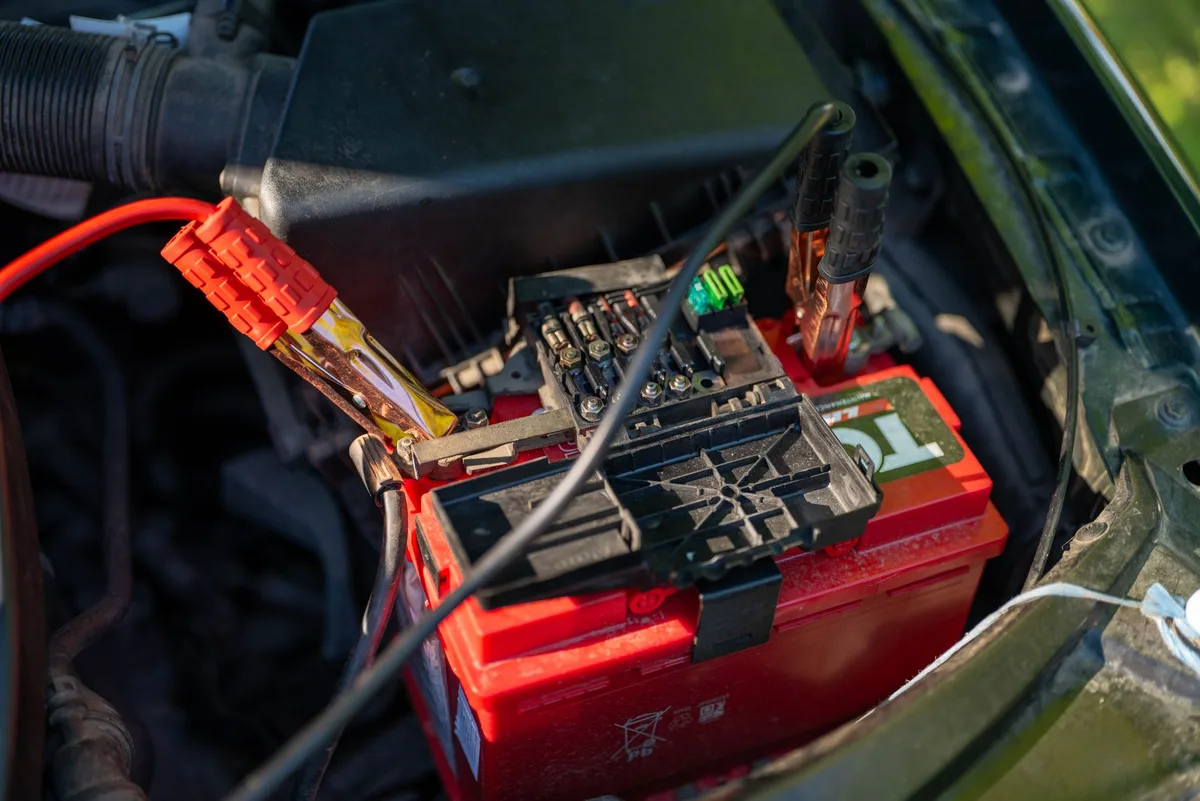
If your car's been sluggish to start and you've grabbed a multimeter, you're probably wondering: do you need to disconnect the battery to test it with a multimeter? For a plain voltage check, no. You leave it connected and read straight off the terminals.
The battery only needs to come off the circuit for a couple of specific tests.
Here's the number that anchors everything. A healthy, rested 12V battery reads about 12.6V, and per SAE International testing conventions that's roughly a full state of charge. Read it wrong and you'll end up blaming the wrong part.
So before you reach for a wrench, let's sort out which test you're actually running.
Quick Answer
No, you don't disconnect the battery for a voltage test. You measure it connected, right on the posts. Set the meter to DC volts.
Disconnect only for a bench test or an amperage draw test. Those two need the circuit broken.
What Testing a Battery Actually Means (Voltage vs. Load vs. Draw)
"Testing the battery" isn't one job. It's three different checks, and only some of them touch the terminals.
Most people mean a voltage test. That's a simple DC voltage reading that tells you the state of charge. It's fast, safe, and you do it with everything still connected.
A load test is different. It measures whether the battery holds voltage while it's working hard, like during cranking. A parasitic draw test measures current leaking out while the car sits, which is what kills a battery overnight.
Here's the quick breakdown:
- Voltage test: Battery connected. Reads charge level. Under a minute.
- Charging test: Engine running. Checks the alternator's output.
- Load test: Battery connected or on a bench tester. Checks strength under demand.
- Parasitic draw test: Circuit broken, meter in series. Finds hidden drains.
If you only want to know whether the battery is charged, the voltage reading you get on the posts is all you need. Keep it connected.
The Decision: Which Test You're Running Changes Everything
This is where the connect-or-disconnect question actually gets answered. It depends entirely on the test.

Testing Resting Voltage: Leave It Connected
If you're checking state of charge, keep the battery connected. Touch the red probe to the positive post and the black probe to the negative. Read the number.
That's it.
Disconnecting here does nothing useful. A battery post reads the same voltage whether the cable's on or off.
Testing Charging Output: Engine Must Be Running
If you want to know whether the alternator is doing its job, the battery stays connected and the engine runs. A disconnected battery can't show you charging voltage, because the charging circuit has to be live.
Start the car and read across the terminals. You're checking the alternator's output now, not the battery's stored charge.
Testing Parasitic Draw: This One Needs the Circuit Broken
If your battery keeps dying while parked, you're hunting a parasitic drain. This test does require disconnection. You pull the negative cable, then put the meter in series between the cable and the post so all current flows through the meter.
Set the meter to amps, use the 10A jack, and wait for the modules to sleep. If the reading stays high, something's draining the battery. There's a full walkthrough on how much draw is actually too much worth reading before you start pulling fuses.
Bench Testing a Removed Battery: Fully Disconnected
If the battery's already out of the car, or you're testing one before recycling it, it's disconnected by definition. Clean the posts, let it rest, then read the voltage. A rested reading off the car gives you the cleanest state-of-charge picture you can get.
Here's the decision at a glance:
| Test | Battery Connected? | Engine | Meter Setting |
|---|---|---|---|
| Resting voltage | Yes | Off | DC volts |
| Charging output | Yes | Running | DC volts |
| Parasitic draw | No (in series) | Off, doors shut | Amps (10A) |
| Bench test | No | N/A | DC volts |
How to Test Battery Voltage With a Multimeter (Battery Still Connected)
A voltage test takes about a minute and needs no disconnection. Here's the clean way to do it.

- Let the car sit. For a true resting reading, leave it off for a few hours, ideally overnight. A recent drive leaves a surface charge that inflates the number.
- Set the meter. Turn the dial to DC voltage, 20V range. This covers a 12V battery with room to spare.
- Find the posts. Pop the hood. Positive is marked with a plus and often a red cap. Negative is the minus.
- Place the probes. Red probe on positive, black probe on negative. Firm metal-to-metal contact matters.
- Read it. A steady number should appear right away.
- Check under load. Start the engine and read again to see charging voltage.
If the probes are backwards, you'll just see a minus sign in front of the number. No harm done, just swap them. For tight terminals or connectors, back-probing technique gives you a cleaner contact without damaging anything.
One caution: never set the meter to amps and touch it across both posts. That creates a dead short through the meter and pops its internal fuse instantly. Amps mode is only for the in-series draw test.
Reading the Numbers: What Your Voltage Actually Tells You
The reading only helps if you know what it means. A car battery lives in a tight voltage window, and small differences matter a lot.
Resting Voltage and State of Charge
With the engine off and the battery rested, voltage maps directly to charge level. Here's the standard picture as of 2026:
| Resting Voltage | State of Charge |
|---|---|
| 12.6–12.8V | ~100% |
| 12.4V | ~75% |
| 12.2V | ~50% |
| 12.0V | ~25% |
| Below 12.0V | Discharged / suspect |
At 12.4V you've still got a reading that's basically fine, just not topped off. Drop to 12.2V and you're at half, which is worth watching. Anything sitting near 12.0V is effectively flat and needs a charge before you judge the battery itself.
Keep in mind a good voltage doesn't guarantee a good battery. A cell can read 12.6V at rest and still collapse under cranking. If yours reads full but won't turn the engine, the next step is a load or cranking test, not another voltage check.
Charging Voltage With the Engine On
Start the car and the number should jump. A healthy charging system reads roughly 13.7V to 14.7V at the terminals. That's the alternator topping the battery back up.
If it stays down near 12.5V with the engine running, the alternator isn't charging. If it climbs past 15V, you may have an overcharge issue. A quick way to separate a battery fault from an alternator fault is to compare the engine-off and engine-on readings side by side.
AGM and LiFePO4: Why the Numbers Shift
Not every battery follows the flooded lead-acid chart. AGM batteries rest slightly higher, around 12.8V to 12.9V at full charge, so a 12.6V AGM is a touch low, not full.
Lithium (LiFePO4) is a different animal entirely. It holds a flat voltage curve, often sitting near 13.3V to 13.6V across most of its range. Voltage tells you far less about a lithium battery's charge, so don't read it against the lead-acid chart.
Why Disconnecting Can Cost You Radio Codes and ECU Settings
Pulling the battery on a modern car isn't free. The moment you break power, the vehicle loses its short-term memory. That's the real reason you don't disconnect for a simple voltage check.
Cut the power and you can lose:
- Radio and infotainment presets, sometimes locked behind a security code
- Power window and sunroof auto-up calibration
- Seat and mirror memory positions
- The engine computer's adaptive fuel and idle trims
The ECU relearning its trims is the sneaky one. For a day or two after a disconnect, the car may idle rough or shift oddly while it rebuilds that data. If you must disconnect, a memory saver plugged into the OBD-II port keeps the modules alive.
So the rule holds: for anything you can read on the posts, leave the cables on. Only break power when the test genuinely demands it.
Mistakes That Wreck Your Reading (or Your Multimeter)
Most bad readings come from a handful of avoidable errors. Here are the ones that trip people up most.
- Testing right after a drive. Surface charge can show 12.8V on a battery that's really at 12.4V. Let it rest first.
- Amps mode across the posts. This shorts the meter and blows its fuse. Amps mode is only for an in-series draw test.
- Dirty or corroded terminals. Crust between probe and post drops the reading. Clean the posts before you trust the number.
- Wrong range. On a manual meter, pick the 20V DC range, not AC. AC volts on a DC battery reads near zero and confuses everyone.
- Loose probe contact. A wobbly touch gives a jumpy number. Press firmly onto bare metal.
One more worth flagging. A battery that reads fine but still won't crank isn't lying to you. Voltage alone can't catch a weak cell under load, so pair it with a cranking test when the numbers don't match the symptoms.
Safe Handling: Hydrogen Gas, Acid, and Probe Placement
A car battery deserves respect. It stores serious energy and vents flammable gas, so a few habits keep the job safe.
Lead-acid batteries release hydrogen, which is explosive in the right mix. OSHA guidance on battery handling stresses good ventilation and keeping sparks and flames well away from the posts. Work in an open garage, not a sealed space.
Quick safety checklist:
- Wear eye protection. The electrolyte is sulfuric acid and burns skin and eyes.
- Take off rings, watches, and metal bracelets before reaching near the terminals.
- Never lay a tool across both posts. A wrench bridging positive to negative can weld itself and spray molten metal.
- Keep the probes from touching each other while they're on the battery.
If a battery looks puffed up or bloated on the sides, stop. A swollen case points to overcharging or internal failure, and that battery should be handled and replaced, not poked around.
Multimeter vs. Dedicated Battery Tester vs. Hydrometer
A multimeter is the most flexible tool, but it isn't the only one. Each has a job it does best.
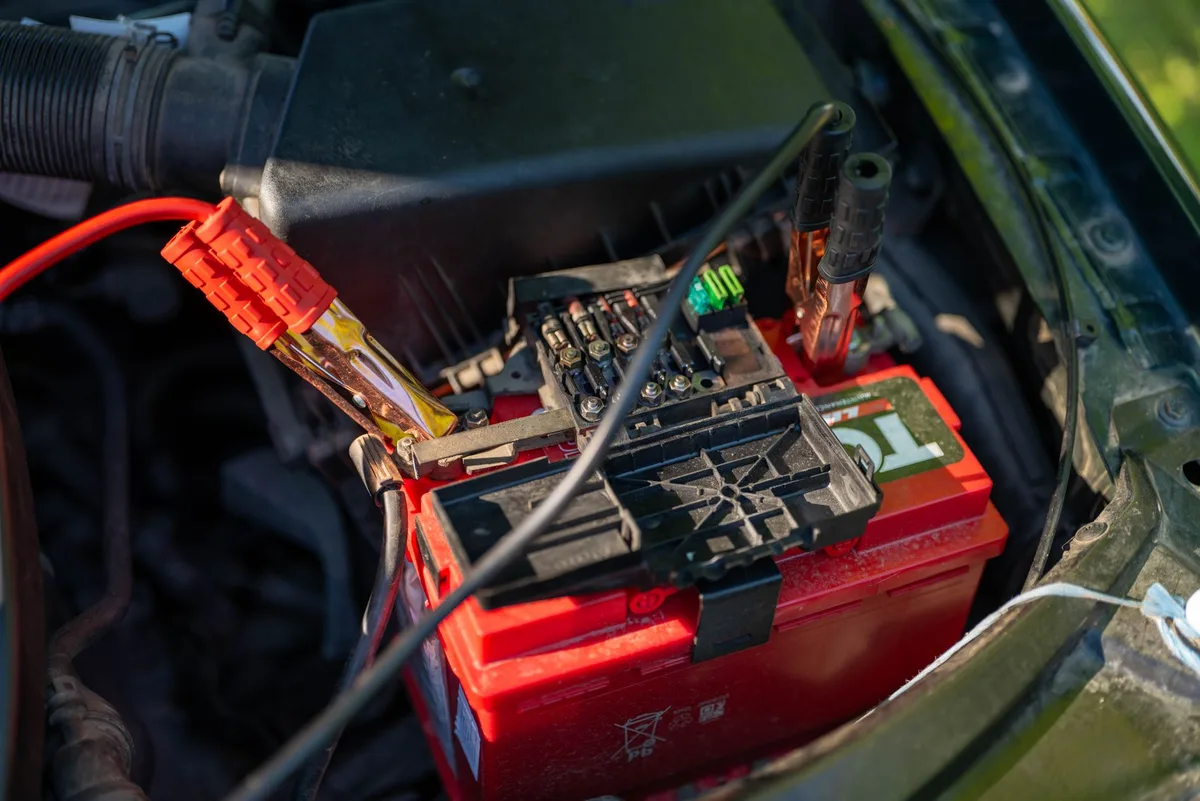
A multimeter reads voltage and current, which covers charge level, charging output, and parasitic draw. A dedicated battery tester (a conductance or carbon-pile load tester) actually judges battery health under load, giving you a pass or fail. A hydrometer measures the electrolyte's specific gravity in flooded batteries, which is the most direct read on charge in each cell.
| Tool | Best For | Limitation |
|---|---|---|
| Multimeter | Voltage, charging, draw | Won't grade health under load |
| Load / conductance tester | Pass/fail battery health | Costs more, single purpose |
| Hydrometer | Per-cell charge, flooded only | No good on sealed or AGM |
For most owners, a multimeter is the right first tool. It's cheap, it does the job for most car battery checks, and it doubles for dozens of other electrical tasks. Reach for a load tester when voltage looks fine but the battery keeps failing to crank.
Battery or Alternator? Using One Meter to Tell Them Apart
One multimeter can settle the battery-versus-alternator argument in about two minutes. You just take two readings and compare them.
First, engine off, read the resting voltage. Around 12.6V means the battery's charged. Well under 12.4V means it's low, so charge it before you judge anything else.
Now start the engine and read again. You're looking for 13.7V to 14.7V. If the number climbs into that band, the alternator's charging and the battery is likely your problem.
If it stays flat near 12.5V or lower, the alternator isn't keeping up.
Here's the simple logic:
- Good at rest, jumps with engine on: alternator's fine, suspect the battery.
- Good at rest, stays flat running: suspect the alternator or its wiring.
- Low at rest, dies fast, drains parked: check for a drain that empties it overnight.
If the car cranks weak or won't start while the lights still work, that pattern often points at the battery or a bad connection rather than a dead charging system. The two-reading test tells you which way to look before you spend a dime on parts.
Pro Tips for a Clean, Trustworthy Reading
A few small habits separate a reliable reading from a misleading one.
- Wait out the surface charge. Give the car at least an hour off, ideally overnight, before reading resting voltage.
- Rev to confirm the alternator. Hold about 2,000 rpm and watch that charging voltage stays in the 13.7V to 14.7V band under load.
- Check the connections first. A clean 12.6V battery with corroded terminals can still act dead. Wiggle-test and clean before you condemn it.
- Read to the hundredth. A meter showing 12.61V tells you more than one rounding to 12.6V.
- Test warm and cold. Cold mornings reveal a weak battery that reads fine in a warm garage.
If a battery keeps going flat no matter what you do, log your readings over a few days. A pattern of overnight drops points to draw, not a tired battery.
Frequently Asked Questions
Do you have to disconnect the battery to check voltage?
No. You check voltage with the battery connected, reading straight off the terminals. Set your multimeter to DC volts and touch the probes to the posts.
Disconnecting changes nothing for a voltage reading. You only break the circuit for an amperage draw test or a bench test.
Can testing a battery with a multimeter damage it?
No, a voltage test is completely harmless to the battery. The meter draws almost no current. The real risk is to the meter itself.
If you switch to amps mode and touch both posts, you'll short the meter and blow its internal fuse instantly.
Should the engine be on or off when testing?
Both, at different stages. Test with the engine off first to read resting voltage and state of charge. Then start the engine to check charging output, which should sit between 13.7V and 14.7V.
Comparing the two readings tells you whether the battery or the alternator is the problem.
Will I lose my radio code if I disconnect the battery?
You can, on cars with security-coded audio. Disconnecting also wipes clock, seat, and window settings, plus the ECU's learned trims. That's exactly why a plain voltage test keeps the battery connected.
If you must disconnect, a memory saver in the OBD-II port holds those settings.
What voltage means a car battery is bad?
A battery resting below 12.0V is deeply discharged and likely failing. But voltage alone isn't the full story. A battery can read 12.6V and still fail under cranking load.
If a charged battery won't turn the engine, follow up with a load test to confirm its health.
Your Quick Decision Guide: Connected or Disconnected
Here's the whole thing boiled down. Match your goal to the move.
- Want state of charge? Battery connected, engine off, DC volts. Read the posts.
- Checking the alternator? Battery connected, engine running, DC volts. Look for 13.7V to 14.7V.
- Hunting an overnight drain? Disconnect the negative, put the meter in series, read amps.
- Testing a battery that's already out? It's disconnected anyway. Rest it, then read voltage.
So for the everyday question of "is my battery charged," keep it hooked up and read the terminals. Save the disconnection for the draw test and the bench test, where breaking the circuit is the only way to get a real number. Get that one distinction right and you'll test smarter, protect your settings, and stop guessing at which part actually failed.

Similar Posts