7 Warning Signs of a Bad Car Battery You Shouldn’t Ignore
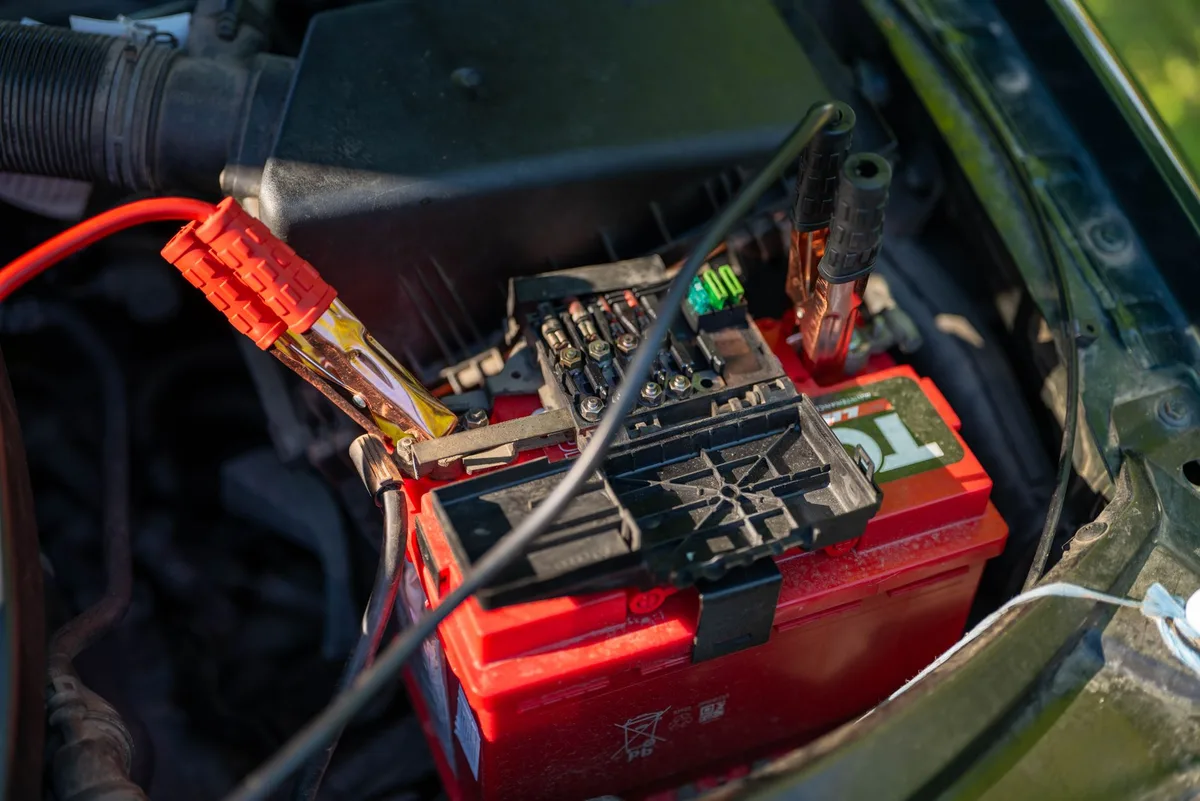
A dead click in a cold parking lot tells you plenty. But the real signs of a bad car battery show up long before that, and most drivers miss them. The trick is knowing which symptom points at the battery and which one is faking you out.
Here's the catch. A slow crank, a warning light, or a no-start can come from the battery, the alternator, or a loose cable. As of 2026, most lead-acid car batteries last only 3 to 5 years, so age alone shifts the odds.
Let's sort the real warning signs from the impostors, starting with why weak batteries are so easy to misread.
Quick Answer
A bad car battery usually shows slow engine cranking and dim headlights. You'll often hear a single click or rapid clicking when you turn the key. Corroded terminals, a swollen case, or a rotten-egg smell are red flags.
Frequent jump-starts point to a failing battery too. Most batteries fail after 3 to 5 years of use.
Why a Weak Battery Fakes You Out: Symptoms That Overlap With Other Problems
Here's the frustrating part. A weak battery, a dying alternator, a bad starter, and a loose cable can all produce the same slow crank. The symptom tells you something's wrong.
It doesn't tell you what.
That overlap is why so many good batteries get tossed and bad ones get kept. So before you swap anything, run the logic:
- If the crank is slow and the battery is over 4 years old, the battery is your prime suspect.
- If the battery is brand new but starts are still weak, check the connections and the alternator first.
- If the car starts after a jump but dies again overnight, you're likely chasing a parasitic drain.
- If nothing happens at all and the lights are dead too, look at the terminals and ground first.
Age matters more than people think. A battery testing at 12.6 volts at rest can still collapse the moment it's asked to turn a starter. That's why a resting number alone isn't the whole story, and why the dip you see at start-up matters just as much.
Keep that if/then habit in mind. Every section below feeds one branch of the same decision tree.
Slow Cranking, Clicking, and No-Start: What Each Sound Actually Means
The sound your car makes when you turn the key is the best free clue you've got. Learn to read it and you're halfway to a diagnosis.
One Single Click vs. Rapid Clicking
One loud click usually points at the starter solenoid not getting enough juice, or a bad starter itself. The battery may still have surface charge, but not enough punch to engage the gear.
Rapid clicking is different. That machine-gun chatter is the classic sign of a battery too weak to hold voltage under load. Each click drops the voltage, the solenoid pulls back, and the cycle repeats.
If you hear rapid clicking, the battery or a corroded connection is almost always to blame.
Cranks Slow but Starts vs. Total No-Crank
A slow, lazy crank that eventually fires means the battery is fading but not gone. Think of it as a warning shot. This is the stage to test and act, especially before winter.
A total no-crank with dead dash lights points to no power reaching the system at all. That's a flat battery, a broken connection, or a failed ground. If the crank is slow only on cold mornings, freezing temperatures are dragging down an already weak battery.
Quick reference for the sounds:
| What you hear | Most likely cause | First thing to check |
|---|---|---|
| Rapid clicking | Weak battery or bad connection | Terminals, then charge level |
| One single click | Starter or solenoid low on power | Battery load, then starter |
| Slow lazy crank | Battery fading | Voltage test, battery age |
| Nothing, dead lights | Flat battery or open circuit | Terminals and ground strap |
Dashboard Lights, Dim Headlights, and Electrical Gremlins
Your car's electrical quirks are early gossip about the battery. When power gets tight, the small stuff acts up first.
Watch for these tells:
- Headlights that dim at idle but brighten when you rev the engine.
- A battery or charging warning light glowing on the dash.
- Power windows crawling instead of snapping up.
- The radio resetting, the clock losing time, or the dome light flickering.
- Interior lights that fade as the starter engages.
Here's the important split. Dim lights that get brighter when you rev usually point at the charging system, not just the battery. Lights that stay weak even with a fresh charge point at the battery or its connections.
That dashboard battery symbol confuses people. It doesn't mean "battery is bad." It means the charging voltage is out of range, which could be the alternator, the belt, or the battery. If you want to confirm what a mid-range resting number like 12.4 volts really tells you, a quick meter check settles it fast.
Corrosion, Swelling, and the Smell of Rotten Eggs
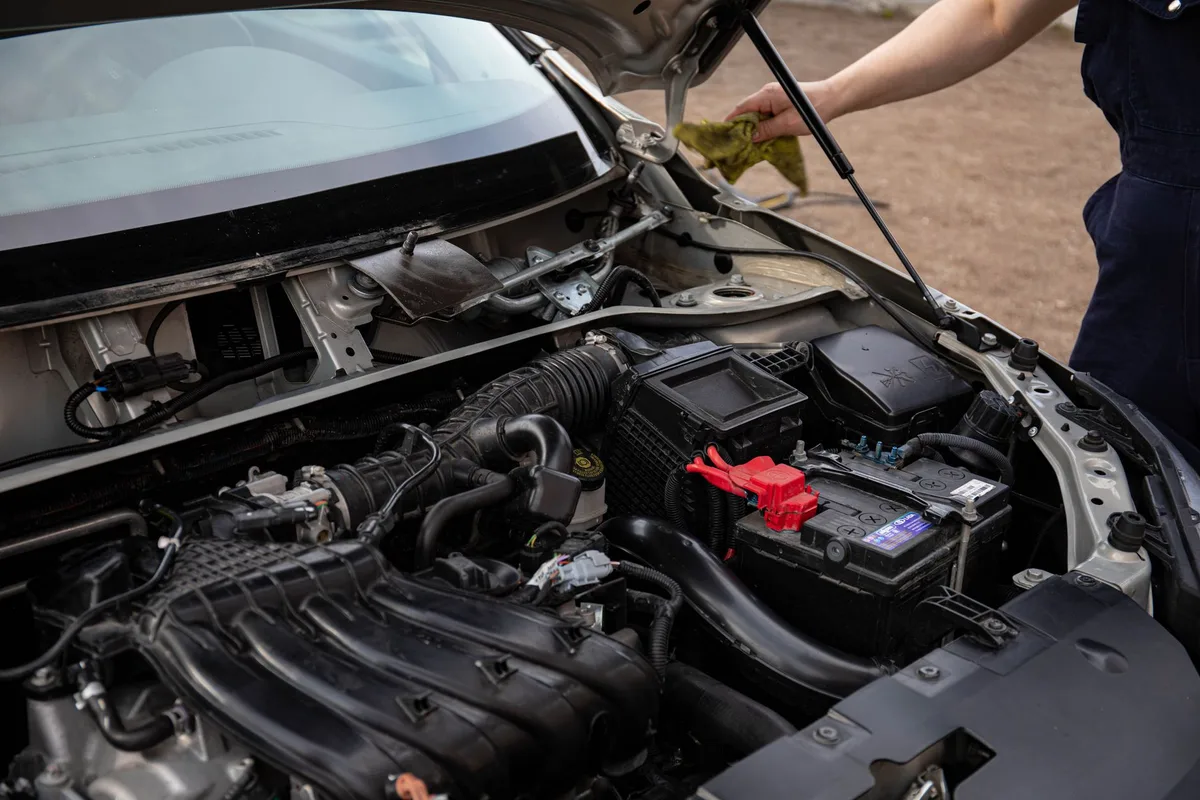
Sometimes the battery tells you it's dying just by how it looks and smells. Pop the hood and use your eyes and nose before you reach for a tool.
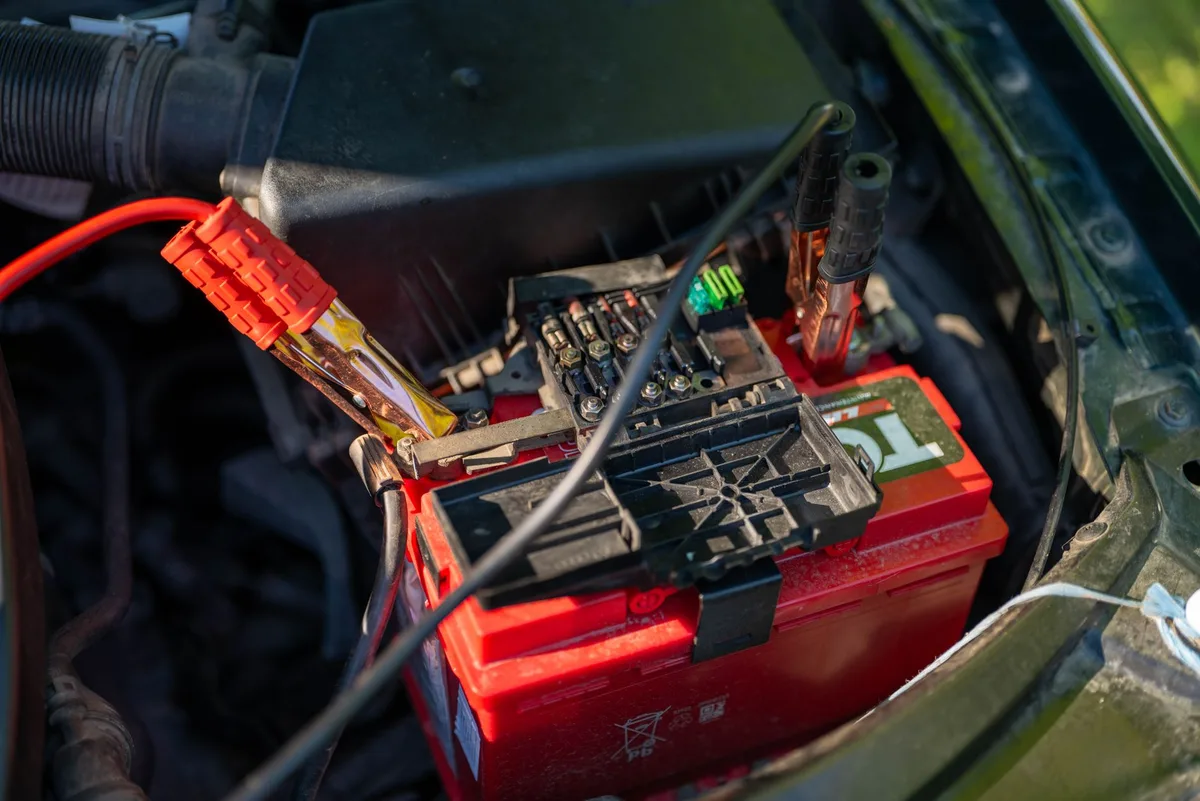
White-Blue Powder on the Terminals
That crusty white, blue, or greenish powder on the posts is corrosion, and it's a genuine performance killer. It builds resistance between the battery and the cables, so even a healthy battery starts acting weak.
The good news: this one's often a cheap fix. Disconnect the cables, scrub the posts with a paste of baking soda and water, rinse, dry, and reconnect. If a slow crank clears up after cleaning, the battery was probably fine all along.
If corrosion keeps coming back fast, the battery may be venting acid and nearing the end.
A Bulging Case or Sulfur Smell
A swollen or bloated battery case is a hard stop. It means the battery overheated or was overcharged, and the plates inside are damaged. Replace it.
Don't try to nurse it back.
A rotten-egg or sulfur smell near the battery is another red flag. That's hydrogen sulfide gas from an overcharged or shorted battery leaking electrolyte. If you smell it, keep sparks and flames away and get the battery tested or replaced.
A case that feels warm long after the engine's off deserves the same caution.
Is It the Battery or the Alternator? The One Test That Settles It
This is the question that trips up almost everyone, and a multimeter answers it in about two minutes. The battery starts the car. The alternator keeps it running and recharges the battery.
Confuse the two and you'll replace the wrong part.
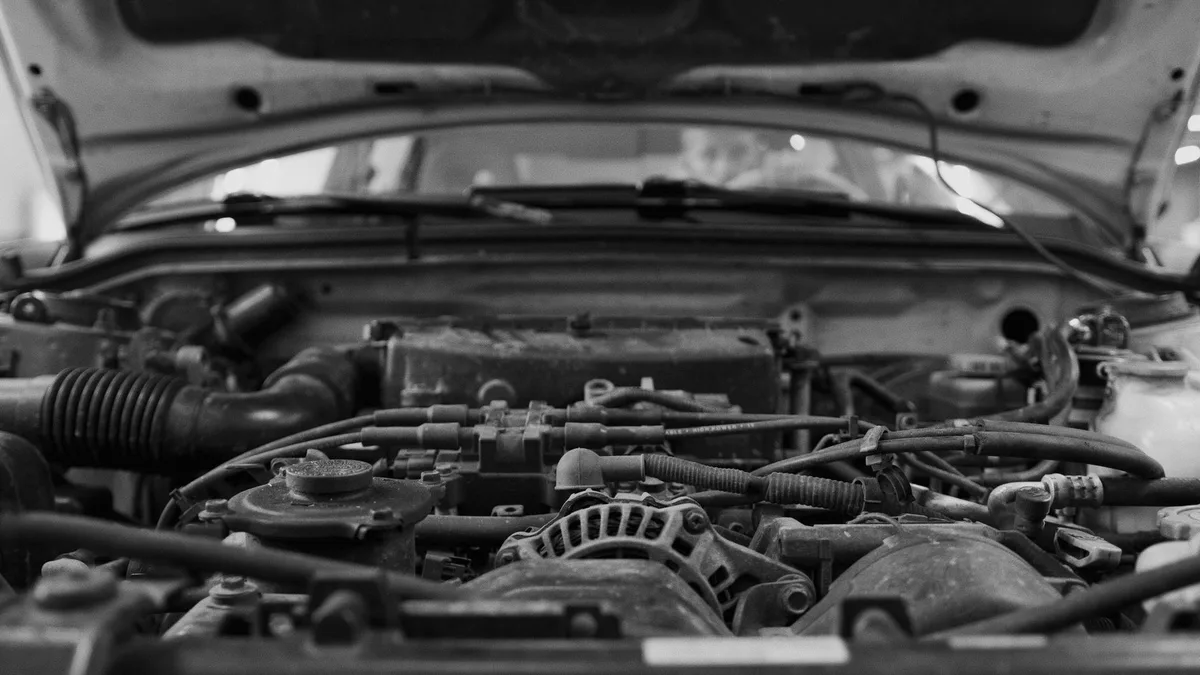
Run this simple sequence:
- With the engine off, measure across the battery terminals. A healthy battery reads about 12.6 volts. Around 12.2 volts means it's near half charged and worth a closer look at that reading.
- Start the engine and measure again. You want roughly 13.7 to 14.7 volts. That rise means the alternator is charging.
- If the running voltage stays down near 12 volts or lower, the alternator isn't doing its job.
So here's the clean split:
- Car won't start but runs fine after a jump: battery is the likely culprit.
- Car starts fine but dies while driving: alternator is the likely culprit.
- Running voltage sits below the normal charging range: charging system, not the battery.
The U.S. Department of Energy notes that both extreme heat and cold shorten battery life and strain the charging system, worth remembering when you see how battery care changes with temperature. If your numbers look off in both tests, don't guess.
A full battery-versus-alternator meter check confirms which part to buy before you spend a dime.
How to Test Your Battery at Home With a Multimeter
You don't need a shop to check a battery. A basic digital multimeter and five minutes tell you most of what you need. Set the dial to DC volts on the 20V range, so the reading lands in the right window.
If the dial settings throw you, this quick guide to choosing the right DC range clears it up in a minute.
Resting Voltage Test
Let the car sit at least an hour, ideally overnight, so surface charge fades. Touch the red probe to the positive post and black to the negative. A healthy battery reads 12.6 volts or higher.
Anything at or below the 12.0-volt mark means the battery is deeply discharged and suspect.
Cranking Voltage Test
This one exposes a weak battery fast. Have a helper crank the engine while you watch the meter. Voltage will dip, and that's normal.
But if it drops below about 9.6 volts during cranking, the battery can't hold up under load. A steep collapse here often explains a battery that reads fine at rest but still shows 12 volts yet won't crank.
Charging System Check
Start the engine and read again. You want 13.7 to 14.7 volts at idle. Too low means the alternator is under-charging.
Above 14.7 hints at an overcharge, which cooks the battery over time. If you'd rather skip the meter, there are a few no-meter checks that give rough answers.
Car Battery Voltage Chart: What Your Numbers Mean
Voltage is the quickest snapshot of state of charge, so keep these numbers handy. They apply to a resting 12-volt lead-acid battery, engine off.
| Resting voltage | State of charge | What it means |
|---|---|---|
| 12.6V and up | 100% | Healthy and fully charged |
| 12.4V | ~75% | Fine, slightly down |
| 12.2V | ~50% | Weak, recharge soon |
| 12.0V | ~25% | Discharged, suspect |
| 11.9V or below | Near 0% | Dead or failing |
A single low reading isn't a death sentence. Recharge, let it rest, and test again. If a battery keeps sliding back to the 11.9-volt zone after a full charge, it's losing capacity and won't hold.
One note. These figures assume a battery near room temperature. Cold shifts them, which we'll get to shortly.
Recharge or Replace? Your Decision Guide
Here's the fork most drivers land on, and the answer follows a simple path. Not every low battery needs replacing.
- If the battery is under 4 years old and just got drained by lights left on: recharge and retest.
- If it recharges to 12.6V and passes a load test: keep it.
- If it won't hold above 12.4V a day after charging: replace it.
- If the case is swollen, leaking, or fails the cranking test: replace it, no question.
- If it's over 5 years old and cranking slow: replace it before it strands you.
Aggregate user reports show a clear pattern. A battery that needs jump-starting more than once a week is telling you it's done. If it keeps dying and you can't find why, running a draw test with a meter usually finds the leak.
Battery Age, Climate, and Why Winter Exposes Weak Batteries
Cold is a battery's worst enemy, and it's why so many fail on the first freezing morning. At 32°F, a battery loses roughly a third of its cranking power. At 0°F, it can shed half.
Here's the cruel twist. Cold engines need more power to start, not less. So the battery gives less exactly when the car asks for more.
A cell that limped through autumn often dies the first hard frost.
Heat does damage too, just quietly. High temperatures speed up internal corrosion and evaporate electrolyte, shortening lifespan even when starts feel normal. That's why hot-climate batteries often fail without much warning.
The takeaway: test in fall, before winter tests you. A battery past 3 years old earns a load check every season.
Parasitic Drain: When the Battery's Fine but Something's Killing It
Sometimes the battery is healthy but keeps going flat overnight. That's parasitic drain, a circuit pulling power while the car is off. A dashcam, a bad relay, or a glovebox light that never shuts off can bleed a battery dry.
A normal parked car draws a small amount, usually under 50 milliamps once everything sleeps. To check, set your multimeter to measure DC amps in series with the negative cable, car fully off and doors closed. A reading well above the 50-milliamp mark means something's staying awake.
Then pull fuses one at a time and watch the meter. When the draw drops, you've found the guilty circuit. This is the fix people miss when they keep replacing good batteries.
Knowing what a safe resting draw looks like saves you from buying parts you don't need.
Mistakes That Get a Good Battery Thrown Out (and a Bad One Kept)
The most common error is blaming the battery for a job the alternator or a cable is doing. This swap-and-pray habit wastes the most money. Test before you buy.
Watch out for these traps:
- Reading only resting voltage and skipping the load test. A battery can read 12.6V and still fail under a starter's pull.
- Ignoring corroded terminals. Clean the posts first, then retest.
- Replacing the battery when a parasitic drain is the real culprit.
- Buying the wrong group size or too little cranking power for the vehicle.
A quick load or conductance test at any parts store settles most of these for free.
Safe Testing and Jump-Starting Without Getting Hurt
Car batteries hold acid and vent hydrogen gas, so a careless spark is a real risk. Keep flames, cigarettes, and sparks well away. Wear eye protection and gloves when handling one.
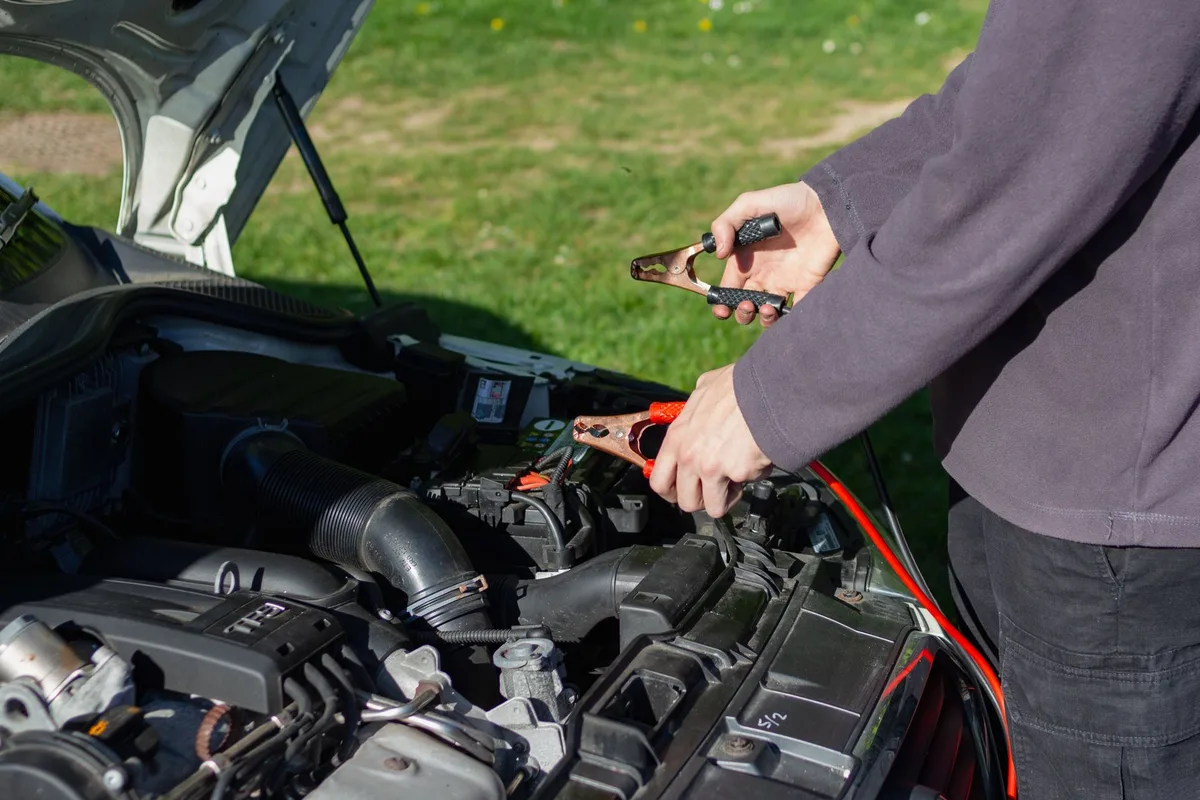
For a clean jump-start, follow the order:
- Red clamp to the dead battery's positive post.
- Red clamp to the good battery's positive post.
- Black clamp to the good battery's negative post.
- Black clamp to bare metal on the dead car, not its battery.
That last ground point keeps sparks away from battery gas. When disconnecting, remove the negative cable first. Never charge a frozen or swollen battery, and recycle old lead-acid batteries at an approved drop-off.
The U.S. EPA treats them as recoverable hazardous material, and most retailers take cores back.
What a Replacement Really Costs and When It's Worth It
A new battery isn't a huge expense, and catching failure early keeps it that way. As of 2026, aggregate pricing puts a standard flooded battery around $120 to $200 installed. AGM batteries for start-stop cars run higher, often $200 to $350.
| Battery type | Typical installed cost | Best for |
|---|---|---|
| Standard flooded | $120 to $200 | Older, simpler vehicles |
| EFB | $170 to $260 | Entry start-stop systems |
| AGM | $200 to $350 | Start-stop, heavy electrical loads |
Replacement is worth it the moment a battery fails a load test or passes 5 years. Weigh that against the cost of a tow and a missed morning. On newer start-stop cars, the new battery may need registering to the BMS, so factor that in.
Frequently Asked Questions
How long does a car battery usually last?
Most lead-acid car batteries last 3 to 5 years. Heat, short trips, and deep discharges shorten that. Cold climates strain them harder each winter.
Once a battery passes 4 years, test it every season so a failure doesn't catch you off guard.
Can a car battery be bad even if it reads 12 volts?
Yes. A battery can show 12 volts at rest and still collapse under the starter's load. Resting voltage only reflects charge, not health.
A cranking or load test reveals whether it can actually deliver power. Always load-test before trusting a resting number.
What's the first sign a car battery is dying?
Slow, labored cranking is usually the earliest warning. You'll notice the engine turns over lazily, especially on cold mornings. Dim headlights at idle often follow.
Catch it here and you can test and replace on your schedule, not stranded in a lot.
Is it the battery or the alternator if my car won't start?
If the car won't start but runs fine after a jump, suspect the battery. If it starts then dies while driving, suspect the alternator. A quick voltage check confirms it: 12.6V at rest, and 13.7 to 14.7V with the engine running.
Can cold weather kill a good battery?
Cold doesn't kill a healthy battery, but it exposes a weak one fast. At freezing, a battery loses about a third of its cranking power while the engine demands more. A cell already fading in autumn often dies on the first hard frost.
Test before winter.

Similar Posts