Can You Leave a Battery Maintainer On All Winter?

So you're staring at the garage, wondering: can you leave a battery maintainer on all winter without frying your battery? For most people the answer is yes, but only with a true smart maintainer, not an old trickle charger. The gadget you own matters more than how long you leave it plugged in.
A quality battery maintainer holds a healthy 12V battery at roughly 13.2 to 13.6 volts, then backs off once it's full. Per Battery Council International guidance, keeping lead-acid batteries near full charge is the best way to prevent sulfation. That's the whole reason maintainers exist.
Let's break down when leaving one on is smart, and when it quietly wrecks a battery.
Quick Answer
Yes, you can leave a smart battery maintainer on all winter. Modern maintainers charge, then switch to float mode automatically. They hold the battery near full without overcharging.
This is safe for months on a healthy battery. Avoid dumb trickle chargers, since they never shut off and can boil the battery dry.
Maintainer vs. Trickle Charger vs. Float Charger: Why the Label Matters
Here's where most people get burned. These three terms get slapped on packaging like they mean the same thing. They don't.
A battery maintainer is a smart device. It reads the battery voltage, charges when needed, and drops to a low float once full. A trickle charger pushes a small, constant current no matter what.
It never stops. Leave one on for months and it slowly overcharges a full battery.
A float charger sits in the middle. It holds a steady voltage but may lack the smart shutoff and staged logic of a true maintainer. The good news?
Most modern maintainers and battery tenders are microprocessor-controlled and safe for long-term use.
Here's the quick way to tell them apart:
| Type | Shuts off when full? | Safe all winter? | Best use |
|---|---|---|---|
| Smart maintainer | Yes, cycles automatically | Yes | Long storage |
| Float charger | Holds voltage, varies by model | Usually | Medium storage |
| Trickle charger (dumb) | No, constant output | No | Short top-ups only |
If the box says automatic, multi-stage, or microprocessor-controlled, you've got a maintainer. If it just says trickle with a fixed amp rating, treat it as a short-term tool only.
How a Smart Battery Maintainer Actually Works Through Winter
A smart maintainer runs a repeating cycle. Understanding it takes the mystery out of leaving it connected.
Most units use three or four stages:
- Bulk stage: pushes maximum current to recharge a low battery fast.
- Absorption stage: tapers the current as the battery nears full.
- Float stage: holds a low maintenance voltage so the battery stays topped up.
- Rest or pulse stage: some models let voltage settle, then top up only when it dips.
Once your battery hits full, the maintainer parks in float. It sips just enough power to offset natural self-discharge. Lead-acid batteries lose roughly 1 to 5 percent of their charge per month while sitting.
The maintainer quietly replaces that loss.
This is why a maintainer beats doing nothing. A battery left alone slowly drains, especially with a small background current drain from alarms or trackers still pulling power. Keep it near full and you avoid the deep discharge that kills batteries and leaves you with a car that won't turn over on a cold morning.
The 5 Conditions That Decide If Yours Is Safe to Leave On
The honest answer depends on your setup. Run through these five checks before you plug in and walk away for three months.
Charger Type: Smart Maintainer or Dumb Trickle Charger
This is the big one. A smart maintainer is safe to leave connected all winter. A basic trickle charger with no auto shutoff is not.
It keeps pushing current into a full battery and boils off electrolyte over time.
Battery Chemistry: Flooded, AGM, Gel, or Lithium
Different chemistries want different float voltages. A flooded lead-acid battery and an AGM battery tolerate slightly different ranges. Lithium (LiFePO4) batteries don't need a float and can be harmed by the wrong profile.
Many good maintainers have a chemistry-select switch, so set it correctly before you leave it running.
Battery Health and Age Before Storage
A maintainer keeps a good battery healthy. It won't resurrect a dying one. If your battery is old, weak, or already showing the warning signs of a failing battery, a maintainer just masks the problem.
A tired battery can also fail to hold float and make the charger cycle oddly.
Storage Temperature and Freeze Risk
Cold changes the math. A fully charged battery resists freezing down to around minus 70°F. A discharged one can freeze near 32°F and crack the case.
Keeping it charged with a maintainer actually protects it from freeze damage. Just never charge a battery that's already frozen solid.
Ventilation and Where the Battery Sits
Flooded batteries vent small amounts of hydrogen gas while charging. That gas needs somewhere to go. Keep the battery in a ventilated spot, not a sealed box, and away from sparks or open flame.
The Decision Branches: Leave It On, Disconnect, or Top Up Monthly
Now let's turn those conditions into a clear choice. Match your situation to one of these three paths.
Path 1: Leave the maintainer on all winter. Best if you own a smart maintainer, a healthy battery, and the correct chemistry setting. This is the set-and-forget option. Plug it in, confirm it reaches float, and check on it once a month.
Path 2: Disconnect and store the battery. Best if you only have a dumb trickle charger or no reliable outlet. Fully charge the battery first, disconnect the negative terminal, and store it somewhere cool and dry. Recharge it every 4 to 6 weeks.
Path 3: Top up manually each month. A middle-ground option if you'd rather not leave anything plugged in. Charge the battery fully, disconnect, then recharge monthly with a smart charger. It works, but it's easy to forget, and a forgotten battery is how deep discharge sneaks up on you.
If you're unsure which path fits, default to Path 1 with a proper maintainer. It's the lowest-effort way to have a battery that cranks strong the moment you reconnect it in spring.
Float Voltage by Battery Type (and Why It's Everything)
Float voltage is the resting charge level your maintainer holds. Get it wrong and you either undercharge the battery or slowly cook it. Each chemistry has its own sweet spot.

Here's a rough guide to typical float ranges as of 2026:
| Battery type | Typical float voltage | Notes |
|---|---|---|
| Flooded lead-acid | 13.2 to 13.6V | Check water level before storage |
| AGM | 13.2 to 13.8V | Sealed, no water top-up |
| Gel | 13.5 to 13.8V | Sensitive to overvoltage |
| Lithium (LiFePO4) | ~13.6V nominal | Often needs no float at all |
The takeaway is simple. Set your maintainer's chemistry switch to match the battery. An AGM profile on a gel battery, or a lead-acid profile on lithium, shortens its life fast.
If you don't know your battery's resting numbers, a quick meter check helps. A healthy 12V battery reads about 12.6 to 12.8V at rest, and understanding those voltage ranges tells you a lot before you ever plug in.
Step-by-Step: Setting Up a Maintainer for Winter Storage
Setup takes about ten minutes. Do it right once and you won't touch it again until spring.
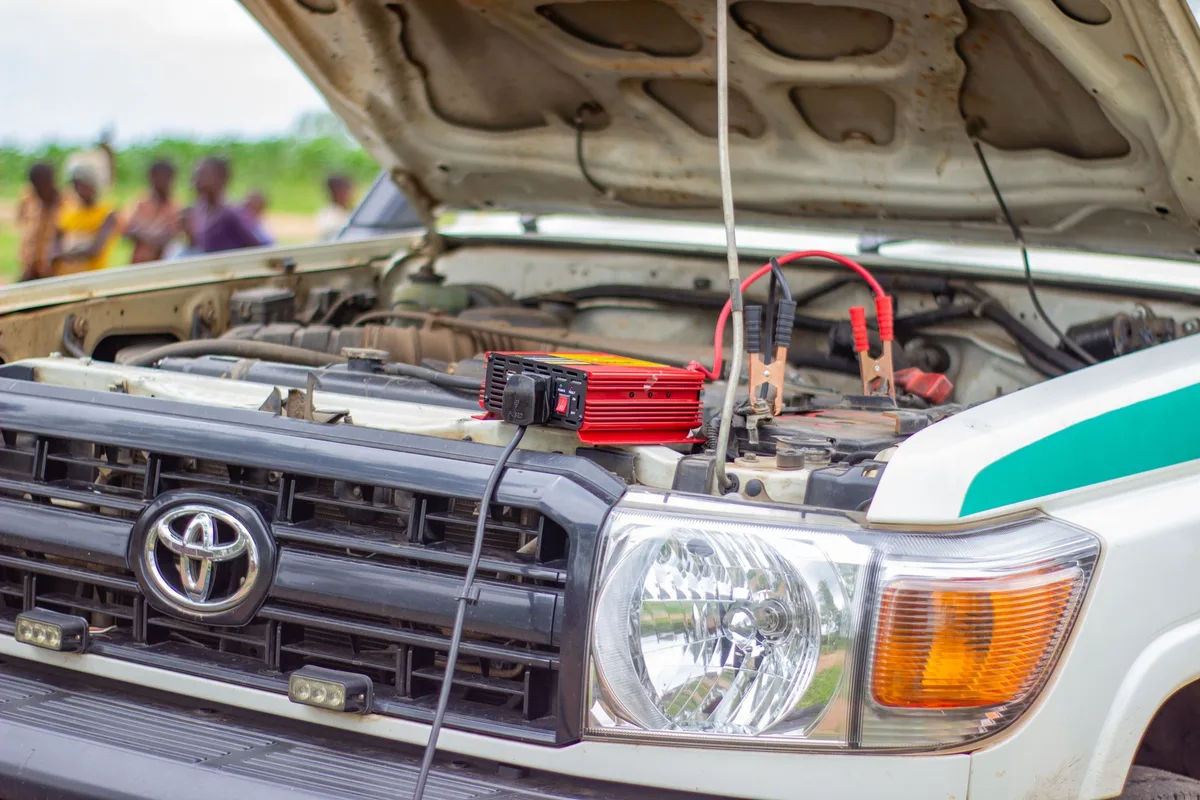
Follow these steps:
- Fully charge first. Bring the battery to full before you switch to maintain mode.
- Clean the terminals. Wipe off corrosion so you get a solid connection.
- Check electrolyte (flooded only). Top up with distilled water if the plates are exposed.
- Set the chemistry mode. Match flooded, AGM, gel, or lithium.
- Connect correctly. Red clamp to positive, black to a clean ground point, in that order.
- Confirm float. Watch for the light or display to show maintenance mode.
- Ventilate. Keep the battery in open air, away from sparks.
Ring-terminal harnesses are worth it for bikes and mowers. You bolt them on once, then clip the maintainer to a pigtail. No fiddling with clamps in a cold garage every time.
One tip from aggregate user reviews: label the pigtail so you don't confuse it with other wiring. It saves headaches when you reconnect and test everything in spring.
Mistakes That Cook Batteries Over Winter
Most winter battery deaths come from a handful of avoidable errors. Here are the ones we see most.
- Using a dumb trickle charger long-term. Constant current with no shutoff boils off electrolyte and warps plates.
- Wrong chemistry setting. An AGM or lithium battery on the wrong profile degrades quietly.
- Storing a half-charged battery. A low battery can freeze and crack. Charge it full first.
- Ignoring a bad battery. A maintainer can't fix a failing cell. If it keeps dying no matter what you do, replace it.
- Poor connections. A loose clamp means the maintainer thinks it's working when it isn't.
- No ventilation. Charging in a sealed container traps hydrogen gas.
The sneakiest mistake is skipping the pre-storage charge. People plug in the maintainer expecting it to rescue a drained battery. A small maintainer at under 1 amp can take days to refill a deeply discharged battery.
Charge it fully with a proper charger first, then let the maintainer hold the line.
Signs Your Maintainer Is Doing More Harm Than Good
The clearest warning sign is a hot battery or a hissing sound. That means overcharging, so unplug right away. A well-behaved maintainer keeps the battery cool and quiet.
Watch for these red flags during winter check-ins:
- Warm or swollen case. Heat and bulging point to overcharge. A swelling battery is a safety issue, so stop charging.
- Rotten-egg smell. That sulfur odor means the battery is venting. A sulfur smell signals trouble inside the cells.
- Rapid clicking or cycling lights. The unit may be fighting a dead cell.
- Fluid loss in flooded cells. Dropping water levels mean it's running too hot.
Spot any of these and you should unplug and test the battery. A maintainer that constantly cycles between charge and float usually signals a battery that can't hold a charge, not a faulty charger.
Solar Maintainers and Other Alternatives When There's No Outlet
No power outlet near your storage spot? A solar battery maintainer is the go-to fix. It's a small panel that trickles charge from daylight, ideal for boats on trailers, RVs, and remote sheds.
Solar maintainers work best with a built-in charge controller. Without one, a bright day can overcharge the battery. Look for a panel rated with regulation, and remember output drops on cloudy days and short winter daylight.
Here's how the main options stack up:
| Option | Needs outlet? | Best for |
|---|---|---|
| Plug-in smart maintainer | Yes | Garages with power |
| Solar maintainer | No | Outdoor, off-grid storage |
| Disconnect battery | No | Simple, no gear needed |
| Monthly manual charge | Yes, occasionally | Hands-on owners |
The simplest alternative is still pulling the battery and disconnecting it. For a healthy battery in a cool spot, that plus a monthly top-up gets you close to a maintainer's results. Just don't skip the calendar reminder, because a missed month is how a stored battery slips into deep discharge.
Safety Rules: Hydrogen Gas, Frozen Batteries, and Uncertified Units
Charging a lead-acid battery releases hydrogen gas, and that's the safety point that matters most. Keep the battery in a ventilated space, never a sealed tote. A single spark near trapped hydrogen can cause a flash.
Never charge a frozen battery. If the case is icy or the electrolyte looks slushy, let it thaw at room temperature first. Charging frozen electrolyte can crack the case or, in rare cases, cause it to rupture.
Stick with certified gear. Look for UL, ETL, or CE marks on the maintainer. Cheap uncertified units are a common cause of garage fires.
Use the right wire gauge and a fused connection on any permanent pigtail.
One more habit: check terminals for corrosion before you connect. A crusty or acid-stained post can signal a leak, and a battery leaking acid needs handling with gloves and care.
Spring Wake-Up: Reconnecting and Load-Testing After Storage
Come spring, don't just unplug and drive off. Give the battery a quick health check first.
Run through this fast routine:
- Unplug the maintainer before disconnecting the battery.
- Inspect the terminals for corrosion and clean if needed.
- Check resting voltage. A healthy battery reads about 12.6 to 12.8V.
- Load-test it. Confirm it holds voltage under a crank or tester.
If the battery cranks strong and holds voltage, you're set. If it reads good but struggles to start, dig deeper, since a battery with fine voltage that won't crank often points to connection or starter issues.
A maintainer that did its job leaves minimal surface charge and a steady read. If numbers look off after months on float, the battery was probably weak going in.
Battery Maintainers by Use Case: Motorcycle, RV, Classic Car, Boat
The right approach shifts a little by vehicle. Here's how it plays out for the most common winter-storage rides.

- Motorcycles and ATVs: Small batteries with low reserve. A 0.75A maintainer and a bolt-on pigtail are ideal.
- RVs and campers: Watch for parasitic draws from clocks, propane detectors, and antennas. Maintain both chassis and house batteries.
- Classic cars: Older flooded batteries love a maintainer over winter. Check water levels before storage.
- Boats and jet skis: Often stored where there's no outlet, so a solar maintainer shines here.
For any of these, a background drain matters. A radio, alarm, or tracker can flatten a small battery in weeks, which is why owners chasing a stubborn overnight drain often turn to a maintainer as the fix.
Frequently Asked Questions
Can a battery maintainer overcharge my battery?
A true smart maintainer won't overcharge. It switches to float once the battery is full and holds a safe voltage. Only dumb trickle chargers with no automatic shutoff risk overcharging.
Match the chemistry setting and you're safe leaving a smart unit on for months.
How long can you safely leave a maintainer connected?
You can leave a smart maintainer connected for the whole off-season, often three to six months or longer. It cycles between float and top-up on its own. Just check the battery once a month for heat, odor, or fluid loss on flooded types.
Do AGM and lithium batteries need a special maintainer?
Yes, they prefer chargers with the correct profile. AGM batteries want a slightly different float range than flooded ones. Lithium (LiFePO4) batteries often need no float at all, so use a lithium-compatible maintainer with the right mode selected.
Will a maintainer bring a dead battery back to life?
No. A maintainer keeps a healthy battery topped up, but it can't revive a battery with a failed cell or deep sulfation. Small maintainers under 1 amp are also too slow to recharge a fully drained battery.
Charge it fully first, then maintain.
Is it safe to leave a maintainer on indoors?
Yes, if the space is ventilated and the unit is certified. Flooded batteries vent small amounts of hydrogen while charging, so avoid sealed closets. Keep the maintainer away from sparks, flame, and flammable material.
Your Winter Battery Decision Guide
Here's the whole thing boiled down. If you own a smart maintainer, a healthy battery, and set the right chemistry, leave it on all winter with confidence.
If you only have a dumb trickle charger, don't leave it running. Either upgrade to a smart unit or disconnect and top up monthly instead. No outlet?
A solar maintainer covers off-grid storage.
Charge the battery full before storage, keep it ventilated, and check in once a month. Do that, and you'll pull a strong, ready battery out of storage every spring. That's the payoff for ten minutes of setup in the fall.

Similar Posts