Can You Charge an AGM Battery With a Normal Charger?

So you've got an AGM battery on the bench and only a basic charger in the garage. Can you charge an AGM battery with a normal charger? The short version is often yes, but only when that charger stays below a safe voltage ceiling.
The wrong one can quietly cook a sealed AGM in a single session.
AGM batteries want a charging voltage of roughly 14.4 to 14.8 volts, per most manufacturer specs as of 2026. Push past 15 volts for long and you risk venting gas and drying out cells you can't refill. That one number decides whether your charger is a friend or a hazard.
Let's start with what makes AGM different in the first place.
Quick Answer
Yes, you can usually charge an AGM battery with a normal charger. It has to hold voltage below about 14.8 volts. Never use a charger with an equalize or desulfation mode on AGM.
A modern smart charger with an AGM setting is the safest choice. A basic manual charger works only if you watch it closely.
What Actually Makes an AGM Battery Different From a Regular One
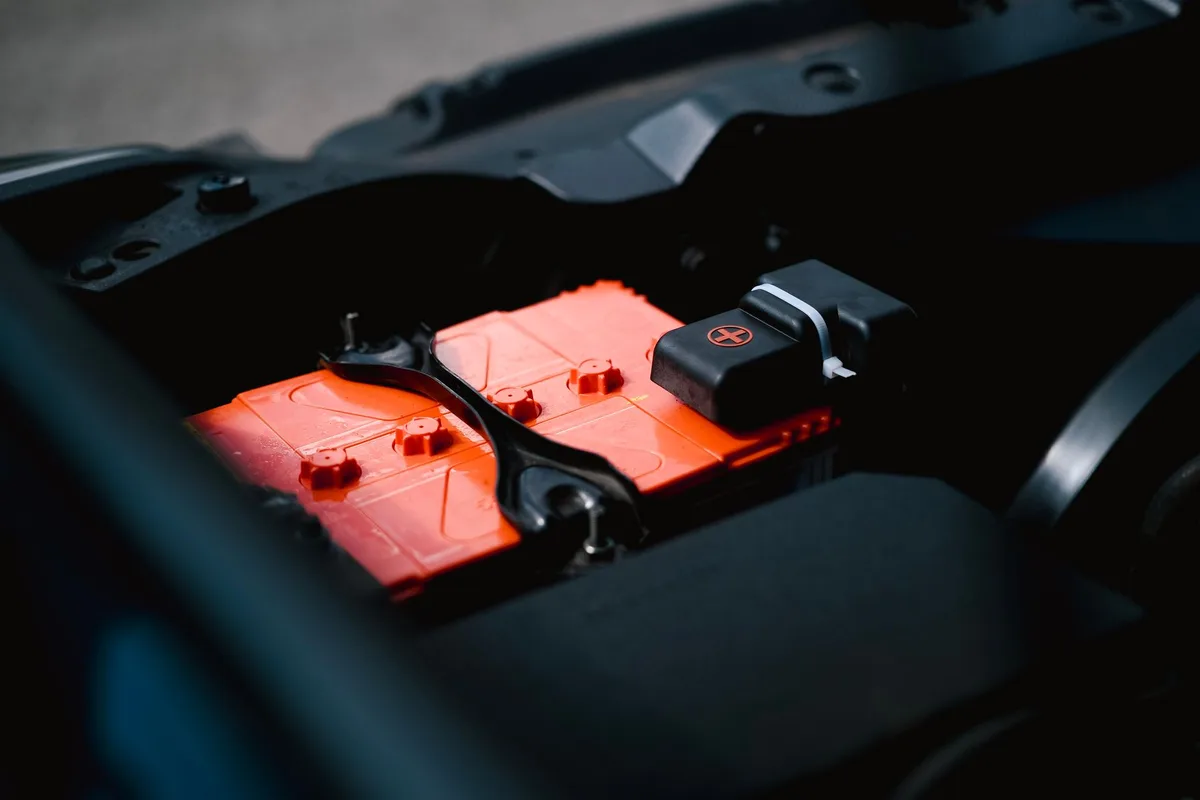
An AGM battery is a sealed lead-acid battery. AGM stands for Absorbent Glass Mat. Instead of loose liquid acid sloshing around, the acid is soaked into fine glass fiber mats between the plates.
That sealed design is the whole reason charging matters so much. A regular flooded battery has caps you can pop to add distilled water. An AGM has none.
Once you boil off electrolyte through overcharging, it's gone for good.
Here's how the two stack up in plain terms.
| Trait | Flooded (Standard) | AGM |
|---|---|---|
| Electrolyte | Free liquid acid | Absorbed in glass mats |
| Maintenance | Add water as needed | Sealed, none |
| Overcharge tolerance | More forgiving | Low, vents and dries out |
| Internal resistance | Higher | Lower, charges faster |
| Safe charge voltage | Up to ~15V | ~14.4 to 14.8V |
AGM also has low internal resistance. That means it can pull a lot of current fast, which is great for cranking but rough on a cheap charger. If your battery is doing the opposite and won't take a charge at all, our guide on why a new battery won't hold a charge walks through the usual culprits.
The One Number That Decides Everything: Charge Voltage
Charge voltage is the single spec that keeps an AGM alive. Get it right and a basic charger is fine. Get it wrong and you damage the battery no matter how fancy the charger looks.
Every lead-acid battery charges in stages. Each stage has a target voltage. For AGM, those targets sit a touch lower than what old flooded chargers were built to deliver.
- Bulk stage: the charger pushes full current until voltage climbs.
- Absorption stage: voltage holds around 14.4 to 14.8 volts while current tapers.
- Float stage: voltage drops to about 13.6 to 13.8 volts to maintain charge.
The danger zone starts above 15 volts. Sustained overvoltage forces the AGM to vent hydrogen through its pressure valve. You lose electrolyte, the case can swell, and capacity never fully recovers.
Temperature matters too. Cold batteries want slightly higher voltage, warm ones slightly lower. Good chargers adjust automatically at roughly minus 3 to minus 5 millivolts per cell for each degree Celsius.
A basic manual charger won't do this, so charge indoors at moderate temperature when you can. Cold weather stress is real, and it ties into why engines struggle to start on frosty mornings.
Is Your "Normal" Charger Safe for AGM? How to Check
Before you clip anything to the terminals, check three things about your charger. If all three pass, you're good to go. If any fail, stop and rethink.
Does It Have a Fixed or Adjustable Voltage?
Look at the charger's output rating first. Many older "normal" chargers top out around 14.4 to 14.8 volts, which is perfectly safe for AGM. Some cheap ones surge higher, especially near the end of a charge.
If the label or manual lists a maximum output at or under 14.8 volts, you're in the clear. If it doesn't say, a simple voltage test settles it. Clip a multimeter across the terminals mid-charge and read the number.
Not sure your meter can handle it? Our take on whether you can harm a meter checking a car battery clears that up.
Does It Have an Equalize or Desulfation Mode?
This is the big one. Equalize and desulfation modes deliberately push high voltage, often 15.5 volts or more, to stir up flooded batteries. On a sealed AGM, that mode is destructive.
If your charger has an equalize, desulfate, or "recondition" button, never use it on AGM. Leave it off every single time. Manufacturers like Optima are clear that high equalize voltages don't belong on their AGM products.
Is It a Dumb Charger or a Smart Charger?
A dumb charger pushes current until you unplug it. It never tapers, never floats, and never stops on its own. Leave one connected overnight and it can overcharge an AGM into an early grave.
A smart charger reads the battery and steps through bulk, absorption, and float automatically. Most modern units include an AGM mode that caps voltage correctly. If you charge batteries more than once in a blue moon, a smart charger pays for itself fast.
The Decision Tree: Which Charger Do You Actually Have?
Run your charger through this quick logic. Find the branch that matches, then follow the action.
- If your charger has an AGM mode, select it and charge normally. This is the ideal case.
- If it's a smart charger without an AGM mode, use the standard lead-acid or "flooded" setting only if its float stays near 14.4 to 14.8 volts. Verify with a multimeter.
- If it's a manual charger with output at or under 14.8 volts, charge at a low rate and unplug the moment it hits full. Don't walk away.
- If it has an equalize or desulfation mode you can't disable, don't use it on AGM. Borrow or buy a proper charger.
- If you have no idea what the output voltage is, test it first. When in doubt, treat it as unsafe.
The safest current is modest. Aim for a charge rate around 10 to 30 percent of the battery's amp-hour rating. A 50Ah AGM, for example, is happiest between 5 and 15 amps.
One more habit worth building. After charging, let the battery rest an hour, then check resting voltage. A healthy, fully charged AGM sits around 12.8 to 12.9 volts.
If yours reads low after a full charge, something else is going on, and our rundown on testing a battery once it's charged helps you pin it down.
Correct AGM Charging Voltages and Current at a Glance
Keep these numbers within reach and you'll never guess again. They cover the healthy range for a standard 12V AGM at room temperature.
| Stage or Reading | Target Value |
|---|---|
| Bulk / absorption voltage | 14.4 to 14.8V |
| Float / maintenance voltage | 13.6 to 13.8V |
| Danger zone (sustained) | Above 15V |
| Full charge resting voltage | 12.8 to 12.9V |
| 50% state of charge | ~12.2V |
| Recommended charge current | 10 to 30% of Ah rating |
A quick example makes the current rule stick. A 100Ah AGM charges safely at 10 to 30 amps. Slower is gentler and adds life, so lean toward the low end if you're not in a hurry.
Voltage tells you state of charge only after the battery rests. Read it right off the charger and the number reads high. Wait an hour, then trust it.
If a reading looks fine but the car still won't crank, that odd mismatch is covered in our piece on good voltage but no crank.
How to Charge an AGM Battery With a Standard Charger (Step by Step)
Here's the safe sequence when you're using a basic, non-AGM charger. Follow it in order and don't skip the voltage check.

- Confirm the charger's max output sits at or below 14.8 volts. Test with a multimeter if unsure.
- Turn off any equalize, desulfate, or recondition mode. Leave it off.
- Set the lowest amp setting the charger offers, ideally near 10% of the battery's Ah rating.
- Connect positive (red) to the positive terminal first, then negative (black) to a clean ground point.
- Charge in a ventilated space, away from sparks and open flame.
- Watch the voltage. Once it holds around 14.4 to 14.8 volts and current tapers off, the battery is nearly full.
- Disconnect a dumb charger promptly at full charge. Never leave it running overnight.
- Let the battery rest an hour, then confirm 12.8 to 12.9 volts resting.
That resting check is your proof of success. If it settles lower, charge a bit longer or suspect a tired cell. Reversed clips cause sparks and damage, so double-check polarity before you flip the switch.
When you're done, our walkthrough on safe jumper cable technique uses the same connect-and-ground logic.
What Goes Wrong When You Get It Wrong
Most AGM failures trace back to the charger, not the battery. Two opposite mistakes do the most damage.
Overcharging, Gassing, and a Dried-Out Cell
Overcharging is the fast killer. Sustained voltage above 15 volts forces the AGM to vent hydrogen through its safety valve. That gas is lost electrolyte you can't replace.
The warning signs are clear. A hot case, a hissing sound, or a swollen battery all point to overvoltage. A bulging AGM is done, and our guide on a battery that's swelling on the sides explains why it's a safety issue, not a cosmetic one.
A rotten-egg smell means gassing too, detailed in our note on sulfur odor from a battery.
Undercharging and Sulfation
Undercharging is the slow killer. If a charger stops too early or floats too low, the AGM never reaches full. Lead sulfate crystals build on the plates and harden over time.
This is called sulfation, and it steals capacity permanently. A chronically undercharged AGM cranks weaker every month. Reaching a true full charge now and then keeps sulfation at bay.
AGM Charger vs. Normal Charger vs. Smart Maintainer
Which tool fits your situation depends on how often you charge and how hands-on you want to be. Here's who each option suits best.

| Charger Type | Best For | Watch Out For |
|---|---|---|
| Normal / dumb charger | Rare, supervised charges | No auto shutoff, easy to overcharge |
| Smart charger with AGM mode | Regular use, set and forget | Costs more upfront |
| Battery maintainer / tender | Long storage, seasonal vehicles | Low amps, slow for a flat battery |
A dumb charger is fine if you're standing right there with a meter. It's the wrong pick for overnight jobs.
A smart charger with AGM mode is the sweet spot for most people. It caps voltage, steps through stages, and floats safely for days. A maintainer is the storage answer.
It sips power to hold a parked RV, boat, or motorcycle battery topped off through winter.
Charging AGM in a Car, RV, Boat, or Solar Setup
The charging rules stay the same, but the source changes by setup. Match the charger to where the battery lives.
In a car, the alternator does most charging. Modern stop-start cars already use AGM and manage voltage correctly. If your alternator seems to charge but the battery keeps draining, the mismatch is worth reading in our take on charging but still dying.
RV and marine house banks are deep-cycle AGM. Use a multi-stage converter or shore charger with an AGM profile. Deep discharges are normal here, so a proper absorption stage matters more than on a starter battery.
Solar setups need a charge controller with an AGM preset. Both MPPT and PWM controllers let you cap voltage at 14.4 to 14.8 volts. Set the float around 13.6 to 13.8 and the bank stays healthy for years.
Mistakes That Quietly Kill AGM Batteries
These slip-ups don't announce themselves. They just shorten the battery's life month by month.
- Using an equalize or desulfation mode on a sealed AGM.
- Leaving a dumb charger connected overnight with no float stage.
- Charging at too high an amp rate for the battery's capacity.
- Ignoring temperature, then overcharging a cold battery.
- Storing an AGM half-charged, which invites sulfation.
- Skipping the resting voltage check and assuming it's full.
Any one of these can trim a year or two off a good AGM. Pair a couple of them and you'll be shopping for a replacement early. A battery that keeps draining despite a healthy charger points elsewhere, often a hidden current drain while parked.
Safety Steps You Shouldn't Skip
AGM batteries are sealed, but charging still produces hydrogen gas under fault conditions. Treat every charge with basic care.
- Charge in a ventilated area, never a sealed closet.
- Keep sparks, cigarettes, and open flame well away.
- Connect positive first, then ground the negative to bare metal.
- Wear eye protection when working near terminals.
- Stop charging if the case feels hot or looks swollen.
A hot or bulging battery is a stop-now signal. Unplug, let it cool, and don't try to salvage a swollen unit. If you smell acid or see residue, our guide on a leaking battery covers safe cleanup.
Pro Tips to Squeeze Out Maximum AGM Lifespan
Small habits add real years to an AGM. These are the ones that matter most.
- Recharge promptly after every deep discharge. AGM hates sitting flat.
- Keep it topped off during storage with a maintainer or monthly charge.
- Charge at a moderate rate, closer to 10% of Ah than 30%.
- Bring the battery to room temperature before charging when you can.
- Do a full charge to 14.4 to 14.8 volts occasionally to fight sulfation.
Verified buyer feedback consistently links early AGM failure to chronic undercharging, not overuse. A battery held near full simply lasts longer. If yours drains overnight despite good habits, our breakdown of an overnight power loss helps trace the cause.
FAQs: AGM Charging Questions People Actually Ask
Will a normal charger ruin my AGM battery?
Not if it stays below about 14.8 volts and has no active equalize mode. A basic charger with safe output is fine when you supervise it. The real risk comes from high-voltage recondition modes and leaving a dumb charger running too long.
Do I need a special AGM charger?
You don't strictly need one, but a smart charger with an AGM setting is the safest and easiest option. It caps voltage, steps through charge stages, and floats without overcharging. For frequent charging or overnight jobs, it's well worth the modest cost.
What voltage should I charge an AGM battery at?
Charge an AGM at roughly 14.4 to 14.8 volts during the absorption stage. Drop to 13.6 to 13.8 volts for float or maintenance. Staying under 15 volts protects the sealed cells from gassing and drying out.
Can I charge an AGM battery with my car's alternator?
Yes, the alternator charges an AGM every time you drive. Modern vehicles with stop-start systems are already tuned for AGM voltage. Just remember that short trips may not fully recharge a deeply drained battery.
How long does it take to charge an AGM battery?
It depends on capacity and charge rate. A 50Ah AGM at 10 amps takes roughly 5 to 7 hours from half charge. Slower charging is gentler and adds lifespan, so allow extra time when you can.
Final Verdict: When a Normal Charger Is Fine and When It Isn't
A normal charger works on an AGM when it holds voltage at or under 14.8 volts and has no equalize or desulfation mode running. Supervise the charge, unplug at full, and check resting voltage after an hour. Under those conditions, a basic charger is perfectly safe.
Reach for a smart charger with an AGM mode if you charge often or want to walk away. It handles voltage, staging, and float automatically. That single upgrade prevents the overcharge and undercharge mistakes that quietly kill these batteries.
So the honest answer is a confident maybe, decided entirely by your charger's voltage ceiling. Check that one number first. Get it right, and your AGM will reward you with years of steady, reliable power.

Similar Posts