Can You Jump Start a Hybrid Car? What to Know
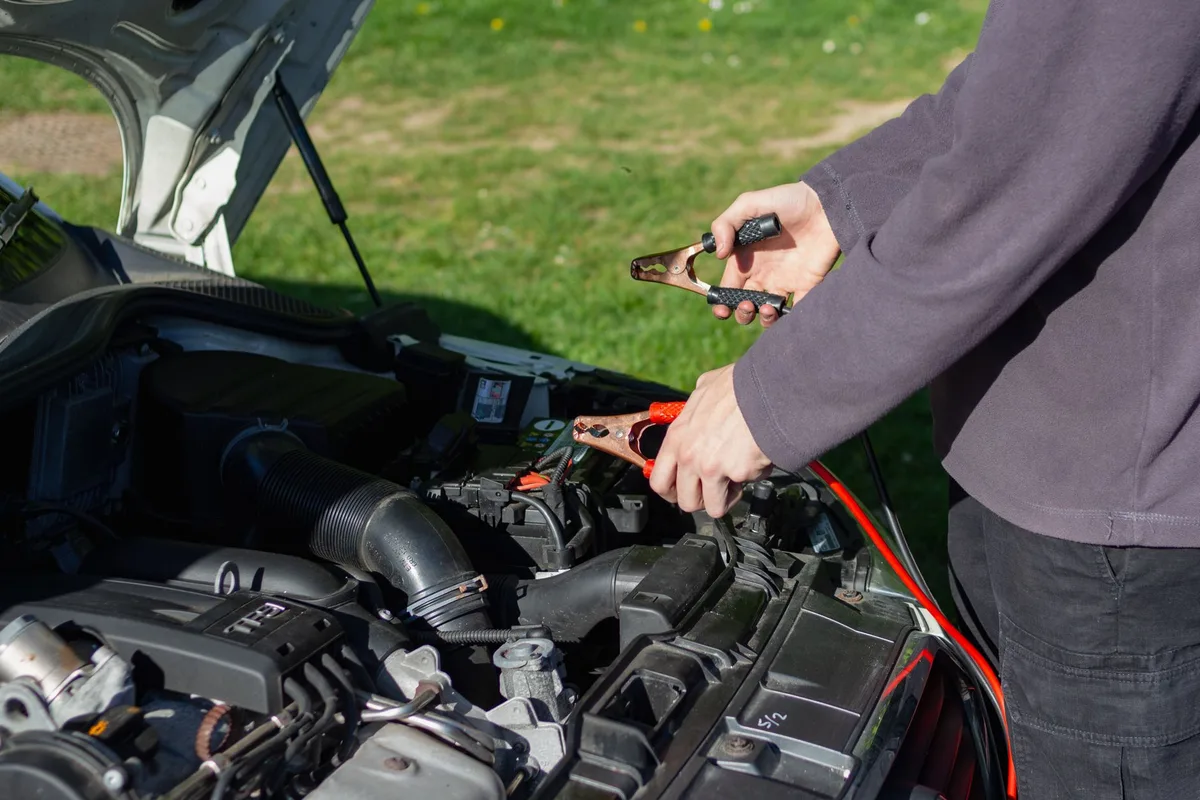
A dead hybrid in the driveway feels scary, but the fix is usually simple. Yes, you can jump start a hybrid car, and the process is almost identical to boosting a regular gas car. The only catch is which battery you're actually reviving.
You never touch the big high-voltage pack, just the small 12V battery that wakes the car up.
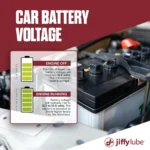
That 12V auxiliary battery is the same humble lead-acid or AGM unit found in ordinary cars, and a healthy one rests near 12.6 volts. When it drops below roughly 12.2 volts, your hybrid may light up the dash yet refuse to reach "READY." As of 2026, a dead 12V battery is the single most common reason a hybrid won't start. Here's how to figure out what you're dealing with before you grab the cables.
Quick Answer
Yes, you can jump start a hybrid car. You only jump the 12V auxiliary battery, never the high-voltage pack. Use standard jumper cables or a portable jump starter.
Connect to the designated jump terminal, which isn't always the battery. Never use a hybrid as the donor car. Once boosted, the hybrid recharges its own 12V battery.
The Two Batteries in Your Hybrid (And Why It Matters)
Every hybrid runs on two completely separate battery systems. Mix them up and you'll either waste your time or damage something expensive. So let's keep them straight.

The 12V Auxiliary Battery
This is the little one, and it's the only battery you ever jump. It powers the computers, lights, door locks, and the electronics that boot the car into "READY."
It's an ordinary 12-volt battery, usually AGM or lead-acid. A healthy unit sits around what a healthy resting reading looks like, while a weak reading like that means it's struggling. When this battery dies, the whole car plays dead even though the hybrid pack is full.
The High-Voltage Traction Pack
This is the giant battery that actually moves the car. It runs at hundreds of volts and connects through thick orange cables. You cannot jump it, charge it with cables, or touch it during a boost.
If the traction pack is truly flat, that's a job for a dealer or technician. But here's the good news. In most no-start situations, the traction pack is perfectly fine and only the 12V has gone flat.
| Feature | 12V Auxiliary Battery | High-Voltage Traction Pack |
|---|---|---|
| Voltage | 12 volts | Hundreds of volts |
| Job | Boots the electronics | Drives the wheels |
| Can you jump it? | Yes | No, never |
| Cable color | Standard red/black | Orange (high voltage) |
Why Your Hybrid Won't Start Even When the Big Battery Is Fine
The reason is simple. Your hybrid needs the 12V battery to power up before it can use the traction pack. No 12V, no startup, no matter how charged the big battery is.
Think of the 12V as the ignition key for the whole system. It closes the relays that connect the high-voltage pack. If that little battery is dead, those relays stay open and nothing happens.
This trips people up constantly. The car has a full hybrid pack, so folks assume a jump won't help. In reality, a quick 12V boost is usually all it takes.
If your dash lights flicker or the car shows voltage yet won't fire, the auxiliary battery is the prime suspect.
Common reasons that 12V dies:
- Interior or headlights left on overnight
- The car sat unused for weeks and slowly drained
- A slow overnight drain from a faulty accessory
- Cold weather sapping an already-aging battery
- An auxiliary battery past its 3 to 5 year lifespan
Is It Actually the 12V Battery? Quick Checks Before You Grab Cables
Start here, because a two-minute check saves you from chasing the wrong problem. If the 12V is the issue, a jump fixes it fast. If it isn't, cables won't help.
Run through this simple if/then logic:
- If the dash is totally dark and nothing responds, then the 12V is likely dead. A jump should work.
- If the dash lights up but won't reach "READY," then the 12V is weak. A jump usually works.
- If everything powers on normally but you see a hybrid system warning, then the problem is deeper. Skip the jump and call a technician.
Want to be sure? Grab a multimeter. With the dial set to 20V DC, touch red to positive and black to negative on the 12V battery.
Anything under about 12.2 volts confirms a flat auxiliary battery. If you'd rather see the full method, our guide on checking it with a multimeter walks through every step.
No meter handy? A dim dome light, sluggish locks, and a dead dash all point the same direction. That's a flat 12V, and a jump is your next move.
Where to Find the Jump-Start Terminal on Your Hybrid
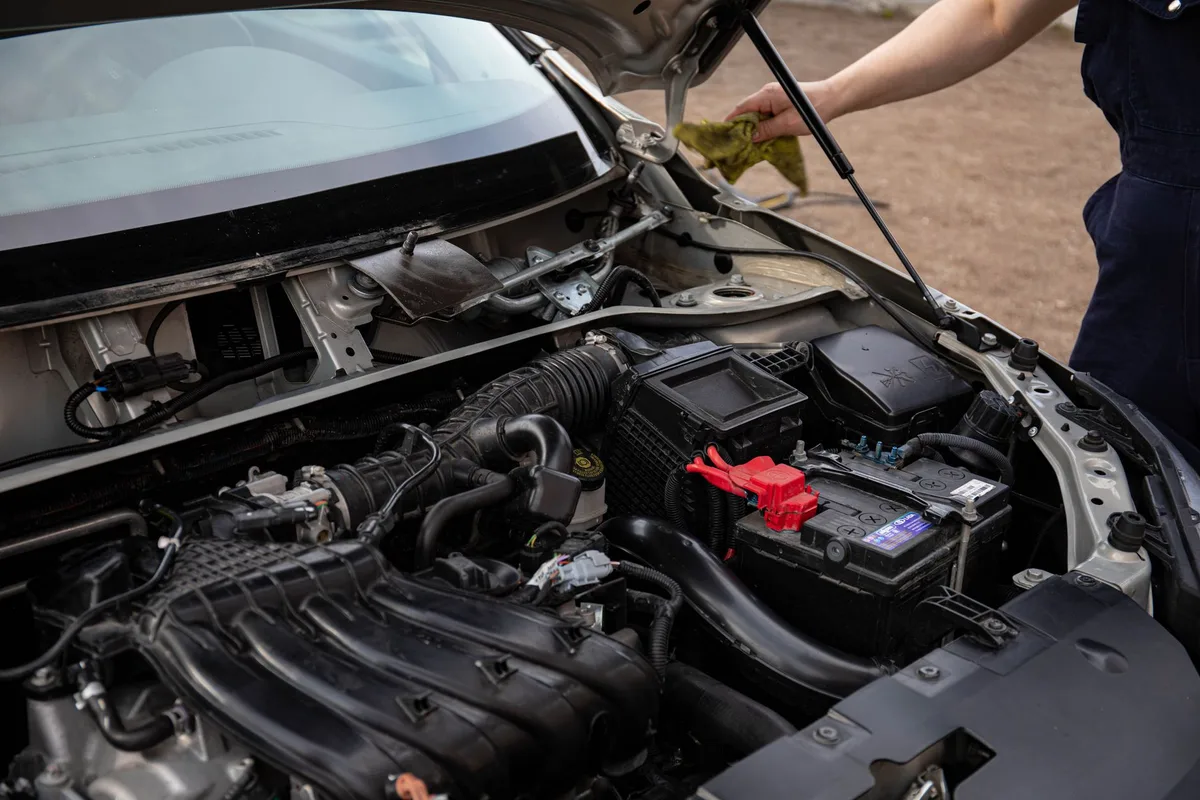
Here's where hybrids differ from gas cars. The 12V battery is often tucked in the trunk, under the rear seat, or in a cargo-area cubby, not up front. So automakers give you a separate jump point under the hood.

Pop the hood and look for a small fuse box with a red plastic cap. Flip that cap up and you'll find the positive (+) jump terminal. That red post is where your positive cable goes, even though the actual battery sits elsewhere.
For the negative connection, you don't clamp the battery. You attach to a bare metal ground point on the engine or chassis. Your owner's manual marks the exact spot, and following it matters.
Grounding to clean metal instead of the battery keeps any spark away from battery gases.
Quick things to confirm before connecting:
- Locate the red positive terminal under the hood, not the buried battery
- Find the manufacturer-specified ground bolt for the negative clamp
- Keep both hybrids switched fully off during hookup
- Check the manual, since terminal spots vary by make and model
Toyota, Honda, Ford, Hyundai, and Kia all publish these locations in their official documentation, and manufacturer sites like Toyota's owner resources list the exact terminal for your model year. Two minutes with the manual beats guessing.
How to Jump Start a Hybrid Car Step by Step
Once you've confirmed a flat 12V and found the jump terminal, the process is quick. Work in order and don't rush the connections.
Connecting the Cables in the Right Order
Sequence matters, because a wrong order risks sparks near the battery. Follow these five steps exactly:
- Switch off both vehicles completely. No ignition, no accessories.
- Clamp the positive cable to the red (+) jump terminal on your hybrid.
- Clamp the other positive end to the donor car's positive terminal.
- Clamp the negative cable to the donor car's negative terminal.
- Clamp the last negative end to a bare metal ground on your hybrid, not the battery.
Double-check that no clamps touch each other. Red goes to red, and your final black clamp lands on clean chassis metal.
Getting to READY and Disconnecting Safely
Start the donor car and let it idle for two to three minutes. This feeds a small charge into your dead 12V battery. Then press your hybrid's power button and wait for the "READY" light.
When it lights up, you're running on the hybrid system. Now disconnect in reverse order: negative on the hybrid first, then the donor negative, then both positives. Keep the clamps clear of metal as you pull them.
Letting the DC-DC Converter Recharge the 12V
Don't shut off right away. Your hybrid's DC-DC converter now pulls power from the traction pack to top up the 12V battery automatically. That's the part that replaces an alternator in a hybrid.
Let the car sit in "READY" or drive it for 20 to 30 minutes. That gives the converter time to restore charge. Kill the engine too soon and you may be stuck again in the morning.
Jumper Cables vs. Portable Jump Starter for Hybrids
Both work fine on a hybrid's 12V battery, so the choice comes down to convenience. A portable lithium jump starter is the easier, safer pick for most drivers.

Cables need a second running vehicle, which isn't always around. A portable pack is self-contained and connects straight to your jump terminal. No donor car, no awkward parking angles.
| Factor | Jumper Cables | Portable Jump Starter |
|---|---|---|
| Needs a second car | Yes | No |
| Best for | Home driveway with help nearby | Solo drivers, parking garages, road trips |
| Spark risk | Higher if order is wrong | Lower, most units are reverse-protected |
| Cost | Low | Moderate |
| Storage | Trunk space | Glovebox-sized |
Here's the practical read. If you often park in remote spots or travel alone, keep a lithium jump pack charged in the car. If you've always got a neighbor and a second vehicle, a good set of cables does the job.
Why You Should Never Use a Hybrid to Jump Another Car
Simple rule: your hybrid can be jumped, but it should never be the donor. Manufacturers specifically warn against using a hybrid to boost another vehicle.
The reason is that DC-DC converter and the smaller 12V system. Cranking a dead gas engine pulls a heavy surge of current. Your hybrid's 12V circuit isn't built for that load, and the converter or fuses can get damaged.
A conventional battery shrugs off that draw because it feeds a beefy starter motor. Hybrids don't have one. So if a friend needs a boost, grab a portable pack or a gas car instead.
Protecting your hybrid's electronics is worth the small inconvenience.
Mistakes That Can Fry Your Hybrid's Electronics
Most hybrid jump-start damage comes from a handful of avoidable errors. Slow down and skip these:
- Reversing polarity. Red to negative, even for a second, can fry control modules.
- Clamping the negative to the battery instead of a ground bolt, inviting a spark.
- Using the hybrid as a donor car, as covered above.
- Trying to "charge" the high-voltage pack with cables. It won't work and it's dangerous.
- Cranking repeatedly when the real issue is a deeper fault, not a flat 12V.
One more quiet trap. If your battery sags hard the moment you connect a load, it may be too far gone for a lasting fix. A jump gets you moving, but plan on testing or replacing that 12V soon.
Bad connections cause trouble too. Corroded or loose terminals block current flow. Wipe them clean and make sure each clamp bites bare metal.
Safety Rules Around High-Voltage Orange Cables
The single hard rule: never touch anything orange. Orange cabling marks the high-voltage system, and it can carry a lethal charge even with the car off.
Those thick orange lines run between the traction pack, the inverter, and the electric motors. They're routed away from the 12V jump points on purpose. Your entire jump-start job stays on the low-voltage side, so there's no reason to go near them.
A few more safety habits keep things clean:
- Wear eye protection when connecting cables.
- Keep sparks, flames, and cigarettes away from the battery.
- Never let positive and negative clamps touch.
- Read your model's manual, since federal safety regulators at NHTSA stress following manufacturer procedures for hybrid and electric vehicles.
If anything looks damaged, chewed cables, corrosion, or a swollen battery, stop. Call roadside assistance rather than risk a bad connection. When in doubt, a pro is cheaper than a fried control module.
When a Jump Won't Help and You Need a Shop
Sometimes a boost does nothing, and that's your signal to stop. If the car reaches "READY" but throws a hybrid system warning, the problem isn't the 12V.
Watch for these red flags that point past a simple dead battery:
- The car jumps fine but dies again within a day or two
- A "Check Hybrid System" or master warning light stays on
- The 12V reads healthy on a meter yet the car won't wake
- You smell anything hot or see corrosion around the pack
Repeated dead batteries often mean a failing 12V or a hidden drain, not bad luck. It helps to know whether the battery or the charging side is at fault before you spend money. A degraded traction pack is a technician job, full stop.
Don't keep re-jumping a car that clearly wants a diagnosis.
Keeping Your 12V Battery Healthy So This Doesn't Happen Again
The best jump start is the one you never need. Most hybrid no-starts trace back to a tired or drained 12V, and a little upkeep prevents both.
Try these simple habits:
- Drive the car at least once a week to keep the 12V topped up.
- Replace the auxiliary battery every 3 to 5 years, before it fails cold.
- Use a trickle charger or maintainer if the car sits for weeks.
- Check for an oversized parasitic drain if the battery keeps dying.
Cold weather is brutal on 12V batteries, and freezing temps cut available capacity fast. If you park outside in winter, a maintainer earns its keep. When a battery keeps going flat for no clear reason, a quick multimeter drain test usually finds the culprit.
Jump Starting Specific Models: Prius, RAV4 Hybrid, CR-V Hybrid
The method is the same across brands, but the 12V and terminal spots differ. Here's a quick reference for three popular hybrids.
| Model | 12V Battery Location | Jump Terminal |
|---|---|---|
| Toyota Prius | Rear cargo area, right side | Red (+) post in under-hood fuse box |
| Toyota RAV4 Hybrid | Under the hood | On or near the battery, check the manual |
| Honda CR-V Hybrid | Under the hood | Positive terminal under a red cap |
Always confirm with your owner's manual for the exact year. Even within one model, layouts shift between generations. The connection order and safety rules stay identical no matter which badge you drive.
Frequently Asked Questions
Can you jump start a hybrid like a normal car?
Yes, and the steps are nearly identical. You clamp the same red and black cables and follow the same connection order. The only real differences are the jump terminal location and the rule to never use your hybrid as the donor vehicle.
Which battery do you jump on a hybrid?
You jump the 12V auxiliary battery, never the high-voltage traction pack. The 12V boots the electronics that bring the car to "READY." The big orange-cabled pack cannot be jumped and should never be touched during a boost.
How long should you let a hybrid charge after a jump?
Let it run 20 to 30 minutes. The DC-DC converter uses that time to refill the 12V battery from the traction pack. Shut off too soon and the car may not start again the next morning.
Can a dead hybrid battery be jump started?
Only the 12V auxiliary battery can be jumped, not the high-voltage pack. If the traction battery is truly dead, a jump won't help and you'll need a technician. Most no-start cases are just a flat 12V, which a boost fixes fast.
Why won't my hybrid start with a full hybrid battery?
Because the 12V battery powers up the system first. Without it, the relays that connect the traction pack stay open. A full hybrid pack means nothing if the little 12V is dead, so start by testing that battery.
Your Quick Decision Guide for a Dead Hybrid
When your hybrid won't wake up, run this fast checklist:
- If the dash is dark or won't reach "READY," then boost the 12V battery.
- If you have no donor car, then use a portable lithium jump starter.
- If a warning light stays on after the jump, then call a technician.
- If the battery dies again within days, then test for a drain or replace the 12V.
Stick to the low-voltage side, follow the connection order, and never touch the orange cables. Do that, and a dead hybrid usually goes from panic to "READY" in under ten minutes. Keep that 12V healthy, and you'll rarely reach for the cables at all.

Similar Posts