How to Test Car Battery Drain With a Multimeter
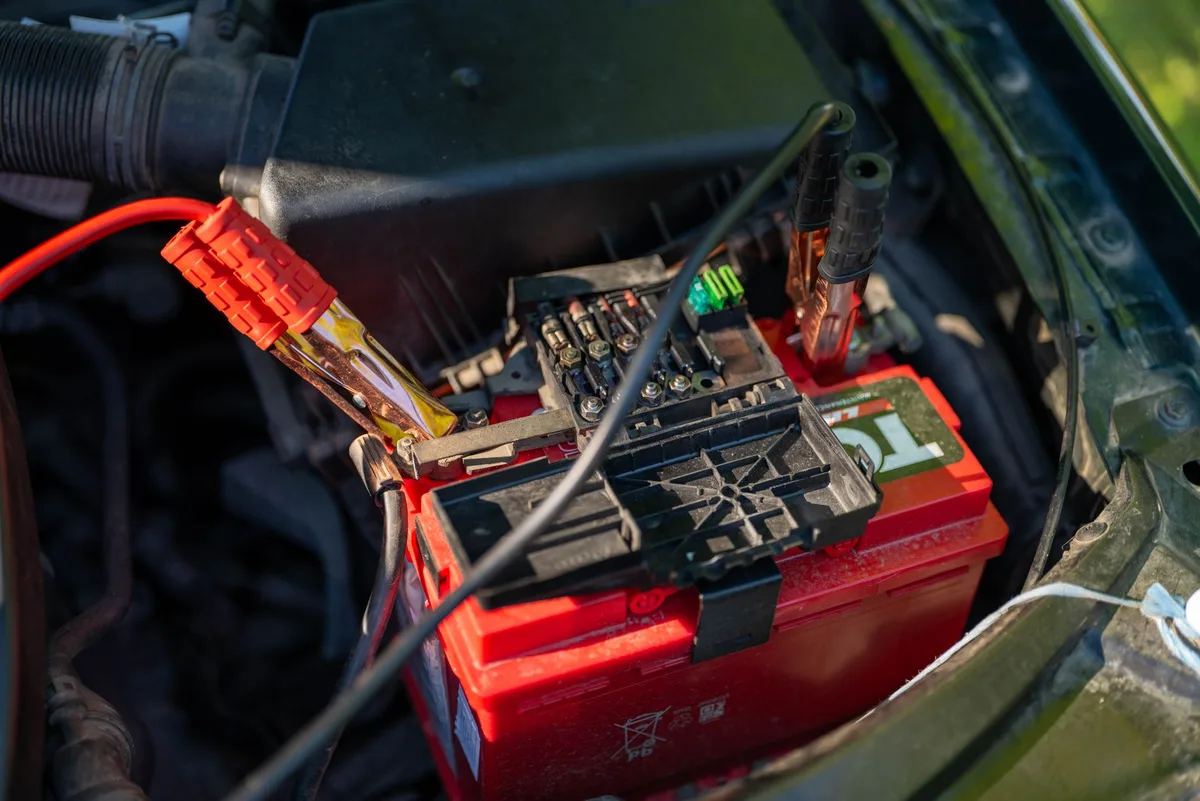
You walk out to a dead car for the third morning in a row, and the battery is barely a year old. Learning how to test a car battery drain with a multimeter is the fastest way to stop guessing and find what's quietly killing your battery overnight. A parasitic drain is any current your car pulls after everything is switched off.
Some draw is normal. Too much means something isn't going to sleep.
The good news? You don't need a shop or a scan tool for this. A basic digital multimeter, the kind you can buy for $20 to $40, measures the draw directly in milliamps.
As of 2026, most manufacturers still consider anything under 50 mA a healthy key-off current. Let's start with why this keeps happening.
Quick Answer
Set your multimeter to DC amps on the 10A jack. Turn the car off and let it sleep 20 to 40 minutes. Disconnect the negative battery cable.
Connect the meter in series between the cable and the negative post. A healthy reading is under 50 mA. Anything over 100 mA means you have a drain to hunt down.
Why Your Car Battery Keeps Dying Overnight
A battery that dies overnight usually isn't a bad battery at all. Nine times out of ten, something in the car stays awake and keeps sipping power after you lock the doors.
Modern cars run dozens of computer modules. They're supposed to power down a few minutes after you walk away. When one refuses to sleep, it can drain a full battery in a night or two.
Common culprits include a stuck relay, a faulty door switch, or an aftermarket accessory wired straight to the battery. Dash cams, alarm systems, and cheap phone chargers are frequent offenders.
If your battery reads healthy but keeps going flat, a parasitic drain is the prime suspect. Before you assume the worst, it helps to confirm the battery itself is fine. You can rule that out with a simple 12-volt health check first.
What Parasitic Battery Drain Actually Is
Parasitic drain is the small amount of current your car draws with the key off and everything switched down. Think of it as the electrical idle. Your clock, the security system, and the memory in your radio all need a tiny trickle to stay alive.
That normal trickle is fine. A fully charged 12-volt battery sits around 12.6 volts and holds plenty of reserve for a few days of light draw.
The problem starts when a circuit pulls far more than it should. Here's the simple logic:
- If the key-off draw is under 50 mA, you're in the clear.
- If it sits between 50 and 85 mA, watch it. Some loaded cars run this high normally.
- If it climbs past 100 mA, something is faulty and needs tracing.
The higher the draw, the faster your battery dies. A 300 mA drain can flatten a healthy battery overnight. Catching that number is the whole point of the test.
Tools You'll Need Before You Start
You don't need much, and you probably own most of it already. The star of the show is a digital multimeter that can read DC current in the 10-amp range.
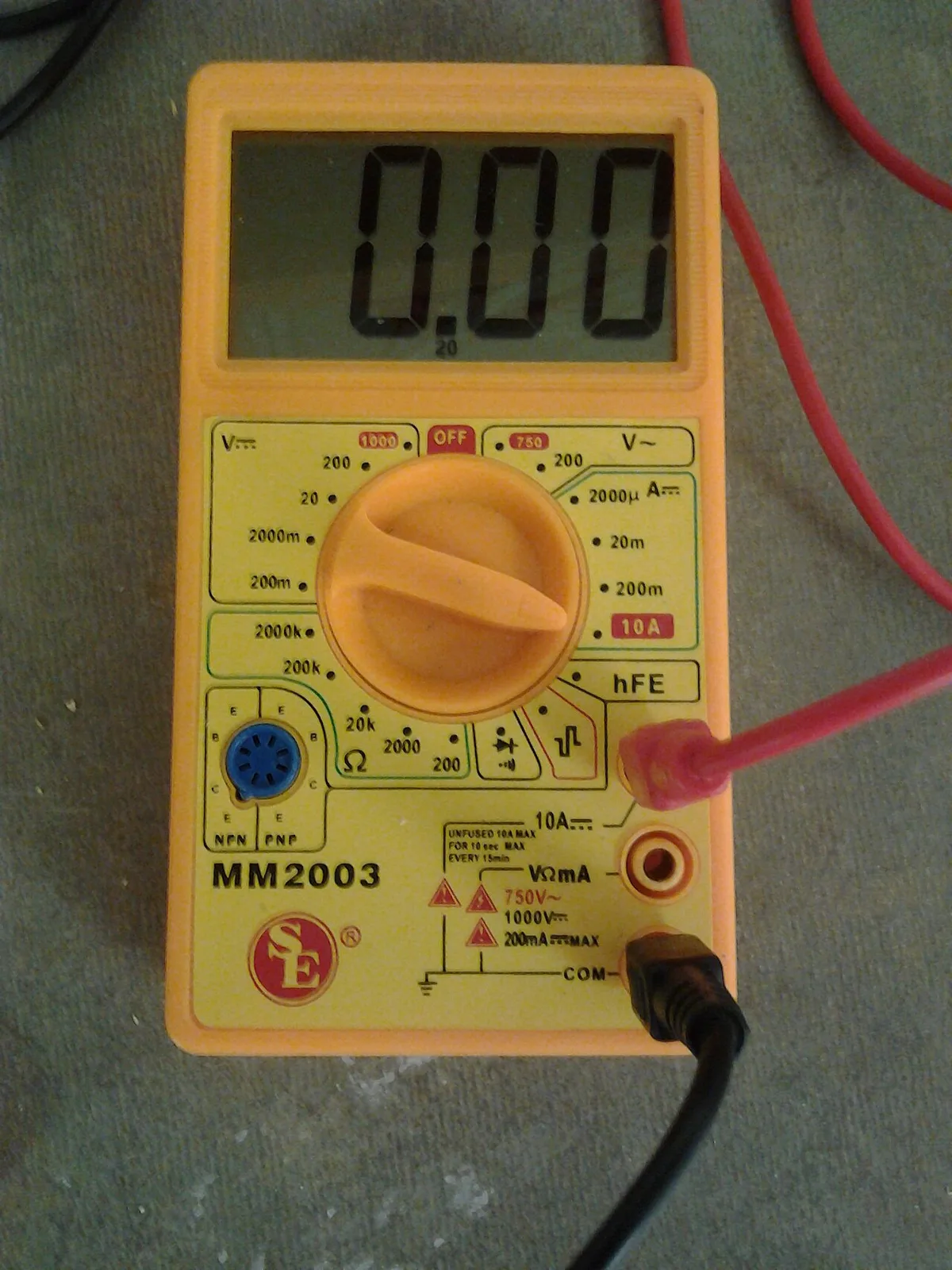
Here's the short list:
- A digital multimeter with a 10A DC current setting
- A basic socket or wrench to loosen the negative battery terminal
- A fuse puller or needle-nose pliers
- A notepad or your phone to log readings
Digital Multimeter vs. Clamp Meter
A standard multimeter measures current in series, which means you break the circuit and route the flow through the meter. It's accurate and cheap. The downside is you have to disconnect the battery cable to hook it up.
A DC clamp meter reads current by clamping around the cable. No disconnecting, no lost radio codes. Clamp meters cost more and can struggle to read very small milliamp draws with precision.
For most home jobs, a plain multimeter wins on value.
Understanding the 10A Jack and Your Meter's Fuse
This part matters more than anything else. Your meter has separate jacks for measuring amps and volts. The red lead goes into the 10A (or sometimes 20A) jack for this test, not the standard voltage jack.
That amp jack is protected by an internal fuse, usually rated at 10 amps. If you try to start the engine with the meter connected in series, the inrush can hit hundreds of amps. You'll blow that fuse instantly.
Manufacturer guides from meter makers like Fluke spell out these input limits, so check your model's rating before you begin.
How to Test Battery Drain with a Multimeter, Step by Step
Work through these steps in order. The timing is what trips most people up, so don't rush the sleep period.
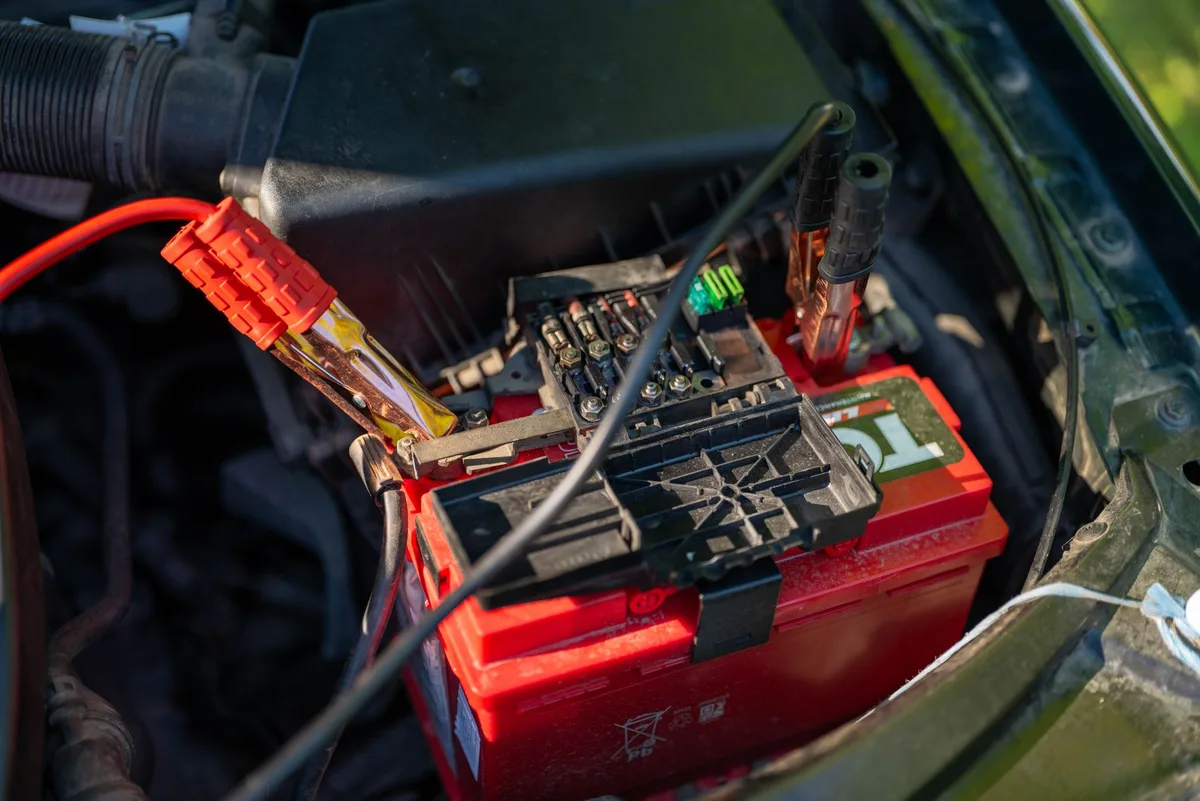
Step 1: Shut Everything Down and Let the Car Sleep
Turn off the engine, lights, radio, and climate control. Remove the key or keep the fob well away from the car. Close the hood using the latch by hand, and shut the doors.
Now wait. Give the modules 20 to 40 minutes to power down completely. If you open a door or the meter mid-test, the car wakes up and your reading spikes.
Patience here saves you a false alarm.
Step 2: Set Your Meter to DC Amps
Move the red lead into the 10A jack. Keep the black lead in the common (COM) jack. Turn the dial to DC amps, the setting marked A with a straight line, not AC.
If your meter isn't auto-ranging, pick the 10A range. This protects the meter from the higher draw you'll see in the first seconds.
Step 3: Connect the Meter in Series
Loosen and remove the negative battery cable from the post. This breaks the circuit. Touch the black meter lead to the negative battery post and the red lead to the disconnected cable end.
Current now flows through your meter instead of the cable. Keep the connection steady. Break it and the modules may wake back up, forcing you to wait all over again.
Step 4: Read the Steady-State Draw
At first the number will be high. That's the modules stirring as you connect the meter. Give it a few minutes to settle.
Once it stabilizes, read the value. Under 50 mA is healthy. Over 100 mA means you've got a drain worth chasing down.
Jot the number so you can compare it as you pull fuses next. If your resting voltage also looked low earlier, a quick voltage reading at the terminals helps confirm whether the battery is charged before you dig deeper.
Reading Your Numbers: Normal, Borderline, or a Real Problem
Your reading only means something once you know where the line sits. Here's how the common numbers break down for a resting 12-volt system.
| Key-off draw | What it means | Your next move |
|---|---|---|
| Under 50 mA | Normal parasitic draw | Battery is fine, look elsewhere |
| 50 to 85 mA | Borderline, common on loaded cars | Watch it, retest after a few days |
| 100 to 300 mA | Faulty circuit | Trace it with the fuse-pull method |
| Over 300 mA | Serious drain | Flattens a battery overnight, act now |
Remember the draw settles over time. That first spike as modules stir isn't your real number. Wait for it to drop and hold before you judge it.
Newer cars with more modules sit at the higher end of normal. A base model might rest at 25 mA. A loaded SUV with keyless entry and telematics can idle near 45 mA and still be healthy.
Finding the Culprit: The Fuse-Pull Method
Once you've confirmed an excess draw, the fuse box tells you where it lives. Keep the meter connected in series and reading current the whole time.

Work one fuse at a time. Pull a fuse, watch the meter, then note whether the draw drops. If the number falls sharply when you pull a fuse, that circuit holds your drain.
- Pull one fuse and check the meter reading.
- If the draw drops, you found the guilty circuit.
- If nothing changes, reinsert the fuse and move to the next.
- Check both the interior and under-hood fuse boxes.
Once a circuit points the finger, match the fuse to its label. Your owner's manual lists what each one feeds. From there you narrow it to the specific component, like a trunk light, amplifier, or module.
The Millivolt Drop Alternative (No Disconnecting Needed)
This method finds the drain without breaking the battery connection. Instead of measuring amps, you measure the tiny voltage drop across each fuse while it's still seated.
Set your meter to millivolts DC. Touch a probe to each test point on top of the fuse. A fuse carrying current shows a small millivolt reading.
The one feeding your drain reads noticeably higher than the quiet ones.
It's faster and keeps your radio codes and clock intact. The trade-off is precision. Very small draws can be hard to spot this way, so the series method stays the gold standard when the number is close.
Common Sources of a Parasitic Drain
Most drains trace back to a short list of usual suspects. Knowing them speeds up your hunt before you even touch a fuse.
- Aftermarket accessories wired direct to the battery: dash cams, alarms, GPS trackers, and amplifiers.
- A stuck relay that stays energized after shutdown.
- Faulty door, trunk, or glovebox switches keeping a light on.
- A failing diode inside the alternator, which lets current bleed backward.
- A control module that won't enter sleep mode after an update or fault.
Aftermarket installs top the list in aggregate repair-shop reports. A cheap USB charger left in the socket can pull enough to matter over a week of sitting.
The alternator diode is a sneaky one. It can pass the standard charging check yet still drain the battery overnight. If your circuit tracing keeps pointing at the charging system, that diode deserves a closer look.
Mistakes That Ruin Your Test (and How to Avoid Them)
Most failed tests come down to a handful of avoidable slips. Get these right and your reading will be trustworthy.
- Starting the engine with the meter inline. This blows the 10A internal fuse instantly. Never crank while connected in series.
- Not waiting for modules to sleep. Read too soon and you'll see a false high draw from systems still powering down.
- Opening a door or the hood mid-test. That wakes the car and resets the sleep timer.
- Leaving the red lead in the voltage jack. You'll get no current reading, or you'll pop the fuse.
- Loose meter connections. A flickering contact wakes modules and throws the number all over the place.
One more quiet trap: disconnecting the battery can wipe stored radio codes and adaptive settings. If your car uses a security code, have it handy before you unhook the negative cable.
Multimeter vs. Clamp Meter vs. Test Light: Which Method Fits You
Each tool finds a drain, but they suit different people and situations. Here's who each one is best for.
| Method | Best for | Trade-off |
|---|---|---|
| Multimeter (in series) | Accuracy on a budget | Must disconnect the battery |
| DC clamp meter | Speed, no lost codes | Costs more, weaker on tiny draws |
| Test light | Quick yes/no check | No actual number, easy to misread |
Choose the multimeter if you want a precise milliamp figure and don't mind unhooking the cable. It's the most reliable for pinning down borderline readings near that 50 mA line.
Reach for a clamp meter if you test cars often or hate resetting radio codes. It clamps right over the negative cable and reads in seconds. Just know it can miss very small draws.
The humble test light is fine for a fast gut check. It glows when current flows through a disconnected negative cable, and dims as you pull the guilty fuse. It won't give you a number, though, so it's a starting point rather than a verdict.
Safety Rules Before You Touch the Battery
A 12-volt battery won't shock you, but it can still hurt you. Car batteries vent hydrogen gas, and that gas is flammable. One spark near the terminals can be dangerous.
Follow these basics every time:
- Wear eye protection. Battery acid and sparks are no joke.
- Take off rings, watches, and metal bracelets. A metal band across both terminals causes a violent short.
- Keep your leads and hands clear of belts and the cooling fan.
- Never lean directly over the battery while connecting anything.
If you spot corrosion, a swollen case, or a sulfur smell, stop. A damaged battery is a separate problem, and it needs handling before any drain test.
When It's the Battery or Alternator, Not a Drain
Sometimes there's no parasitic drain at all. The battery is simply worn out, or the alternator isn't charging it. Ruling these out saves you a pointless fuse hunt.
Start with a resting voltage check. A healthy, fully charged battery reads about 12.6 volts after sitting a few hours. Drop to 12.2 volts and you're at roughly half charge.
Below 12.0 volts, it's flat.
Now check charging. Start the engine and read across the terminals. You should see 13.8 to 14.7 volts with the engine running.
Less than that points to a weak alternator, not a drain.
If the battery won't hold a charge even after a full recharge, it's likely aged out. A full step-by-step battery check confirms its condition, and a quick look at the terminal voltage under load tells you whether the charging system is doing its job.
When to Stop and Call a Mechanic
Some drains hide beyond a driveway fix. If you've traced the circuit but can't isolate the part, a professional with a scan tool can watch modules in real time.
Call in help when:
- The drain lives inside a computer module you can't safely access.
- Pulling every fuse still doesn't drop the reading, which hints at an unfused circuit like the starter or alternator.
- The draw changes randomly, suggesting an intermittent fault.
There's no shame in it. Chasing a phantom module drain can eat hours, and a shop's diagnostic gear pays for itself here.
Frequently Asked Questions
How long should I wait before reading the draw?
Give the car 20 to 40 minutes with everything off and the doors closed. Modern modules power down in stages, and reading too early shows a false high number. Wait until the meter settles and holds steady before you trust it.
What is a normal parasitic draw in milliamps?
A healthy key-off draw sits under 50 mA on most vehicles. Loaded cars with keyless entry and telematics can idle near 45 mA and still be fine. Anything past 100 mA signals a fault worth tracing through the fuse box.
Will testing the drain reset my radio or clock?
It can. Disconnecting the negative cable for the series test cuts power to memory circuits. That may wipe your radio presets, security code, and clock.
Grab your radio code beforehand, or use a clamp meter to avoid disconnecting at all.
Can I leave the multimeter connected overnight?
Not on the 10A amps setting. An intermittent drain might tempt you, but the meter's fuse and leads aren't rated for long unattended runs. If a fault only appears occasionally, a DC clamp meter with a min/max function is the safer tool for extended monitoring.
Your Battery Drain Diagnosis Cheat Sheet
Keep this quick flow handy the next time your battery goes flat.
- Charged battery reads 12.6 volts at rest. Below 12.4 volts, recharge first.
- Engine running should show 13.8 to 14.7 volts. Less means a charging fault.
- Let the car sleep 20 to 40 minutes, then read DC amps in series.
- Under 50 mA is healthy. Over 100 mA means hunt for the drain.
- Pull fuses one at a time until the reading drops. That's your circuit.
- Suspect aftermarket accessories, stuck relays, and alternator diodes first.
Work it in that order and you'll spend minutes, not mornings, chasing a dead battery. Most drains come down to one small circuit that forgot to go to sleep. Find it, fix it, and your battery gets its nights back.

Similar Posts