Skip to content

Fully Charged Car Battery Voltage: What’s Normal?

·19 min read·by
fully charged car battery voltage

Your car won't start, or maybe it cranked a little slower than usual this morning. So you grabbed a multimeter, touched the probes to the terminals, and now you're staring at a number wondering what it means. Fully charged car battery voltage sits at 12.6 volts or a touch higher, but that single number only tells the truth under specific conditions.

The catch is that a battery fresh off a drive can read 13.2V and still be half-worn-out. Per SAE J537 testing standards, a true resting reading requires the battery to sit unused for several hours first. Let's start with the short answer, then unpack the conditions that make or break your reading.
fully charged car battery voltage

Quick Answer

A fully charged car battery reads 12.6 to 12.8 volts at rest. This applies to standard flooded lead-acid batteries with the engine off. AGM batteries read slightly higher, around 12.8 to 13.0 volts.

With the engine running, normal voltage jumps to 13.7 to 14.7 volts. Anything below 12.4 volts at rest means the battery needs charging.

Is your battery fully charged or not #shortsvia shanes maine shop

Why One Number Can't Tell the Whole Story

If you ask ten mechanics what a full battery reads, you'll hear "12.6 volts" ten times. That's correct, but incomplete. The right answer always depends on three conditions: when you test, what type of battery you have, and whether the engine is running.

Test five minutes after a highway drive and you'll see 13.0V or more. That's surface charge, not real capacity. Test with the engine idling and you're measuring the alternator, not the battery.

Test an AGM battery against flooded-battery numbers and you'll misjudge it by a full state-of-charge tier.

So here's the simple logic we'll follow through this whole guide. If the engine is off and the battery has rested, you're measuring state of charge. If the engine is running, you're measuring the charging system.

Keep those two tests separate in your head and everything else falls into place.

One more thing worth saying early: voltage measures charge, not health. A worn-out battery can hold a beautiful 12.6V right up until the moment it fails under cranking load. We'll cover that trap in its own section, because it catches a lot of people.

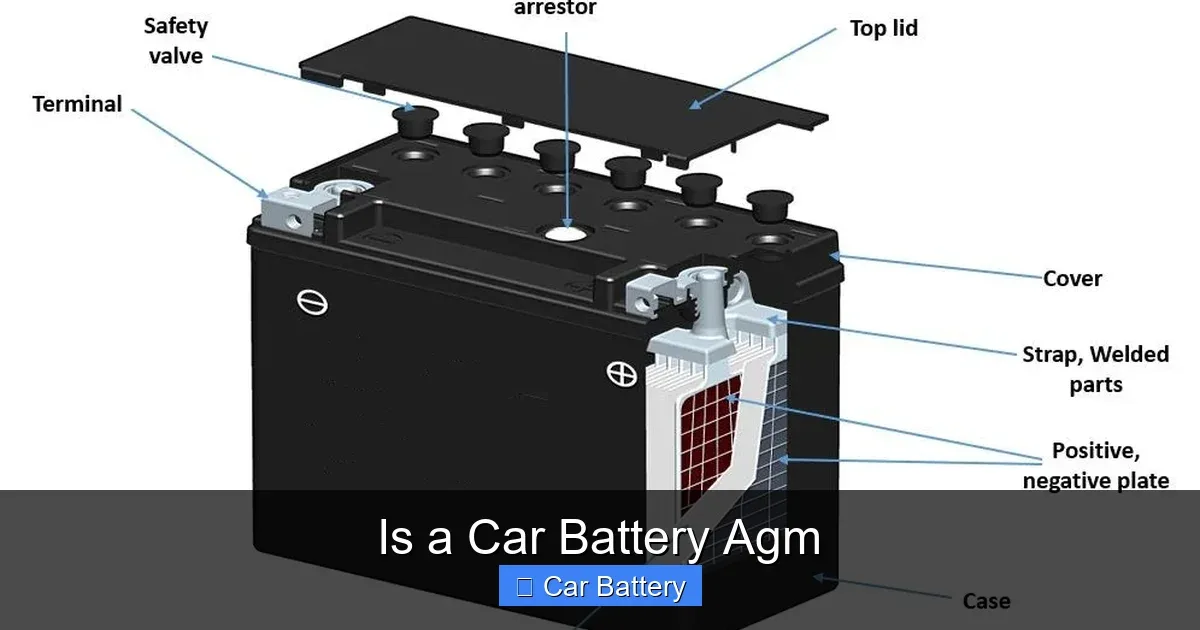
Understanding what happens inside the case makes that distinction much easier to picture.

Car Battery Voltage Chart: What Every Reading Actually Means

Here's the chart worth saving. These values assume a standard flooded lead-acid battery, engine off, after resting at least four hours at roughly room temperature.

Resting VoltageState of ChargeWhat It Means
12.6V or higher100%Fully charged and healthy
12.4V~75%Starts fine, but charge it soon
12.2V~50%Undercharged, recharge now
12.0V~25%Deeply discharged, damage begins
11.9V or below~0%Effectively flat
10.5V or lowerDeadLikely a failed cell

car battery voltage chart

Notice how tight that scale is. The entire range from full to empty spans barely one volt. That's why a reading of 12.3V isn't "close enough" to 12.6V.

It's the difference between a full battery and one sitting at half capacity.

Resting Voltage vs. State of Charge

Resting voltage, also called open-circuit voltage, is the reading you get with no load and no charging happening. It's the most honest number a multimeter can give you about state of charge. State of charge simply means how full the battery is right now, expressed as a percentage.

The two aren't the same thing, but resting voltage is the best window into state of charge you'll get without lab gear. In our research, the 12.4V threshold matters most. Below that line, lead-acid plates start forming hardened sulfate crystals.

That process, called sulfation, permanently eats capacity the longer the battery sits low.

If your battery keeps landing at 12.4V or under, don't just shrug and drive on. Something is draining it, undercharging it, or the battery itself is aging out. Knowing how the whole system works helps you figure out which one you're dealing with.

Where the Numbers Come From: Six Cells at 2.1 Volts

A "12-volt" battery is really a 12.6-volt battery. Inside the case sit six individual cells wired in series. Each cell produces about 2.1 volts when fully charged.

Six times 2.1 gives you 12.6V.

That bit of math explains two useful things. First, why "full" is 12.6V and not a round 12.0V. Second, why a reading near 10.5V usually means one cell has died outright.

Lose one cell's 2.1 volts from 12.6 and you land almost exactly at 10.5V. If you see that number after a full overnight charge, the battery is done. No charger revives a dead cell.

Full Charge Looks Different by Battery Type: Flooded, AGM, EFB, and Lithium

The 12.6V benchmark fits the standard flooded battery that's been in cars for decades. But as of 2026, a huge share of new vehicles ship with something else, and each chemistry has its own idea of "full."

Battery TypeFully Charged (Resting)Typical Use
Flooded lead-acid12.6 to 12.8VOlder and budget vehicles
EFB12.6 to 12.8VEntry-level stop-start cars
AGM12.8 to 13.0VStop-start, luxury, high-demand cars
Gel12.8 to 12.9VDeep-cycle and specialty uses
Lithium (LiFePO4)13.3 to 13.6VAftermarket, powersports, racing

AGM car battery

The practical takeaway: know what's under your hood before you judge a reading. An AGM battery showing 12.6V isn't full. It's sitting around 75 to 80 percent.

Judge it by flooded standards and you'll leave it chronically undercharged, which shortens its life.

How do you tell what you have? Check the battery label first. AGM and EFB batteries almost always say so right on top.

The absorbed glass mat design holds its electrolyte in fiberglass separators, so there are no removable caps and no sloshing sound. EFB units use an upgraded flooded construction built for stop-start duty, and they read like standard flooded batteries on a meter.

Lithium is its own world. A LiFePO4 battery resting at 13.3V is normal and full. It also holds voltage almost flat until nearly empty, so the lead-acid chart above doesn't apply to it at all.

If you're not sure which chemistry fits your situation, this breakdown of the main chemistry options sorts them out quickly.

One charging note while we're here. AGM and lithium batteries need a charger with the correct mode. A standard flooded profile can undercharge an AGM and can genuinely damage lithium.

Manufacturer specifications from Clarios and Odyssey confirm AGM absorption voltages run slightly different from flooded, so match the charger setting to the label.

Engine Off vs. Engine Running: Two Completely Different Tests

This is the single biggest source of confusion in battery testing, so let's make it crisp. Engine off measures the battery. Engine running measures the alternator.

Same multimeter, same terminals, two totally different diagnoses.

If you only remember one rule from this guide, make it that one. A reading of 14.2V with the engine idling says nothing about whether your battery is charged. It says your charging system is pushing current into it.
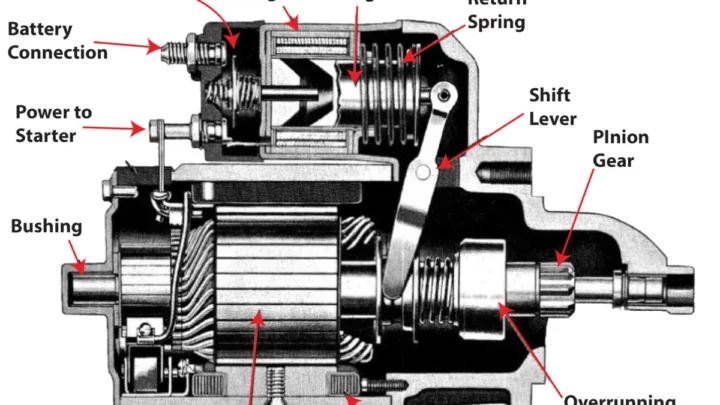
alternator charging voltage

Normal Charging Voltage at Idle (13.7 to 14.7V)

With the engine idling, a healthy charging system reads 13.7 to 14.7 volts at the battery terminals. The alternator deliberately holds voltage above the battery's resting level. That pressure difference is what pushes charge back into the plates while you drive.

Don't panic if the number wanders inside that band. Modern vehicles with smart alternators vary output on purpose to save fuel, especially stop-start cars. Some will briefly dip near 12.8V when cruising with a full battery, then ramp up when loads kick on.

The U.S. Department of Energy covers the basics of how vehicle charging and battery systems manage energy this way.

What Low or High Running Voltage Tells You About the Alternator

Here's the if/then logic for engine-running readings:

  • 13.7 to 14.7V: Charging system is healthy. Move on.
  • Below 13.5V at idle: The alternator is underperforming. Suspect a worn alternator, slipping belt, or corroded connections. Your battery is slowly starving.
  • Above 15.0V: The voltage regulator is overcharging. This cooks batteries, boils electrolyte, and can damage electronics. Get it checked promptly.
  • Reading drops hard when you switch on headlights, blower, and rear defrost: The alternator can't keep up under load. It may pass an unloaded test and still be failing.

That load test at the end matters. A marginal alternator often looks fine with nothing switched on. Turn on every major accessory at idle and watch the meter.

If voltage sinks below about 13.0V and stays there, the charging system needs attention before the battery takes the blame.

Surface Charge: The Reading That Fools Almost Everyone

Surface charge is a temporary layer of voltage sitting on the battery plates right after charging. It inflates your reading without reflecting real stored energy. Test right after a drive and a tired 80% battery can flash 13.1V at you.

Think of it like foam on a beer. The glass looks full, but part of that height disappears once things settle. Aggregate technician guidance agrees on the pattern: readings taken within an hour of driving routinely run 0.3 to 0.5 volts high.

You've got two ways to get rid of it:

  • The patient way: Let the car sit with everything off for at least four hours. Overnight is better. Then test.
  • The fast way: Turn the headlights on for two to three minutes with the engine off. Switch them off, wait ten minutes, then test.

If you skip this step, every number in the voltage chart becomes unreliable. A battery reading 12.9V hot off the alternator might settle to 12.3V by morning. That gap is the difference between "all good" and "recharge now."

How to Test Your Battery Voltage the Right Way (Step by Step)

The whole test takes about two minutes once the battery has rested. Here's the full workflow, from setup to interpretation.

StepActionTarget Result
1Rest the battery 4+ hoursSurface charge gone
2Set meter to DC volts20V range on manual meters
3Probe both terminalsStable resting reading
4Compare to the chartState of charge known
5Start engine, retest13.7 to 14.7V confirms charging

Setting Up Your Multimeter

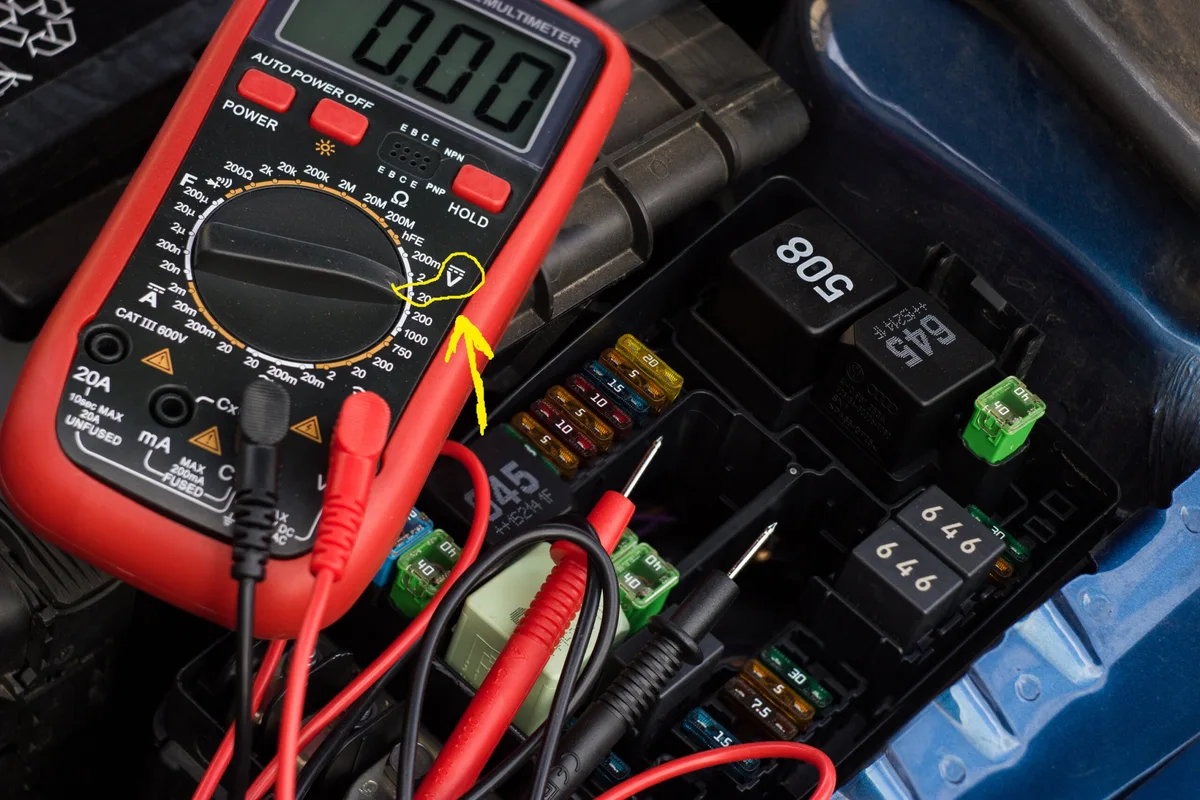
Set the dial to DC voltage, not AC. Car electrical systems run on direct current, and the DCV setting explained here is the one marked with a solid line over a dashed line. On a manual-ranging meter, pick the 20V range.

Auto-ranging meters figure it out themselves.

Plug the black lead into the COM port and the red lead into the port marked V. If the dial and icons look like hieroglyphics, this rundown of what each dial marking means clears it up fast. Almost any meter works for this job.

Battery voltage doesn't demand an expensive instrument, just a functioning one.

Before you probe anything, glance at the terminals. Crusty white or green corrosion adds resistance and can skew your reading low. Clean it off first with a wire brush or a baking soda paste.

Getting a True Resting Reading

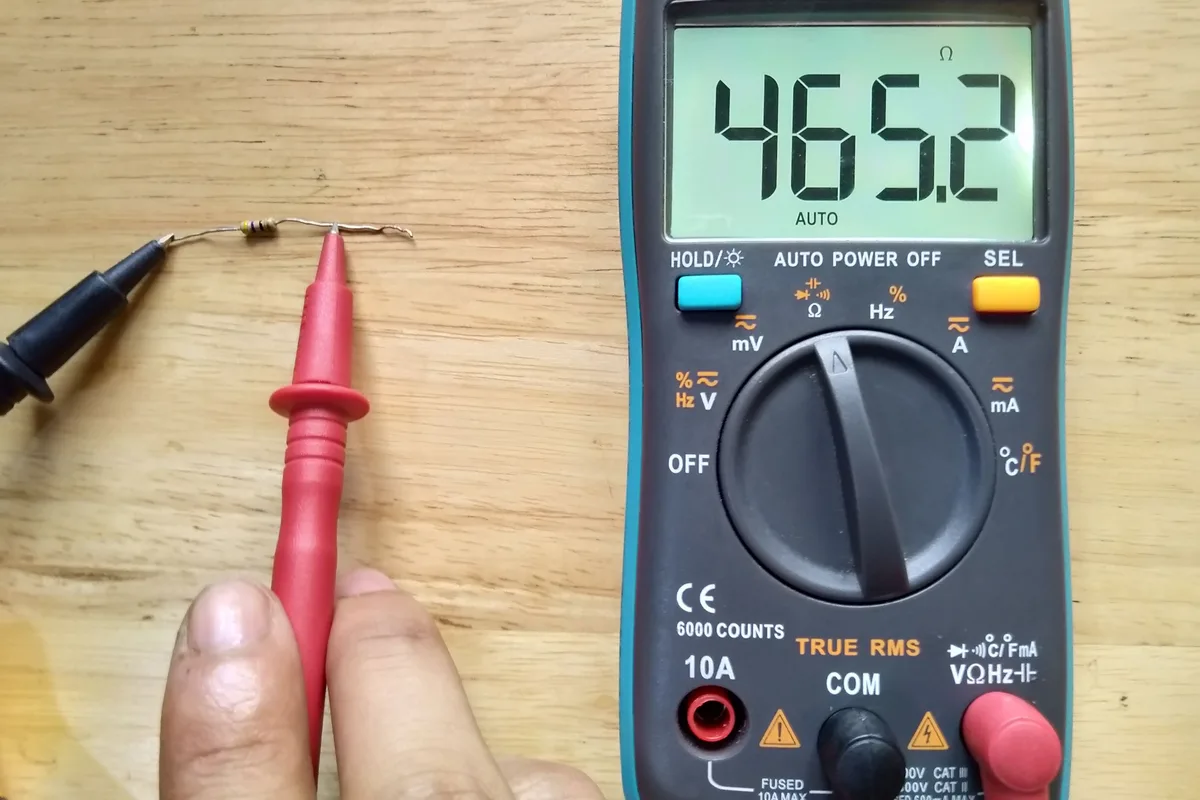
Touch the red probe to the positive terminal and the black probe to the negative terminal. Press firmly onto bare metal, not onto corrosion or plastic. Hold steady for a few seconds until the number stops moving.

Reverse the probes by accident and you'll just see a negative number, like -12.6V. Nothing breaks. Flip the probes and carry on.

If you're brand new to this tool, our walkthrough on taking your first measurements covers probe handling in more detail.

Write the number down. Seriously. A log of resting readings over weeks tells you far more than any single test.

A battery drifting from 12.6V to 12.4V to 12.2V across a month is telling you something is wrong before it strands you.

Checking Charging Voltage Under Load

Now start the engine and probe the same terminals again. You should see 13.7 to 14.7V at idle, as covered earlier. Then make the test honest.

Switch on the headlights, blower fan on high, and rear defroster. Watch the display. A healthy system holds above roughly 13.5V with all that running.

If it sags into the 12s and stays there, the alternator is struggling. If the display bounces around erratically, suspect a failing diode or a loose connection.

Interpreting a jumpy or dim display is its own small skill. This primer on making sense of the readout helps if the numbers don't behave the way you expect.

What Your Reading Means: A Decision Guide for Every Voltage

You've got a true resting number. Here's the branch-by-branch playbook for what to do with it.

12.6V and Above: You're Good, Here's What to Do

Your battery is fully charged. Nothing needs fixing today. If the car also cranks strongly, close the hood and move on.

One caveat: if you're testing because the car cranked slowly, a full reading doesn't clear the battery. Slow cranking at 12.6V points to a capacity or connection problem. Jump ahead to the good-voltage-bad-battery section below.

12.4 to 12.5V: Charged Enough to Start, but Don't Ignore It

The car will almost certainly start fine at this level. That's exactly why people ignore it, and why it's a trap. You're sitting around 75% charge, right at the edge of where sulfation starts.

If this was a one-off (say, lots of short trips in cold weather), take a 30-minute highway drive or put a smart charger on overnight. Then retest in a day or two. If the battery keeps returning to 12.4V, something is draining it or the alternator is undercharging.

Investigate rather than repeat-charging forever.

12.0 to 12.3V: Recharge Now, Then Retest

This battery is between 25% and 50% charged, and it needs a proper charger, not just a drive. An alternator tops off a battery. It's not designed to bulk-charge a half-dead one, and forcing it to shortens alternator life.

Charge overnight with a smart charger set to the correct chemistry mode. Then let it rest and retest. If it holds 12.6V for a couple of days, hunt for the cause: a dome light, a parasitic drain, or a short-trip driving pattern.

If it sinks back below 12.4V on its own, the battery is likely failing.

Below 12.0V: Deep Discharge Territory

Under 12 volts, a lead-acid battery is deeply discharged and actively being damaged. Every day it sits here costs permanent capacity. Charge it immediately with a smart charger.

Many chargers have a recovery or repair mode for exactly this state.

Be realistic about the outcome. A battery that dipped once, after headlights were left on, often recovers most of its capacity. A battery that's been sitting at 11.8V in a stored car all winter usually comes back weakened.

Charge it, test it under load, and watch it closely for the next few weeks.

10.5V or Lower: Likely a Dead Cell

A resting reading of 10.5V after a full charge attempt means one of the six cells has failed. Remember the math from earlier: 12.6 minus one cell's 2.1 volts lands you at 10.5. No charger fixes this.

Replace the battery.

Before buying, confirm the replacement matches your vehicle's requirements. Getting the right physical fit matters as much as chemistry, and stop-start vehicles must get AGM or EFB replacements, not standard flooded units.

Good Voltage, Bad Battery: Why 12.6V Doesn't Guarantee It'll Start

Voltage measures state of charge. It does not measure state of health. A battery near the end of its life can charge up to a textbook 12.6V and then collapse the instant the starter demands 150+ amps.

Here's why. Aging plates lose active surface area through corrosion and sulfation. The battery still reaches full voltage, but it holds far less usable energy behind that voltage.

It's like a fuel gauge reading full on a tank that's shrunk to a quarter of its original size.

Two numbers on the battery label describe real capacity. The cold cranking rating tells you how much current it can deliver at 0°F. The backup runtime figure tells you how long it can run essentials if the alternator quits.

A voltage test checks neither.

The fix is a load test. Watch your multimeter while a helper cranks the engine. A healthy battery stays above about 9.6V during cranking.

Dip into the 8s or lower and the battery is weak regardless of its resting voltage. Most auto parts stores also run free conductance tests that measure health directly. If your battery is past year four, get one annually.

What Voltage Should Car Battery Be?!via Mechanic Mindset

How Temperature and Season Change Your Numbers

Voltage readings shift with temperature, and so does the battery's actual ability to do work. The chart values earlier assume roughly 70 to 80°F. Cold moves the goalposts in two ways at once.

First, the reading itself drops slightly. A fully charged battery at 30°F can show 12.4 to 12.5V and still be genuinely full. The chemistry slows down, which lowers open-circuit voltage a touch.

Second, and more important, cold slashes cranking power. At 0°F a battery delivers well under half the starting current it manages on a mild day, while the engine's thickened oil demands more.

That double squeeze is why batteries die on the first cold morning of the year. A marginal battery that started fine all September simply runs out of margin in November. If you're heading into winter with a resting reading of 12.4V or below, charge it or test it now, not after the first frost.

Heat plays the opposite trick. Warm readings look slightly generous, and summer heat is actually the bigger long-term killer. High underhood temperatures speed up grid corrosion and evaporate electrolyte in flooded batteries.

Research from the U.S. Department of Energy's vehicle technologies program links elevated operating temperatures to accelerated battery aging. A battery cooked through two Phoenix summers often fails the following winter, and that pattern shows up clearly in typical lifespan data by climate.

Mistakes That Skew Your Reading (and How to Avoid Them)

Most "bad battery" misdiagnoses trace back to a handful of testing errors. Run through this list before you trust any number.

  • Testing right after driving. Surface charge inflates the reading. Rest the battery or burn the charge off first.
  • Testing with the engine running and calling it battery charge. You're reading the alternator. Shut the engine off for state-of-charge checks.
  • Probing corroded terminals. Corrosion adds resistance and drags the number down. Clean to bare metal first.
  • Using the AC voltage setting. You'll get a nonsense reading. Confirm the meter shows DCV.
  • Judging an AGM battery by flooded numbers. AGM full is 12.8 to 13.0V. Holding it to 12.6V standards leaves it undercharged.
  • Ignoring temperature. A 12.4V reading on a freezing morning may still be a full battery.
  • Trusting a cheap meter blindly. Budget meters can read a tenth or two off. If a reading seems odd, verify against a second meter.

One more subtle trap: leaving a door open while you test. Interior lights and modules put a small load on the battery, which pulls the reading down slightly. Close doors, switch everything off, and let the car's electronics go to sleep for a few minutes before probing.

If your meter suddenly reads nothing at all mid-test, don't assume the battery died. A popped internal fuse in the meter itself is a common culprit, usually from an earlier measurement mistake.

Keeping Your Battery at Full Charge Between Drives

A battery that lives at 12.6V lasts years longer than one that hovers at 12.3V. The goal isn't just reading full once. It's staying there.

If you drive daily for 20+ minutes, the alternator usually handles it. If your driving is mostly short hops, the starter takes out more than the alternator puts back. Editorial analysis of technician feedback shows chronic short-trip driving is the top cause of premature sulfation in otherwise healthy batteries.

Here's the maintenance playbook by situation:

  • Short-trip commuter: Put a smart charger on overnight once or twice a month.
  • Weekend car or motorcycle: Use a battery maintainer full-time between rides.
  • Stored vehicle (winter or seasonal): Connect a maintainer, or at minimum charge fully before storage and top up monthly. A full battery also resists freezing far better than a discharged one.
  • Daily driver with a drifting voltage log: Test for parasitic drain. Anything above about 50 milliamps of draw with the car asleep deserves investigation.

Match the maintainer to your chemistry. AGM mode for AGM, lithium mode for LiFePO4. And keep terminals clean and tight year-round.

A loose clamp can mimic a dying battery perfectly.

Typical lead-acid batteries self-discharge 1 to 5 percent per month just sitting. That's why a garaged classic reads 12.2V in spring after parking at 12.6V in fall. The battery didn't fail.

It just did what chemistry does, and how many years you get overall depends heavily on how often it sits in that discharged state.

Safety Basics Before You Touch the Terminals

Voltage testing is low-risk, but the battery itself deserves respect. A 12V shock won't hurt you. The other hazards can.

  • Hydrogen gas. Charging batteries vent flammable hydrogen. No smoking, sparks, or open flames nearby, especially right after charging. OSHA guidance on battery handling treats ventilation as the baseline precaution.
  • Sulfuric acid. Flooded batteries contain corrosive electrolyte. Wear eye protection when cleaning terminals or handling a cracked case, and wash skin contact immediately.
  • Short circuits. A wrench bridging the positive terminal to ground can weld itself in place and spray molten metal. Keep tools clear of the positive post.
  • Charger hookup order. Connect positive first, then negative. Disconnect in reverse. Never unhook the battery with the engine running, since the voltage spike can fry modules.
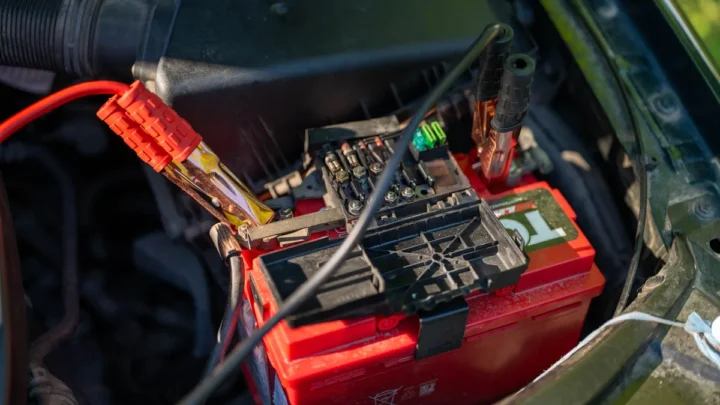
  • Jump-starting. Follow the exact cable order in your owner's manual, and never jump a cracked or frozen battery.

When a battery does reach the end, don't bin it. Lead-acid batteries are among the most recycled products in existence, and retailers take old units back, usually with a core-charge refund.

Frequently Asked Questions

Is 12.4 volts enough to start a car?

Usually, yes. At 12.4V the battery holds about 75% charge, which starts most vehicles without drama. But it's below the healthy resting range, so recharge soon.

Batteries left at 12.4V or lower begin sulfating, which permanently reduces capacity over weeks and months.

What voltage is too low for a car battery?

Below 12.0V resting is the danger line. That's roughly 25% charge, deep discharge territory where damage accumulates daily. Under 11.8V, many cars crank slowly or not at all.

A reading of 10.5V after a full charge means a dead cell, and the battery needs replacement.

Why does my battery read 13 volts with the engine off?

That's almost certainly surface charge from recent driving or charging. It's a temporary layer of voltage, not extra capacity. Turn the headlights on for two to three minutes, wait ten minutes, and retest.

The true resting number will typically settle between 12.4 and 12.8V.

What should battery voltage be with the engine running?

Between 13.7 and 14.7 volts at the terminals. That range shows the alternator is charging properly. Below 13.5V suggests a weak alternator, slipping belt, or bad connection.

Above 15.0V points to a failed voltage regulator, which overcharges the battery and can damage electronics.

Is 12.6 volts always fully charged?

For a standard flooded battery, yes. For AGM, full is slightly higher at 12.8 to 13.0V, so 12.6V on an AGM means roughly 75 to 80% charge. Lithium LiFePO4 batteries rest even higher, around 13.3V when full.

Always match the target to your battery's chemistry.

Can a battery show good voltage and still be bad?

Absolutely. Voltage measures charge, not health. An aged battery can rest at 12.6V yet collapse under the starter's current demand.

If cranking is slow despite good voltage, get a load test or free conductance test. Healthy batteries stay above about 9.6V while cranking.

Your Next Move Based on Today's Reading

Everything in this guide compresses into one short decision path. Find your number and act.

Your Resting ReadingYour Next Move
12.6V+ (12.8V+ AGM)Nothing. Retest seasonally.
12.4 to 12.5VCharge soon, then retest in two days.
12.0 to 12.3VSmart-charge overnight now, then find the cause.
Below 12.0VCharge immediately, expect reduced lifespan.
10.5V or lessReplace the battery.

Then run the second test. Engine on, 13.7 to 14.7V means the charging system is doing its job. Outside that band, the alternator or regulator needs attention no matter how good the battery is.

And remember the one thing voltage can't tell you: health. If your battery is four years or older, pair your multimeter habit with an annual load test. Refreshing the basics on what those baseline numbers mean makes every future reading faster to interpret.

A two-minute check twice a year, once before winter and once before summer, catches most battery problems while they're still cheap. That beats discovering the answer in a dark parking lot every single time.

Ryan Carter is the founder of AutoVerse Authority. A self-taught gearhead from just outside Kansas City, he's spent 15 years buying, fixing, and living with cars — and now shares honest, hands-on advice so everyday drivers can save money and skip the dealership traps.

Share.

Similar Posts

What Should Alternator Voltage Be…Car Battery Reads 12V but Won&#82…How to Set a Multimeter to 20V DC…How Long to Drive After a Jump St…How to Test Parasitic Draw With a…Why Your Battery Voltage Drops Wh…Multimeter Setting for Car Batter…How to Test a Car Battery Without…How to Test a Car Battery With a …How to Use Back Probe Pins on a M…
Share