Car Battery Types Explained: Which One Fits Your Ride
Car batteries all look like the same black box under the hood, but they're not interchangeable. Getting car battery types explained properly saves you from a dead-of-winter no-start or a pricey battery that quits in a year. The type you need depends on your car, your climate, and how you drive.
Pick wrong, and even a brand-new battery can fail fast.
Most passenger cars run a 12-volt lead-acid battery that reads about 12.6 volts when fully charged and rested. But "lead-acid" now splits into flooded, EFB, AGM, and gel, with lithium climbing fast as of 2026. Each handles heat, cycling, and heavy electrical loads differently.
Let's start with the fastest answer, then break down every type.

Quick Answer
Car battery types explained simply: most cars use a 12V lead-acid battery in one of four forms. Flooded (standard SLI) suits older, basic cars. EFB fits light start-stop systems.
AGM handles start-stop and heavy loads. Lithium (LiFePO₄) is the lightweight premium option. Match the type to your car's original spec.
Why Your Car Battery Type Actually Matters
The battery type isn't just a price tier. It's tied to how your car's charging system and electronics were designed. Drop the wrong type in, and something usually gives.
Here's the big one. Start-stop cars shut the engine at every red light and restart it seconds later. That hammers the battery with far more cycles than an old commuter ever saw.
A standard flooded battery isn't built for that. Put one in a start-stop car and it can wear out in months, not years.
The reverse causes trouble too. AGM batteries want a specific charging voltage. If your car's alternator wasn't tuned for AGM, it may undercharge the battery and shorten its life.
Charging behavior matters, and if you're unsure whether the battery or the charging side is the weak link, a quick alternator-versus-battery check clears it up fast.
Climate stacks on top of all this. Cold weather cuts cranking power hard, and a battery that's fine in fall can struggle at the first hard freeze. Heat is sneakier.
It dries out the electrolyte and corrodes plates from the inside. So the "best" type isn't universal. It's whatever fits your car, your loads, and your weather.
The Main Car Battery Types Explained
There are five types worth knowing. Four are lead-acid variants. One is lithium.
Here's what each one is and who it's built for.
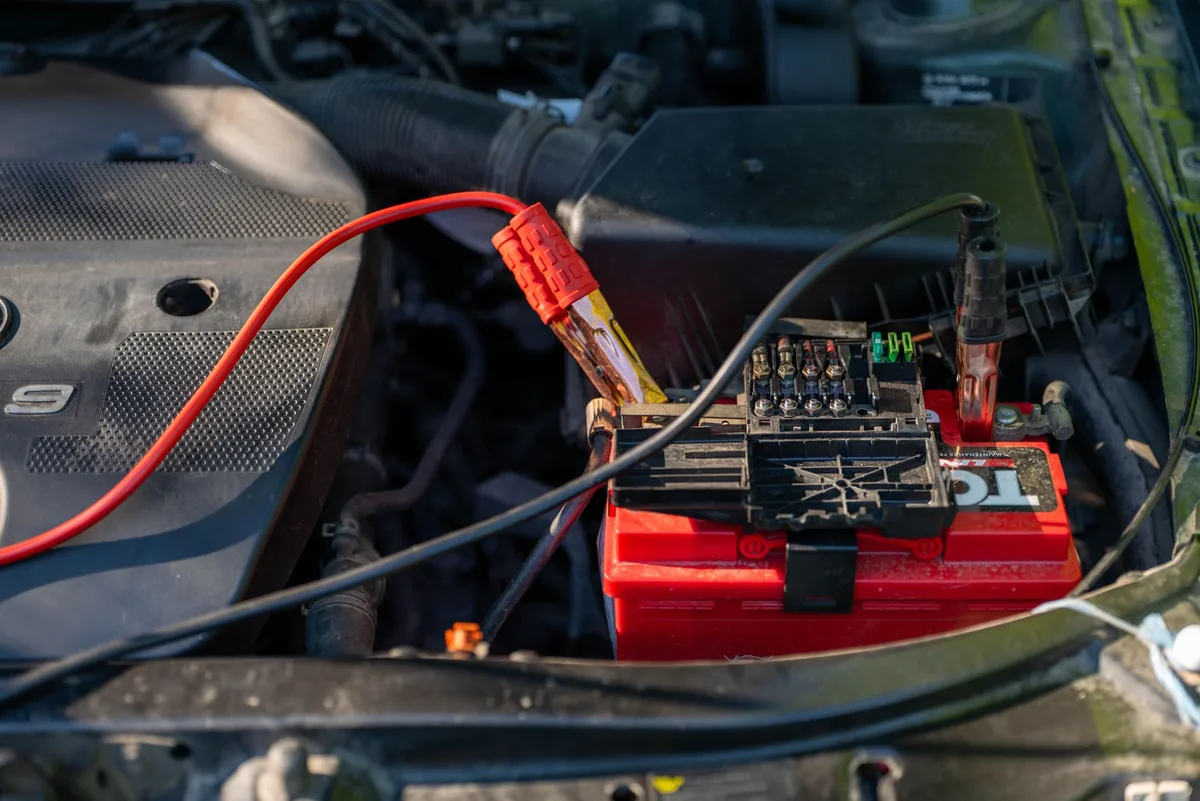
Flooded (Wet Cell) Lead-Acid, the Standard SLI Battery
This is the classic. SLI stands for Starting, Lighting, Ignition, the three jobs it does in a basic car. Liquid electrolyte sloshes around lead plates inside the case.
It's the cheapest type and available everywhere. That's the appeal. But it doesn't like deep discharges, it's sensitive to vibration, and cheaper ones need occasional water top-ups.
- Best for: older or basic cars with no start-stop
- Strengths: low cost, easy to find, simple to replace
- Watch out for: shorter cycle life, weaker in repeated deep drains
EFB (Enhanced Flooded Battery), Built for Light Start-Stop
EFB is a beefed-up flooded battery. It uses improved plates and better internal design to survive more charge cycles. Think of it as the middle step between standard flooded and AGM.
It's the factory choice for many entry-level start-stop cars. It costs less than AGM while handling the extra cycling those systems demand.
- Best for: basic start-stop vehicles
- Strengths: better cycle life than flooded, cheaper than AGM
- Watch out for: not as durable as AGM under heavy electrical loads
AGM (Absorbent Glass Mat), the Heavy-Duty Workhorse
AGM soaks the electrolyte into a fiberglass mat between the plates. Nothing sloshes. That makes it spill-proof, vibration-resistant, and able to handle deep discharges far better than flooded.
AGM shrugs off heat better and delivers higher cranking power. It's the go-to for start-stop cars, luxury models loaded with electronics, and big car-audio builds. The trade-off is price and its need for a compatible charging setup.
- Best for: start-stop cars, high-electrical-load vehicles, cold climates
- Strengths: long cycle life, strong CCA, spill-proof, heat-tolerant
- Watch out for: higher cost, picky about charging voltage
Gel Cell, the Niche Deep-Cycle Option
Gel batteries use a thickened, jelly-like electrolyte. They're excellent at deep cycling and tolerate heat well. But they're fussy about charging and can be damaged by too-high voltages.
You'll rarely see gel as a standard car starter battery. It shows up more in specific deep-cycle and backup roles.
- Best for: certain deep-cycle and specialty uses
- Strengths: strong deep-cycle life, good heat tolerance
- Watch out for: sensitive charging, not ideal as a cranking battery
Lithium (LiFePO₄), the Lightweight Premium Upgrade
Lithium iron phosphate batteries are the newcomer in mainstream cars. They weigh roughly a third of a comparable lead-acid battery. They also last far longer and recharge quickly.
The catch? Cost is high upfront. They don't love extreme cold for cranking, and they need a compatible battery management system.
For track cars and weight-focused builds, though, the payoff is real.
- Best for: performance builds, weight savings, long service life
- Strengths: very light, thousands of cycles, low self-discharge
- Watch out for: high price, cold-cranking limits, needs proper BMS and charger
Flooded vs. EFB vs. AGM vs. Lithium: Side-by-Side
Sometimes the fastest way to choose is to see the types lined up. Here's how the four common options stack up on the things that matter.
| Feature | Flooded | EFB | AGM | Lithium (LiFePO₄) |
|---|---|---|---|---|
| Upfront cost | Lowest | Mid | Higher | Highest |
| Typical lifespan | 3 to 5 yrs | 4 to 6 yrs | 4 to 7 yrs | 8 to 10+ yrs |
| Start-stop ready | No | Light only | Yes | Depends on model |
| Deep-cycle tolerance | Low | Moderate | High | Very high |
| Vibration resistance | Low | Moderate | High | High |
| Weight | Heavy | Heavy | Heavy | Very light |
| Charging fussiness | Low | Low | Medium | High (needs BMS) |
A few takeaways. If your car left the factory with a plain flooded battery and has no start-stop, like-for-like is the cheapest smart move. If it has start-stop, you need EFB or AGM, never a standard flooded.
And if you're chasing weight savings above all, lithium is the only one that delivers.
One rule holds across the board. Never downgrade below what your car came with. You can often go up a tier safely, but going down usually ends in early failure.
When cranking power feels marginal, it helps to know how much current your battery should push so you don't under-spec the replacement.
Reading the Numbers: CCA, Reserve Capacity, Ah, and Group Size
The label on a battery tells you almost everything you need, once you know the codes. These four numbers decide whether a battery fits and performs.
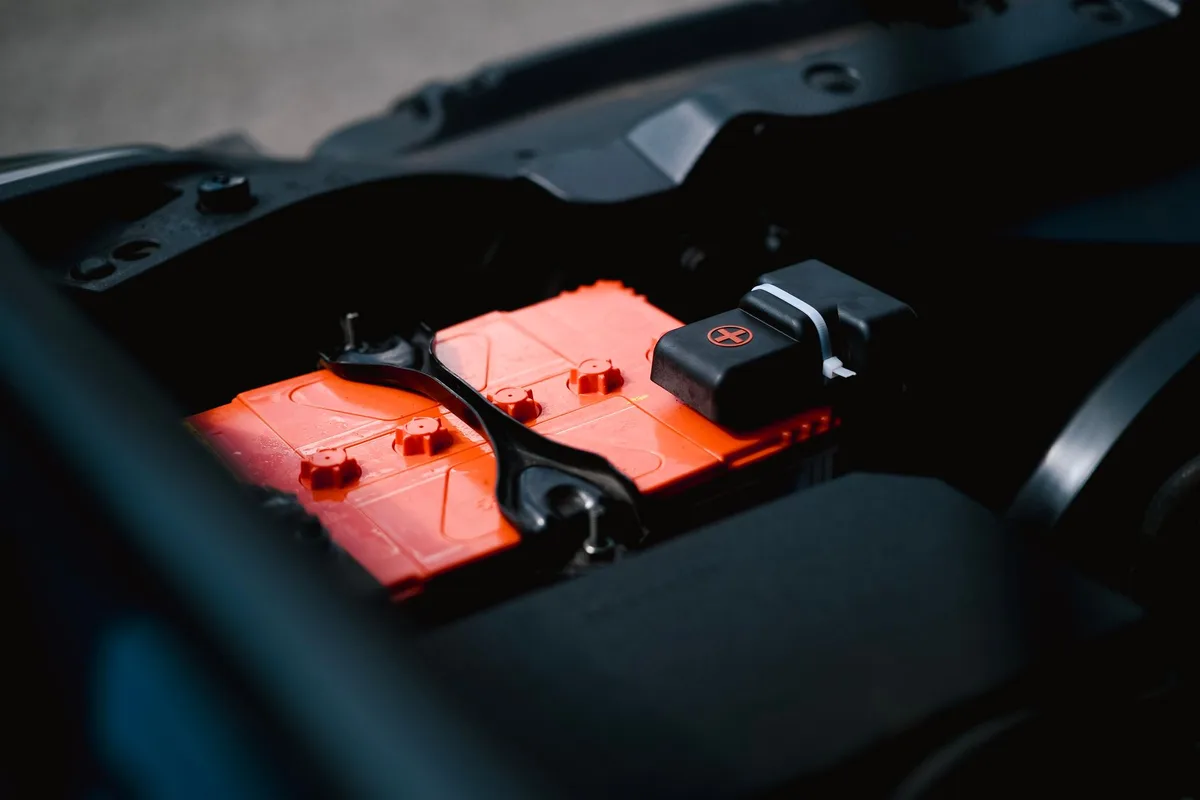
- CCA (Cold Cranking Amps): the current the battery delivers at 0°F while holding usable voltage. Higher CCA means stronger cold starts. The test method is defined by SAE International, so ratings are comparable across brands.
- RC (Reserve Capacity): how many minutes the battery can run your car's basics if the alternator quits. More minutes is more safety margin.
- Ah (Amp-hours): total energy capacity. It matters most for cars with heavy electrical loads and for deep-cycle use.
- Group size: the physical size, terminal position, and hold-down layout. This is BCI group size in North America, like Group 35, 48/H6, or 65.
Get the group size right first. A battery with perfect specs won't help if it doesn't fit the tray or the cables won't reach the terminals. Then match or exceed your car's original CCA and RC.
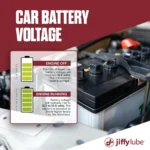
A quick reality check on voltage while you're at it. A healthy, rested battery sits near 12.6 volts, and 12.4 volts still counts as decent. Cranking pulls that down briefly, which is normal, but a big sag can flag a weak battery.
If you want the exact numbers, here's how far voltage should dip on start.
Which Battery Type Is Right for Your Situation
The right type comes down to how and where you drive. Here's the quick logic for the most common cases.
Standard Commuter Cars
If your car has no start-stop and modest electronics, a quality flooded battery is plenty. Match the original group size and CCA, and you're set. Spending up for AGM here rarely pays off unless you want the longer life.
Start-Stop and Mild-Hybrid Vehicles
These need EFB or AGM, full stop. Check your owner's manual for which one the car shipped with. If it came with AGM, stick with AGM.
Downgrading to a flooded battery invites early failure and can trigger charging faults.
Cold-Climate and Hard-Starting Cars
Cold saps cranking power, so prioritize high CCA and strong reserve capacity. AGM tends to hold up better in deep cold and recovers from discharge faster. If your engine has been cranking slower lately, confirm it's the battery and not a current leak draining it overnight.
Hot-Climate Drivers
Heat is the real battery killer, not cold. It speeds up internal corrosion and water loss. AGM handles heat better than flooded and usually lasts longer in hot regions.
Parking in shade and keeping terminals clean both help.
Off-Road, Marine, RV, and Big Audio Builds
These need deep-cycle or dual-purpose batteries, not plain starters. AGM and lithium shine here because they tolerate repeated deep discharges. Big amplifiers and winches pull hard, so reserve capacity and Ah matter as much as CCA.
Cost, Lifespan, and Real-World Value Over Time
Cheapest upfront isn't always cheapest over time. A flooded battery costs the least but often needs replacing sooner. AGM and lithium cost more but stretch the years between swaps.
| Type | Rough upfront cost | Typical lifespan | Best value when |
|---|---|---|---|
| Flooded | Lowest | 3 to 5 yrs | Basic car, tight budget |
| EFB | Mid | 4 to 6 yrs | Light start-stop |
| AGM | Higher | 4 to 7 yrs | Start-stop, heat, heavy loads |
| Lithium | Highest | 8 to 10+ yrs | Long-term, weight-critical |
Lifespan swings a lot with climate and habits. Short trips that never fully recharge the battery will shorten any type's life. So will chronic undercharging or a weak alternator.
If a battery keeps dying young, the fix is often the charging system, and a step-by-step multimeter test usually finds the culprit.
Mistakes That Kill a New Battery Early
A new battery should last years. Most early deaths come from a handful of avoidable errors.
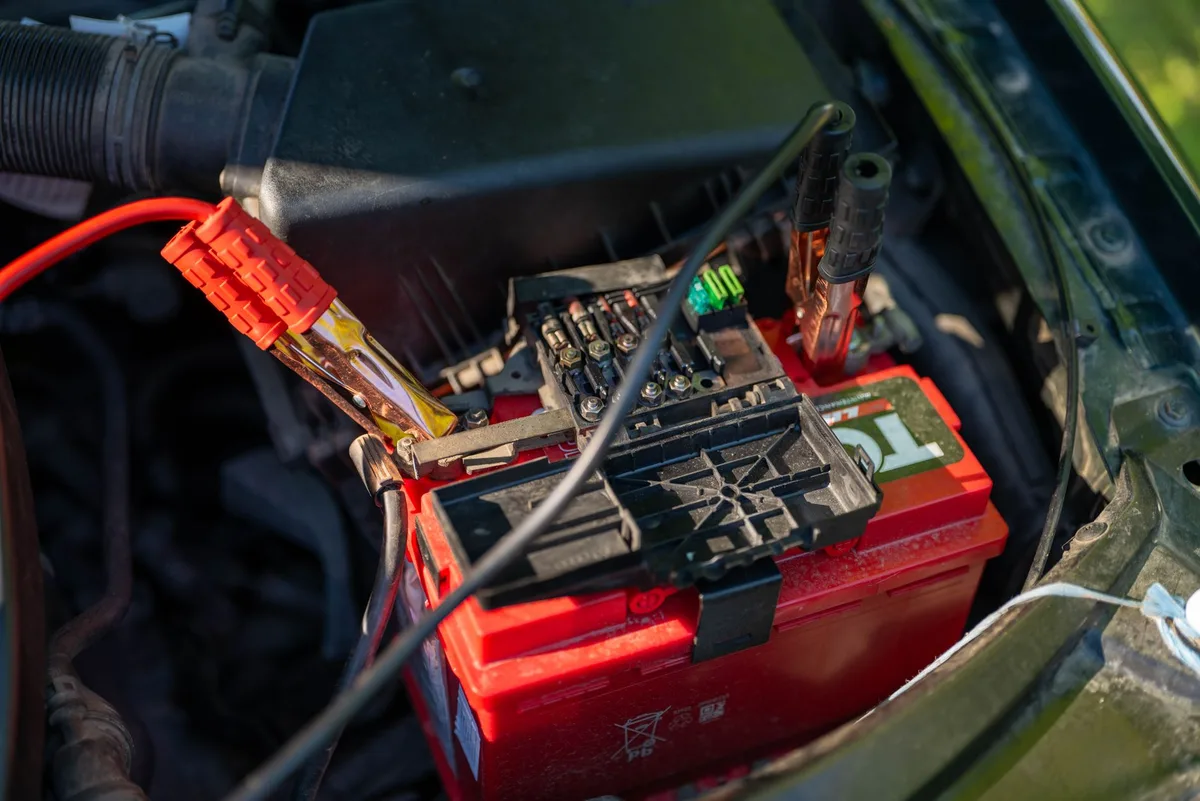
- Fitting a standard flooded battery in a start-stop car. It can't handle the cycling and fails fast.
- Skipping battery registration on cars that require it. The charging system keeps treating it like the old battery.
- Ignoring terminal corrosion. That white or green crust chokes the connection and mimics a dead battery.
- Letting it sit discharged. Sulfation builds on the plates and permanently cuts capacity.
- Using the wrong charger. AGM and lithium need the correct profile, not a generic bump charger.
Corroded terminals deserve special mention. They cause weird symptoms like slow cranks and flickering lights, even on a good battery. If your car reads right around 12 volts but won't turn over, clean and tighten the terminals before you condemn the battery.
Safe Handling, Charging, and Disposal
Lead-acid batteries hold sulfuric acid and can vent hydrogen gas, so treat them with respect. A few basics keep you safe and keep the battery healthy.
- Wear gloves and eye protection when handling any battery.
- Keep sparks and flames away, especially near a charging flooded battery.
- Disconnect the negative terminal first, then the positive. Reconnect in reverse.
- Charge in a ventilated space, never a sealed room.
- Match the charger to the type. AGM mode for AGM, a lithium-specific charger for LiFePO₄.
Disposal isn't optional. Lead-acid batteries are hazardous waste and must be recycled, not tossed in the trash. Almost every parts store takes them back, often with a small core refund.
The U.S. Environmental Protection Agency treats spent lead-acid batteries as regulated waste, and recycling recovers nearly all the lead and plastic.

Similar Posts