How to Check Your Car Battery Manufacture Date

You want to know how to check a car battery manufacture date because age tells you more about a battery than almost anything else on the label. A battery that's sat on a shelf for a year is already burning through its life before it touches your car. The date is stamped or stickered right on the case, but the code isn't always obvious.
Different brands hide it in different spots and write it in different formats.
Here's the catch. That code can mean the build date, the ship date, or the warranty start, and mixing them up costs you real warranty months. Most lead-acid car batteries last three to five years, and manufacturer specs suggest buying one that's under six months old.
As of 2026, there's still no single universal date format across brands. So let's start with why the sticker on the front can fool you.
Quick Answer
To check a car battery manufacture date, find the date code on the top or side of the case. It's usually a letter and a number. The letter is the month (A equals January, B equals February).
The number is the year. So "C5" means March 2025. Some brands use a 4-digit sticker instead.
Why You Can't Just Trust the Sticker on a Car Battery
The big front label shows the brand, the group size, and the cold cranking amps. It rarely shows the true build date. That's the first trap.
Many batteries carry two or three dates. There's the manufacture date, the ship date, and sometimes a warranty activation date. Retailers often quote the one that helps them, not you.
Our research shows buyers frequently accept a "ship" code as the build date and lose months of coverage.
Here's why it matters. A battery loses charge just sitting still, roughly 1% to 3% per month at room temperature. Sit long enough and sulfation sets in, which permanently cuts capacity.
So a battery built ten months ago isn't really new, even if the box looks spotless.
If you've ever bought a battery that died young, shelf age may be the reason. The same slow drain also explains a lot of early failures, much like a weak cell shows up when your voltage sags during a cold start. Check the date before you check anything else.
What a Battery Manufacture Date Actually Tells You
The manufacture date is the day the battery was built and filled at the plant. That's the clock that matters for warranty and lifespan. Everything else is secondary.
Think of it in three layers:
- Manufacture date: when it was made. This starts the aging clock.
- Ship date: when it left the warehouse. Often weeks later.
- Purchase or install date: when it went into your car. This can be months after manufacture.
Most warranties start from the purchase date, not the build date. But a battery that sat too long before you bought it is already worn. Battery Council International, the trade group that sets group-size and testing standards, treats the manufacture date as the reference point for age.
You can read more at Battery Council International.
Why care about a few months? Heat and time do quiet damage. A battery built last spring and stored in a hot warehouse can lose real capacity before its first crank.
Knowing the true date lets you judge remaining life honestly, and it helps when you're troubleshooting a car that keeps draining its battery.
Where the Date Code Hides on the Battery Case
The code lives somewhere on the case, but "somewhere" changes by brand. Start at the top, then work your way around. A phone flashlight helps, and a quick wipe with a rag clears the dust that hides faded stamps.
Top of the Case and Near the Terminals
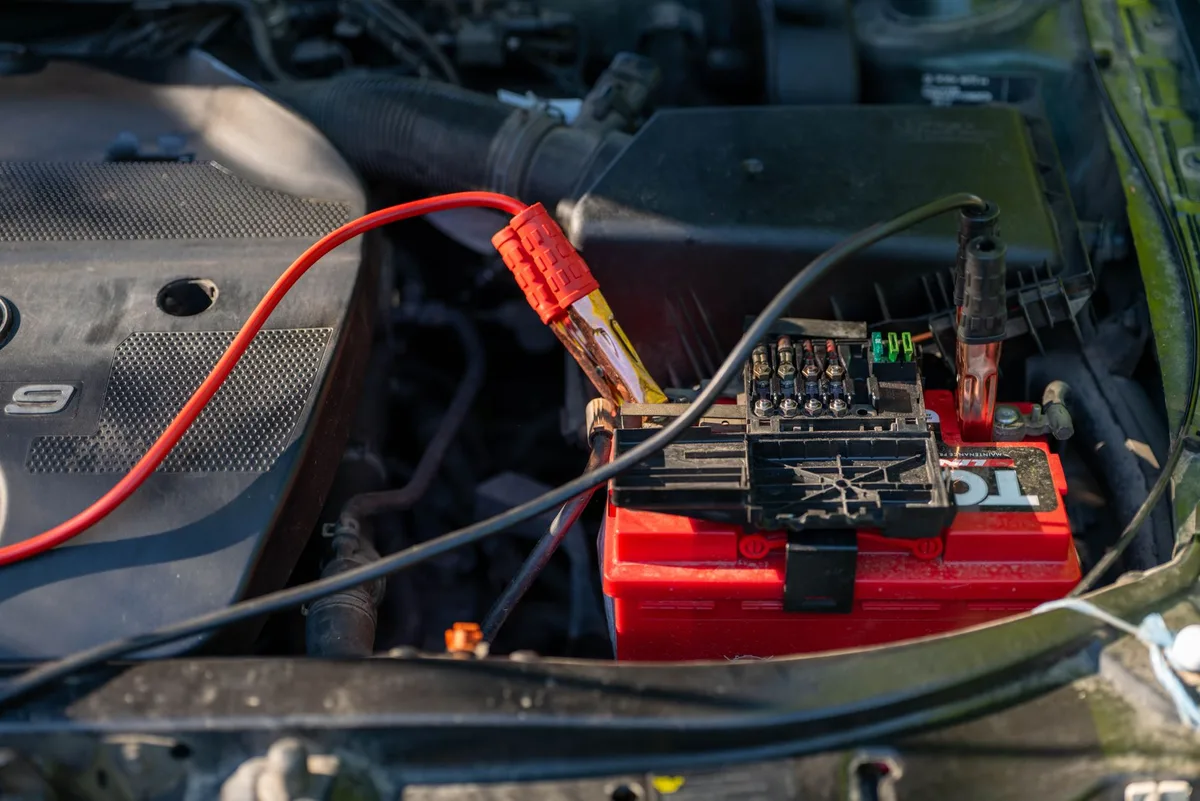
The top cover is the most common spot. Look for a small sticker or a row of stamped characters near one of the terminal posts. Many brands place a shipping code close to the positive terminal.
Sometimes the real date sticker sits flat on the top, half hidden under the plastic handle. Lift or slide the handle out of the way and look underneath. If you see two codes, note both.
One is likely the ship code, the other the build date.
Side Labels, Handles, and Hot-Stamped Corners
If the top shows nothing clear, check the sides. Some makers print a date on the main side label, right next to the CCA rating. Others hot-stamp the code into the plastic at a corner or along the top edge.
A hot stamp is pressed into the case, not printed. It has no ink, so it's easy to miss. Tilt the battery toward the light and look for raised or recessed characters.
Grime fills the grooves, so a clean cloth makes the difference between reading it and guessing.
How to Read the Two Most Common Date Code Formats
Two formats cover most batteries you'll meet. The letter-number combo and the plain numeric code. Once you know both, you can decode nearly any brand.
The Letter-Number Code (Month + Year)
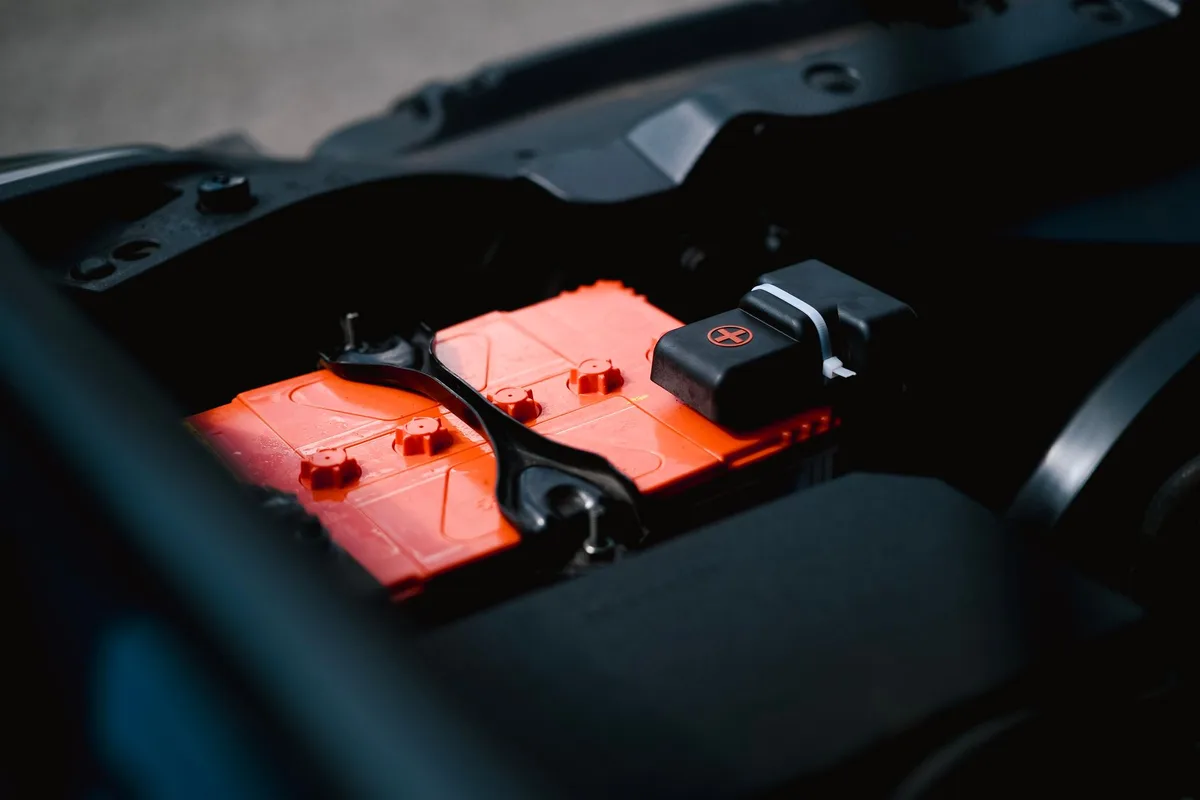
This is the classic system. One letter for the month, one digit for the year. The letter runs A through L for January through December.
| Letter | Month | Letter | Month |
|---|---|---|---|
| A | January | G | July |
| B | February | H | August |
| C | March | I or J | September |
| D | April | J or K | October |
| E | May | K or L | November |
| F | June | L or M | December |
Here's the trap. Some brands skip the letter "I" because it looks like a 1. When they skip it, the months shift, so September becomes J instead of I.
Always confirm whether a brand skips "I" before you trust the month.
The year is the single digit that follows. So "B6" reads as February 2026. "K4" reads as November 2024 on a brand that skips "I".
When a code shows a letter first then a number, that letter is almost always the month.
The 4-Digit and Julian Number Codes
Some batteries drop letters entirely. A 4-digit sticker usually reads as month and year, like "0326" for March 2026. Others flip it to year then month.
Context makes it clear, since a value over 12 can't be a month.
A few makers use a Julian date, which counts the day of the year. "045" would be the 45th day, mid-February. You'll often see the year digit tacked on, so "5045" means the 45th day of 2025.
It looks strange, but it's precise once you spot the pattern.
If your battery has no readable code at all, don't panic. You can still gauge its health with a simple resting voltage check, which we cover below.
Decoding Date Codes by Brand
Brands don't agree on a single format, so a quick brand-by-brand cheat sheet saves guesswork. Here's how the common names lay it out.
Interstate, ACDelco, and Motorcraft
Interstate uses a letter-number stamp on the top or side, with the letter as the month and the number as the year. It's one of the cleaner systems to read.
ACDelco often uses a longer alphanumeric string. The key characters are usually a letter for the month and a digit for the year near the start of the code. Look for the shorter stamped code, not the full serial.
Motorcraft, Ford's parts brand, typically prints a 4-digit style date or a letter-number combo on the label. When you see a plain four numbers, read it as month and year first.
EverStart, Duralast, DieHard, Optima, Bosch, and Varta
EverStart, sold at Walmart, uses a letter-number code where the letter is the month. Duralast, the AutoZone brand, works the same way with a stamped letter and year digit.
DieHard and Optima both lean on the letter-month system, often hot-stamped into the case top. Optima's spiral cells can make the stamp tricky to spot, so check the flat top edge.
Bosch and Varta, common across the UK and Europe, usually print a longer date label. Varta often encodes the date inside a production string, where a specific character block marks the month and year. When a European battery shows a long code, the manufacture date is usually buried in the middle, not at the front.
The takeaway across every brand is the same. Find the short code, confirm whether the month is a letter or a number, and check if the brand skips "I". Get those three right and the date falls into place.
If the numbers still don't add up, a quick meter reading tells you what the sticker can't, and it pairs well with knowing what a healthy resting voltage looks like.
Manufacture Date vs. Ship Date vs. Warranty Date
These three dates get mixed up constantly, and the mix-up costs you money. Each answers a different question, so treat them separately.
| Date type | What it marks | Why it matters |
|---|---|---|
| Manufacture date | Day the battery was built and filled | Starts the real aging clock |
| Ship date | Day it left the warehouse | Often weeks after build |
| Warranty date | Day you bought it | Starts your coverage period |
The manufacture date is your aging clock. The warranty date is your coverage clock. They're rarely the same day.
Here's the practical angle. If a battery was built in January but you buy it in August, it's already seven months old. Your warranty still starts in August, but the battery has less real life left.
Always match the build date against the purchase receipt before you commit.
Step-by-Step: Checking Your Battery's Age in Under 5 Minutes
You don't need tools for this part, just good light. Follow these steps in order.
- Open the hood and locate the battery. Note the brand on the front label.
- Wipe the top clean with a dry rag. Dust hides faded codes.
- Check the top cover first, near both terminals and under the handle.
- No luck on top? Scan the side labels and the corners for a hot stamp.
- Find the short code, not the long serial number.
- Identify the format: letter-number, 4-digit, or Julian.
- Decode the month and year using the letter chart from earlier.
- Confirm whether that brand skips the letter "I".
- Write the date down. You'll want it for warranty records.
If the battery is already loose or off the car, check the bottom edge too. Some off-brands stamp there. Once you've got the date, a quick health check confirms whether the age matches the wear, which is where a meter earns its keep, using the same multimeter setting you'd use for any voltage read.
Common Mistakes People Make Reading the Date Code
Most errors come down to reading the wrong code or misreading the right one. Here are the ones that trip people up most.
- Reading the ship code instead of the build code. The ship code often sits nearest the positive terminal.
- Forgetting a brand skips "I", which shifts every month after August.
- Mistaking a 0 for an O, or a 5 for an S on a worn stamp.
- Treating a 4-digit warranty sticker as the manufacture date.
- Reading the code upside down. Rotate the battery or your head.
- Assuming a spotless case means a fresh battery. Age hides inside.
One more trap. A long serial string can contain the date buried in the middle, especially on European brands. Don't grab the first two characters and call it done.
Cross-check with the brand's format first.
If the date reads fine but the battery still struggles, the issue may not be age. A tired battery and a weak charging system look similar from the driver's seat, so it helps to know whether the battery or alternator is at fault.
How Old Is Too Old? Shelf Age, Lifespan, and Freshness Limits
A car battery you're buying should be under six months old, ideally under three. Past that, shelf aging eats into the life you paid for.
Here's the rough math. Lead-acid batteries self-discharge about 1% to 3% per month at room temperature. Heat speeds that up.
A battery stored a full year in a warm warehouse can arrive meaningfully weaker than its "new" label suggests.
For a battery already in your car, the useful window is three to five years. Hot climates push toward the low end, since heat drives evaporation and internal wear. Cold doesn't age a battery the same way, but it exposes a weak one fast.
That's why old batteries so often die on the first frosty morning.
Use these rough freshness rules:
- Under 6 months old at purchase: good to buy.
- 6 to 12 months: ask for a discount or fresher stock.
- Over 12 months: walk away unless it's deeply discounted and load-tested.
- Over 3 years in service: start budgeting for a replacement.
Date Code vs. Voltage Test vs. Load Test: Confirming Real Health
The date tells you age, not condition. A meter tells you condition. You need both for the full picture.
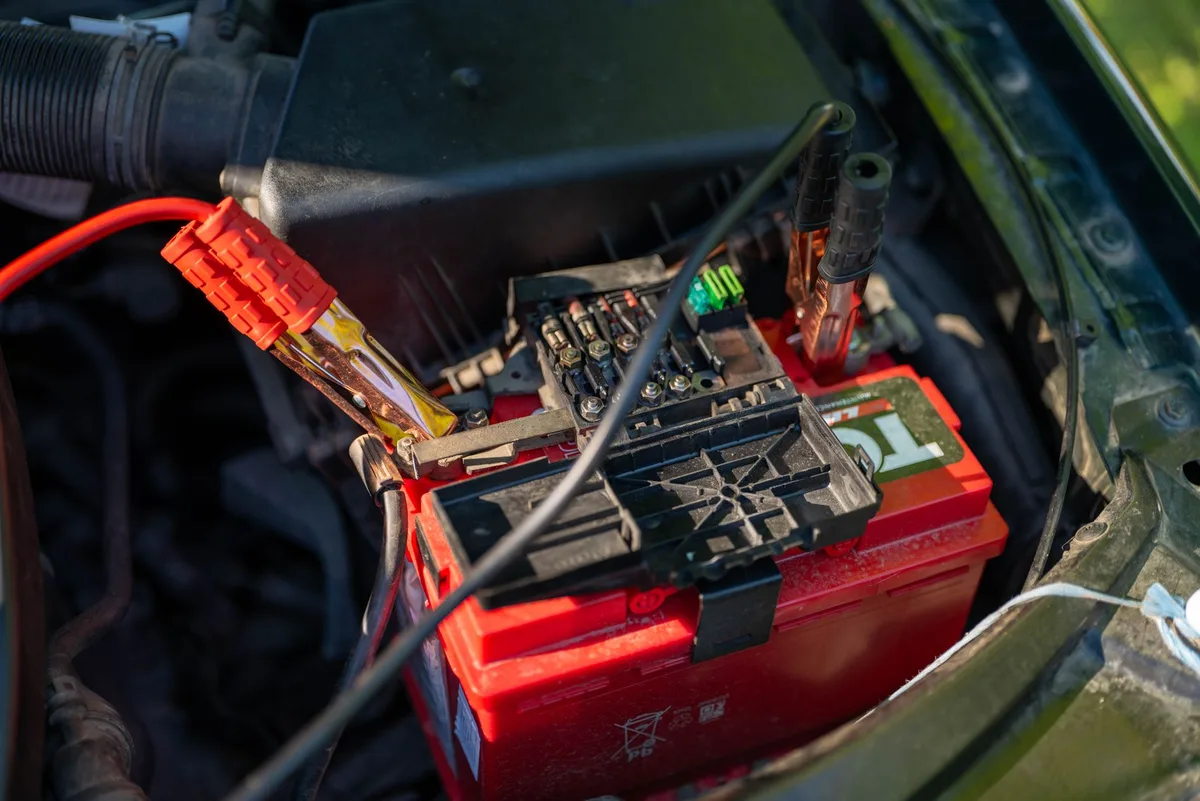
A resting voltage test is the quickest health check. Let the car sit a few hours, then read across the terminals. A healthy, fully charged battery reads around 12.6 volts.
Drop to 12.4 and you're near 75%. Hit the low-12s range and the charge is fading.
Here's how the three checks compare:
| Check | What it measures | Best for |
|---|---|---|
| Date code | Age | Judging shelf life and warranty |
| Voltage test | State of charge | A fast pass/fail snapshot |
| Load test | Capacity under demand | Confirming real cranking strength |
Voltage alone can lie. A battery can show a decent resting number and still collapse under load. That's why a load test matters.
It measures whether the battery holds up when the starter pulls hard.
If your reading sits far below normal, don't assume the battery is dead yet. Charge it first, then retest. A single low number after a cold night is different from a battery that won't climb back up after a full charge.
Handling the Battery Safely While You Check
Car batteries hold acid and vent hydrogen gas, so treat them with respect. Wear gloves and eye protection if you're lifting or wiping one down.
Keep sparks and flames away from the terminals. Don't rest metal tools across both posts. If you need to remove the battery to read the bottom, disconnect the negative terminal first, then the positive.
Old or leaking batteries belong at a recycling drop-off, not the trash. Most auto parts stores take lead-acid cores for free. The EPA backs proper recycling, and you can find local guidance at the EPA.
Using the Date for Warranty Claims and Used-Car Checks
The manufacture date is your proof of age when a battery fails early. Keep the code and your receipt together, since most warranties count from purchase.
Buying a used car? Check the battery date before you close. A battery near the four-year mark is a bargaining chip.
It's a cheap fix, but it tells you how the previous owner handled upkeep.
If the seller swears the battery is new, the code settles it fast. A build date two years back means the "new battery" claim doesn't hold.
Frequently Asked Questions
Where is the manufacture date on a car battery?
It's usually on the top cover near a terminal, or on a side label. Some brands hot-stamp it into the plastic case. Wipe the surface clean and use a flashlight, since faded or embossed codes are easy to miss at a glance.
What does a letter in the battery date code mean?
The letter is the month. A is January, B is February, and so on through L for December. Some brands skip the letter "I", which shifts every month after August.
The digit beside it is the year, so "C5" means March 2025.
How old can a car battery be when I buy it?
Aim for under six months old, and under three is better. Lead-acid batteries self-discharge 1% to 3% per month, so shelf time drains real life. Anything over a year deserves a discount and a load test before you take it home.
Is the ship date the same as the manufacture date?
No. The manufacture date is when the battery was built. The ship date is when it left the warehouse, often weeks later.
Warranty claims and true age both track the manufacture date, so don't confuse the two.
Can I tell battery age without a date code?
Not precisely, but you can gauge health. A resting voltage read near 12.6 volts means a strong charge. A load test shows whether it holds up under demand.
Neither gives an exact birthday, though they tell you if the battery is worth keeping.
Your Quick Battery-Age Decision Guide
Keep it simple. Find the code, decode the month and year, then check freshness.
- If it's under 6 months old: buy or keep it with confidence.
- If it's 6 to 12 months: ask for fresher stock or a price break.
- If it's over a year on the shelf: load-test first or walk away.
- If it's 3 to 5 years in service: test the voltage and plan a replacement.
The date sets the clock. A meter confirms the health. Read both, and you'll never get stuck with a battery that's older than it looks.

Similar Posts