How Accurate Are Cheap Multimeters? The Real Truth

Cheap multimeters are more accurate than most people expect, just not everywhere. If you've ever wondered how accurate are cheap multimeters before trusting one on a car battery, the honest answer is that it depends on what you're measuring. For basic DC voltage, a $15 meter often lands within a whisker of a $400 one.
Push it into AC, current, or capacitance, though, and the gaps get wide fast.
Manufacturer specs typically quote DC voltage accuracy near ±0.5% plus a digit or two. A professional meter claims closer to ±0.05%. That's a tenfold difference on paper, and bench comparisons back it up.
Safety standards like IEC 61010 matter as much as the raw numbers. Here's how the accuracy question really breaks down.
Quick Answer
Cheap multimeters are accurate enough for most DC voltage and continuity work. Budget models usually read DC volts within ±0.5% to ±1%. Accuracy drops sharply on AC, current, and capacitance.
Many lack true-RMS, so non-sine readings run high or low. Safety ratings are often overstated, so avoid mains work.
The Bench Test Setup: How I Measured Cheap Meters Against a Calibrated Reference
Accuracy only means something when you compare against a known-good reference. In our research, the fairest method is to check a budget meter against a calibrated bench meter like a Fluke 87V or Keysight unit. That reference gives you a trusted baseline.
Everything else gets judged against it.

A proper comparison checks readings at several points across each range. You test near the low end, the middle, and close to full scale. One good reading at 12 volts tells you almost nothing on its own.
Error rarely stays flat across the whole scale.
Repeatability gets checked too. That means feeding the same input several times and watching how much the number wanders. A cheap meter might nail the average yet jump around by several digits.
Traceable calibration, the kind tracked by bodies like NIST, is what separates a real accuracy claim from a marketing number.
What Accuracy Actually Means on a Multimeter (And Why the Spec Sheet Lies a Little)
Accuracy is how close the reading sits to the true value. It sounds simple, but the spec sheet hides a few things. A meter can look precise while being consistently wrong.
Understanding three separate ideas clears up most of the confusion.
Accuracy vs Precision vs Repeatability
These three words get mixed up constantly. They describe different problems.
- Accuracy: how close the number is to reality.
- Precision: how fine the resolution is, like reading 12.06 instead of 12.1.
- Repeatability: how steady the reading stays on the same input.
A budget meter can be precise and repeatable yet inaccurate. It shows 12.34 volts every time, rock steady, but the real value is 12.50. That's a calibration gap, not random noise.
When you check a healthy resting voltage on a battery, that fixed offset is what fools people.
Reading the ±(% + digits) Spec Format
Accuracy specs come written as ±(percent of reading + a digit count). Take ±0.5% + 2 on a reading of 100.0 volts. The percent gives 0.5 volts.
The two digits add another 0.2 volts. Total possible error is 0.7 volts.
Those extra digits hurt most at the low end of a range. A tiny reading can be swamped by the fixed digit error. That's why a cheap meter looks great at 12 volts but sloppy at 0.05 volts.
As of 2026, most budget datasheets still bury this detail in fine print.
DC Voltage Results: Where Cheap Meters Hold Up Surprisingly Well
DC voltage is the bright spot for budget meters. This is the one job they do genuinely well. Aggregate reviews and bench comparisons put most cheap meters within ±0.5% to ±1% of a calibrated reference on DC volts.
For a car battery, that's a difference of maybe 0.05 to 0.1 volts.
That margin is fine for real work. Checking a state-of-charge number or confirming your alternator output does not need lab precision. A reading of 12.6 versus 12.65 changes nothing about your decision.
Here's roughly how the tiers stack up on DC voltage.
| Meter tier | Typical price | DC voltage accuracy | Good for |
|---|---|---|---|
| Budget DMM | $10 to $40 | ±0.5% to ±1% | Hobby, automotive, continuity |
| Mid-range | $60 to $150 | ±0.1% to ±0.3% | Serious DIY, field work |
| Professional | $300 to $500 | ±0.05% | Calibration, precision, mains |
The takeaway is simple. If DC volts are your main job, a cheap meter earns its keep. Testing whether you're facing a battery or an alternator issue works fine with an inexpensive unit.
AC Voltage and the True-RMS Problem: Where Budget Meters Fall Apart
AC is where cheap meters start lying to you. The root cause is how they calculate the reading. Most budget meters are averaging-type.
They assume a clean sine wave and do the math from there.

On a clean mains sine wave, an averaging meter is close enough. Feed it a distorted waveform and the number goes wrong. Dimmer switches, variable-speed drives, and switch-mode power supplies all chop the waveform.
An averaging meter can read 10% to 40% off on those loads.
True-RMS meters measure the actual heating value of any waveform. They handle distorted signals correctly. Most cheap meters skip true-RMS to save cost.
- Averaging meter: accurate only on clean sine waves.
- True-RMS meter: accurate on distorted and noisy waveforms.
- The label usually says "True RMS" right on the front if it has it.
For automotive DC work, none of this matters. For anything touching modern AC electronics, it matters a lot.
Current, Resistance, Capacitance, and Temperature: The Ranges That Drift the Most
These ranges are the weakest part of any budget meter. Accuracy here can be several times worse than the DC volts figure. The specs are looser and the errors bigger.
Current is the trickiest. Cheap meters use low-tolerance shunt resistors, so the reading drifts. They also add burden voltage, often more than 200 mV, which the meter drops across itself.
On a low-voltage circuit that skews the result. Hunting a small parasitic drain with a budget meter can send you chasing ghosts.
Resistance, capacitance, and temperature each carry their own weaknesses.
- Resistance: fine for a few hundred ohms, jumpy on very low or very high values.
- Capacitance: often ±5% or worse, and slow to settle.
- Temperature: the bundled thermocouple can be off by several degrees.
None of this makes a cheap meter useless. It just means you should trust it most on DC volts and continuity. For fiddly circuit access, pairing it with proper back probe pins gets you cleaner contact and steadier readings than the numbers alone suggest.
Unit-to-Unit Variation: Why Two Identical $15 Meters Don't Always Agree
Two meters off the same production line can read differently. That's the part budget shoppers rarely think about. Cheap factories run looser quality control, so calibration varies from unit to unit.
Aggregate reviews report pairs of identical models differing by a few tenths of a volt on the same source. One reads 12.58 while its twin shows 12.61. Neither is broken.
Both simply landed at different spots inside a wide tolerance band.
This matters when you compare readings over time. If you swap meters mid-job, a small drift can look like a real change in the circuit. Stick with one meter for a given measurement.
Trends read cleaner when the tool stays constant.
Burden Voltage, Input Impedance, and Other Hidden Error Sources
Some errors never appear on the spec sheet. They come from how the meter connects to the circuit. Two matter most: burden voltage and input impedance.
Burden voltage is the drop across the meter when measuring current. Cheap meters can drop 200 mV or more on their current shunts. On a low-voltage circuit, that stolen voltage skews everything downstream.
Precision current work suffers the most.
Input impedance affects voltage readings on high-resistance circuits. Most meters use 10 megohms, which is fine for batteries and power rails. On sensitive electronics, a low-impedance meter can load the circuit and pull the reading down.
A few budget meters offer a "LoZ" mode, which is the opposite trick, useful for killing ghost voltages.
- Burden voltage: robs accuracy on current ranges.
- Input impedance: affects delicate, high-resistance circuits.
- Test lead resistance: cheap leads add a fraction of an ohm on continuity.
Those thin bundled leads are worth replacing. Better probes remove a small but real source of error.
Cheap DMM vs Mid-Range vs Pro: A Side-by-Side Accuracy Breakdown
The right meter depends on the job, not the badge. Each tier earns its place with a different buyer. Here's who each one fits.
| Feature | Budget ($10 to $40) | Mid-range ($60 to $150) | Pro ($300 to $500) |
|---|---|---|---|
| DC volt accuracy | ±0.5% to ±1% | ±0.1% to ±0.3% | ±0.05% |
| True-RMS | Rare | Common | Standard |
| Safety rating | Often overstated | Usually genuine | Certified CAT III/IV |
| Best for | Hobby, automotive | Serious DIY, trades | Industrial, mains |
Budget meters suit hobbyists, students, and anyone checking a normal 12-volt reading. Mid-range meters fit tradespeople who need true-RMS and honest safety ratings. Pro meters earn their price only when precision or high-energy circuits are on the line.
For most home garages, the mid-range tier is the sweet spot. You get real true-RMS and a genuine safety rating without paying pro money.
Where a Cheap Multimeter Is Good Enough (And Where It Isn't)
A cheap meter is good enough more often than critics admit. The trick is matching it to low-stakes, low-voltage work. Push it past that and the risks stack up quickly.
Fine for Hobby, Automotive, and Continuity
Budget meters shine on 12-volt and low-voltage tasks. The accuracy is plenty, and the stakes are low.
- Checking battery voltage and charge state.
- Confirming alternator output around 13.8 to 14.4 volts.
- Continuity and blown-fuse checks.
- Testing switches, relays, and simple sensors.
Diagnosing why a battery drains overnight sits comfortably in this zone. So does a basic go or no-go continuity test.
Not Fine for Mains, Non-Sine AC, or Precision Work
Skip the cheap meter on anything dangerous or demanding. Household mains, industrial panels, and distorted AC are all off-limits. The averaging circuit reads non-sine AC wrong, and the safety rating may be fiction.
Precision jobs are the other no-go. Calibration work, low-current measurement, and fine capacitance checks need a better instrument. When accuracy or safety is on the line, borrow or buy up.
The Safety Gap: Fake CAT Ratings, Missing Fuses, and IEC 61010
The scariest thing about cheap meters isn't accuracy. It's safety. A meter can read perfectly and still hurt you on a high-energy circuit.
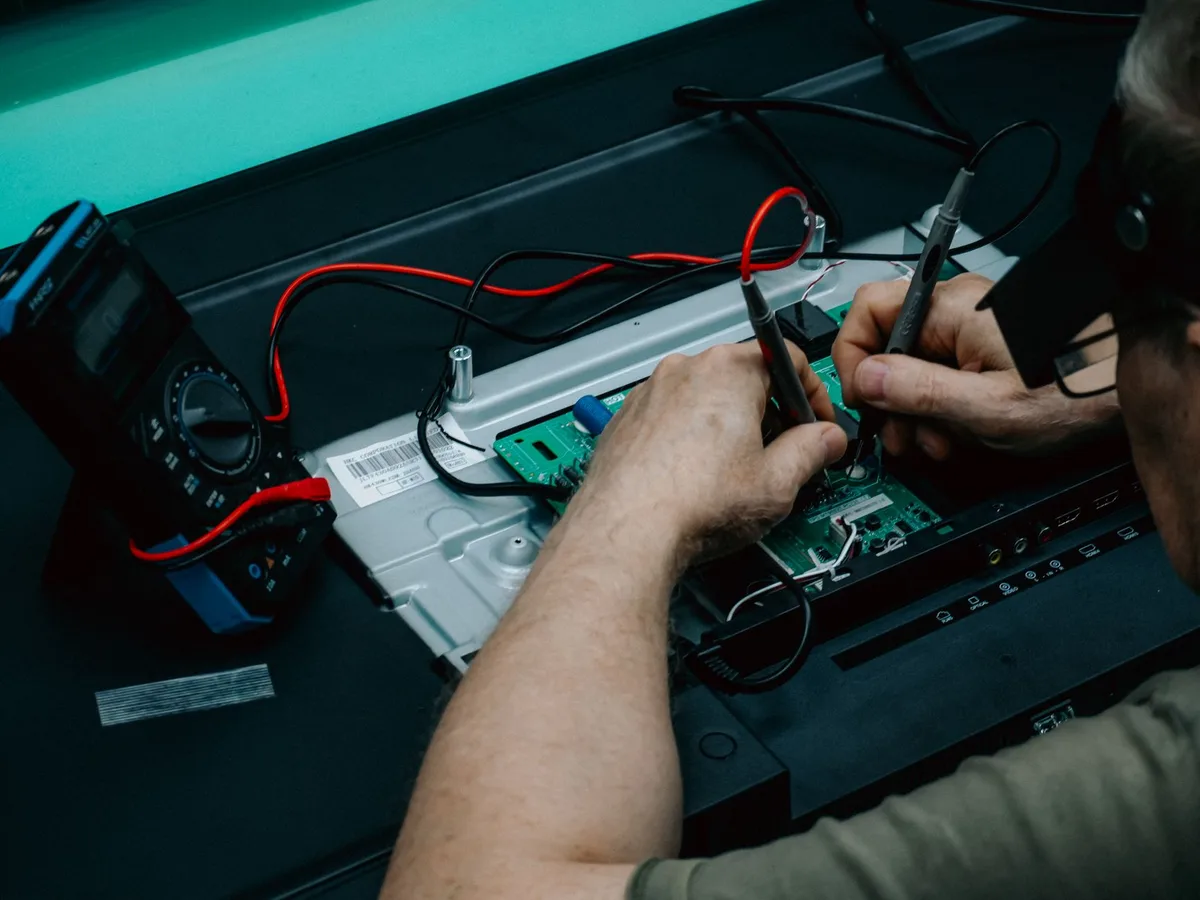
Measurement Category ratings (CAT I through CAT IV) tell you the energy level a meter can survive. Budget meters often print CAT III or CAT IV on the case without the internals to back it up. Teardowns routinely show missing spacing, thin traces, and no real protection.
The fuse is the giveaway. A safe meter uses a high-rupture-capacity (HRC) sand-filled fuse. Many cheap meters ship with a plain glass fuse, or none at all.
On a short, a glass fuse can explode instead of safely breaking the circuit.
The safety framework here is IEC 61010, the standard for handheld test equipment. Look for a genuine mark from a recognized body like UL or Intertek (ETL). If the CAT rating and fuse can't be verified, treat the meter as low-voltage only.
That single rule keeps budget-meter owners out of real trouble.
Common Mistakes That Make a Cheap Meter Look Worse Than It Is
Half the "inaccuracy" people blame on cheap meters is user error. Fix these and your readings tighten up fast. Most cost nothing to correct.
- Dying battery: a weak 9V inside the meter drags readings off. Swap it first.
- Wrong range on manual meters: pick a range that fits the value.
- Dirty or loose probe contact: poor contact adds resistance and jitter.
- No warm-up: give the meter a minute to settle before trusting it.
- Reading too soon: let auto-range stop hunting before you record.
Touching the probe tips with your fingers is another classic. Your skin adds resistance to the reading on high-ohm measurements. Hold the insulated part, not the metal.
One more trap catches people on batteries. A surface charge can read high right after driving. If your meter shows an oddly strong number, that may be why a battery reads 12.6V but still won't crank.
Simple Ways to Check and Improve Your Cheap Meter's Accuracy
You can sanity-check a cheap meter at home without lab gear. The goal is a rough confidence check, not certified calibration. A few known references do the job.
- Test a fresh alkaline AA. A new cell reads close to 1.5 to 1.6 volts.
- Measure a 1% tolerance resistor. The reading should land within its rated band.
- Compare against a known-good meter on the same source.
- Use a cheap precision voltage reference like an LM4040 for a fixed target.
If the numbers line up, trust the meter for everyday work. If one range is way off while others are fine, that range is the weak spot. Note it and work around it.
Replace the bundled leads with silicone-jacketed probes. Better leads lower contact resistance and improve continuity readings. It's the cheapest accuracy upgrade you can make.
What I'd Buy Now: Matching the Meter to the Job
The best meter is the one that fits the work, not the priciest one on the shelf. Match the tool to the task and you rarely overpay. Here's how the choice breaks down.
- Pure automotive and hobby: a $20 to $40 budget meter is plenty for 12-volt work.
- Serious DIY and trades: a mid-range true-RMS meter around $60 to $150.
- Mains, industrial, or precision: a certified pro meter with a genuine CAT rating.
For a garage that mostly checks charging systems, budget is fine. Confirming whether a battery is truly bad needs accuracy a cheap meter already has. Step up only when true-RMS or high-energy safety enters the picture.
If you can stretch the budget once, buy the mid-range tier. As of 2026, that range offers genuine safety and true-RMS at a fair price. It's the meter most home users won't outgrow.
Frequently Asked Questions
Are cheap multimeters accurate enough for car batteries?
Yes. For 12-volt battery and charging checks, budget meters read within ±0.5% to ±1%. That's a difference of roughly 0.05 to 0.1 volts, which never changes your diagnosis.
Just use fresh internal batteries and clean probe contact for the steadiest readings.
Why does my cheap multimeter give different readings each time?
Unstable readings usually come from a weak internal battery, poor probe contact, or auto-range hunting. Cheap meters also settle slowly, so wait a moment before recording. If the number still wanders by several digits, the meter's repeatability on that range is simply limited.
What's the difference between true-RMS and averaging meters?
True-RMS meters measure the real heating value of any AC waveform, including distorted ones. Averaging meters assume a clean sine wave and calculate from there. On dimmers, motor drives, or power supplies, an averaging meter can read 10% to 40% off.
Can a cheap multimeter be dangerous to use?
Yes, on high-energy circuits. Many budget meters overstate their CAT safety rating and use a plain glass fuse instead of a proper HRC one. Keep cheap meters on low-voltage work like batteries and electronics.
Leave mains and industrial panels to a certified meter.
How often should I check a cheap multimeter's accuracy?
Check it whenever readings look suspicious, or roughly once a year for light use. Compare it against a fresh battery, a 1% resistor, or a known-good meter. Cheap meters can drift as they age, and there's usually no way to recalibrate them.
Do more expensive multimeters last longer?
Usually, yes. Pro meters use better components, real input protection, and genuine fuses, so they survive mistakes that kill budget units. A cheap meter may still work for years on gentle, low-voltage tasks.
It just won't shrug off a serious overload the way a quality meter does.

Similar Posts