How Long Can You Safely Leave a Trickle Charger On?
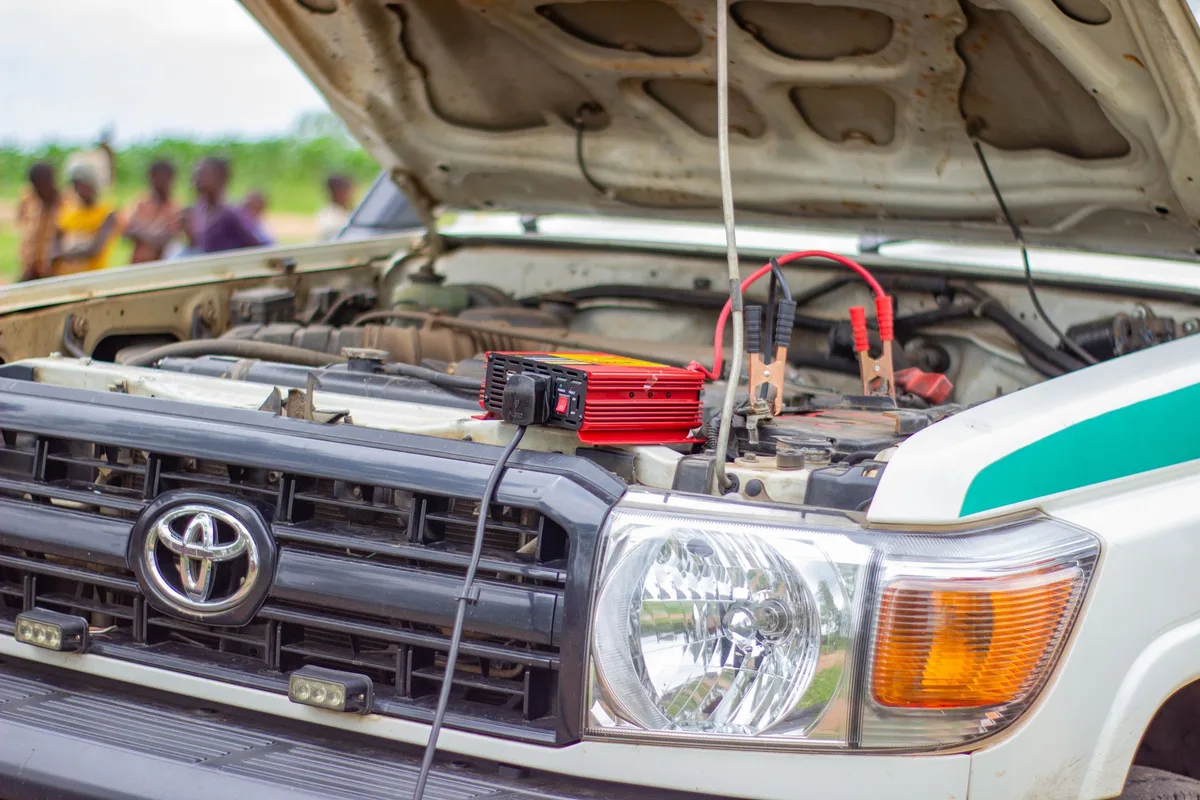
Leaving a battery on charge feels risky, so it's fair to wonder how long can you leave a trickle charger on before something goes wrong. The honest answer depends on one thing: the kind of charger sitting on your bench. A modern smart maintainer can stay connected for months.
An old unregulated unit can cook a battery in a day or two.
That gap matters because lead-acid batteries start gassing once voltage climbs past roughly 14.4V. As of 2026, most name-brand chargers hold a safe float around 13.2V to 13.8V and shut themselves down when full. Older "dumb" chargers never stop pushing current.
Let's sort out which camp yours falls into and how long it can safely stay plugged in.
Quick Answer
A smart trickle charger or battery maintainer can stay on indefinitely. It self-regulates and switches to float mode when full. An unregulated trickle charger should only run for hours, not days.
Left unattended, it overcharges and damages the battery. Always match run time to charger type.
Smart Maintainer vs. Old-School Trickle Charger: Why the Difference Decides Everything
Here's the fork in the road. Everything about safe run time hinges on whether your charger is smart or dumb.

A battery maintainer (often sold as a "battery tender") uses a microprocessor. It charges the battery, then drops to a float voltage and holds it there. When the battery sips a little power, the charger tops it off.
That on-off cycle is why it can sit connected all winter without harm.
An old-school trickle charger is different. It pushes a small, constant current, usually 0.75A to 2A, and never stops. Once the battery is full, that energy has nowhere useful to go.
It turns into heat and gas instead.
- If then rule 1: If your charger says "automatic," "float," "maintainer," or "smart," then long-term use is fine.
- If then rule 2: If it only has an on/off switch and a single amp setting, then treat it as dumb and time it carefully.
Getting this wrong is how good batteries end up swelling on the sides or worse.
How Trickle Charging Actually Works
Trickle charging means feeding a battery a slow, low current that roughly matches its natural self-discharge rate. A parked lead-acid battery loses about 3% to 5% of its charge every month. A trickle charger simply replaces that slow leak.
Smart chargers do it in stages. First comes a bulk stage, then absorption, then a steady float stage for maintenance. That float voltage is the key number.
Hold a 12V battery near 13.2V to 13.8V and it stays full without overcharging.
A resting, fully charged battery reads about 12.6V to 12.8V. If you want to confirm yours is healthy after topping off, our guide on checking a battery once it's charged walks through the numbers. Voltage tells you almost everything about what's happening inside.
First, Figure Out Which Charger You Own
Before you leave anything plugged in, identify your charger. The label and the lights tell the story.
Signs You Have a Smart/Float Charger
- A status light changes from "charging" to "full," "float," or "maintain."
- The box says automatic, multi-stage, microprocessor-controlled, or maintainer.
- It's rated for both charging and long-term storage.
Signs You Have an Unregulated (Dumb) Charger
- One light that stays the same no matter how full the battery is.
- No mention of float, auto, or maintenance mode.
- A simple analog dial or a single fixed output.
Check the Label: Amps, Voltage, and Auto-Shutoff
Flip the unit over and read the output rating. A true trickle charger usually outputs 0.75A to 2A. Look for the words "auto shutoff" or "float." If it's missing, assume the charger keeps pushing current forever.
When in doubt, treat it as dumb and never walk away for days.
| Charger type | Safe to leave on | Auto-shutoff | Best use |
|---|---|---|---|
| Smart maintainer / tender | Weeks to months | Yes | Long-term storage |
| Unregulated trickle | Hours only | No | Quick top-ups, watched |
Safe Time Limits by Charger and Battery Type
Now the part you came for. Here's how long each setup can safely stay connected.
Smart Maintainer on a Lead-Acid or AGM Battery
A smart maintainer on a flooded, AGM, or standard lead-acid battery can stay on for months. It floats the battery and stops the moment it's full. This is the ideal setup for a stored car, and it helps sidestep the common headache of a battery going flat while parked.
Unregulated Charger: The Hours-Not-Days Rule
An unregulated trickle charger is a different animal. Plan in hours, not days. As a rough guide, charge time equals battery amp-hours divided by charger amps.
A 50Ah battery on a 2A charger needs roughly 25 hours to fully charge, so check it well before then.
Leave a dumb charger on too long and the battery gasses hydrogen. That's a real fire risk. The safety folks at OSHA flag ventilation during battery charging for exactly this reason.
Overcharging also boils off water, which can leave the case smelling like rotten eggs.
Lithium (LiFePO4) and Gel Battery Timing
Lithium and gel batteries are pickier. Use a charger set for that exact chemistry. A lead-acid trickle charger can push the wrong voltage into lithium and damage it.
Most quality LiFePO4 chargers stop at full and stay off, so run time isn't the worry. Matching the chemistry is.
What Happens When You Leave It On Too Long
Push current into a full battery and that energy has to go somewhere. On a dumb charger, it turns into heat and gas. That's where the damage starts.
Overcharging, Gassing, and Boiling Off Electrolyte
Overcharging drives voltage past the gassing point, near 14.4V and up. The battery starts breaking water into hydrogen and oxygen. In a flooded battery, the electrolyte level drops and the plates get exposed.
Left long enough, the case heats up, warps, or vents acid.
You'll spot the warning signs fast: a warm or hot case, a hissing sound, or that sharp sulfur smell. If the sides start to bulge, unplug it immediately. A bulging battery case means gas pressure has nowhere to escape.
Sulfation From Undercharging the Wrong Way
Sulfation is the opposite problem. Leave a battery sitting low and lead sulfate crystals harden on the plates. That's why a maintainer beats letting the battery drain in storage.
It also explains why a fresh battery can quietly lose charge if nothing keeps it topped up.
Step-by-Step: Leaving a Trickle Charger On the Right Way
Do it in this order and you'll avoid sparks, bad connections, and guesswork.

- Read the charger label. Confirm the voltage (6V or 12V) and amp output.
- Pick a ventilated spot. A garage with airflow beats a sealed closet.
- Connect positive first. Clamp the red lead to the positive terminal.
- Connect the ground last. Attach the black lead to a clean metal point away from the battery.
- Plug the charger into the wall only after the clamps are secure.
- Watch the first cycle. Confirm the light moves toward "full" or "float."
- For a dumb charger, set a timer. Use amp-hours divided by amps as your estimate.
If the clamps spark hard or the reading looks off, stop and check for a poor ground contact. Loose or corroded terminals throw off the whole charge.
Mistakes That Cook Your Battery (and How to Dodge Them)
Most ruined batteries come down to a handful of repeat errors. Here's what to skip.
- Walking away from a dumb charger for days. Set a timer, every time.
- Assuming every charger is "smart." Check the label first.
- Using a lead-acid charger on lithium. Match the chemistry.
- Ignoring water levels on flooded batteries. Top up with distilled water if needed.
- Charging a frozen or leaking battery. Never do it. Replace it instead.
- Clamping onto corroded terminals. Clean them so current flows cleanly.
One more quiet killer: a hidden electrical drain. If a battery keeps dying even with a maintainer attached, you may have a parasitic current draw pulling it down faster than the charger can keep up.
Safe Charging Practices: Ventilation, Terminals, and Fire Risk
Charging a lead-acid battery releases hydrogen, and hydrogen is flammable. That single fact shapes every safety rule here.
- Charge in a ventilated area. Never in a sealed box or airtight cabinet.
- Keep flames and sparks away. No smoking, no grinding nearby.
- Connect ground last and away from the battery top. That keeps any spark clear of gas.
- Wear eye protection. Acid and eyes don't mix.
- Skip charging a swollen, cracked, or hot battery.
Quality matters too. Look for a charger with reverse-polarity and short-circuit protection, plus a UL or CE listing. Those features stop small mistakes from becoming big ones.
Winter Storage and Long-Term Battery Maintenance
For winter layup, a smart maintainer is the easiest answer. Connect it in fall, leave it through spring, and the battery stays full. Cold speeds up self-discharge, so an unattended battery drops faster in freezing weather.

This is where maintainers earn their keep on motorcycles, boats, RVs, and mowers. All of them sit idle for months. A float charger holds them ready without overcharging.
If you'd rather not leave anything plugged in, disconnect the battery or use a battery disconnect switch. That cuts parasitic drain, though the battery still slowly self-discharges. A maintainer is the only option that keeps it truly full.
Cold-weather no-starts often trace back to a battery that lost charge over a frozen night, which a maintainer prevents outright.
Trickle Charger vs. Battery Tender vs. Disconnecting the Battery
Three common storage options, three different outcomes. Here's who each one suits.
| Option | Keeps battery full? | Effort | Best for |
|---|---|---|---|
| Smart battery tender | Yes, indefinitely | Plug in once | Long storage, any vehicle |
| Unregulated trickle charger | Only while watched | Needs timing | Quick top-ups only |
| Disconnect the battery | No, slow self-discharge | Manual reconnect | Short storage, no outlet |
A battery tender wins for hands-off storage. An unregulated charger works only if you babysit it. Disconnecting suits a car parked a few weeks near no power outlet.
If yours drains oddly even after a full charge, the fault may sit elsewhere, like an alternator that charges but still lets the battery die.
Best Setup For Your Situation: Car, Motorcycle, Boat, RV, and Mower
Match the maintainer to the vehicle and you'll rarely think about it again.
- Daily-driven car: A maintainer only if it sits over a week at a time.
- Stored classic or seasonal car: Smart maintainer through the whole layup.
- Motorcycle, ATV, snowmobile: Small maintainer sized for the smaller battery.
- Boat: A marine-rated maintainer, ideally with terminal ring connectors.
- RV: A maintainer for the chassis battery, plus care for the house bank.
- Riding mower: A basic float charger over the off-season.
The rule holds across all of them. If it's smart, leave it on. If it's dumb, time it.
When a battery still won't hold after all this, it may simply be worn out, and our checklist on spotting a failing battery helps you confirm it.
Frequently Asked Questions
Can you leave a trickle charger on overnight?
Yes, if it's a smart maintainer, overnight is completely safe. It floats the battery and stops when full. An unregulated trickle charger is riskier overnight.
Set a timer or check it before you sleep, since it never shuts off on its own.
Can you leave a battery tender on all winter?
Yes. A battery tender is built for exactly that. It holds the battery at float voltage for months without overcharging.
Connect it in fall and leave it through spring. Just place it somewhere ventilated and check the connections once or twice over the season.
Will a trickle charger overcharge a battery?
A smart charger won't, because it switches to float mode when full. An unregulated trickle charger absolutely can. It keeps pushing current with nowhere for it to go, which heats the battery and boils off electrolyte.
Charger type decides the outcome.
How long does it take to trickle charge a dead car battery?
Roughly the battery's amp-hours divided by the charger's amps. A 50Ah battery on a 2A charger needs about 25 hours. Trickle chargers are slow by design.
For a truly flat battery, a higher-amp charger does the heavy lifting faster and more safely.
Is it safe to leave a trickle charger on unattended?
A smart maintainer is safe unattended for long stretches. A dumb charger is not. Without auto-shutoff, it can overcharge and vent hydrogen while you're away.
Only leave a charger running unattended if the label confirms automatic float or maintenance mode.
Your Quick Decision Guide: How Long to Leave It On
Boil it all down to three questions.
- Is it a smart maintainer? Leave it on for weeks or months. No worries.
- Is it an unregulated trickle charger? Run it in hours, then unplug. Never for days.
- Not sure which you have? Treat it as dumb and use a timer until you confirm.
Match the charger to the battery chemistry, keep the area ventilated, and check the connections. Do that, and a maintainer becomes the cheapest insurance your battery will ever get.

Similar Posts