How to Dispose of a Car Battery Safely & Responsibly

So your car battery's finally given up, and now you're stuck holding a heavy, acid-filled brick you can't just chuck in the bin. Knowing how to dispose of a car battery actually matters, because these things count as hazardous waste, not regular trash. Get it wrong and you're looking at fines, acid burns, and lead leaching into the soil.
Here's the good news. A standard 12-volt lead-acid battery is roughly 99% recyclable, one of the highest recovery rates of any consumer product, per US EPA figures. Most auto parts stores take yours back for free, and you'll often walk away with cash in hand.
Let's start with the fastest answer.
The Quick Answer: Where a Dead Car Battery Actually Goes
To dispose of a car battery, take it to an auto parts store. Nearly all major retailers accept used lead-acid batteries for free. You'll often get a core charge refund of five to twenty dollars.
Household hazardous waste sites and scrap yards accept them too. Never put a car battery in household trash or curbside recycling.
Why You Can't Just Toss a Car Battery in the Trash
A car battery isn't garbage. It's a sealed container of lead and sulfuric acid, both nasty for people and the environment.
Landfilling one is actually illegal across most of the US. The EPA's Universal Waste rules classify used batteries as hazardous, and the vast majority of states ban them from landfills outright. Curbside recycling won't take them either.
Those bins are for paper, glass, and plastics, not battery acid.
Here's what's inside a typical 12-volt battery, and why it's regulated:
- Lead plates: toxic if it enters soil or water, and dangerous to handle bare.
- Sulfuric acid: corrosive enough to burn skin and eat through clothing.
- Polypropylene casing: recyclable, but useless once it's crushed in a trash compactor.
Crush a battery in a garbage truck and you've got a leaking acid hazard plus a fire risk from shorted terminals. That's the whole reason a proper disposal channel exists. And as of 2026, retailers are legally obligated to take your old one back in nearly every state.
First, Figure Out What Kind of Battery You Have
Before you drive anywhere, confirm what you're actually holding. The disposal path splits based on chemistry, and mixing them up is a common mistake.
Lead-Acid, AGM, and EFB Batteries
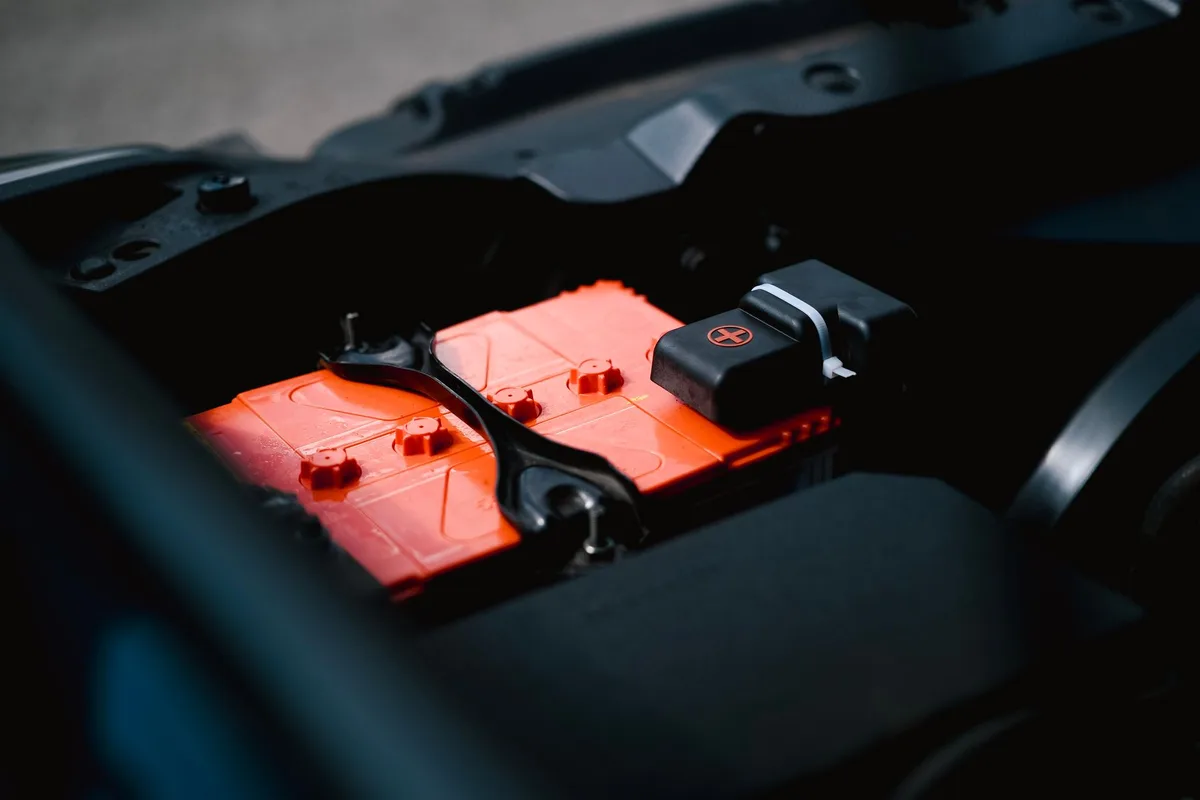
If it's a normal gas or diesel car, you almost certainly have a lead-acid battery. That covers the classic flooded type, AGM (Absorbent Glass Mat), and EFB (Enhanced Flooded Battery). All three go down the same road.
They're heavy, usually 30 to 50 pounds, and rectangular with two posts on top. Any auto parts store recycles all three the same way. You don't need to know which variant you've got.
If it came out of the engine bay and it's this heavy, it's lead-acid.
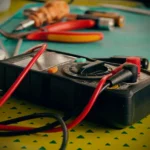
If you're not fully sure the battery is even dead yet, it's worth a quick check first. A simple voltage check with a multimeter tells you whether it's genuinely done or just flat. Sometimes a battery that keeps draining overnight is fine and the real culprit is a parasitic draw.
Lithium-Ion and EV Batteries
Electric vehicle and hybrid drive batteries are a completely different animal. Do not treat these like a normal car battery.
- EV traction packs are high-voltage and must be handled by the dealer or manufacturer.
- Small lithium 12-volt batteries (found in some newer cars) need a lithium-specific recycler.
- Never take a lithium pack to a standard scrap yard.
If you drive an EV or hybrid, call your dealership. They have the equipment and the legal responsibility to handle it safely.
Check the Condition Before You Move It
How you transport the battery depends entirely on its condition. An intact battery is easy. A damaged one needs real care.
Intact and Just Dead
If the case is solid, dry, and not bulging, you're in the clear. Keep it upright, and you can drop it off whenever suits you. No acid is escaping, so a quick trip in the trunk is fine.
Set it inside a sturdy plastic tub or a cardboard box lined with a bag. That catches any residue and stops the battery sliding around on the drive over.
Swollen, Cracked, or Leaking
A bulging, cracked, or wet battery is a hazard, so slow down. Leaking sulfuric acid burns skin and damages surfaces on contact.
- Put on chemical-resistant gloves and eye protection before touching it.
- Keep it perfectly level so acid doesn't pour out.
- Place it in a leak-proof plastic container, never bare in your trunk.
- Neutralize any spilled acid with baking soda and water.
If it's badly damaged, call your local household hazardous waste facility first and ask how they want it delivered. Some retailers won't accept a leaking battery, so a dedicated hazmat site is your safest bet.
Your Disposal Options, Side by Side
You've got four solid routes, and the best one depends on convenience, condition, and whether you want money back. Here's how they stack up.
| Option | Cost to you | Best for | Get money back? |
|---|---|---|---|
| Auto parts store | Free | Most people, easy access | Yes, core refund |
| Hazardous waste site | Free | Leaking or damaged batteries | No |
| Scrap metal yard | Free | Selling by weight | Yes, scrap value |
| Mail-back / pickup | Varies | Rural areas, no store nearby | Rarely |
Auto Parts Store Drop-Off
This is the go-to for nearly everyone. Stores like AutoZone, O'Reilly, Advance Auto Parts, and NAPA accept used lead-acid batteries free, no purchase required.
They're set up for it, they take it on the spot, and they'll refund your core charge if one applies. If you bought a replacement from them, bring the receipt.
Household Hazardous Waste Facility
Your city or county runs one of these for exactly this kind of waste. It's the right call for a leaking or cracked battery a store might turn away.
Check hours before you go, since many only open certain days. There's no refund here, but disposal is free and fully compliant.
Scrap Metal Yard
Scrap yards buy lead-acid batteries by weight because the lead has real value. You'll usually get a few dollars per battery.
This makes sense if you've got several old batteries or you'd rather sell than swap for store credit. Call ahead to confirm current pricing and that they accept them.
Mail-Back and Pickup Services
No auto store within reach? Mail-back kits and scheduled pickups exist for rural drivers. You pay for a certified shipping box that handles the battery safely.
It costs more than a free drop-off, but it keeps you legal when there's no nearby option. For most people in town, though, the parts store down the road is faster and free.
The Core Charge: The Refund Most People Leave Behind
A core charge is a refundable deposit built into the price of a new battery. When you bought your replacement, the retailer likely tacked on five to twenty dollars as a core fee. Bring the old battery back and that money returns to you.
Here's where people lose out. They buy the new battery online or at one store, then toss the dead one at home. That's cash left on the table, forfeited for good.
- Kept your receipt? Take the old core to the same retailer for a full refund.
- Bought online? Check if the seller includes a prepaid core-return label.
- In California and several other states, core deposits are required by law.
If you did the swap yourself, don't skip this step. Returning the core costs nothing and puts a bit of money back in your pocket.
How to Safely Remove and Transport a Used Battery
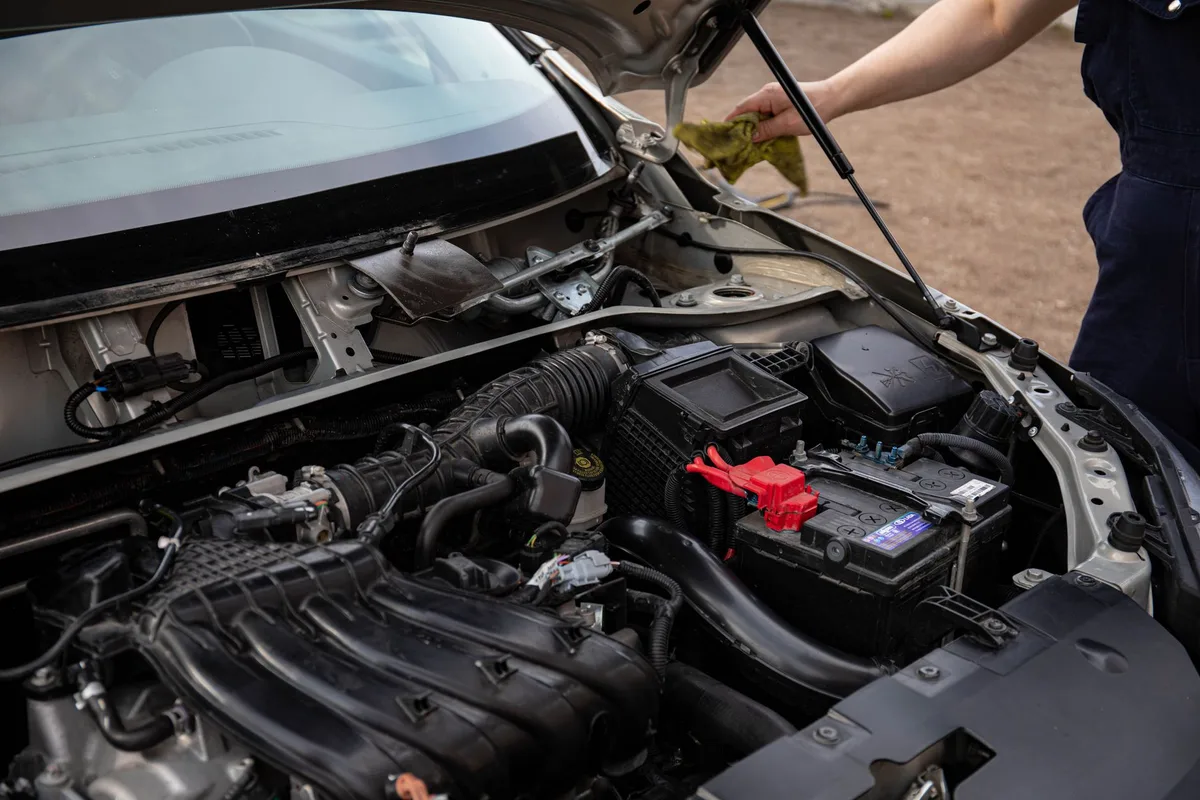
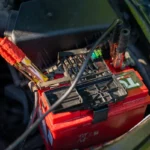
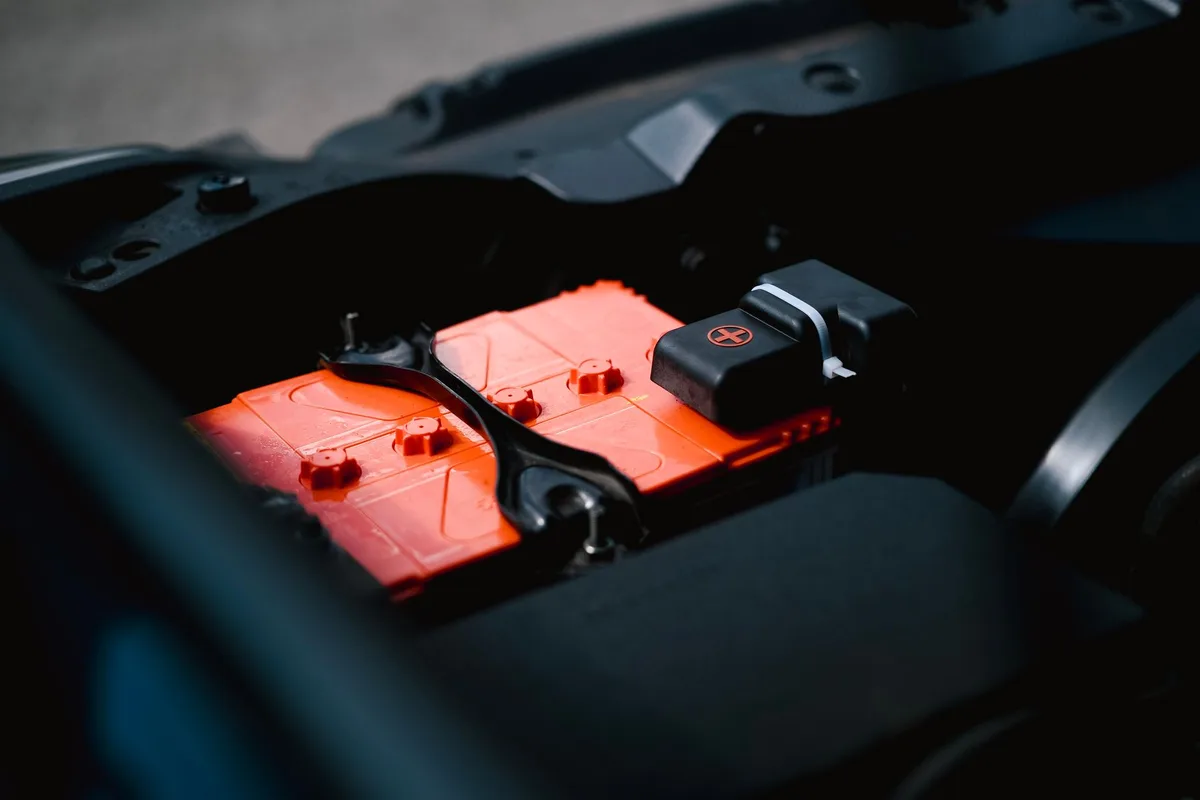
Pulling a battery out is simple if you follow the order. Always disconnect the negative terminal first, then the positive. Doing it in reverse risks sparking against the car's metal frame.
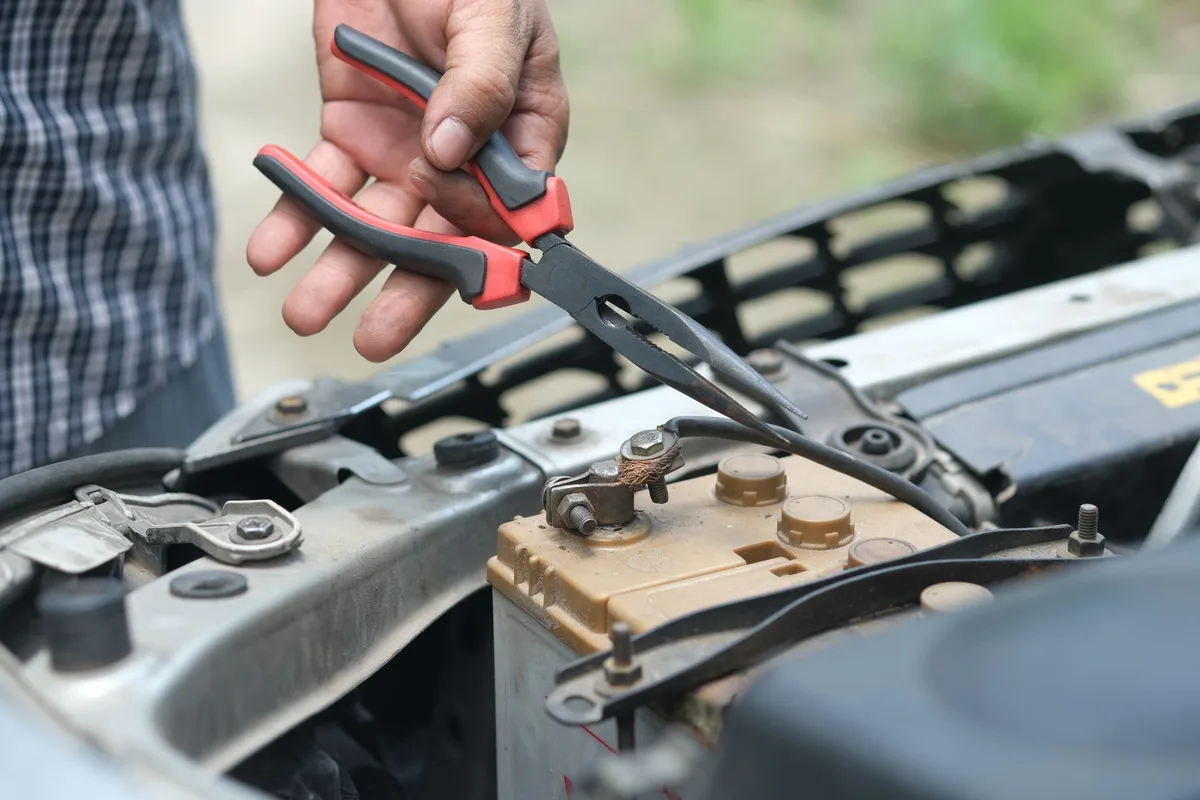
Here's the safe sequence:
- Turn off the engine and let it cool.
- Loosen the negative (black, minus) clamp and lift it clear.
- Loosen the positive (red, plus) clamp next.
- Undo the hold-down bracket, then lift the battery straight up.
- Keep it upright and set it in a plastic tub for the trip.
Wear gloves and safety glasses throughout. Batteries are heavy, so lift with your legs and grip the case, not the terminals. A loose bit of metal touching both posts can short and spark, so tape the terminals if anything might roll around back there.
If the battery came out because the car wouldn't start, it's worth confirming that was the real fault. Sometimes a voltage sag under cranking points to the battery, while a charging system that reads low points to the alternator instead.
Handling a Leaking or Damaged Battery Without Getting Hurt
A leaking battery calls for caution, not panic. The liquid inside is diluted sulfuric acid, and it burns skin, eyes, and clothing on contact. Treat every wet or bulging battery as active.
Gear up before you touch it:
- Chemical-resistant gloves, not thin latex ones.
- Wraparound safety goggles or a face shield.
- Old clothes or an apron you don't mind ruining.
Neutralize any spill with a paste of baking soda and water. It fizzes as it cancels the acid, then wipe it up once the reaction stops. Never use bare hands, even on dried residue.
Seal the battery in a leak-proof bin lined with cat litter or an absorbent pad. Then call your household hazardous waste facility for drop-off instructions. Skin contact with acid needs 15 minutes of flushing under water and, if it's serious, a call to poison control or your doctor.
Mistakes That Cost You Money or a Fine
The biggest errors here are avoidable and easy to spot. Most come down to treating a hazardous item like ordinary junk.
| Mistake | What it costs you |
|---|---|
| Tossing it in the trash | Illegal dumping fine, environmental harm |
| Skipping the core return | Losing your five to twenty dollar refund |
| Laying it on its side | Acid leaks in your trunk |
| Leaving terminals exposed | Sparks, shorts, possible fire |
| Storing it on bare concrete | Corrosion and slow discharge over time |
One more trap: mixing chemistries. Never hand a lithium pack to a lead-acid recycler, and never toss any battery in with electronics recycling that isn't set up for it.
If a battery went dead sooner than expected, look at why before you replace it again. A hidden current draw while parked can kill a brand-new battery just as fast as an old one.
What It's Worth: Core Refunds, Scrap Value, and Fees
A used car battery has real value, which is why disposal is usually free or even pays you. Here's a realistic look at the numbers as of 2026.
| Route | Typical payout or cost |
|---|---|
| Core charge refund | 5 to 20 dollars back |
| Scrap yard (by weight) | A few dollars per battery |
| Auto parts drop-off | Free, no fee |
| Hazardous waste facility | Free at most sites |
| Mail-back kit | You pay for shipping |
Core refunds and scrap value both trace back to lead, which recyclers reclaim and reuse. A single battery holds around 20 pounds of it.
Don't expect to get rich. One battery nets you a few bucks at most. But between a core refund and free recycling, there's almost never a reason to pay to get rid of one properly.
The Laws and Rules Behind Battery Disposal
Battery disposal is regulated, and the rules favor recycling. Under the EPA's Universal Waste program and the Resource Conservation and Recovery Act (RCRA), lead-acid batteries are hazardous waste. Nearly every US state bans them from landfills.
Retailers carry part of the responsibility too. Most states require any store selling car batteries to accept used ones back. Many also mandate that core deposit we covered, which nudges people to return the old unit.
In the UK and EU, similar take-back duties apply under battery regulations. Council recycling centres accept them free. Wherever you live, the pattern holds: dumping is illegal, and free recycling is the legal default.
Safe Storage If You Can't Drop It Off Right Away
Sometimes you can't get to a drop-off the same day, and that's fine. A dead battery stores safely for weeks if you handle it right.
- Keep it upright at all times to prevent acid leaks.
- Set it on wood or cardboard, never bare concrete.
- Choose a cool, dry, ventilated spot away from kids and pets.
- Cover the terminals with tape so nothing shorts across them.
Cold makes matters worse for any battery, dead or alive. Freezing temperatures speed up the drop in battery performance, and a discharged battery can even freeze and crack its case. Store it indoors if winter's biting, and don't let it sit for months.
Frequently Asked Questions
Can I throw a car battery in the regular trash?
No. Car batteries are hazardous waste and banned from landfills in most states. Household trash and curbside recycling won't take them.
Drop yours at an auto parts store or hazardous waste facility instead. It's free, legal, and usually earns you a small refund.
Do auto parts stores really take old batteries for free?
Yes. Chains like AutoZone, O'Reilly, Advance Auto Parts, and NAPA accept used lead-acid batteries at no charge, no purchase required. Most states legally require battery sellers to take them back.
Bring your receipt if you're also claiming a core charge refund.
How much is a used car battery worth?
A used car battery is typically worth a few dollars for scrap, or five to twenty dollars as a core charge refund. The value comes from the roughly 20 pounds of recyclable lead inside. Scrap yards pay by weight, while retailers refund the core deposit from your purchase.
What do I do with a leaking or swollen battery?
Handle it with gloves and eye protection, keep it level, and seal it in a leak-proof container. Neutralize any spilled acid with baking soda and water. Then call your local hazardous waste facility for drop-off instructions, since some retailers won't accept a damaged battery.
Is an EV or hybrid battery disposed of the same way?
No. High-voltage EV and hybrid traction packs must go back to a dealer or manufacturer. They're too dangerous for a standard scrap yard or store bin.
Small lithium 12-volt batteries need a lithium-specific recycler. When in doubt, call your dealership first.
Your 30-Second Disposal Decision Guide
Here's the whole thing boiled down. Match your situation to the right move and you're done.
- Battery is intact and dead? Drop it at any auto parts store, free.
- Bought a replacement? Return the old core for your refund.
- Battery is leaking or swollen? Gear up, seal it, call hazardous waste.
- Got several old batteries? A scrap yard pays by weight.
- No store nearby? Use a certified mail-back kit.
- Driving an EV or hybrid? Call the dealer, don't DIY it.
The rule underneath all of it is simple. Never bin a car battery, always keep it upright, and grab the refund you're owed. Do that, and you've handled it the safe, legal, and free way.

Similar Posts