Why Your Car Cranks Slowly: Causes & Easy Fixes
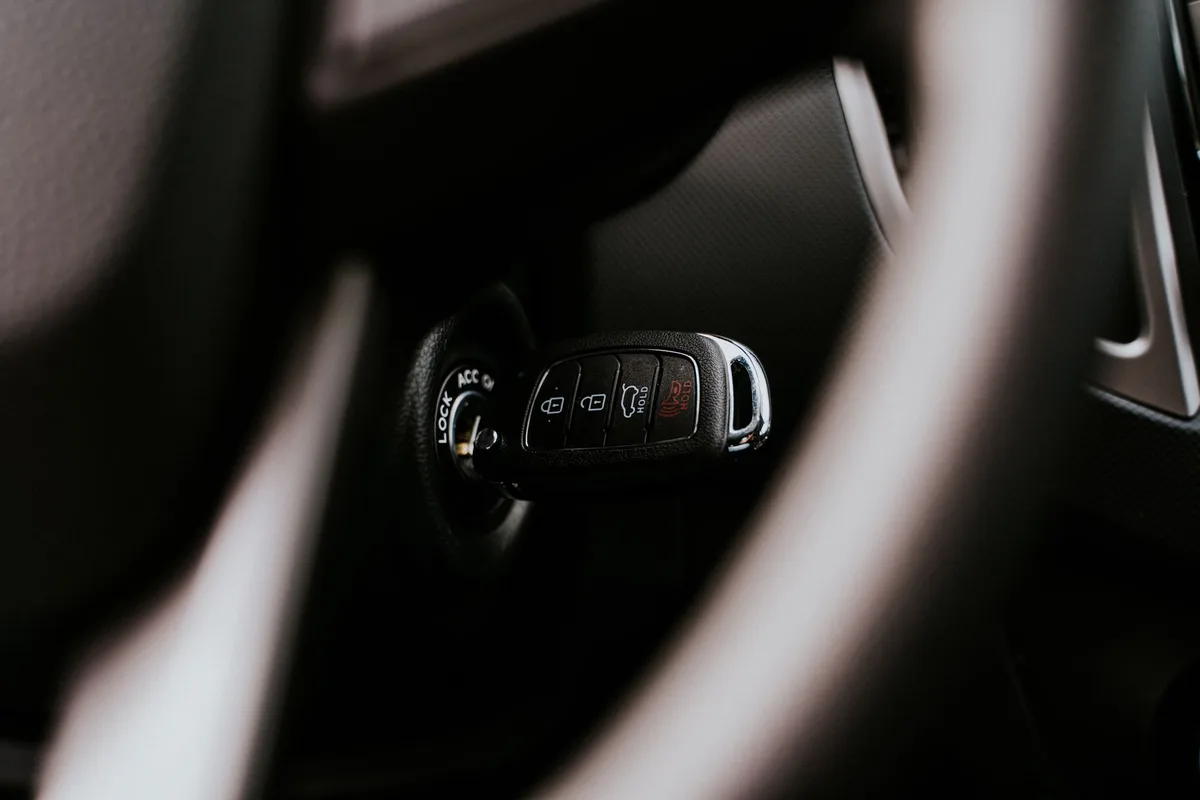
You turn the key, and instead of a quick, eager start, the car cranks slowly. That lazy "rur… rur… rur" sound is your starting system telling you something's off. Most of the time it's a weak battery or a bad connection, not a dead car.
The good news? You can usually pin down the cause in about ten minutes with basic tools.
The trick is reading the clues in the right order. A healthy battery rests at 12.6 volts, and cranking amps are rated using the SAE Cold Cranking Amps (CCA) standard, a spec you'll see printed right on the battery. As of 2026, most no-start calls still trace back to the battery or its cables, not the starter.
So before you spend money, let's work through the symptoms together.
Quick Answer
A car that cranks slowly usually means a weak battery or a bad connection. Corroded terminals and a low charge top the list. A worn starter or poor ground can also drag the crank.
Test battery voltage first, then check the cables. Replace the starter only after ruling those out.
Why a Slow Cranking Engine Is a Warning You Shouldn't Ignore
A slow crank is the last polite warning before a full no-start. Today it barely turns over. Tomorrow you get a click, or nothing at all.
That's why it pays to act early. A sluggish crank strains every part of the starting circuit. The starter pulls harder, the battery drains deeper, and heat builds in the cables.
Left alone, a small issue snowballs. A loose terminal that only slows the crank now can cook itself into a melted connection later. Catching it early keeps a five-minute fix from becoming a tow.
There's a safety angle too. Getting stranded in traffic, a dark parking lot, or freezing weather is more than an inconvenience. A car that starts reliably is a car you can trust.
What a Slow Crank Actually Sounds Like (and What It's Telling You)
A slow crank has a distinct, dragging rhythm. Instead of a fast "rurrurrur" that fires right up, you hear a labored "rur… rur… rur" that struggles to spin the engine. The engine is turning, just too slowly to start cleanly.
That sound is different from other no-start noises. Learning to tell them apart saves you a lot of guesswork.
- Slow, dragging crank: the engine turns but lacks power. Usually a weak battery, bad connection, or tired starter.
- Single loud click: the starter solenoid engages, but there's not enough juice to spin the motor. Often a very low battery or corroded connection.
- Rapid clicking (chatter): the solenoid pulls in and drops out fast. Classic sign of a nearly dead battery.
- Fast, normal crank but no fire: the starting system is fine. Look at fuel or spark instead.
If you hear the dragging crank, you're in the right guide. That symptom points squarely at power delivery. A healthy battery only sags so far when the starter hits it, and knowing why that sag happens makes the next tests easier to read.
The 3 Usual Suspects: Battery, Connections, or Starter
Almost every slow crank comes down to three things. Work through them in this order, cheapest and easiest first.
| Suspect | What goes wrong | How common | Rough fix cost |
|---|---|---|---|
| Battery | Low charge, aging, or sulfated. Can't deliver enough amps | Most common | $120 to $250 |
| Connections | Corroded terminals, loose clamps, bad ground strap | Very common | $0 to $30 |
| Starter | Worn brushes or bushings drawing extra current | Less common | $150 to $450 |
Here's the logic. The battery stores and delivers the power. The connections carry it.
The starter turns it into motion. A weak link anywhere in that chain slows the crank.
Batteries are the number one culprit, especially past the three to five year mark. Cranking power depends on that SAE-rated CCA figure, and groups like SAE International set the testing standards behind it. As a battery ages, its real-world output drops well below the number on the label.
Connections are the sneaky one. A little corrosion or a loose clamp adds resistance, and resistance chokes the amps your starter needs. It's also the cheapest fix, which is why we check it early.
If a resting battery shows a healthy voltage but still won't spin the engine over, a bad connection is often hiding behind that reading.
Read the Symptoms First: Dim Lights vs Bright Lights vs Clicking
Before you grab a single tool, watch your dashboard and headlights while cranking. This one observation splits the problem in half. It tells you whether you're chasing a power problem or a starter problem.
Slow Crank With Dim Dash Lights
If the lights fade hard when you turn the key, the battery or its connections are struggling. The whole electrical system is starving for voltage.
This points to a low or failing battery, or a corroded connection bleeding off power. If the lights dim sharply during a slow crank, start with a battery voltage test and a terminal check.
Slow Crank With Bright Lights
If the lights stay bright but the engine still cranks slowly, the battery is probably fine. Power is reaching the dash, so the fault sits closer to the starter itself.
Then your suspect list shifts. Look at a high-resistance connection feeding the starter, a bad ground, or a worn starter motor dragging under load.
Slow Crank With a Click or Rapid Clicking
If a slow crank turns into a single click or rapid chatter, the battery is critically low. There simply isn't enough current to keep the solenoid engaged.
Charge or jump the battery and retest. If it cranks normally afterward, you've likely found a weak battery or a poor connection starving it.
Start Here: The 5-Minute Terminal and Cable Check
Always start with the connections. It's free, it's fast, and it fixes a surprising number of slow cranks. Bad terminals mimic a dead battery, and plenty of people replace a perfectly good battery over a little corrosion.
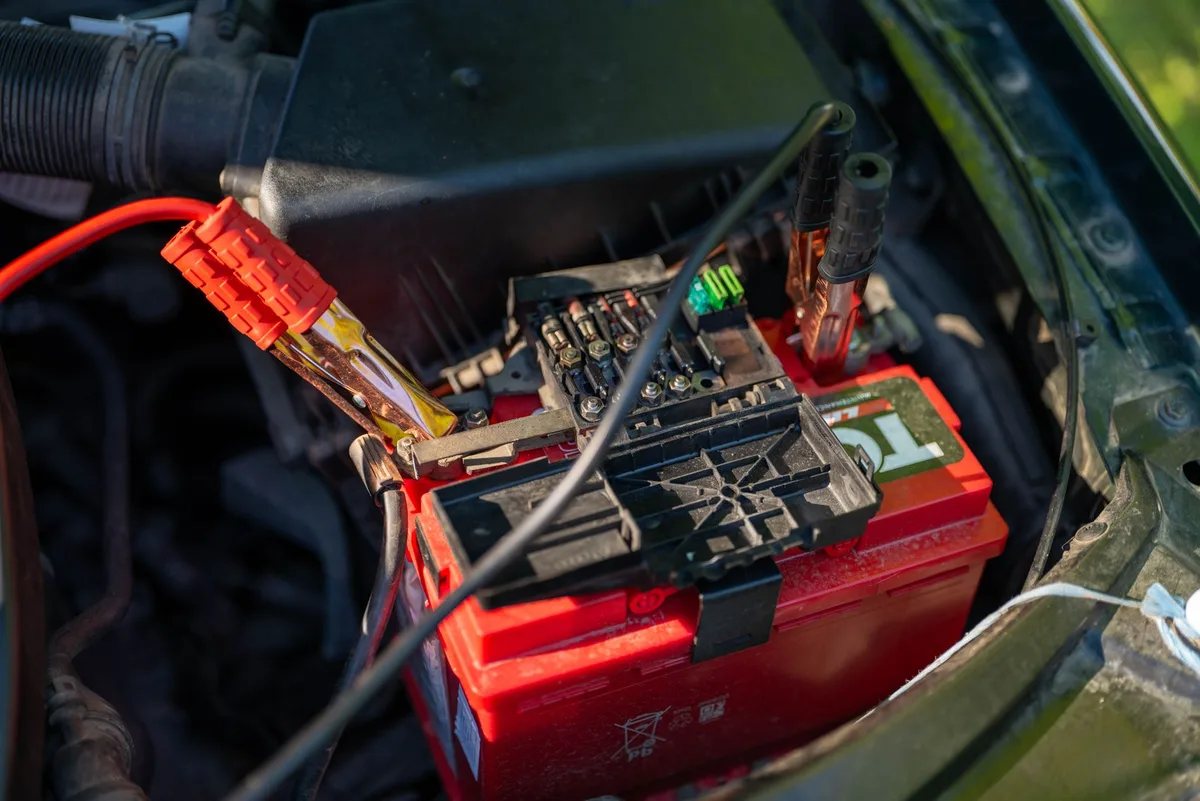
Work through these steps with the engine off and the key out.
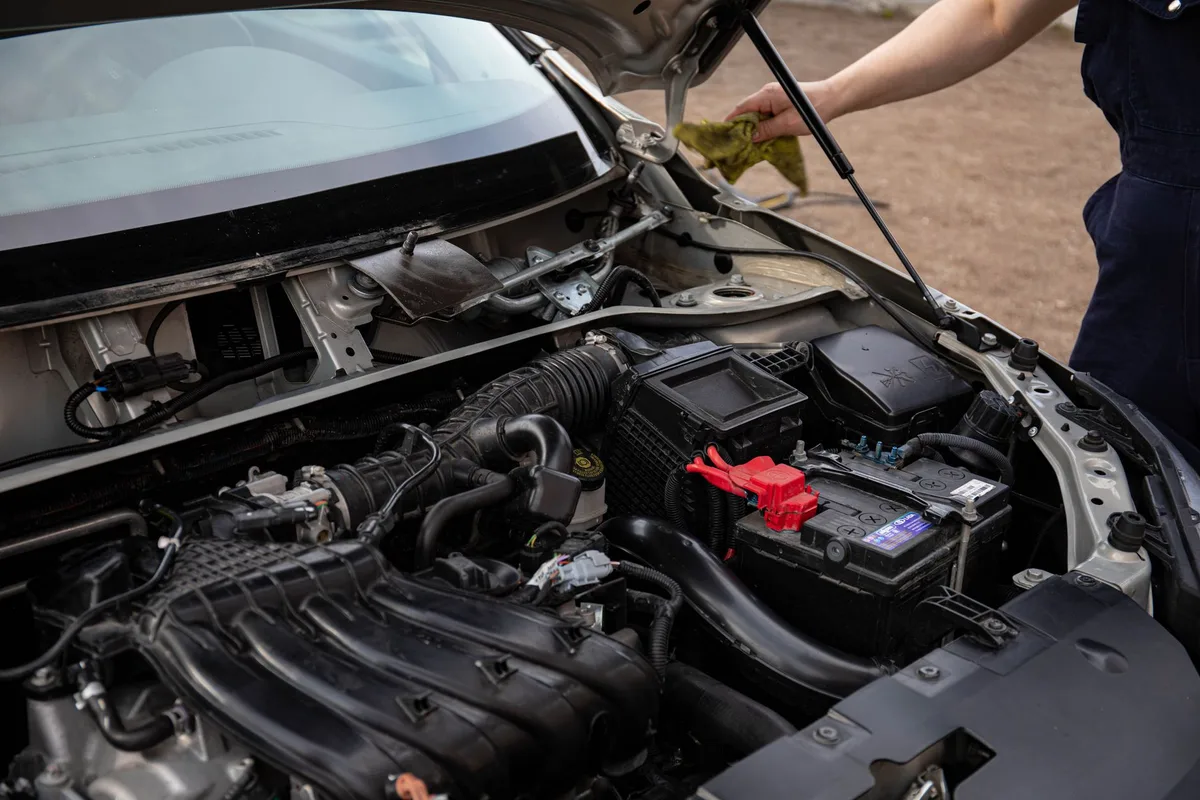
- Look at both terminals. White, green, or bluish crust means corrosion is adding resistance.
- Wiggle each clamp by hand. A terminal that moves is a loose connection, and loose means slow.
- Clean the corrosion. Use a mix of baking soda and water with a wire brush, then dry it off.
- Tighten the clamps snugly. Don't overtighten and crack the post, just make them solid.
- Trace the negative cable to its ground point on the engine or chassis. Make sure that bolt is clean and tight.
That ground strap matters more than people think. A corroded engine-to-chassis ground creates resistance the starter feels directly. If cleaning it up brings the crank back to life, you just saved yourself a battery or a starter.
One more tip: a smear of dielectric grease or terminal protectant after cleaning keeps corrosion from creeping back. If everything here looks clean and tight but the slow crank sticks around, it's time to measure what the battery is doing.
Test the Battery With a Multimeter (Resting and Under Load)
Grab a cheap digital multimeter and set it to 20V DC. This is the single most useful test for a slow crank. It turns guesswork into a number.
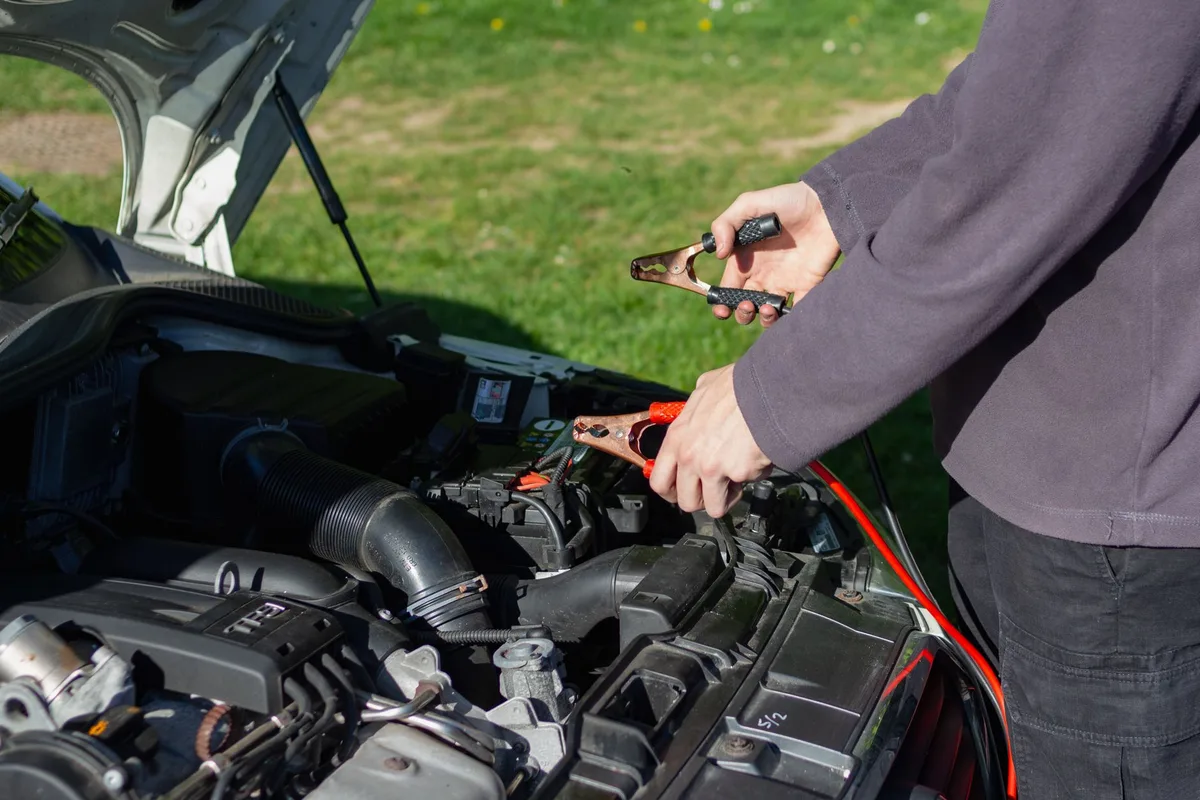
If you're unsure which dial position to use, picking the right range takes two seconds and keeps your readings accurate.
Resting Voltage Numbers That Matter
Test with the engine off and everything switched off. Touch red to the positive post and black to the negative. Here's how to read it.
| Resting voltage | State of charge | What it means |
|---|---|---|
| 12.6V or higher | 100% | Healthy and fully charged |
| 12.4V | ~75% | Slightly low, still workable |
| 12.2V | ~50% | Getting weak, recharge it |
| 12.0V or lower | 25% or less | Nearly flat, expect a slow crank |
A reading of around 12.4 volts is passable but not full. Once you drift down toward the 12.2 volt mark, the battery is only half charged and a sluggish crank makes sense.
What a Load Test Reveals
Resting voltage only tells half the story. A battery can read 12.6V and still collapse under load. That's why the cranking test matters.
Keep the meter connected and have someone crank the engine. Watch the voltage. If it drops below about 9.6 volts while cranking, the battery is weak and can't hold up.
A healthy battery stays above 9.6V during a normal crank.
Voltage Drop Test: Finding a Hidden Bad Connection or Ground
A voltage drop test finds resistance that a plain voltage reading misses. This is how you catch a bad cable or ground that's quietly choking your starter. It measures voltage lost across a connection while the circuit is working.
Here's the method. Set the meter to 20V DC. Put the probes on both ends of a single connection, say the battery post and the cable clamp, while a helper cranks.
- Reading under 0.2V: the connection is solid.
- Reading of 0.3V to 0.5V: marginal, worth cleaning.
- Reading above 0.5V: a real problem. That connection is stealing power.
Test each link in the chain. Positive post to starter, and the negative path from battery to engine block. If you find a high drop on the ground side, clean that strap before condemning any expensive part.
A bad ground is one of the most overlooked slow-crank causes.
When It's Actually the Starter (and How to Confirm)
Suspect the starter when the battery tests strong, the connections are clean, and the lights stay bright during a slow crank. At that point, the power is there but the motor can't use it well.
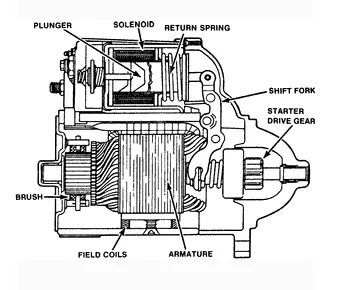
A tired starter draws more current than it should. Worn brushes, dry bushings, or a dragging armature all force it to spin slowly. On many engines a healthy starter pulls roughly 100 to 250 amps during a crank.
A worn one spikes higher and still turns lazily.
Two quick confirmations help.
- Heat soak test: a starter that cranks fine cold but slows when the engine is hot is often failing internally.
- Tap test: a gentle tap on the starter body with a wrench sometimes frees a stuck spot and it cranks normally. That's a strong sign the starter is on its way out.
If the battery and cables check out and the starter still drags, replacement is the fix. A remanufactured unit costs less than OEM and works fine for most drivers.
Cold Weather, Thick Oil, and Short Trips: The Sneaky Causes
Sometimes the parts are fine and the conditions are the problem. Cold is the biggest one. A battery loses a big chunk of its cranking power as temperatures fall.
At 0°F, a battery can lose 30% to 50% of its available amps. The U.S. Department of Energy points to cold slowing the chemical reaction inside the cells.
At the same time, cold thickens your engine oil, so the starter has to fight more drag. That combo explains a lot of frosty-morning slow cranks, and what cold does to battery voltage is worth knowing before winter.
Thick or wrong-grade oil hurts year-round. Using a heavier viscosity than your manual calls for makes the engine harder to spin.
Short trips are the quiet killer. Quick drives never fully recharge the battery, so it slowly falls behind. If you only drive a few minutes at a time, the battery stays chronically undercharged and cranks slower over time.
Is the Alternator Undercharging Your Battery?
The alternator recharges your battery while you drive, so a weak one leaves you starting on a half-empty tank. If your battery keeps going flat and cranking slower each morning, the charging system deserves a look.
Test it with the engine running. A healthy alternator should show roughly 13.5 to 14.7 volts at the battery. Below 13.5V, it isn't charging well.
Above 14.7V, it's overcharging and cooking the battery.
If your resting battery keeps landing low no matter how much you drive, the battery-versus-alternator question is easy to settle with the same meter. A parasitic drain can mimic this too, pulling the battery down overnight. Checking for an abnormal current draw rules out a hidden electrical leak before you replace anything.
The Slow-Crank Decision Tree: Symptom to Fix, Step by Step
Run these checks in order and stop the moment one lands. Each step rules out a suspect before you spend money.
- Watch the lights while cranking. If they dim hard, go to step 2. If they stay bright, jump to step 4.
- Inspect and clean the terminals and ground. If the crank improves, you're done.
- Test resting and cranking voltage. If it's below 12.4V resting or under 9.6V cranking, charge or replace the battery.
- Run a voltage drop test on the cables and ground. Above 0.5V means clean or replace that connection.
- Test alternator output at 13.5V to 14.7V. Out of range means the charging system.
- Everything checks out but it still drags? The starter is the culprit.
Mistakes That Lead People to Replace the Wrong Part
The most expensive mistake is swapping the starter first. Our research into repair complaints shows plenty of good starters get tossed when a dirty terminal was the real fault. Always test the cheap stuff first.
- Buying a battery on voltage alone. A battery can read 12.6V and still fail under load.
- Ignoring the ground strap. It carries as much current as the positive cable.
- Skipping the load test. Resting numbers hide a weak battery.
- Overtightening clamps and cracking a post. Snug, not brutal.
- Forgetting recent short trips or a cold snap that just drained a healthy battery.
What Each Fix Typically Costs and When It's Worth DIY
Most slow-crank fixes are cheap and beginner friendly. Cleaning terminals costs almost nothing and takes ten minutes. That alone solves a big share of cases.
| Fix | Typical cost | DIY difficulty |
|---|---|---|
| Clean terminals and ground | $0 to $15 | Easy |
| Recharge battery | $0 to $40 | Easy |
| New battery | $120 to $250 | Easy |
| Starter replacement | $150 to $450 | Moderate to hard |
| Alternator replacement | $300 to $600 | Moderate |
Terminal cleaning, charging, and battery swaps are well within DIY range. Starter and alternator jobs depend on where the part sits. If it's buried behind the engine, a shop may be worth it.
Safety Rules Before You Touch the Battery or Starter
Batteries store real energy and give off hydrogen gas, so treat them with respect. Wear eye protection and work in a ventilated spot. A spark near the battery can ignite that gas.
- Disconnect the negative terminal first, and reconnect it last.
- Keep metal tools from bridging both posts. That's a dead short.
- Never lean over the battery while cranking or jump-starting.
- Connect jumper cables in the right order, grounding the last clamp to bare metal away from the battery.
Recycle old lead-acid batteries at a proper drop-off. They're regulated for good reason, and most auto parts stores take them free.
How to Keep Your Starting System Healthy Year-Round
A little upkeep prevents most slow cranks. Check your terminals a couple of times a year and keep them clean and tight. A thin coat of dielectric grease keeps corrosion from creeping back.
Drive long enough to fully recharge the battery, especially in winter. If you only take short hops, a periodic top-up with a smart charger keeps it healthy. Test your battery each fall before the cold hits.
Most batteries last three to five years. If yours is past that and cranking slower, plan for a replacement before it strands you.
Slow Cranking FAQs
Can a slow crank still start the car and be fine?
Not really. If it starts but drags, something is already weak. It's an early warning, so test the battery and connections before it fails completely.
How do I know if it's the battery or the starter?
Watch the lights while cranking. Dim lights point to the battery or connections. Bright lights with a slow crank point to the starter or a bad ground.
Will a jump-start fix a slow crank?
Only temporarily. A jump gets you moving, but if the battery is weak or the alternator isn't charging, the slow crank returns. Use it to confirm the battery, not as a cure.
Why does my car crank slowly only on cold mornings?
Cold cuts battery output and thickens engine oil, so the starter works harder. A battery near the end of its life shows this first. Test it before winter.
Your Quick Diagnosis Guide: What to Do Next
Start cheap and work up. Clean the terminals and ground, then test the battery resting and under load. Those two steps solve most slow cranks.
If the battery and connections check out, look at the alternator and finally the starter. Match the fix to the symptom, and you'll avoid replacing parts you don't need. A ten-minute test today beats a tow tomorrow.
Similar Posts