What Size Battery Does My Car Need? Easy Guide
Figuring out what size battery does my car need comes down to three things: the physical group size, the cold cranking amps, and the battery type your car was built for. Get those right and the battery drops in, cranks strong, and lasts its full life. Get one wrong and you're looking at a battery that won't fit, won't start on a cold morning, or dies years early.
The good news? You don't need a mechanic to work this out. Your exact spec is printed on the old battery and in your owner's manual, and it follows standards set by Battery Council International (BCI).
As of 2026, most passenger cars run a 12-volt battery rated between 400 and 850 cold cranking amps. Let's start with why the wrong size causes so much grief.
Quick Answer
Your car needs the battery group size, cold cranking amps (CCA), and chemistry that match its factory spec. Find the group number and CCA on the old battery label or in the owner's manual. Match or exceed the CCA, never go below it.
Keep the same group size so it fits the tray. Start-stop cars require an AGM or EFB battery, not a standard flooded one.
Why Putting the Wrong Battery in Your Car Causes No-Starts and Early Failure
The wrong battery fails in three ways: it won't physically fit, it can't crank the engine, or it fights your car's charging system. Each one costs you money and time.
Fitment is the first trap. If the case is too tall, the hood or a cover won't close. If the terminals sit on the wrong side, your cables won't reach.
That's the "R" in a group number, and we'll cover it soon.
Then there's starting power. A battery with too few cold cranking amps might turn the engine on a mild day and then leave you stranded at 10 degrees. Cold saps a battery's output by roughly a third near 0°F.
If you're already under-spec, that gap gets ugly fast. This is also why a healthy-looking battery can still struggle, and it ties into why voltage sags during a start.
The quietest failure is chemistry. Drop a standard flooded battery into a start-stop car and it can't handle the constant charge cycling. It'll wear out in a year or two, and some cars throw charging faults on top of it.
Match the type your car expects and you avoid all of that.
The Three Numbers That Actually Decide Battery Size: Group, CCA, and Reserve
Three specs decide the right battery, and people mix them up all the time. Here's what each one means in plain terms.
- Group size (fit): The BCI group number sets the case dimensions, terminal layout, and hold-down style. This is what makes the battery physically fit your tray.
- Cold cranking amps (starting power): CCA is the amps a battery delivers for 30 seconds at 0°F while staying above 7.2 volts. Higher CCA means stronger cold starts.
- Reserve capacity (backup runtime): RC is how many minutes the battery can run a 25-amp load before it drops to 10.5 volts. It's your cushion if the alternator quits.
| Spec | What it controls | Where you'll see it |
|---|---|---|
| BCI group size | Physical fit and terminals | 24F, 35, 47, 65, H6 |
| Cold cranking amps (CCA) | Cold starting power | 550 CCA, 650 CCA |
| Reserve capacity (RC) | Backup runtime | 90 min, 120 min |
Think of group size as "will it fit," CCA as "will it start," and RC as "will it hold up." You want all three to meet or beat the factory number. If you're weighing raw starting current more broadly, our take on how much cranking current a battery should supply breaks it down further.
How to Find Your Car's Exact Battery Spec in Under 5 Minutes
The fastest source is the battery already in your car. The label lists the group size and CCA right on top. No guessing required.
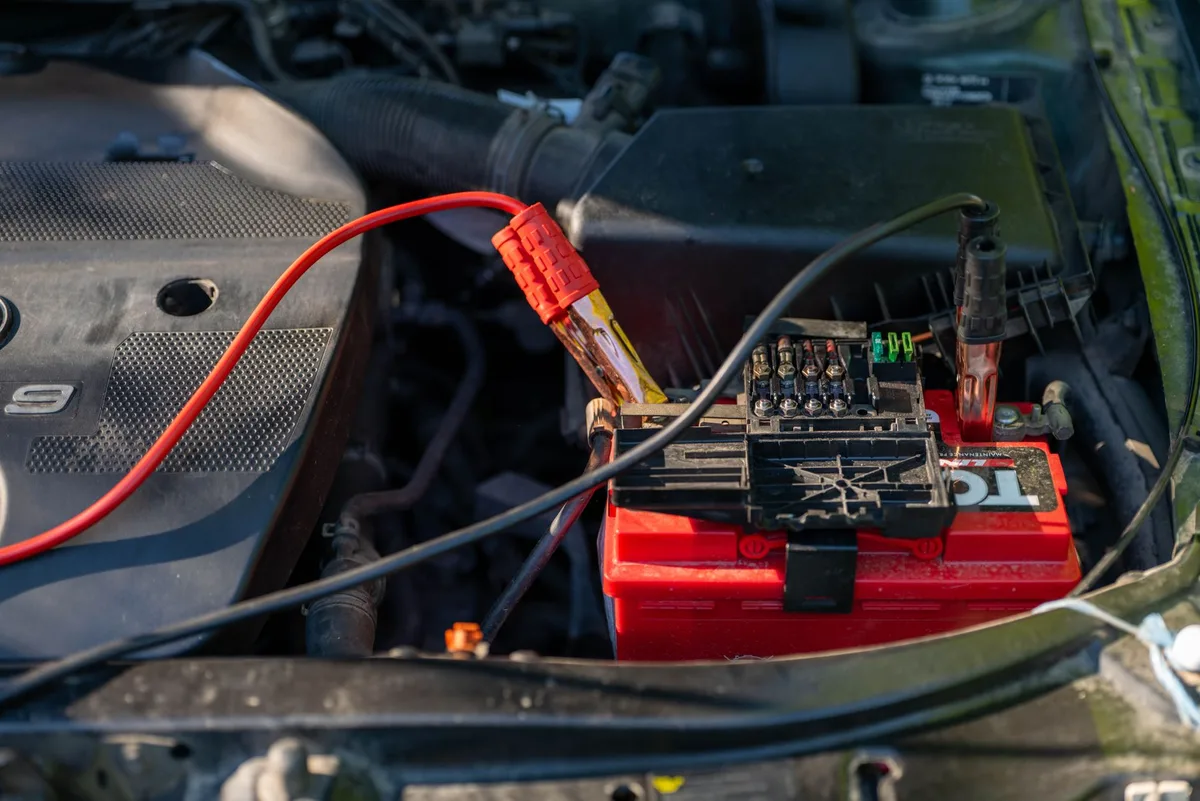
Reading the Label on Your Old Battery
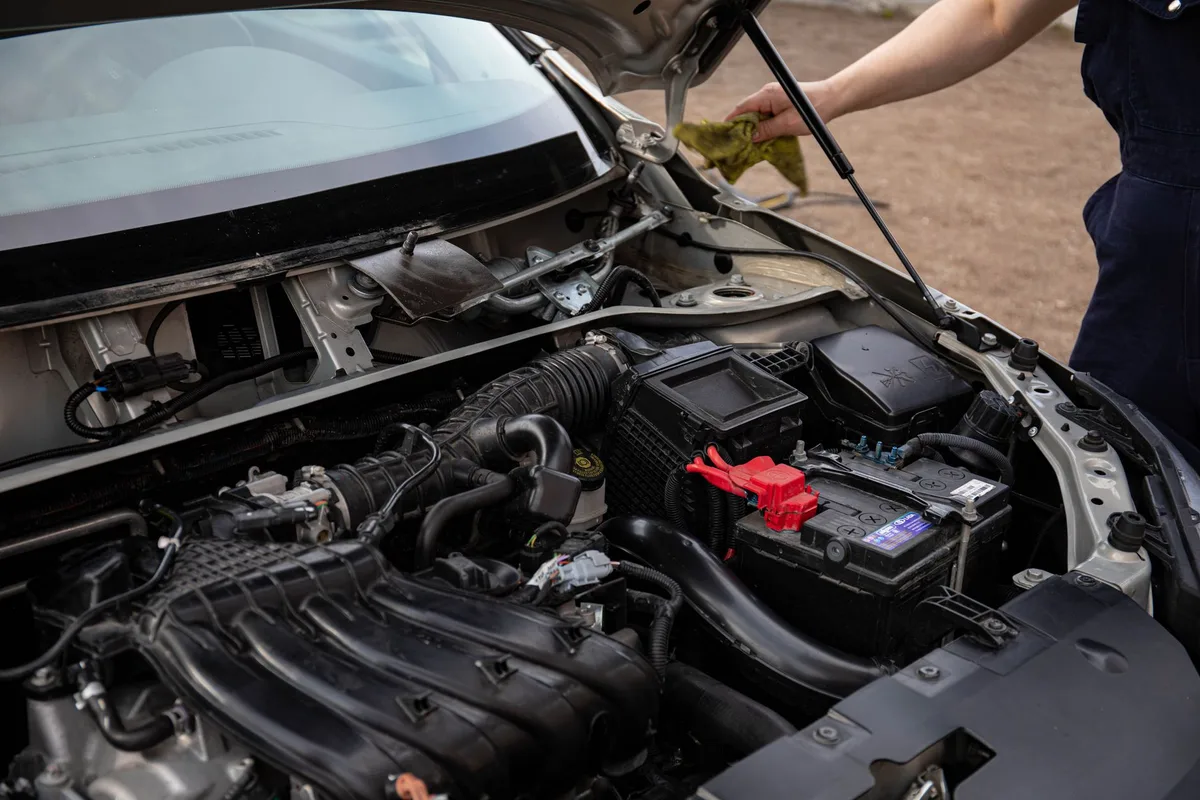
Pop the hood and look at the top or side of the current battery. You're hunting for two things.
- The group size, often near the terminals (for example, "Group 35" or "H6").
- The CCA rating, printed as a number followed by "CCA" or "A (EN)" on European labels.
Jot both down. If the battery is the factory original, that spec is your baseline. If someone swapped it before, double-check against the manual, because a past owner may have fitted the wrong one.
Checking the Owner's Manual and Year-Make-Model Lookup
If the label is faded or missing, go to the owner's manual. Look under "battery," "specifications," or "capacities." Most manuals list the recommended group size and CCA outright.
No manual handy? Use a battery retailer's fitment tool and enter your year, make, model, and engine. The engine matters.
A 4-cylinder and a V6 in the same model often take different CCA ratings.
- If the label and manual agree: buy that exact spec.
- If they disagree: trust the manual, then match or exceed its CCA.
- If you're still unsure: measure the tray and note terminal position before you shop.
A weak or dying battery can muddy your reading, so it helps to confirm the old one's health first. Our guide on checking a battery with a multimeter walks through a quick voltage test.
BCI Group Size Explained: What "24F," "35," "H6," and the "R" Really Mean
A BCI group size is a standardized code for a battery's dimensions and terminal layout, set by Battery Council International. It tells you the battery will fit a specific tray, nothing about its power. Two batteries in the same group can have very different CCA.
North American cars use numbers like 24, 35, 47, 48, 49, and 65. European sizing often uses "H" codes, so H5, H6, H7, and H8 line up with groups 47, 48, 49, and 49-plus. Japanese cars may use JIS numbers instead.
You can see the full standard through Battery Council International.
Now the letters. An "F" (as in 24F) means a front-mounted terminal variant of that group. The tricky one is "R," which flips the terminal positions.
- No "R": positive terminal is on the standard side for that group.
- "R" suffix (like 51R or 35R): positive and negative are reversed.
Get the polarity wrong and your cables land on the opposite corners from where they need to be. Here's a quick reference for common groups.
| Group size | Typical fit | Region/style |
|---|---|---|
| 24 / 24F | Many Toyota, Honda, Nissan | North American |
| 35 | Japanese sedans and SUVs | North American (JIS-based) |
| 47 (H5) | Compact European, some VW | European (DIN/EN) |
| 48 (H6) | Midsize European, many GM | European (DIN/EN) |
| 49 (H8) | Larger European sedans | European (DIN/EN) |
| 65 | Ford trucks and large cars | North American |
Match the group first. Then, and only then, compare CCA and reserve capacity within that group.
How Many Cold Cranking Amps (CCA) You Need for Your Climate
Start with your car's factory CCA, then adjust up for cold. The manual's number is the minimum, not a suggestion. You can always go higher, but never lower.
Cold is the enemy here. A battery near 0°F delivers roughly 30 to 35% less current than it does at room temperature, while a cold engine's oil is thicker and harder to turn. That's a double hit right when you need power most.
If winter starts feel sluggish, our notes on how cold weather changes battery readings explain what's happening.
Here's a simple way to decide:
- If you live where winters are mild: match the factory CCA and you're set.
- If you see hard freezes and snow: pick the highest CCA available in your group size.
- If you run a big audio system, a winch, or lots of accessories: lean toward higher CCA and reserve capacity.
- If your climate is hot year-round: CCA matters less, but heat kills batteries faster, so prioritize a quality battery and good reserve.
One myth worth clearing up: extra CCA won't hurt your car. Your starter only pulls the amps it needs, so a higher-rated battery simply gives you margin. That margin keeps you starting on the coldest mornings, and it explains why a fresh battery cranks so much stronger than a tired one that barely holds voltage under load.
Reserve Capacity and Amp Hours: Why They Matter for Accessory Load
Reserve capacity is your safety net when the alternator stops charging. It tells you how long the battery alone can run your lights, ignition, and pump before it fades. A higher RC buys you more time to reach a shop if the charging system fails on the road.
Amp hours (Ah) measure total energy storage and show up more on European and start-stop batteries. A typical car battery lands around 45 to 70 Ah. More Ah generally means more reserve and better tolerance for repeated deep cycling.
Who needs to care most about reserve? A few groups:
- Short-trip drivers whose batteries rarely fully recharge.
- Cars with heavy loads: big stereos, heated seats, dash cams, winches.
- Anyone in a hot climate where heat quietly drains capacity.
If your car keeps running flat between drives, reserve capacity alone won't fix a bad charging habit. A parasitic drain could be the real culprit, and our breakdown of what a safe key-off current looks like helps you check.
Flooded vs EFB vs AGM: Matching Chemistry to Your Car
Match the chemistry your car was built for, then match or upgrade within it. Putting a lesser type in a car that expects more is the fastest way to void a warranty and kill a battery early.
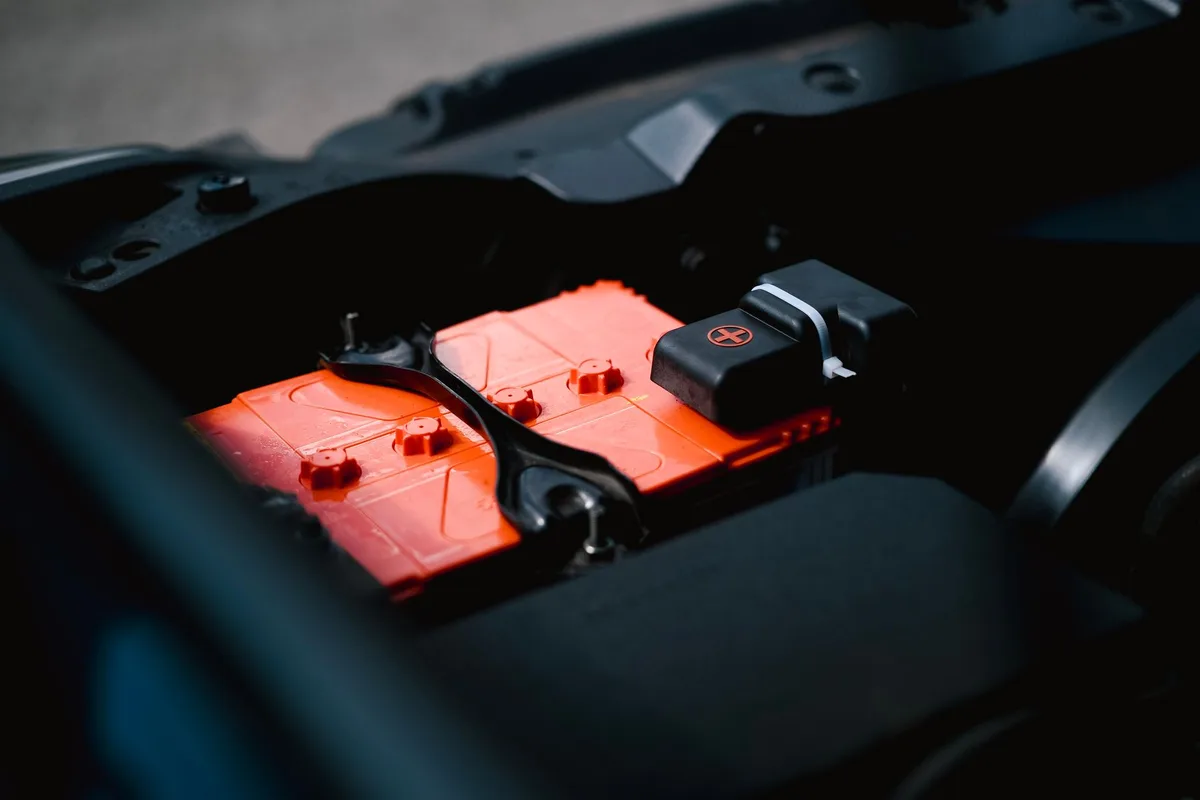
Here's how the three common types stack up.
| Type | Best for | Key trait |
|---|---|---|
| Flooded (SLI) | Older, simpler cars | Cheapest, standard cranking |
| EFB | Entry start-stop cars | Tougher than flooded, mid-price |
| AGM | Start-stop, high-load cars | Sealed, deep-cycle tolerant, priciest |
Flooded batteries are the classic lead-acid design and work fine in cars without start-stop. EFB (Enhanced Flooded Battery) handles more charge cycles and suits basic start-stop systems. AGM (Absorbed Glass Mat) is sealed, vibration-resistant, and built for constant cycling and heavy electrical demand.
You can move up a tier, say from EFB to AGM, but never down. An AGM car needs AGM.
Why Start-Stop Cars Can't Take a Standard Battery
Start-stop cars kill the engine at every red light and restart it constantly. That hammers the battery with far more charge and discharge cycles than a normal car sees. A standard flooded battery isn't built for it and wears out fast.
These systems also use a battery management system (BMS) that expects a specific chemistry. Fit the wrong type and the car may disable auto start-stop, throw a warning, or charge the battery incorrectly. Stick with the AGM or EFB spec your manufacturer lists.
Battery Size Decision Guide by Car Type and Situation
Use this quick if/then path to land on the right battery fast. Match the first condition that fits your car.
- If your car has no start-stop and mild winters: a flooded battery in your factory group size and CCA is all you need.
- If your car has basic start-stop: fit at least an EFB, and go AGM if the manual calls for it.
- If your car has an AGM label or a heavy electrical load: fit AGM in the correct group size, matching or beating the CCA.
- If you face hard freezes: pick the highest CCA in your group, in the chemistry your car requires.
- If you added aftermarket gear (audio, lights, fridge): prioritize higher reserve capacity alongside the right chemistry.
When two batteries fit and share the chemistry, the tiebreaker is simple. Take the one with higher CCA and reserve capacity. The extra headroom costs a little more and pays off in cold starts and lifespan.
Common Battery Sizing Mistakes That Kill Fitment and Warranty
Most sizing errors trace back to a handful of avoidable slips. Here are the ones our research sees most often.
- Buying by price, not spec. A cheaper battery in the wrong group won't clamp down or fit the tray.
- Ignoring the "R" suffix. Reversed terminals leave your cables too short to reach.
- Going below the factory CCA. It may crank in summer, then fail in the cold.
- Fitting flooded in a start-stop car. Premature failure and charging faults follow.
- Skipping battery registration on European cars. The BMS keeps charging for the old battery and shortens the new one's life.
One more subtle trap: blaming the battery when the real fault is elsewhere. A weak alternator or a parasitic drain can flatten a brand-new, perfectly sized battery. Before you assume the size was wrong, it's worth learning to separate a charging fault from a bad battery.
Battery Group Size and CCA Reference Chart by Vehicle Type
Use this as a starting point, then confirm against your own label or manual. Exact fitment varies by trim and engine, so treat these as typical ranges, not gospel.
| Vehicle type | Common group sizes | Typical CCA range |
|---|---|---|
| Compact sedans | 35, 51R, 47 (H5) | 450–600 |
| Midsize sedans | 24F, 35, 48 (H6) | 550–700 |
| Small/midsize SUVs | 24F, 48 (H6), 49 (H8) | 600–750 |
| Full-size trucks | 65, 94R, 49 (H8) | 650–850 |
| European luxury | 48 (H6), 49 (H8) | 680–850 |
Notice the pattern. Bigger engines and heavier vehicles need more CCA, and European models lean on AGM in H-code sizes. Always verify the positive terminal side before buying, since one wrong letter changes everything.
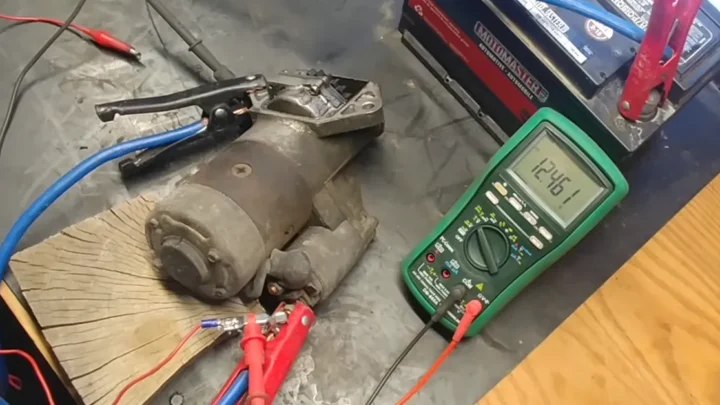
If your reading still looks off after fitting the right battery, test the resting voltage. A healthy battery sits near 12.6 volts, and our note on what a mid-range 12.4-volt reading signals helps you judge whether it's charged or slipping.
Battery Registration, BMS Reset, and Safe Install Steps
Many modern cars, especially European ones, need the new battery "registered" to the battery management system. Skip it and the car keeps charging for the old battery's age, which cooks the new one early. A basic scan tool or a shop can handle registration in minutes.

A safe swap follows a simple order:

Similar Posts