What Causes a Parasitic Draw? Common Culprits Explained
You come out to a dead battery for the third time this month, and you're wondering what causes a parasitic draw before you drop more cash on jump-packs and replacement batteries. A parasitic draw is any electrical load still pulling current from your 12V battery after the ignition is off. It's the difference between a battery lasting five years and one that dies every couple of weeks.
In our research across OEM service bulletins and SAE guidance, a healthy key-off current on a modern CAN-bus vehicle sits between 30 and 85 milliamps once every module has slept. Anything sustained above 100 mA usually points to a fault. As of 2026, more than 70% of new cars run always-on telematics, which reshapes the diagnostic playbook.
Here's how to think about it before you start yanking fuses.
Quick Answer
A parasitic draw is caused by any circuit or device that keeps drawing current after the vehicle is fully asleep. Common culprits include aftermarket electronics on constant 12V, modules that refuse to sleep, stuck relays, courtesy lights kept on by bad switches, and corroded grounds. Alternator diode leakage is a smaller but real factor.
A healthy vehicle sits under 85 mA once asleep.
What a Parasitic Draw Actually Is (and Why It Kills Batteries)
A parasitic draw, sometimes called key-off current or dark current in European service literature, is the small amount of amperage a vehicle still consumes with the key out and the doors closed. Every modern car has some. The keyless entry receiver listens for the fob.
The clock keeps time. The BCM stays in a low-power watch state.
Trouble starts when that draw stays too high after the vehicle should be asleep. A typical Group 24 battery holds around 60 amp-hours of usable charge. At 50 mA, it takes roughly 40 days to fully discharge.
At 500 mA, it's under 5 days. Push the number past a full amp and you're looking at overnight death.
The real damage isn't just an inconvenient dead battery. Lead-acid chemistry hates being discharged. Repeated deep cycling sulphates the plates and permanently drops capacity.
That's why cars with an unresolved draw often chew through two or three batteries before anyone connects the dots.
How Much Key-Off Current Is Normal on a Modern Vehicle
Normal isn't a single number. It depends on the age of the vehicle and how much always-on electronics live in it. Older cars from before the CAN-bus era typically settle at 20 to 50 mA.
Anything built in the last decade sits higher because modules stay in listening states for longer.
| Vehicle type | Healthy asleep draw | Investigate at |
|---|---|---|
| Pre-2005 vehicles | 20 to 50 mA | Over 75 mA |
| Modern CAN-bus (2010+) | 30 to 85 mA | Over 100 mA sustained |
| Vehicles with telematics (OnStar, Uconnect, SYNC) | 40 to 90 mA | Over 120 mA sustained |
| Cars with aftermarket alarms or trackers | 50 to 100 mA | Over 150 mA sustained |
Two things matter more than the exact figure. The reading has to be taken after the vehicle is truly asleep. And the current has to be stable.
Fluctuating readings usually mean a module is still cycling or a wake-up event is retriggering. For the baseline first, our guide on what a healthy 12V battery reads sets the reference numbers.
The Real Top Causes of a Parasitic Draw
Most parasitic draws trace back to a small group of repeat offenders. In our review of independent shop tech surveys and OEM technical bulletins, aftermarket wiring and non-sleeping modules top the list every single time. Alternator faults come up far less often than internet forums claim.
Aftermarket Electronics Wired to Constant 12V
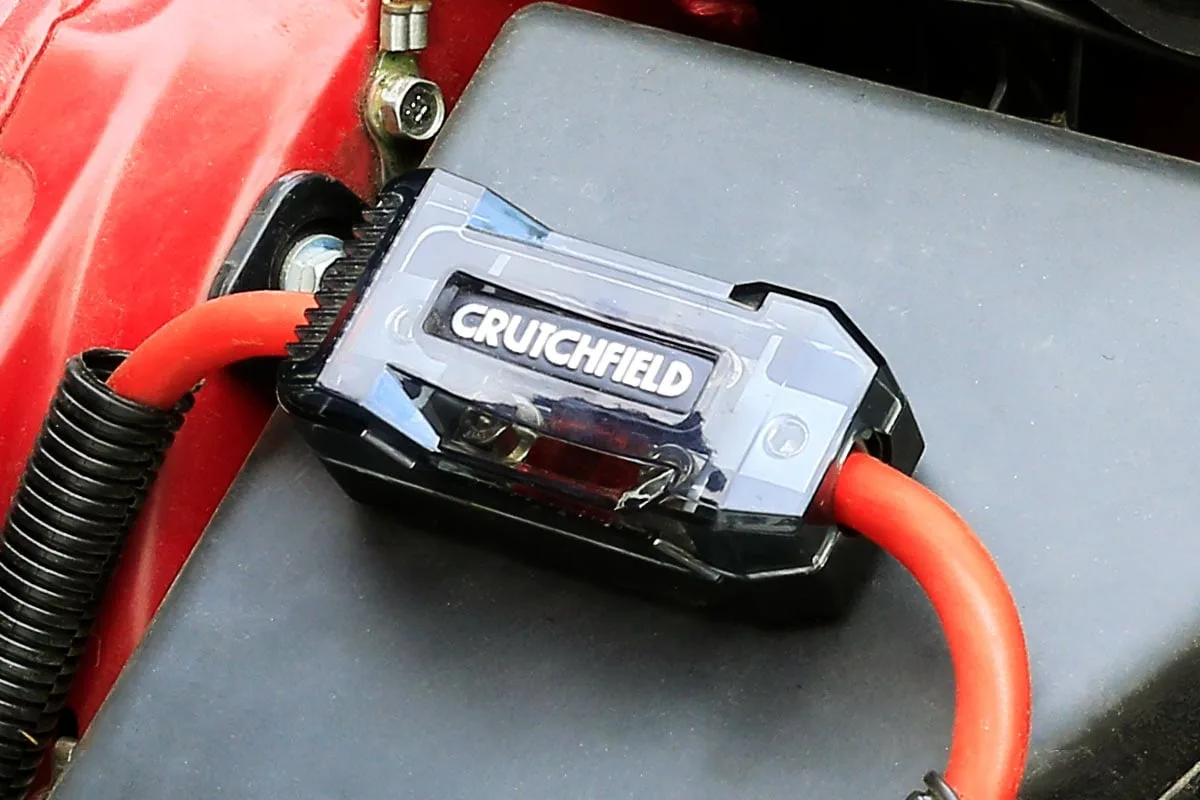
This is the single most common cause reported by working techs. Dash cams, hard-wire kits, remote starters, GPS trackers, aftermarket amplifiers, and cheap LED light bars often get tapped straight into the battery or a permanent 12V feed. Many draw 100 to 400 mA on their own.
Poorly wired amps that never see a proper remote turn-on signal keep the whole audio chain on standby.
Modules That Refuse to Go to Sleep
Body Control Modules, infotainment head units, and telematics cell modems sometimes get stuck awake. A corrupted software state, a stuck wake-up input, or a failing module can hold current around 300 to 800 mA indefinitely. This one usually needs a scan tool to catch in the act.
Stuck Relays and Failing Switches
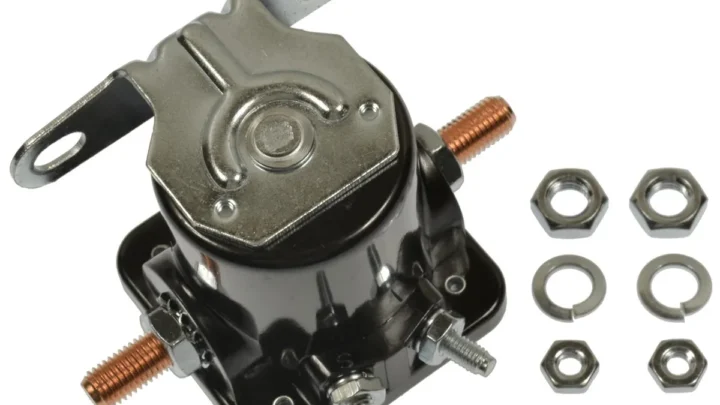
Fuel pump relays, cooling fan relays, and A/C compressor clutch relays can weld shut internally. A stuck relay energises its load 24/7. That load might be a fuel pump pulling 4 to 6 amps.
The clue is a hot fuse or a warm relay body long after key-off.
Interior, Trunk, Glovebox, and Under-Hood Lights
A door jamb switch that never breaks contact, a hood latch switch stuck by rust, or a broken glovebox pin can leave a lamp on. It sounds trivial. A single 5-watt bulb pulls around 400 mA.
Modern LED courtesy strips are lower but still enough to flatten a battery over a weekend.
Corroded Grounds and Water-Damaged Harnesses
Water gets into tail light housings, trailer connectors, and door harnesses. Corrosion creates unintended paths to ground that let current sneak through where it shouldn't. This is the hardest cause to trace because the reading often changes with humidity.
Alternator Diode Leakage
A leaky diode in the alternator's rectifier pack can back-feed the battery through the charge circuit. It happens, but not as often as the internet suggests. If you've ruled out the easy stuff, our breakdown of whether a failing charge system can flatten a battery walks through the check.
How to Tell a Parasitic Draw From a Weak Battery or Bad Alternator
The symptoms overlap, so sort them out before you go hunting a draw that isn't there. Start with the battery itself. A resting voltage below 12.4V after an overnight sit points to a discharged or sulphated battery, not always a draw.
Next, watch the pattern. A parasitic draw kills the battery slowly and consistently. The car starts fine on Monday, weak on Wednesday, dead on Friday.
A weak battery is dead cold in the morning but recovers after a longer drive. A failing alternator shows itself while running, with dimming lights, warning lamps, or voltage under 13.5V at 1,500 rpm.
Our walkthrough on sorting out which one is actually failing covers the quick tests. If the battery load-tests fine and the alternator holds voltage, you're looking at a draw.
The 20 to 45 Minute Sleep Rule Most People Get Wrong
Here's where most DIY diagnoses go sideways. Modern vehicles don't go to sleep the moment you close the door. Modules stay awake for a programmed timeout, monitoring for wake-up events like door reopens, remote key presses, or motion at the hood.
The timeout runs anywhere from 20 minutes on most Asian brands up to 45 minutes on European brands like BMW, Mercedes, and Audi.
Hook up a meter, close the door, and read the current after two minutes, and you'll see a hugely inflated number. It might read 600 mA when the real steady-state draw is 60 mA. You'll chase phantoms all afternoon.
Per SAE test procedures and manufacturer service data, wait out the full timeout with the vehicle undisturbed before recording anything. For the underlying test standards, SAE International publishes the documentation OEMs work from.
Practical tips for triggering a real sleep cycle:
- Close every door, the hood, and the trunk fully.
- Lock the vehicle with the fob, then step out of range.
- Don't open a door to check the meter. Use a window-routed lead or a low-current DC amp clamp.
- Give it 30 minutes minimum. On a Euro brand, 45.
Skip this step and every reading after it will lie to you.
How to Measure Parasitic Draw the Right Way
There are three practical ways to measure key-off current. Pick the one that fits your tools and the size of the suspected draw. The core rule stays the same across all three.
Never break the circuit while the vehicle is waking up.
Multimeter in Series (Traditional Method)
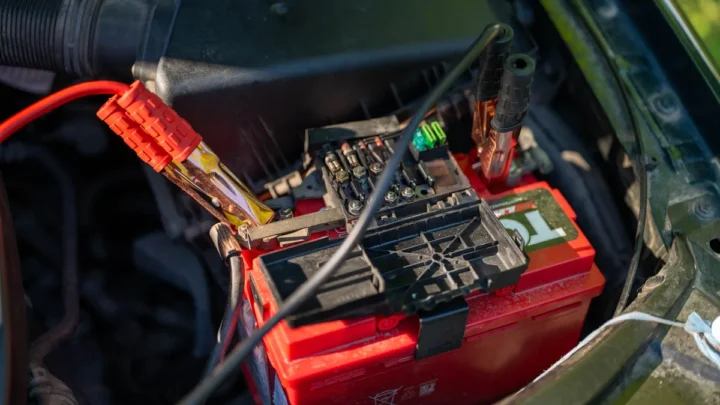
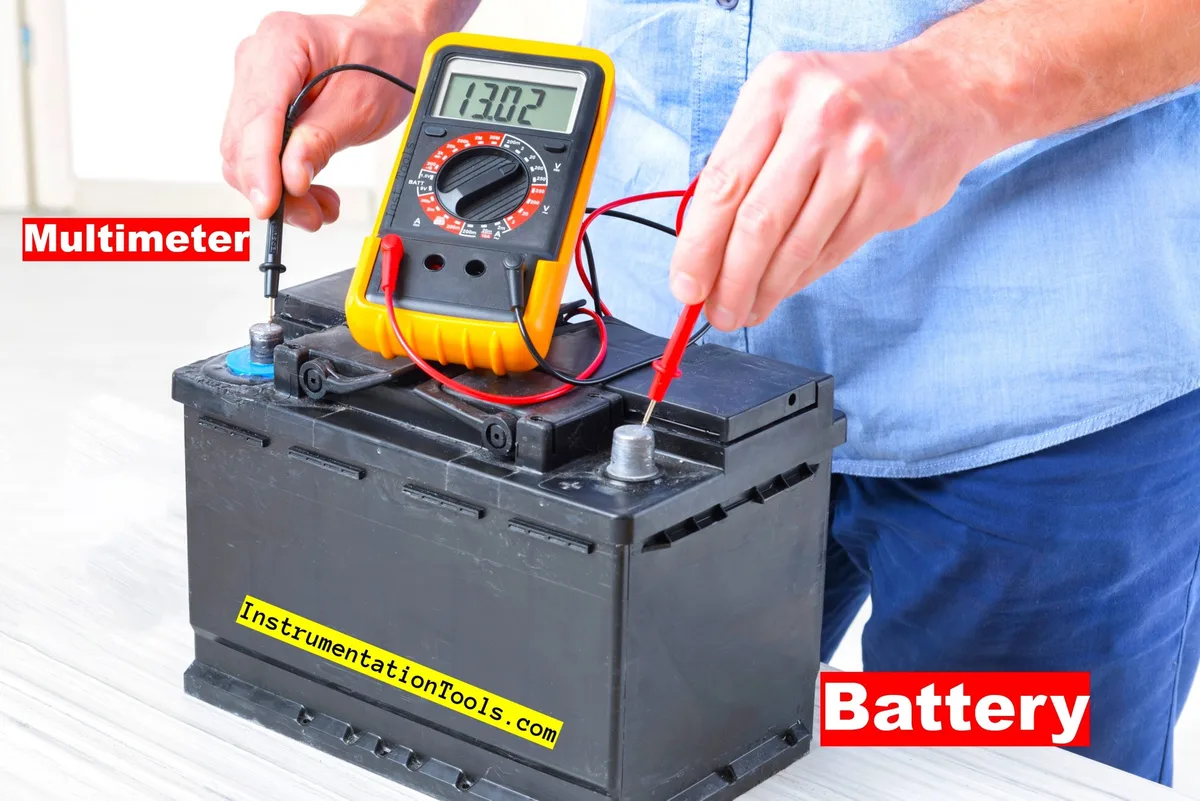
Set your DMM to the 10A DC current range. Loosen the negative battery terminal, lift the cable off the post, and connect the meter between the post and the cable clamp. Wait out the full sleep timeout without opening a door.
Whatever the meter reads once stable is your draw. Our walkthrough on using a multimeter on a 12V battery covers the exact dial position.
Low-Current DC Amp Clamp (The Faster Way)
A DC amp clamp with milliamp resolution clips around the negative cable without breaking anything. It's the tool most working techs prefer. Fluke, Snap-on, and UEi models resolve down to 1 mA.
There's no risk of losing power, and modules never wake up during setup.
Voltage-Drop-Across-Fuse Method
Instead of pulling fuses, measure the millivolt drop across each fuse with the meter on DC millivolts. Any circuit passing current will show a small voltage across the fuse ends. The bigger the draw, the bigger the reading.
It's the fastest way to scan a whole fuse box without waking the car.
The Fuse-Pull Decision Tree: Finding the Offending Circuit
Once you've got a baseline mA reading, the fuse box is where you locate the guilty circuit. Work methodically and record every step.
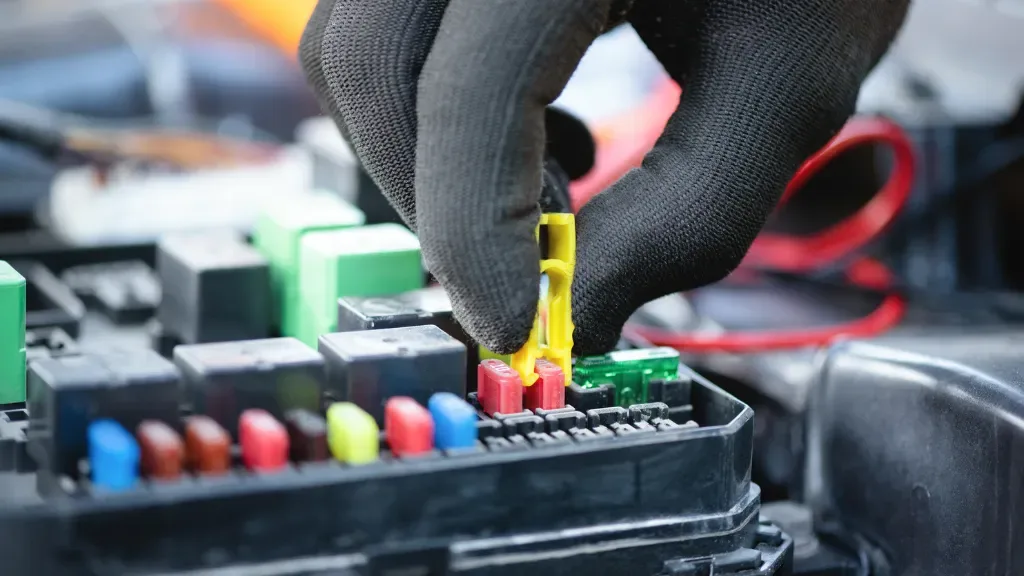
Follow this decision path:
- Note the current baseline reading (say, 320 mA).
- Pull one fuse at a time, starting with interior and body fuses.
- Watch the meter for a meaningful drop. A jump from 320 mA to 60 mA means the offending circuit is under that fuse.
- If pulling a fuse causes no change, replace it and move on.
- Once a suspect circuit is identified, check the fuse map to see what's on that leg.
- Trace the load with a wiring diagram. It may serve two or three components.
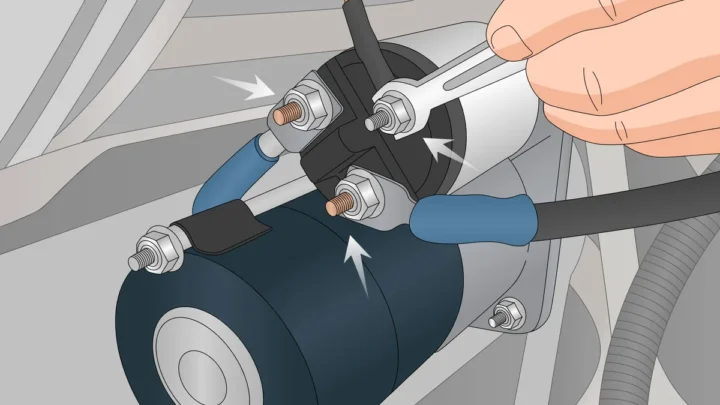
If pulling every fuse drops the current only slightly, the draw is upstream of the fuse box. Common upstream culprits include the alternator, starter B+ cable feeds, and any aftermarket wire tapped straight to the battery. That's where a clamp on individual heavy cables earns its keep.
Reading the Numbers: What Your mA Draw Is Telling You
Your reading gives you both severity and clues about the source. Here's what each range typically means on a modern vehicle.
| Reading (asleep) | Likely meaning |
|---|---|
| Under 85 mA | Normal for most modern vehicles. Look elsewhere for your dead-battery cause. |
| 85 to 150 mA | Slightly elevated. Often a minor aftermarket device or a lazy module. |
| 150 to 400 mA | Real problem. Dash cam, tracker, stuck courtesy lamp, or non-sleeping BCM. |
| 400 mA to 1 A | Serious draw. Stuck relay, non-sleeping infotainment, or wired-hot amplifier. |
| Over 1 A | Major fault. Stuck fuel pump relay, welded cooling fan relay, or shorted harness. |
Battery math tells you how urgent this is. A 60 Ah battery starts to struggle when you've pulled roughly a third of its capacity. At 500 mA, that's about 40 hours.
At 2 A, it's 10 hours. If the car sits overnight and won't crank, your draw is almost certainly north of 1 A.
Compare your reading against what a healthy vehicle looks like from the voltage side of things. Both numbers should agree. If the draw is fine but the battery voltage keeps sliding, the battery itself is likely done.
Mistakes That Send DIYers Down the Wrong Path
The same errors trip up almost everyone new to this diagnosis. Any one of them can waste a whole afternoon.

Similar Posts