7 Warning Signs Your Car Battery Is Dying

That sluggish groan when you turn the key is usually the first of the symptoms of a dying car battery, and it rarely shows up alone. Most people notice two or three warning signs at once, then ignore them until the morning the engine won't fire at all. Catching it early is the difference between a planned swap and a tow bill.
Here's the good news. A weak battery leaves a clear trail, and you can read it in minutes. Most starter batteries are lead-acid units rated for a 3 to 5 year service life, per Battery Council International guidance, and they fade in predictable ways.
As of 2026, a simple voltage check and one "turn the key" test will tell you almost everything you need to know.
Quick Answer
The main symptoms of a dying car battery are slow engine cranking, a clicking sound when you turn the key, and needing a jump-start. You may also see dim headlights, a dashboard battery light, or flaky electronics. Most batteries last 3 to 5 years.
A resting voltage below 12.4 volts signals a weak battery that needs testing or replacement.
Your Car's Trying to Tell You Something: The Warning Signs Up Front
A dying battery almost never quits overnight. It fades, and it drops hints for days or weeks before it strands you. The trick is knowing which hints matter.
Here are the signs worth watching, roughly in the order most drivers notice them:
- The engine cranks slower than usual, especially on cold mornings.
- You hear a click or a rapid clicking when you turn the key.
- The car needs a jump-start to get going, then runs fine.
- Headlights look dim at idle and brighten when you rev.
- The battery or charging warning light glows on the dash.
- Electronics act up: windows crawl, the radio resets, start-stop quits.
- The battery case looks swollen, or you smell rotten eggs.
If you're nodding at two or more of these, treat it as a real signal, not a fluke. One weak start can be a fluke. A pattern is a battery telling you it's near the end.
What "Dying" Actually Means Inside a 12-Volt Battery
A "dying" battery has lost its ability to hold charge and deliver a strong burst of current. That burst is what spins your starter motor. When the battery weakens, there isn't enough punch left to turn the engine over quickly.
Inside a standard 12-volt lead-acid battery, lead plates sit in a bath of sulfuric acid electrolyte. Every time the battery discharges, a thin layer of lead sulfate forms on those plates. Normal charging clears it away.
Over years, some of that sulfate hardens and stays put, a process called sulfation, and it permanently cuts capacity.
Two numbers describe the health of that battery:
- Cold Cranking Amps (CCA): the current the battery can deliver in cold conditions. This drops as the battery ages.
- State of Charge (SoC): how full the battery is right now, which you read as resting voltage.
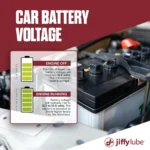
A healthy battery rests around 12.6 to 12.8 volts with the engine off. If you're seeing a lower number, our guide on what a mid-range reading really tells you breaks down why 12.4 volts sits at roughly 75 percent charge. Drop to 12.2 volts and you're near half charge.
Once you understand that 12.0 volts signals a nearly flat battery, the symptoms start to make sense. Low voltage plus lost CCA equals weak, slow starts.
The First Test That Tells You Almost Everything: Turn the Key
Before you buy anything, do this one free test: turn the key and listen. What happens in that moment sorts most problems in seconds.
Use this simple if/then logic:
- If the engine cranks slowly and gets worse each morning, then the battery is the prime suspect.
- If it cranks fine after a jump but dies again once parked, then you likely have a bad battery or a parasitic drain.
- If you hear a single loud click and no crank, then it's often the starter or a badly discharged battery.
- If you hear rapid machine-gun clicking, then the battery lacks the amps to engage the starter, a classic dying-battery sound.
- If the dash lights blaze bright but the engine won't turn, then look past the battery toward the starter.
Here's the tell that trips people up. A battery that gets weaker each day points at the battery itself. A car that starts poorly, runs a while, then improves points more toward charging problems.
Voltage that sags too far the instant you crank is another red flag, and we cover how far a healthy battery should dip in a separate walkthrough.
The 8 Symptoms of a Dying Car Battery
These are the eight signs that show up again and again. Read them as a checklist. The more boxes you tick, the more confident you can be.
Slow, Sluggish Cranking
The engine turns over lazily, like it's wading through mud. This is the number one early warning. Cold weather makes it worse because low temperatures cut a battery's available cranking power sharply, a well-documented effect the [U.S.
Department of Energy](https://www.energy.gov/) notes for all lead-acid chemistries.
The Click (One Click vs Rapid Clicking)
A single click usually means the starter got power but not enough to spin. Rapid clicking means the battery keeps trying and failing to hold voltage under load. Both point to a battery that can't deliver amps.
Needing a Jump-Start to Get Going
If a jump brings the car right back to life, the battery couldn't do the job on its own. One jump is a warning. Needing a jump every morning is a battery on its last legs, and it's worth reading up on why a battery keeps going flat before you replace it.
Dim or Flickering Headlights at Idle
Weak headlights at a stoplight that brighten when you rev the engine hint at a battery that can't hold voltage. Interior lights dimming hard while you crank is another version of the same clue.
The Battery or Charging Warning Light
That little battery icon doesn't only mean "battery." It flags trouble anywhere in the charging system. Take it seriously, then test to find out whether the battery or the alternator is behind it.
Electrical Glitches and Start-Stop Dropping Out
Modern cars lean hard on steady voltage. When it sags, you get resetting infotainment, slow power windows, and odd error messages. On start-stop vehicles, the auto stop feature quitting is often the earliest sign the battery is fading.
A Swollen Case or Rotten-Egg Smell
A bloated battery case usually means heat or overcharging cooked it. A sulfur, rotten-egg smell means the battery is venting gas. Both mean stop using it and replace it soon.
It's Simply Old (The 3 to 5 Year Mark)
Even a battery with no obvious symptoms is living on borrowed time past five years. Check the date code stamped on the case. If it's older than five years and starts feel weak, age alone is reason enough to test it.
Battery or Something Else? Sorting the Real Culprit
Not every no-start is the battery's fault. Three other culprits mimic a dying battery, and swapping the battery won't fix them. Here's how to tell them apart.
| Symptom pattern | Likely culprit | Quick check |
|---|---|---|
| Weak starts get worse daily, battery is old | Dying battery | Resting voltage below 12.4V |
| Battery light on, dims while driving, dies after a run | Failing alternator | Running voltage below 13.7V |
| One loud click, dash lights stay bright | Starter motor | Voltage fine, engine won't spin |
| Fine after cleaning posts | Corroded or loose terminals | White/green buildup on posts |
| Full charge drains overnight while parked | Parasitic drain | Draw above spec with car off |
Dying Battery vs Failing Alternator
The alternator recharges the battery while you drive. If it fails, the battery slowly empties and the car dies mid-trip, not just at startup. The clean way to separate the two is a running voltage check, which our battery-versus-alternator test walks through step by step.
Battery vs Starter Motor
A starter fault gives you a solid click and bright dash lights, because the battery still has plenty of voltage. The engine just won't turn. If your lights stay strong but nothing cranks, look past the battery.
Battery vs Corroded Terminals or a Parasitic Drain
Sometimes the battery is fine but the connection isn't. White or blue-green crust on the posts blocks current and fakes a dead battery. Clean, tight terminals often fix it.
If the battery drains overnight instead, you've got a parasitic draw, and it helps to know what a normal key-off draw looks like before you chase it.
Confirm It Yourself: The Multimeter and Load Test Walkthrough
A cheap multimeter settles the argument in about two minutes. Set it to 20V DC, touch red to the positive post and black to the negative, and read the number. If you're unsure of the dial, our quick guide to the 20V DC setting sorts it out.

Resting Voltage: What the Numbers Mean
Test with the engine off, ideally after the car has sat a few hours. Here's how to read it:
- 12.6V or higher: healthy, fully charged.
- 12.4V: about 75 percent, still workable.
- 12.2V: roughly 50 percent, weak.
- 12.0V or below: nearly flat, expect no-start trouble.
A number under 12.4V doesn't always mean a bad battery. It might just be discharged. Charge it fully, then retest to see if it holds.
Running Voltage: Is the Alternator Charging?
Start the engine and read again. You should see 13.7 to 14.7 volts, which means the alternator is charging. If it reads below 13.7V while running, the charging side is the problem, not the battery.
Our breakdown of normal alternator output covers what each figure means.
Why a Load Test Catches What Voltage Misses
Resting voltage can lie. A tired battery often shows a healthy 12.6V at rest, then collapses the second it's asked to crank. A load test (or conductance test) pulls real current and watches the voltage.
It should stay above about 9.6 volts under load. Most auto parts stores run this test free in a few minutes.
What Kills Batteries Early: Cold, Heat, and Short Trips
Three things age a battery faster than time alone. Knowing them helps you predict a failure before it happens.
Cold is the obvious one. Freezing temperatures slow the chemical reaction and can cut cranking power by a third or more, which is why so many batteries die on the first frosty morning. Our notes on how cold weather drags voltage down explain the drop in detail.
Heat is the quieter killer. High under-hood temperatures evaporate electrolyte and speed up internal corrosion. Batteries in hot climates like the desert Southwest often wear out well before the five-year mark.
Short trips finish the job. Starting the engine drains a big chunk of charge, and a five-minute drive never fully replaces it. Weeks of short hops leave the battery chronically undercharged and sulfating.
If most of your driving is quick errands, an occasional longer run or a smart charger keeps it topped up.
Recharge or Replace? The Decision That Saves You Money
Not every weak battery is scrap. The right call depends on why it went flat and how old it is.
Use this logic:
- If a healthy battery drained from lights left on, then recharge it and move on.
- If it's under three years old and holds charge after a full recharge, then keep it.
- If it fails a load test or won't hold voltage, then replace it.
- If the case is swollen, leaking, or smells of sulfur, then replace it now.
- If it's past five years and starts feel weak, then replace it before it strands you.
Reconditioning a sulfated battery rarely pays off. It might buy a few weeks, but the plates are already damaged. For a battery that keeps dying with no clear cause, chase the root problem first, whether that's a parasitic drain or a lazy alternator.
Mistakes That Cost People a Battery (or a Tow)
Most battery headaches trace back to a handful of avoidable errors. Skip these and you'll dodge a lot of grief.
- Ignoring slow cranks. The first sluggish start is your warning, not a one-off.
- Trusting resting voltage alone. A load test catches the fakes.
- Replacing the battery when the alternator is the real fault. Test the charging side first.
- Leaving corrosion on the posts. Crusty terminals choke current and mimic a dead battery.
- Buying the wrong group size or CCA. A battery that doesn't match spec fits poorly and underperforms.
- Letting a car sit for weeks. Batteries self-discharge and sulfate when parked long-term.
One more trap: assuming a fresh battery fixes everything. If a parasitic drain or bad charging killed the old one, it'll kill the new one too.
Reading CCA, Group Size, and the Date Code Before You Buy
Three numbers make or break a replacement, and they're all printed on the battery. Get them right and the new one drops in clean.
| Spec | What it means | How to match it |
|---|---|---|
| Group size | Physical size and terminal layout | Match your car's requirement exactly (e.g. Group 47, 48/H6, 65) |
| CCA | Cold cranking power | Meet or exceed the original rating |
| Date code | Age of the battery | Buy the freshest one on the shelf |
Group size matters most for fit. A battery that's too small won't clamp down tight, and the wrong terminal layout won't reach your cables. Your owner's manual or the old battery's label lists the correct size.
CCA is your cold-weather insurance. Never go below the factory rating, and bump it up if you park outside in a cold climate. Matching your battery chemistry counts too, since AGM and flooded types charge differently.
The date code is easy to miss. A battery loses shelf life while it sits, so a unit built ten months ago starts a step behind. Look for a stamped letter and number, where the letter is the month and the number is the year.
Handling Batteries Safely: Acid, Gas, and the Right Cable Order
Car batteries hold sulfuric acid and can vent hydrogen, a flammable gas. Wear eye protection and gloves, and keep sparks away from the top of the battery.

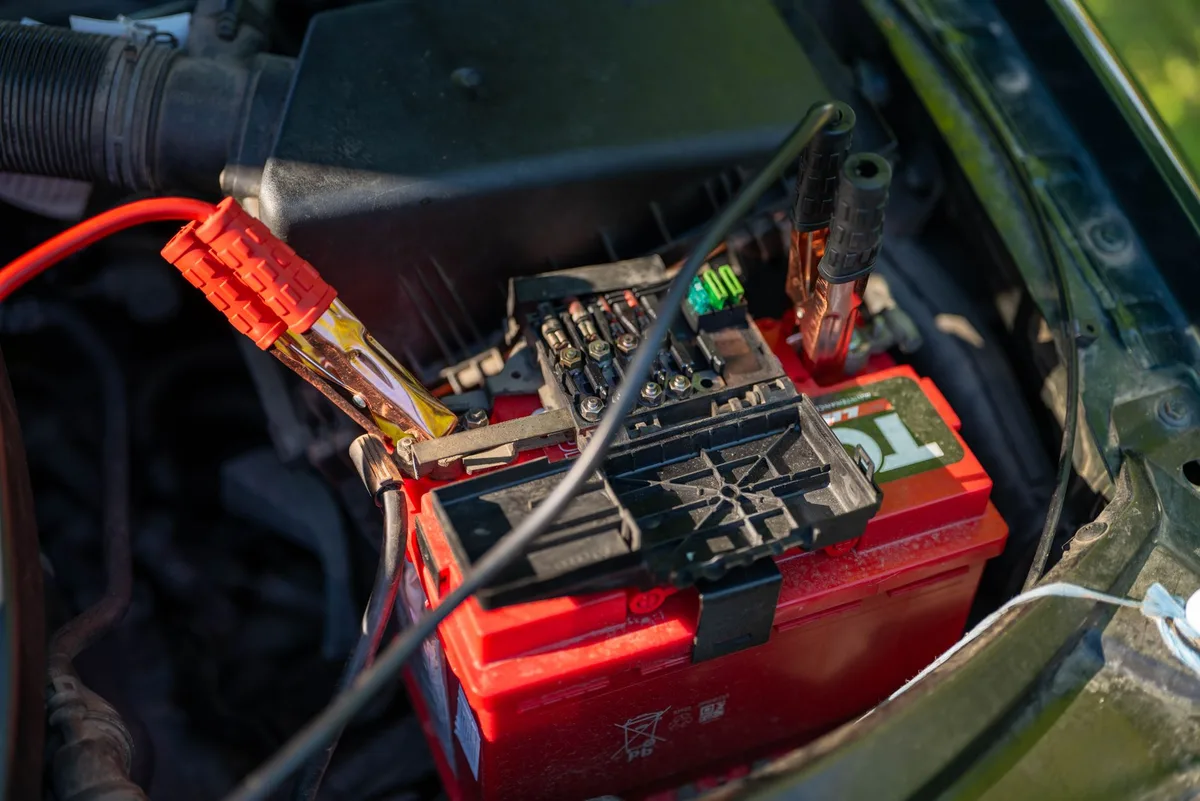
When jump-starting, connect in this order: positive to the dead battery, positive to the good one, negative to the good one, then negative to a bare metal ground on the dead car. That last ground point keeps sparks away from the battery.
When replacing a battery, disconnect the negative terminal first to avoid shorting the wrench against the body. Reconnect it last. Recycle the old battery at any auto parts store, since it's classed as hazardous waste.
Simple Habits That Add Years to a Battery's Life
A few small habits stretch a battery well past three years.
- Take a longer drive now and then to fully recharge after short trips.
- Use a smart charger or maintainer if the car sits for weeks.
- Keep the terminals clean and tight with a baking soda and water paste.
- Turn off lights and accessories before you leave the car.
- Test the battery twice a year, especially before winter.
Quick Answers to Common Dying-Battery Questions
How long does a car battery usually last?
Most lead-acid car batteries last 3 to 5 years. Heat, cold, and lots of short trips shorten that. Past five years, test it twice a year even if starts feel normal.
Can a dying battery still start the car?
Yes, often for a while. A weak battery may start fine on warm days, then fail on the first cold morning. Slow cranking is your cue to test it before it quits completely.
Is it the battery or the alternator?
Test voltage. A resting reading below 12.4V with the engine off points to the battery. A running reading below 13.7V points to the alternator.
Batteries fail worse at startup, alternators fail while driving.
Will a new battery fix repeated dying?
Not if something else is draining it. A parasitic drain or a failing alternator will flatten a new battery too. Find the root cause before replacing, or you'll be back with the same problem.
Can I drive with the battery light on?
Drive straight home or to a shop, not far. The light flags a charging fault, and the car is running on stored battery power. Once that runs out, the engine stalls.
Your At-a-Glance Symptom-to-Action Guide
| What you notice | Most likely cause | Do this next |
|---|---|---|
| Slow crank, worse in cold | Weak battery | Test resting voltage, charge or replace |
| Rapid clicking, no start | Battery low on amps | Jump-start, then load test |
| Battery light while driving | Alternator | Check running voltage |
| Dies overnight when parked | Parasitic drain | Measure key-off draw |
| Crusty terminals | Corrosion | Clean posts, retighten |
| 5+ years old | Age | Replace before it strands you |
Read the signs early, test before you guess, and you'll swap the battery on your terms. That's the whole game. A two-minute check beats a cold morning stuck in the driveway every time.

Similar Posts