How to Find Your Car Battery Group Size Fast
Figuring out how to find your car battery group size sounds fiddly, but it's really just a matter of knowing where to look. The group size is a standardized code that tells you the battery's physical dimensions, terminal layout, and hold-down style. Get it right and the new battery drops straight into the tray.
Get it wrong and the cables won't reach or the hood won't shut.
The good news is that the number is almost always printed on the battery itself. And there are three or four reliable backup methods if the label's gone. As of 2026, most vehicles sold in North America still use the Battery Council International (BCI) group numbering system, so the same codes show up across brands.
Let's start with what that code actually means.
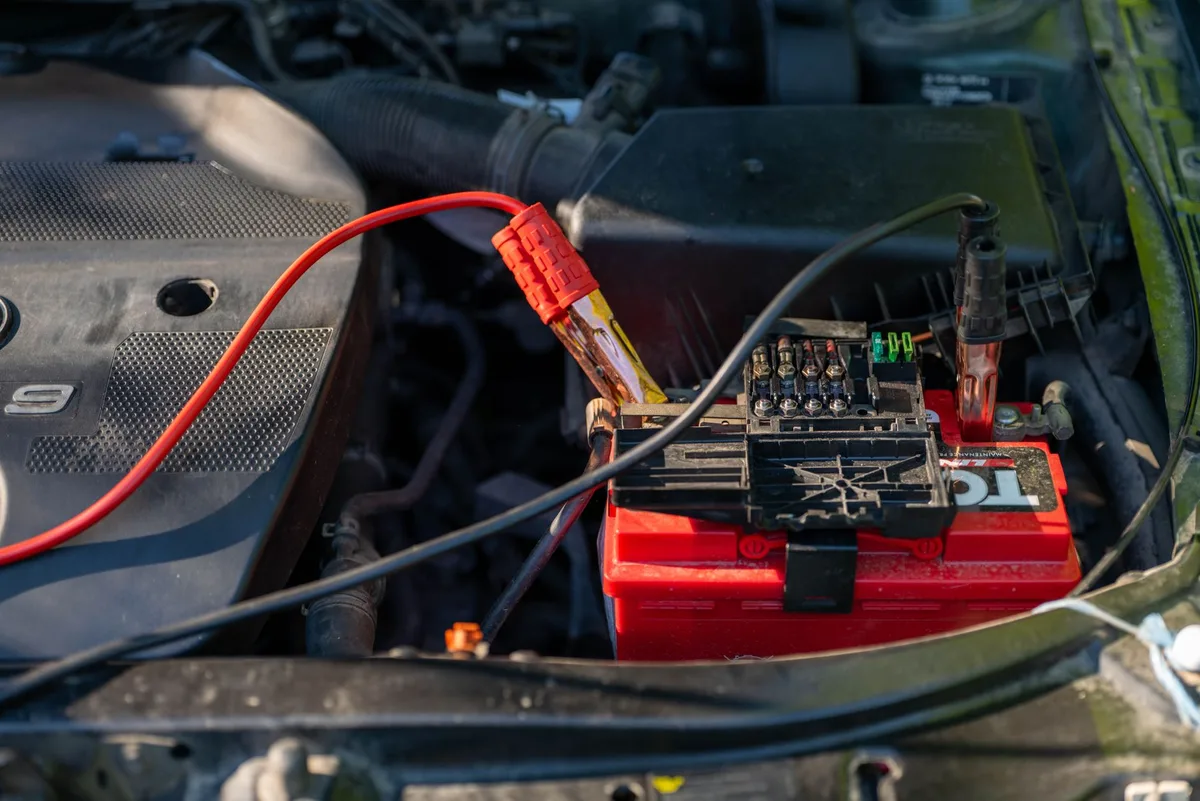
What a Battery Group Size Actually Is (and Why It Matters for Fit)
A battery group size is a standardized code that describes a battery's case dimensions, terminal positions, and mounting style. It's set by Battery Council International, the trade body that maintains the sizing chart most North American batteries follow. The code is about fit, not power.
Two batteries in the same group can have very different cranking amps.
Here's why the group size matters more than people expect:
- The battery has to sit in your tray without wobbling.
- The terminals need to line up so the cables reach without stretching.
- The hold-down clamp has to grip the case properly.
- The battery can't be so tall it fouls the hood or a nearby bracket.
A loose or mismatched battery isn't just annoying. Vibration cracks the plates and shortens battery life fast. So the group size is the first spec to confirm, before you ever look at price or brand.
The 30-Second Answer: Where to Look First
Look at the top or side of your current battery first. The group size is printed on the manufacturer's label, often near the cold cranking amps rating. It'll read as a short code like 24F, 35, 48, or 65.
If the label's faded, check your owner's manual under battery specifications. You can also enter your year, make, and model into any auto parts store's online fitment tool.
That's the fast route. The rest of this guide covers what to do when the label is peeling, corroded, or missing entirely. It also shows you how to avoid mixing up the group size with the other numbers stamped nearby.
Reading the Group Size Off Your Battery Label
Pop the hood and find the battery. On most cars it's in the engine bay, but plenty of models tuck it in the trunk, under the rear seat, or below the passenger floor. Once you've found it, the group size is on the printed label wrapped around the case.
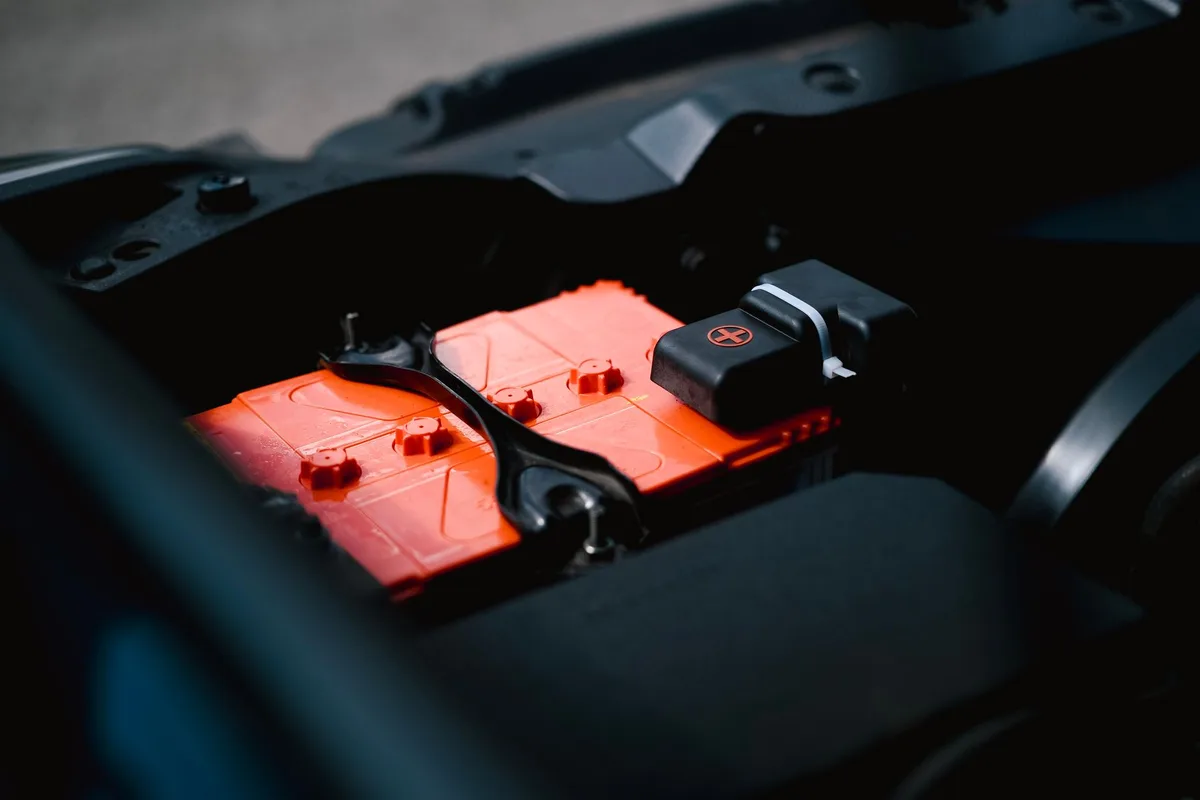
Top Label vs Side Label
Some brands print the group size on the top sticker, right by the terminals. Others put it on the side, lower down where corrosion likes to build up. If you can't spot it up top, wipe the sides clean and check there.
A damp cloth and a little baking soda knock off crust without you needing to pull the battery.
Telling the Group Code Apart From CCA, Part Numbers, and Date Codes
This is where most people slip up. Your battery label carries several numbers, and the biggest one usually isn't the group size.
- Cold cranking amps (CCA): a three-digit power figure, often 500 to 850. This is not the group.
- Group size: a short code like 24F, 35, or 51R, usually labeled "GROUP" or "BCI."
- Part number: a longer string unique to that brand's model.
- Date code: a letter and number combo showing the manufacture month and year.
If your battery's been struggling to crank lately, that's a separate issue from sizing. It's worth a quick check of the voltage while starting before you assume you need a new one.
Decoding the Numbers and Letters (24F, 35, 51R, 65 and the "F"/"R" Suffixes)
The digits point to a specific case footprint, and the letters tell you about terminal placement. Once you know the pattern, the codes stop looking random.
- A plain number like 35, 24, or 65 is the base group.
- An "F" (as in 24F) means the terminals are flipped from the standard 24 layout.
- An "R" (as in 51R or 35R) means reversed polarity, so the positive post sits on the opposite side.
- Import-heavy models sometimes use H-series codes like H5, H6, or H8 instead.
Here's how a few common codes break down:
| Group Code | What It Tells You | Typical Vehicles |
|---|---|---|
| 24 / 24F | Mid-size case, 24F has flipped terminals | Many Toyota, Honda, Nissan |
| 35 | Compact case, common import fit | Subaru, Nissan, Toyota |
| 48 / H6 | European-style case | GM, Ford, VW, Audi |
| 65 | Large case, high capacity | Ford trucks, SUVs |
| 51R | Small case, reversed polarity | Honda, Mazda |
That "R" matters a lot. A 51 and a 51R are the same size but wire up backwards from each other. Buy the wrong one and your cables end up on the wrong terminals.
Finding It in the Owner's Manual and Spec Sheets
If the label's unreadable, your owner's manual is the next stop. Look in the maintenance or specifications section, usually near the fluids and bulb charts. Many manuals list the group size right alongside the recommended CCA.
One catch worth knowing: some manuals list more than one group size. That happens when the same model came with different engines or trim levels. If you see two options, match yours by engine size or by measuring the battery you already have.
A separate decal on the fuse box or radiator support can also confirm which one your car shipped with.
Using a VIN or Year/Make/Model Lookup When the Label's Gone
If the label peeled off years ago, an online fitment lookup will name the right group in seconds. Every major parts retailer runs a free battery finder on their site. You plug in the details and it returns the correct group size along with recommended CCA.
You've got two ways to search:
- Year, make, model, and engine: the quickest path for most drivers.
- VIN lookup: better when your car has multiple engine options, since the VIN pins down the exact build.
Your VIN sits on the driver's-side dashboard by the windshield, or on a sticker in the door jamb. If the tool offers a couple of group sizes, that usually means a battery upgrade was optional from the factory. A weak battery can mimic other electrical faults, so if yours keeps going flat it's worth ruling out a hidden current drain before you replace it.
Measuring Your Battery and Tray by Hand
When no label and no lookup gets you there, measuring the old battery settles it. Grab a tape measure and record the case in three directions: length, width, and height. Match those figures against a group size chart to find the code.

Measure the case only, not the terminals or handles. Note dimensions in both inches and millimeters, since charts list them either way. A Group 24 runs about 10.25 by 6.8 by 8.9 inches.
A Group 35 is closer to 9.06 by 6.88 by 8.88 inches. Even half an inch of difference points to a different group, so measure carefully.
Also check the tray itself. If a previous owner jammed in the wrong size, the tray tells you what the car was built to hold. Look for the molded ledge or clamp that grips the case, then measure to that boundary.
Terminal Position, Polarity, and Hold-Down Clearance to Check Before You Buy
Group size gets you 90 percent there, but three details still trip people up. Confirm terminal position, polarity, and clearance before you pay.

Here's your pre-purchase checklist:
- Terminal type: top-post or side-post, sometimes both.
- Polarity: note which side the positive terminal sits on as you face the battery.
- Height clearance: make sure the posts won't touch the hood or any bracket.
- Hold-down style: bottom ledge, top bar, or J-hook.
Polarity is the sneaky one. Remember the "R" suffix from earlier. A reversed-polarity battery in the wrong orientation puts your positive cable nowhere near the positive post.
That's how people end up forcing connections or, worse, crossing them. If a cross-connection has ever left you with odd readings, our guide on a multimeter showing zero volts walks through what that usually means.
Common Mistakes That Lead to the Wrong Battery
Most sizing errors come down to a handful of repeat offenders. Knowing them upfront saves a return trip.
- Reading the CCA number as the group size. The big three-digit figure is cranking power, not the code.
- Ignoring the "F" or "R" suffix, so a 24F gets swapped for a plain 24.
- Trusting the battery that's already installed, when it may be the wrong size itself.
- Matching only dimensions and forgetting terminal position.
- Buying on CCA alone and ending up with a case that won't fit the tray.
One more worth flagging: don't assume a higher CCA fixes a car that won't start. Cranking trouble often traces back to charging or connection faults, not battery size. Before you upgrade, it helps to know whether the battery or the alternator is the real culprit.
BCI Group Sizes vs DIN/EN (H-Series): Which Chart You're Reading
BCI and DIN/EN are two different sizing systems, and which one you use depends on where your car was designed. BCI numbers dominate North American vehicles. DIN and EN codes, shown as H-series numbers like H5, H6, and H8, are standard on many European models.
Here's how they line up:
| System | Where It's Common | Example Codes |
|---|---|---|
| BCI | North American market | 24F, 35, 65, 51R |
| DIN/EN (H-series) | European, some imports | H5, H6, H7, H8 |
The systems overlap. A Group 47 is often labeled H5, and a Group 48 maps to H6. If your car is a European import sold in the States, you may see both codes on the same battery.
When that happens, match either code to your existing battery and you're safe. Retailer lookup tools handle the cross-reference automatically, so you rarely have to convert by hand.
Group Size Reference Chart: Dimensions and Common Fitments
This quick reference covers the group sizes most drivers run into. Use it to match a measured case or to sanity-check a lookup result.
| Group | Approx. L x W x H (in) | Terminal Note | Common Fitments |
|---|---|---|---|
| 24 / 24F | 10.25 x 6.8 x 8.9 | 24F flipped | Toyota, Honda, Lexus |
| 34 | 10.25 x 6.8 x 7.9 | Dual post | Chrysler, Dodge, Jeep |
| 35 | 9.06 x 6.88 x 8.88 | Standard | Subaru, Nissan, Toyota |
| 47 / H5 | 9.5 x 6.9 x 7.5 | Top post | Buick, Chevy, VW |
| 48 / H6 | 12.06 x 6.9 x 7.5 | Top post | Ford, GM, Audi |
| 51R | 9.4 x 5.1 x 8.9 | Reversed | Honda, Mazda |
| 65 | 12.06 x 7.5 x 7.6 | Top post | Ford trucks, SUVs |
Treat the dimensions as close approximations. Brands vary by a fraction of an inch. Always confirm against your own tray before buying.
Expert Tips for Nailing the Right Size the First Time
A few habits keep you from guessing. These are the checks that separate a clean swap from a wasted afternoon.
- Photograph the label before you clean or remove anything. If it flakes off, you've still got the code.
- Write down group size, CCA, and terminal side together. All three matter at the counter.
- Cross-check two sources when you can. Label plus manual, or manual plus VIN lookup.
- Match CCA to your climate. Cold starts pull harder, so don't drop below the factory rating.
That last point carries weight in winter country. Cranking amps fade as temperatures drop, which is why a battery that's fine in summer can quit in January. If you drive through hard freezes, our notes on how the cold changes your readings explain what to expect.
Staying at or above the original CCA within the same group is the safe move.
Safe Removal, Handling, and Recycling
Handle a car battery with care, since it holds sulfuric acid and can vent hydrogen gas. Wear gloves and eye protection before you start. Work in a ventilated spot, and keep tools from bridging the two terminals.
Follow this order when you pull the old one:
- Disconnect the negative terminal first, then the positive.
- Release the hold-down clamp and lift the battery straight up.
- Keep it upright so nothing leaks.
Never toss a lead-acid battery in the trash. It's fully recyclable, and most retailers take the old core when you buy a replacement. The [U.S.
Environmental Protection Agency](https://www.epa.gov) treats lead-acid batteries as recyclable hazardous material, so proper drop-off keeps lead out of landfills. A core charge, often around 10 to 20 dollars, gets refunded when you return the old unit.
Frequently Asked Questions
Is the group size the same as cold cranking amps?
No. Group size describes the battery's physical dimensions, terminal layout, and hold-down style. Cold cranking amps (CCA) measure starting power in cold weather.
Two batteries in the same group can carry very different CCA ratings, so check both numbers separately before you buy.
Can I use a different group size than my car came with?
Only if it fits the tray, clamps down securely, and lets the cables reach the correct terminals. A slightly different group sometimes works, but a wrong footprint leaves the battery loose or the posts crossed. Stick with your factory group unless a verified fitment guide lists an alternative.

Similar Posts