What Is Reserve Capacity on a Car Battery? Explained
Reserve capacity is one of those battery numbers people skip right past, and it's usually the one that saves your bacon when the charging system quits. So what is reserve capacity on a car battery? In plain terms, it's how long a fully charged battery can keep your car's essentials running on its own, with no help from the alternator.
Think of it as your built-in emergency fuel tank for electricity.
Here's the part that matters. Reserve capacity is measured under a strict rule set from Battery Council International, using a steady 25-amp load until the battery drops to 10.5 volts. As of 2026, most passenger-car batteries land between 90 and 120 minutes.
That single figure tells you far more about real staying power than the big cranking number on the label, which is exactly where we're headed next.

Quick Answer
Reserve capacity is the number of minutes a fully charged 12-volt car battery can run a 25-amp load before dropping to 10.5 volts. It's measured at 80°F under BCI standards. A higher number means more backup runtime.
Most car batteries rate between 90 and 120 minutes. It shows staying power, not cranking strength.
What Reserve Capacity Actually Means on a Car Battery
Reserve capacity, often shortened to RC, is a runtime rating. It answers a simple question: if your alternator died right now, how long could the battery alone keep the critical stuff alive?
That critical stuff means your ignition, fuel pump, ECU, headlights, and basic electronics. RC doesn't measure how hard your battery can crank the engine. It measures how long it can carry a moderate, steady load.
The rating comes from a standardized bench test, not a guess. A fully charged battery gets hit with a constant 25-amp draw. The clock runs until voltage sags to 10.5 volts, the accepted "empty" point for a 12-volt lead-acid battery.
The minutes it lasts become its RC value.
So a battery rated RC 110 runs that 25-amp load for 110 minutes. That's the whole idea. It's a stamina score, and it's genuinely useful once you know what a healthy voltage looks like day to day.
The 25-Amp Test: How Reserve Capacity Is Measured
The RC test is deliberately simple so results stay comparable across brands. Battery Council International and SAE International both anchor the number to the same core conditions.
Here's what the standardized test looks like:
- The battery starts fully charged.
- Ambient temperature sits at 80°F (26.7°C).
- A constant 25-amp load is applied.
- Voltage is monitored continuously.
- Timing stops the moment voltage hits 10.5 volts.
- The elapsed time in minutes becomes the RC rating.
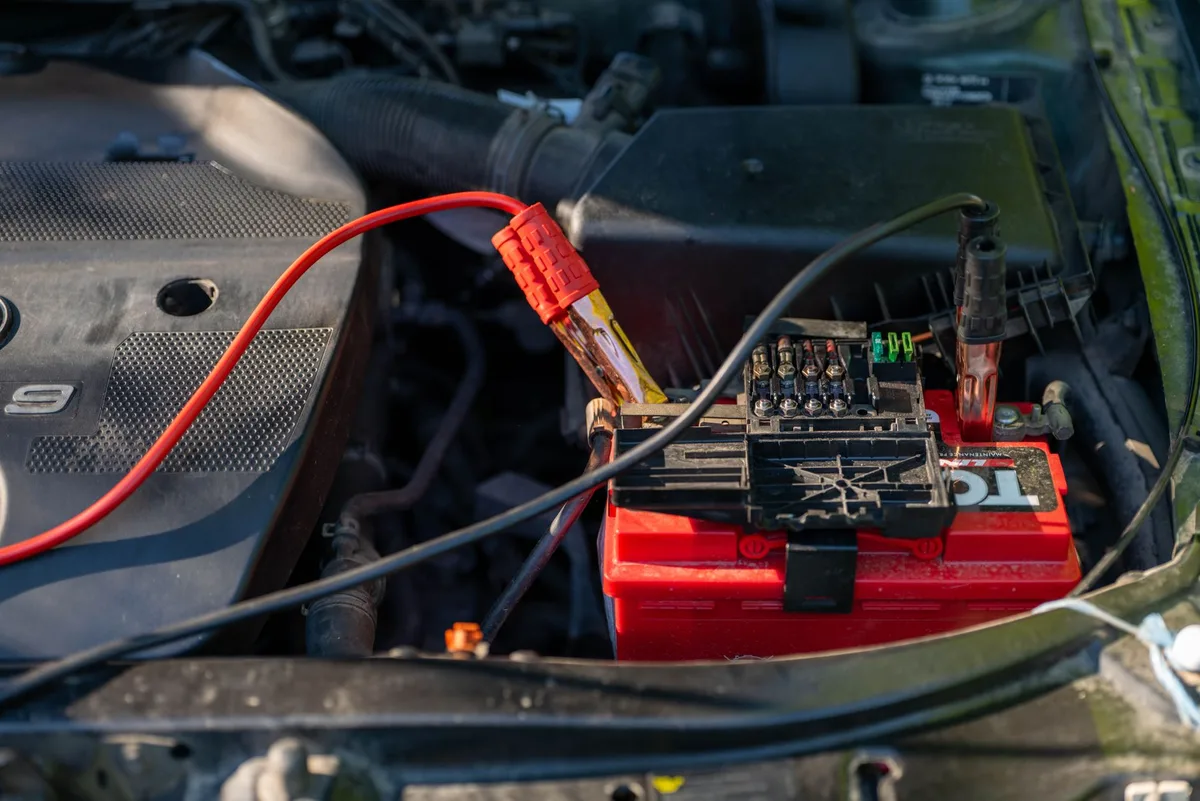
Why 25 amps? Because it roughly mimics the real load of running headlights, the fuel pump, ignition, and a few accessories at once. It's a fair stand-in for limping home with a dead alternator.
Why 10.5 volts? Below that point, a lead-acid battery is effectively drained. Pushing past it risks permanent damage, so the standard treats it as the finish line.
To verify your own battery's state first, the right meter setup helps, and our guide on the correct dial position for battery checks covers it. You can also confirm a full charge by knowing what a rested 12.6-volt reading tells you.
What a Good Reserve Capacity Number Looks Like
A good RC number depends on your vehicle, but the ranges are predictable. For a standard passenger car, 90 to 120 minutes is solid. Push above 140 minutes and you're into premium, high-demand territory.
Typical RC Ranges by Battery and Vehicle Type
| Battery / Vehicle Type | Typical Reserve Capacity |
|---|---|
| Compact car, basic electronics | 70 to 90 minutes |
| Standard sedan or crossover | 90 to 120 minutes |
| Truck, SUV, heavy accessory load | 120 to 150 minutes |
| Premium AGM, start-stop vehicles | 140 to 190 minutes |
| Deep-cycle / dual-purpose | 150+ minutes |
Bigger vehicles and loaded-up electrical systems need more reserve. A truck running a winch, extra lighting, and an inverter burns stored energy faster, so it benefits from higher RC.
One honest caveat. A high RC on paper doesn't help if the battery is old or undercharged. Reserve capacity fades with age and sulfation, so a five-year-old battery rated RC 120 might deliver far less.
If yours runs flat overnight, a quick draw test can reveal a hidden drain.
Reserve Capacity vs CCA vs Amp-Hours: Clearing Up the Confusion
This is where most people get tripped up. RC, CCA, and amp-hours all describe a battery, but they measure different things. Mixing them up leads to buying the wrong battery.
Here's the clean breakdown:
- Reserve Capacity (RC): runtime in minutes at a 25-amp load. Measures endurance.
- Cold Cranking Amps (CCA): the current delivered at 0°F for 30 seconds while staying above 7.2 volts. Measures cold cranking punch.
- Amp-Hours (Ah): total stored charge, usually rated over a 20-hour discharge. Measures overall capacity.
| Rating | What It Measures | Best Used For |
|---|---|---|
| RC | Backup runtime (minutes) | Surviving alternator failure |
| CCA | Cold starting power | Winter starts, big engines |
| Ah | Total energy storage | Deep-cycle, accessory loads |
Think of it this way. CCA is a sprinter, delivering a huge burst for a few seconds to start the engine. RC is a distance runner, pacing a steady load for a long time.
You need both, for different reasons. A cold-climate driver leans on CCA, which ties into how much cranking current your battery should have. Someone worried about electronics staying alive when the alternator quits cares more about RC.
Neither number replaces the other.
How Many Minutes of Real Drive-Home Time RC Actually Gives You
Here's the reality check nobody puts on the label. Your real-world runtime is almost always shorter than the RC minutes suggest. If your alternator dies, don't expect the full rated time.
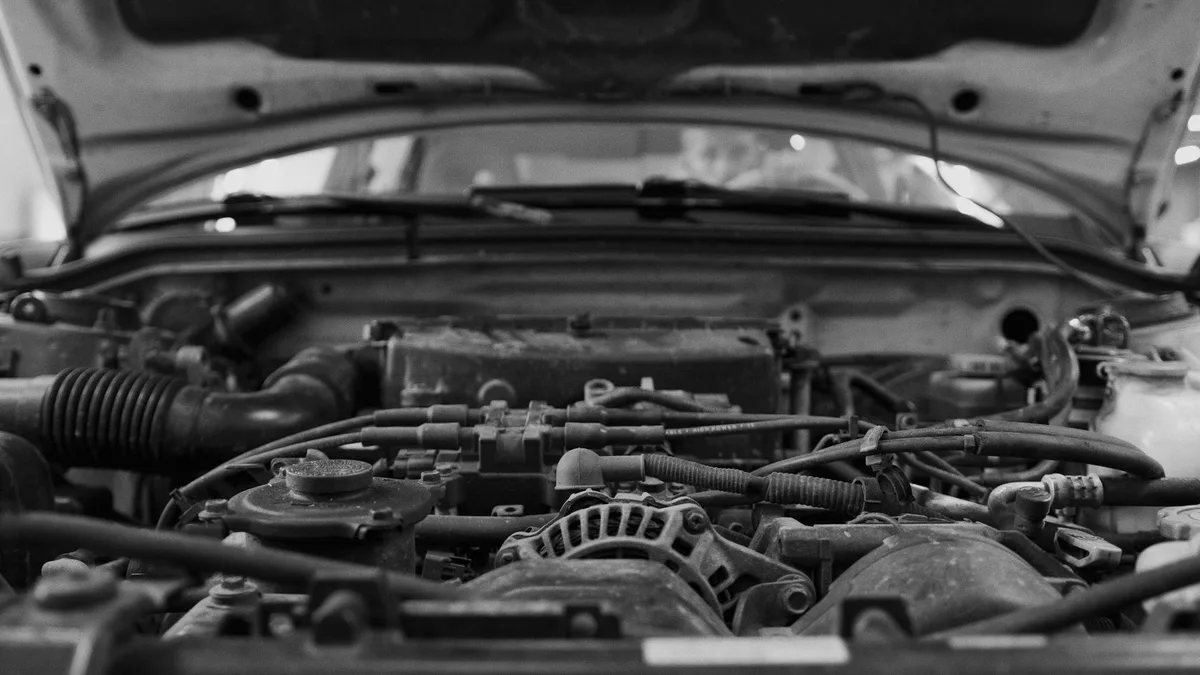
The RC test uses a 25-amp load. Your actual load with headlights, the fuel pump, ignition, wipers, and the blower fan can easily climb past 25 amps at night in the rain. More load means faster drain, and it isn't a straight line.
Why RC Minutes Don't Scale the Way People Think (Peukert's Effect)
Lead-acid batteries lose efficiency as you pull harder from them. This is Peukert's effect, and it means a heavier load drains the battery disproportionately fast. Draw double the current and you get well under half the runtime.
So an RC 100 battery won't give you 100 minutes if your real draw is 40 or 50 amps. A more honest expectation is roughly half the rated RC once you factor in heavier load, an aging battery, and cold. Learning whether the trouble is the battery or the alternator tells you how much time you really have before the car stalls.
Converting Reserve Capacity to Amp-Hours
Want to turn an RC rating into amp-hours? The math is quick. Multiply the RC minutes by the 25-amp test load, then divide by 60.
The formula looks like this: Ah ≈ (RC × 25) ÷ 60. That simplifies to RC minutes × 0.417.
So a battery rated RC 100 works out to roughly 41 amp-hours at that discharge rate. An RC 120 battery lands near 50 Ah. It's a handy back-of-the-napkin estimate when a spec sheet lists one number but not the other.
One warning. This conversion assumes the 25-amp test rate. Rated Ah figures usually come from a gentler 20-hour discharge, so the published Ah number reads higher.
Treat the converted value as a rough floor, not an exact match.
Where Reserve Capacity Matters Most
Reserve capacity earns its keep in vehicles that pull steady power even when things go wrong. If your driving fits any of these cases, RC deserves real attention.
- Long night commutes, where a failing alternator could strand you miles from home.
- Vehicles with heavy accessories: winches, light bars, sound systems, or inverters.
- Start-stop cars that cycle the battery at every light.
- RVs, boats, and overlanding rigs running fridges and pumps off the same system.
- Older cars with tired charging systems that occasionally drop out.
For a daily driver with a healthy alternator, RC is a safety buffer you rarely touch. For anyone running big key-off loads, it keeps electronics alive. A parasitic drain that creeps past the safe range chips away at that buffer overnight, and knowing what a normal draw looks like tells you whether your reserve is being quietly stolen.
Marine and deep-cycle users lean hardest on RC. Their batteries spend hours delivering moderate loads, which is exactly what the reserve rating describes.
Common Mistakes When Reading Reserve Capacity Specs
The biggest mistake is treating RC and CCA as interchangeable. They're not. A high CCA battery can still have mediocre reserve, and buying on cranking power alone leaves you short on runtime.
Here are the errors we see most often:
- Assuming RC minutes equal real drive-home minutes. Higher real loads cut that time roughly in half.
- Comparing RC numbers between an old battery and a new one. Age and sulfation quietly erode capacity.
- Ignoring temperature. A rating measured at 80°F won't hold up on a freezing morning.
- Buying a smaller group size to save money, then losing reserve you needed.
- Confusing the 25-amp RC test with the 20-hour Ah rating and expecting the numbers to match.
Another trap is trusting the label on a battery that never gets fully charged. Short trips rarely top off a battery, so its usable reserve sits below the rating. If your car reads healthy voltage but still struggles, the issue may be a battery that shows 12 volts yet won't crank, not the RC spec itself.
Flooded vs EFB vs AGM: How Battery Type Affects Reserve
Battery chemistry changes how much reserve you get and how well it holds up. The three common car types are flooded, EFB, and AGM, and they scale up in that order for reserve.
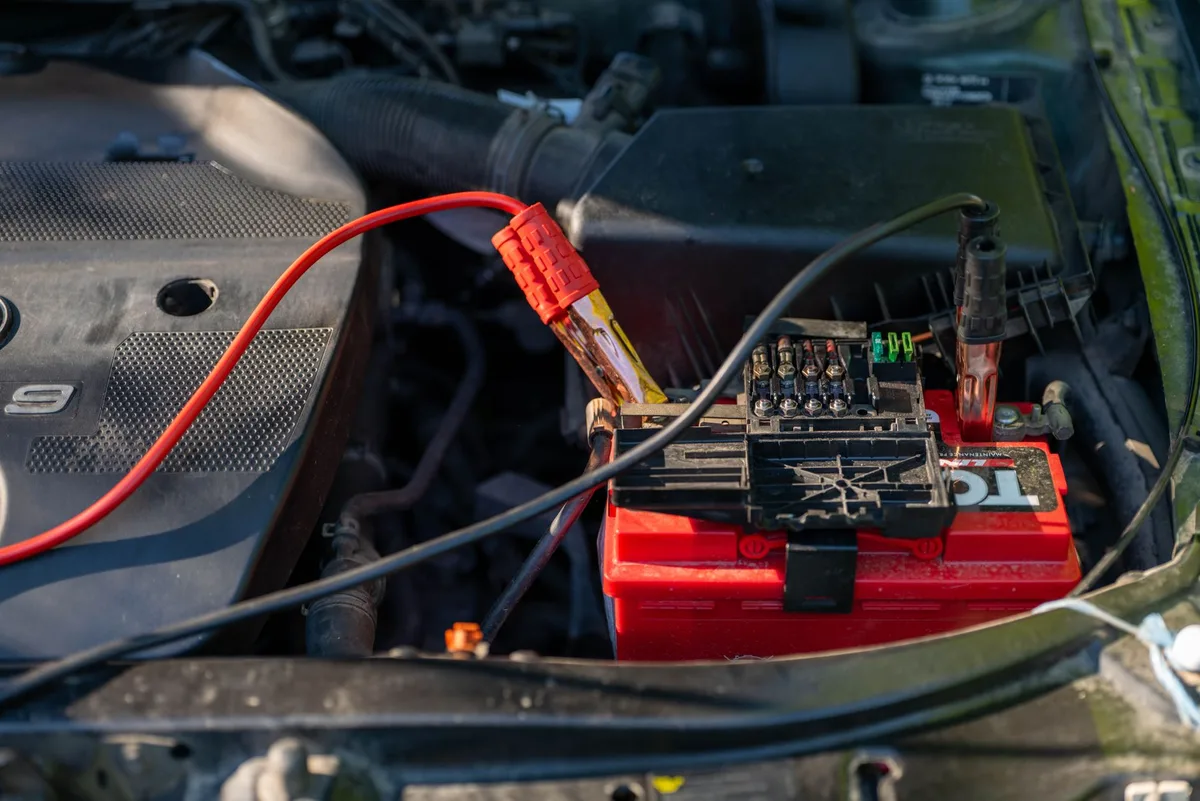
Standard flooded (wet-cell) batteries are the budget baseline. They deliver decent RC for basic vehicles but fade faster under deep or repeated discharge. EFB batteries improve on that with tougher plates and better cycling, which suits entry-level start-stop cars.
AGM batteries sit at the top. The absorbed glass mat design supports higher reserve capacity, deeper discharge tolerance, and far more charge cycles. That's why start-stop and high-accessory vehicles usually ship with them.
| Battery Type | Relative Reserve | Best For |
|---|---|---|
| Flooded | Baseline | Basic cars, mild climates |
| EFB | Better | Entry start-stop, moderate loads |
| AGM | Best | Start-stop, heavy accessories, deep cycling |
Here's the trade-off. AGM costs more upfront and needs a charging system tuned for it. But if you rely on reserve, the extra capacity and cycle life usually pay off.
Matching the battery to your alternator's output matters too, since a mismatched charging voltage shortens any battery's life.
How Heat, Cold, and Age Eat Into Your Reserve Capacity
Reserve capacity isn't fixed for life. It shifts with temperature and drops as the battery ages. The label figure is a best-case number measured under ideal lab conditions.
Cold weather is the obvious thief. At freezing temperatures, a lead-acid battery loses a big chunk of usable capacity because the chemical reactions slow down. That RC 110 battery might behave more like RC 70 on a bitter morning, which matters when winter cranking numbers start to sag.
Heat does damage of a different kind. High under-hood temperatures speed up water loss and internal corrosion, which permanently shrinks capacity. Cold steals reserve temporarily.
Heat steals it for good.
Age piles on top of both. Sulfation builds on the plates, active material sheds, and the battery can't store what it once did. Most batteries lose meaningful reserve after three to five years, even ones that still crank fine.
If yours drains faster than it used to, a quick multimeter check on overall health shows whether capacity loss is the culprit.

Similar Posts