Car Clicks But Won’t Start? Causes & Fixes
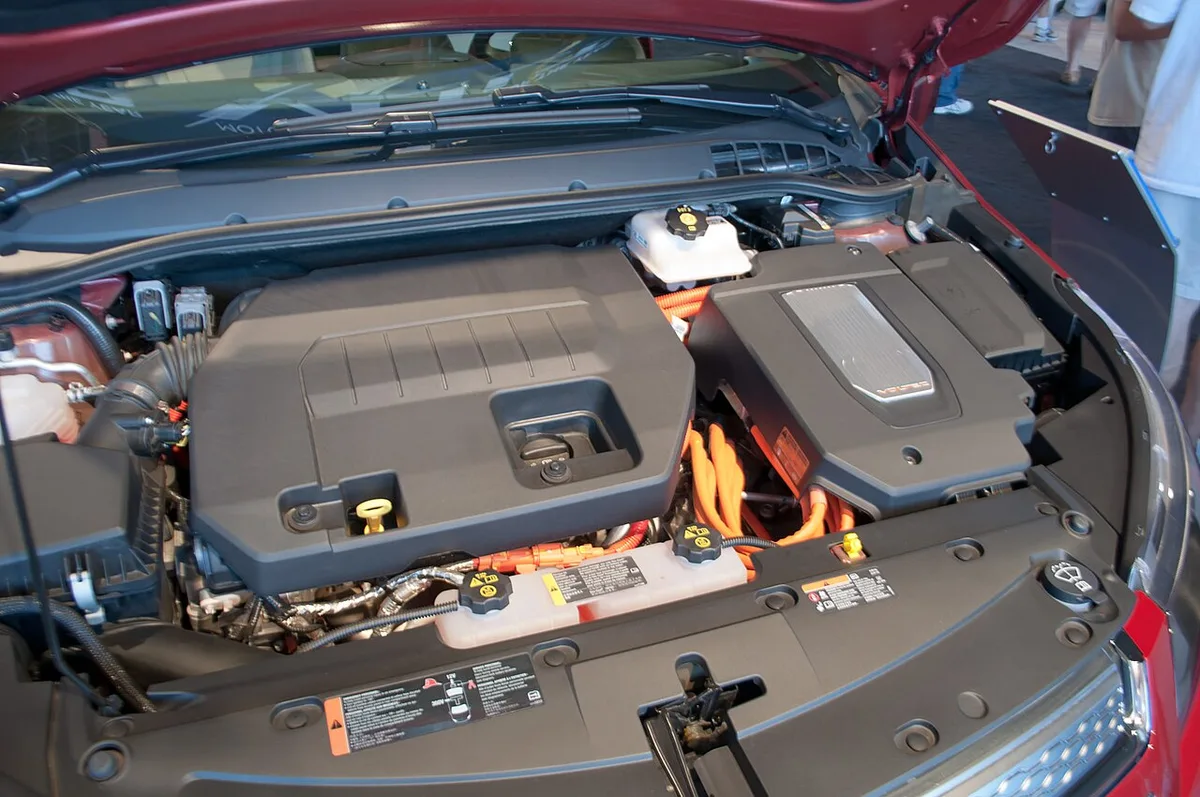
That heart-sinking moment when you turn the key and your car clicks but won't start is one of the most common no-start problems out there. The good news? That clicking is actually a clue.
It tells you the battery and starter are still talking to each other, but something in the chain isn't delivering enough juice.
Nine times out of ten, it's a weak battery or a bad connection, not a dead engine. In our research across common failure patterns, a healthy 12V lead-acid battery rests near 12.6 volts and should stay above 9.6 volts while cranking. Drop below that, and the starter can only click.
As of 2026, most car batteries still last just three to five years, so age matters more than folks expect.
Why Your Car Clicks But Won't Start
The click comes from the starter solenoid. That's a small electromagnetic switch bolted to the starter motor. When you turn the key, the solenoid gets a signal and tries to slam a heavy contact closed.
That contact sends a big burst of current to the starter motor, which spins the engine.
If there isn't enough power to hold that contact closed, the solenoid pulls in and drops out, over and over. That's your clicking. The starter never gets the steady current it needs.
So the click means the signal is arriving. The muscle behind it isn't. That single fact rules out a lot of scary problems and points you at the battery, the cables, or the starter itself.
The 30-Second Answer: Rapid Clicks vs. One Single Click
Rapid clicking usually means a weak or dead battery. There isn't enough power to hold the starter engaged. One single click often points to the starter or solenoid.
The battery may be fine but the motor won't spin. Start by testing the battery voltage. Clean the terminals, then try a jump start.
That's the short version. The sound your car makes is the fastest free diagnostic you've got, and it splits the problem neatly in two.
What the Clicking Sound Is Actually Telling You
Rapid Clicking: The Battery Can't Deliver Enough Power
Fast, machine-gun clicking almost always means low voltage. The solenoid keeps trying to engage, the voltage sags, it drops out, and it repeats several times a second. You'll often see the dash lights dim or flicker in time with the clicks.
This is classic dead-battery behavior. It can also show up when the battery reads okay at rest but collapses under load. If your meter shows a decent number yet the car still clicks, that gap tells the story.
Here's a closer look at how far it should dip on start.
One Loud Click (or Clunk): Think Starter or Solenoid
A single, solid clunk with no cranking usually means the solenoid engaged but the motor didn't turn. The contact closed, current tried to flow, and nothing spun. Worn starter brushes, a stuck solenoid, or burnt contacts are the usual causes.
Here's the tricky part. A weak battery can also cause one lonely click. That's why you never replace a starter on sound alone.
Confirm the battery first, then judge the starter. Plenty of good starters get tossed when the real culprit was a tired battery reading 12 volts but refusing to crank.
The Usual Suspects Behind a Click-No-Start
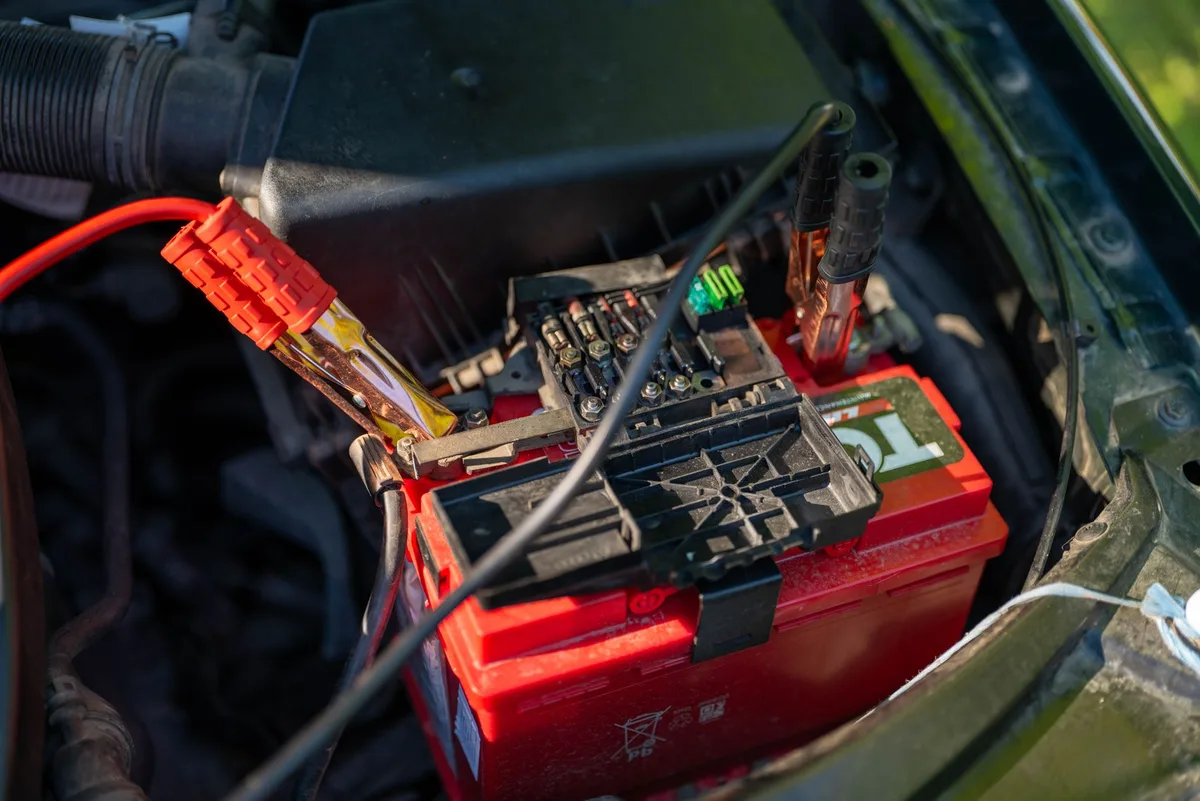
Most click-no-start cases trace back to five common faults. Run through them from cheapest and easiest to most involved.
- Dead or weak battery. The number one cause by a wide margin. Left a light on overnight, or the battery is simply old.
- Corroded or loose terminals. That white, green, or bluish crust on the posts blocks current. So do clamps you can wiggle by hand.
- Bad ground connection. The negative cable bolts to the engine or chassis. If that ground is loose or rusty, the starter starves.
- Failing starter motor or solenoid. Worn brushes and pitted contacts stop the motor from spinning even with a full battery.
- Weak alternator or a parasitic drain. If the battery keeps going flat, the charging system may be under-delivering, or something is drawing power while the car sits.
A quick way to sort the last one: if a fresh charge or jump gets you going but the trouble returns in a day or two, you're likely chasing a charging or drain issue rather than a one-off flat battery.
Battery age deserves a callout. Capacity fades with time, and cold makes it worse. A battery rated by its cold cranking amps, a figure standardized by SAE International, loses a big chunk of its punch once temperatures fall near freezing.
Quick Checks You Can Do in Your Driveway
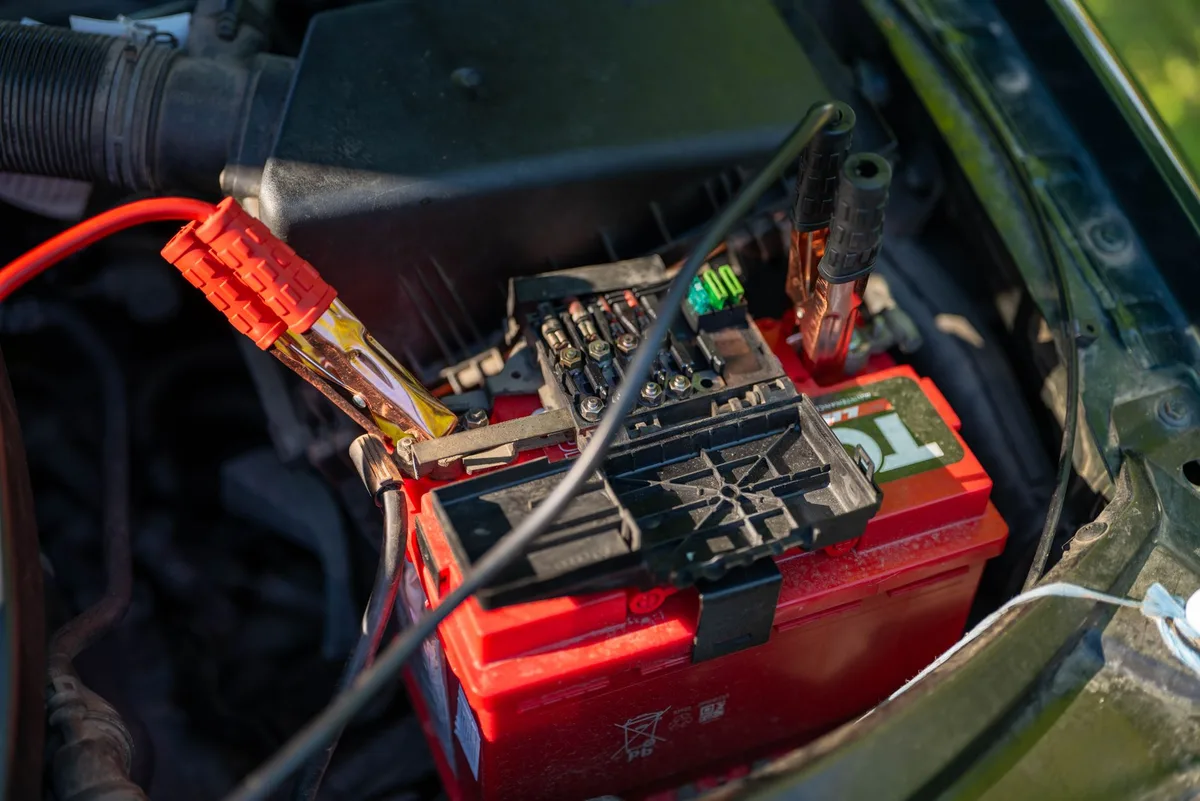
You can narrow this down in a few minutes with basic tools. Work through these in order and stop when you find the fault.
The Dome Light and Headlight Test
Turn on your headlights or dome light before you crank. Then have someone try to start the car while you watch. If the lights go dim or die when you turn the key, the battery is weak.
If they stay bright but you still get one click, lean toward the starter.
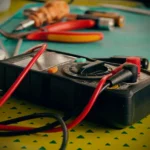
Reading Battery Voltage With a Multimeter
Set your meter to 20V DC, then touch red to the positive post and black to the negative. Here's the quick reference:
| Resting voltage | What it means |
|---|---|
| 12.6V or higher | Fully charged, healthy |
| 12.4V | Roughly 75%, still okay |
| 12.2V | About 50%, getting weak |
| 12.0V or below | Discharged, likely the problem |
A reading near the 12.4-volt mark is fine at rest, but the real test is what happens under cranking load. No meter? You can still check a battery without one using the headlight trick above.
Inspecting and Cleaning the Terminals
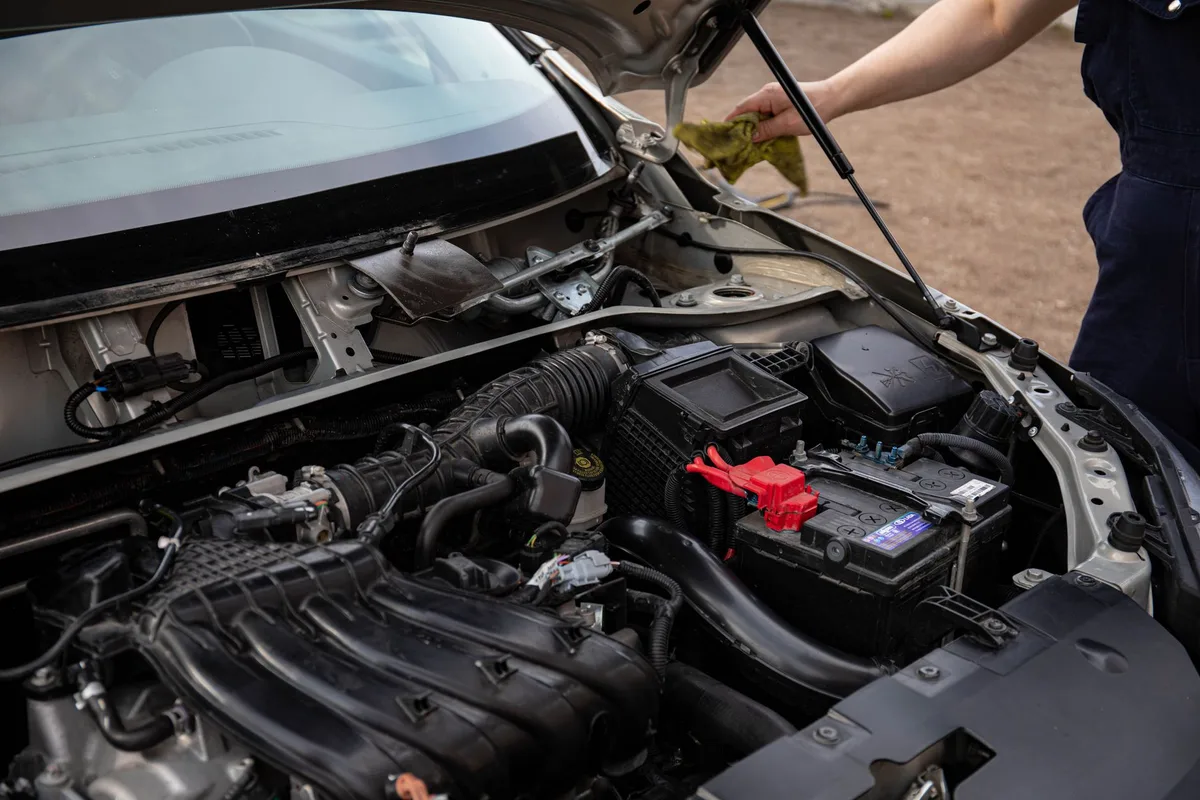
Pop the hood and look at the posts. Corrosion looks like fuzzy white, green, or blue buildup. Scrub it off with a wire brush and a paste of baking soda and water.
Then make sure both clamps are tight enough that they won't twist by hand.
The "Tap the Starter" Trick
If the battery checks out but you get a single click, try this. Have someone hold the key in the start position while you gently tap the starter motor with a wrench. A dead spot in a worn starter can free up long enough for one more start.
It's a get-home fix, not a repair, so plan on replacing that starter soon.
How to Jump-Start Safely (and What Order the Clamps Go)
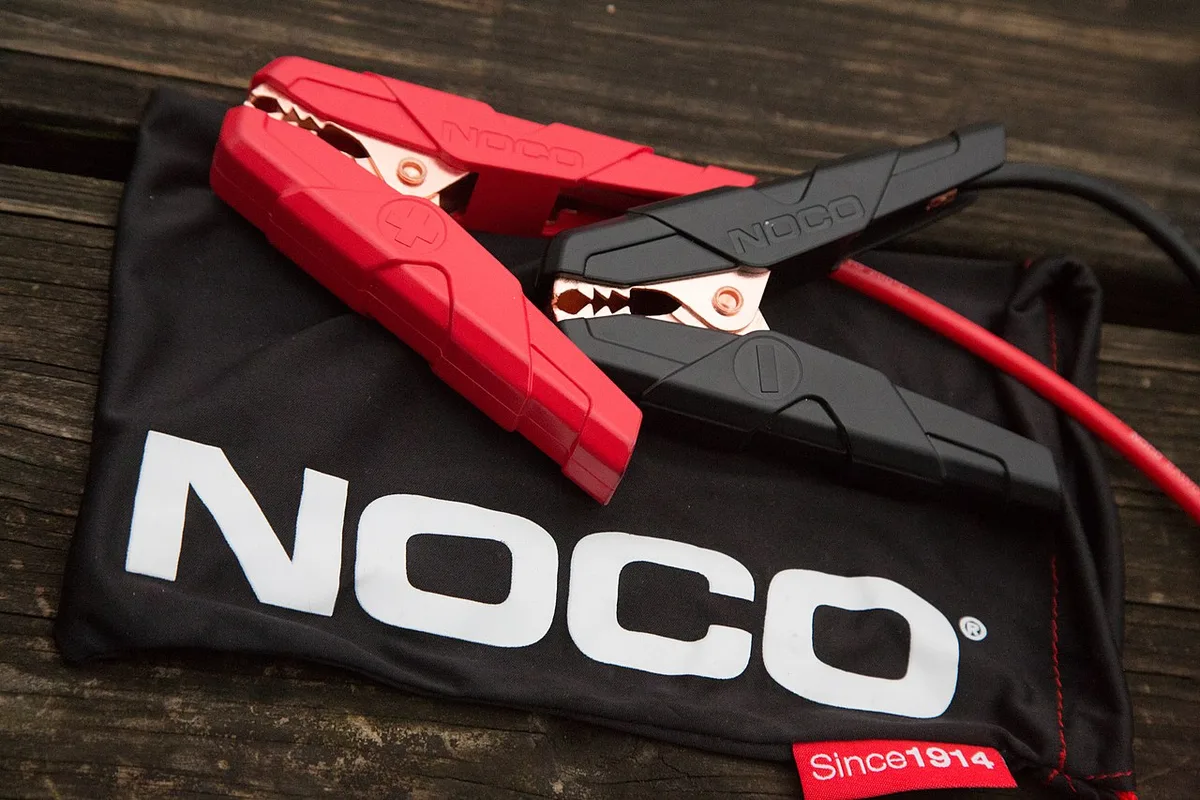
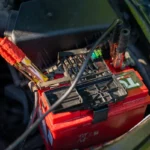
A jump start confirms the diagnosis and often gets you moving. Clamp order matters for safety, since a dead battery can vent hydrogen gas. Connect in this sequence to keep sparks away from the battery.
- Red clamp to the dead battery's positive post.
- Red clamp to the good battery's positive post.
- Black clamp to the good battery's negative post.
- Black clamp to a bare metal bolt or bracket on the dead car's engine, not the battery.
That last ground point is the one people get wrong. Attaching the final clamp to bare engine metal keeps any spark away from battery fumes.
Let the good car run for a couple of minutes, then try to start. If it fires up, leave it running and drive a while to recharge. A portable lithium jump pack skips the second car and follows the same red-first logic.
If the car starts but dies again soon after, you're likely looking at a charging system that isn't keeping up.
Battery Problem or Starter Problem? A Simple Decision Guide
Use this if/then chain to land on the right part without guessing.
- If the dash lights dim and you hear rapid clicks, then it's the battery or a bad connection. Charge, clean, and retest.
- If the lights stay bright but you get one click, then suspect the starter or solenoid. Try the tap trick, then test.
- If a jump start works instantly, then the battery was flat. Now find out why it drained.
- If the battery reads 12.4V or higher yet still only clicks, then check the ground and cables before condemning the starter.
- If the car starts fine but goes dead again within a day, then hunt for a charging fault or a parasitic drain pulling power while parked.
The trap here is the overlap. A weak battery mimics a bad starter, and a bad connection mimics both. That's why voltage under load beats any single symptom.
When the numbers and the sound agree, you've found it.
Mistakes That Send People to the Wrong Fix
The most expensive mistake is replacing the starter when the battery was the problem. A single click fools people into buying a starter, only to have the same click return. Always confirm cranking voltage first.
Here are the errors we see most often:
- Skipping the terminals. Corrosion is free to fix but blocks current like a dead battery. Clean before you spend a dime.
- Trusting resting voltage alone. A battery can read 12.5V at rest and still collapse under load. Test while cranking.
- Ignoring the ground cable. A rusty ground bolt starves the starter even with a perfect battery.
- Assuming a jump means the battery is fine. If it needed a jump, something drained it. Find the cause.
- Buying a battery without a load test. Charge it, load test it, then decide. A reading around 12.2 volts is weak but not always dead.
One more. If the car cranks slowly for a few days before it quits, that's a warning, not a surprise. Slow cranking is a battery or charging system waving a flag.
What Each Repair Actually Costs
Costs swing with your vehicle and whether you do the work yourself. These are typical ballpark ranges for planning, not quotes.
| Fix | DIY cost | Shop cost |
|---|---|---|
| Clean terminals | Under $10 | $20 to $50 |
| Replace battery | $100 to $300 | $150 to $400 |
| Replace starter | $80 to $250 (part) | $300 to $650 |
| Charge or ground repair | Under $30 | $75 to $200 |
Cleaning terminals is the cheapest possible win, and it fixes a real share of no-starts. A battery swap is next, and many are straightforward DIY jobs. A starter replacement costs the most because of labor, since the part often sits low on the engine.
Before you commit to the priciest option, spend ten minutes confirming the battery. A meter and a wire brush have saved plenty of drivers from a needless starter bill.
Cold Weather, Short Trips, and Why Batteries Die Early
Cold is brutal on batteries. Chemical reactions slow as temperatures fall, so a battery that cranks fine in summer can barely click on a frosty morning. Near 0°F, a battery can lose roughly a third of its usable capacity, which is why cold-weather no-starts spike every winter.
Short trips make it worse. Starting the engine drains a big slug of power, and a five-minute drive won't replace it. String enough short trips together and the battery slowly falls behind.
Over weeks, it never reaches a full charge.
A weak alternator hides inside this same pattern. If output sits low, the battery leaves the driveway already half-fed. You can catch this by checking what the charging voltage reads while running, which should sit in the low-to-mid 14-volt range on most cars.
If your commute is mostly short hops, an occasional longer drive or a plug-in maintainer keeps the battery topped up. That one habit prevents a lot of click-no-start mornings.
Safety Rules Before You Touch the Battery
A car battery holds real hazards, so a few habits keep you safe. It vents flammable hydrogen gas and holds sulfuric acid. Both deserve respect, even on a dead battery.
- Kill the sparks. No smoking, no open flames, and keep the final ground clamp off the battery.
- Protect your eyes and hands. Wear safety glasses and gloves. Acid burns and battery crust are no fun on skin.
- Disconnect negative first. When you remove a battery, pull the negative cable before the positive. That stops accidental shorts.
- Never lean over the battery while connecting cables. Keep your face back as the last clamp lands.
- Check for a cracked case or leaks. A swollen or leaking battery gets replaced, not charged.
If you smell rotten eggs near the battery, stop. That sulfur odor means it's venting, and it needs to cool and vent before you go further.
When to Stop and Call a Mechanic or Roadside Assistance
Some no-starts are worth handing off. If you've charged the battery, cleaned the terminals, and checked the ground, yet the car still only clicks, the starter or wiring likely needs a pro. That's especially true when the battery load tests fine.
Call for help in these cases:
- You smell burning or see melted cable insulation. That points to a serious electrical fault.
- The battery is swollen, cracked, or leaking. Don't jump or charge it.
- Repeated dead batteries with no clear cause. A hidden drain needs metered testing to trace.
- No tools and no safe spot to work. A parking lot shoulder is no place to wrestle a starter.
Roadside assistance is the fast route when you're stranded and just need a jump or a tow. A shop is the better call when the fault keeps coming back. Chasing an intermittent starter or a phantom drain often takes gear most drivers don't keep at home.
Frequently Asked Questions
Why does my car click rapidly but the lights still work?
Lights draw very little power, so they can glow while the battery still can't crank the engine. Starting the motor demands a huge current burst that a weak battery can't supply. The rapid clicking is the solenoid dropping out under that load.
Test the battery under cranking, not just at rest.
Can a bad starter cause a single click?
Yes. A worn starter or a stuck solenoid can engage with one click but fail to spin. First confirm the battery is strong and the connections are clean.
If both check out and you still get one click, the starter is the likely culprit.
Will a jump start always fix a clicking car?
Not always. A jump start fixes a flat battery, but it won't cure corroded terminals, a bad ground, or a failing starter. If the jump works but the problem returns, something drained or starved the battery.
Track down that cause before you trust the car again.
How do I know if it's the battery or the alternator?
Check voltage in two states. A resting battery should read about 12.6V, and with the engine running it should climb into the low-to-mid 14-volt range. If it won't hold a charge and the running voltage stays low, the alternator is suspect.
A steady low resting number points at the battery itself.
Can cold weather alone make my car click and not start?
Yes, cold is a common trigger. Low temperatures cut a battery's available power sharply, so a borderline battery that started fine yesterday can stall on a freezing morning. If the same battery cranks fine once it warms up, it's weak and due for replacement.
A load test in the cold confirms it.
Is it safe to keep trying the key when the car just clicks?
No, hold off after two or three tries. Repeated cranking overheats the starter and drains what little charge remains. Stop, check the battery and terminals, then jump or charge before trying again.
Grinding on the key only digs the hole deeper.
Similar Posts