How to Jump Start a Car: Step-by-Step Safety Guide
A dead battery always picks the worst moment. Knowing how to jump start a car turns a stranded morning into a five-minute fix. The process itself is simple.
But the order you connect those cables really matters, and getting it wrong can spark, injure, or fry your car's electronics.
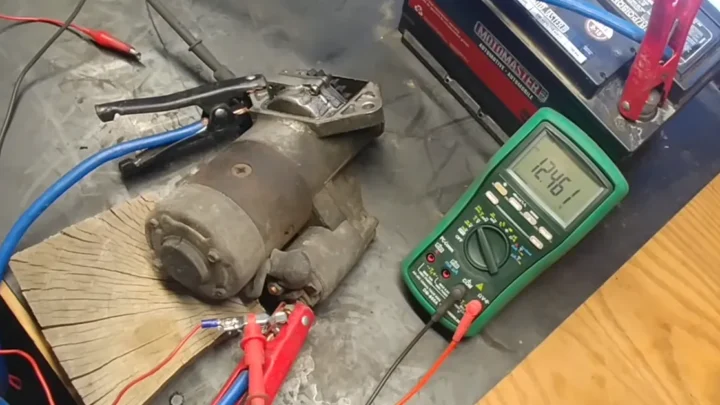
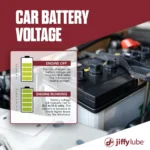
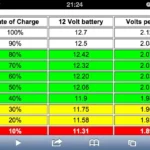
A healthy 12-volt battery reads about 12.6 volts at rest, per Battery Council International reference values. Drop below roughly 12.0 volts and the starter usually won't spin. As of 2026, most cars still run this same lead-acid setup, so the fundamentals haven't changed.
Here's why doing it the right way is worth the extra 30 seconds.

Quick Answer
To jump start a car, park a working car close and shut both off. Connect red to the dead battery's positive post. Then red to the good battery's positive.
Connect black to the good battery's negative. Then black to bare metal on the dead car. Start the good car, wait two minutes, then start the dead one.
Why Getting a Jump Start Right Actually Matters
Jump starting isn't hard, but it's not risk-free either. You're working with live current, a battery that vents flammable hydrogen gas, and thousands of dollars of sensitive electronics. One reversed clamp can blow fuses or damage a control module.
The stakes are real, so treat this like any safety job. A wrong move can spark right next to the battery. That spark near vented hydrogen is exactly how batteries rupture.
Here's what's actually on the line:
- Personal safety: sparks, acid splashes, and burns
- Your electronics: reversed polarity can cook the ECU
- The other car: a bad connection can damage the donor vehicle too
- Your time: a botched attempt can leave you stranded twice
The good news is that following the correct sequence removes almost all of that risk. Slow and correct beats fast and sorry every time.
What Jump Starting Really Does to Your Dead Battery
A jump start doesn't recharge your battery. It borrows enough current from a good battery to spin your starter motor once. Once the engine fires, your alternator takes over and starts recharging.
That distinction matters. If your battery is simply flat from a light left on overnight, a jump gets you going and the alternator refills it as you drive. If the battery has a dead cell or the alternator is failing, the jump is only a temporary patch.
Voltage tells the story. A reading of 12.6 volts means fully charged. Around 12.4 volts sits near 75 percent, and if you're curious what that middle reading signals, it's usable but slipping.
Once you hit the point most techs call flat, the starter can't pull enough amps.
You'll also notice your dash lights dim when you crank. That drop is normal, but a severe sag hints at a weak battery. It's worth understanding why the numbers fall during a start so you can tell a flat battery from a dying one.
The Gear You Need: Jumper Cables vs. a Portable Jump Starter
You've got two solid options. Jumper cables need a second running car. A portable jump starter is a battery pack that works on its own, no donor vehicle required.
Both do the same job. Which one fits you depends on whether you usually have a helpful stranger nearby or drive alone.
| Factor | Jumper Cables | Portable Jump Starter |
|---|---|---|
| Needs a second car | Yes | No |
| Typical cost | Low | Higher |
| Storage size | Bulky coil | Fits a glovebox |
| Best for | Two-car households | Solo drivers |
| Charge upkeep | None | Recharge every few months |
What to Look For in Jumper Cables
Cable quality decides how much current actually reaches your starter. Thin, cheap cables sag and struggle in the cold. Look for these traits:
- Gauge: 4 to 6 AWG for most cars, thicker for trucks and SUVs
- Length: 12 to 20 feet so you can reach across engine bays
- Clamps: heavy copper jaws that bite the terminal firmly
- Insulation: flexible even in freezing weather
What to Look For in a Lithium Jump Pack
A portable lithium pack lives in your trunk and skips the whole donor-car problem. Check the specs before you trust one:
- Peak amps: 400 to 1,000 for cars, more for diesels
- Reverse-polarity protection: warns you if clamps are backwards
- Charge level: keep it above 50 percent so it's ready
- Extras: a built-in light and USB port earn their keep
Before You Touch a Cable: Safety Checks That Prevent Sparks and Injury
Run these checks before a single clamp goes on. Batteries vent hydrogen gas, and that gas ignites from the smallest spark. The U.S.
Occupational Safety and Health Administration (OSHA) flags battery charging areas as a genuine explosion and acid hazard, so this isn't overcaution.
Do this first, every time:
- Put both cars in Park or Neutral with the parking brakes set
- Turn off both ignitions and pull the keys
- Switch off headlights, heater, and radio to cut the load
- Remove rings, watches, and metal jewelry
- Keep hands, sleeves, and hair clear of belts and fans
- No smoking, no open flames, nothing that sparks nearby
Take a look at the battery itself too. Light surface dust is fine. But if you spot cracks, bulging sides, or a leaking case, stop right there.
The One Battery You Should Never Jump Start
Never jump a frozen, swollen, or leaking battery. A frozen battery can burst when current hits it, spraying sulfuric acid. If the case looks bloated or the fluid is slushy in deep cold, walk away and call for a tow.
The same goes for a battery that reads truly dead with zero response. If you know how to check, a reading of nothing at all often means an internal fault, not just a flat charge. That's a replacement job, not a jump.
How to Jump Start a Car With Jumper Cables (Correct Connection Order)
Connection order is the whole ballgame. Follow it exactly. Red goes on first, and the last black clamp never touches the dead battery.
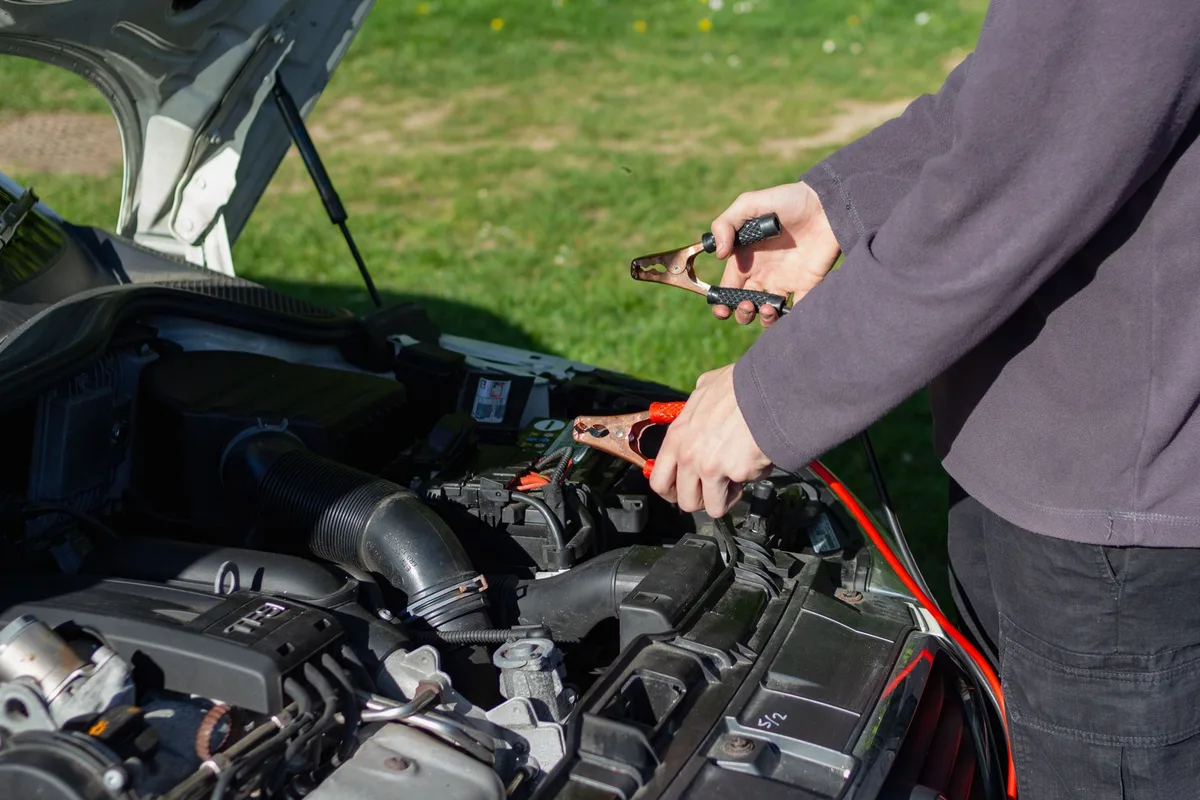
Here's the sequence, step by step:
- Park the good car nose to nose, close but not touching. Both engines off.
- Clamp red to the dead battery's positive (+) post.
- Clamp the other red end to the good battery's positive (+) post.
- Clamp black to the good battery's negative (−) post.
- Clamp the final black end to bare, unpainted metal on the dead car's engine block or a chassis bolt. Not the battery.
- Start the good car. Let it run two to three minutes.
- Start the dead car. Crank in short bursts of about five seconds.
That last black clamp on bare metal is the step people skip. Grounding away from the battery keeps any spark far from the hydrogen gas around the terminals. It's the single most important safety move in the whole process.
If the dead car cranks slowly or clicks, wait another few minutes and let the donor car keep feeding it. Rev the good car's engine gently to around 1,500 rpm to push more current across. If it still won't fire after a few honest tries, the problem is bigger than a flat battery.
How to Jump Start a Car Without Another Car Using a Jump Pack
No donor car? A portable lithium jump starter does the whole job on its own. It's the fastest option when you're alone in an empty lot.

The steps mirror the cable method, minus the second car:
- Make sure the pack is charged to at least 50 percent.
- Clamp red to the battery's positive (+) post.
- Clamp black to bare metal ground, not the negative post.
- Turn the pack on and wait for the ready light.
- Start the car, then unplug the pack right away.
Most car-rated packs push 400 to 1,000 peak amps, plenty for a four-cylinder. Diesels and big V8s need more muscle, so check the rating first. If the pack has reverse-polarity protection, it'll beep or flash when clamps are backwards.
Don't ignore that warning.
Removing the Cables and Recharging the Battery the Right Way
Pull the cables in the exact reverse order you put them on. That means the last clamp attached comes off first. Rushing this step is how people create a live short.
Here's the removal order:
- Black clamp off the engine ground
- Black clamp off the good battery
- Red clamp off the good battery
- Red clamp off your battery
Keep the clamps from touching each other or any metal while the cables are still connected at the other end. Once everything's clear, coil the cables and stow them.
Now drive. Your battery is still low, and only the alternator refills it. Aim for 20 to 30 minutes of steady driving, not idling in the driveway.
Idling barely charges the battery, so highway miles work best.
Common Jump Starting Mistakes That Fry Electronics or Cause Injury
Most jump-start disasters come from a handful of avoidable slips. Knowing them ahead of time keeps you and your car safe.
- Reversing the clamps: red on negative can blow fuses and cook the ECU
- Grounding the last clamp on the battery: sparks next to hydrogen gas
- Letting the clamps touch each other while live
- Cranking for more than five seconds straight, which overheats the starter
- Jumping a cracked, frozen, or swollen battery
- Leaving accessories on, which steals current from the crank
One more trap catches people. If the car starts but dies the moment you unhook, don't just keep re-jumping it. That pattern points to a charging fault, not a stubborn battery.
Chasing it with repeat jumps only wears out your starter.
Car Still Won't Start After a Jump? Reading the Real Problem
If a proper jump doesn't work, the battery usually isn't the only issue. The clues are in how the car responds when you turn the key.
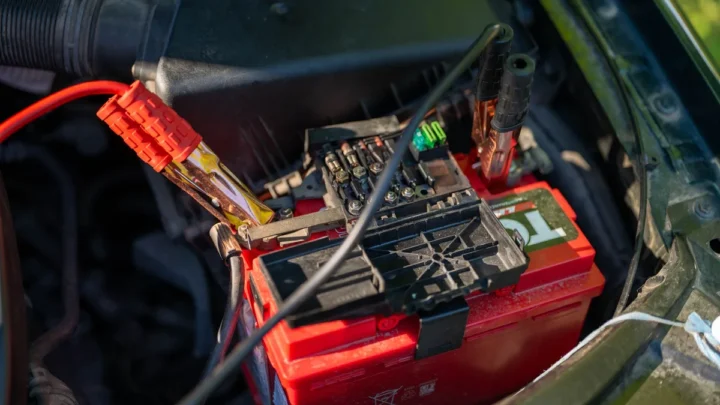
Start with the terminals. Heavy white or blue corrosion, like the buildup shown above, blocks current before it ever reaches the starter. Clean the posts with a wire brush and reconnect tightly, then try again.
Still nothing? Listen closely. Rapid clicking usually means not enough amps.
A single loud click often points to the starter. Total silence with good voltage can mean a wiring or ignition-switch fault. If you own a multimeter, it's worth learning a quick way to confirm a bad battery before spending money.
Dead Battery vs. Failing Alternator vs. Bad Starter
These three feel similar but behave differently. Sorting them saves you a wasted parts swap.
- Dead battery: jumps fine, runs fine, but goes flat again when parked
- Failing alternator: jumps, runs a while, then dies as the battery drains
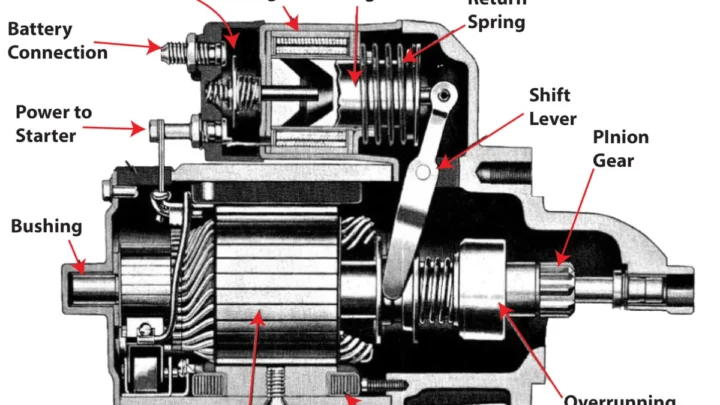
- Bad starter: strong battery voltage but only a click, no crank
The alternator test is the one people skip. If the car dies minutes after a good jump, the charging system likely isn't keeping up. A simple check tells you whether the battery or the alternator is at fault, and it takes about two minutes with a meter.
When a battery keeps draining overnight instead, the culprit is often a hidden power drain pulling current while you sleep.
Where the Battery Hides on EVs, Hybrids, and Modern Cars
The battery isn't always under the hood anymore. On many modern cars, it sits in the trunk, under the rear seat, or beneath the floor. Automakers put it there for weight balance, and it can throw you off.
To keep things simple, they add remote jump terminals in the engine bay. You'll see a red plastic cap over a positive stud and a marked ground point nearby. Clamp to those exactly like you would a normal battery.
One firm rule for hybrids and EVs: you only ever jump the small 12-volt battery. Never touch the high-voltage traction pack. That orange-cabled system carries lethal voltage and is not a DIY job.
When in doubt, the owner's manual shows the exact terminals and any warnings for your specific model. A hybrid can jump-start your gas car, but always follow its manual before using it either way.
Cold Weather, Heat, and Why Batteries Die When They Do
Cold is a battery's worst enemy. At 0°F, a typical lead-acid battery loses around 30 to 40 percent of its cranking power. That's why so many no-starts happen on the first freezing morning.
Heat does quiet damage too. High temperatures speed up internal corrosion and evaporate the fluid inside. The battery may test fine until one cold snap finishes it off.
If you want the numbers behind how the cold drags voltage down, a quick winter check can save you a stranded morning.
Jump Starting vs. Bump Starting, Charging, and Calling for a Tow
Jumping isn't your only move. The right choice depends on your car and how much time you have.
| Method | Works On | Best When |
|---|---|---|
| Jump start | Any car | You have cables or a pack |
| Bump start | Manual only | No cables, a slope, and helpers |
| Battery charger | Any car | You're home and not in a rush |
| Tow / roadside | Any car | Battery is damaged or unsafe |
Bump starting only works with a manual transmission. You roll the car, pop it into second gear, and release the clutch to spin the engine. Automatics can't do it, so don't try.
When to Stop and Call a Professional Instead
Some situations aren't worth the risk. Call for help rather than forcing a jump in these cases:
- The battery is cracked, leaking, swollen, or frozen
- You smell rotten eggs, a sign of a venting or overheating battery
- The car jumps but dies repeatedly, pointing to a charging fault
- You can't safely reach the terminals or find the jump points
There's no shame in a tow when the battery is unsafe. A damaged battery can spray acid or rupture, and that's far pricier than a service call.
Expert Tips to Avoid Getting Stranded in the First Place
The best jump start is the one you never need. A few habits keep your battery healthy and ready.
- Test the battery twice a year, especially before winter
- Keep the terminals clean and tight to stop voltage loss
- Drive long enough for the alternator to fully recharge
- Replace a battery once it passes three to five years
- Store a charged jump pack in the trunk as backup
If your battery keeps dying without an obvious reason, chase the cause early. A weak reading like what a 12.2-volt result signals often warns you weeks before a total no-start.
Frequently Asked Questions
Which cable do I connect first, red or black?
Always connect red first. Clamp red to the dead battery's positive post, then red to the good battery's positive. Black comes next on the good battery, and the final black clamp goes to bare metal on the dead car, never the battery terminal.
How long should I drive after a jump start?
Drive at least 20 to 30 minutes at highway speed. Idling barely charges the battery, so steady driving works far better. If the battery still dies after a long drive, the alternator or the battery itself likely needs attention.
Can I jump start a completely dead battery?
Sometimes, if the battery is simply drained and not damaged. A battery reading near 0 volts or one that's frozen or swollen should not be jumped. That points to an internal fault, and a replacement is the safe move.
Will a wrong connection damage my car?
Yes. Reversing the clamps sends current backward and can blow fuses or fry the ECU. Clamps touching each other while live can also spark or short.
Follow the correct order every time to protect both cars.
Do I need to turn off the working car before connecting?
Turn off both cars before attaching any clamps. Once all four connections are secure, start the donor car and let it run a couple of minutes. This protects the electronics on both vehicles from surges.
Your Safe Jump Start Checklist at a Glance
Keep this simple list in mind and you'll handle any dead battery calmly.
- Both cars off, in Park or Neutral, brakes set
- Jewelry off, no sparks or flames nearby
- Red to dead positive, red to good positive
- Black to good negative, black to bare metal ground
- Start the donor, wait, then start the dead car
- Remove clamps in reverse order
- Drive 20 to 30 minutes to recharge
Get the order right, respect the battery, and a dead one becomes a minor delay instead of a ruined day.

Similar Posts