What Causes a Starter to Go Bad? 7 Common Culprits
You turn the key and get one loud click. Or you get nothing at all. Understanding what causes a starter to go bad saves you from a wrong diagnosis, a $300 part you didn't need, and a tow bill that hurts even more.
In our research across manufacturer service bulletins, ASE technician forums, and OEM shop manuals, the same handful of failures keep showing up.
A healthy starter pulls 150 to 250 amps at engagement, and factory specs call for cranking voltage to stay above 9.6 volts under load. As of 2026, most passenger-car starters carry a design life of 80,000 to 150,000 miles, yet plenty die far sooner. Heat, corrosion, and voltage drop finish them off long before their time.
Here's why.
Quick Answer
A starter goes bad from worn carbon brushes, burnt solenoid contacts, or a sticking bendix drive. Heat soak from the exhaust manifold cooks the internals over time. Oil leaks saturate the housing and short the windings.
Corroded ground straps starve the motor of current. Repeated hard cranking finishes the job.
Why a Starter Fails Long Before You Expect It To

Most starters don't die from age alone. They die from stress the driver never sees. A weak battery forces the motor to pull double the amps to spin the engine.
That cooks the brushes and warps the solenoid contacts.
Short-trip driving is another silent killer. Every start puts a heavy surge through the windings, and short drives never let the heat dissipate. Add a leaky valve cover dripping oil onto the housing, and the failure clock speeds up fast.
Location matters too. Salt-belt states corrode ground straps. Desert states bake the solenoid.
Both shorten the life of a part rated for a decade of clean, average use.
The Quick Diagnosis: What Your Starter Is Trying to Tell You
If you know the sound, you already know 80% of the answer. The starter speaks in clicks, grinds, and silence. Each noise points to a different failure.
| What You Hear | Likely Cause |
|---|---|
| One loud click | Burnt solenoid contacts or seized armature |
| Rapid clicking | Weak battery or high resistance in the cranking circuit |
| Grinding | Chipped pinion or worn flywheel teeth |
| Whirring, no crank | Failed bendix drive not engaging the flywheel |
| Silence | Bad ignition switch, relay, safety switch, or open ground |
| Slow, lazy crank | Low voltage, corroded cables, or worn brushes |
Before condemning the starter, confirm the battery reads 12.6 volts and the terminals are clean. Our guide on what a healthy 12V battery reads walks through the baseline numbers you need before touching anything else.
How a Starter Actually Works (And Why That Matters for Failure)
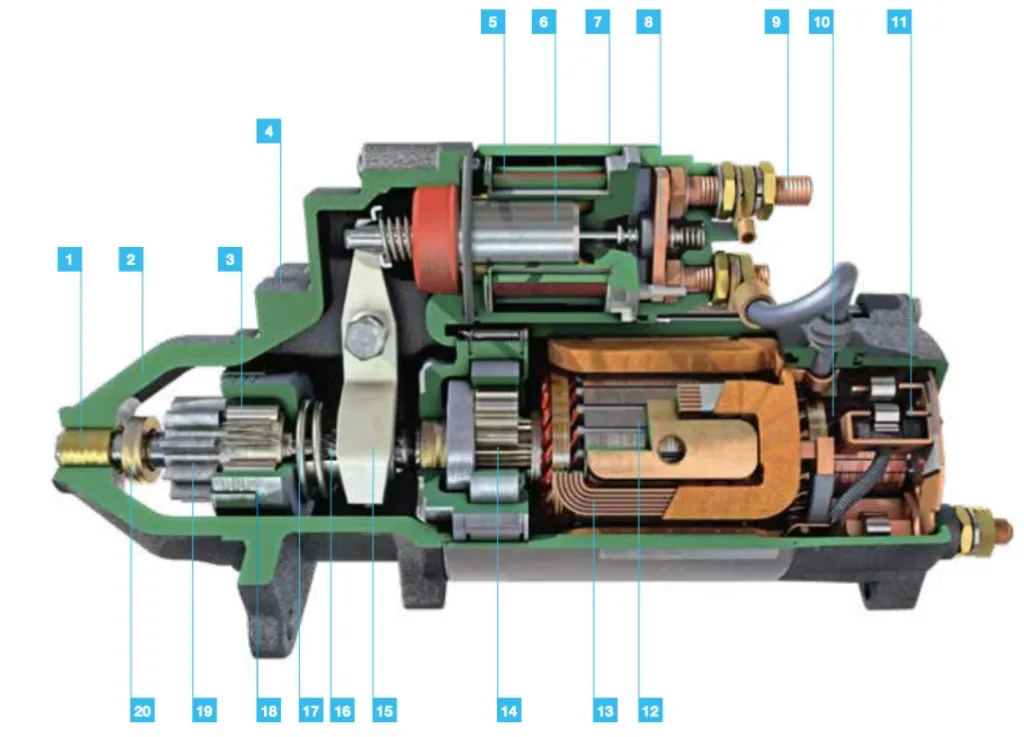
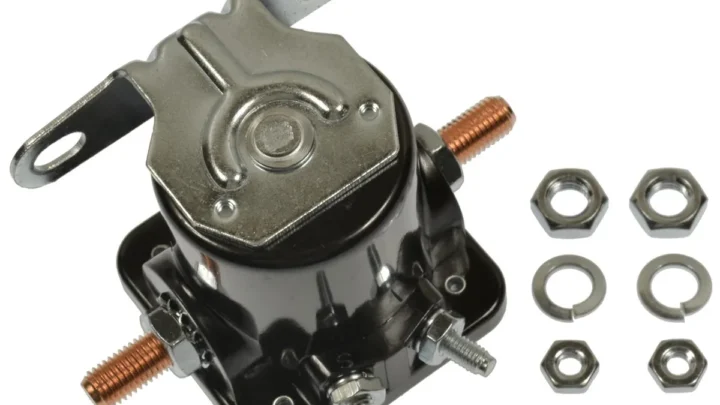
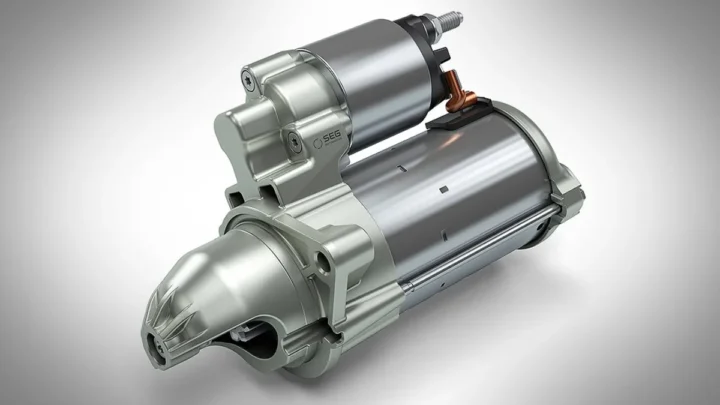
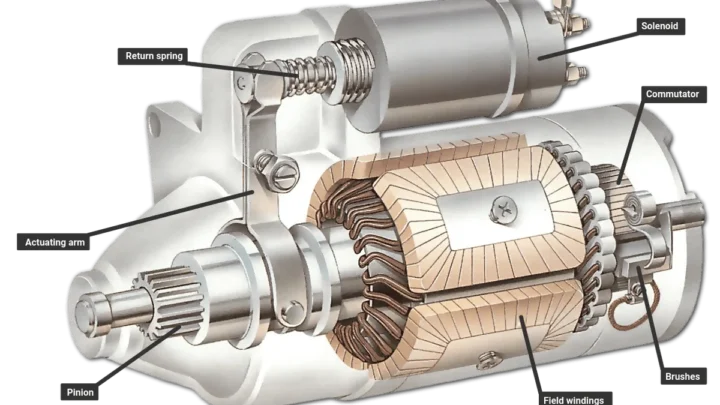
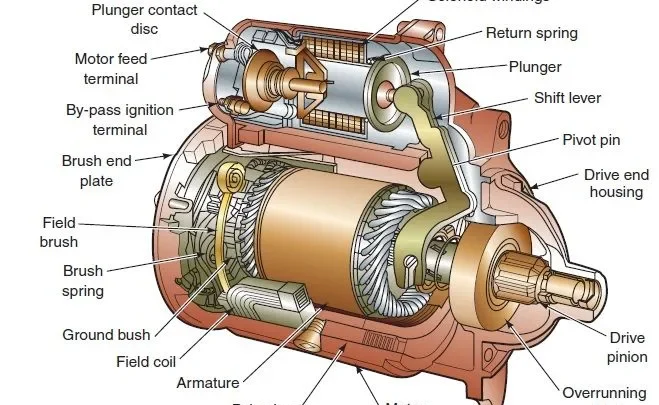
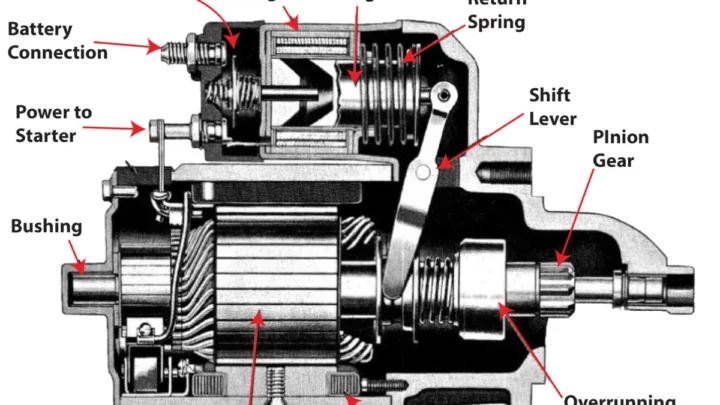
Turn the key, and the ignition switch sends a small signal to the starter relay. The relay energizes the solenoid. The solenoid does two jobs at once.
It pushes the pinion gear forward to mesh with the flywheel. Then it closes a heavy contact that dumps battery current straight into the motor.
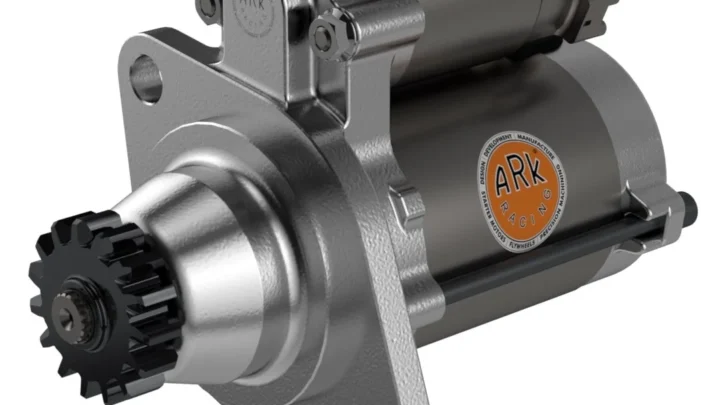
The motor spins the flywheel and the engine catches. An overrunning clutch inside the bendix lets the pinion freewheel so the engine doesn't spin the starter to death. When any single link in that chain wears, the starter reads as bad even if the motor itself is fine.
That's why brushes, contacts, springs, and ground paths matter as much as the armature. A copper solenoid contact only takes so many amp-surges before it pits. A brush spring only stays taut for so many thousand cycles.
Standards published by SAE International define the electrical and mechanical benchmarks these components must meet across their service life.
The Real Culprits Behind a Bad Starter
Seven failures cause the overwhelming majority of no-crank starter complaints. Knowing which one you're looking at decides whether the fix is a $20 solenoid rebuild or a full unit replacement.
Worn Brushes and a Glazed Commutator
Carbon brushes ride against the spinning commutator to feed current to the armature. Over 100,000-plus cycles they wear thin, lose spring tension, and stop making solid contact. You'll get intermittent no-starts, slow cranks, and eventually total silence.
Burnt Solenoid Contacts
The heavy copper contacts inside the solenoid pit and burn every time they close under load. Once pitted, they can't pass full current. Classic symptom: one loud click, no crank, and a starter that suddenly works again if you tap it or try three or four times.
A Sticking or Failed Bendix Drive
The bendix throws the pinion forward and lets it freewheel afterward. When the one-way clutch fails, you get whirring without cranking. When the drive sticks, the starter stays engaged after the engine catches and makes a horrible screech.
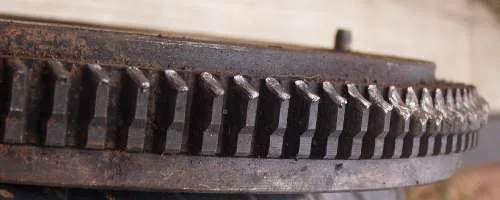
Chewed-Up Flywheel Teeth
If the starter was mounted crooked or engaged at the wrong angle over years, the pinion chews the ring-gear teeth on the flywheel. You'll hear grinding on some starts and silence on others, depending on where the flywheel stops.
Heat Soak From the Exhaust Manifold
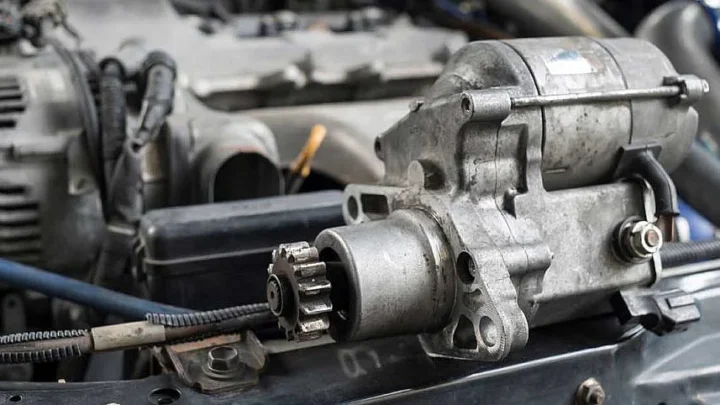
Many starters sit inches from the exhaust manifold. Underhood temperatures hit 250°F or more after shutdown. The heat warps the solenoid plunger and cooks the field windings.
This is the textbook "won't start when hot, starts fine when cold" failure.
Oil Leaks Soaking the Starter
A leaking valve cover, oil pan gasket, or rear main seal drips onto the starter housing. Oil seeps in, contaminates the brushes, and shorts the windings. Fix the leak first, or the replacement starter dies exactly the same way.
Bad Grounds and Voltage Drop
A corroded engine-to-chassis ground strap or a loose battery cable can drop 2 to 3 volts across the cranking circuit. The starter reads as bad because it barely spins. The starter is fine.
The circuit feeding it isn't.
Symptoms That Point Straight to the Starter
Before you swap parts, listen. Each symptom below matches a specific failure mode inside the starter or the cranking circuit that feeds it.
Single Loud Click Under the Hood
That single clunk is the solenoid slamming forward while the motor refuses to turn. Cause is usually burnt solenoid contacts, a seized armature, or a battery too weak to swing the motor. Verify battery voltage first, then bench-test the starter.
Rapid Clicking (Solenoid Chatter)
Machine-gun clicking means the solenoid pulls in, voltage collapses, and it drops out again, over and over. It's a low-voltage symptom almost every single time. Check the battery, the cables, and the ground strap before touching the starter.
Grinding or Whirring Noise
Grinding on crank means the pinion isn't meshing cleanly with the flywheel. That's chewed teeth, a worn bendix, or a starter loose in its mount. Whirring without cranking means the pinion isn't engaging at all.
Slow, Lazy Crank
A crank that sounds like it's dragging through mud points at low voltage, worn brushes, or high resistance in the cables. Load-test the battery first. A quick multimeter check on the battery terminals tells you which side of the circuit is the real culprit.
Intermittent No-Start (Especially When Hot)
If the car starts cold and refuses hot, that's textbook heat-soak damage inside the solenoid or worn brushes losing contact as they expand. Let it cool for 30 minutes and try again. If it fires right up, the starter is on its way out.
Complete Silence When You Turn the Key
Total silence usually isn't the starter at all. It's the ignition switch, the starter relay, the neutral safety switch, or a truly dead battery. If you get no click and no dimming dash lights, start with battery voltage and the fuse box.
Bad Starter vs. Dead Battery vs. Bad Alternator vs. Ignition Switch
Half the starters replaced every year didn't need replacing. The real fault sat one component away. Use this comparison to sort the four most common no-crank suspects.
| Component | Telltale Sign | Quick Test |
|---|---|---|
| Bad starter | Click or grind with a good battery | Bench test or tap test |
| Dead battery | Dim lights, rapid clicks, no crank | Voltage reads under 12.4V at rest |
| Bad alternator | Battery keeps dying after charging | Output under 13.8V at idle |
| Ignition switch | No dash lights or no crank in start position | Voltage check at solenoid "S" terminal |
If the battery keeps going flat overnight and the starter cranks weakly by morning, the charging system is the likely culprit, not the starter. Our breakdown on sorting a weak battery from a failing charging system walks through the split. And if lights dim while driving, you're likely chasing an alternator, not a starter.
The Step-by-Step Diagnostic Workflow Before Replacing Anything
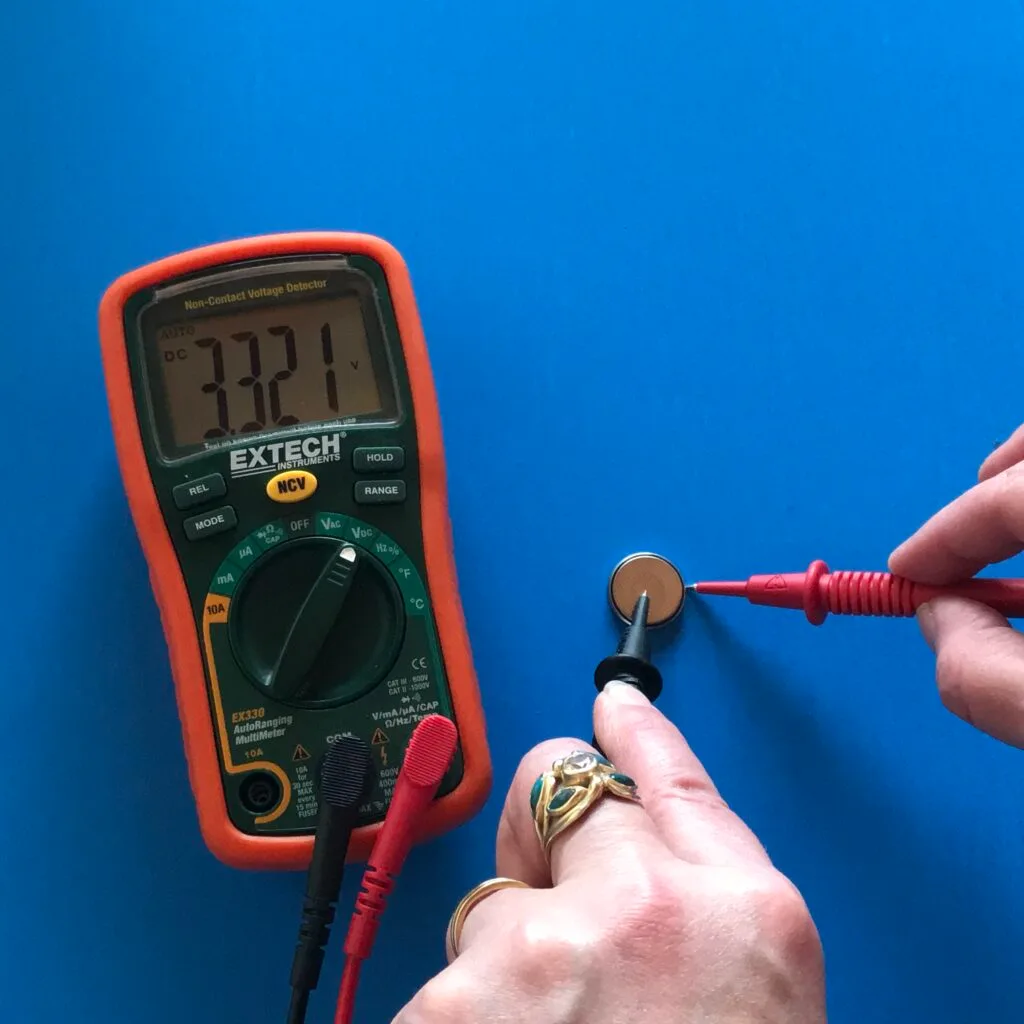
Work the circuit from the battery outward. Skipping steps is how good starters end up in the recycle bin.
- Check battery voltage at rest. It should read 12.4V or higher.
- Load-test the battery. A weak battery drops under 9.6V during crank.
- Inspect both terminals for corrosion and tighten cable ends.
- Voltage-drop test each cable. Anything over 0.5V is too much.
- Confirm the engine-to-chassis ground strap is clean and tight.
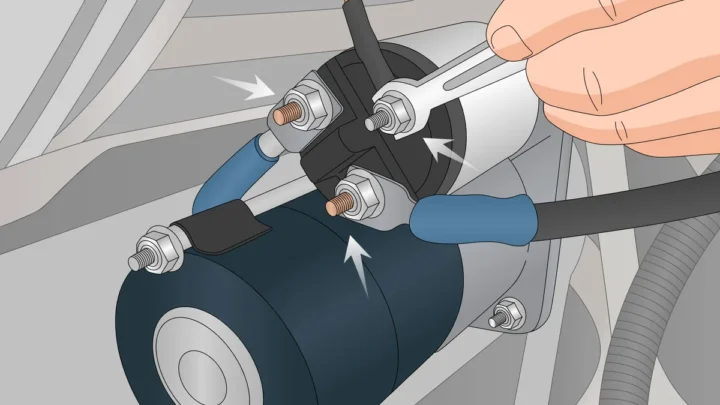
- With the key in start, check for 12V at the solenoid "S" terminal.
- If S-terminal voltage is present but the motor doesn't spin, the starter or solenoid is bad.
Aggregate technician reports show that steps 1 through 5 fix roughly 60% of "bad starter" complaints. Only after those pass should you pull the starter for a bench test.
Mistakes That Kill Starters Early
A brand-new starter can die in a week if you install it into the same conditions that killed the last one. These are the habits and shortcuts that shorten starter life the most.
- Ignoring an oil leak dripping onto the housing. The next unit dies the same way.
- Cranking longer than 10 seconds without a 30-second cool-down. That heats the windings past safe limits.
- Skipping the ground-strap check. Corrosion drops voltage and forces the motor to work harder.
- Reusing crushed or corroded battery cables with a fresh starter.
- Torquing the mounting bolts unevenly. That misaligns the pinion and chews the flywheel.
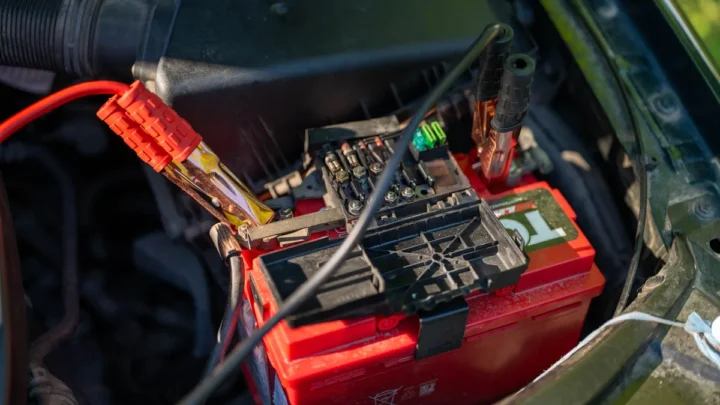
- Jump-starting with a running donor vehicle at high RPM. Voltage spikes damage the solenoid.
- Buying the cheapest remanufactured unit online. Poor tolerances mean early brush and bushing failure.
Fix the root cause first. Only then bolt the new starter in.
What It Costs to Fix (Parts, Labor, and Hidden Add-Ons)
Starter replacement costs vary wildly by vehicle. A four-cylinder Corolla is a 30-minute job. A Northstar V8 buried under the intake is a full day.
Aggregate 2026 shop estimates land in these ranges.
| Item | Typical Cost (USD) |
|---|---|
| Aftermarket new starter | $120 to $300 |
| OEM starter | $250 to $600 |
| Remanufactured unit | $80 to $200 |
| Solenoid rebuild kit | $15 to $40 |
| Independent shop labor | $150 to $400 |
| Dealer labor | $250 to $700 |
| Heat shield (if required) | $20 to $60 |
Hidden add-ons hit hardest on European makes and pickups with the starter mounted under the intake manifold. Gaskets, coolant, and hours pile up fast. Always ask the shop whether the flywheel needs inspection during the same job.
Preventive Habits That Add Years to a Starter's Life
Preventive care isn't glamorous, but it's the reason some starters hit 200,000 miles while others die at 60,000. The habits below cost almost nothing and pay back in avoided tows.
- Keep the battery above 12.4V and replace it at four to five years, not seven.
- Clean battery terminals twice a year and coat with dielectric grease.
- Inspect and tighten the engine ground strap every oil change.
- Fix small oil leaks before they saturate the starter housing.
- Install a heat shield if your model is known for heat-soak failures.
- Avoid extended cranking. If it doesn't fire in 10 seconds, pause and diagnose.
- Watch for symptoms of a struggling charging system so the starter isn't compensating for a weak alternator.
A starter that never gets abused rarely dies early. It's usually the circuit around it that shortens its life, not the motor itself.
When to Replace vs. Rebuild vs. Live With It
Rebuild if only the solenoid contacts or brushes are worn and the housing is dry. Kits run $15 to $40 and fix the two most common failures. It's a good move on classic cars and vehicles with hard-to-find OEM units.
Replace when the armature is scored, the bushings are worn, or oil has soaked the windings. A remanufactured unit from a name-brand rebuilder is the sweet spot on cost and reliability. Watch for the core-return discount.
Never live with a starter that grinds. Every failed engagement chips more ring-gear teeth. What starts as a $200 starter job turns into a $1,500 transmission-out flywheel replacement fast.
Safety Rules Before You Touch the Starter
The starter cable is a fat unfused wire straight from the positive battery post. Short it to ground and you get molten metal in a hurry. Follow these rules before any hands-on work.
- Disconnect the negative battery terminal first and set the cable aside.
- Wear safety glasses. Corrosion dust and hot solder from an accidental short both blind.
- Support the vehicle with jack stands rated for the weight. A hydraulic jack alone is not enough.
- Never straddle a wrench across the solenoid B+ stud and the housing.
- Let the exhaust cool for at least 30 minutes before reaching near the starter.
- Recycle the old starter through a parts-store core-return program instead of the trash.
OSHA lifting guidance applies: a cast-iron starter can weigh 15 lb or more, and dropping one on your face is a genuine ER trip.

Similar Posts