How Many Times Can You Jump Start a Car Safely?

You can jump start a car more than once, but how many times can you jump start a car before it becomes a real problem? The truthful answer is that the number matters less than the pattern. One jump gets you moving.
A second jump the same week is a warning light in disguise. Needing repeated boosts almost always means your battery or alternator is failing, not just tired.
Here's the part most people miss. A healthy 12-volt lead-acid battery should read about 12.6 volts at rest, and the charging system should push 13.7 to 14.7 volts while the engine runs. If yours keeps dropping dead, jumping it again just masks the fault.
As of 2026, roadside data still shows dead batteries near the top of breakdown calls every winter. So let's unpack what's really happening under the hood.
Quick Answer
You can jump start a car as many times as needed in an emergency. There is no hard mechanical limit. But needing more than one or two jumps signals a failing battery or alternator.
Repeated jumps can strain the charging system and risk electronic damage. Diagnose the cause instead of jumping again.
Why the Number Isn't the Real Question
Nobody wakes up wanting to jump their car twice. If you're asking how many times is safe, the real question is usually different. It's "why does my car keep dying?"
A jump start doesn't fix anything. It borrows power from another source so your engine can crank once. That's it.
The underlying reason your battery went flat is still sitting there, unsolved.
Think of it like a phone at 1 percent. Plugging in for ten seconds gets the screen on, but you haven't actually charged it. Your car works the same way.
So counting jumps is the wrong metric. What counts is how often you need one and why.
- One jump after leaving the lights on overnight? Totally normal.
- Two jumps in a week with no obvious cause? Something's wrong.
- A jump every single morning? Your battery or alternator is on its way out.
If your battery reads low even after a drive, our guide on what a 12.4-volt reading means helps you read the signs early.
The Short Answer: One or Two Jumps, Then Diagnose
Mechanically, there's no set limit on jump starts. You could jump a car ten times in a row and nothing explodes. But that doesn't make it safe or smart.
Here's the practical rule our research supports:
| Situation | What it usually means | What to do |
|---|---|---|
| First jump, obvious cause (lights left on) | One-off drain | Jump, then drive 20 to 30 minutes |
| Second jump within days | Battery not holding charge | Test battery and charging system |
| Repeated jumps, no clear cause | Failing battery or alternator | Stop jumping, get it diagnosed |
| Car dies while driving | Alternator or wiring fault | Do not rely on jumps, seek help |
The takeaway is simple. Use jumps as an emergency tool, not a daily habit. Once you've jumped a car twice for no clear reason, the smart move is testing, not another boost.
If you own a multimeter, checking whether it's the battery or the alternator takes just a few minutes and saves you guessing.
What Actually Happens When You Jump Start a Car
A jump start feeds outside power into your dead battery so the starter motor can turn the engine over. Once the engine fires, your alternator takes over and starts recharging the battery. That's the whole idea in one sentence.
But there are three parts working together here, and knowing their jobs explains why repeated jumps are a red flag.

The Role of the Battery, Alternator, and Starter
The battery is a storage tank. It holds the electrical charge that fires the starter and runs everything when the engine's off.
The starter motor is the muscle. It draws a big burst of current to physically spin the engine until it catches.
The alternator is the recharger. Once the engine runs, it generates electricity to refill the battery and power your lights, radio, and computers. A healthy alternator puts out roughly 13.7 to 14.7 volts.
You can see what a normal running voltage looks like to check yours.
When you jump a car, you're only helping the battery do its cranking job. If the alternator is the real problem, the engine may start and then die again minutes later.
Surface Charge vs a Real Recharge
Right after a jump, your battery shows a "surface charge." That's a thin, temporary voltage on the plates that looks healthier than the battery really is. It fades fast.
A true recharge takes time and a working alternator. A quick five-minute drive won't cut it. The battery needs a solid stretch of driving to actually refill.
This is exactly why so many people jump a car, run to the store, and find it dead again in the parking lot.
If your battery drops sharply the moment you crank, that behavior is worth understanding, and why voltage sags during starting breaks it down clearly.
When Repeated Jumps Are a Warning Sign
If you're jumping the same car over and over, the battery isn't the whole story. Repeated jumps almost always point to one of three culprits. Let's name them.
Dead Battery vs Failing Alternator
These two get confused constantly, but the fix is completely different.
A dying battery usually cranks slowly, needs a jump, then runs fine once the engine's going. It just can't hold a charge overnight. Most batteries last three to five years, and their cranking power is rated in Cold Cranking Amps under a test standard set by SAE International, so age and rating both matter.
A failing alternator is sneakier. The car might start after a jump, then stall as it drains the fresh charge. Dimming headlights, a battery warning light, or the engine dying while driving all point to the alternator.
Here's a quick self-check. With the engine running, a healthy system reads above 13.5 volts at the battery. Below that, suspect the alternator.
Knowing the exact numbers that spell a truly dead battery helps you tell the two apart fast.
Parasitic Drain and Other Hidden Culprits
Sometimes the battery and alternator are both fine, and the car still keeps dying. That usually means something is quietly draining the battery while the car is parked. This is called parasitic draw.
A normal parasitic draw sits around 25 to 50 milliamps. Anything much higher can flatten a good battery overnight. Common causes include:
- A glovebox or trunk light staying on
- A faulty relay or stuck module
- Aftermarket electronics wired incorrectly
- Corroded or loose battery terminals
If your car dies after sitting a day or two, checking whether a 50mA draw is normal is a smart next step. A simple multimeter routine for a battery that keeps dying can pinpoint the drain fast.
The Real Risks of Jump Starting Too Often
Jump starting is safe when done right and done rarely. Lean on it too often, or do it carelessly, and you can cause real damage. Here's what's actually at stake.
Alternator Strain and Overheating
When you jump a deeply drained battery, the alternator has to work overtime to refill it. Alternators are built to maintain a charge, not to resurrect a flat battery from zero.
Do that repeatedly and you run the alternator hot. Over time, that extra load can shorten its life or burn it out early. Then you've turned a battery problem into a pricier alternator problem.
Voltage Spikes and Electronic Damage
Modern cars are packed with sensitive electronics. The engine control unit, sensors, and infotainment all run on clean, steady voltage. A sloppy jump can send a spike through the system.
Connecting cables in the wrong order, or letting the clamps touch, can create surges. Those surges can fry a control module or blow fuses. On some vehicles, that repair costs far more than a new battery ever would.
Reverse Polarity and Battery Hazards
Hooking the cables up backward is the classic mistake, and it's a dangerous one. Reverse polarity can instantly damage electronics, melt cables, and even cause the battery to vent or rupture.
Lead-acid batteries also release hydrogen gas, which is flammable. A stray spark near the battery can ignite it. That's why you never connect the final ground clamp directly to the dead battery's negative post.
Never jump a battery that's cracked, leaking, swollen, or frozen, since those are worth replacing, not reviving.
How to Jump Start Safely (Correct Cable Order and Steps)
Cable order is where most damage happens, so follow it exactly. Connect in this sequence, and disconnect in reverse.
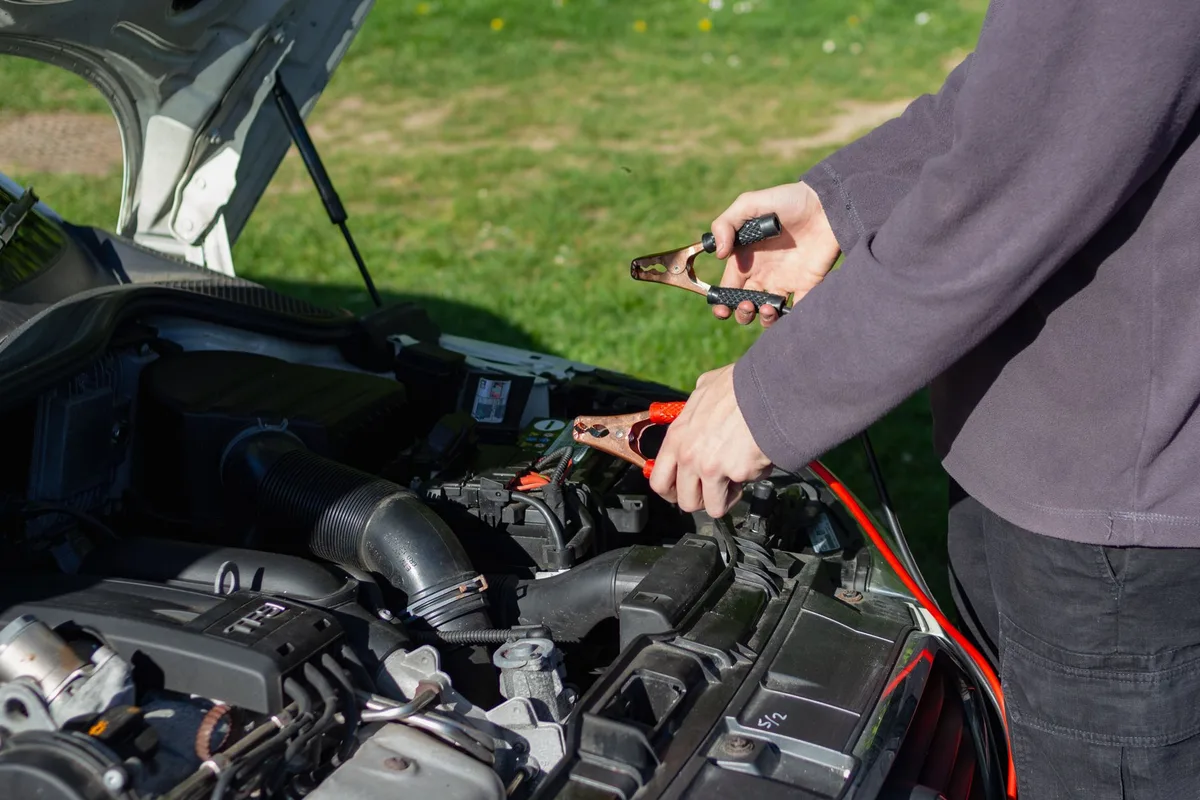
- Park the good car close, both engines off, keys out.
- Clamp red (positive) to the dead battery's positive terminal.
- Clamp the other red to the donor battery's positive terminal.
- Clamp black (negative) to the donor battery's negative terminal.
- Clamp the last black to a bare metal ground on the dead car, not its battery.
- Start the donor car, let it run a minute, then start the dead car.
That last ground point matters. Attaching it to bare engine metal instead of the battery post keeps any spark away from hydrogen gas. Once the dead car starts, remove the clamps in reverse order.
If the engine cranks slowly or won't turn at all, don't grind the starter. Crank in short bursts of three to five seconds, then pause. A car that reads 12 volts but won't crank at all often has a terminal or connection issue rather than a truly dead cell.
How Long to Drive After a Jump to Actually Recharge
Drive at least 20 to 30 minutes after a jump, and highway speeds beat idling. Idling barely charges the battery because the alternator spins slowly and your accessories eat the output.
Remember the surface charge trap from earlier. A short hop to the shop leaves the battery nearly as flat as before. If you can, take a longer continuous drive so the alternator has time to refill the tank.
Here's a rough guide to recovery time:
| Driving condition | Charge recovery |
|---|---|
| Idling in the driveway | Minimal, avoid relying on it |
| City stop-and-go, 20 min | Partial recharge |
| Steady highway, 30+ min | Best real-world recharge |
For a deeper refill, a smart charger overnight does what no drive can. That fully tops the battery and can even help reverse mild sulfation.
Mistakes That Turn a Simple Jump Into Expensive Damage
Most jump-start disasters come from a handful of avoidable errors. Our research into roadside failures keeps flagging the same ones.
- Reversing the clamps, which fries electronics instantly.
- Letting the red and black clamps touch while live.
- Jumping a cracked, leaking, or frozen battery.
- Cranking for 10-plus seconds straight and cooking the starter.
- Driving five minutes and assuming the battery's recharged.
- Ignoring corroded terminals that mimic a dead battery.
That last one is sneaky. White or bluish crust on the posts blocks current and looks exactly like a flat battery. A quick clean with a brush and baking soda solution often fixes a "dead" car with no jump needed.
And don't forget hybrids and EVs. Never connect cables to the high-voltage system. Use the manufacturer's designated 12-volt jump points listed in the owner's manual.
Jump Cables vs Portable Jump Starter vs Smart Charger
These three tools solve different problems, so pick by your situation. Cables are cheapest but need a second car. A portable jump starter works solo.
A smart charger doesn't start anything but fixes the root cause.
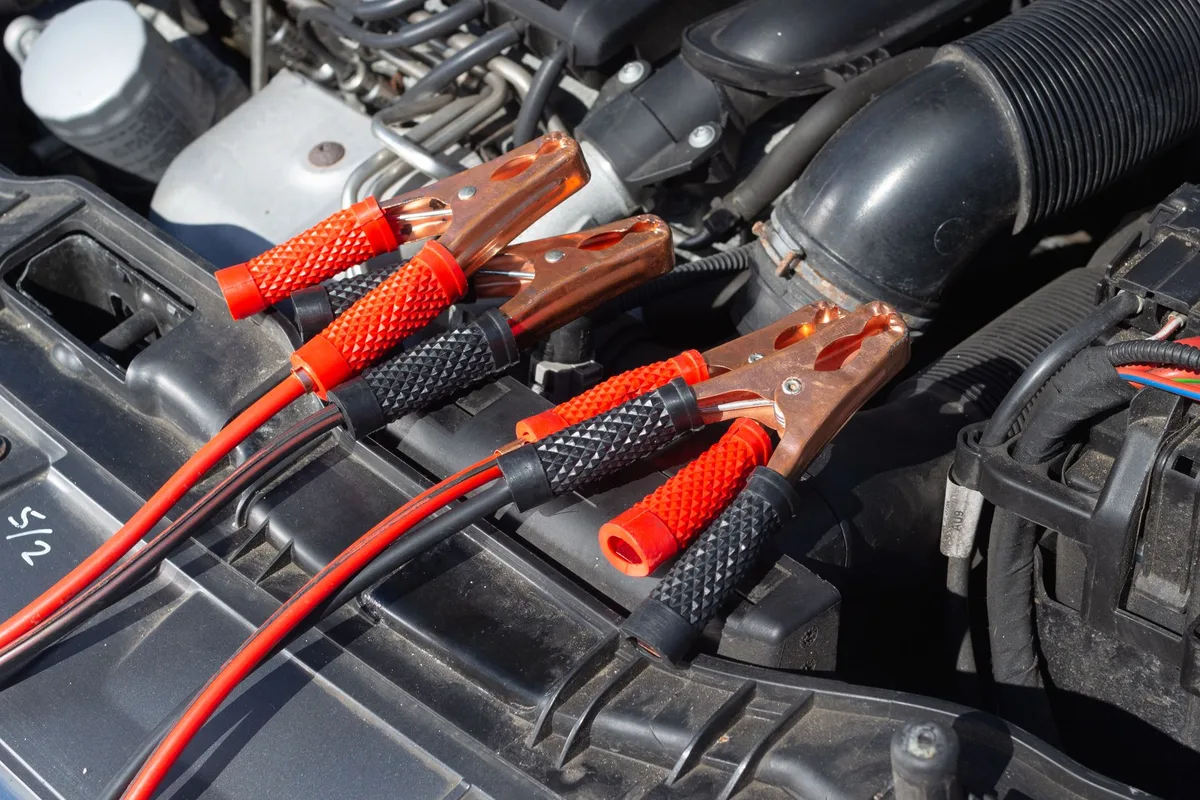
| Tool | Best for | Trade-off |
|---|---|---|
| Jumper cables | Cheap backup, if help's around | Needs a donor vehicle |
| Portable jump starter | Solo drivers, remote areas | Must stay charged, costs more |
| Smart charger | Recharging and battery health | Doesn't start a car on the spot |
If you're often alone or park far from others, a lithium jump pack is worth keeping in the trunk. If your battery just won't hold charge, a smart charger addresses that better than any jump. And if you want to confirm the battery's condition first, here's how to read a battery with a multimeter before spending a cent.
What It Costs: Battery Replacement, Testing, and Roadside Help
Knowing the price tags helps you decide when jumping stops being worth it. A repeated-jump habit usually costs more in the long run than just fixing the fault.
Rough figures as of 2026 vary by region, vehicle, and battery type:
| Service | Typical range |
|---|---|
| Battery test (many auto stores) | Often free |
| Standard flooded battery | $100 to $200 |
| AGM battery | $200 to $350 |
| Alternator replacement | $400 to $900 |
| Roadside jump service | $50 to $150, or free with membership |
Battery testing is the cheapest step and the smartest first move. Many parts stores check your battery and alternator at no charge. If the battery reads healthy but keeps dying, that points you toward the alternator or a parasitic drain, saving you from buying the wrong part.
A low resting voltage like 12.2 volts is often the first clue that replacement is near.
When to Stop Jumping and Call a Professional
Stop jumping and get help once you've boosted the same car twice with no clear reason. At that point, you're masking a fault, not fixing it.
Call a professional right away if you notice any of these:
- The car starts, then dies while driving.
- The battery warning or charging light stays on.
- You smell rotten eggs, which signals a leaking battery.
- The battery case looks swollen, cracked, or is leaking.
- Cranking is slow every morning, even after long drives.
These point to a failing alternator, a shot battery, or a wiring fault. A shop can load-test the battery and check alternator output in minutes. Guessing gets expensive fast.
Battery Care That Prevents the Next Dead Start
The best jump start is the one you never need. A little upkeep keeps your battery healthy for its full three to five years.
- Take regular longer drives so the battery stays topped up.
- Clean corrosion off the terminals a few times a year.
- Use a smart charger if the car sits unused for days.
- Turn off all lights and accessories before leaving the car.
- Have the battery tested once a year, especially past year three.
Cold and Hot Climate Effects on Battery Life
Temperature is your battery's biggest enemy. Cold weather thickens the electrolyte and cuts cranking power, which is why so many batteries die on the first frosty morning. Heat is worse in the long run, since it speeds up internal wear and evaporates fluid.
If you park outside in a harsh climate, test the battery before winter hits. A battery that reads fine in summer can struggle badly once temperatures drop.
Frequently Asked Questions
Can jump starting a car damage it?
Yes, if done wrong. Reversing the cables or letting the clamps touch can send voltage spikes through sensitive electronics, blow fuses, or damage the engine control unit. Done correctly and rarely, a jump start is safe.
The bigger risk is repeatedly straining the alternator.
Why does my car die again right after a jump?
Your battery isn't holding a charge, or your alternator isn't recharging it. A quick jump only puts a temporary surface charge on the battery. If you don't drive long enough, or the alternator is failing, the car drains and dies again within minutes or hours.
How long should I drive after jump starting?
Drive at least 20 to 30 minutes, ideally at highway speeds. Idling barely charges the battery because the alternator spins too slowly. For a full recharge, use a smart charger overnight, since a single drive rarely refills a deeply drained battery completely.
Is it bad to jump start a car multiple times in one day?
It's not ideal. Each jump forces the alternator to work hard refilling a flat battery, which adds heat and wear. If you need several jumps in a day, the battery or charging system is failing.
Get it tested instead of jumping again.
Can I jump start a car by myself?
Yes, with a portable jump starter. These lithium packs supply the cranking power without a second vehicle. Just connect red to positive and black to a bare metal ground, then start the car.
Traditional cables, on the other hand, always need a donor vehicle.
Your Quick Decision Guide for a Car That Keeps Dying
If the cause is obvious, like lights left on, jump it once and drive 30 minutes. Problem solved.
If it dies again within days, test the battery first. A healthy reading points you toward the alternator or a parasitic drain instead.
If the car stalls while driving or the charging light glows, skip the jump and get it diagnosed. That's a charging fault, not a battery you can boost your way out of.
The pattern tells the story every time. One jump is a fix. A habit of jumps is your car asking for real repair.

Similar Posts