How Often Should You Replace Your Car Battery?
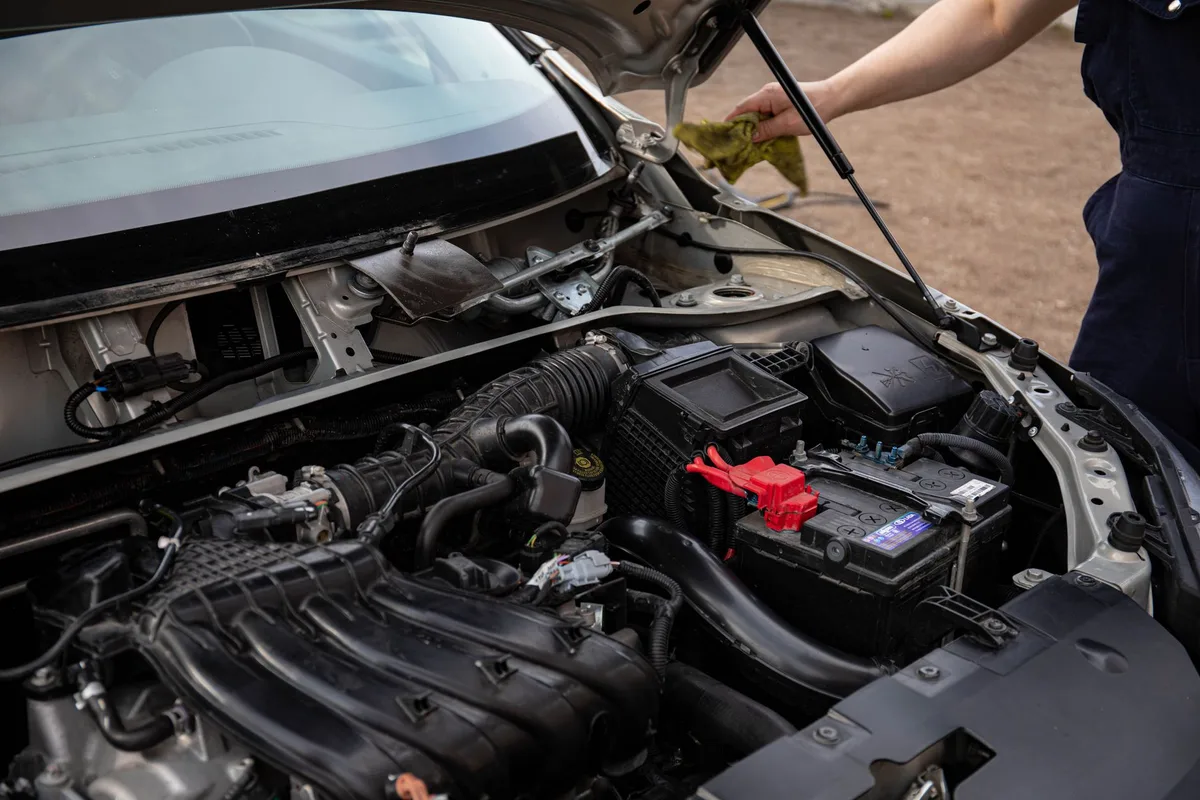
Car batteries fail on the worst possible day, usually a freezing morning when you're already late. So how often should you replace a car battery? For most drivers, the honest answer is every 3 to 5 years, but that window shifts a lot based on where you live and how you drive.
A battery baking in Arizona heat lives a very different life than one in a mild coastal town.
Here's the part most guides skip. Age alone doesn't tell you when to swap it. Cold Cranking Amps (CCA), the industry rating for starting power at 0°F, fade slowly until one day the engine won't turn over.
As of 2026, the smartest move is to stop guessing by the calendar and start testing. Let's break down what really drives battery life.
The Quick Answer: 3 to 5 Years, But It Depends on You
Replace a car battery every 3 to 5 years for most drivers. Hot climates often shorten that to 2 to 3 years. Cold or mild driving can push it past 5 years.
Test the battery yearly once it turns three. Swap it when cranking power fades or a load test fails.
That range covers the typical flooded lead-acid battery in a normal car. Your exact number depends on heat, driving habits, and battery type. We'll walk through each one so you can pin down your own timeline.
What Actually Kills a Car Battery (Heat, Short Trips, and Time)
Three things wear a battery down: heat, incomplete charging, and plain old age. Heat is the biggest culprit, and it surprises people. Cold weather gets the blame because that's when batteries die, but cold mostly exposes a battery that heat already weakened.
Inside a lead-acid battery, high temperatures speed up the reactions that corrode the internal plates. The U.S. Department of Energy notes that elevated temperatures accelerate battery degradation.
As a rough rule, sustained heat can roughly halve a battery's service life compared to a mild climate.
Short trips do quiet damage too. Starting the engine draws a big chunk of power. If you only drive ten minutes, the alternator never fully recharges what you pulled out.
Do that for months and the battery sits chronically undercharged, which builds sulfation on the plates and steals capacity.
Here's the short list of what drains life fastest:
- Sustained high underhood temperatures
- Lots of short trips that never fully recharge
- Long periods parked without a maintainer
- A weak or overcharging alternator
- Heavy electrical loads (dashcams, sound systems, seat heaters)
That last point matters. If your battery keeps dying young, the battery may not be the real problem. A bad charging component or a hidden drain can cook a fresh battery.
It's worth ruling that out with a quick battery-versus-alternator check before you spend money.
The Conditions That Decide Your Battery's Real Lifespan
Your replacement timeline isn't one number. It's a branch. Match your situation to the factors below and you'll land on a realistic window.
Climate: Why Hot Weather Is Worse Than Cold
If you live somewhere hot, plan for a shorter life. Drivers in Phoenix, Houston, or Miami often replace batteries at the 2 to 3 year mark. The heat quietly corrodes the plates year round, so the battery arrives at winter already weak.
Cold doesn't destroy a healthy battery, but it does test one. At 32°F, a battery delivers noticeably less cranking power. A tired one that coasted through summer finally taps out.
If you want the science on that seasonal drop, our guide on how the cold affects starting power breaks it down.
So here's the if/then:
- If you're in a hot southern climate, start testing at year 2.
- If you're in a cold or mild climate, start testing at year 3 to 4.
- If your car parks outside in extreme swings, lean toward the shorter end.
Your Driving Habits and Short-Trip Damage
Long, regular drives keep a battery topped up and happy. Short hops do the opposite. If your daily routine is a five minute run to school and back, your battery rarely reaches a full charge.
That chronic undercharging shortens life even in a mild climate. A weekly highway drive of 30 minutes or more helps the alternator catch up. If that's not realistic, a plug-in battery maintainer does the same job in the driveway.
Battery Type: Flooded vs AGM vs EFB
Not all batteries age the same. The type in your car changes both cost and expected life.
| Battery Type | Typical Lifespan | Best For | Rough Cost |
|---|---|---|---|
| Flooded (standard) | 3 to 5 years | Older, simpler cars | $100 to $200 |
| EFB (Enhanced Flooded) | 4 to 6 years | Entry stop-start systems | $150 to $250 |
| AGM (Absorbent Glass Mat) | 4 to 7 years | Stop-start, heavy electronics | $200 to $400 |
If your car has automatic stop-start, it almost certainly needs an AGM or EFB battery. Dropping in a cheap flooded battery will fail early and can confuse the vehicle's charging logic. Always match the type your manufacturer specifies.
Warning Signs Your Battery Is on Its Way Out
A dying battery usually warns you before it strands you. The classic first sign is a slow, lazy crank. The engine turns over sluggishly, like it's dragging itself awake, especially on cold mornings.
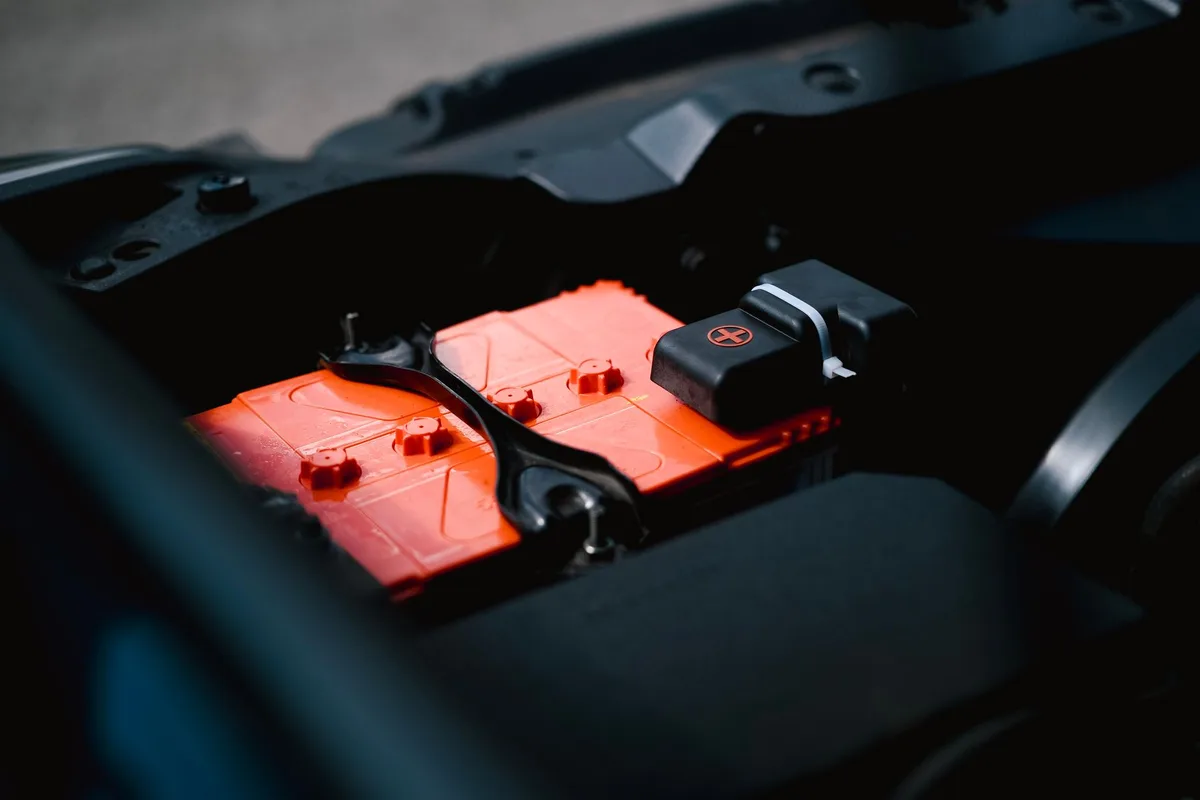
Watch for these red flags:
- Slow or hesitant engine cranking
- Dimming headlights or flickering dash lights at idle
- Needing a jump-start more than once
- A swollen or bulging battery case
- Heavy white or green corrosion on the terminals
- The battery or charging warning light on your dash
- A rotten-egg (sulfur) smell near the battery
A swollen case is a hard stop. That means heat damage, and the battery should be replaced right away. Corrosion on the posts can sometimes be cleaned, but heavy buildup usually points to an aging battery that's leaking or gassing.
One sign fools a lot of people. If the car reads a healthy 12 volts but still won't start, the battery can look fine while lacking the amps to crank. That gap shows up in why a full-looking battery still won't turn the engine.
When a slow crank pairs with a voltage dip, our notes on what happens to voltage during startup explain the cause. Either way, the next step is the same: stop guessing and test it.
Don't Guess, Test: Voltage, CCA, and the Date Code
The calendar gives you a ballpark. A test gives you the truth. Once your battery hits year three, a quick check twice a year tells you exactly where it stands.
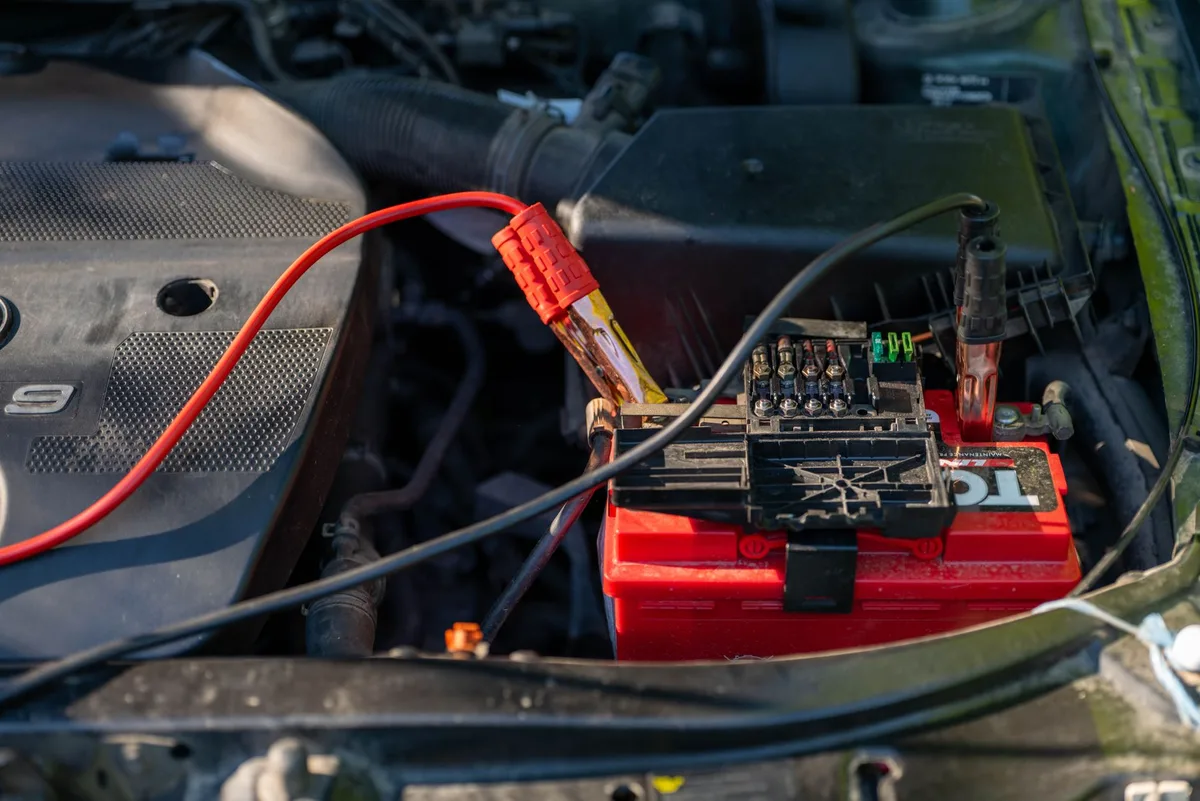
Reading the Resting Voltage
Start with a resting voltage check using a multimeter. Let the car sit for a few hours so you're not reading surface charge. Set the meter to 20V DC, then touch red to positive and black to negative.
Here's what the numbers mean:
| Resting Voltage | State of Charge | What To Do |
|---|---|---|
| 12.6V or higher | 100% | Healthy, keep driving |
| 12.4V | ~75% | Fine, recheck in a month |
| 12.2V | ~50% | Charge it, then retest |
| 12.0V | ~25% | Nearly dead, suspect failure |
| Below 12.0V | Discharged | Charge and load-test now |
A steady 12.6V is a good sign, and our breakdown of what a 12.4V reading tells you explains the mid-range. If it keeps sliding toward the 12.2V mark, the battery isn't holding charge well. New to the meter?
The steps for reading a battery correctly cover the basics.
Load and Conductance Testing
Voltage tells you charge, not strength. A battery can read 12.6V and still fail under load. That's where a load test or an electronic conductance test comes in, and most auto parts stores run one free.
The tester measures actual Cold Cranking Amps against the rating printed on the battery. If measured CCA drops below about 70 to 80% of the rated number, replacement time is close. During cranking, healthy voltage should stay above roughly 9.6V.
Finding the Manufacture Date Stamp
Every battery has a date code stamped on the case or a sticker. It shows when the battery was made. A letter and number combo is common, where the letter is the month (A for January) and the number is the year.
If your battery is already four or five years past that date, treat any weak test result as your cue. Don't wait for a no-start.
The Decision Branch: Replace Now, Test Again, or Wait
Put it all together and the decision gets simple. Match your battery to one of these three paths.
- Replace now if: the case is swollen, it fails a load test, CCA is under 70% of rated, or you've needed two or more jump-starts.
- Test again soon if: it's 3 to 5 years old, cranks a little slow, or rests between 12.2V and 12.4V. Recheck within a month.
- Wait and monitor if: it's under 3 years old, cranks strong, and rests at 12.6V or higher.
One extra branch matters. If a young battery keeps dying, don't just replace it. Chase the root cause first, whether that's a parasitic drain or a charging fault.
Our walkthrough on why a battery keeps going flat shows how to trace it.
Battery Type Comparison and What Fits Your Car
The right replacement matches three things: group size, CCA rating, and battery type. Get any of them wrong and you'll have fitment or performance problems.
Group size (a BCI number like 35, 47, or 65) sets the physical dimensions and terminal layout. Your owner's manual lists it, and the old battery has it printed on top. Never size down on CCA below the manufacturer spec, especially in cold climates.
Here's who each type suits best:
- Flooded standard: best for older cars without stop-start and a tight budget.
- EFB: best for basic stop-start systems that don't require full AGM.
- AGM: best for stop-start cars, heavy electronics, or extreme climates. It handles deep discharge better and lasts longer.
The Battery Council International sets the group-size standards that keep these interchangeable across brands. When in doubt, buy the type your car shipped with, or step up to AGM if the manual allows it.
What a New Car Battery Costs (and Warranty Tiers)
Expect to spend between $100 and $400, depending on type and brand. Standard flooded batteries sit at the low end. AGM units for stop-start cars cost the most.
| Battery Type | Typical Price | Warranty Range |
|---|---|---|
| Flooded standard | $100 to $200 | 2 to 3 years free replacement |
| EFB | $150 to $250 | 3 to 4 years |
| AGM | $200 to $400 | 3 to 5 years |
Warranties usually come in two parts. There's a free-replacement window, then a prorated period where you get partial credit. A longer free-replacement term often signals a better-built battery.
Two costs catch people off guard. Many stores charge a core deposit that you get back when you return the old battery. Stop-start cars may also need a battery registration or BMS reset, which adds a small shop fee if you can't do it yourself.
Replacing It Yourself vs Letting a Shop Do It
Swapping a battery is one of the easier car jobs, but it isn't always the right DIY call. It comes down to your car's setup and your comfort level.
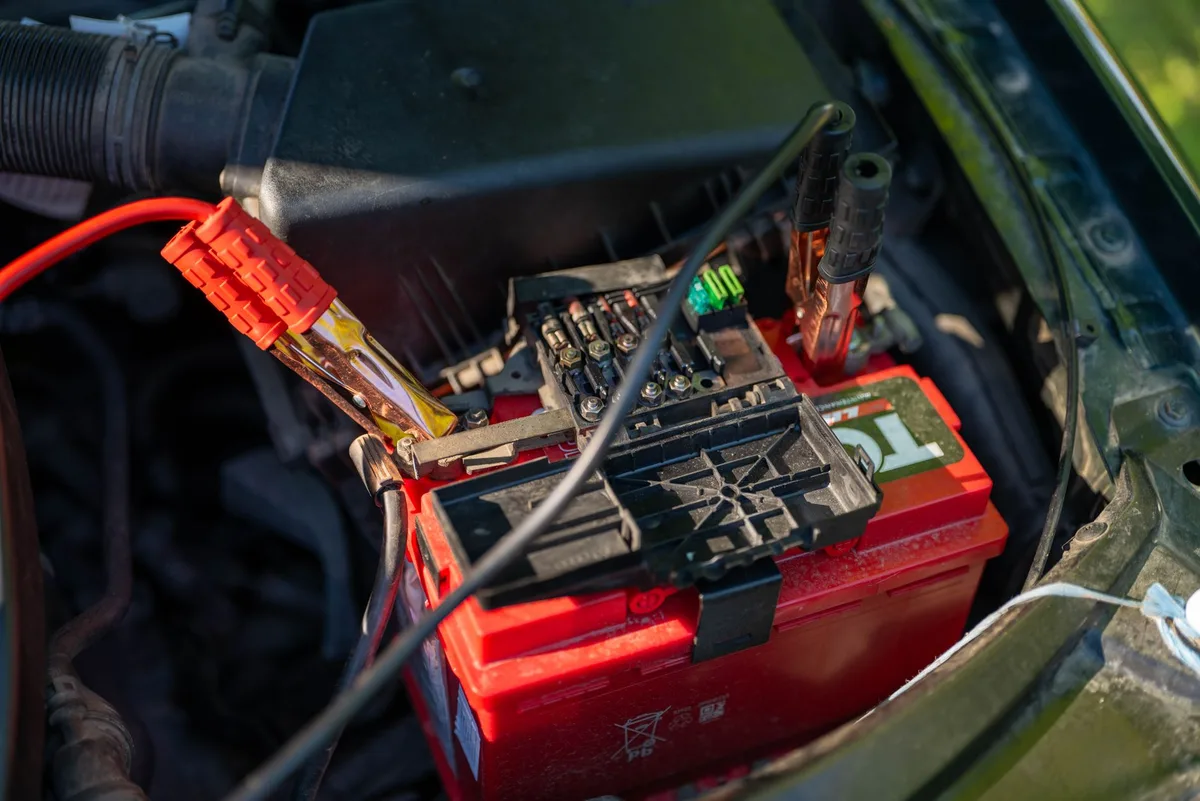
DIY makes sense when the battery is easy to reach and your car is older without stop-start. You'll need a wrench, gloves, eye protection, and a memory saver to keep radio and settings alive. Disconnect the negative terminal first, then positive.
Reverse that order when connecting the new one: positive first, negative last.
Let a shop handle it when:
- The car has stop-start and needs battery registration.
- The battery is buried under trim, the wiper cowl, or in the trunk.
- You're not comfortable working near live terminals.
Modern cars with lots of electronics can throw fault codes if power is cut wrong. That memory saver plugs into the 12V socket and prevents most of those headaches. If you'd rather not risk it, most parts stores install a battery you buy from them, often free.
Mistakes That Waste Money or Kill a Good Battery Early
The most common mistake is swapping the battery when the alternator is the real fault. A charging system that overcharges or undercharges will destroy a brand-new battery in weeks. Always confirm the charging voltage before you buy.
A few other money-wasters show up again and again:
- Buying a battery with lower CCA than the manufacturer spec.
- Fitting a standard flooded battery in a stop-start car that needs AGM.
- Ignoring a slow parasitic drain that flattens the battery overnight.
- Letting the battery sit dead for weeks, which bakes in sulfation.
If your battery drains while parked, a hidden load is the likely cause. Checking what a normal parasitic draw looks like helps you spot when something's pulling too much.
Safe Handling, Acid, and Proper Recycling
Car batteries hold sulfuric acid and release hydrogen gas, so treat them with respect. Wear gloves and eye protection. Keep sparks, cigarettes, and open flames away from the terminals.
Never let a wrench bridge both posts. That dead-short can throw sparks or crack the case. When cleaning corrosion, a paste of baking soda and water neutralizes the acid safely.
Recycle the old battery, don't bin it. Lead-acid batteries are almost fully recyclable, and most retailers take the core for a refund. The [U.S.
Environmental Protection Agency](https://www.epa.gov) treats them as regulated waste, so proper drop-off keeps lead out of landfills.
Simple Habits That Stretch Battery Life
A few small habits add real months to a battery's life. Most cost nothing and take seconds.
- Drive at least 20 to 30 minutes weekly to fully recharge.
- Use a battery maintainer if the car sits for days at a time.
- Turn off lights, wipers, and the sound system before shutting down.
- Keep the terminals clean and tight.
- Park in shade or a garage in hot climates.
Heat is the enemy, so anything that lowers underhood temperature helps. In winter, a healthy charge going into the cold season prevents most no-starts.
Frequently Asked Questions
Can a car battery last 10 years?
It's rare, but possible in ideal conditions. A garage-kept car in a mild climate with steady driving and a maintainer can push a battery past its usual life. Most batteries still tap out between 3 and 7 years, so treat anything past that as borrowed time.
Should I replace my battery before it dies completely?
Yes, replacing it proactively is the smarter move. Waiting for a full failure usually means a breakdown at the worst moment. Once your battery is over three years old and starts failing tests, swap it before winter or a long trip.
Does a new car battery need to be charged first?
Usually no, a fresh battery comes charged and ready to install. Still, checking the resting voltage is smart. It should read 12.6V or higher.
If it's low, give it a full charge with a smart charger before relying on it.
How do I know if it's the battery or the alternator?
Test the charging voltage with the engine running. A healthy alternator reads roughly 13.5V to 14.7V at the terminals. If the reading sits low with the engine on, suspect the alternator, not the battery.
A voltage that's fine running but dead after sitting points to the battery.
Do AGM batteries really last longer?
Often yes, AGM batteries tend to outlast standard flooded ones. They handle heat and deep discharge better, which suits stop-start cars and heavy electrical loads. Expect 4 to 7 years from a quality AGM versus 3 to 5 for a standard flooded battery.
Your Quick Decision Guide
Boil it all down to a simple flow. Under three years old and cranking strong? Just keep an eye on it.
Three to five years old? Test the voltage and CCA twice a year, especially before winter. If it rests below 12.4V or fails a load test, plan the replacement now.
Swollen case, repeated jump-starts, or CCA under 70% of rated? Replace it today. Then confirm your alternator and parasitic draw are healthy so the new one lasts its full life.

Similar Posts