CAT III vs CAT IV on a Multimeter: What They Mean
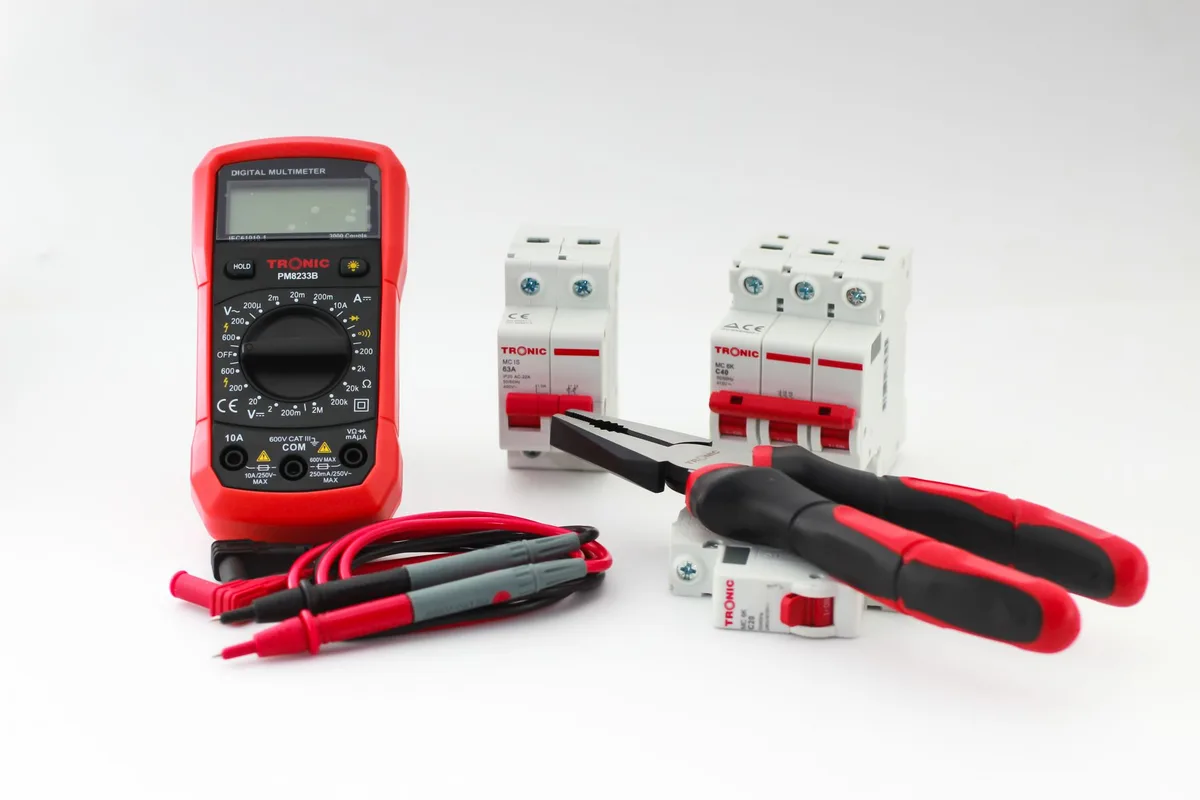
If you've ever picked up a meter and wondered what is CAT III and CAT IV on a multimeter, you're asking the one question that actually keeps you safe. Those little "CAT" labels aren't marketing. They tell you where the meter can be used without turning into shrapnel during a fault.
Get it wrong, and a routine voltage check can end in an arc flash.
Here's the short version. The CAT rating (measurement category) comes straight from the international safety standard IEC 61010. It describes how much transient energy your meter can survive at a given point in the electrical system.
As of 2026, every reputable handheld meter carries one of four categories, from CAT I up to CAT IV. Let's break down what each one means and why the category can matter more than the voltage printed beside it.
Quick Answer
CAT III and CAT IV are safety ratings on a multimeter. They show where the meter can safely measure. CAT III covers fixed installations like distribution panels and motor circuits.
CAT IV covers the utility connection and service entrance, where fault energy is highest. A higher category survives bigger transient voltage spikes.
Why Your Multimeter's CAT Rating Can Save Your Life
The danger in electrical work isn't just the steady voltage. It's the sudden spike, the transient overvoltage, that rides in when something faults nearby.
Closer to the power source, that spike carries more energy and far more available fault current. A meter built for a wall outlet can't handle the punch it takes at a service panel. When it fails, it can fail explosively.
That's the whole point of the category system. It rates your meter for the worst-case surge at a specific point in the system, not just the number on the dial.
- Wrong category means the meter can arc over internally during a fault.
- An internal arc can vaporize the leads and blow the case apart.
- The result is an arc flash, capable of severe burns or worse.
This is exactly why measuring a live panel is nothing like a quick check on a car battery. If low-voltage DC work is more your speed, our guide on picking the right meter setting covers that ground safely.
What "Measurement Category" Actually Means on a Multimeter
A measurement category is a rating for transient impulse energy, defined by the standard IEC 61010. It answers one question: how big a voltage spike can this meter shrug off where you plan to use it?
The categories run from CAT I to CAT IV. As you move up, you're moving closer to the utility supply. Source impedance drops and fault current climbs.
Lower impedance means a spike doesn't get softened before it hits your meter.
Each category is tested with a defined impulse. Here's roughly how the transient test voltage scales at a 600V working level, per IEC 61010 test conditions:
| Category | Typical location | Transient test voltage (at 600V) |
|---|---|---|
| CAT I | Protected electronics | ~2.5 kV |
| CAT II | Plug-in loads, receptacles | ~2.5 kV |
| CAT III | Fixed installation, distribution | ~4 kV |
| CAT IV | Service entrance, utility supply | ~6 kV |
Notice the jump. A CAT IV meter is built to handle more than double the impulse of a CAT II unit at the same voltage. That gap is the safety margin standing between you and a fault.
Where CAT I, CAT II, CAT III, and CAT IV Live in an Electrical System
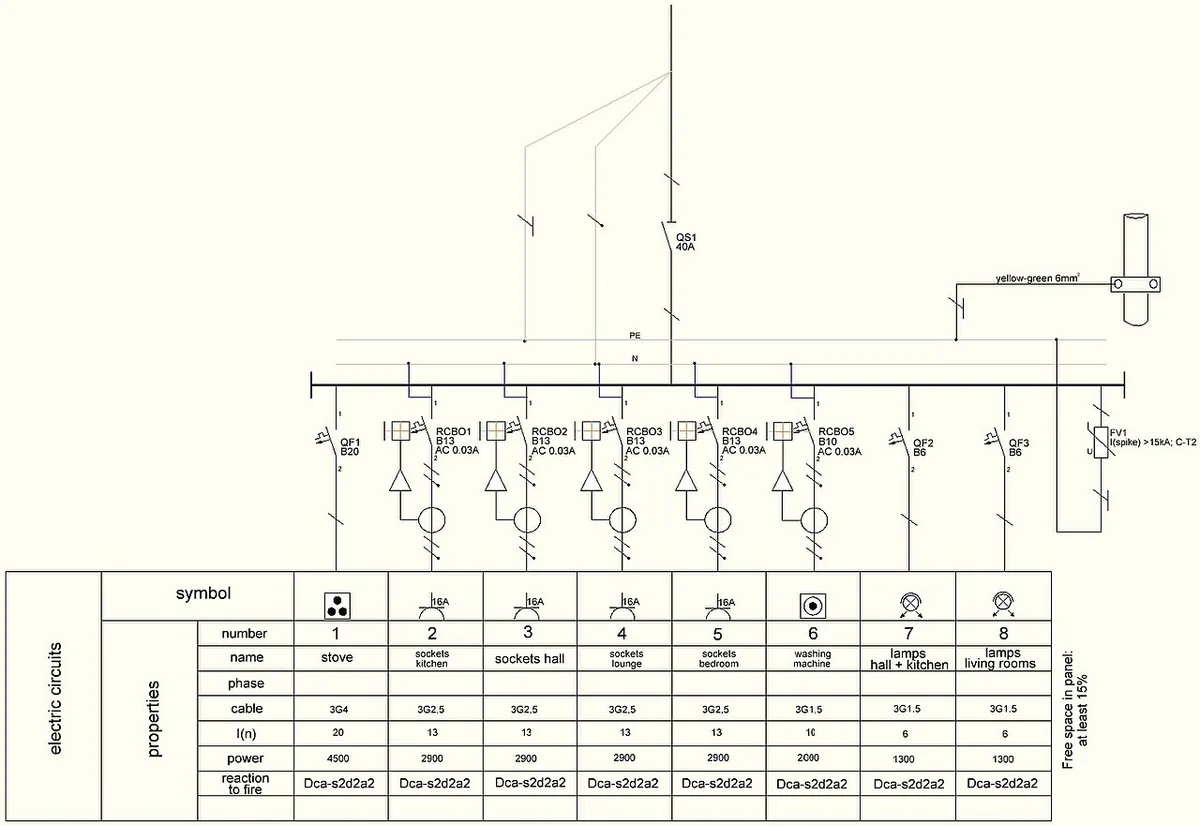
The easiest way to understand the categories is to walk the power from the street to the device. Each step sits farther from the raw energy of the grid, so the risk drops as the number drops.
CAT I and CAT II: Protected Electronics and Plug-In Loads
CAT I is the safest zone. It covers protected, low-energy electronics that never touch mains directly, like a signal circuit inside a device.
CAT II steps out to anything you plug into a wall outlet. Think appliances, chargers, and bench tools on a standard receptacle. There's real distance and impedance between you and the transformer here, so spikes arrive softened.
CAT III: Fixed Installation and Distribution Panels
CAT III is where serious electrical work begins. It covers the fixed wiring of a building: distribution panels, branch circuits, bus bars, motor control centers, and hardwired equipment.
If you're opening a breaker panel or testing a three-phase motor, you need CAT III at minimum. The fault current available here can be substantial.
CAT IV: The Service Entrance and Utility Connection
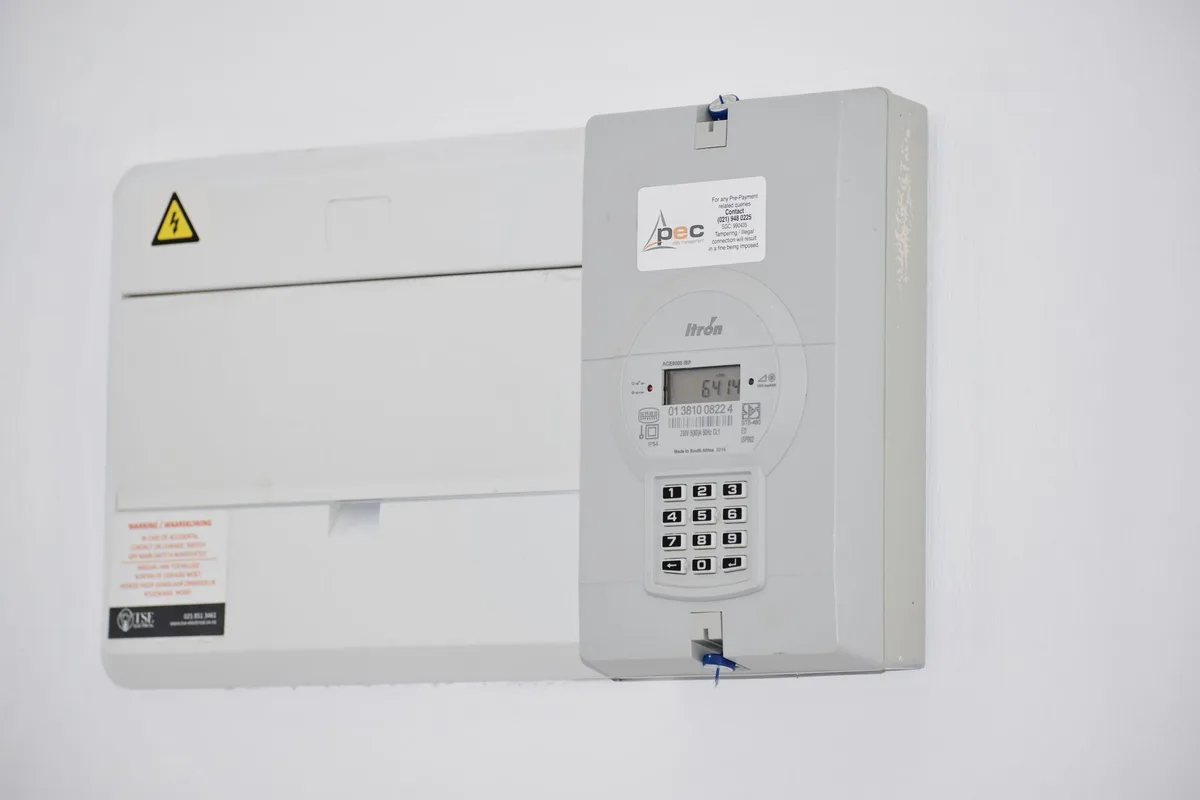
CAT IV is the top tier, reserved for the origin of the installation. That's the service entrance, the meter base, the main breaker, and anything on the utility side.
This is the highest-energy point in the whole system. There's almost nothing between you and the transformer, so a transient hits with full force. Only a CAT IV meter belongs here.
Why Category Matters More Than the Voltage Number
This is the part generic advice gets wrong, and it trips up even experienced techs. The category matters more than the voltage rating printed next to it.
You'd think a meter marked CAT III 1000V beats a CAT IV 600V meter at 600 volts. It doesn't. Let's compare the two head to head, because the answer surprises people.
CAT III 1000V vs CAT IV 600V: Which Is Really Safer?
At the same working voltage, the higher category wins. A CAT IV 600V meter is built to survive a bigger transient impulse than a CAT III 1000V meter, because CAT IV assumes you're closer to the source.
| Spec | CAT III 1000V | CAT IV 600V |
|---|---|---|
| Steady working voltage | Higher (1000V) | Lower (600V) |
| Assumed location | Distribution | Service entrance |
| Transient energy at the source | Lower margin | Higher margin |
| Safer near the utility feed | No | Yes |
The takeaway is simple. Don't shop by the voltage number alone. Match the category to where you're standing in the system first, then confirm the voltage covers your circuit.
Getting comfortable with your meter's dial and safe habits pays off everywhere, even on simpler jobs like checking a battery's state of charge. The same respect for the tool keeps you safe on a 480V panel.
Transient Overvoltage, Fault Current, and What Your Meter Actually Survives
Two forces decide whether a meter lives or dies during a fault: the transient overvoltage and the available fault current. One is the spike. The other is how much current can pour through once something arcs over.
A transient is a brief, high-voltage impulse. A lightning strike miles away or a large motor switching off can send one racing down the line. It lasts microseconds, but the peak can hit several kilovolts.
Fault current is the volume behind that spike. Near the service entrance, available fault current can reach tens of thousands of amps. That's why CAT IV meters use beefier internal spacing and stronger clamping.
Here's the failure chain when the category is too low:
- A transient exceeds the meter's impulse withstand.
- The insulation breaks down and an internal arc forms.
- High fault current feeds that arc, and the meter erupts.
The category rating exists to interrupt that chain before step three ever happens.
What's Inside a Properly CAT-Rated Meter
A real CAT rating isn't one feature. It's a stack of protective parts working together, from the input jacks to the fuse. Cheap meters skip these and just print the label on the case.
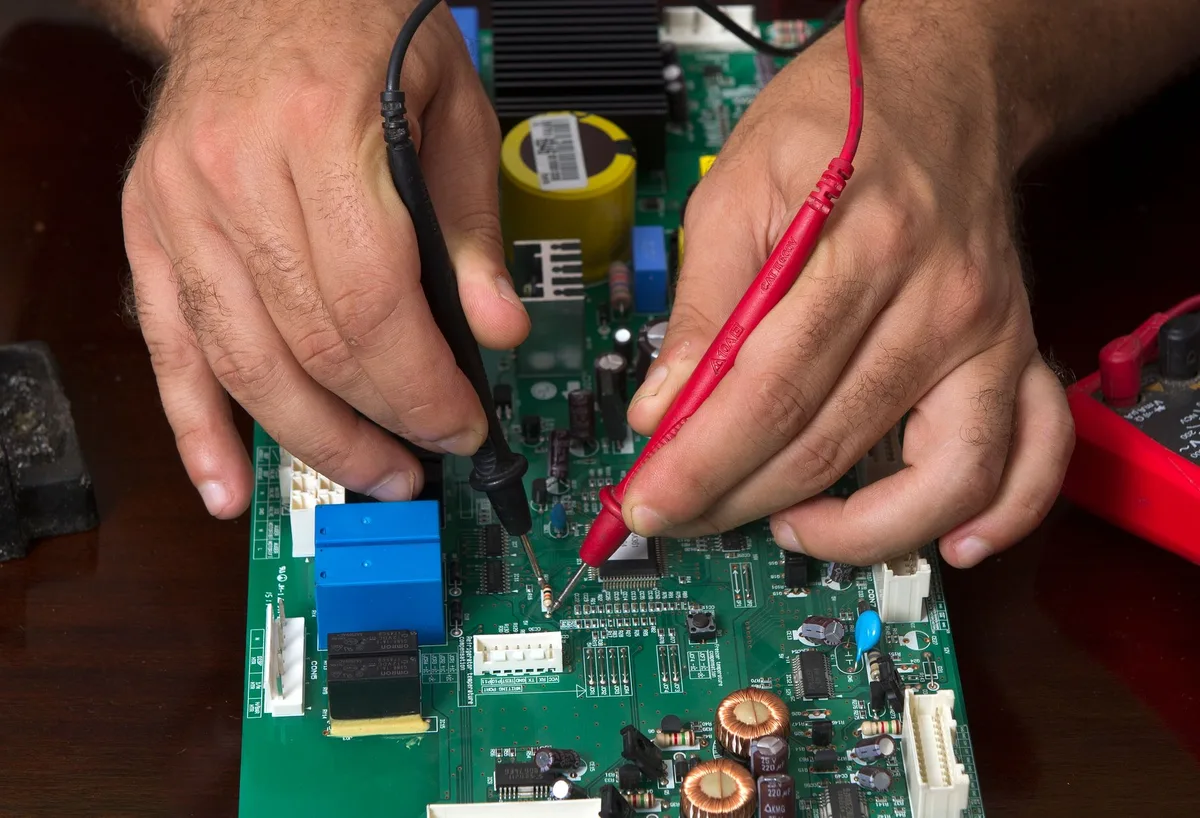
Genuine safety meters use reinforced (double) insulation, wide creepage distances between internal traces, and metal-oxide varistors that clamp incoming spikes. You can't see most of this from the outside. That's exactly why the third-party certification we'll cover shortly matters so much.
HRC Fuses and Interrupt Ratings
The fuse is the single most important part inside a current-measuring meter. A properly rated meter uses an HRC fuse (high rupture capacity), a sand-filled ceramic cartridge built to snuff out a high-energy arc.
What matters is the interrupt rating, printed in kiloamps. Look for something like 1000V, 20 kA on the fuse body. A common glass fuse might interrupt only a few hundred amps.
Drop that into a CAT III or CAT IV job and it can arc straight through, defeating the whole meter.
Leads, Probes, and the Weakest Link Rule
Your protection is only as strong as the lowest-rated part in the chain. This is the weakest-link rule, and it catches people constantly.
A CAT IV meter paired with CAT II leads is a CAT II setup. Full stop. The leads, probe tips, shrouds, and fuse all have to match or beat the meter's category.
Check the tiny print molded into the lead insulation before you trust it.
How to Read the Rating Printed on Your Multimeter
The rating lives right on the meter's face, usually near the input jacks. You'll see a pairing like CAT III 600V and CAT IV 300V listed together. Both matter.
The first token is the category. The second is the maximum working voltage for that category. Many meters carry a dual rating because the safe voltage drops as the category climbs.
Read the category that applies to your location first, then confirm the voltage covers your circuit.
If your meter lists only a voltage with no category at all, treat it as unrated for mains work. It belongs on low-voltage jobs like the ones in our 20V DC dial walkthrough, not inside a panel.
How to Verify a CAT Rating Is Real (Not Just Printed On)
A printed "CAT IV 1000V" means nothing on its own. Anyone can silkscreen those characters onto a plastic case. The rating only counts if an independent lab has tested and certified it.
Look for an independent test-lab mark next to the category:
| Mark | Body | Region |
|---|---|---|
| UL / cULus | Underwriters Laboratories | US / Canada |
| CSA | CSA Group | Canada / US |
| TÜV, VDE | German test houses | Europe |
| ETL | Intertek | US |
A plain "CE" alone is a self-declaration by the maker, not proof of third-party testing. That distinction separates a certified tool from a lookalike. Reputable manufacturer specs, like those published by Fluke or Keysight, will always name the certifying body outright.
If you can't find a genuine lab mark, don't stake your hands on that meter near live power. Downgrade it to bench or low-voltage duty, similar to a basic battery health check.
Matching the Right CAT Rating to the Job
The rule is simple: match the category to where you're measuring, then pick a voltage with headroom. When in doubt, go one category higher rather than lower.
Here's a quick field reference:
- Bench electronics, low-voltage signals: CAT I or CAT II is fine.
- Household outlets and plug-in gear: CAT II.
- Breaker panels, branch circuits, three-phase motors: CAT III minimum.
- Service entrance, meter base, utility side: CAT IV only.
If you split your time between fixed installations and the service entrance, a CAT IV 600V or CAT III 1000V meter covers most real work safely. Buying up in category costs a little more. It's cheap insurance against fault energy you can't see coming.
Common CAT Rating Mistakes That Cause Arc Flash
Most category accidents trace back to a handful of avoidable errors. Knowing them is half the protection.
- Reading voltage only. Grabbing a 1000V meter for a service entrance because the number looks big, while the category is only CAT III.
- Mismatched leads. A high-category meter wearing low-category probes, quietly downgrading the whole setup.
- Uncertified bargains. A no-name meter with a printed CAT IV label and no lab mark behind it.
- Old glass fuses. Swapping a blown HRC fuse for a cheap glass one that can't interrupt fault current.
- Damaged gear. Cracked cases, nicked leads, or exposed probe tips that shorten creepage distance.
If then logic keeps you safe here. If you can't confirm both the category and the certification, don't take the meter near live mains. Step back and verify first.
Standards and Certifications Behind the Numbers
The whole category system rests on IEC 61010, with IEC 61010-2-033 covering handheld meters that measure current. These standards define the impulse tests, spacing, and voltage limits every rating must pass.
Certification is separate from the standard. A lab like UL, CSA, or TÜV runs the tests and lets the maker carry its mark. That mark is your proof the meter actually met the spec.
Safe work practices come from a different document. In the US, NFPA 70E sets the rules for arc flash boundaries, incident energy, and the PPE you wear near live equipment. Your meter's category and your work procedures have to line up.
Pro Tips for Buying and Using a CAT-Rated Meter Safely
A few habits separate a safe tech from a lucky one. These come straight from aggregate reviews and manufacturer safety guidance.
- Buy one category above your usual work. Headroom costs little and covers surprises.
- Confirm the lab mark before the price. UL, CSA, TÜV, or ETL, not CE alone.
- Match every accessory. Leads and probes must equal or beat the meter's category.
- Inspect before each use. Flex the leads, check the tips, look for cracks.
- Prove the meter live-dead-live. Verify it on a known source before trusting a zero reading.
Solid habits carry over to everyday jobs too, like confirming a charging system's output or chasing down a stubborn battery drain. The same discipline keeps you sharp everywhere.
When to Stop and Call a Qualified Electrician
Stop the moment the job outruns your training or your gear. That's the honest answer, and it's the one that keeps you whole.
Call a licensed electrician if any of these apply:
- You're working at or above the service entrance without a certified CAT IV meter.
- The available fault current is unknown or clearly high.
- You lack the arc-rated PPE that NFPA 70E requires for the task.
- Anything looks damaged, scorched, or improperly wired.
There's no shame in stepping back. Arc flash injuries are life-altering, and a phone call is far cheaper than a hospital stay.
Frequently Asked Questions
Is CAT IV always safer than CAT III?
At the same voltage, yes. CAT IV survives a larger transient impulse because it assumes you're closer to the utility source. A CAT IV 600V meter handles more spike energy than a CAT III 600V unit.
Still, match the category to your actual measuring point.
Can I use a CAT III meter on a household outlet?
Yes, easily. A wall receptacle is CAT II territory, and a CAT III meter exceeds that requirement. You're moving down in energy, not up, so the meter has plenty of margin.
Just confirm the leads carry a matching or higher rating.
What does CAT III 600V actually mean?
It means the meter is rated for fixed-installation work up to 600 volts. CAT III covers distribution panels, branch circuits, and hardwired equipment. The 600V is the maximum working voltage at that category.
Above 600 volts, you'd need a higher voltage rating.
Does a higher voltage rating make a meter safer?
Not by itself. The category determines transient and fault-energy survival, and it outranks the voltage number. A CAT III 1000V meter is not automatically safer than a CAT IV 600V one near the source.
Read the category first, then the voltage.
How do I know my meter's CAT rating is genuine?
Look for an independent lab mark beside the printed category. UL, CSA, TÜV, or ETL confirm real testing. A lone CE mark is only the maker's self-declaration.
No credible mark means you shouldn't trust it on live mains.
Choosing the Right CAT-Rated Meter With Confidence
Pick your meter by location first, voltage second, and certification always. That order keeps you safe in every panel you open.
For most fixed-installation and utility work, a certified CAT IV 600V or CAT III 1000V meter with matching leads covers the ground well. Confirm the lab mark, keep an HRC fuse in the slot, and inspect your gear before every job. Do that, and the numbers on the case stop being a mystery and start being the safeguard they were built to be.
Similar Posts