how to charge a car battery at home
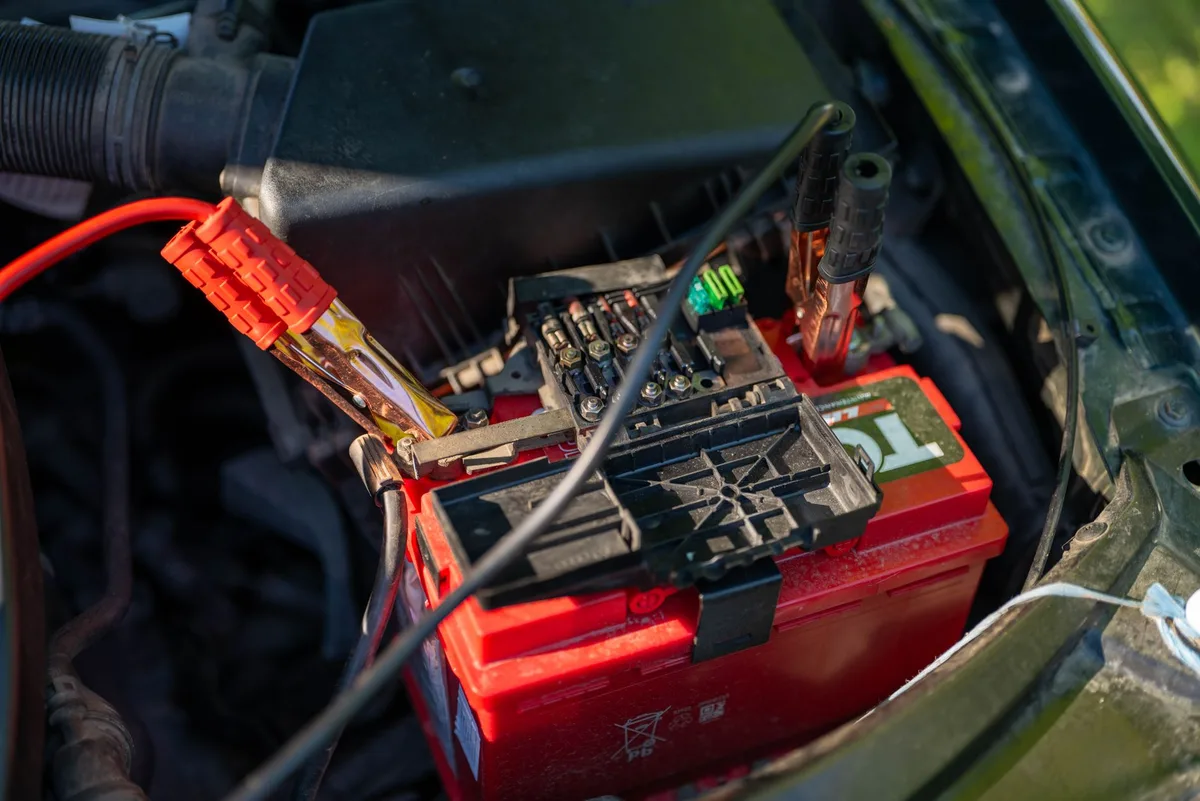
A dead car battery doesn't have to mean a tow truck or an expensive call-out. Learning how to charge a car battery at home is one of the simplest fixes any driver can handle, as long as you respect the risks. A lead-acid battery holds sulfuric acid and vents hydrogen gas while it charges.
Get the basics right, and your car will usually start again by morning.
Most modern chargers do the hard thinking for you. A standard 12-volt car battery holds roughly 40 to 70 amp-hours, and a healthy one rests at about 12.6 volts. As of 2026, microprocessor chargers can read your battery's condition and switch charging stages on their own.
Before you clip on a single clamp, though, it pays to know why getting this wrong costs so much.
Why Charging a Car Battery Wrong Can Cost You More Than a New Battery
A car battery isn't a harmless box of stored power. It's a sealed unit of sulfuric acid that gives off flammable hydrogen gas the moment current flows through it. One stray spark near those vents can ignite that gas.
That's the real reason the safety steps matter.
Money's on the line too. Overcharging boils off the electrolyte and warps the plates inside. Charging a frozen or fully dead battery can crack the case or, in rare cases, cause it to rupture.
Pick the wrong mode for your chemistry, and a desulfation pulse can cook a sealed AGM battery.
Then there's disposal. A battery you've ruined can't go in the household trash, which is why the U.S. EPA treats spent lead-acid batteries as hazardous waste.
Do it right and you save the battery. Do it wrong and you've bought a new one plus a recycling trip.
The 60-Second Answer: What You Need and How Long It Takes
To charge a car battery at home, connect a 12-volt charger to the battery and let it run. Clip the red clamp to the positive terminal first. Clip the black clamp to bare metal on the engine block, away from the battery.
Set the charger to your battery type. A slow 2-amp charge takes 10 hours or more. A 10-amp charge takes a few hours.
Here's the short version of what you'll need:
- A smart 12-volt battery charger
- Safety goggles and gloves
- A multimeter to check voltage
- A well-ventilated space, ideally outdoors or in an open garage
- Your owner's manual for battery type and location
How Car Battery Charging Actually Works
Charging pushes current backward through the battery to reverse the chemical reaction that starting your car drained. A good charger doesn't just dump power in at a flat rate. It works through distinct stages, and each one protects the battery in a different way.
The Charge Stages: Bulk, Absorption, Float, and Desulfation
Smart chargers move through a set sequence:
- Bulk: The charger delivers its full amperage to bring the battery up fast, usually to around 80 percent.
- Absorption: Current tapers off while voltage holds steady near 14.4 volts, topping off the last stretch gently.
- Float: The charger drops to a trickle to hold the battery full without overcharging. This is the maintenance stage.
- Desulfation: Some chargers pulse a higher voltage to break up sulfate crystals on the plates. Useful on tired flooded batteries, risky on AGM or lithium.
Why Battery Chemistry Changes Everything
The chemistry inside your battery decides how it should be charged. A flooded lead-acid battery tolerates higher voltages and desulfation pulses. An AGM battery needs a tighter voltage ceiling and its own charger mode.
Lithium (LiFePO4) batteries use a completely different charge curve and must never sit on a lead-acid desulfation setting.
Check the label or your manual before you choose a mode. Guessing here is how good batteries get wrecked.
Reading Your Battery First: Voltage, State of Charge, and Charge Time
Never plug in blind. A quick voltage reading tells you how flat the battery is, whether it's safe to charge, and roughly how long it'll take. All you need is a multimeter set to 20 volts DC across the two terminals.
What Resting Voltage Tells You (12.6V vs 12.0V)
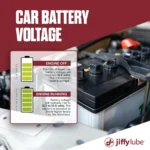
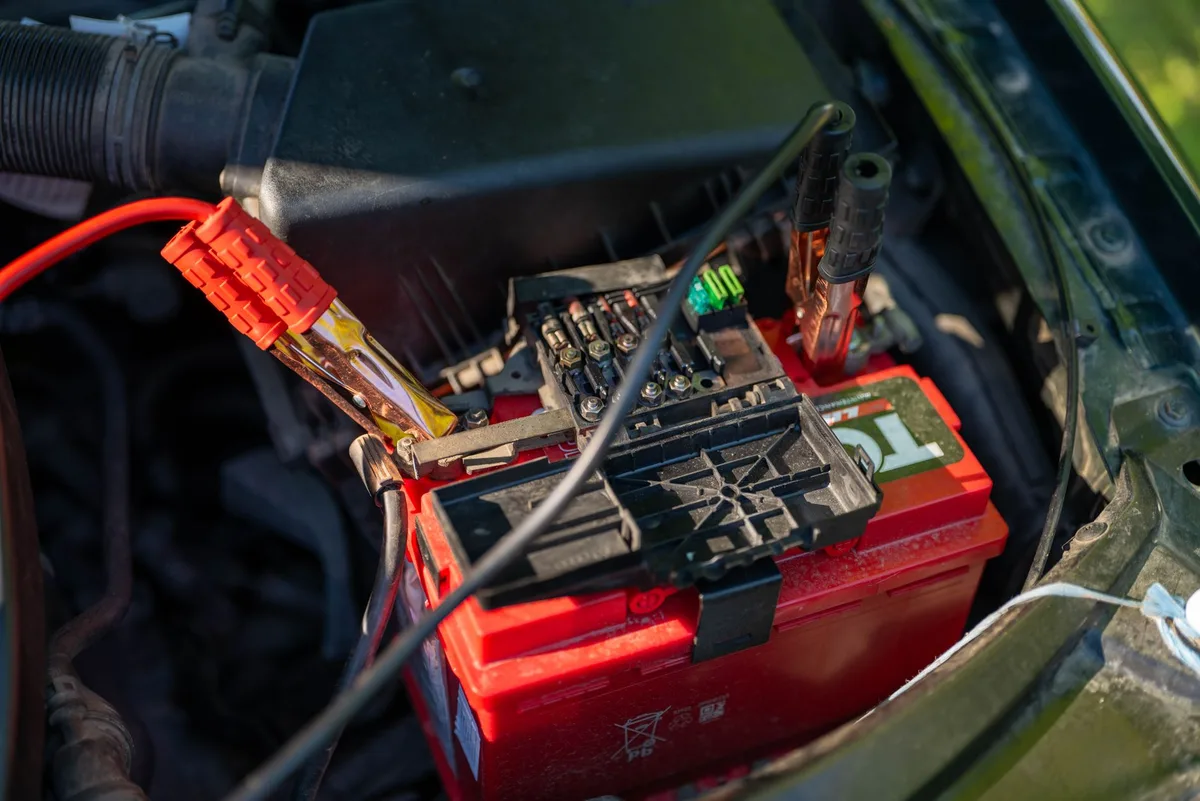
Resting voltage is what the battery reads after sitting for a few hours with the engine off. It maps directly to state of charge:
| Resting Voltage | State of Charge | What It Means |
|---|---|---|
| 12.6–12.8V | 100% | Fully charged, healthy |
| 12.4V | ~75% | Slightly down, worth topping up |
| 12.2V | ~50% | Half flat, charge it |
| 12.0V | ~25% | Deeply discharged |
| 10.5V | Dead cell | Likely needs replacing |
If your meter shows a borderline number, our breakdown of what a resting reading really means walks through the gray areas. A battery sitting this low at 12.0 volts can still recover, but it's telling you something's draining it. Not sure how to read it?
Here's a simple guide to checking it with a meter.
Estimating How Long Your Battery Will Take
Charge time comes down to simple math. Divide the battery's amp-hour rating by the charger's amps, then add about 20 percent for inefficiency. A 50 amp-hour battery on a 10-amp charger takes roughly six hours from half empty.
The same battery on a 2-amp trickle charger could take most of a day.
Slower is gentler on the plates. If you're not in a rush, a lower amperage almost always gives the battery a longer life.
Picking the Right Charger for Your Battery
The charger you choose matters as much as the technique. The wrong one either takes forever or quietly damages the battery. Most home users are best served by an automatic smart charger that matches their battery chemistry.
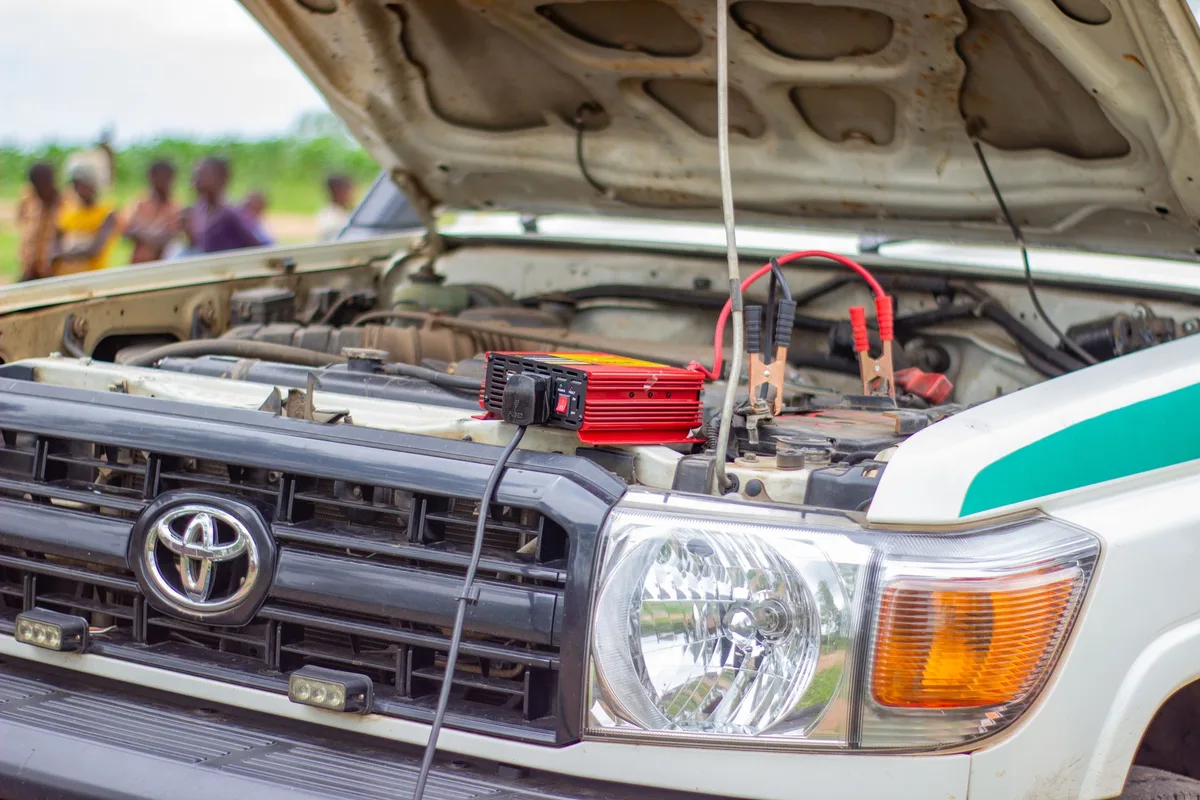
Trickle Charger vs Smart Charger vs Maintainer
Each type suits a different job:
| Charger Type | Best For | Watch Out For |
|---|---|---|
| Trickle charger | Slow overnight top-ups | Basic ones can overcharge if left on |
| Smart charger | Everyday home charging | Costs more, but hardest to misuse |
| Battery maintainer | Stored cars, bikes, RVs | Low output, not for reviving a flat battery fast |
A smart charger is the safest all-rounder. It reads the battery, picks the stages, and drops to float when full. A maintainer is what you leave on a seasonal vehicle for months.
Matching Amperage to Battery Size
Match the charger's output to the battery, not the other way around. A small motorcycle battery hates a 15-amp blast. A big truck battery crawls on 2 amps.
As a rough rule, keep the charge rate around 10 to 20 percent of the amp-hour rating.
If you're unsure what your battery is rated for, our guide on sizing the amps to your battery clears it up. And if the battery keeps going flat even after a full charge, you may be chasing a hidden drain rather than a charging problem.
What You Need Before You Start
Gather everything first so you're not fumbling with live clamps mid-job. The list is short and most of it is already in a home garage.
- Charger: a 12-volt smart charger matched to your battery type
- Eye and skin protection: goggles and acid-resistant gloves
- Multimeter: to confirm voltage before and after
- Terminal cleaner: a wire brush and a baking soda paste for corrosion
- Ventilation: an open garage door or outdoor spot
- Owner's manual: for terminal location and any electronic quirks
Pull off any rings, watches, or metal bracelets. A metal band that bridges a terminal and the chassis can heat up fast and cause a nasty burn. Two minutes of prep here saves you real trouble later.
How to Charge a Car Battery at Home, Step by Step
The order of these steps isn't optional. Connecting or disconnecting in the wrong sequence is what creates sparks near the battery.
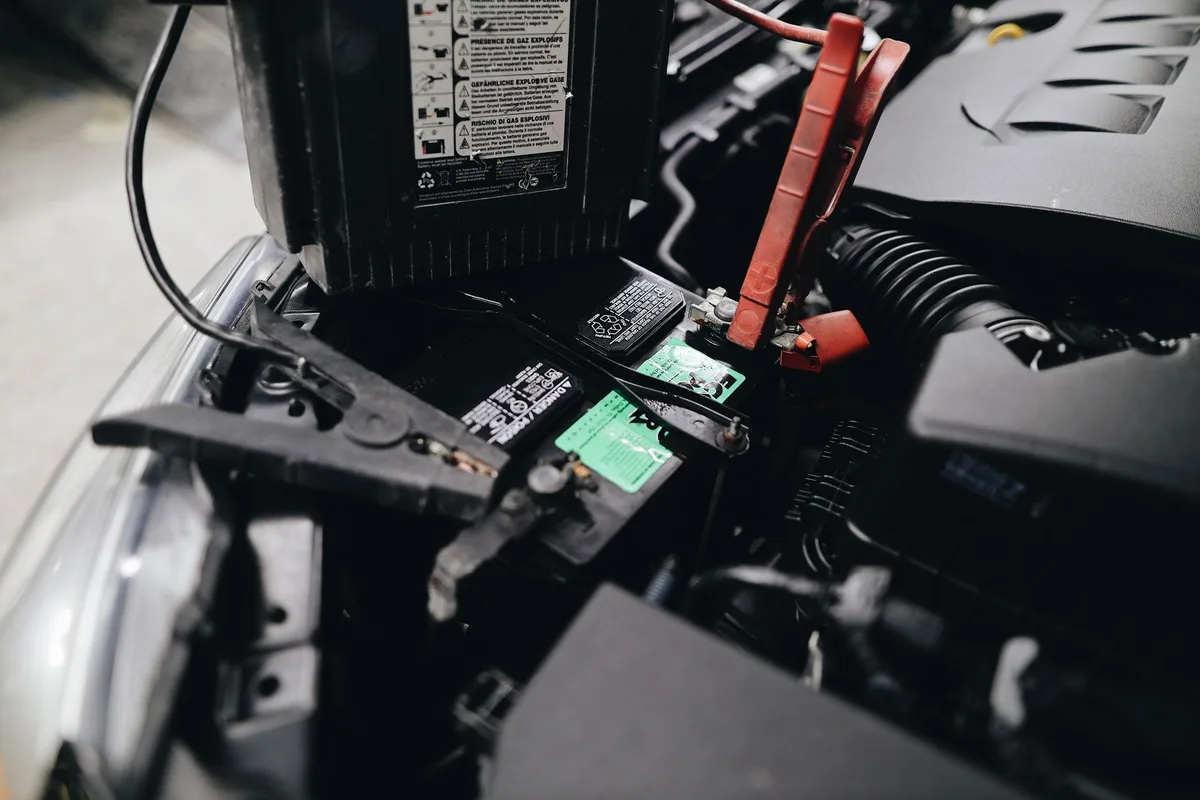
Connecting the Clamps in the Right Order
Keep the charger unplugged and switched off the entire time you're attaching clamps.
- Turn off the ignition and every accessory.
- Clip the red positive clamp to the positive terminal first.
- Clip the black negative clamp to bare, unpainted metal on the engine block or chassis.
- Keep that ground point well away from the battery itself.
Grounding to the chassis instead of the negative post matters. If a small spark jumps when the circuit completes, you want it nowhere near the hydrogen venting off the battery.
Choosing Your Settings and Monitoring the Charge
Now set the charger. Select your battery chemistry, flooded, AGM, or lithium, then pick an amperage that suits the battery size. Plug it in and switch it on.
Check progress every hour or two. A warm battery is normal. A hot battery, a hissing sound, or a swelling case means stop right away.
Most smart chargers show a full-charge light or drop to float on their own.
Disconnecting Safely When It's Done
Reverse the whole process to unhook. Switch off and unplug the charger first. Remove the black ground clamp, then the red positive clamp last.
Give the battery a resting voltage check with your multimeter to confirm it reads near 12.6 volts.
Charging With the Battery Still in the Car vs Removing It
For most home charges, you can leave the battery right where it is. Modern smart chargers are low-risk and keep your radio codes and ECU settings intact. Removing the battery only makes sense in specific cases.
Leave it in when:
- You're using an automatic smart charger or maintainer
- The battery is awkward but accessible
- You want to keep clock, radio, and computer memory alive
Take it out when:
- The battery is badly corroded or leaking
- Terminals are hard to reach safely
- You're deep-charging a very flat battery and want it on a bench
If you do disconnect, remove the negative terminal first, then the positive. That order prevents a wrench from shorting the positive to the body. When it's time to reconnect, positive goes on first, negative last.
Safety Rules That Prevent Sparks, Acid Burns, and Explosions
Hydrogen gas is the real hazard here, and it only takes a small spark to ignite it. Everything below exists to keep ignition sources away from that gas and acid off your skin.
- Ventilate always. Charge outdoors or with the garage door open, never in a sealed room.
- No flames or sparks. No smoking, no grinding, no switching lights on and off near the battery.
- Wear protection. Goggles and gloves guard against sulfuric acid splashes.
- Never charge a frozen battery. Let it thaw to room temperature first. A frozen battery can crack or burst.
- Skip a fully dead cell. A battery reading around 10.5 volts likely has a shorted cell and shouldn't be charged.
If acid touches your skin, rinse with plenty of water. For eye contact, flush and get medical help fast. These aren't scare tactics.
They're the same precautions the Occupational Safety and Health Administration sets out for anyone working around lead-acid batteries.
Common Charging Mistakes That Kill Batteries
Most ruined batteries come down to a handful of avoidable errors. Knowing them ahead of time saves you the cost of a replacement.
- Overcharging with a dumb charger. A basic trickle charger left on for days boils off electrolyte. Use a smart charger or a maintainer instead.
- Wrong mode for the chemistry. Running desulfation on an AGM or lithium battery can cook it. Match the setting to the label.
- Fast-charging a tiny battery. A 10-amp rate overheats a small motorcycle or lawn battery.
- Charging without checking voltage. You miss a dead cell and waste hours on a battery that's already done.
- Ignoring corrosion. Crusty terminals block current, so the charge never fully lands. Clean them first.
One more trap: charging over and over while the real problem sits elsewhere. If a fresh charge drains within days, the fault may be the charging system, not the battery. Our guide on telling whether it's the battery or the alternator helps you pin it down.
Cold snaps make this worse too, as freezing temperatures sap capacity and mask how weak a battery really is.
When to Stop Charging and Replace the Battery Instead
Sometimes a charge won't fix the problem, and pushing power into a failing battery just wastes time. A few clear signs tell you it's replacement time.
- It won't hold a charge. Fully charged, then flat within a day or two, points to a dying battery.
- Resting voltage stalls near 10.5V. That usually means a shorted internal cell.
- The case is swollen or leaking. Physical damage is a hard stop. Recycle it.
- It's simply old. Most car batteries last three to five years. Past that, decline is normal.
A battery that reads a solid 12.6 volts but still won't turn the engine can be misleading. Sometimes the fault is elsewhere, which is why a full charge that still won't crank deserves a closer look. When numbers keep dropping to a genuinely dead reading, trust the pattern over hope.
Keeping a Battery Healthy During Storage and Winter
A battery that sits unused slowly self-discharges, and a flat battery left in the cold can freeze. The fix is a battery maintainer, sometimes called a float charger. It holds the battery topped up without overcharging.
For a car, motorcycle, RV, or boat in storage, plug in a maintainer and leave it. Aggregate user reviews report maintainers keeping batteries healthy through an entire off-season with no fuss. It's the cheapest insurance against a dead battery in spring.
Winter is harder on batteries than most people realize. Cold thickens the oil and slashes available cranking power. A battery that's already weak in October often fails on the first freezing morning, so charge it fully before the cold sets in.
Expert Tips for Faster, Safer Charging
A few habits separate a clean charge from a frustrating one. None of them cost extra.
- Clean the terminals first. Corrosion blocks current, so a wire brush and baking soda paste help the charge land.
- Charge slow when you can. Lower amperage runs cooler and extends plate life.
- Verify with a multimeter. Trust a reading over the charger's light, and confirm 12.6 volts at rest.
- Let it settle before testing. Wait an hour after charging so surface charge fades and the number is honest.
- Log the date. Note when you charged so a fast repeat drain is easy to spot.
If a battery keeps needing charges, chase the cause. A parasitic drain or a lazy alternator will drain a perfectly good battery on repeat.
Charging a Car Battery at Home: FAQs
How long does it take to charge a car battery at home?
It depends on the charger's amperage and how flat the battery is. A 2-amp charger can take 10 to 24 hours for a full charge. A 10-amp charger handles a half-drained battery in a few hours.
Slower charging is gentler and helps the battery last longer.
Can I charge a car battery without removing it?
Yes, and for most home charges you should leave it in. Keeping the battery connected preserves your radio codes, clock, and computer memory. Just turn off the ignition and all accessories first.
Only remove it if the battery is leaking, corroded, or hard to reach safely.
Is it safe to charge a car battery indoors?
Only with strong ventilation, and never in a sealed room. Lead-acid batteries release flammable hydrogen gas while charging. An open garage door is the minimum, and outdoors is safer.
Keep all flames, sparks, and cigarettes well away from the battery.
How do I know when the battery is fully charged?
A smart charger shows a full-charge light or switches to a float or maintenance mode. To confirm, disconnect and let the battery rest an hour, then check it with a multimeter. A reading of 12.6 to 12.8 volts means it's full.
Anything lower means it needs more time.
Can a completely dead battery be recharged?
Sometimes, but not always. A battery drained to zero from leaving the lights on can often recover on a slow charge. One that reads around 10.5 volts likely has a dead cell and won't come back.
If it won't hold a charge afterward, replace it.

Similar Posts