Can You Jump Start an AGM Battery? What to Know
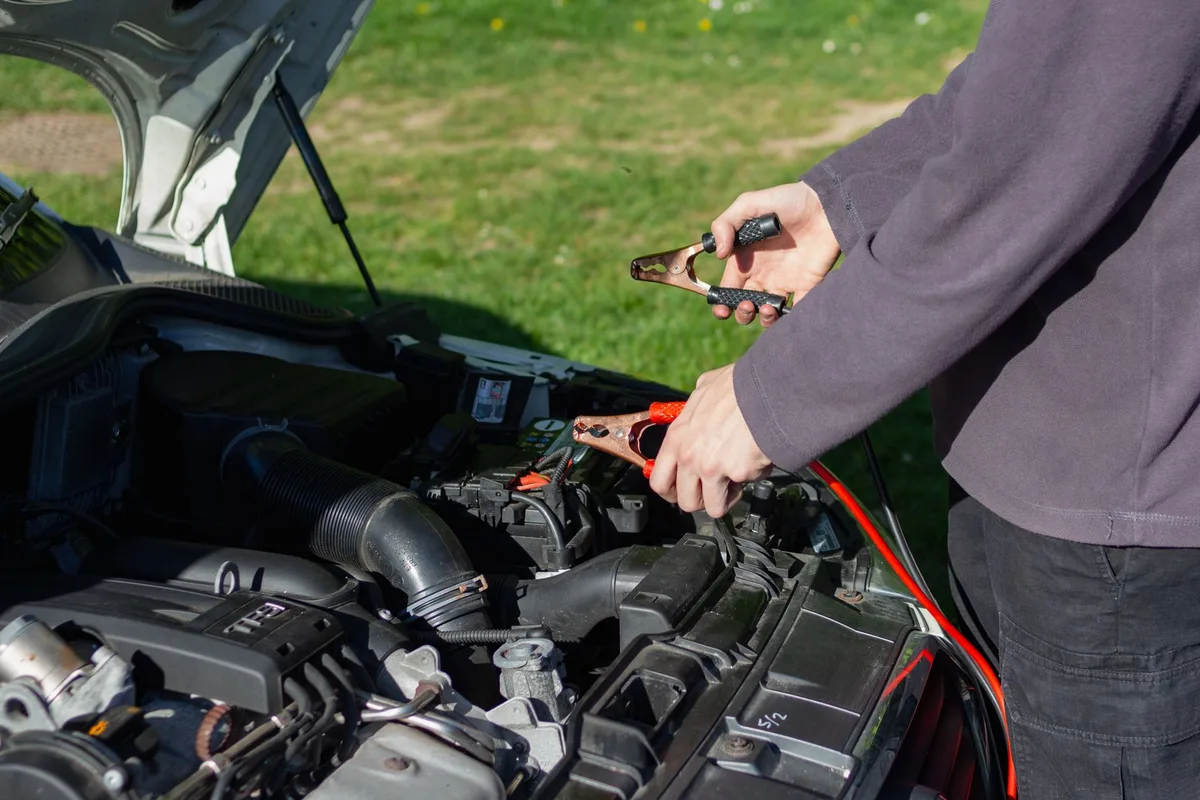
Can you jump start an AGM battery? In most cases, yes, and the process looks almost identical to jumping any 12-volt car battery. The catch is knowing when it's actually safe to try and when a jump will just waste your time.
Get that call wrong and you can cook a pricey battery or end up stranded twice in one afternoon.
Absorbent Glass Mat (AGM) batteries are sealed lead-acid units built for heavier electrical demand, and they're now standard in most start-stop vehicles as of 2026. A healthy one rests around 12.6 to 12.8 volts. Drop below roughly 10.5 volts and a jump often does more harm than good.
Here's how to tell the difference before you clamp on a single cable.
Can You Jump Start an AGM Battery? The Short Answer First
Yes, you can jump start an AGM battery safely in most situations. The steps match a standard flooded lead-acid battery. Check the resting voltage first with a multimeter.
If it reads above about 11.8 volts, a jump usually works. Below 10.5 volts, recharge it with an AGM charger instead.
What Makes an AGM Battery Different When It's Dead
AGM is still a lead-acid battery at heart. The difference is inside. Instead of liquid electrolyte sloshing around, thin glass mats soak it up like a sponge and hold it against the plates.
That's why it's sealed, spill-proof, and safe to mount at odd angles.
This is the sealed lead-acid design that Battery Council International classifies as VRLA, short for valve-regulated lead-acid. A few traits matter the moment your AGM goes flat:
- Low internal resistance. AGM accepts and delivers current fast, so it handles jump-start loads well when it's healthy.
- Overcharge sensitivity. Push too much voltage into it and the sealed vents can open. That vents gas and shortens its life.
- Deep-discharge damage. Let an AGM sit fully drained and sulfation builds on the plates. That can leave it unable to hold a charge at all.
So the battery type isn't the problem when you jump it. How deeply it's discharged, and why, is what really decides your next move.
Check This Before You Touch the Cables: Resting Voltage
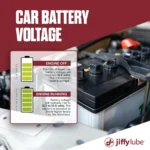
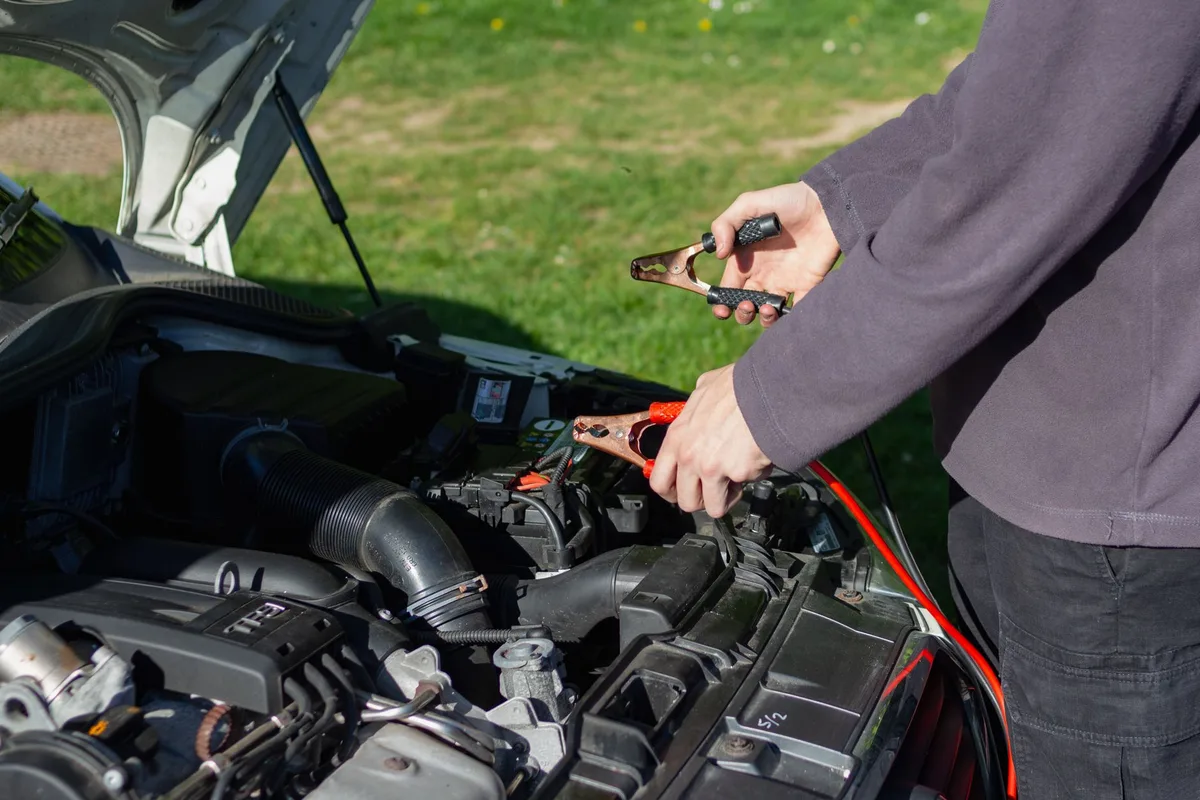
Grab a multimeter before you grab the cables. A quick voltage reading tells you whether a jump will work or whether you're wasting your time. Set the meter to DC volts and touch red to positive, black to negative.
If you're unsure of the dial, our guide to picking the right DC range walks through it in seconds.
What Your Voltage Reading Actually Means
Read the battery with the engine off and everything switched off. Ideally, let the car sit an hour first so the number settles. Here's the quick translation:
| Resting Voltage | State of Charge | What To Do |
|---|---|---|
| 12.6V or higher | Full (100%) | Battery is fine, look elsewhere |
| 12.4V | About 75% | Healthy, recharge soon |
| 12.2V | About 50% | Weak, charge before it dies |
| 12.0V | About 25% | Nearly flat, jump may still work |
| 10.5V or lower | Deeply discharged | Charge, do not jump |
If your meter shows a reading around 12.4 volts, the battery itself is likely fine and the fault is elsewhere. A number closer to 12.2 volts means it's half-empty and fading.
The 10.5V Red Line
Below 10.5 volts, treat the AGM as deeply discharged. A running alternator will dump heavy current into it, and that heat can warp plates and finish it off. At this point it's effectively dead and needs a proper AGM-mode charger, not a jump.
One more thing to rule out: a reading of exactly zero. That usually points to a tripped safety, a broken connection, or corroded terminals, not a truly empty cell. Clean the terminals and re-test before you write off the battery.
Why Did the AGM Die? The Cause Changes What You Do Next
A jump only makes sense if you know why the battery went flat. Otherwise you fix the symptom and get stranded again next week. In our research, dead AGM batteries usually trace back to one of four causes.
- You left something on. Dome light, boot light, or a door ajar overnight. A simple jump and a drive often fix this.
- Parasitic drain. Something keeps pulling power after shutdown. If your battery keeps going flat overnight, a hidden draw is the likely culprit.
- A weak alternator. If the battery drains while driving, the charging system may be the problem, not the battery.
- Old age or deep sulfation. AGM batteries typically last four to seven years. Past that, a jump is a short-lived rescue.
Before you trust the jump, it helps to know whether you're chasing the battery or the alternator. A quick charging test after the jump saves a second breakdown.
Jump Start or Charge Instead? Your Decision Path
Here's the simple branch that answers the whole question. Match your voltage reading and cause to the right action.
- If voltage is 11.8V or higher and the drain was a one-off: jump start it, then drive 20 to 30 minutes or put it on a charger.
- If voltage is between 10.5V and 11.8V: a jump may work, but recharge it fully with an AGM charger afterward. Don't rely on the alternator alone.
- If voltage is below 10.5V: skip the jump. Charge it slowly on an AGM-mode charger before doing anything else.
- If the battery is over five years old or won't hold a charge: jump it only to get home, then plan to replace it.
- If you suspect a parasitic drain or bad alternator: jump it, but test the charging system right away.
The rule of thumb is easy to remember. A jump is for a healthy AGM that got caught out once. A charger is for one that's been run deep into the ground.
How to Jump Start an AGM Battery Safely, Step by Step
Once your voltage check gives the green light, the jump itself is straightforward. Both cars off, everything switched off, and work in order. Rushing the cable sequence is where sparks happen.

Cable Order That Won't Spark Near the Battery
Follow this sequence every time. The final clamp goes on bare metal, not the battery, to keep any spark away from vented gas.
- Red clamp to the dead AGM's positive (+) terminal.
- Other red clamp to the donor battery's positive (+) terminal.
- Black clamp to the donor battery's negative (−) terminal.
- Last black clamp to an unpainted metal bracket or engine block on the dead car.
Never clamp that last black lead straight onto the dead battery's negative post. That's the connection most likely to throw a spark.
What to Do the Moment It Starts
Start the donor car first and let it idle two or three minutes. Then try the dead vehicle. If it cranks and fires, leave both running for another minute before you touch anything.
Remove the clamps in exact reverse order: last black first, then donor black, then both reds. Keep the clamps from touching each other or any metal while cables are still live.
If the dead car cranks slowly or clicks, wait five minutes with the donor running. The AGM's low internal resistance means it takes a surface charge quickly, which often gets a stubborn engine over the line.
Jumper Cables vs Portable Lithium Jump Starter
Both get you moving, but they suit different situations. Jumper cables need a second car. A portable lithium jump starter is a self-contained pack you keep in the boot, so you're never relying on a passing good samaritan.

| Factor | Jumper Cables | Lithium Jump Starter |
|---|---|---|
| Needs a second vehicle | Yes | No |
| Upfront cost | Low | Moderate |
| Works when alone | No | Yes |
| Storage | Compact | Compact, needs recharging |
| Best for | Home, driveway, backup | Solo drivers, remote areas |
Cables are the cheap, reliable fallback if you've got a willing donor nearby. A jump pack earns its price the day your AGM dies in an empty car park at night. For a start-stop AGM, either works fine, provided the pack's peak amps meet your engine's cranking demand.
One tip from aggregate user feedback: check the jump starter's charge every few months. A pack that's been flat in the glovebox all winter is no help at all.
After the Jump: Recharging So It Doesn't Die Again
Getting the engine running is only half the job. An AGM that went flat needs a full recharge, and the alternator alone often can't finish it.
Why a 20-Minute Drive Often Isn't Enough
A short drive replaces only surface charge, not the deep charge an AGM needs. Your alternator prioritizes running the car's electronics first, so what's left for the battery is modest. If the AGM was deeply drained, expect it to stay well under full charge after a 20-minute run.
The fix is a proper bench charge. Put the battery on an AGM-mode charger for several hours until it hits a true resting 12.6 volts or higher. This also protects against the sulfation that sets in when an AGM sits low for long.
AGM Charge Mode and Voltage Ceilings
AGM batteries charge best below roughly 14.4 to 14.8 volts. Push past that ceiling and the sealed vents can open and release gas. A charger with a dedicated AGM setting holds the right voltage automatically.
Skip old-school high-amp fast chargers with no AGM mode. As a rough guide, keep charge current to about 20 to 30 percent of the battery's amp-hour rating. Slow and steady preserves the plates.
While the car runs, a quick check that your alternator output sits in range confirms the charging system is doing its part.
Mistakes That Cook an AGM During a Jump
Most AGM damage during a jump comes down to a handful of avoidable errors. Our research points to the same repeat offenders.
- Jumping a battery below 10.5 volts. The heavy current into a deeply discharged AGM warps plates. Charge it instead.
- Reversed polarity. Red to negative, even for a second, can fry electronics and the battery. Double-check every clamp.
- Leaving it on the alternator to "top up." A sustained high charge voltage stresses a recovered AGM. Use a proper charger.
- Ignoring a swollen or hot battery. A bulging case means it's already failing. Don't jump it at all.
- Trusting a jump when the real fault is a dead alternator. You'll stall again within miles.
If the engine cranks fine but dies the moment you unhook the donor, the charging system is the suspect, not the battery.
When to Skip the Jump and Replace the Battery
Sometimes a jump is just delaying the inevitable. If your AGM shows any of these signs, plan a replacement instead of another rescue.
- It won't hold a charge after a full bench charge.
- Resting voltage sits stubbornly low even off the charger.
- The case is swollen, cracked, or leaking.
- It's over five years old and cranking has turned sluggish.
- It dies again within days despite no obvious drain.
A quick load test tells the story. If the voltage collapses under load, the battery can't do its job anymore. At that point, jumping it is a stopgap, not a fix, and you're better off fitting a fresh AGM sized to your vehicle's original spec.
Start-Stop Vehicles: The Extra Step Most People Miss
If your car has stop-start tech, jumping the AGM may not be the end of the job. Many of these vehicles track the battery through a monitoring system. Fit or fully recharge a battery without telling the car, and the charging logic can undercharge it.
This is battery registration, sometimes called battery coding. On plenty of European makes, a scan tool resets the system so it recognizes the battery's state. A jump alone doesn't trigger it.
For a simple jump-and-drive after a one-off drain, you usually don't need registration. It matters most after a deep discharge or a battery swap. If your stop-start feature stops working after a jump, that's the clue the system needs a reset.
AGM Battery Lifespan, Voltage, and Charging Specs at a Glance
Here are the numbers worth keeping handy for any AGM decision.
| Spec | Typical Value |
|---|---|
| Full resting voltage | 12.6 to 12.8V |
| Deep-discharge red line | 10.5V or lower |
| Charging voltage ceiling | 14.4 to 14.8V |
| Safe charge current | 20 to 30% of Ah rating |
| Typical service life | 4 to 7 years |
| Recharge time (bench) | Several hours on AGM mode |
Cold weather shifts these readings down. A healthy AGM can read lower on a freezing morning and still crank fine. If your numbers dip in the cold, factor that in before condemning the battery.
Safety Warnings You Shouldn't Ignore
AGM batteries are sealed, but they're not risk-free during a jump. Treat every one with respect.
- Wear eye protection. A stray spark near a vented battery is a real hazard.
- Keep flames, cigarettes, and sparks away from both batteries.
- Never jump a battery that's swollen, cracked, hot, or leaking.
- Make sure both cars aren't touching, and both are in park or neutral with brakes set.
- Double-check polarity before you connect the donor. Reversed clamps can injure you and destroy electronics.
If you smell rotten eggs near the battery, stop. That sulfur odor signals venting, and the battery needs to be isolated and replaced, not charged.
Common Questions About Jump Starting AGM Batteries
Can you jump start an AGM battery with a regular car?
Yes. A standard petrol or diesel car makes a fine donor for an AGM. The jump procedure is identical to jumping any 12-volt battery.
Just confirm the dead AGM is above about 10.5 volts first, and follow the correct cable order to avoid sparks near the terminals.
Will jump starting damage an AGM battery?
Not if the battery is only mildly discharged. Jumping a healthy AGM that got caught out once is safe. Damage happens when you jump a deeply drained AGM below 10.5 volts, reverse the polarity, or leave it charging at high alternator voltage for too long afterward.
How long should you drive after jump starting an AGM battery?
Drive at least 20 to 30 minutes to put some charge back. But a short drive rarely fully recharges a deeply drained AGM. For a proper recovery, finish the job on an AGM-mode charger until it rests at 12.6 volts or higher.
Can you jump start an AGM battery with a lithium jump starter?
Yes, a portable lithium jump starter works well on AGM batteries. Match the pack's peak amps to your engine's cranking needs. It's the better option when you're alone, since you don't need a second vehicle.
Keep the pack charged so it's ready when you need it.
Why won't my AGM battery take a jump?
If it won't jump, the battery is likely too deeply discharged, sulfated, or internally failed. A reading near zero often means corroded terminals or a broken connection. Clean the posts and retest.
If it still won't respond above 10.5 volts, it needs a charger or replacement.
Your Quick Decision Guide
Boil it all down and the choice is simple. Read the voltage, know the cause, then act.
- Above 11.8V, one-off drain: jump it, drive, done.
- 10.5V to 11.8V: jump if needed, then fully recharge on an AGM charger.
- Below 10.5V: don't jump. Charge it slowly first.
- Won't hold charge or over five years old: replace it.
- Cranks then stalls: test the alternator, not just the battery.
An AGM handles a jump just as well as any lead-acid battery when it's healthy. The skill isn't in the cables, it's in reading the situation before you connect them. Get that right and you'll avoid both a fried battery and a second breakdown.

Similar Posts