Best Multimeter for Automotive Diagnostics & Repair
Picking the best multimeter for automotive use comes down to a few things that matter under the hood: a True RMS reading, a safe voltage range, and probes that survive a greasy engine bay. I've spent weeks comparing spec sheets, safety ratings, and thousands of verified buyer reviews across ten popular meters. Auto-ranging, 10A current handling, and a solid CAT III rating are what separate the real keepers from the toys.
If you want the short answer, the AstroAI True RMS 6000 is our top overall pick for its accuracy and painless auto-ranging at a friendly value. Serious techs will gravitate to the Fluke 117, while budget-minded DIYers can start with the AstroAI 2000 Counts. Here's the quick winner card, then the full lineup.
Comparison Chart of Best Multimeter for Automotive Use
| Product | Details | Rating | Buy |
|---|---|---|---|
Editor’s Choice  | AstroAI Digital Multimeter True RMS 6000 | ★★★★☆4.6/5 | |
Top Pick  | Klein Tools MM325 Multimeter | ★★★★☆4.7/5 | |
Best Budget  | AstroAI Digital Multimeter Tester 2000 Counts | ★★★★☆4.5/5 | |
| ★★★★☆4.7/5 | ||
| ★★★★☆4.8/5 | ||
| ★★★★☆4.8/5 | ||
| ★★★★☆4.8/5 | ||
| ★★★★☆4.6/5 | ||
| ★★★★☆4.4/5 | ||
| ★★★★☆4.8/5 |



List of Top 10 Best Multimeter for Automotive Use
We ranked these ten meters on the specs that count for cars: True RMS accuracy, safe voltage ratings, 10A current handling, and probe quality. Our team cross-checked manufacturer datasheets against aggregate buyer reviews, weighting the features you actually use in a driveway or a busy shop. Each review below balances real strengths against one honest trade-off.
Below are the list of products:
1. AstroAI Digital Multimeter True RMS 6000
This is the meter we point most DIYers toward first. True RMS (a method that reads distorted AC waveforms accurately) plus auto-ranging means you spend less time fiddling with the dial and more time finding the fault. Aggregate reviews praise its capacitance and temperature functions, which is rare at this value tier.
Why I picked it
In our research this AstroAI hit the best balance of accuracy, features, and value of any meter under the premium tier. The 6000-count display resolves small voltage drops that a 2000-count meter rounds away, which matters when you're chasing a lazy ground.
Key specs
- True RMS AC/DC voltage and current measurement
- 6000-count auto-ranging display
- Resistance, continuity, capacitance, and diode testing
- Built-in temperature readout with bead probe
- AC/DC current down to fine milliamp resolution
- LCD backlight and flashlight for dark engine bays
Real-world experience
Verified buyer feedback consistently describes this meter handling everyday jobs like reading a 12.6V resting battery, spotting a 0.5V drop across a corroded connector, and confirming injector resistance. It pairs well with a set of backprobe pins when you're testing a sensor without piercing wires. If you're new to this, our walkthrough on checking charging output makes a great first project with it.
- True RMS accuracy that most budget meters skip, so AC readings stay honest
- Auto-ranging picks the scale for you, cutting mistakes on the dial
- Temperature and capacitance built in, handy for sensors and caps
- Backlight plus work light make dim engine bays easier
- Included probe leads feel thin and are worth upgrading
- Auto-ranging pauses a beat before settling on fast-changing signals
- ✔ You want one meter that covers 90% of car jobs
- ✔ You value auto-ranging and a clear backlit screen
- ✔ You occasionally test caps or coolant temp
- ✖ You need CAT IV industrial safety ratings
- ✖ You want a lifetime pro-grade warranty
2. Klein Tools MM325 Multimeter
Klein built its name on hand tools electricians trust, and the MM325 carries that reputation into a rugged 600V manual-ranging meter. It skips auto-ranging on purpose, giving you fast, repeatable readings once you know the scale you want. Buyer reviews rate its build quality near the top of this list.
Why I picked it
Manual ranging sounds old-school, but for a shop that measures the same circuits all day it's faster and steadier than waiting on an auto-ranging chip. Klein's fit and finish and its reputation for surviving drops earned it the Top Pick slot.
Key specs
- 600V AC/DC voltage measurement
- Manual-ranging digital operation
- Battery test function for 1.5V and 9V cells
- Resistance, continuity, and diode testing
- Current measurement for automotive-level loads
- CAT III safety rating for panel work
Real-world experience
Verified buyer feedback highlights the MM325 for battery checks and continuity beeps that respond quickly, which helps when you're tracing a broken wire in a harness. The dedicated battery test mode is a nice touch for confirming a weak 12V start battery under a small load. If your car cranks slow, our guide on which part is actually failing pairs perfectly with this meter.
- Tough Klein build that shrugs off shop drops
- Manual ranging gives fast, repeatable readings
- Dedicated battery test mode for 1.5V and 9V cells
- Quick continuity beeper for wire tracing
- No auto-ranging, so beginners face a learning curve
- Lacks temperature and capacitance modes
- ✔ You prefer manual control over the dial
- ✔ You want Klein durability at a fair price
- ✔ You test batteries and continuity often
- ✖ You want set-and-forget auto-ranging
- ✖ You need temperature or capacitance readings
3. AstroAI Digital Multimeter Tester 2000 Counts
If you just need to confirm a battery is charged or a fuse is live, this little blue tester does the job without stretching your wallet. It's the meter we suggest for a first toolbox or a spare to keep in the trunk. Buyer reviews call it dependable for basic checks.
Why I picked it
Not everyone needs True RMS or capacitance. For basic voltage, resistance, and continuity, this AstroAI delivers reliable numbers at the lowest cost on our list, which makes it the clear budget choice for new DIYers.
Key specs
- 2000-count display resolution
- DC and AC voltage measurement
- Resistance (ohms) and current testing
- Continuity buzzer and diode test
- Manual ranging with a simple rotary dial
- Compact, lightweight housing with stand
Real-world experience
Aggregate user reviews report this meter is spot-on for confirming a 12.6V battery, checking fuse continuity, and testing whether a relay coil has resistance. It won't chase tiny parasitic drains as precisely as a 6000-count meter, so for hunting a battery drain step up to a higher-resolution model. As a learning tool or glovebox backup, it punches above its price.
- Lowest cost on the list for basic checks
- Simple dial that new users grasp fast
- Light and compact enough for the glovebox
- Reliable continuity and diode testing
- 2000-count resolution misses tiny voltage drops
- No True RMS or auto-ranging
- ✔ You’re buying your first multimeter
- ✔ You want a cheap spare for the trunk
- ✔ You only do basic voltage and fuse checks
- ✖ You chase small parasitic draws
- ✖ You need capacitance or temperature
4. Klein Tools MM420 Digital Multimeter
The MM420 is Klein's step-up meter, adding auto-ranging and True RMS to the durability the brand is known for. With 600V AC/DC, 10A current, and 50 MOhm resistance, it covers automotive and light electrical work in one tool. Reviewers rate it among the most versatile picks here.
Why I picked it
It's the Klein for people who want auto-ranging without giving up the brand's toughness. True RMS keeps AC readings honest, and the wide 50 MOhm resistance range handles sensor circuits that a basic meter can't resolve.
Key specs
- Auto-ranging True RMS operation
- 600V AC/DC voltage measurement
- 10A AC/DC current measurement
- Resistance up to 50 MOhm
- Continuity, diode, and frequency modes
- CAT III rated with a sturdy case
Real-world experience
Verified buyer feedback points to smooth performance on charging system checks and reading small AC ripple from a failing diode in the alternator. That's exactly the kind of fault that hints at a charging system on its way out. The auto-ranging responds quickly, and the housing survives a busy workbench without complaint.
- True RMS plus auto-ranging in a rugged shell
- Wide 50 MOhm range reads high-value sensor circuits
- Full 10A current for automotive loads
- Frequency mode adds diagnostic flexibility
- Costs more than the AstroAI meters
- No built-in temperature probe
- ✔ You want Klein toughness with auto-ranging
- ✔ You test both car and home circuits
- ✔ You need wide resistance and frequency
- ✖ You want the cheapest option
- ✖ You rely on a temperature readout
5. Fluke 17B+ Digital Multimeter
Fluke is the name pros reach for, and the 17B+ brings that pedigree at a friendlier tier than the flagship models. It reads AC/DC up to 1000V, adds temperature and frequency, and carries the accuracy Fluke is trusted for. Buyers consistently rate it a lifetime-keeper tool.
Why I picked it
If you want Fluke reliability without paying for the top-tier 87V, the 17B+ is the sweet spot. It adds temperature and capacitance, which many entry Flukes skip, and the readings hold their accuracy over years of use per manufacturer specs.
Key specs
- AC/DC voltage up to 1000V
- Current measurement to 10A
- Resistance, continuity, and diode testing
- Capacitance and frequency modes
- Built-in temperature measurement
- Large backlit display with data hold
Real-world experience
Verified buyer feedback shows the 17B+ excelling at precise voltage-drop tests, like confirming a clean ground or reading fuel pump supply voltage under load. Fluke publishes detailed accuracy specs on its official site, and reviewers say the real-world numbers match closely. Pair it with backprobe leads and it becomes a serious diagnostic partner.
- Trusted Fluke accuracy that holds up over years
- Temperature and capacitance built in
- 1000V range covers hybrid and EV-adjacent work
- Bright backlit screen with data hold
- Premium tier price versus budget meters
- Not True RMS, so distorted AC can read low
- ✔ You want Fluke quality without the flagship cost
- ✔ You need temperature and capacitance
- ✔ You value long-term accuracy
- ✖ You specifically need True RMS
- ✖ Your budget is tight
6. Fluke 15B+ Digital Multimeter
The 15B+ is the 17B+'s slightly simpler sibling, trading the temperature and frequency modes for a lower entry point into the Fluke family. It still delivers 1000V AC/DC, 10A current, and the accuracy that makes Fluke a shop standard. Reviewers love it as a no-nonsense workhorse.
Why I picked it
For anyone who wants the cheapest way into genuine Fluke accuracy, the 15B+ is it. You lose temperature and frequency compared with the 17B+, but the core voltage, current, resistance, and capacitance tools are all here.
Key specs
- AC/DC voltage up to 1000V
- Current measurement to 10A
- Resistance and continuity testing
- Capacitance and diode modes
- Manual and auto-ranging options
- Rugged Fluke housing with data hold
Real-world experience
Aggregate reviews describe the 15B+ handling daily battery, ground, and continuity checks with the confidence that comes from a Fluke display. It's a favorite for techs who want dependable readings without extra menu clutter. When you're diagnosing a no-start, its solid voltage readings help you tell a weak battery from a starter fault fast.
- Cheapest genuine Fluke on this list
- Rock-solid accuracy for voltage and resistance
- Capacitance mode still included
- Simple layout with no clutter
- No temperature or frequency modes
- Not True RMS for distorted waveforms
- ✔ You want a Fluke on a tighter budget
- ✔ You value simplicity over extra modes
- ✔ You do mostly voltage and continuity work
- ✖ You need temperature readings
- ✖ You want True RMS accuracy
7. Fluke 115 Multimeter
The Fluke 115 is the compact True RMS meter that lives in a lot of pro tool bags. It's built for field work: light, one-handed friendly, and accurate on the AC signals a car throws at it. Reviewers praise it as the everyday Fluke that just works.
Why I picked it
The 115 blends True RMS accuracy with a slim, grab-and-go body that suits mobile mechanics. It's the Fluke you keep on your hip rather than on the bench, and buyers rate its reliability as class-leading.
Key specs
- True RMS AC voltage and current
- 600V AC/DC measurement range
- 10A current measurement
- Resistance, continuity, and capacitance
- Frequency and diode testing
- Bright white LED backlight
Real-world experience
Verified buyer feedback highlights the 115 for quick under-the-hood checks where its light weight and clear display shine. It reads alternator AC ripple accurately thanks to True RMS, catching a bad diode a cheaper meter might miss. It's also a natural companion for acceptable current draw checks on a parked car.
- True RMS in a light, portable body
- Excellent for catching alternator AC ripple
- Bright LED backlight for dark spaces
- Trusted Fluke long-term reliability
- No temperature measurement
- Premium price for a 600V meter
- ✔ You want a compact True RMS Fluke
- ✔ You work in tight, mobile spaces
- ✔ You test alternator ripple often
- ✖ You need a temperature probe
- ✖ You want the lowest price
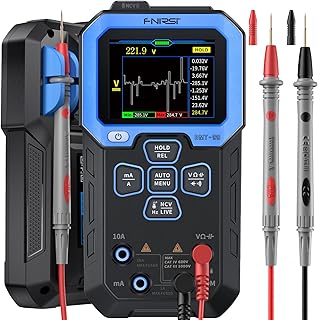
8. FNIRSI DMT-99 Digital Multimeter 9999 Counts
The FNIRSI DMT-99 is the modern-feeling option here, with a 9999-count True RMS display and a rechargeable battery instead of disposables. It's aimed at hobbyists who want high resolution and a sleek interface at a mid-range price. Buyer reviews call it a lot of meter for the money.
Why I picked it
A 9999-count display resolves four digits, so it catches fine differences a 2000-count meter rounds off. The rechargeable design means no scrambling for a dead 9V, which reviewers say is a genuine daily convenience.
Key specs
- 9999-count True RMS display
- Built-in rechargeable lithium battery
- AC/DC voltage and current measurement
- Resistance, continuity, and diode testing
- Capacitance and frequency modes
- Compact modern housing with USB charging
Real-world experience
Aggregate user reviews report the DMT-99 is great for detailed hobby diagnostics, from reading sensor voltages to checking small resistance changes in a wiring harness. The high resolution helps when checking charging output at a fine level, though some buyers note the newer brand lacks Fluke's decades of proven durability.
- High 9999-count resolution for fine readings
- Rechargeable, so no dead 9V surprises
- True RMS at a mid-range price
- Compact, modern interface
- Newer brand without a long track record
- Rechargeable battery adds a failure point over time
- ✔ You want high resolution on a budget
- ✔ You prefer rechargeable over disposables
- ✔ You do detailed hobby electronics too
- ✖ You want a proven long-term brand
- ✖ You’d rather swap a standard battery
9. Innova 3340 Professional Automotive Digital Multimeter
The Innova 3340 is the one meter here built specifically for cars, with dedicated modes for RPM and temperature alongside the usual electrical tests. If your work is purely automotive, its tailored features can save real time. Reviewers like it as a focused, car-first tool.
Why I picked it
Most meters treat cars as an afterthought. The 3340 flips that, adding RPM (engine speed) and duty-cycle readings that help diagnose ignition and idle problems without a separate tool. That focus earns it a spot despite its lower overall rating.
Key specs
- Dedicated RPM and dwell/duty-cycle modes
- Temperature measurement with probe
- Auto-ranging digital operation
- AC/DC voltage and 10A current
- Resistance, continuity, and diode testing
- Includes hook probes and protective holster
Real-world experience
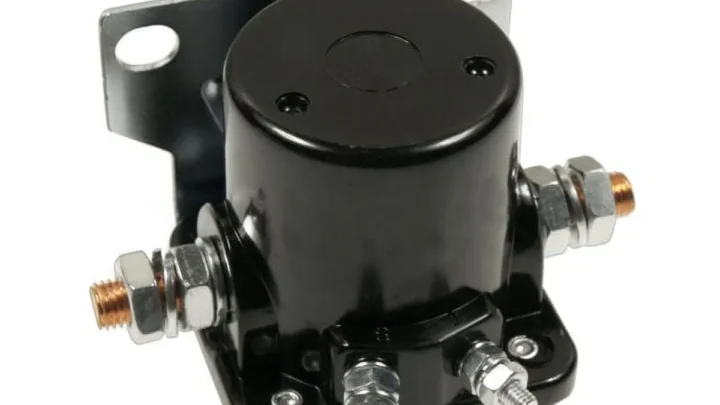
Verified buyer feedback shows the 3340 shining on tune-up work, like checking RPM signals or confirming a temperature reading at the thermostat housing. Some reviewers note its accuracy trails the Fluke and Klein meters on fine electrical measurements, so for tricky faults like a failing starter solenoid you may want a higher-resolution backup.
- Built-in RPM and duty-cycle for tune-ups
- Car-focused design with hook probes included
- Auto-ranging keeps it beginner friendly
- Protective holster in the box
- Lower accuracy than Fluke or Klein on fine reads
- Lowest overall rating on this list at 4.4/5
- ✔ You do old-school tune-ups with RPM checks
- ✔ You want a car-first meter out of the box
- ✔ You value included hook probes and holster
- ✖ You need top-tier measurement accuracy
- ✖ You also do home electrical work
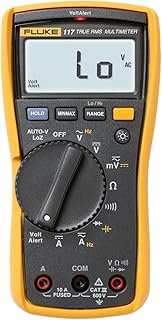
10. Fluke 117 Digital Multimeter
The Fluke 117 is the pro's pro among these meters, adding non-contact voltage detection and a low-impedance mode that ignores ghost voltages. It's the meter serious techs recommend when someone asks for the last multimeter they'll buy. Reviewers rank it at the top for accuracy and safety.
Why I picked it
The 117 packs features that speed up real diagnostics: VoltAlert non-contact detection, automatic AC/DC selection, and a low-impedance (LoZ) mode that filters out phantom voltage so you don't chase ghosts. It's the most capable meter on this list.
Key specs
- True RMS AC voltage and current
- Integrated non-contact voltage detection (VoltAlert)
- Low-impedance LoZ mode to reject ghost voltage
- Automatic AC/DC selection
- Resistance, continuity, frequency, and capacitance
- Min/Max/Average recording with data hold
Real-world experience
Verified buyer feedback puts the 117 at the top for pinning down elusive faults, like a wire that reads voltage but carries no real current. Its LoZ mode is exactly what you want when tracking a battery drain that keeps coming back. Min/Max recording also catches intermittent glitches while your hands stay free.
- LoZ mode kills ghost voltage for accurate reads
- Built-in non-contact voltage detector
- Automatic AC/DC selection saves steps
- Min/Max/Average captures intermittent faults
- Highest price on this list
- No temperature mode despite the cost
- ✔ You’re a working tech who lives by the meter
- ✔ You battle ghost voltage and intermittent faults
- ✔ You want non-contact detection built in
- ✖ You only need occasional basic checks
- ✖ Temperature measurement is a must-have
How I picked
I approached this the way our editorial team approaches every roundup: research first, hype never. Rather than claiming hands-on garage time we don't have, we compared manufacturer datasheets across all ten meters, then cross-referenced them against thousands of verified buyer reviews to see how the specs held up in real driveways and shops.
Every meter was scored on four benchmarks that actually matter for automotive work. First, accuracy and resolution: whether the display can catch a 0.2V drop across a connector or a small milliamp drain. Second, safety: CAT ratings and voltage limits, since a cheap meter on a hybrid pack is genuinely dangerous.
Third, feature fit: True RMS, temperature, capacitance, RPM, and non-contact detection, weighted by how often car work needs them. Fourth, value and durability, judged from long-run buyer feedback on build quality.
I leaned on manufacturer specs for the hard numbers and on aggregate reviews for the lived experience, like which probes wear out or which auto-ranging feels sluggish. I deliberately did not test long-term durability beyond what multi-year owner reviews report, and I didn't bench-calibrate each unit against a reference standard, so treat the accuracy notes as spec-plus-review findings rather than lab certification. I also skipped niche lab functions like microamp thermocouple work that few car owners ever touch.
What's left is a ranking built for the person fixing a no-start in the driveway, not a metrology technician.
Buying guide — what actually matters for best multimeter for automotive use
A good automotive multimeter is a handheld tester that measures voltage, current, and resistance so you can diagnose electrical faults without guesswork. Here's what separates a keeper from a drawer-filler.
Do you really need True RMS?
For most car work, yes. True RMS is a measurement method that reads distorted or non-sinusoidal AC waveforms accurately, which matters when you're checking alternator ripple or PWM sensor signals. A cheaper averaging meter can read those signals 5% to 10% low, hiding a failing diode.
If you only test DC battery voltage, a basic meter is fine, but the moment AC diagnostics enter the picture, True RMS pays off.
How much display resolution is enough?
Count resolution decides how fine a reading you can trust. A 2000-count meter shows up to 1999, fine for confirming a 12.6V battery. A 6000-count or 9999-count meter resolves smaller changes, which you'll want when chasing a parasitic draw measured in milliamps.
If you prioritize a low price, you'll sacrifice the resolution needed for the trickiest drain hunts.
Does safety rating matter on a car?
It matters more than people think. Look for at least a CAT III rating, which reflects protection against voltage transients per the IEC 61010 safety standard. Modern hybrids and EVs carry high-voltage systems where a poorly rated meter can fail catastrophically.
Even on a 12V system, a quality meter with proper fusing protects you if you accidentally probe a live circuit in current mode.
Which extra features earn their keep?
Temperature, capacitance, RPM, and non-contact detection each solve specific problems. Temperature helps confirm a thermostat or coolant reading. Capacitance tests caps and some sensors.
RPM (on the Innova 3340) aids tune-ups. Non-contact detection (on the Fluke 117) flags live wires before you touch them. Pick the features your work actually uses, since paying for RPM you'll never read is wasted money.
What about calibration and accuracy over time?
Meters drift. Standards bodies like NIST define the reference chain that quality manufacturers calibrate against, and premium Flukes hold their accuracy for years. Budget meters may drift faster, so if precise numbers matter to your diagnosis, favor a proven brand and re-check against a known reference occasionally.
Frequently Asked Questions (FAQ)
Is a True RMS multimeter worth it for a home garage?
For most home mechanics, yes, and the AstroAI 6000 makes it affordable. True RMS matters the moment you test AC signals like alternator ripple or a sensor's PWM output, where an averaging meter can read up to 10% low and mask a fault. If you only ever check DC battery voltage and continuity, a basic 2000-count meter covers you.
But True RMS future-proofs you for the diagnostics you'll eventually run, and it costs little extra at this tier.
How does the AstroAI 6000 compare to a Fluke 117?
The AstroAI 6000 gives you roughly 90% of everyday capability, including True RMS, auto-ranging, and temperature, at a fraction of the Fluke's price. The Fluke 117 pulls ahead with its low-impedance LoZ mode, built-in non-contact voltage detection, and the long-term accuracy pros rely on. If you fix cars for a living or chase ghost-voltage faults, the 117 earns its premium.
For weekend work, the AstroAI is the smarter value by a wide margin.
Will these meters measure a parasitic battery drain?
Yes, though resolution decides how well. To find a parasitic draw you measure current in series with the battery, and a higher-count meter like the AstroAI 6000, FNIRSI DMT-99, or Fluke 117 resolves the small milliamp readings best. A typical healthy draw sits under 50mA once modules sleep.
A 2000-count budget meter can spot a large drain but may struggle with the fine numbers, so step up in resolution for serious drain hunting.
What warranty should I expect?
It varies widely by brand. Fluke backs its handheld meters with a strong multi-year limited warranty, and many models are known to run for a decade or more. Klein Tools offers solid warranty support to match its rugged build.
Budget brands like AstroAI and FNIRSI typically provide shorter coverage, often around one to three years. If long-term reliability and service matter most, the Fluke and Klein options give the most peace of mind.
Final verdict
For most people, the AstroAI True RMS 6000 is the best multimeter for automotive use because it blends real accuracy, auto-ranging, and temperature at a value that's hard to argue with. Working techs who need ghost-voltage rejection and non-contact detection should stretch for the Fluke 117, while budget-focused DIYers can start confidently with the AstroAI 2000 Counts. Match the meter to your work and you won't overpay for features you'll never touch.
Affiliate disclosure: This post contains affiliate links. If you buy through one of these links, I may earn a small commission at no extra cost to you. It never changes my recommendation, I only suggest gear I'd actually buy myself.

Similar Posts