What Is a Turbocharged Engine and How Does It Work?
If you’ve ever wondered what is a turbocharged engine, think of it as a system that squeezes more air into your cylinders. This extra oxygen allows the engine to burn more fuel efficiently. The result is significantly higher power output from a smaller displacement block.
It’s not magic, just smart physics applied to automotive design.
Modern manufacturers rely on this technology to meet strict emissions standards without sacrificing performance. As of 2026, over 60% of new light-duty vehicles sold globally feature some form of forced induction. Understanding the mechanical flow helps demystify the noise and lag drivers often complain about.
Let’s look at the hardware that makes this possible.
Quick Answer
A turbocharged engine uses exhaust gases to spin a turbine. That turbine drives a compressor wheel. The compressor forces more air into the engine.
More air means more fuel can be burned. This creates greater horsepower and torque. It improves efficiency compared to larger naturally aspirated engines.
The Invisible Hand: Why You Need to See the Turbo to Understand It
Text descriptions often fail here because turbos are dynamic systems. They don’t just sit there; they react instantly to pressure changes. Imagine trying to explain a hurricane using only a weather map legend.
You miss the wind speed, the rotation, and the sheer force involved.
Visualizing the connection between exhaust and intake is critical. Most confusion stems from thinking the turbo adds power directly. It doesn’t.
It recycles wasted energy. The heat and pressure leaving your tailpipe drive the front-end compressor. Without seeing this loop, the concept feels abstract.
We need to track two distinct paths simultaneously. One path handles hot, dirty exhaust gas. The other manages cool, dense intake air.
These streams never mix, yet they share a single shaft. This separation is why diagrams matter so much. If you can’t picture the twin-scroll housing or the diverter valve location, you’ll misunderstand how boost builds.
For anyone diagnosing issues or tuning performance, spatial awareness is everything. Knowing where the wastegate sits relative to the turbine inlet dictates response time. Seeing the intercooler piping reveals potential leak points.
This isn’t academic trivia. It’s practical knowledge for maintaining peak engine health.
Anatomy of the Beast: Mapping the Air and Exhaust Paths
Let’s break down the components by following the air molecules. Start with the fresh air entering through the intake filter. It hits the Mass Air Flow (MAF) sensor, which tells the computer how much oxygen is available.
From there, it travels to the compressor inlet.
Inside the compressor housing, a spinning wheel accelerates the air. This compression raises both pressure and temperature drastically. Hot air expands, reducing density.
So, we send it through an intercooler. Here, ambient air or coolant strips away the excess heat. The now-dense, cooler charge moves to the throttle body and finally into the combustion chambers.
Meanwhile, the exhaust side works in reverse. Burnt gases exit the cylinders via the manifold. They rush into the turbine housing.
The kinetic energy spins the turbine wheel. This wheel shares a shaft with the compressor. Finally, the spent gases leave through the downpipe and catalytic converter.
| Component | Function | Location Relative to Engine |
|---|---|---|
| Turbine Wheel | Converts exhaust energy to rotational force | Connected to exhaust manifold |
| Compressor Wheel | Forces atmospheric air into engine | Connected to intake system |
| Center Hub (CHRA) | Houses bearings and seals for shaft rotation | Between turbine and compressor |
| Wastegate | Regulates maximum boost pressure | Integrated into turbine housing |
| Intercooler | Cools compressed intake air | Mounted ahead of radiator/intake |
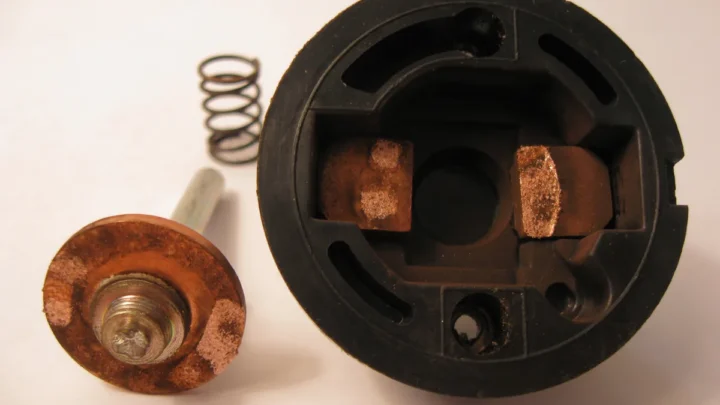
Understanding this layout helps when checking for signs of a bad starter indirectly, as electrical faults can mimic mechanical hesitation. But primarily, knowing the path prevents misdiagnosis of vacuum leaks versus boost leaks.
The Lag Myth vs. Reality: Watching the Spool in Real-Time
Turbo lag is the delay between pressing the accelerator and feeling the surge of power. Critics call it a flaw. Enthusiasts know it’s a characteristic of inertia.
The heavy metal wheels inside the turbo have mass. Getting them up to 100,000 RPM takes time.
Think of pushing a child on a swing. Your first push does little. Momentum builds gradually.
Once moving, small pushes create big arcs. The same applies here. At low RPM, exhaust flow is weak.
The turbine barely turns. Boost pressure remains near zero.
As RPM climbs, exhaust volume increases. The turbine accelerates rapidly. Suddenly, the compressor bites.
Air floods the cylinders. The driver feels the "hit." Modern variable geometry turbos reduce this gap by adjusting vane angles electronically. This optimizes exhaust velocity even at lower speeds.
You can visualize spooling by watching a tachometer needle sweep upward. In a naturally aspirated car, power rises linearly. In a turbo car, it stays flat then jumps vertically.
This step-function curve defines the driving experience. It requires anticipation rather than reaction. Drivers accustomed to instant electric torque often find this adjustment period frustrating initially.
However, lag isn't always bad. It protects the engine from sudden stress spikes. Smooth delivery extends component life.
If you’re experiencing unusual noises during acceleration, check if it resembles starter clicking but not turning over, though that indicates electrical failure rather than aerodynamic delay. True turbo behavior is silent until the blow-off valve chirps.
Heat Management: Where Turbos Live and Die
Heat is the enemy of forced induction. The exhaust side operates at temperatures exceeding 1,400°F. Meanwhile, the intake side needs to stay below 150°F for optimal density.
Managing this thermal gradient is complex engineering.
The center hub relies entirely on engine oil for cooling and lubrication. Oil flows under pressure through tiny galleries. It carries heat away from the bearings.
If oil circulation stops, the shaft seizes within seconds. This is why idling before shutdown matters for older setups.
Newer designs use water-cooled centers. Coolant circulates around the CHRA. This maintains stable operating temperatures regardless of load.
It reduces thermal shock during rapid starts and stops. Manufacturer specifications indicate these systems extend service intervals significantly.
Intercoolers also play a vital role. Air-to-air models use ram air from the front bumper. They are efficient but bulky.
Water-to-air variants pump coolant through compact cores. They offer faster response times due to reduced piping length. Both methods aim to prevent detonation, or pre-ignition.
Detonation destroys pistons quickly. Keeping charge temps low ensures consistent combustion stability.
Proper ventilation in the engine bay aids overall cooling. Trapped heat radiates back onto sensitive hoses and sensors. Regular inspections ensure clamps remain tight and lines aren’t chafing against hot surfaces.
Neglect here leads to expensive repairs far sooner than expected.
Turbo vs. Supercharger: Choosing Your Forced Induction Flavor
Not all forced induction looks alike. While turbos harvest waste energy, superchargers consume crankshaft power directly. They bolt onto the engine via belts or gears.
This fundamental difference shapes their performance curves.
Superchargers provide immediate torque across the entire rev range. There is no lag. You press the pedal, and boost arrives instantly.
However, they steal horsepower from the engine to run themselves. Efficiency drops at high RPMs unless equipped with bypass valves.
Turbos excel at sustained high-RPM power. They become more effective as exhaust flow increases. This makes them ideal for highway cruising and track racing.
Yet, they suffer from initial latency. Twin-turbo setups mitigate this by using one small turbo for low-end response and another large one for top-end fury.
| Feature | Turbocharger | Supercharger |
|---|---|---|
| Power Source | Exhaust Gas Energy | Crankshaft Mechanical Drive |
| Response Time | Delayed (Spool-up) | Instantaneous |
| Efficiency | High (Recycles Waste) | Lower (Consumes Engine Power) |
| Complexity | Moderate (Plumbing/Electronics) | Simple (Belt/Pulley System) |
| Best For | Fuel Economy & Top End Speed | Immediate Torque & Linear Feel |
Choosing between them depends on your priorities. Daily drivers benefit from turbo efficiency. Drag racers might prefer supercharger consistency.
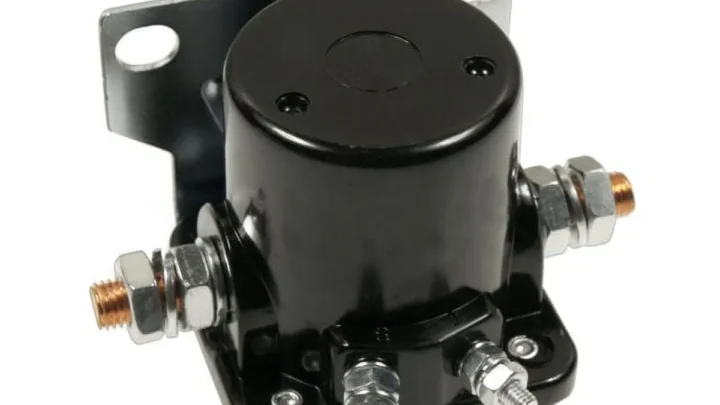
Some hybrids combine both, using a supercharger for launch and a turbo for sustainment. Regardless of choice, understanding how to test a starter relay remains crucial for ensuring reliable ignition sequences in any modified setup.
Keeping It Alive: Maintenance That Actually Matters
Turbos demand stricter oil discipline than standard engines. The bearings spin at extreme speeds, relying entirely on a thin film of lubricant. If that film breaks, metal grinds against metal.
Catastrophic failure happens in seconds. Always use the manufacturer-specified synthetic oil grade. Conventional oils break down too quickly under high thermal stress.
Change intervals should be conservative. Most experts recommend every 5,000 miles for turbocharged daily drivers. This removes contaminants before they clog the tiny feed galleries.
Neglect here causes shaft play and eventual seizure. Check your dipstick regularly for milky residue. That indicates coolant intrusion, a common sign of gasket failure.
Cooling protocols differ by design age. Older units require idling after hard driving to circulate oil. Newer water-cooled hubs handle heat better but still benefit from gentle cooldowns.
Never shut off immediately after towing or racing. Let the engine idle for two minutes. This prevents oil from baking into sludge inside the center hub.
Sludge blocks flow and starves the bearings.
Watch for blue smoke on startup. This signals worn piston rings or valve stem seals leaking oil into the intake. It’s not just messy; it fouls spark plugs and damages catalytic converters.
Address leaks early to avoid expensive downstream repairs. Regular inspections of charge pipes prevent boost leaks. A hissing sound often points to loose clamps or cracked silicone couplers.
Tighten them promptly to maintain pressure integrity.
FAQs: Quick Answers for the Curious Driver
Does a turbo reduce engine lifespan?
Not necessarily. Modern engineering compensates for added stress with stronger internals. However, poor maintenance accelerates wear significantly.
Stick to strict oil change schedules. Avoid cold revving before the oil warms up. Treat the system gently during break-in periods.
With proper care, a turbo engine lasts as long as its naturally aspirated counterpart.
Can I tune my stock turbo for more power?
Yes, but proceed with caution. Small gains are possible via software maps alone. Larger increases require hardware upgrades like intercoolers or exhaust systems.
Aggressive tuning raises cylinder pressures and temperatures. This risks detonation and head gasket failures. Consult a professional tuner familiar with your specific platform.
Ensure fuel delivery matches the new air volume requirements safely.
Why does my turbo whistle or chirp?
Whistling usually indicates normal compressor operation at high RPMs. Chirping, however, suggests compressor surge. This occurs when the wastegate closes rapidly while airflow is restricted.
It creates instability in the intake tract. Install a recirculation valve if missing. Check for blocked filters or restrictive piping.
Persistent surging can damage the turbine blades over time.
Are twin-turbo setups better than single turbos?
It depends on your goals. Twin-turbo configurations offer smoother power delivery across the rev range. They eliminate lag effectively using sequential activation.
Single turbos are simpler, lighter, and cheaper to maintain. They excel at peak horsepower figures above certain RPM thresholds. Choose twins for streetability and linear response.
Opt for singles for maximum top-end speed and minimal complexity.
Similar Posts