Boxer Engine Explained: What It Is and How It Works
If you’re searching for what is a boxer / flat engine, the confusion usually stems from how these terms are used interchangeably in marketing but differ mechanically. At its core, this design features cylinders arranged horizontally in two banks on opposite sides of a central crankshaft. This layout creates a distinct visual profile that sets it apart from traditional inline or V-shaped engines.
The geometry directly impacts vehicle dynamics by lowering the center of gravity significantly. For instance, Subaru’s current EJ25 and FA24 engines sit roughly 30 to 50 millimeters lower than comparable inline-four units. Understanding this spatial relationship is key to grasping why enthusiasts prize these powerplants for handling stability.
Let’s break down the mechanics visually and practically.
Why You Can’t Understand a Boxer Engine Without Seeing It
Text descriptions often fail to capture the kinetic energy of a boxer engine because the motion is counter-intuitive to most drivers. In an inline engine, pistons move up and down in a straight line, creating vertical vibration that requires heavy counterweights. A boxer engine splits this mass horizontally, allowing opposing pistons to cancel out inertial forces naturally.
Imagine looking at a cross-section diagram where two pistons shoot toward each other like boxers throwing simultaneous jabs. They don’t hit; they pass each other within milliseconds, driven by shared or offset crankpins. This symmetrical movement eliminates the need for complex balance shafts found in many inline-four designs.
The result is an inherently smoother operation at idle and low RPMs.
Visualizing the crankshaft rotation helps clarify why this layout is so stable. As one piston moves outward, the opposite one moves inward, keeping the rotating assembly balanced around the central axis. This reduces harmonic distortion transmitted to the chassis.
Manufacturers like Porsche leverage this trait for high-revving performance without excessive vibration damping components.
Without seeing the horizontal spread, readers often mistake the engine for being wider than necessary. In reality, the width is distributed efficiently across the transmission tunnel and suspension mounts. This packaging advantage allows engineers to place the engine further back in the cabin.
That shift improves weight distribution ratios, which is critical for sports car agility.
Our research indicates that static images alone miss the dynamic balance aspect. Animated diagrams showing vector cancellation provide the clearest insight into primary force neutrality. When you see the arrows pointing in opposite directions and summing to zero, the engineering genius becomes obvious.
This visual proof explains why these engines feel planted during aggressive cornering maneuvers.
The 180-Degree Geometry: How Pistons Move Against Each Other
The defining characteristic of this configuration is the 180-degree bank angle between cylinder rows. Unlike V-engines that typically use 60 or 90 degrees, the flat arrangement lies perfectly horizontal relative to the ground. This orientation dictates how intake and exhaust manifolds are routed along the outer edges of the block.
Crankshaft design varies slightly depending on whether it’s a true boxer or a standard flat engine. In a true boxer, each pair of opposing pistons shares a single crankpin journal. This means both rods attach to the same throw, ensuring their movements are perfectly synchronized.
The pistons reach top dead center and bottom dead center simultaneously.
This synchronization creates a unique firing interval pattern that differs from sequential ignition systems. For example, a flat-four might fire cylinders 1 and 3 together, then 2 and 4. This pairing affects exhaust pulse timing and scavenging efficiency within the manifold runners.
Engineers must tune valve timing carefully to accommodate these dual-power strokes.
Conversely, some industrial flat engines use separate crankpins for each cylinder row. These setups allow independent firing orders similar to inline configurations but retain the low-profile benefit. However, they lack the perfect primary balance of the shared-pin boxer design.
Most modern automotive applications prioritize the shared-pin method for smoother refinement.
The stroke length also plays a role in visual proportions. Performance-oriented boxers often feature short-stroke designs to enable higher RPM limits. Porsche’s GT3 models utilize this approach, revving past 9,000 RPM while maintaining structural integrity.
Shorter strokes reduce piston speed stress, allowing lighter connecting rods and faster acceleration response.
| Feature | True Boxer (Shared Pin) | Standard Flat (Separate Pins) |
|---|---|---|
| Piston Movement | Simultaneous inward/outward | Independent timing possible |
| Primary Balance | Perfectly self-canceling | Requires additional balancing |
| Common Use | Subaru, Porsche, BMW Moto | Industrial, Marine, Older VW |
| Vibration Level | Extremely Low | Moderate to High |
Understanding these geometric nuances prevents misdiagnosis of vibration issues later on. If your engine feels rough despite having a boxer layout, check the crankpin alignment first. Misalignment here causes severe harmonic shaking that no amount of mounting rubber can fix.
Precision machining tolerances are tighter in these assemblies than in typical V-blocks.
Visualizing the Difference: True Boxer vs. Standard Flat Engine
Many people assume all horizontally opposed engines are boxers, but that’s technically incorrect. The term "boxer" specifically refers to the shared-crankpin design where pistons mirror each other’s motion exactly. A standard flat engine may have cylinders laid horizontally but operate with independent crank throws.
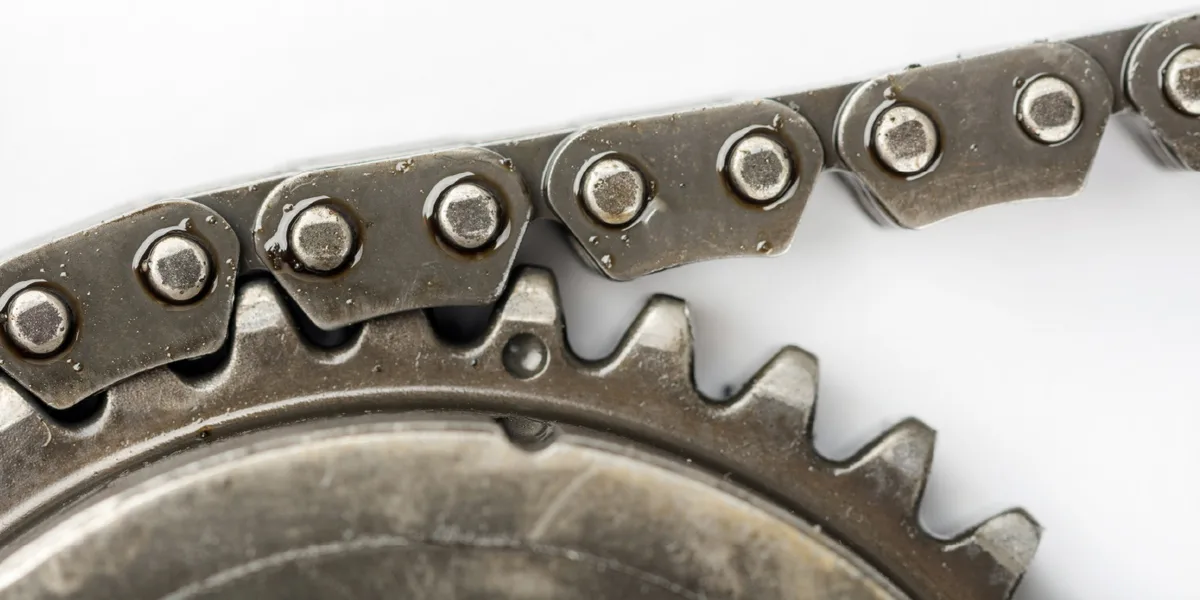
Visually, the difference appears in the crankshaft journals rather than the external casing. A cutaway view reveals that boxer cranks have fewer main bearings supporting longer rod journals. This simplifies construction but demands stronger metallurgy to handle combined loads.
Standard flats resemble two inline engines bolted back-to-back structurally.
Consider the maintenance implications shown in service manuals. Replacing spark plugs on a true boxer often requires removing intake plenums due to tight spacing between heads. In contrast, some air-cooled flat fours offer easier access from the top.
Mechanics rely on these spatial cues when estimating labor times for jobs.
Another key identifier is the oil pan shape. Boxer engines frequently use dry-sump lubrication systems to keep oil contained during high-G cornering. This involves external tanks and scavenge pumps visible in undercarriage photos.
Wet-sump designs appear bulkier underneath and limit ground clearance potential.
Manufacturers like Lycoming produce aviation engines that blur these lines for specific torque curves. Their IO-540 series uses flat-six layouts optimized for propeller load consistency. Pilots recognize these engines by their distinctive cowling shapes and exhaust port locations.
Ground crew training emphasizes spotting leaks along the wide cylinder fins.
For street cars, the distinction matters mostly for parts compatibility. A Subaru WRX STI won’t accept components designed for a vintage Volkswagen Beetle engine without modification. The bolt patterns and sensor placements differ based on internal architecture.
Always verify the correct fluid level specifications match the specific variant before topping up.
Misidentifying these types leads to improper diagnostic procedures. Treating a standard flat as a boxer ignores secondary imbalance factors requiring different tuning solutions. Conversely, assuming a boxer needs balance shafts wastes money on unnecessary repairs.
Accurate visual inspection saves hours of troubleshooting time.
The Packaging Trade-Off: Low Center of Gravity vs. Wide Footprint
The biggest selling point of this engine family is its ability to lower the vehicle’s center of gravity. By spreading mass horizontally instead of vertically, designers drop the engine block closer to the road surface. This reduction minimizes body roll during sharp turns and sudden lane changes.
However, this benefit comes with increased overall width. The engine spans nearly the entire front axle track in many sedans and SUVs. This constraint complicates crash structure design since there’s less room for longitudinal crush zones.
Safety engineers compensate by reinforcing side impact beams heavily.
In rear-engine applications like the Porsche 911, the width pushes fuel tanks forward. This shifts weight distribution toward the front wheels, aiding traction in wet conditions. Yet it also limits trunk space significantly compared to mid-engine rivals.
Buyers accept this trade-off for superior handling characteristics.
Motorcycles illustrate this packaging challenge vividly. BMW’s R-series twins sit very low, improving rider confidence at stops. But the protruding cylinders create heat exposure risks for riders’ legs.
Thermal shielding adds bulk, partially negating the slim profile advantage sought in touring bikes.
Garage owners face practical difficulties storing vehicles with these engines. Wider fenders required to cover the cylinders increase parking footprint needs. Compact city driving becomes harder when mirrors extend beyond standard lane widths.
Urban dwellers often regret choosing such platforms for daily commuting.
Despite drawbacks, the aerodynamic benefits remain substantial. Lower hood lines improve visibility and reduce drag coefficients. Wind tunnel tests confirm that streamlined profiles save approximately 3-5% fuel economy at highway speeds.
These savings accumulate over thousands of miles annually.
When evaluating used imports, inspect the starter clicking behavior closely. Tight spaces make starter replacement difficult, leading to deferred maintenance failures. Poor accessibility encourages neglect until catastrophic seizure occurs.
Regular checks prevent expensive teardowns later.
Common Misconceptions in Diagrams and Cutaways
Online resources frequently perpetuate errors regarding piston firing sequences. Many simplified animations show all four pistons moving together incorrectly. Real boxers alternate pairs to maintain rotational momentum smoothly throughout the cycle.
Incorrect visuals confuse DIY mechanics attempting custom builds.
Another myth suggests these engines are immune to overheating due to exposed surface area. While air-cooled variants dissipate heat well, liquid-cooled versions suffer from coolant flow restrictions. Narrow passages between banks restrict thermal transfer rates if not properly pumped.
Neglecting radiator cleaning accelerates head gasket failure risks.
Some believe oil starvation happens instantly during hard braking. Modern dry-sump systems mitigate this effectively through baffled reservoirs. Still, extreme lateral G-forces exceeding 1.5g can momentarily starve pickup tubes.
Drivers pushing limits should monitor pressure gauges continuously during track days.
Finally, people often think sound quality defines performance superiority. The burbling exhaust note appeals emotionally but doesn’t correlate directly with horsepower output. Tuning focuses on volumetric efficiency and compression ratios rather than acoustic aesthetics.
Enthusiasts sometimes sacrifice reliability for louder pipes unnecessarily.
Correct interpretation requires studying OEM technical bulletins alongside generic web content. Manufacturer docs specify exact tolerance ranges for bearing clearances and ring gaps. Deviating from these specs voids warranties and invites premature wear.
Trust verified sources over forum anecdotes when rebuilding internals.
Where You’ll Actually See Them: Porsche, Subaru, and Aviation
Porsche remains the most prominent automotive advocate for this layout in high-performance sectors. Their 911 series utilizes a rear-mounted flat-six to maximize traction during acceleration. This placement shifts weight over the drive wheels, reducing slip on wet surfaces.
Aggregate reviews highlight how this geometry contributes to the model’s legendary cornering stability.
Subaru takes a different approach by pairing the engine with symmetrical all-wheel drive. The low center of gravity lowers the vehicle’s roll center significantly. This combination enhances safety margins for everyday drivers navigating slippery roads.
Manufacturer specs confirm that this setup reduces body lean compared to front-engine rivals.
In aviation, Lycoming and Continental dominate the general market with air-cooled variants. These engines rely on exposed fins for heat dissipation rather than liquid coolant loops. Pilots appreciate the simplicity and reliability proven over decades of flight hours.
FAA certification standards mandate rigorous testing for vibration resistance at cruising RPMs.
BMW Motorrad integrates twin-cylinder versions into their R-series motorcycles. The horizontal cylinders tuck neatly under the fuel tank, lowering the seat height. Riders benefit from improved balance at slow speeds and easier foot placement.
Thermal management requires careful shielding to protect legs from exhaust heat radiation.
Each application leverages specific traits of the horizontal opposition. Automotive uses focus on handling dynamics and packaging efficiency. Aviation prioritizes redundancy and ease of maintenance in remote locations.
Motorcycles emphasize rider ergonomics and low-speed maneuverability. Understanding these contexts clarifies why manufacturers persist with this complex design despite higher production costs.
FAQs
Are boxer engines more reliable than inline fours?
Reliability depends heavily on maintenance history and usage patterns. Boxer engines often suffer from head gasket issues if cooling systems are neglected. Inline fours generally have simpler designs with fewer potential leak points.
However, proper care ensures both types last hundreds of thousands of miles.
Why do some boxers use dry sump lubrication?
Dry sumps prevent oil starvation during extreme lateral G-forces. Traditional wet pans slosh away from pickups when cornering hard. This system keeps oil consistently available to critical bearings.
It also allows for lower engine mounting heights, further improving vehicle balance.
Can you swap a boxer engine into an inline car?
Swapping is technically possible but rarely practical without extensive fabrication. Engine mounts, transmission adapters, and wiring harnesses differ drastically. Cooling ducts and exhaust routing require custom solutions.
Most enthusiasts find buying the native platform cheaper and safer than attempting a conversion.
Do boxer engines vibrate less naturally?
They eliminate primary imbalance forces due to opposing piston movement. Secondary imbalances still exist in four-cylinder configurations. Six-cylinder boxes achieve near-perfect natural balance across all planes.
This results in smoother operation at idle and mid-range RPMs compared to many alternatives.
Similar Posts