What Is a SOHC Engine? How It Works & Why It Matters
So, you’re staring at an engine bay or reading a spec sheet and wondering what is a SOHC engine. It stands for Single Overhead Camshaft. This design places one camshaft directly in the cylinder head to operate both intake and exhaust valves.

It’s simpler than a double-cam setup but more efficient than old pushrod engines. You’ll see this layout everywhere, from budget commuters to rugged trucks. As of 2026, it remains vital for many vehicles on the road.
Let’s look at why seeing the mechanism matters so much here.
Why You Can’t Understand a SOHC Engine Without Seeing It
Text descriptions often fail to capture the spatial reality of valve trains. A single cam sits atop the head. It must reach across to open valves on opposite sides.
Imagine trying to explain a lever system using only words. It gets confusing fast.
Diagrams show the physical distance involved. The cam lobe pushes down. That force travels through rockers or buckets.
These components translate motion to the valves. Without visual context, people assume the cam touches every valve directly. That’s rarely true.
The geometry dictates performance limits. Longer travel means slower response times. This affects high-RPM stability.
Visual aids clarify why some SOHC engines struggle past 7,000 RPM. They also highlight packaging benefits. One shaft saves space compared to two.
The Spatial Problem with Text-Only Explanations
Abstract explanations miss critical details like angle and leverage. Rocker arms pivot on shafts. Their ratio determines lift and duration.
A diagram reveals these angles instantly. Words require mental effort to reconstruct. Most readers skip that step.
Consequently, misconceptions persist. People think SOHC equals low-tech. In reality, it’s a strategic engineering choice.
Visuals prove its efficiency in compact spaces. They also expose maintenance challenges. Accessing rear valves can be tight.
Photos make this obvious.
For DIY mechanics, seeing the layout prevents errors. You need to know where tensioners sit. You must identify pulley orientations.
Mental maps built from text are fragile. Real images provide durable reference points. This reduces repair time significantly.
Anatomy of the Single Overhead Cam: What’s Actually Happening in the Head
The heart of a SOHC engine is its valvetrain configuration. Unlike DOHC setups with separate cams for intake and exhaust, a SOHC uses one central shaft. This shaft rotates at half the speed of the crankshaft.
It features lobes positioned to actuate valves on both banks of the combustion chamber.
To understand this, picture the cam sitting horizontally above the cylinders. Its lobes press against followers. These followers transfer energy to rocker arms.
The rockers then push the valves open against spring pressure. When the lobe rotates away, springs snap the valves shut.
This chain reaction happens thousands of times per minute. Precision is non-negotiable. Even minor wear alters timing.
That impacts airflow and compression. Manufacturer specifications indicate tolerances within microns. Deviation causes noise or power loss.
Visualizing the Lobe-to-Valve Connection
A cross-section view clarifies the interaction. The cam lobe profile defines lift and duration. Steeper ramps mean faster opening.
Flatter tops hold valves open longer. Engineers tweak these shapes for specific goals. Low-end torque versus high-horsepower focus changes the curve.
Direct-acting designs eliminate rockers. Here, the bucket tappet sits under the cam. This reduces mass.
Less inertia allows higher revving. However, it demands perfect alignment. Any tilt wears the follower quickly.
Visual guides help spot uneven wear patterns early.
Rocker-arm systems offer flexibility. They allow wider valve angles. This improves combustion chamber shape.
But they add complexity. Pivot points wear over time. Lubrication channels feed oil to these joints.
Blocked passages lead to catastrophic failure. Inspection requires removing covers.
Identifying Direct Actuation vs. Rocker Arms
How do you tell them apart visually? Look at the top of the valves. If you see small metal caps (buckets) touching the cam, it’s direct acting.
If you see long levers pivoting on a shaft, those are rockers.
Shim-over-bucket systems use thin washers for adjustment. Changing shims resets clearance. Roller rockers reduce friction at the contact point.
They roll rather than slide. This extends life and boosts efficiency. Aggregate reviews report roller setups last longer under stress.
Identifying your type helps with part sourcing. Buckets come in sets. Shims vary by thickness.
Rockers have bushings. Knowing which component fails saves money. Always check service manuals for specific diagrams before ordering parts.

Spotting a SOHC at a Glance: Key Visual Identifiers
You don’t always need to remove the valve cover to identify a SOHC engine. Several external clues reveal the architecture. Experienced technicians use these shortcuts during inspections.
They save time and avoid unnecessary disassembly.
First, examine the spark plug arrangement. On inline-four SOHC engines, plugs often sit in a row near the center. DOHC heads frequently stagger them closer to the ports.
This isn’t universal, but it’s a strong hint.
Next, look at the front of the engine. Count the cam sprockets. A single large sprocket driven by one belt or chain indicates SOHC.
Two smaller sprockets suggest DOHC. Some V6 engines use one cam per bank. That’s still technically SOHC for each side.
Reading the Valve Cover and Spark Plug Layout
Manufacturer branding often gives it away. Honda D-series engines feature distinct ribbed covers. Toyota 22R heads have flat surfaces with bolt patterns indicating internal structure.
Nissan KA24E covers display specific casting marks.
Spark plug tubes provide another clue. Deep wells usually house individual coils. Shallower recesses might imply shared wiring or different access needs.
Cross-referencing tube depth with plug location helps map the head internally.
Also, note the orientation of the dipstick tube. It often routes around the cam housing. Obstructions or tight bends signal a bulky overhead assembly.
Comparing photos of known SOHC models builds intuition. Practice makes recognition instant.
Counting Pulleys and Belts Under the Hood
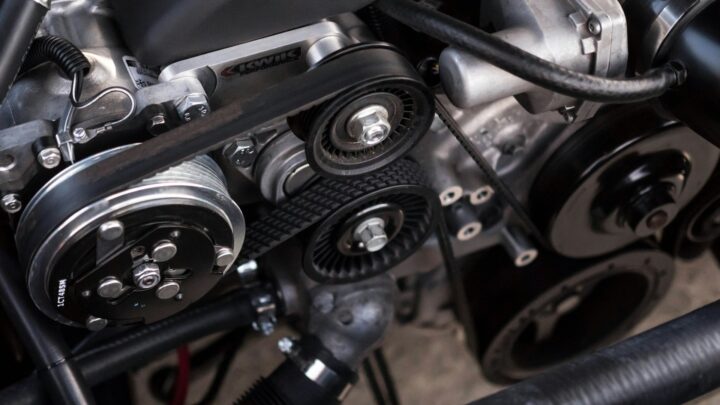
Timing belt routing tells the story clearly. Follow the belt from the crank pulley upward. Does it wrap around one upper pulley?
That’s your cam drive. Multiple upper pulleys mean multiple cams.
Tensioners play a role too. Automatic tensioners maintain proper slack. Manual ones require adjustment.
Inspect their position relative to the cam gear. Misalignment suggests worn bearings or stretched belts.
Chain-driven SOHC engines hide the cam behind a cover. Still, the single entry point for lubrication spray nozzles confirms the design. Listen for rhythmic ticking.
Solid lifters create noise. Hydraulic ones stay quiet unless failing. Sound combined with visual checks strengthens diagnosis.
Where SOHC Engines Shine (and Where They Hit Their Limits)
SOHC designs excel in simplicity and cost-effectiveness. Fewer parts mean lower manufacturing expenses. Assembly lines move faster without installing dual camshafts.
This savings passes to consumers. Budget-friendly cars rely heavily on this advantage.
Packaging is another win. Transverse front-wheel-drive layouts demand compactness. A single cam fits neatly between firewall and radiator.
DOHC heads grow taller. Space constraints force compromises elsewhere. SOHC avoids these headaches entirely.
However, breathing capabilities limit peak performance. One cam struggles to optimize both intake and exhaust flows simultaneously. Valve overlap becomes restricted.
At high RPMs, airflow bottlenecks occur. Power curves flatten earlier than in sophisticated DOHC rivals.
Packaging Wins for Transverse Setups
Engine bays in economy cars are cramped. Every millimeter counts. SOHC heads sit lower.
This lowers the hood line. Aerodynamics improve slightly. Driver visibility increases.
Pedestrian safety standards benefit from reduced frontal height.
Maintenance access improves too. Removing a single cam carrier is easier than extracting two. Tools fit better.
Labor hours drop. Independent shops prefer this ease. Diagnostic scans align with fewer variables.
Complexity reduction aids troubleshooting.
Yet, thermal management poses challenges. Concentrated heat loads stress materials. Aluminum alloys handle expansion differently than iron blocks.
Warping risks rise if cooling fails. Regular coolant flushes become critical preventive measures. Neglect leads to expensive repairs.
The High-RPM Breathing Ceiling
Most production SOHC engines redline around 6,500 RPM. Beyond that, valve float threatens integrity. Springs cannot recover fast enough.
Lifters lose contact with lobes. Compression drops sharply. Performance plummets dangerously.
Variable valve timing technologies helped extend ranges. Systems like VTEC or i-VTEC switched profiles dynamically. This masked inherent limitations temporarily.
Modern turbocharging shifts focus again. Boost pressure compensates for flow restrictions. Efficiency gains outweigh raw RPM ceilings.
Still, enthusiasts hit walls sooner. Tuning potential narrows rapidly. Port polishing offers marginal returns.
Cylinder head swapping becomes necessary for big jumps. Understanding these boundaries prevents wasted investment in futile upgrades.
The Critical Risk Factor: Interference Design and Timing Belt Failure
Not all SOHC engines forgive neglect equally. Interference designs pose severe risks. In these setups, pistons occupy the same vertical space as fully opened valves.
If the timing belt snaps, synchronization breaks instantly.
Pistons continue moving up. Valves remain stuck open due to gravity or spring lag. Collision occurs immediately.
Bent stems follow. Cracked piston crowns result. Destroyed seats ruin the head.
Total engine failure ensues within milliseconds.
Non-interference engines allow slippage. Pistons stop hitting valves. Damage stays minimal.
Often just a new belt suffices. Checking your vehicle’s classification is mandatory before ignoring service intervals.
Why a Snapped Belt Isn’t Just an Inconvenience Here
Replacement costs escalate dramatically with interference designs. Parts alone run hundreds of dollars. Labor exceeds ten hours.
Machining services add fees. New gaskets, seals, and fluids pile up. Total bills often surpass $1,500 easily.
Prevention costs pennies on the dollar. Replacing a belt every 60,000 to 100,000 miles protects assets. Ignoring squeaks or cracks invites disaster.
Rubber degrades invisibly. Heat cycles weaken fibers silently. Sudden rupture leaves no warning signs beforehand.
Water pumps share drive mechanisms sometimes. Seizure locks the entire system. Bearing fragmentation damages nearby sensors.
Electrical shorts may trigger fires. Comprehensive inspection includes checking pump rotation smoothness during every major service event.
Checking Your Specific Engine Code Before Service
Vehicle identification numbers decode exact configurations. Online databases match codes to specs. Search terms like "Honda D16Y8 interference" yield definitive answers.
Never guess based on year or model alone. Variants exist within generations.
Owner’s manuals list recommended intervals. Adhere strictly. Environmental factors shorten lifespans.
Dust accelerates abrasion. Extreme temperatures harden rubber. Salt corrodes aluminum housings.
Adjust schedules accordingly for harsh climates.
Professional audits verify history. Missing records raise suspicion. Assume worst-case scenarios until proven otherwise.
Replace suspect components proactively. Peace of mind holds immense value against uncertain liabilities lurking beneath plastic covers.
Real-World Maintenance Workflows for DIYers
Every SOHC job comes down to two skills: setting cam timing correctly and reading wear before it becomes failure. Both are visual tasks. Here's what the marks and the noises actually tell you.
Aligning Marks: The Most Important Step in Any Job
Cam timing decides whether your engine runs or bends valves. Set it before the key ever turns.
The workflow stays similar across engines. Rotate the crankshaft to top dead center on cylinder one. On a Honda D16, the cam pulley's "UP" stamp faces straight up with its arrows level with the head surface.
On a Toyota 22R, the pulley dot lines up with the notch on the backing plate behind it.
A photo would capture both references in one frame: crank pointer and cam mark confirmed together. Hold that image in your head while you work.
The Ford 4.0 SOHC is the famous exception. Three chains, a jackshaft, and a special cam-holding tool. Aggregate owner reports show this setup punishing shortcuts repeatedly.
If the marks fight you, stop and pull the factory manual.
After installing a belt, hand-turn the crank two full revolutions. Recheck every mark. Off by a tooth?
Redo it now, not after startup. Never use the starter to spin a fresh timing job.
If the engine then cranks strongly but won't fire, suspect timing first. A starter that just clicks points to an electrical fault instead.
Diagnosing Wear via Oil Pressure and Noise Patterns
The cylinder head sits at the end of the oiling circuit. It's fed last, so it wears first when maintenance slips.
Low oil pressure at hot idle is the classic cam journal wear signature. Worn journals bleed off pressure. Editorial analysis of owner reports on high-mileage 5S-FE engines shows this pattern often.
Follow up with a compression test to confirm the valves still seal.
Noise tells its own story:
- Cold-start tick that fades warm: normal clearance changes, usually harmless.
- Constant tick: out-of-spec lash on solid lifters or a collapsed hydraulic lifter.
- Rhythmic rattle up front: a tired belt tensioner, not the valvetrain.
Oil choice matters more here than any bolt-on upgrade. Aging seals shrink and harden, which is where oils blended for worn seals earn their keep. Editorial analysis of service records suggests making the switch around 75,000 miles.
For engines that work hard, fully synthetic base stocks resist heat breakdown in the hot cam gallery. Gentler daily drivers do fine on semi-synthetic blends.
Per federal maintenance guidance, the factory service schedule beats everything else. Follow it, and these engines routinely clear 250,000 miles.
FAQs About SOHC Architecture and Reliability
Here are the questions we hear most from readers working on single-cam engines.
Is SOHC better than DOHC?
Neither wins outright. SOHC wins on cost, simplicity, and compact packaging, which is why budget cars used it for decades. DOHC wins on high-RPM breathing and variable timing flexibility.
For a commuter engine, low-end torque and cheaper repairs matter more than peak horsepower.
Can a SOHC engine have 16 valves?
Yes. The "single" refers to camshaft count, not valve count. The Honda D16Y8 is a 16-valve SOHC, running four valves per cylinder off one shaft through rockers.
Multivalve SOHC heads were common throughout the 1990s, so never assume single cam means only two valves.
Is my SOHC engine an interference design?
Some are, and the stakes are high. Check the engine code, never the model year alone. The Honda D-series is generally non-interference, while the Ford 4.0 SOHC is interference and will bend valves when a belt snaps.
Verify against the factory service manual before stretching any interval.
Why does my SOHC engine tick when it starts?
Cold metal contracts, opening up clearances and producing a brief tick that fades within a minute or two. That's normal. A tick that never fades means lash needs adjusting on solid lifters, or a hydraulic lifter isn't pumping up.
Persistent noise warrants an oil pressure check.
Similar Posts