What Is Full Synthetic Oil and Why Your Engine Needs It
Ask ten drivers what is full synthetic oil and you'll get ten different answers, most of them wrong. Some think it's brewed in a lab with no crude involved at all. Others assume any bottle marked "synthetic" is the same as the next one.
Neither is true, and the confusion costs people money in avoidable engine wear and voided warranties.
Full synthetic motor oil is a highly engineered lubricant built from purified base stocks (API Group III, IV, or V) blended with a precision additive package. As of 2026, most new passenger vehicles in North America ship from the factory with full synthetic in the sump, and most OEM warranties now require it. Here's what that actually means when you're standing in front of a shelf of oil jugs.
Quick Answer
Full synthetic oil is engine lubricant made from chemically refined or synthesised base oils blended with performance additives. It uses API Group III, IV, or V base stocks instead of minimally processed Group I or II. Full synthetic delivers stronger high-heat stability, better cold-start flow, and longer drain intervals than conventional oil.
It is the default factory fill in most modern engines.
What Full Synthetic Oil Actually Is (And What It Isn't)
Full synthetic oil isn't grown in a petri dish. It still starts as crude oil in most cases. The difference is how far the refining and molecular reshaping goes before the product hits your engine.
A true full synthetic uses base oils that have been either heavily hydrocracked and hydroisomerised (Group III), chemically built from smaller molecules like ethylene (Group IV polyalphaolefins), or engineered from esters and exotic stocks (Group V). No Group I or Group II mineral bases. The finished oil delivers uniform molecule size, near-zero paraffin wax, and predictable behaviour across temperature extremes.
What it isn't: a synthetic blend. A blend is mostly conventional oil with some synthetic base mixed in for marketing punch. And a bottle labelled "synthetic" isn't automatically a Group IV product, which brings us to the legal wrinkle that changed the industry.
The Base Oil Groups That Define "Synthetic": Group III vs. Group IV vs. Group V
The American Petroleum Institute sorts base oils into five groups based on saturates, sulphur content, and viscosity index. Groups I and II are conventional mineral oils. Groups III, IV, and V are the ones that matter for this conversation.
| Base Oil Group | How It's Made | Where You See It |
|---|---|---|
| Group III | Severely hydrocracked and hydroisomerised petroleum | Most retail "full synthetics" (Mobil 1, Castrol EDGE, Pennzoil Platinum GTL) |
| Group IV | Chemically synthesised polyalphaolefins (PAO) | Premium synthetics, cold-climate and racing oils |
| Group V | Esters, alkylated naphthalenes, PAG, others | Blended into Group III or IV to boost seal compatibility |
Group III oils dominate the retail shelf. They're excellent, and they meet every API SP and ILSAC GF-6A spec you'll encounter. Group IV PAO oils cost more and deliver better cold pumpability and thermal stability, which matters in genuine extremes.
Group V rarely stands alone. It's the seasoning that makes the other groups perform better.
The takeaway is simple. Most "full synthetic" you buy is Group III. That's not a knock, just the reality of the market, and it explains why prices vary so much between brands wearing the same label.
Why the FTC's 1999 Ruling Changed What "Synthetic" Means in the US
In 1999, the National Advertising Division of the Council of Better Business Bureaus sided with Castrol against Mobil in a dispute over whether a hydrocracked Group III oil could legally be marketed as "synthetic." The ruling said yes. Since then, US oil brands have been free to label Group III products as full synthetic, and almost all of them do.
Europe treats the term more strictly. Many European buyers still expect "synthetic" to mean Group IV PAO. That regional gap explains why the same brand can carry different formulations for North American and European markets.
For you, the practical impact is this. Don't judge a bottle by the word "synthetic" alone. Judge it by the API service category, the ILSAC starburst, and the OEM approvals printed on the back.
Those are what actually determine whether the oil belongs in your engine.
What's Inside the Bottle: Base Stocks, Additives, and Viscosity Modifiers
A finished jug of full synthetic is roughly 70% to 90% base oil and 10% to 30% additive package. The base oil handles lubrication and heat transfer. The additives do everything else.
Here's what the chemistry brings to the party:
- Detergents and dispersants keep combustion byproducts suspended so they drain out with the used oil instead of forming sludge.
- Anti-wear additives (zinc dialkyldithiophosphate, ZDDP) plate onto metal surfaces during high-load moments like cold starts.
- Friction modifiers (often molybdenum-based) reduce parasitic drag and help fuel economy.
- Viscosity index improvers keep the oil flowing correctly across the full temperature range, which is how a 5W-30 stays a 5W-30 whether it's January in Minnesota or August in Phoenix.
- Antioxidants slow the oxidation that turns clean oil into black sludge.
- Corrosion inhibitors protect bearings from acid attack.
Base stock quality decides how long the additives last. Premium synthetics oxidise slower, so the additive package survives longer. That's why extended drain intervals are feasible with full synthetic and risky with conventional.
How Full Synthetic Protects Your Engine Under Real Driving Conditions
Lab specs matter, but the real test happens in a hot turbo housing at 3 a.m. in February. Full synthetic earns its price in the extremes.
Cold-Start Protection and Pumpability
The majority of engine wear happens in the first few seconds after cold start, before oil pressure reaches the top end. Full synthetic keeps flowing at temperatures where conventional oil turns to molasses. A 0W-20 synthetic still pumps at around −40°F.
A conventional 10W-30 stops pumping near −20°F. If you handle your own service work, our walkthrough on swapping the fluid at home covers winter-grade selection in detail.
High-Temperature Stability and Turbo Coking Resistance
Turbocharger bearings run at 500°F or hotter. Conventional oil oxidises and leaves carbon deposits (coking) on the bearing surfaces, which shortens turbo life dramatically. Full synthetic resists that thermal breakdown far better.
Noack volatility, measured under ASTM D5800, sits below 15% for a quality API SP synthetic. Conventional oils often exceed 20%.
LSPI Prevention in Modern Turbo GDI Engines
Low-speed pre-ignition is a violent, engine-destroying knock event unique to turbocharged direct-injection engines. Certain additive chemistries in older oils actually trigger it. API SP and ILSAC GF-6 formulations are engineered to suppress LSPI, and full synthetics are the only oils formulated to those specs consistently across the shelf.
If you drive a modern turbo four-cylinder (which covers most mid-size sedans and SUVs today), the correct-spec synthetic isn't optional. It's the only thing standing between you and a cracked piston. A thorough used-car walkaround checklist should include popping the oil cap on any turbo model to check for signs of proper service history.
Full Synthetic vs. Conventional vs. Synthetic Blend vs. High-Mileage
The four categories on the shelf serve different jobs. Picking the wrong one won't kill an engine overnight, but it will shorten service life and drain interval quickly.
| Oil Type | Base Stock | Typical Drain Interval | Best For |
|---|---|---|---|
| Conventional | Group I or II mineral | 3,000 to 5,000 miles | Older port-injection engines with no OEM synthetic requirement |
| Synthetic Blend | Mostly Group II with some Group III/IV | 5,000 to 7,500 miles | Budget upgrade for older engines in warmer climates |
| Full Synthetic | Group III, IV, or V | 7,500 to 15,000 miles | Modern GDI, turbo, hybrid, and Euro-spec engines |
| High-Mileage Synthetic | Group III/IV plus seal conditioners | 5,000 to 10,000 miles | Engines over 75,000 miles showing minor leaks or consumption |
High-mileage formulas add seal-swell agents and extra detergents. They aren't a repair kit for a badly worn engine, but they can slow small leaks and reduce burn-off. If your car is under 60,000 miles and using synthetic from new, stick with the standard full synthetic in the correct viscosity.
Reading the Bottle: API Donut, ILSAC Starburst, ACEA Sequences, and OEM Approvals
The front label is marketing. The back label is where the real information lives. Learn to read three things: the API service donut, the ILSAC starburst, and the OEM approval list.
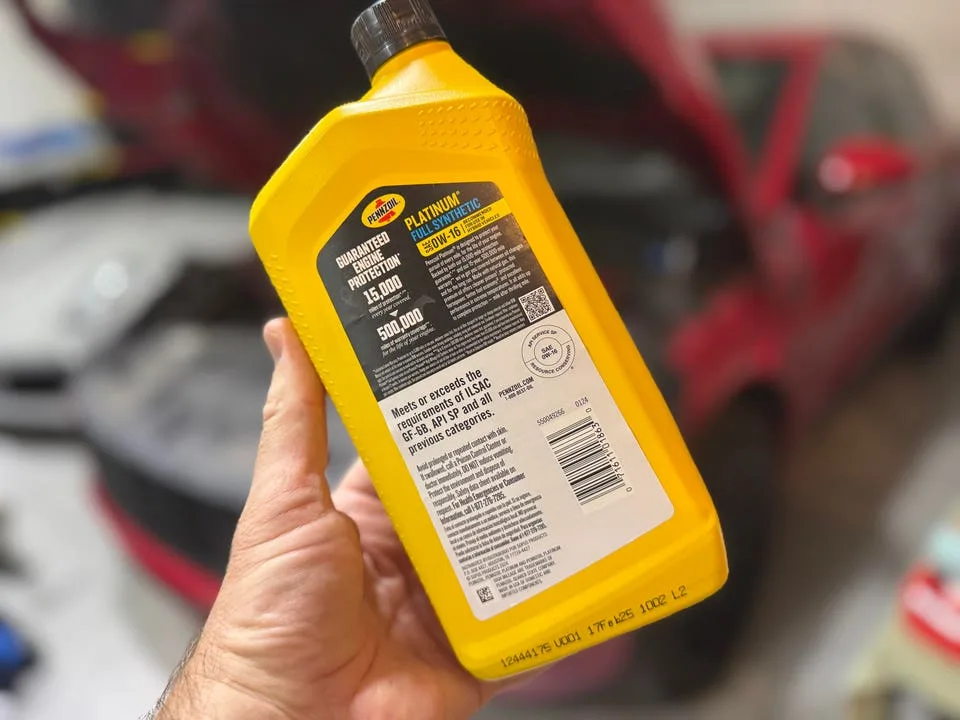
The API donut shows the current service category (SP is the latest for gasoline as of 2026), the SAE viscosity grade, and any energy-conserving claim. The ILSAC starburst confirms the oil passes fuel-economy and emissions-system compatibility tests. Both symbols mean the oil is licensed, not just labelled.
dexos1 Gen 3, MB 229.5, VW 508.00, BMW LL-01, Ford WSS-M2C961-A1
OEM approvals are stricter than API or ILSAC. They involve OEM-specific engine test protocols and paid licensing.
- GM dexos1 Gen 3 covers modern GM gasoline engines and specifically addresses LSPI protection.
- Mercedes-Benz MB 229.5 is a long-life spec for older MB gasoline engines. MB 229.51 and 229.71 apply to newer, particulate-filter-equipped models.
- VW 508.00 is the current fuel-economy spec for VW Group gasoline engines. VW 502.00 covers earlier models.
- BMW Longlife-01 fits older BMW gasoline engines. LL-04 and LL-14 FE+ cover newer, low-SAPS applications.
- Ford WSS-M2C961-A1 is Ford's current spec for many EcoBoost engines.
Check your owner's manual for the exact approval your engine requires. An API SP oil without the matching OEM approval can still void your warranty on a European car.
Who Actually Needs Full Synthetic (And Who's Fine Without It)
Not every engine benefits equally. The value scales with heat, boost, and drain interval.
You need full synthetic if you drive:
- Any turbocharged engine (LSPI protection is non-negotiable)
- A gasoline direct-injection engine built after 2011
- A hybrid (frequent stop-start cycles cook conventional oil)
- A European vehicle (VW, BMW, Mercedes, Audi, Porsche, Volvo)
- A modern diesel with a DPF (needs low-SAPS synthetic)
- Anything in extreme cold or extreme heat regularly
You're probably fine with conventional or synthetic blend if you drive:
- A pre-2005 port-injection engine with no OEM synthetic requirement
- A carbureted classic or vintage engine
- A commuter with short intervals in a temperate climate
Even then, aggregate reliability data suggests modern full synthetic reduces long-term wear enough to justify the extra spend on almost any engine.
Common Mistakes That Cost People Engines and Warranties
The oil aisle is a minefield of small errors that add up to big repair bills. These are the ones the service bay sees most.
- Ignoring the OEM spec. An API SP synthetic that lacks dexos1 Gen 3 will void your GM powertrain warranty even if it costs $12 a quart.
- Wrong viscosity. Running 5W-30 in an engine that calls for 0W-20 can throw off variable valve timing and hurt fuel economy. Running 0W-20 in an engine that calls for 5W-40 drops HTHS below safe levels.
- Mixing SAPS levels. Full-SAPS oil in a diesel with a DPF will clog the filter. It's an expensive fix.
- Assuming "synthetic" is one product. A $22 Group III synthetic and a $58 Group IV racing synthetic both say "synthetic" on the front. They aren't interchangeable in a boosted engine driven hard.
- Overextending drain intervals blindly. Just because the jug says "up to 20,000 miles" doesn't mean your driving pattern supports it.
- Skipping the filter. A premium oil paired with a bargain-bin filter defeats the purpose. Match the filter grade to the oil.
Realistic Drain Intervals: What the Oil Life Monitor and UOA Actually Tell You
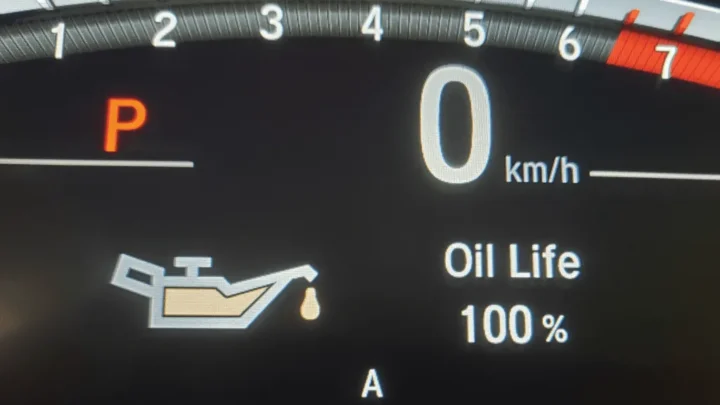
Modern oil life monitors (OLMs) don't measure oil directly. They calculate remaining life from engine load, temperature, RPM, and cold-start data. The output is usually accurate within about 15% of what a lab would call for.

For a real answer, run a used oil analysis (UOA) through an accredited lab. A UOA measures wear metals, viscosity retention, TBN depletion, and fuel dilution. It tells you exactly how much life is left in your oil under your driving pattern.
Some rough guidance for full synthetic under normal driving:
- Severe-duty (short trips, towing, extreme heat or cold): 5,000 to 7,500 miles
- Normal daily driving: 7,500 to 10,000 miles
- Highway-heavy driving in mild climates: 10,000 to 15,000 miles
Trust the OLM as a starting point. Trust a UOA as the final word. Never let a car go longer than 12 months between changes regardless of mileage, because oil oxidises even sitting still.
What Full Synthetic Costs in 2026 and Whether It's Worth It
Full synthetic runs $28 to $55 for a 5-quart jug at retail in the US, depending on brand and spec. Premium Group IV PAO oils and OEM-approved Euro specs push toward the top of that range.
| Oil Category | Typical 5-Quart Price (2026) | Cost Per Mile at 10,000-Mile Interval |
|---|---|---|
| Conventional | $18 to $25 | ~$0.0025 |
| Synthetic Blend | $22 to $32 | ~$0.0032 |
| Full Synthetic (Group III) | $28 to $42 | ~$0.0038 |
| Full Synthetic (Group IV / Euro spec) | $45 to $65 | ~$0.0055 |
The extra $2 to $4 a month is trivial next to a $4,000 turbo replacement or a $12,000 engine. On any modern vehicle, full synthetic pays for itself in avoided wear.
Myths About Synthetic Oil That Won't Die
A few claims refuse to go away. All of them are wrong.
- "Synthetic causes leaks in older engines." False. Modern synthetics contain seal conditioners. If an older engine leaks after switching, it was going to leak anyway because the synthetic cleaned the sludge that was plugging the gap.
- "Once you switch to synthetic, you can never go back." False. You can switch between conventional and synthetic freely. It's not a one-way door.
- "Synthetic voids warranties on older cars." False. The Magnuson-Moss Warranty Act protects your right to use any oil meeting the OEM spec.
- "All full synthetics are basically the same." False. Group III, Group IV, and Group V base stocks perform very differently under heat and load.
- "You have to change synthetic at 3,000 miles like conventional." False. That interval was built for 1970s mineral oil and is pure waste with modern lubricants.
Pro Tips From the Service Bay
A few small habits that separate a well-maintained engine from a struggling one:
- Change the oil filter every time. A partially clogged filter opens the bypass valve and sends unfiltered oil straight to your bearings.
- Warm the engine gently for the first 30 seconds after a cold start. Don't rev it while the OLM light is still amber.
- Check oil level monthly, not just at oil changes. Modern turbo engines can burn a quart every 3,000 miles as normal.
- Recycle used oil at any auto parts store or municipal collection site. Never pour it down a drain.
- Save your oil change receipts and OEM approval documentation. That paper trail protects your warranty if a claim comes up.
Frequently Asked Questions
Is full synthetic oil worth the extra money?
Yes for any modern engine. Turbo, GDI, hybrid, and Euro engines require it, and even older engines see reduced wear and longer service life. The extra $10 to $25 per change is insurance against thousand-dollar repairs.
Can I mix full synthetic with conventional oil?
Yes. All motor oils meeting the same API service category are chemically compatible and can be mixed safely. You'll dilute the synthetic's performance benefits, but you won't cause any damage.
Use it as an emergency top-off only.
How often should I change full synthetic oil?
Follow the OEM interval, usually 7,500 to 10,000 miles for most modern cars, up to 15,000 for some Euro long-life specs. Trust the oil life monitor and shorten the interval if you drive short trips, tow, or see extreme temperatures often.
Does full synthetic actually improve fuel economy?
Marginally. Aggregate testing shows 1% to 2% improvement over conventional, mostly from lower internal friction and lower viscosity grades like 0W-16 and 0W-20. The savings alone won't pay for the upgrade, but reduced wear will.
What's the difference between full synthetic and synthetic blend?
Full synthetic uses only Group III, IV, or V base oils. Synthetic blend is mostly conventional Group II base with a small percentage of synthetic added. Blends cost less but don't match full synthetic's drain intervals, cold-start flow, or high-heat stability.

Similar Posts