What Is Synthetic Blend Oil? A Simple Guide for Drivers
Walk down any auto parts aisle and you'll spot bottles labeled "synthetic blend" sitting right between the cheap conventional oil and the pricey full synthetic. Understanding what is synthetic blend oil matters because that middle-shelf bottle isn't just a cost compromise. It's a specific type of engine lubricant.
Mineral oil is mixed with a portion of synthetic base stock, giving you a real performance bump without full synthetic prices.
Per American Petroleum Institute service categories current as of 2026, most blends carry the same API SP and ILSAC GF-6 ratings as their full synthetic counterparts. The catch is the synthetic ratio isn't printed on the bottle. Industry surveys suggest most blends contain between 10 and 30 percent synthetic base oil.
That single detail changes everything about when a blend is worth buying.

What Synthetic Blend Oil Actually Is (In Plain English)
Synthetic blend motor oil is a mix of conventional petroleum-based oil and a smaller portion of synthetic base stock, combined with a standard additive package. Some folks call it "semi-synthetic," "part-synthetic," or "synthetic-fortified." All those names point to the same thing.
The idea is simple. Straight conventional oil is cheap but breaks down faster under heat. Full synthetic holds up longer but costs roughly double.
A blend splits the difference, using synthetic base oils to boost the parts of performance where mineral oil struggles most, mainly cold flow and oxidation resistance.
Here's the honest bit most bottles won't tell you. There's no legal minimum ratio for a product to be called "synthetic blend" in the United States. That means one brand's blend might be 15 percent synthetic while another sits closer to 30.
The label rarely says.
The Quick Answer: Is Synthetic Blend Right for Your Car?
Synthetic blend oil suits daily drivers, older sedans, and light-duty trucks that don't require full synthetic. It offers better heat and cold protection than conventional oil at a lower price than full synthetic. Most blends run 5,000 to 7,500 miles between changes.
Skip the blend if your owner's manual specifies full synthetic. Turbocharged and direct-injection engines need the real thing.
How Synthetic Blend Oil Is Made: Base Stocks and Ratios
Every motor oil starts with a base stock, and the American Petroleum Institute sorts those base stocks into five groups. Group I and Group II are conventional mineral oils, refined from crude. Group III is heavily hydrocracked mineral oil that behaves so much like true synthetic that it's legally sold as synthetic in the US.
Group IV (PAO, or polyalphaolefin) and Group V (esters and specialty stocks) are the truly engineered synthetics.
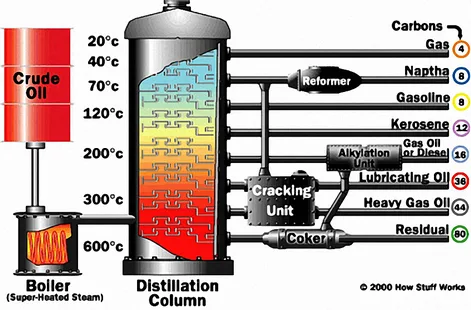
A synthetic blend is typically built on a Group II mineral base with a percentage of Group III or Group IV synthetic mixed in. The blender then drops in the additive package, roughly 15 to 25 percent of the finished product by volume.
Two things to keep in mind about the ratio:
- Manufacturers rarely disclose exact percentages because the recipe is proprietary.
- A "high mileage synthetic blend" often carries a richer synthetic fraction plus extra seal conditioners.
The takeaway is that not all blends are equal. Two bottles at the same price point can perform noticeably differently. That's why the API and ILSAC certification symbols on the label matter far more than the marketing copy on the front.
What's Actually Inside the Bottle: Additives and Performance Traits
Base oil is only part of the story. Roughly 15 to 25 percent of every quart is a chemical cocktail engineered to keep your engine clean, cool, and protected under load.
Here's what that additive package typically includes:
- Detergents that keep piston crowns and ring lands clean.
- Dispersants that hold soot and combustion byproducts in suspension so they drain out at your next change.
- Anti-wear additives like ZDDP (zinc dialkyldithiophosphate) that form a sacrificial film on metal surfaces.
- Viscosity index improvers that keep oil flowing across a wide temperature range.
- Friction modifiers that squeeze out a fraction of a percent in fuel economy.
- Anti-foaming agents, corrosion inhibitors, and seal conditioners.
The performance traits worth knowing on a blend:
- Better cold-start flow than conventional, so less dry running at startup.
- Higher oxidation stability, meaning the oil takes longer to sludge up.
- Lower NOACK volatility than pure mineral oil, so less oil boils off in a hot engine.
- Shear stability that's a step above conventional but still below premium full synthetic.
If you're planning to handle the change yourself, our step-by-step engine oil walkthrough covers filter selection, drain plug torque, and dipstick checks in detail.
Synthetic Blend vs. Conventional vs. Full Synthetic: The Real Differences
The three oil types share the same basic job. They lubricate, cool, and clean your engine. What separates them is how they're built and how long they last.
Base Oil Quality Compared
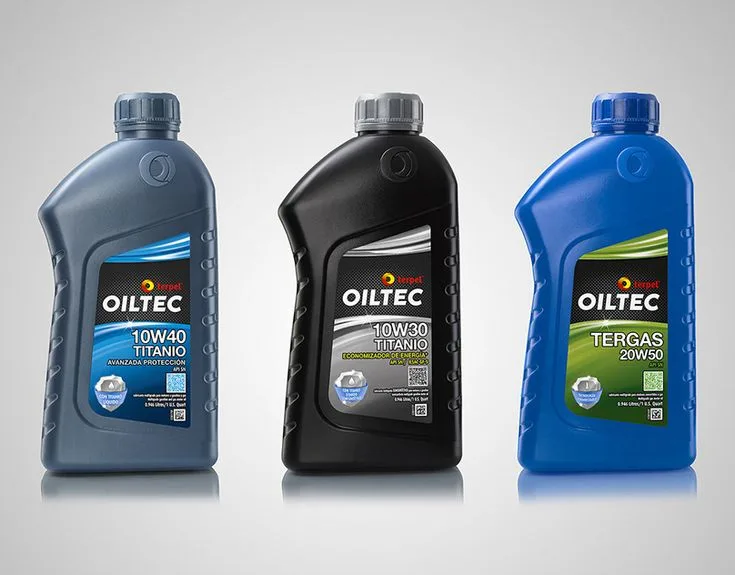
Conventional oil uses Group I or II base stocks straight from a refinery. Synthetic blend adds a slice of Group III or IV to the same mineral base. Full synthetic runs on Group III, IV, or V exclusively, giving you tighter molecular consistency and better performance at temperature extremes.
That consistency is why full synthetic resists thermal breakdown, protects against low-speed pre-ignition (LSPI) in turbo engines, and keeps timing chains from stretching in modern direct-injection motors.
Drain Interval Differences
Drain interval is where the price gap shows its value.
| Oil Type | Typical Drain Interval | Base Stock |
|---|---|---|
| Conventional | 3,000 to 5,000 miles | Group I / II |
| Synthetic Blend | 5,000 to 7,500 miles | Mostly Group II with Group III/IV |
| Full Synthetic | 7,500 to 15,000 miles | Group III, IV, or V |
Manufacturer recommendations always override these ranges. If your dash oil-life monitor calls for a change at 6,200 miles on a blend, trust it.
Cost Per Mile Breakdown
Per-quart price isn't the whole picture. Cost per mile is.
| Oil Type | Price Per Quart | 5-Quart Change | Cost Per 10,000 Miles |
|---|---|---|---|
| Conventional | $4 to $6 | $20 to $30 | Roughly $60 |
| Synthetic Blend | $5 to $8 | $25 to $40 | Roughly $50 |
| Full Synthetic | $8 to $12 | $40 to $60 | Roughly $40 |
Full synthetic often works out cheaper over the long haul because you change it half as often. A blend lands in the middle on both sticker price and total cost. Shopping for a used vehicle and want to know what oil the previous owner ran?
Our used car pre-purchase checklist covers the service records and dipstick tells that give it away.
When Synthetic Blend Is the Smart Choice
A blend earns its place when the price-to-performance math actually works in your favor. That usually means an older car, a modest driving pattern, and no factory spec forcing you toward full synthetic.
Situations where a blend makes sense:
- Vehicles from roughly 2005 to 2015 with naturally aspirated engines and no direct injection.
- Daily commuters that see mostly steady highway miles.
- Light-duty pickups and SUVs used for errands and occasional weekend loads.
- Sedans with 60,000 to 150,000 miles on the odometer that don't yet burn oil.
- Drivers who change oil themselves and prefer 5,000 mile intervals.
- Fleet vehicles on fixed service schedules where drain intervals stay short.
If your climate stays moderate and your engine already runs conventional without issue, stepping up to a blend adds a real buffer against sludge and cold-start wear. It's a low-risk upgrade.
The catch is that you should still match the exact viscosity grade in your owner's manual. A 5W-20 blend and a 5W-30 blend aren't interchangeable. Going off spec can cost you fuel economy or long-term wear protection.
When You Should Skip the Blend and Go Full Synthetic
Some engines aren't candidates for a blend at all, and pouring one in can cause real trouble down the road. Modern powertrains are far more sensitive to oil quality than the engines of even a decade ago.
Go full synthetic instead when any of these apply:
- Your owner's manual specifies full synthetic. Ignoring that spec can void the powertrain warranty.
- The engine is turbocharged. Turbo bearings run hotter than 400 degrees Fahrenheit and coke up cheaper oils.
- Your vehicle uses gasoline direct injection (GDI). Full synthetic reduces low-speed pre-ignition (LSPI) events.
- The engine calls for a low-viscosity grade like 0W-20 or 0W-16. Blends rarely meet the cold-flow targets required.
- You tow heavy loads, drive in stop-and-go traffic in summer heat, or track your car.
- The manual references API SP, Dexos1 Gen 3, or a specific OEM approval like Ford WSS-M2C, VW 508.00, or MB 229.71.
Full synthetic also makes sense once your oil-life monitor stretches drain intervals past 7,500 miles. A blend simply won't hold up that long under thermal load without oxidizing.
Situations Where Conventional Oil Still Wins
Straight conventional oil isn't dead. It still has a place in the right vehicle.
Conventional works well for:
- Older engines built before roughly 2000 that were designed around Group I and II mineral oils.
- Small-engine equipment like mowers, generators, and outboard motors when spec allows.
- Vehicles operated on very short drain cycles (say, 3,000 miles for taxi or delivery work).
- Break-in oil for freshly rebuilt engines, when the builder specifically calls for it.
The one place conventional beats a blend is cost per change if your interval is genuinely short. If you drain every 3,000 miles regardless, paying extra for synthetic content you'll never fully use is money wasted.
That said, aggregate maintenance data suggests most drivers stretch changes well past 3,000 miles anyway. In that scenario, the blend's extra protection is cheap insurance.
Reading the Label: API, ILSAC, ACEA, and Dexos Explained
The certifications on the back of the bottle tell you more than the front-panel marketing ever will. Learn the four you'll actually see.

The API Donut and Starburst
The circular "API Service Symbol" (the donut) shows the current service category (SP as of 2026), the SAE viscosity grade, and any energy-conserving claim. The starburst next to it is the ILSAC certification mark. Any oil carrying it meets the current GF-6A or GF-6B standard for gasoline engines.
ACEA Sequences (European Cars)
If you own a European vehicle, look for the ACEA code instead. Codes like C3, C5, or A5/B5 tell you the oil meets European Automobile Manufacturers' Association performance sequences. Many BMW, Audi, and Mercedes engines require these.
Dexos and OEM Approvals
GM vehicles built after 2011 typically require Dexos1 Gen 3 for gasoline engines or Dexos D for diesels. The Dexos logo on the front confirms licensed compliance. Ford, Chrysler, and VW each have their own equivalents (WSS-M2C, MS-series, and VW 5xx codes respectively).
Bottom line: a synthetic blend that meets API SP, ILSAC GF-6, and your OEM approval is functionally equivalent to a full synthetic on paper. The difference shows up in how long that protection lasts under load.
Matching Viscosity Grade to Your Engine and Climate
Viscosity is the single spec you cannot afford to get wrong. It controls how easily oil flows at cold start and how well it holds a protective film at operating temperature.
The SAE J300 standard defines every grade you'll see. The first number with a "W" is the cold-crank rating (winter). The second number is the high-temperature viscosity at 100 degrees Celsius.
| Grade | Best For | Climate Fit |
|---|---|---|
| 0W-20 | Modern hybrids, small turbo engines | All climates, especially cold winters |
| 5W-20 | Late-model Fords, Hondas, Toyotas | Moderate to cold |
| 5W-30 | Most 2000 to 2020 gasoline engines | Universal |
| 10W-30 | Older engines, warm climates | Hot regions, higher-mileage motors |
| 10W-40 | Vintage engines, some motorcycles | Warm climates only |
Rules of thumb worth following:
- Always match the grade printed on your oil cap or in the owner's manual first.
- Colder climates favor a lower first number (0W or 5W) for faster startup flow.
- Hot climates and high-load driving tolerate a higher second number (30 or 40).
- Never jump two grades away from spec (going from 5W-20 to 10W-40 is a bad idea).
If your dipstick reads dark and thin just a few thousand miles into a change, the oil is shearing down. That's a signal to move up from a blend to a full synthetic of the same viscosity.
How Long Synthetic Blend Really Lasts Between Changes
Most synthetic blends run cleanly for 5,000 to 7,500 miles under normal driving. Highway commuters at the top end of that range. City drivers and short-trip vehicles at the bottom.
Three things shorten the interval fast:
- Repeated short trips under 10 miles that never let the oil reach full operating temperature.
- Extreme heat, dust, or heavy towing (all classified as "severe service").
- Cold-climate winter driving with frequent cold starts.
If your vehicle has an oil-life monitor, trust it over the mileage rule. Modern algorithms track engine load, rpm, coolant temperature, and startup conditions to predict when the additive package is spent. When the light flips on, change it.

Similar Posts





















