DOHC Engine Explained: What It Is & How It Works
If you’ve ever wondered what is a DOHC engine, the answer lies in its camshaft configuration. It’s a design where two separate shafts sit atop the cylinder head to operate valves independently. This setup allows for precise control over air and fuel flow, boosting efficiency and power potential.
Understanding this architecture requires visualizing the internal geometry. Unlike simpler designs, DOHC eliminates pushrods, reducing weight and inertia. As of 2026, most modern performance cars rely on this layout.
Let’s break down why seeing the components matters more than just reading about them.
Why You Can’t Understand DOHC Without Seeing It
Text descriptions often fail to convey the spatial relationships inside an engine. You need to picture the two camshafts sitting parallel above the pistons. This arrangement dictates how valves open and close relative to each other.
Without a diagram, the concept of "dual" overhead cams feels abstract. Readers struggle to grasp why two shafts are better than one. The physical placement determines port shape and combustion chamber size.
These factors directly influence airflow velocity and engine breathing.
Visual aids clarify the lack of rocker arms in many designs. In a Single Overhead Cam (SOHC) engine, rockers transfer motion from one shaft. DOHC removes this intermediate step.
The lobes press directly onto the valves or followers. This direct actuation reduces energy loss.
Consider the cross-section view. You see intake ports on one side and exhaust on the other. The cams align perfectly with these banks.
This symmetry is hard to describe verbally. A quick glance at a schematic makes it obvious. That’s why engineers always start with drawings before building prototypes.
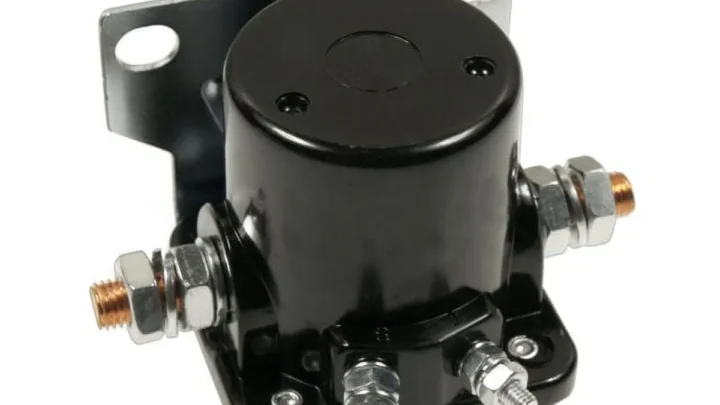
If you’re curious about other engine basics, understanding what does a starter do helps contextualize the entire ignition system.
Anatomy of the Cylinder Head: Visualizing the Two Cams
The cylinder head houses the critical components of the valvetrain. In a DOHC setup, you’ll find two distinct camshafts. One controls the intake valves, while the other manages the exhaust valves.
They rotate synchronously, driven by a timing chain or belt.
Look closely at the valve angles. DOHC engines typically feature steeper valve angles compared to older designs. This geometry allows for larger diameter valves.
Bigger valves mean more air can enter the combustion chamber. This improves volumetric efficiency, especially at higher RPMs.
Intake and Exhaust Shaft Placement
The intake cam sits closer to the throttle body or turbocharger. The exhaust cam positions near the manifold outlet. This separation optimizes heat management.
Exhaust gases are hot, so isolating that cam protects sensitive components.
Manufacturers specify these layouts in service manuals. For instance, Honda’s K-series engines use a specific offset for their VTEC systems. Toyota’s Valvematic technology adjusts lift dynamically.
Both rely on the dual-shaft foundation.
| Component | Function in DOHC | Visual Cue |
|---|---|---|
| Intake Camshaft | Opens intake valves | Located on cold side of head |
| Exhaust Camshaft | Opens exhaust valves | Located on hot side of head |
| Valve Springs | Return valves to closed position | Coiled around valve stems |
| Timing Chain/Belt | Synchronizes both cams | Wraps around sprockets at front/rear |
The Elimination of Pushrods and Lifters
Pushrod engines place the camshaft low in the block. Long rods transfer motion upward. DOHC places the cams high, eliminating these heavy parts.
This reduction in reciprocating mass is key. Lighter components accelerate faster.
You don’t see lifters ticking in a well-maintained DOHC. The direct contact minimizes slop. However, some designs still use roller finger followers.
These small levers reduce friction further. Imagine a lever pressing down on a valve stem. That’s the basic mechanical action.
Understanding this flow helps when diagnosing noises. If your car struggles to crank, check signs of a bad starter first, as electrical issues mimic mechanical faults.
How DOHC Changes Engine Behavior at High RPM
High revolutions per minute demand rapid valve movement. At 7,000 RPM, valves open and close hundreds of times per second. Any hesitation causes power loss.
DOHC excels here because of reduced inertia.
Lighter valvetrain components react faster to cam lobe profiles. There’s less mass to move. This means the engine can rev higher without risking valve float.
Valve float occurs when springs can’t close valves quickly enough. Pistons might then strike open valves. Catastrophic damage follows.
Reduced Valvetrain Inertia Explained Visually
Picture a heavy door versus a light screen door. The heavy one swings slowly. The light one snaps shut instantly.
DOHC acts like the screen door mechanism. The cams drive the valves directly or via short followers.
This precision allows for aggressive cam profiles. Engineers design lobes with sharp ramps. These ramps open valves wider and faster.
SOHC engines often limit this due to rocker arm flex. Flex absorbs energy. DOHC avoids that waste.
Per SAE International technical papers, reducing valve train mass improves transient response. Drivers feel immediate acceleration. Turbocharged engines benefit most.
Boost pressure builds quickly if airflow isn’t restricted. You can verify peak performance metrics against manufacturer specs. Always consult official documentation for exact redline limits.
Stability Limits and Valve Float Prevention
Spring tension must match cam speed. Too soft, and valves float. Too stiff, and you lose power at lower RPMs.
DOHC allows independent tuning for intake and exhaust.
Intake valves need big openings for airflow. Exhaust valves need durability against heat. Separate cams let engineers optimize each bank differently.
An intake cam might have a long duration profile. The exhaust cam focuses on early closing to retain torque.
This flexibility is invisible in text but clear in diagrams. Look at the lobe shapes. They differ between the two shafts.
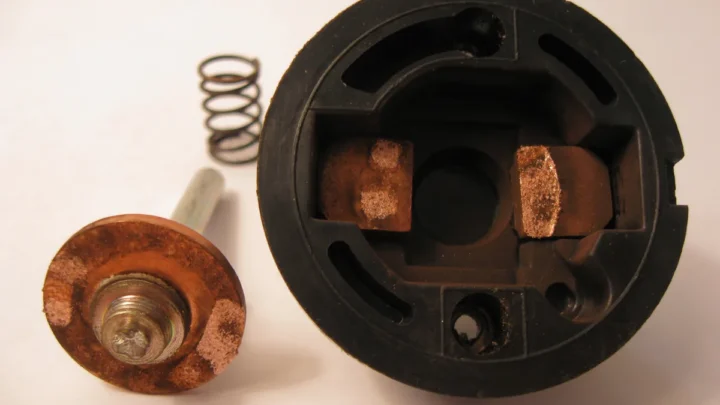
That asymmetry drives efficiency. If you hear unusual rattling during startup, investigate symptoms of a bad starter solenoid to rule out electrical engagement issues before assuming mechanical failure.
Common Visual Misinterpretations and Mechanical Pitfalls
Misunderstanding DOHC leads to costly errors. Many assume all dual-cam engines are interference types. Others confuse transverse mounting with longitudinal orientation.
Visual clarity prevents these mistakes.
Interference engines risk piston-to-valve collision if timing fails. Non-interference designs allow valves to stay open safely. Diagrams show clearance gaps.
Text rarely conveys this margin accurately. You must see the piston crown shape relative to the valve pocket.
Confusing DOHC Layouts in Transverse vs. Longitudinal Engines
Transverse engines mount sideways. Space is tight. Mechanics often remove accessories to access cams.
Longitudinal engines run lengthwise. Access differs significantly.
In a transverse setup, the timing chain usually runs at the rear. In longitudinal, it’s often at the front. Assuming otherwise causes confusion during repairs.
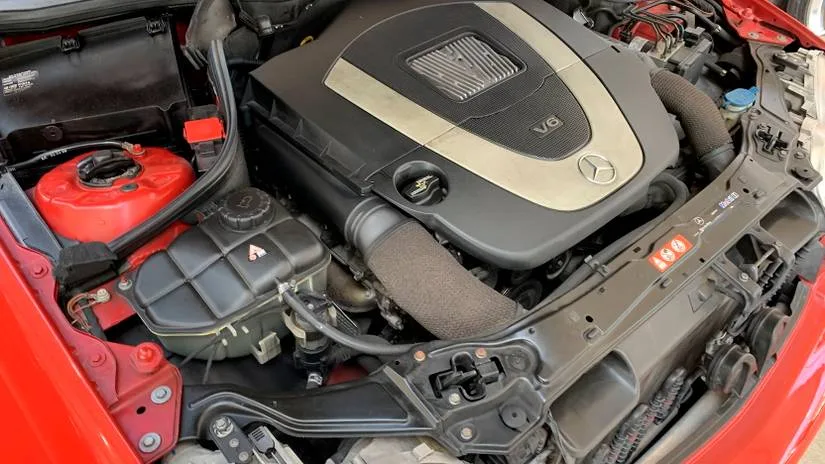
Photos of the actual engine bay help orient technicians.
Also, note the oil passages. DOHC heads require consistent lubrication to the top. Blocked galleries cause premature wear.
Visual inspection of bolt holes reveals passage alignment. Missing this step risks seizing cams. Regular maintenance checks prevent such failures.
Ensure you know how proper engine oil specifications work principles apply broadly: correct fluid levels matter everywhere.
Identifying Interference Risks from Timing Chain/Belt Paths
Timing belts snap unexpectedly. Chains stretch over time. Both disrupt synchronization.
When this happens in an interference engine, disaster strikes.
Diagrams illustrate the worst-case scenario. Pistons rise as valves remain open. Metal meets metal.
Bent valves result. Destroyed pistons follow. Repair bills skyrocket.
Non-interference engines have recessed valve pockets. Pistons miss them even if timing slips. Knowing which type you own saves money.
Check owner’s manuals. They specify interference status explicitly. Never guess based on brand reputation alone.
Some manufacturers switch designs mid-production year. Verify VIN-specific details.
Spotting Wear Patterns on Cam Lobes and Followers
Wear tells a story. Flat spots on lobes indicate slippage. Scoring on followers suggests debris.
Visual examination under magnification reveals these flaws.
Oil starvation causes scoring. Low pressure leaves marks. Technicians look for shiny patches on matte surfaces.
These anomalies signal trouble. Early detection prevents total failure. Cleanliness matters.
Debris accelerates wear. Use proper filtration. Consider switching to full synthetic oil for better protection in extreme conditions.
Practical Applications: Where DOHC Architecture Shines
DOHC isn’t just for race cars. It dominates modern commuter vehicles too. Efficiency mandates drive adoption.
Governments enforce strict emissions standards.
Turbocharging pairs perfectly with DOHC. Forced induction demands precise valve timing. Dual cams deliver that control.
Small displacement engines gain significant power. Downsizing trends favor this combination.
Turbocharged Performance Builds
Boost pressure forces more air into cylinders. Valves must open fully and quickly. DOHC handles high-pressure cycles well.
Reinforced springs resist fatigue.
Enthusiasts swap cams for custom profiles. Adjustable timing gears offer fine-tuning. Visual guides help install these mods correctly.
Incorrect alignment hurts performance. Precision is paramount.
Modern Efficiency-Focused Commuter Cars
Daily drivers prioritize fuel economy. Variable Valve Timing (VVT) works best with DOHC. Systems adjust cam angle on the fly.
Optimal overlap reduces pumping losses.
Honda’s Earth Dreams and Toyota’s Dynamic Force engines exemplify this. They achieve high compression ratios safely. Knock sensors monitor combustion.
DOHC stability supports these advanced features. Reliability remains high despite complexity. Maintenance schedules reflect this sophistication.
Follow factory intervals strictly. Neglect leads to expensive repairs later.
Maintenance Insights: What to Look For Under the Cover
DOHC heads put everything within sight, which makes top-end checks easier than most drivers expect. With the valve cover off, you can eyeball the parts that fail most. Here's where we'd start.
Inspecting Timing Components for Stretch or Slack
Rubber belts tell on themselves. Look for cracks across the ribbed side, glazing on the teeth, or frayed edges. A photo of a fresh belt next to a worn one shows the difference instantly.
Chains hide inside the engine, but they announce trouble through sound. A rattle on cold starts that fades once oil pressure builds is the classic stretch symptom. Stretched chains also trigger camshaft and crankshaft correlation codes, so scan a check engine light before driving on.
Some engines carried known chain wear issues, and open recalls show up through NHTSA's recall lookup.
Checking Hydraulic Lash Adjuster Health
Most modern DOHC heads use hydraulic lash adjusters that self-adjust with oil pressure. A tick on cold starts that fades within thirty seconds usually means an adjuster bled down overnight. That's often harmless.
A tick that never quits points to a worn lobe or a stuck adjuster.
Oil condition drives all of it. Thin or dirty oil lets adjusters leak down faster. Once an engine passes 75,000 miles, oils blended for aging seals hold pressure better in the top end.
Recognizing Oil Leak Sources Around Cam Seals
Cam seals and spark plug tube seals sit at the very top of the head. Heat hardens them over time, and leaks show up in predictable spots. The table below maps what you see to what's actually failing.
| Symptom | Likely Culprit | What a Photo Shows |
|---|---|---|
| Oil in plug wells | Hardened tube seals | Wet pooling around plug boots |
| Film on timing cover | Cam seal weeping | Streaks below the cam gear |
| Burning smell after driving | Valve cover gasket | Oil dripping onto the exhaust |
| Glazed belt teeth | Gasket leak contaminating belt | Oil soaking the belt face |
Caught early, these are cheap gasket jobs. Ignored, oil-soaked belts can fail months ahead of schedule, and you've already seen what that costs on an interference design.
Frequently Asked Questions About DOHC Configurations
We pulled the five questions that come up most often.
Is a DOHC engine better than a SOHC engine?
Not automatically. DOHC breathes better at high RPM and allows independent intake and exhaust cam timing, which is why it dominates modern performance and efficiency engines. SOHC costs less to build and repair.
Both designs routinely pass 200,000 miles when service intervals get followed.
Does DOHC always mean four valves per cylinder?
No. Early DOHC engines ran two valves per cylinder, including Alfa Romeo's classic Bialbero designs. Yamaha later built DOHC heads with five valves per cylinder.
The cam count and valve count are separate engineering choices, even though four valves became the modern norm.
What happens when a timing belt breaks on a DOHC engine?
It depends on the design. In interference engines, pistons strike the open valves, bending them and often damaging pistons and the head itself. Non-interference engines usually escape with just a tow bill.
Manufacturer specifications confirm most modern DOHC fours fall into the interference category.
How can you tell if your engine is DOHC?
Start with the valve cover. Many carry DOHC or Twin Cam badges. Under the cover, a cutaway would show two camshafts running parallel above the valves, one for intake and one for exhaust.
The owner's manual or a VIN decode settles it without any disassembly.
Are DOHC engines more expensive to maintain?
Usually, yes. There are more parts in the head, and reaching the cams takes more disassembly. Timing belt jobs on DOHC engines commonly cost several hundred dollars more than comparable SOHC service because both shafts need precise alignment.
Chain-driven designs trade that scheduled interval for possible stretch repairs later.
Similar Posts