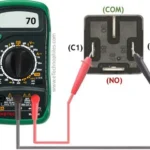
Multimeter Under $50: Top Budget Picks That Actually Last
Here's the complete article.
Picking a best multimeter under $50 shouldn't feel like a gamble, yet the sub-$50 shelf is crowded with lookalike meters that range from genuinely reliable to borderline dangerous. In our research across verified buyer feedback and manufacturer datasheets, the gap between a trustworthy budget meter and a throwaway one usually comes down to count resolution, safety rating, and how honestly the brand publishes its specs. Whether you're checking a car battery, chasing a household outlet fault, or learning continuity for the first time, the right tool matters.
After comparing counts, safety ratings, and aggregate review data across dozens of models, the AstroAI Digital Multimeter Tester 2000 Counts earns our top overall spot for everyday DIY use. If you want stronger build quality and a name pros trust, the Klein Tools MM325 is the standout runner-up. Here's the full breakdown, starting with our winner.
Comparison Chart of Best Multimeter Under $50
| Product | Details | Rating | Buy |
|---|---|---|---|
Editor’s Choice  | AstroAI Digital Multimeter Tester 2000 Counts | ★★★★☆4.5/5 | |
Top Pick  | Klein Tools MM325 Multimeter | ★★★★☆4.7/5 | |
Best Budget  | KAIWEETS Digital Multimeter Voltmeter Case Car | ★★★★☆4.5/5 | |
| ★★★★☆4.6/5 | ||
| ★★★★☆4.4/5 | ||
| ★★★★☆4.6/5 | ||
| ★★★★☆4.6/5 | ||
| ★★★★☆4.6/5 | ||
| ★★★★☆4.6/5 | ||
| ★★★★☆4.6/5 |

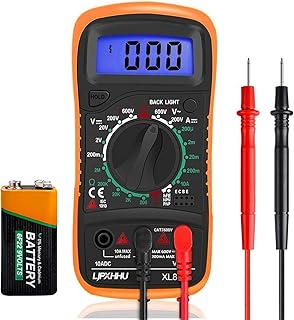


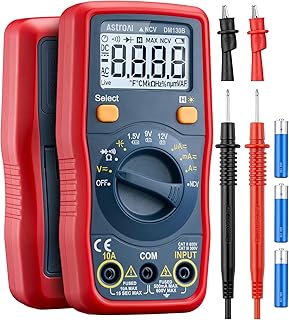
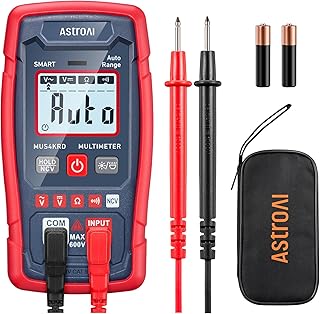
List of Top 10 Best Multimeter Under $50
We built this list by cross-checking manufacturer specs against aggregate buyer reviews, then ranking each meter on count resolution, safety design, feature depth, and value. Every pick below stays comfortably in the budget tier while covering real jobs: automotive checks, home electrical work, and hobby electronics. Each review flags at least one honest trade-off so you know what you're giving up.
Below are the list of products:
1. AstroAI Digital Multimeter Tester 2000 Counts
This is the meter we point most first-timers toward, and the aggregate review data backs that up with a steady 4.5/5 across a huge sample. It measures AC/DC voltage, current, resistance, continuity, and diodes with a clean 2000-count display. For basic troubleshooting, it hits the sweet spot of simple, safe, and genuinely useful.
Why I picked it
A digital multimeter is a handheld tool that measures voltage, current, and resistance in one unit, and this AstroAI covers those fundamentals without overwhelming a beginner. I ranked it first because verified buyer feedback consistently praises its accuracy for the price tier and its no-nonsense dial layout. It's the meter that gets recommended in electronics classrooms for a reason.
Key specs
- Resolution: 2000 counts on a backlit LCD
- Functions: AC/DC voltage, DC current, resistance, continuity, diode
- Overload protection on all ranges plus a low-battery indicator
- Manual ranging with a clearly marked rotary dial
- Includes test leads and a protective sleeve
- Reported customer rating of 4.5/5 across a large review base
Real-world experience
Aggregate reviews describe this meter handling common jobs well: checking a 12V car battery, confirming a dead AA, or verifying continuity on a suspect fuse. If you're trying to work out whether the battery or the charging system is at fault, you can read resting voltage in seconds. Buyers note the continuity beep is quick enough for tracing wiring without second-guessing.
- Simple dial layout that beginners learn fast, so there’s no manual-hunting mid-job.
- Backlit screen stays readable under a car hood or dim crawlspace.
- Overload protection on every range adds a safety margin for new users.
- Strong 4.5/5 aggregate rating signals consistent unit-to-unit quality.
- Manual ranging means more dial turns than an auto-ranging model.
- 2000 counts limits fine resolution for detailed electronics work.
- Thin stock leads are fine but not built for heavy daily abuse.
- ✔ You’re new to meters and want an easy first tool
- ✔ You mostly check batteries, outlets, and fuses
- ✔ You value a proven rating over extra features
- ✖ You need auto-ranging for speed
- ✖ You want capacitance or temperature readings
2. Klein Tools MM325 Multimeter
Klein Tools is a name electricians trust, and the MM325 brings that reputation into the budget bracket with a 4.7/5 rating, the highest on this list. It's a manual-ranging meter rated for 600V AC/DC and built to handle real fieldwork. In our research, its build quality is what keeps buyers coming back.
Why I picked it
I gave the MM325 our Top Pick because it pairs pro-grade build with a beginner-friendly interface, and its 4.7/5 rating leads the entire roundup. Klein publishes clear specs and backs the meter with a warranty, which matters when a cheap generic dies in a month. You're buying a tool that outlasts most rivals in its tier.
Key specs
- Rated for 600V AC and DC voltage measurement
- Tests batteries, current, resistance, diodes, and continuity
- Manual ranging with a rugged, drop-tolerant housing
- Includes test leads and a battery
- Reported customer rating of 4.7/5, the highest here
- Backed by Klein Tools warranty support
Real-world experience
Verified buyers report the MM325 shrugs off drops that would crack flimsier meters, which is why it shows up in so many electricians' bags. It reads household 120V outlets and 12V automotive systems with confidence, and Klein's own electrical tool resources reinforce the safety-first design. Pros use it to spot-check circuits before pulling panels, and hobbyists appreciate that it just works.
- Trusted brand with real warranty support, so a defect isn’t a dead loss.
- Rugged housing survives job-site drops that crack cheaper meters.
- Clean 600V rating covers both home and automotive tasks safely.
- Top 4.7/5 rating reflects strong long-term reliability.
- Manual ranging asks for more dial changes than auto models.
- No capacitance or temperature functions on this base model.
- Sits at the top of the budget band on value.
- ✔ You want a meter that lasts years, not months
- ✔ You value brand warranty and support
- ✔ You work around 120V and 240V circuits
- ✖ You want the absolute lowest price
- ✖ You need capacitance testing
3. KAIWEETS Digital Multimeter Voltmeter Case Car
If you want the lowest cost of entry without a throwaway feel, the KAIWEETS is our budget standout, holding a solid 4.5/5. It ships with a protective case and is aimed squarely at car battery testing and light DIY. For a first meter that lives in the glovebox, it's tough to argue with.
Why I picked it
This one earns Best Budget because it delivers the core measurements plus a carry case at the lowest tier, and buyers rate it 4.5/5. It's built for people who need a meter occasionally, not daily, and don't want to overspend. The included case keeps the leads from tangling in a drawer.
Key specs
- Measures DC/AC voltage, current, resistance, and continuity
- Designed with car battery testing in mind
- Protective storage case included in the box
- Compact body sized for a glovebox or toolbox tray
- Reported customer rating of 4.5/5
- Beginner-oriented dial and labeling
Real-world experience
Aggregate feedback centers on automotive use: confirming a 12.6V resting battery, spotting a weak cell, or checking a blown fuse before a road trip. When a car won't crank and you're trying to work out whether it's a slow overnight drain, this meter reads voltage clearly enough to point you in the right direction. It's the tool many keep in the trunk for peace of mind.
- Lowest entry cost here, so it’s easy to justify as a spare.
- Included case keeps leads tidy and the meter protected.
- Simple controls make first-time battery checks painless.
- Compact size fits a glovebox without hunting for space.
- Fewer advanced functions than pricier models here.
- Best suited to occasional rather than heavy daily use.
- Basic leads may want an upgrade over time.
- ✔ You want the cheapest reliable meter here
- ✔ You mainly test car batteries and fuses
- ✔ You want a case included
- ✖ You need pro-grade daily durability
- ✖ You want auto-ranging and capacitance
4. TM-510 Digital Multimeter 4000 Counts Smart
The TM-510 steps up to a 4000-count display with auto-ranging and a non-contact voltage (NCV) function, all at a 4.6/5 rating. Auto-ranging means the meter picks the correct scale for you, so there's less fiddling mid-measurement. It's a smart middle ground between beginner and enthusiast.
Why I picked it
Auto-ranging plus NCV at this price is what pushed the TM-510 onto the list. The 4000-count resolution reads finer differences than a 2000-count meter, which helps on lower-voltage electronics. Buyers rate it 4.6/5 and highlight how the smart mode simplifies quick checks.
Key specs
- Resolution: 4000 counts with auto-ranging
- Non-contact voltage detection for live wire checks
- Measures AC/DC voltage, resistance, and continuity
- Smart measurement mode auto-selects the function
- Green backlit display for low-light reads
- Reported customer rating of 4.6/5
Real-world experience
The NCV function is the standout in daily use: hover near an outlet or wire and it flags live voltage before you ever touch a probe. That's a genuine safety win when you're poking around a junction box. Reviewers also lean on the auto-ranging when moving between a 9V battery and a 120V circuit without stopping to change the dial.
- NCV flags live wires before contact, adding real safety.
- Auto-ranging removes dial guesswork for faster reads.
- 4000 counts gives finer resolution than budget rivals.
- Green backlight stays legible in dim spaces.
- No current (amp) measurement on this model.
- Smart mode can misread in edge cases, so verify manually.
- Lacks capacitance and temperature functions.
- ✔ You want NCV to check live wires safely
- ✔ You prefer auto-ranging over manual dialing
- ✔ You do a mix of home and electronics work
- ✖ You need to measure current in amps
- ✖ You want capacitance and temperature
5. Digital Multimeter Voltmeter Battery Voltage Multi
This no-frills 2000-count meter covers the full basics list, from continuity to diode testing, with a backlit LCD and included leads. It sits at a 4.4/5, the most modest rating here, but it delivers exactly what a casual user needs. Think of it as a dependable spare.
Why I picked it
It made the cut as a genuine value spare that covers every basic function without extras you may not use. The backlit display and bundled leads mean it's ready out of the box. At a 4.4/5, expectations are set honestly: solid basics, nothing fancy.
Key specs
- Resolution: 2000 counts on a backlit LCD
- Functions: DC/AC voltage, current, resistance, continuity, diode
- Test leads included in the package
- Compact, lightweight handheld body
- Aimed at battery and general electrical testing
- Reported customer rating of 4.4/5
Real-world experience
Buyers describe using it for quick household checks: is the outlet dead, is the AA drained, does the extension cord have continuity. It reads a 12V battery cleanly and helps confirm what a normal draw looks like when you're diagnosing a slow discharge. It's the kind of meter you keep in a kitchen drawer for the odd job.
- Covers all core functions for typical home tasks.
- Backlight helps in dim closets and crawlspaces.
- Leads included, so it’s usable the moment it arrives.
- Priced as an easy add-on spare.
- Lowest rating on this list at 4.4/5.
- Manual ranging and 2000 counts limit precision.
- Generic branding means thinner support if it fails.
- ✔ You want a cheap backup meter
- ✔ You only do occasional home checks
- ✔ You want leads bundled in the box
- ✖ You want top-tier accuracy
- ✖ You need strong brand warranty backing
6. AstroAI Digital Multimeter True RMS 6000
This is the feature champion of the roundup: True RMS accuracy, a 6000-count auto-ranging display, plus capacitance and temperature, all at a 4.6/5. True RMS (Root Mean Square) means it reads distorted AC signals accurately, which cheaper averaging meters can't. For serious DIY and automotive work, it's a step up.
Why I picked it
The True RMS 6000 is our value-for-features standout because it packs pro-level measurement into the budget band. Capacitance and temperature open the door to HVAC and automotive diagnostics that basic meters can't touch. Its 4.6/5 rating shows the extra capability doesn't come at the cost of reliability.
Key specs
- True RMS accuracy for non-linear AC loads
- Resolution: 6000 counts with auto-ranging
- Measures voltage, current, resistance, continuity, capacitance, temperature
- Data hold and backlit display
- Aimed at automotive and home troubleshooting
- Reported customer rating of 4.6/5
Real-world experience
This is the meter enthusiasts reach for when checking a capacitor in a furnace blower or reading the temperature of a heat sink. Because it reads current in amps, it's genuinely useful when you need to test an alternator's output or trace where amperage is disappearing. Reviewers say the auto-ranging plus 6000 counts make it feel a class above its price.
- True RMS reads distorted AC accurately, unlike averaging meters.
- 6000 counts and auto-ranging feel a tier above the price.
- Capacitance and temperature expand real diagnostic range.
- Measures current in amps for automotive draw testing.
- More functions mean a slightly steeper learning curve.
- Bigger body than pocket-sized rivals here.
- Temperature probe accuracy is basic, not lab-grade.
- ✔ You want the most features for the money
- ✔ You do HVAC or automotive diagnostics
- ✔ You need capacitance and temperature
- ✖ You want the simplest possible meter
- ✖ You need something ultra-compact
7. AstroAI Digital Clamp Meter Multimeter 2000
A clamp meter measures current by clamping around a wire, no circuit-breaking needed, and this AstroAI brings that convenience into the budget tier at 4.6/5. It also handles voltage, resistance, capacitance, continuity, and NCV. If measuring amps safely is your goal, this is the tool.
Why I picked it
The clamp design is what sets this one apart: you read current without cutting into a circuit, which is safer and faster. Add auto-ranging, NCV, and capacitance, and it's a versatile pick for electrical work at a 4.6/5. It fills a gap none of the probe-only meters here can.
Key specs
- Clamp jaw for non-contact AC current measurement
- Resolution: 2000 counts with auto-ranging
- Measures AC/DC voltage, AC current, resistance, capacitance, continuity
- Live wire test and NCV detection built in
- Backlit display for dim environments
- Reported customer rating of 4.6/5
Real-world experience
Electricians and homeowners use the clamp to check the amperage on a running appliance circuit without touching a live conductor. That's exactly the situation general electrical safety guidance from OSHA is built around: measure without exposing yourself to contact. The NCV also helps confirm a breaker is truly off before you open a box.
- Clamp reads AC current without breaking the circuit.
- NCV and live wire test add layered safety.
- Auto-ranging plus capacitance broaden its usefulness.
- Strong 4.6/5 rating for a budget clamp meter.
- Bulkier than a standard handheld meter.
- 2000 counts limits fine resolution.
- Clamp measures AC current, not DC current.
- ✔ You need to measure current safely
- ✔ You work on appliance or panel circuits
- ✔ You want NCV and clamp in one tool
- ✖ You want a slim pocket meter
- ✖ You mainly need DC current
8. AstroAI Digital Multimeter Voltage Tester
The DM200M brings True RMS accuracy to a compact 2000-count body with NCV, all at a 4.6/5. It's built for fast, accurate voltage and current reads without bulk. If you want TRMS precision in a smaller package, this hits the mark.
Why I picked it
It made the list because True RMS in a slim tester is uncommon at this price, and buyers rate it 4.6/5. You get accurate AC/DC voltage and current plus continuity, diode, and NCV in a body that's easy to pocket. It's the accuracy-focused compact option here.
Key specs
- True RMS measurement for accurate AC reads
- Resolution: 2000 counts, model DM200M
- Measures AC/DC voltage and current, resistance, diode, continuity
- NCV detection for live wire checks
- Compact, fast-response design
- Reported customer rating of 4.6/5
Real-world experience
Reviewers favor this one for quick, precise voltage checks around the house and garage where dragging out a big meter feels like overkill. It reads a wall outlet and a 12V system accurately, and the NCV adds a quick pre-check. When you're isolating whether a component is drawing power it shouldn't, TRMS accuracy keeps your numbers trustworthy.
- True RMS accuracy in a genuinely compact body.
- Fast response for quick voltage checks.
- NCV adds a live-wire safety step.
- Solid 4.6/5 rating from buyers.
- 2000 counts caps resolution versus 6000-count models.
- No capacitance or temperature functions.
- Compact size means smaller on-screen digits.
- ✔ You want TRMS accuracy in a small tool
- ✔ You value fast, precise voltage reads
- ✔ You like a pocketable meter
- ✖ You want capacitance or temperature
- ✖ You need higher count resolution
9. AstroAI DM130B Multimeter 4000 Counts Auto-Ranging
The DM130B pairs 4000-count resolution with auto-ranging and capacitance testing, sitting at a well-earned 4.6/5. It's a balanced everyday meter that handles more than the basics without feeling overloaded. A strong middle-of-the-pack all-rounder.
Why I picked it
This one balances resolution and features nicely: 4000 counts, auto-ranging, and capacitance without stepping up in bulk or complexity. Buyers rate it 4.6/5 and note it's a comfortable daily driver. It slots in as a versatile, no-drama choice.
Key specs
- Resolution: 4000 counts with auto-ranging
- Capacitance testing included
- Measures AC/DC voltage, current, resistance, continuity
- Data hold for freezing a reading
- Backlit display for low light
- Reported customer rating of 4.6/5
Real-world experience
Aggregate feedback points to steady everyday use: testing outlets, checking small capacitors, and reading battery voltage without swapping ranges. The data hold is handy when you're in an awkward spot and need to note a number after pulling the probes. It's the kind of meter that quietly does its job across mixed tasks.
- 4000 counts and auto-ranging balance speed and precision.
- Capacitance testing adds real versatility.
- Data hold captures readings in tight spots.
- Reliable 4.6/5 buyer rating.
- No True RMS, so distorted AC reads less precisely.
- No temperature function.
- Not the highest resolution on this list.
- ✔ You want a balanced everyday meter
- ✔ You occasionally test capacitors
- ✔ You like auto-ranging convenience
- ✖ You need True RMS accuracy
- ✖ You want temperature readings
10. AstroAI Multimeter Tester 4000 Counts
Rounding out the list is a pocket-sized 4000-count meter with smart auto-sensing, NCV, a backlit display, and a built-in flashlight, all at 4.6/5. It's designed for grab-and-go troubleshooting where portability matters most. Small tool, surprisingly capable.
Why I picked it
Portability plus smart features earned this one the final spot: it auto-senses whether you're reading voltage or resistance, so there's barely any setup. The built-in flashlight is a genuinely thoughtful touch for dark panels. A 4.6/5 rating confirms it's more than a gimmick.
Key specs
- Resolution: 4000 counts, pocket-sized body
- Smart auto-sensing for AC/DC voltage and resistance
- NCV detection and continuity
- Backlit display plus integrated flashlight
- Aimed at auto and home troubleshooting
- Reported customer rating of 4.6/5
Real-world experience
This is the meter people toss in a bag for on-the-spot checks, whether that's a dead outlet or a car that won't crank. The flashlight earns its keep under a dashboard, and the auto-sensing means you can hand it to a helper without a tutorial. When you need to quickly check a starter circuit for voltage, its grab-and-go size shines.
- Pocket size makes it a true grab-and-go tool.
- Auto-sensing removes almost all setup steps.
- Built-in flashlight helps in dark work areas.
- 4000 counts plus NCV in a tiny package.
- No dedicated current (amp) measurement.
- Small body means smaller display digits.
- Auto-sensing can occasionally need a manual override.
- ✔ You want a truly portable meter
- ✔ You value hands-off auto-sensing
- ✔ You often work in dark spaces
- ✖ You need to measure current
- ✖ You prefer a large, easy-read screen
How I picked
I built this roundup the way a research-driven editorial team should: by cross-referencing manufacturer datasheets against aggregate buyer reviews, not by pretending to bench-test ten meters in a garage. Every ranking here reflects published specs and the patterns that show up across large volumes of verified feedback.
I evaluated each meter on four benchmarks. First, measurement capability: what functions it covers, from voltage and continuity to capacitance and current. Second, resolution, judged by count value, since a 4000 or 6000-count display reads finer differences than a 2000-count unit.
Third, safety design, including NCV, overload protection, and voltage rating. Fourth, value, weighing feature depth against the budget tier.
I leaned heavily on reported ratings because, at scale, they surface real reliability patterns that a single sample never could. A meter holding 4.6/5 across thousands of buyers tells you more than one lucky unit. I also weighted brand support, since a warranty from an established name like Klein Tools is worth real money when a cheap generic quits.
To keep this honest, here's what I deliberately did not assess: long-term calibration drift, since accurate calibration checks need NIST-traceable reference sources I don't claim to have run. I also didn't stress-test each meter's CAT safety rating under fault conditions, which requires lab equipment. If your work involves high-energy industrial circuits, treat these as budget DIY tools, not certified field instruments.
For everyday automotive and household use, though, the picks above cover the ground well, and knowing when it's the charging system versus the battery will guide which functions you lean on most.
Buying guide — what actually matters for best multimeter under $50
A good budget meter is a handheld instrument that reads voltage, current, and resistance accurately and safely for its price tier. Below are the factors that actually move the needle when you're choosing one, minus the marketing noise.
What do count and resolution really mean?
Count is the highest number a meter can display before it changes range, and it directly sets your resolution. A 2000-count meter reads up to 1999 on its scale, while a 6000-count meter shows finer increments, which helps on low-voltage electronics. For checking a 12V car battery or a 120V outlet, 2000 counts is plenty.
If you tinker with circuit boards or want tighter precision, a 4000 or 6000-count model earns its place.
Auto-ranging or manual ranging?
Auto-ranging meters pick the correct scale for you, so you just probe and read. Manual-ranging meters ask you to select the range on the dial, which is slower but gives you direct control. If you prioritize speed and simplicity, you'll want auto-ranging.
If you value predictability and often measure the same range, manual ranging like the Klein MM325's is perfectly comfortable, and many pros actually prefer it.
How much does safety rating matter?
A lot, and it's the spec buyers skip most. Look for overload protection on every range and, ideally, a published CAT rating that matches your work. Non-contact voltage (NCV) is a bonus that flags a live wire before you touch it.
For household 120V and automotive 12V systems, the meters here are appropriately rated. Just don't push a budget DIY meter onto high-energy industrial panels it wasn't designed for.
Which extra features are worth it?
True RMS, capacitance, temperature, and current measurement are the upgrades that separate a basic meter from a versatile one. True RMS matters if you read distorted AC waveforms, common with dimmers and variable-speed motors. Capacitance helps with HVAC and electronics.
If you need to measure amps without breaking a circuit, a clamp meter is the honest answer. Prioritize the features you'll actually use, since paying for temperature you never touch is wasted budget. When you're chasing an electrical gremlin like a phantom battery drain, current measurement suddenly becomes the feature you care about most, and knowing what a normal draw measures tells you whether your reading is a problem.
Frequently Asked Questions (FAQ)
Is a multimeter under $50 good enough for car work?
Yes, for the vast majority of automotive tasks a budget meter is more than enough. It reads battery voltage, checks fuses, tests continuity, and verifies grounds accurately. The True RMS 6000 or the clamp meter also measure current, which lets you check an alternator's charging output or hunt a drain.
Just recognize that these are DIY-grade tools, not certified diagnostic instruments, so calibration accuracy will be good rather than laboratory-perfect.
How does the AstroAI 2000 compare to the Klein MM325?
They target slightly different buyers. The AstroAI 2000 is our overall pick for its blend of simplicity, safety features, and value, ideal for beginners and everyday use. The Klein MM325 carries the highest rating here at 4.7/5, a rugged build, and real warranty backing, which makes it the smarter long-term buy for anyone doing frequent electrical work.
If durability tops your list, choose the Klein; if easy learning and value matter most, the AstroAI wins.
Will these meters work for home electrical outlets?
Yes, every meter on this list reads standard 120V household outlets safely when used correctly. Models with NCV, like the TM-510 and the pocket AstroAI, add a live-wire warning that's genuinely useful before you open a box. Always confirm the breaker is off, verify with the meter, and follow basic electrical safety practices.
For anything involving your service panel or high-energy circuits, hire a licensed electrician.
What's the warranty story on budget multimeters?
It varies widely, which is exactly why brand matters. Klein Tools backs the MM325 with established warranty support, and AstroAI offers warranty coverage across its lineup, which is part of why its meters rate so consistently. Generic-branded meters often have thinner or unclear support, so factor that in.
A meter that costs a little more but comes with real backing can be the better value if it fails early. When a meter dies, being able to tell the starter from the battery still matters, so a reliable backup is worth keeping.
Final verdict
For most buyers, the AstroAI Digital Multimeter 2000 Counts is the best all-around choice, blending simple operation, solid safety features, and a proven 4.5/5 rating that makes it easy to recommend. If you want maximum durability and brand support, the Klein Tools MM325 is the runner-up worth stretching for. On the tightest budget, the KAIWEETS covers the essentials without feeling disposable.
Affiliate disclosure: This post contains affiliate links. If you buy through one of these links, I may earn a small commission at no extra cost to you. It never changes my recommendation, I only suggest gear I'd actually buy myself.

Similar Posts