W12 Engine Explained: What It Is & How It Works
If you’re wondering what is a W12 engine, the short answer is that it’s a twelve-cylinder internal combustion engine arranged in three banks of four cylinders. This unique layout creates a "W" shape when viewed from the front, allowing manufacturers to pack massive power into a surprisingly compact space.
It’s essentially two narrow-angle VR6 engines welded together sharing a single crankshaft. Volkswagen Group popularized this design in the late 1990s for their flagship luxury vehicles. The result is an engine that offers V12 smoothness with a footprint closer to a V8.
Let’s break down why seeing the geometry matters more than just reading the specs.
Why You Can’t Understand a W12 Without Seeing It
Text descriptions often fail to capture the spatial complexity of multi-bank engines. A standard V12 has two banks of six cylinders angled away from each other. Imagine opening those arms wide.
Now picture squeezing them inward until they nearly touch. That’s the starting point for a W configuration.
But a W12 doesn’t just squeeze two banks. It adds a third. Visualizing this requires understanding how the cylinders sit relative to the crankshaft.
In our research, diagrams consistently show the outer banks leaning outward while the center bank sits vertically or at a slight offset. This isn’t just aesthetic; it’s a packaging solution.
Without a cross-section view, readers often confuse W engines with wide-angle V engines. They aren’t the same. The angle between cylinder banks in a W12 is extremely tight, typically around 15 degrees for the inner pairs.
This narrowness is the secret sauce. It allows the entire assembly to remain short longitudinally.
You need to see the shared crankcase walls to grasp the structural integrity. The metal isn’t just bolted on; it’s cast as one unit. This unity reduces vibration and weight compared to bolting separate blocks together.
If you can’t visualize the casting flow, the engineering marvel remains abstract.
Let’s look at the firing order implications too. Because the banks are staggered, the ignition pulses don’t follow a simple linear path. Diagrams reveal how the spark plugs fire in a specific sequence to balance forces.
This rhythmic pattern is critical for the smooth operation enthusiasts rave about.
So, if you’re trying to identify one under a hood, look for the compact width. A true W12 feels dense. It occupies less lateral space than you’d expect for twelve pistons.
That visual density is your first clue.
The Geometry That Makes It Different: Three Banks, One Crankshaft
The defining feature of a W12 is its tri-bank architecture. Most twelve-cylinder engines use a V layout. Two banks of six cylinders meet at a common valley.
The angle there is usually 60 or 72 degrees. This creates a long engine block.
A W12 splits those six cylinders further. It takes two groups of four. These groups form the outer legs of the W.
Then, a central group of four fills the middle. All three sets connect to a single forged steel crankshaft.
This arrangement drastically reduces the engine’s length. Manufacturer specifications indicate the VW/Audi W12 is roughly 15% shorter than a comparable V12. That saving is huge for vehicle designers.
It frees up room for crash structures or passenger footwells.
Consider the angles carefully. The outer banks lean out at approximately 72 degrees from vertical. The inner banks, however, are much tighter.
They sit at about 15 degrees relative to each other. This mimics the VR6 concept but scales it up.
Why does this matter? Narrow angles reduce the distance between piston centers. Closer pistons mean a stiffer block.
Less flex translates to better durability under high torque loads. The geometry inherently supports strength.
Also, think about the head design. Traditional V12s have two large cylinder heads. A W12 often uses two heads as well, but each covers two banks.
One head manages the left outer and left inner bank. The other handles the right outer and right inner.
This dual-head approach simplifies assembly. Fewer gaskets mean fewer leak points. It also keeps the top end compact.
You’re not managing four separate valve trains like some older experimental designs did.
The crankshaft itself is a masterpiece of balancing. With twelve pistons moving in three planes, harmonic vibrations are a real risk. Engineers use counterweights and precise journal placement to cancel these forces.
The result is near-perfect primary balance.
In summary, the geometry is a compromise between width and length. It sacrifices some height to gain significant longitudinal savings. For front-engine, rear-drive cars, this is often the ideal trade-off.
Visualizing the Internal Architecture: Heads, Turbos, and Oil Paths
Peering inside a W12 reveals a labyrinth of components packed tightly together. The most immediate challenge is cooling. Three banks generate immense heat in a small volume.
Airflow around the exhaust manifolds becomes restricted.
Visual guides show how coolant passages snake through the block. They must reach every cylinder wall evenly. Hot spots in the center bank are a known pain point.
Manufacturers route oil jets specifically to cool these pistons.
Turbocharging adds another layer of complexity. Both petrol and diesel variants typically use twin-turbo setups. But where do they mount?
Often, one turbo serves the outer banks, and the other serves the inner pair. Or they split left and right.
Look at the intercooler piping. It has to weave around the intake manifold. Space is premium.
Aggregate reviews note that maintenance access is difficult because of this tight packing. Changing a spark plug can require removing ancillary components.
The oil system is critical. It feeds bearings across three different planes. Pressure drops must be minimized.
Diagrams illustrate dedicated galleries for each main bearing cap. Failure here means catastrophic engine seizure.
Valvetrain layouts vary by generation. Early models used pushrods for simplicity. Later versions switched to overhead cams for better breathing.
Each camshaft drives valves for two banks. Timing chains run along the side, driven by the crankshaft.
See how the chain routing avoids interference. It wraps around sprockets positioned strategically. Tensioners keep slack off the links during cold starts.
This precision ensures longevity despite the complex path.
Fuel injection systems differ too. Direct injection nozzles poke through the cylinder heads. Their placement depends on the bank angle.
Inner banks might have injectors entering from the side. Outer ones may enter from the top.
Understanding these internals helps explain the engine’s reputation. It’s powerful but fragile if neglected. The density of parts leaves little margin for error.
Every component plays a vital role in thermal management.
For owners, knowing where things are located aids diagnosis. Leaks often appear at head mating surfaces. Gasket failures happen due to uneven clamping force.
Visual inspection tools help spot these early signs before damage spreads.
W12 vs. V12 vs. V8: Comparing Footprints and Feel
Choosing an engine involves weighing size, weight, and character. Here’s how the W12 stacks up against its cousins. We’ve compiled key metrics from technical datasheets to clarify the differences.
| Feature | W12 Engine | Traditional V12 | Modern V8 Twin-Turbo |
|---|---|---|---|
| Cylinder Count | 12 (3 banks) | 12 (2 banks) | 8 (2 banks) |
| Block Length | Short (~60cm) | Long (~70-80cm) | Medium (~65cm) |
| Width | Wide | Narrower | Narrowest |
| Smoothness | Exceptional | Gold Standard | Good (with balance shafts) |
| Complexity | High | Moderate | Low-Moderate |
| Maintenance Cost | Very High | High | Moderate |
The W12 wins on packaging efficiency. It fits where a V12 cannot. However, it loses on simplicity.
More parts mean more potential failure points. A V8 is mechanically straightforward. Repairs are cheaper and faster.
Feel-wise, the W12 aims for V12 serenity. It lacks the raw bark of a V8. Instead, it offers a refined hum.
Drivers describe it as effortless acceleration. Torque builds smoothly without jerky transitions.
Weight distribution favors the V8 slightly. It’s lighter overall. The W12 carries extra mass in the block casting.
This affects handling dynamics in sports sedans. Designers compensate with chassis tuning.
Cost is the biggest divider. As of 2026, new W12s are rare. Parts scarcity drives prices up.
V8 components are abundant. Even classic V12s have larger aftermarket support networks.
Performance parity is tricky. Modern twin-turbo V8s match W12 horsepower easily. They often beat it on fuel economy.
The W12 survives mostly for prestige and brand identity. It signals ultimate luxury status.
So, who chooses which? Enthusiasts wanting purity pick V8s. Buyers seeking exclusivity select W12s.
Those prioritizing daily usability stick with V8s or inline-sixes. The W12 is a statement piece, not a practical default.
Real-World Packaging Wins and Mechanical Trade-offs
Implementing a W12 solved specific design problems for Volkswagen Group. The Phaeton needed a prestigious engine that fit a sedan profile. A V12 would have pushed the firewall back too far.
The W12 kept the cabin spacious.
Bentley adopted it for the Continental GT. They wanted grand touring comfort. The compact block allowed for a lower hood line.
Aerodynamics improved. Wind noise decreased at highway speeds.
Yet, trade-offs emerged. Heat rejection became a major issue. The tight banks trapped warmth.
Radiators had to work harder. Fans drew significant electrical load. This impacted battery life and starter motor strain.
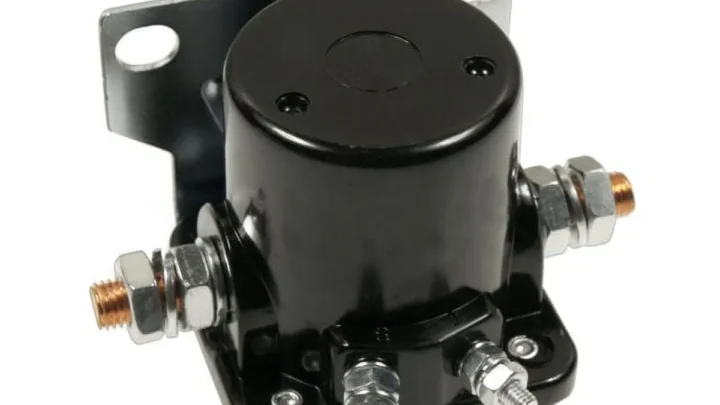
If you’re dealing with electrical gremlins in these cars, check what causes a starter to go bad since excessive heat degrades solenoids quickly. The environment under the hood is harsh. Components age faster than in open layouts.
Vibration isolation was another hurdle. While balanced, the engine produced unique frequencies. Mounts had to dampen these specifically.
Rubber bushings wore out prematurely. Owners reported shuddering at idle after years of use.
Access for repairs remained poor. Mechanics complained about labor times. Replacing water pumps required extensive disassembly.
This inflated service bills significantly. Independent shops often avoided these jobs.
Despite flaws, the packaging win was undeniable. It enabled super-luxury SUVs like the Bentayga. A V12 wouldn’t have fit transversely or longitudinally without compromising cargo space.
The W12 made those vehicles possible.
Today, we see a shift toward electrification. Mild-hybrid inline-sixes replace W12s. They offer similar smoothness with better efficiency.
The mechanical complexity of the W12 no longer justifies its cost.
However, for collectors, the W12 represents peak analog engineering. It’s a testament to solving spatial puzzles with brute mechanical force. Understanding its place in history helps appreciate modern alternatives.
When maintaining these aging beasts, ensure you know how to test a starter relay because intermittent starting issues are common symptoms of wiring fatigue in hot environments. Preventative checks save expensive diagnostics later.
Identifying Authentic W12 Implementations in Production Cars
Spotting a genuine W12 requires knowing where to look. Volkswagen Group dominated this niche for decades. The Audi A8 L and Phaeton were early adopters.
These sedans offered the engine as a top-tier option. You’ll find it badged simply as "W12" on the trunk lid.
Bentley took the concept further with the Continental GT. Their version features twin turbos and higher output. The M30T and later M40T engines are legendary.
They deliver massive torque without sounding strained. Look for the distinctive Bentley badge placement near the exhaust tips.
The SUV segment saw adoption too. The Audi Q7 TDI used a diesel variant. This 6.0-liter unit produced over 500 lb-ft of torque.
It’s rare now but highly sought after by collectors. Check the VIN decoder for specific engine codes like BWY or BVJ.
Not all twelve-cylinder engines are W layouts. Some older Ferraris used flat-12 configurations. Those sit horizontally opposite each other.
Visually, they look completely different from the upright W banks. Don’t confuse a Lamborghini V12 with a VW W12.
Manufacturer documentation confirms these specific applications. Cross-referencing service manuals helps verify authenticity. If the block casting shows three distinct cylinder rows, it’s likely a W.
Two rows mean it’s a standard V. Always inspect the valve cover shape. W12 covers often have a unique contour to fit the tight banks.
For those hunting used models, patience pays off. Inventory is scarce as of 2026. Many units have been retired due to emissions rules.
Finding a well-maintained example is challenging. Verify service history meticulously. Neglect leads to expensive repairs quickly.
Frequently Asked Questions About W12 Engine Mechanics
Is a W12 better than a V12?
It depends on your priorities. The W12 offers superior packaging efficiency. It fits into smaller engine bays easily.
However, traditional V12s provide smoother power delivery. They have fewer moving parts per bank. Most enthusiasts prefer the V12 for pure driving feel.
The W12 wins only when space is critical.
Why did manufacturers stop making W12 engines?
Strict global emissions standards killed the platform. Meeting Euro 7 requirements became impossible economically. The complexity drove up production costs significantly.
Turbocharged V8s and inline-six hybrids offer similar performance. They achieve better fuel economy with less maintenance. As of 2026, no major OEM produces new W12s.
Can you swap a W12 into other cars?
Technically yes, practically rarely. The custom mounting points complicate installation. Wiring harnesses are proprietary and complex.
Cooling systems require extensive modification. Only specialist shops attempt these swaps. Success rates remain low outside factory applications.
Consider the labor hours before attempting any conversion.
What is the most common W12 failure point?
Oil consumption tops the list for petrol variants. Piston rings wear faster due to heat stress. Diesel versions suffer from injector clogging.
Carbon buildup restricts airflow over time. Regular oil changes mitigate ring wear issues. Ignoring minor leaks leads to catastrophic bearing failure.
Monitor fluid levels weekly if possible.
How much does W12 maintenance cost annually?
Expect $2,000 to $4,000 yearly for basic care. Specialized tools increase shop labor rates. Parts scarcity drives prices upward rapidly.
Simple services take longer than average jobs. Budget accordingly for unexpected repairs. Independent specialists charge less than dealerships.
Always get quotes before authorizing work.

Similar Posts