Which Engine Oils Actually Meet Mercedes-Benz 229.5 Spec?
If you're standing in the parts aisle wondering what oil meets Mercedes 229.5 spec, here's the short answer. Any full-synthetic carrying a formal MB-Approval 229.5 stamp on the bottle qualifies. The spec covers gasoline and diesel Mercedes engines built roughly between 2002 and 2008 without a diesel particulate filter.
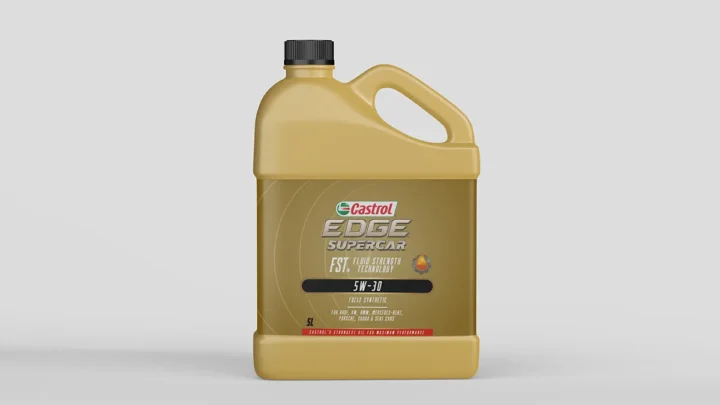
As of 2026, the approved list includes household names like Mobil 1 FS 5W-40, Castrol Edge 5W-40 A3/B4, Shell Helix Ultra, and Liqui Moly Top Tec 4100. Each one meets ACEA A3/B4 with a High Temperature High Shear viscosity of at least 3.5 mPa·s. Here's how to sort the genuine approvals from the "meets specs" marketing.
Quick Answer
Oils meeting Mercedes 229.5 must carry a formal MB-Approval 229.5 stamp. Popular approved picks include Mobil 1 FS 5W-40 and Castrol Edge 5W-40 A3/B4. Shell Helix Ultra 5W-40 and Liqui Moly Top Tec 4100 also qualify.
The spec demands full-synthetic oil, ACEA A3/B4, and HTHS above 3.5 mPa·s. Always verify approval on the official Mercedes BeVo list.
What MB 229.5 Actually Means (and Why the Sheet Number Matters)
MB 229.5 is a Mercedes-Benz oil approval sheet, not a viscosity grade or a marketing badge. It's a full-synthetic, long-drain performance spec for gasoline and diesel MB engines from around 2002 onward that don't run a diesel particulate filter.
The sheet sets minimum requirements for wear protection, sludge control, high-temperature stability, and evaporation loss. Those minimums sit well above the standard API and ACEA baselines.
Think of it this way. API SP or ACEA A3/B4 is the industry floor. MB 229.5 is a stricter house standard layered on top.
An oil only earns the approval after Mercedes tests it in reference engines and signs off in writing.
That written sign-off gets published on Mercedes' BeVo (Betriebsstoffvorschriften) portal. If your bottle claims 229.5 but the product doesn't appear on that database, it doesn't have the approval. Marketing labels aren't the same as a formal Freigabe.
The Short List: Oils Formally Approved for Mercedes 229.5
As of 2026, the most commonly stocked oils holding a live MB-Approval 229.5 include:
- Mobil 1 FS 5W-40 (formerly New Life)
- Mobil 1 ESP Formula 5W-30
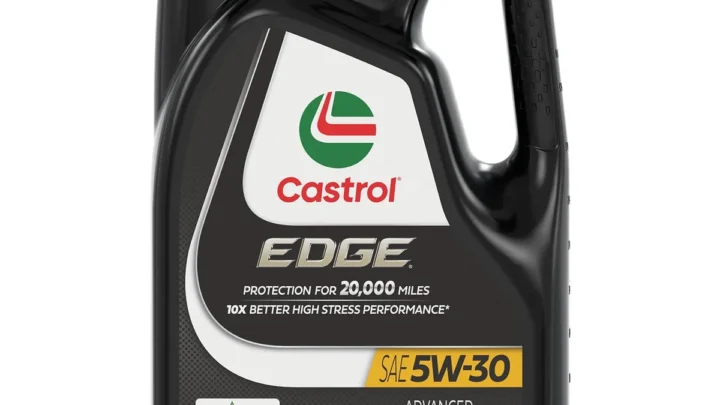
- Castrol Edge 5W-40 A3/B4
- Castrol Edge Professional A3 5W-40
- Shell Helix Ultra 5W-40
- Pennzoil Ultra Platinum 5W-40 (in select markets)
- Liqui Moly Top Tec 4100 5W-40
- Liqui Moly Synthoil High Tech 5W-40
- Ravenol VST 5W-40 and VMP 5W-30
- Motul 8100 X-cess 5W-40
- Pentosin Pento High Performance 5W-40
- Fuchs Titan GT1 Pro C-3 5W-30
- Total Quartz 9000 Energy 5W-40
- Valvoline SynPower MST C3 5W-40
That's the practical shortlist most owners will run into. All are full-synthetic, all carry the MB stamp, and all are safe for the engines the spec was written for.
One caveat. Approvals change. Formulations get revised, and a product that held 229.5 five years ago may have shifted to 229.51 or dropped off the list entirely.
Always cross-check the exact bottle number before you buy a case.
How to Verify an Oil Is Genuinely 229.5 Approved (Not Just "Meets Specs")
Straight answer: read the back label, then cross-reference it on the official Mercedes list. "Meets", "suitable for", or "recommended for" is not the same as a formal approval.
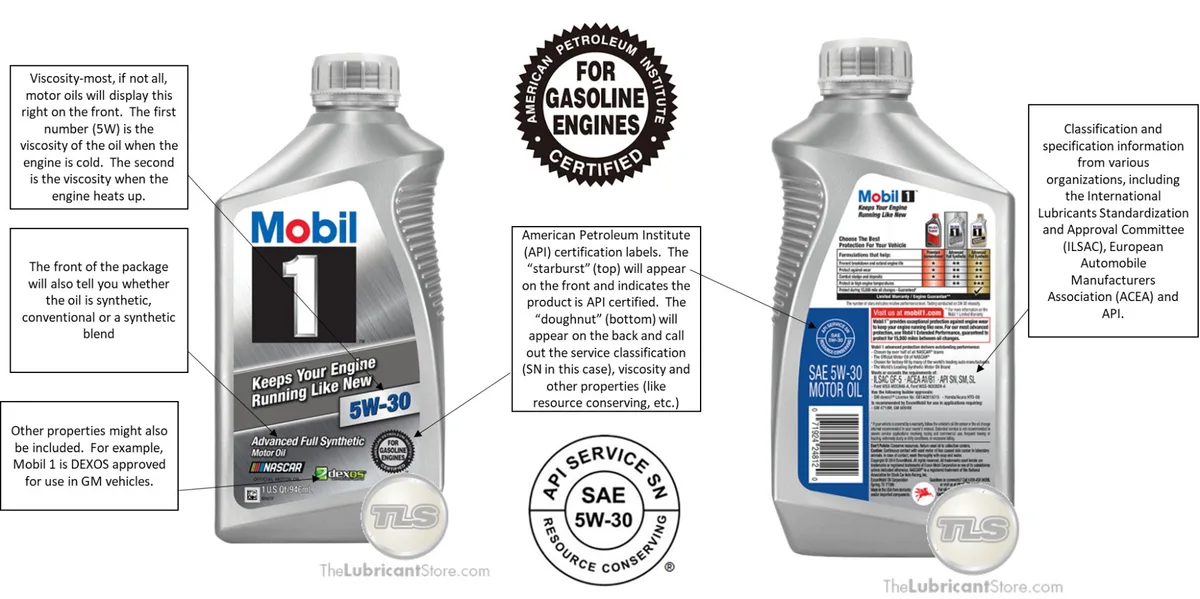
Here's the two-minute verification workflow:
- Flip the bottle over and find the technical approvals block on the back label.
- Look for the exact wording "MB-Approval 229.5". Not "meets", not "for use where required".
- Note the full product name, including viscosity and any suffix (X2, ESP, FS, and so on).
- Search that exact product name on the official Mercedes-Benz lubricants database.
- Confirm it appears under Sheet 229.5 with a live approval number.
If the product shows up, you're covered. If it doesn't, put the bottle back and pick one that does. This same discipline is worth applying whenever you're checking a used Mercedes before purchase, since previous owners often top up with whatever was cheapest at the pump.
5W-40 vs 5W-30 vs 0W-40: Picking the Right Viscosity Within the Spec
MB 229.5 is approved in a handful of SAE grades. The right one depends on your engine, your climate, and how the car actually gets driven.
| Viscosity | Best For | What To Know |
|---|---|---|
| 5W-40 | Most 229.5 engines, warm and mixed climates | The European default. Strong film strength at temperature |
| 5W-30 | Newer or fuel-economy tuned engines | Mobil 1 ESP Formula is the common pick |
| 0W-40 | Very cold climates or performance use | Faster cold-start flow, thinner at low temps |
If your owner's manual lists 5W-40 as the primary recommendation, stick with it. If it shows a viscosity chart tied to ambient temperature, match the grade to your average winter low.
AMG engines and turbocharged motors almost always want the 5W-40 for shear stability. For long freeway runs in summer heat, 5W-40 gives more headroom. For short trips and cold winters, 0W-40 pours faster on start-up and cuts down on cold-start wear.
Both 0W-40 and 5W-40 are valid inside the 229.5 spec. What matters is that the bottle you pick is genuinely approved, and that you swap it on schedule, whether that's at the dealer or when you handle the oil change yourself.
Side-by-Side Comparison of the Top 229.5 Oils
Every 229.5 oil clears the same Mercedes bench tests, so the differences come down to formulation focus, availability, and price. Here's how the popular options stack up.
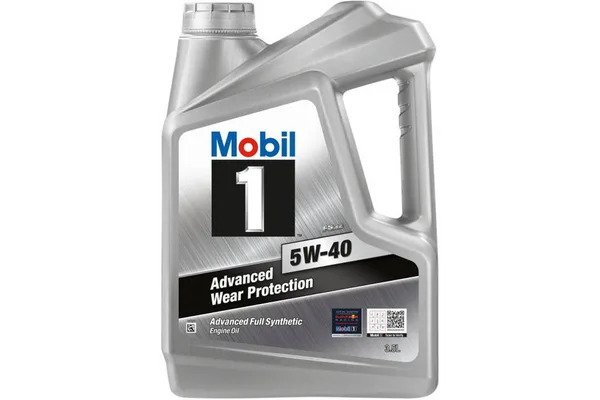
Mobil 1 FS 5W-40 and ESP Formula 5W-30
Mobil 1 FS is the workhorse. It's widely stocked in North America and Europe, leans on a PAO-heavy synthetic base, and holds up in AMG and turbo engines. The ESP Formula 5W-30 is the pick when your car calls for a thinner grade with the same approval.
Castrol Edge 5W-40 A3/B4
The other mainstream option. Castrol runs a Titanium-fortified additive package and is easy to source at most parts counters. Aggregate user reviews flag it as a strong all-rounder in M272 and M273 V6 engines, and pricing tracks close to Mobil 1.
Shell Helix Ultra 5W-40
Shell's flagship synthetic is factory fill at several Mercedes assembly plants. That tie-in makes it the closest thing to what came out of Stuttgart. The base uses Shell's PurePlus gas-to-liquid technology, which runs clean over long drain intervals.
Liqui Moly Top Tec 4100 and Synthoil High Tech
Liqui Moly is the go-to for European independent specialists. Top Tec 4100 5W-40 is the popular pick, praised for clean-running behavior and low oil consumption on higher-mileage engines. Synthoil High Tech is the fully synthetic sibling with the same approval and a slightly different additive balance.
Ravenol, Pentosin, Motul, and Fuchs Options
These are the specialist choices. Ravenol VST 5W-40 and Pentosin Pento High Performance are enthusiast favorites for older MB engines. Motul 8100 X-cess suits owners who mix track days with street driving.
Fuchs Titan GT1 Pro C-3 5W-30 covers cars that want a low-SAPS feel while still holding a full 229.5 approval.
Best Oil for Each Mercedes Engine Family (M272, M273, OM642, M111, and More)
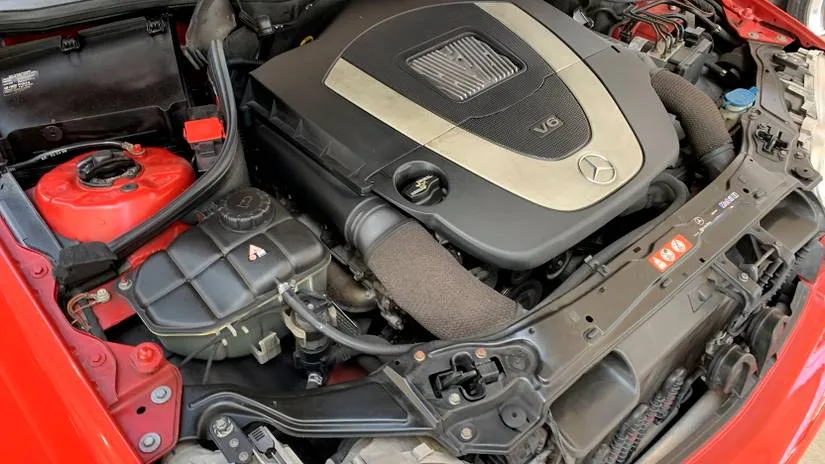
The 229.5 spec covers a wide range of engines. Here's a quick guide to what tends to work best in each family.
| Engine Family | Typical Vehicles | Recommended Grade |
|---|---|---|
| M111 (4-cyl) | W202, W210, R170 | 5W-40 |
| M112 / M113 V6/V8 | W211, W220, W463 | 5W-40 or 0W-40 |
| M272 V6 | W211, W204, W164, W219 | 5W-40 |
| M273 V8 | W221, W164, W211 | 5W-40 |
| OM611 / OM612 / OM613 | W203, W210, Sprinter | 5W-40 |
| OM642 (pre-DPF variants) | W211, W164, Sprinter | 5W-40 |
M272 and M273 owners tend toward Mobil 1 FS or Castrol Edge 5W-40. Both hold up well against the timing-chain wear these engines are known for. Pre-DPF OM642 owners lean on Shell Helix Ultra or Liqui Moly Top Tec 4100.
Older M111 four-cylinders will run any 229.5 approved 5W-40 without complaint.
MB 229.5 vs 229.3, 229.51, 229.52, and 229.71: Which Sheet Fits Your Car
Sheet numbers matter because the wrong oil can ruin a diesel particulate filter. Here's the cheat sheet.
| Sheet | Best For | Key Difference |
|---|---|---|
| 229.3 | Pre-2002 MB engines | Semi-synthetic acceptable |
| 229.5 | 2002 to 2008, no DPF | Full-synthetic, high-SAPS |
| 229.31 | Diesel with DPF, mid-SAPS | Lower ash content |
| 229.51 | Most 2009+ diesels with DPF | Low-SAPS, fuel-economy focus |
| 229.52 | 2013+ diesels | Even lower SAPS |
| 229.71 | Newest MB engines | Ultra-low viscosity, DPF-safe |
If your car runs a DPF or is a diesel built after 2009, do not use 229.5. The higher sulfated ash will clog the filter over time. Check the sticker under your hood before you buy.
For a 229.5 car, the older 229.3 is not a valid substitute either.
Common Mistakes When Buying 229.5 Oil
A few slip-ups come up again and again. Avoid these and you'll stay out of trouble.
- Trusting "meets 229.5" instead of "MB-Approval 229.5". Only the second is a formal approval.
- Using 229.5 in a DPF-equipped diesel. That's the most expensive mistake on this list.
- Grabbing a random 5W-40 at a big-box store without checking the back label.
- Assuming the shelf tag matches the current bottle. Formulations get revised.
- Buying counterfeit oil on marketplace sites at prices too good to be true.
- Mixing brands mid-interval on an engine that already runs a specific oil well.
If you're servicing a used Mercedes with unknown history, drop the old oil, fit a fresh filter, and start clean with a verified 229.5 fill. A proper full drain and refill beats topping up mystery oil every time.
What You'll Pay Per Liter and How Much Your Engine Needs
Expect $8 to $15 per liter for a genuine 229.5 synthetic as of 2026. Bulk 5-liter jugs bring the per-liter price down, sometimes into the $6 range for Castrol or Mobil 1.
| Engine | Sump Capacity | Oil-Only Cost per Change |
|---|---|---|
| M111 4-cyl | ~5.5 L | $45 to $70 |
| M272 V6 | ~8.5 L | $70 to $110 |
| M273 V8 | ~8.5 L | $70 to $110 |
| OM642 V6 diesel | ~8.5 L | $70 to $110 |
Add another $15 to $30 for a genuine MB or Mahle oil filter. On a 229.5 engine, spend the extra few dollars on a quality filter rather than the cheapest option. Mobil 1 FS and Castrol Edge routinely drop 20 to 30 percent off list at auto-parts chains, so buying by the case pays off.
Oil Change Intervals Under Mercedes' Flexible Service System
Mercedes' Flexible Service System (ASSYST or ASSYST Plus depending on the car) sets your change interval based on how the car actually gets driven. In practice, that lands between 10,000 and 15,000 km, or 12 months, whichever comes first.
Short-trip driving, cold climates, and heavy idling will pull that interval shorter. Long highway miles push it longer. Trust the dashboard countdown rather than a fixed calendar.
Most MB specialists still recommend a stricter 10,000 km or 12-month interval on older 229.5 engines. M272 and M273 V6s have known timing-chain concerns tied to oil condition. Shorter intervals are cheap insurance against a five-figure repair bill.
After the change, reset the service counter through the instrument cluster using the dash button combo.
Warranty, Counterfeits, and Dealer Servicing Considerations
If your Mercedes is still under manufacturer warranty, use an oil that carries a current MB-Approval 229.5 on the BeVo list. Anything less can be grounds to challenge a warranty claim later.
Counterfeit oil is a genuine problem. Fake Mobil 1 and Castrol Edge bottles show up on marketplace sites at suspicious prices. Stick to authorized dealers, established parts chains, or the brand's own site.
If the bottle feels light, the label print looks fuzzy, or the seal is tampered with, don't put it in your engine.
Independent MB specialists can perform warranty-compliant services as long as they use approved oil and document every change. Keep receipts, note the brand, viscosity, and lot number, and stamp the service book. That paperwork matters more than most owners realize, especially at resale.
A thorough pre-purchase check always includes verifying which oil the previous owner actually ran.
FAQs About Mercedes-Benz 229.5 Engine Oil
Can I use 5W-30 instead of 5W-40 if both are 229.5 approved?
Yes, if your owner's manual lists both grades as acceptable. Mobil 1 ESP Formula 5W-30 carries a formal MB-Approval 229.5, so it's a valid choice. That said, most 229.5-era engines were spec'd around 5W-40 for shear stability, especially the M272, M273, and AMG variants.
When in doubt, follow the manual.
Is 229.5 the same as ACEA A3/B4?
No. ACEA A3/B4 is the European baseline, and MB 229.5 sits above it. Every 229.5 approved oil meets or exceeds A3/B4, but plenty of A3/B4 oils never earn the 229.5 approval.
Mercedes runs extra reference-engine tests before granting the formal Freigabe.
Can I use 229.5 oil in a car that requires 229.51?
No. The 229.51 spec is low-SAPS to protect a diesel particulate filter. The higher sulfated ash content in 229.5 will accumulate in the DPF and cut its life short.

Similar Posts