Conventional vs Synthetic Oil: Which One Does Your Car Need?
Walk into any auto parts store and you'll see two rows of motor oil that look nearly identical, with prices that aren't. That's the exact moment most drivers Google "conventional vs synthetic oil explained" and get a wall of contradictory advice. The short version: synthetic isn't always better for every engine, and conventional isn't always cheaper once you factor in change intervals.
Which one fits your car depends on the engine design, the manufacturer spec, and how you actually drive.
As of 2026, roughly 70% of new vehicles sold in North America require full synthetic to meet warranty. That figure comes from manufacturer service data and API SP / ILSAC GF-6 specifications. A decade ago, the number was under 20%.
The gap between the two oil types has widened, and so have the consequences of picking wrong.
Quick Answer
Conventional motor oil is refined from crude with a natural, uneven molecular structure. Full synthetic is engineered from chemically built base oils with uniform molecules. Synthetic flows better cold, resists heat longer, and typically doubles the drain interval.
Conventional costs less per quart but needs more frequent changes. Modern turbo and direct-injection engines usually require synthetic.
Why the Conventional vs Synthetic Oil Debate Actually Matters for Your Engine
Picking the wrong oil isn't a small mistake. Modern engines run hotter, spin faster, and use tighter tolerances than anything built 20 years ago. A turbo GDI engine sees exhaust temperatures north of 1,000°F right next to the oil galleries.
Conventional base stock can oxidize and coke under that kind of load.
Get it right and you'll see cleaner internals, longer drain intervals, and better cold-start protection. Get it wrong and you'll see sludge, accelerated timing chain wear, or a denied warranty claim. The right oil is one of the cheapest forms of insurance your engine will ever get.
What "Conventional" and "Synthetic" Really Mean at the Molecular Level
The difference starts with the base oil, which makes up roughly 70 to 90% of what's in the bottle. The rest is the additive package. The base oil sets how the finished product behaves under heat, cold, and pressure.
How Conventional Motor Oil Is Made
Conventional oil comes from crude, refined into API Group I or Group II base stocks. The molecules are natural hydrocarbons of different shapes and sizes. That irregularity is why conventional oil thickens faster in cold weather.
It also breaks down sooner under sustained heat.
How Full Synthetic Is Engineered (Group III, PAO, and Ester Base Oils)
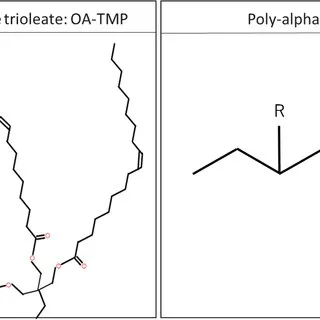
Full synthetic uses base oils built or heavily processed to create uniform molecules. Group III is hydrocracked from crude to near-synthetic purity. Group IV is poly-alpha-olefin (PAO), built molecule by molecule.
Group V includes esters, prized for high heat stability and additive solubility. That uniform structure is why synthetic pours at colder temperatures and resists shear longer.
Where Synthetic Blends Fit In
Synthetic blends mix conventional and synthetic base stocks, usually 10 to 30% synthetic content. You get some cold-flow and heat-resistance gains at a lower price point. It's a reasonable middle ground, not a full substitute for true synthetic in a demanding engine.
The Additive Package: The Hidden Half of Every Bottle
Base oil sets the foundation, but additives do the heavy lifting on engine protection. A typical passenger-car formula runs 10 to 25% additives by volume. The recipe matters as much as the base stock.
The key categories inside every quart:
- Detergents and dispersants keep soot and combustion byproducts suspended so they drain out with the old oil
- Anti-wear additives, mainly ZDDP (zinc dialkyldithiophosphate), form a sacrificial film on metal surfaces
- Viscosity modifiers keep the oil in grade across temperature swings
- Antioxidants slow the chemical breakdown of the base oil
- Friction modifiers reduce internal drag for better fuel economy
- Corrosion inhibitors protect bearings and copper components
Synthetic oils can carry higher additive loads because the base stock is cleaner and more stable. That's a big reason premium synthetics last so much longer between changes.
Conventional Motor Oil: Strengths, Weaknesses, and Where It Still Wins
Conventional oil isn't dead. For the right engine and the right driver, it still makes sense in 2026.
Strengths:
- Lowest cost per quart, usually $4 to $7
- Widely available at any parts store or supercenter
- Perfectly adequate for older, low-stress engines built before roughly 2010
- Easier on very high-mileage engines with worn seals that might weep on synthetic
- Compatible with break-in residues in some rebuild scenarios
Weaknesses:
- Shorter drain interval, typically 3,000 to 5,000 miles
- Thickens noticeably in sub-zero weather
- Breaks down faster under sustained high heat
- Not approved for most modern turbo, GDI, or European engines
- Higher volatility, meaning more of it evaporates through the PCV system between changes
Best for naturally aspirated engines, older domestic V8s and inline sixes, fleet vehicles on strict 3,000-mile schedules, and drivers on a tight budget who don't mind extra service visits. If you're handling the work yourself, our step-by-step oil change walkthrough covers the process for either oil type.
Full Synthetic Motor Oil: Strengths, Weaknesses, and What You're Paying For
Synthetic isn't magic, but the performance gap over conventional is real and measurable. Independent bench testing per ASTM D6335 (TEOST) and NOACK volatility standards consistently favors synthetic for heat and evaporation resistance.
Strengths:
- Drain intervals of 7,500 to 15,000 miles depending on the formula and engine
- Pours reliably well below zero, often down to -40°F
- Superior high-temperature film strength for turbos and DI engines
- Lower volatility, so less oil consumption between changes
- Better resistance to Low-Speed Pre-Ignition (LSPI) when API SP rated
- Cleaner internals thanks to advanced detergent packages
Weaknesses:
- Higher upfront cost, typically $8 to $14 per quart
- Overkill for older, lightly stressed engines
- Can expose pre-existing leaks in high-mileage engines by cleaning away old sludge
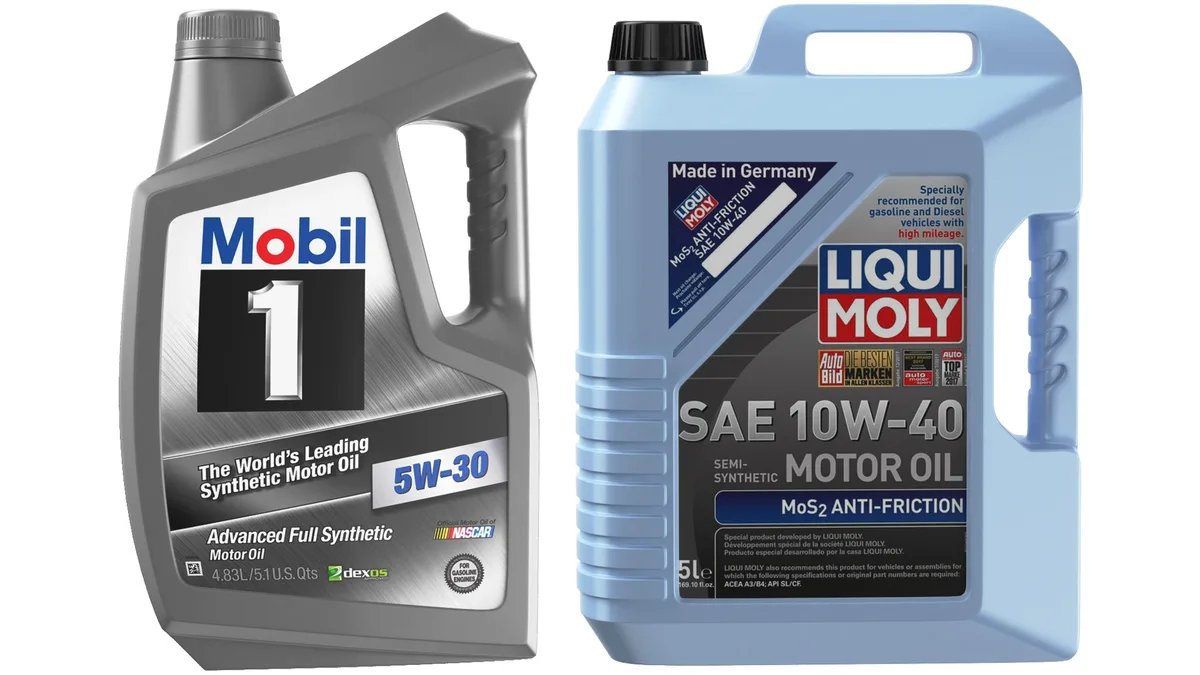
- Spec matching still required. A premium synthetic that doesn't meet dexos1 Gen 3 or MB 229.5 is still the wrong oil
Best for any turbocharged engine, direct-injection engines, European vehicles, cold-climate and hot-climate drivers, tow rigs, and anyone who values longer intervals between service. Per the American Petroleum Institute, the current API SP and ILSAC GF-6 categories are the baseline for modern gasoline engines. Most conventional oils on the shelf still don't meet them.
Side-by-Side Comparison: Performance, Protection, and Price
Here's how the two stack up across the metrics that actually influence engine life and running cost.
| Category | Conventional | Full Synthetic |
|---|---|---|
| Cost per quart | $4 to $7 | $8 to $14 |
| Typical drain interval | 3,000 to 5,000 mi | 7,500 to 15,000 mi |
| Cold pour point | around -20°F | down to -40°F |
| High-temp stability | Moderate | Excellent |
| NOACK volatility | 13% to 18% | 6% to 10% |
| Turbo / GDI approval | Rarely | Standard |
Cold-Start Flow and Pumpability
Roughly 75% of engine wear happens in the first 30 seconds after startup, per SAE research on wear patterns. Synthetic reaches the top end faster because it stays fluid at temperatures where conventional turns to molasses. In a Minnesota January, that difference is measurable at the crankshaft.
High-Temperature and Turbocharger Protection
Turbo bearings can hit 500°F on shutdown. Conventional oil leaves coke deposits on those hot surfaces, choking oil galleries and shortening turbo life. Synthetic base stocks resist that oxidation and keep flowing cleanly through tight passages.
Drain Interval and Long-Term Wear
Synthetic doubles or triples the safe change interval, but only with a quality filter and normal driving. Extended-drain synthetic formulas hold their viscosity and additive strength well past 10,000 miles in most engines. Used oil analysis is the only way to confirm what your specific engine tolerates.
Cost Per Mile, Not Cost Per Quart
Do the math on cost per mile, not per bottle. A $60 synthetic change every 10,000 miles beats a $35 conventional change every 4,000 miles once you count labor and time. Conventional wins on total cost only when service intervals get skipped, which defeats the point.
Which Engines Actually Need Full Synthetic
Not every engine sees a real benefit from synthetic. Some absolutely require it. Others just prefer it.
A few older engines run happier on conventional.
Turbocharged and Direct-Injection Engines
Modern turbo GDI engines require API SP synthetic to control LSPI and protect turbo bearings. Conventional oil in these engines shortens component life measurably. This is non-negotiable on almost every 2018 and newer platform.
High-Mileage and Older Engines
Engines over 100,000 miles benefit from high-mileage synthetic, which adds seal conditioners to soften old rubber. A pre-2005 engine with worn seals may weep if you switch cold-turkey to full synthetic. Running a proper check before you switch oils on an older car is smart, and our pre-purchase inspection checklist covers what to look for on any older engine.
Daily Commuters and Short-Trip Drivers
Short trips are hard on oil because the engine never fully burns off moisture and fuel dilution. Synthetic holds up much better under that abuse. If your average trip runs under 10 miles, synthetic pays for itself in wear reduction alone.
Towing, Hauling, and Severe Duty
Sustained high loads spike oil temperatures fast. Synthetic keeps its viscosity where conventional shears down. Every major truck manufacturer specs synthetic for towing packages as of 2026.
Cold-Climate and Hot-Climate Driving
In Arctic or desert conditions, base oil quality shows up on day one. Synthetic 0W-20 pumps at temperatures where conventional 5W-30 barely moves. In Phoenix summers, the same synthetic resists breakdown while conventional darkens fast and thins out under load.
Reading the Bottle: API, ILSAC, ACEA, and OEM Specs That Actually Matter
The label is where you separate a good oil from a wrong oil.
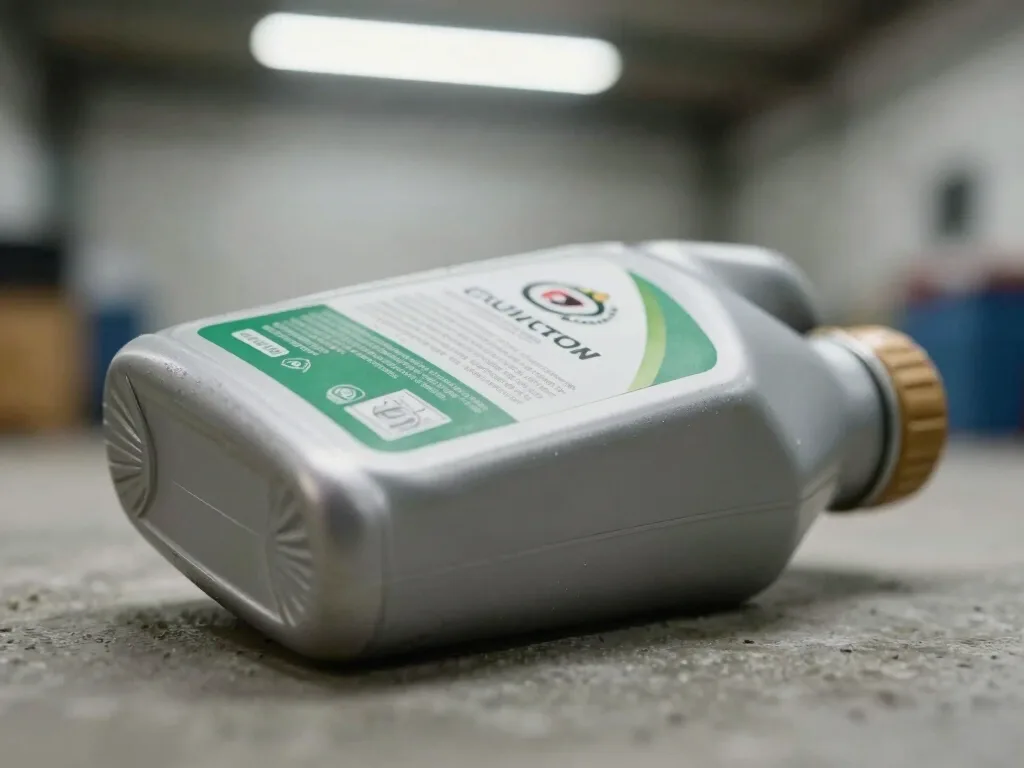
Look for these marks before anything else:
- API donut on the back with the current service category (SP for gasoline, CK-4 or FA-4 for diesel)
- ILSAC starburst on the front, currently GF-6A or GF-6B
- SAE viscosity grade in the center of the donut (0W-20, 5W-30, and so on)
- ACEA sequence for European engines (A3/B4, C3, C5)
- OEM approvals printed on the back: dexos1 Gen 3 for GM, MB 229.5 for Mercedes, VW 502.00 or 508.00, BMW LL-01 or LL-04, Ford WSS-M2C946-B1, Chrysler MS-6395, Porsche A40 or C30
Match the OEM approval first, then confirm viscosity. Skipping the approval is how warranty claims get denied and turbos die young.
Common Mistakes When Choosing Between Conventional and Synthetic
The wrong choice usually comes from good intentions, not carelessness.
- Buying "synthetic" without checking the OEM spec, ending up with an oil that doesn't meet the required approval
- Running conventional in a turbo or GDI engine because it was on sale that week
- Switching a 200,000-mile engine to full synthetic and blaming the oil when the seals start weeping
- Stretching a 15,000-mile synthetic drain in a short-trip vehicle that meets every severe-duty condition in the manual
- Mixing viscosity grades on top-offs (dumping 5W-30 into a 0W-20 crankcase changes the finished blend)
- Assuming all synthetics are equal (they aren't, Group III performs differently from PAO)
- Ignoring the oil filter, which is just as critical as the oil itself on extended intervals
Switching from Conventional to Synthetic: What Really Happens
Switching is safer than internet lore suggests. In our research, no major manufacturer warns against changing between oil types, and most modern synthetics are fully compatible with any conventional residue left in the engine.

Here's what to expect after the swap:
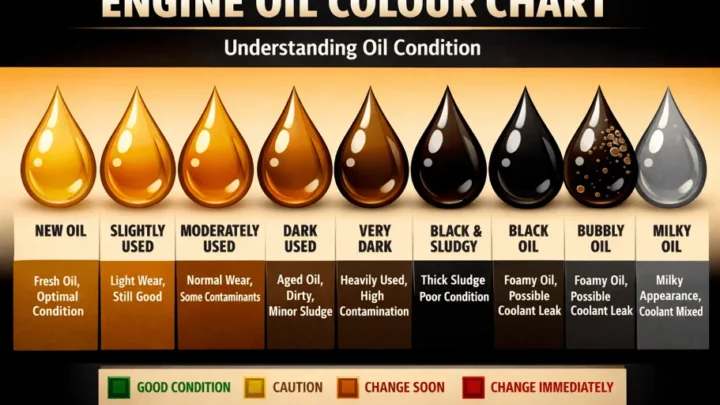
- Stronger synthetic detergents lift some old deposits, so the first drain may look darker than usual
- On engines over 150,000 miles, leaks that were sealed by sludge can start weeping (the oil didn't cause the leak, it just uncovered it)
- Oil consumption sometimes drops thanks to lower volatility
- Cold starts feel smoother during the first cold snap after the switch
For an older engine, a two-step switch works well. Run a synthetic blend for one interval first, then move to full synthetic. That eases the transition without shocking tired seals.
The mechanical steps are identical either way, and our full DIY walkthrough covers the process from drain plug to fill cap.
Drain Intervals: Manufacturer Recommendations vs Real-World Data
The 3,000-mile change interval is dead for most drivers. Modern oil life monitors and used oil analysis prove that repeatedly.
Typical intervals by oil type and driving pattern:
| Driving Pattern | Conventional | Full Synthetic |
|---|---|---|
| Normal service | 5,000 mi | 10,000 mi |
| Severe (short trip, dust, tow) | 3,000 mi | 5,000 to 7,500 mi |
| Highway cruise | 5,000 mi | 12,000 to 15,000 mi |
The owner's manual is the final word. If yours says 10,000 miles on full synthetic, trust it. If it lists your commute pattern under "severe service", follow the shorter interval even if the oil claims otherwise.
Used oil analysis costs around $30 through labs like Blackstone. It tells you exactly what your engine is doing to the oil. That's how fleet managers set custom drain intervals with confidence.
Expert Tips Most Drivers Never Hear
- Change the filter every time you change the oil, no exceptions
- Warm the engine for five minutes before draining so contaminants stay suspended
- Never mix API SP with older SN oil during top-offs in a turbo GDI engine
- If your car burns oil, a slightly higher HTHS grade may help when the OEM allows it
- Keep a quart of your exact oil in the trunk for emergency top-offs
- Check the level cold on level ground, not right after a highway drive
- After a long tow or track day, change the oil early even if the monitor says you're fine
- Don't chase boutique brand hype. Mobil 1, Pennzoil Platinum, Castrol Edge, and Valvoline Extended Protection all meet the same real specs
Aggregate user reviews across major owner forums confirm the same pattern. Engines fail from missed changes far more often than from picking the "wrong" premium brand.

Similar Posts