What Causes Hydrolock? Engine Damage Explained
Hydrolock is one of those failures where seconds decide everything. What causes hydrolock comes down to one thing: liquid sitting inside a cylinder built for nothing but air and fuel vapor. You turn the key, hear a hard clunk, and the engine stops dead instead of firing up.
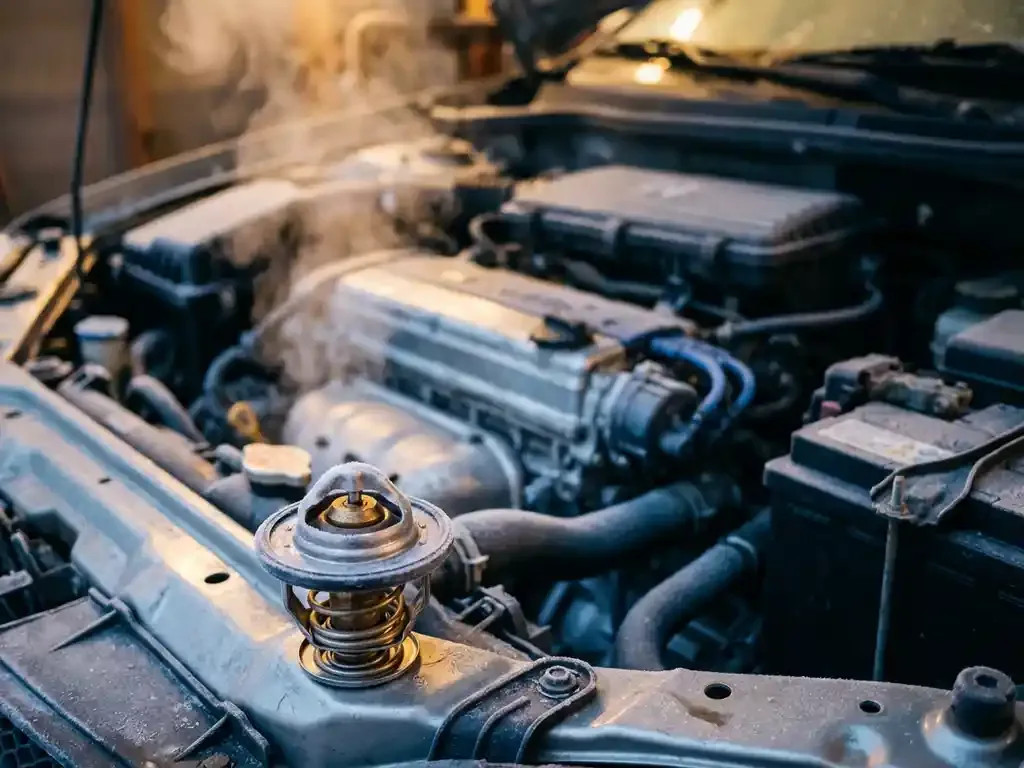
Water, coolant, or oil, it doesn't compress, and the pistons can't push it aside.
The physics leave zero margin. Air compresses to roughly a tenth of its volume as the piston rises, while liquid barely shrinks at all. That's why cylinder pressure can spike past a thousand PSI before you even hear the clunk.
Here's how that force turns a puddle into a bent connecting rod.
Quick Answer
What causes hydrolock is any liquid filling a cylinder where only air belongs. Water barely compresses, so the piston stops mid-stroke. The starter or crankshaft keeps pushing, and metal loses.
Flood water, coolant leaks, and overfilled oil are the usual sources. One turn of the key can bend a connecting rod.
Why Hydrolock Kills Engines Instantly
An engine is an air pump at heart. Every power stroke depends on squeezing a mist of fuel and air into a small space at the top of the cylinder. Air plays along nicely.
A typical gasoline engine runs a compression ratio between 9:1 and 14:1, so the mixture shrinks to a tenth of its volume or less. Diesels go further, squeezing past 16:1.
Liquid refuses to cooperate. Water, coolant, and oil hold their volume even under crushing pressure, so a cylinder full of fluid becomes a solid wall. The piston hits it mid-stroke, and something has to give.
Engineers call this hydrostatic lock. Mechanic shorthand is hydrolock.
What breaks first depends on which part is weakest that day.
- Connecting rods bend first in most cases, leaving a knock and little or no compression in that cylinder
- Pistons can crack or shatter, especially in tight-tolerance modern engines
- Crankshafts occasionally snap outright, which turns the block into scrap
- Starters and ring gears chip teeth when the motor keeps fighting a locked flywheel
The starter deserves special mention here. Its whole job is cranking the engine over, so it keeps grinding against a locked flywheel until it fails too. Diesels have it worst of all, because their tiny clearance volume leaves almost no room for liquid before the piston makes contact.
And none of this damage is gradual. It happens in one or two revolutions.
The Three Real Causes: Floods, Leaks, and Neglect
Water getting sucked through the intake is the classic cause, and it's the one that totals cars after storms. Air intakes sit low on many vehicles, and driving through deep water creates a bow wave that splashes straight into the filter box. Once the engine inhales water, lock happens within a revolution or two.
The National Weather Service's flood guidance puts it bluntly: 12 inches of moving water can carry away most vehicles. That's how little depth it takes. As of 2026, factory wading limits on mainstream SUVs still cluster between 19 and 34 inches.
Exceed those numbers and any water damage is on you.
Internal leaks are quieter but just as deadly. A blown head gasket, cracked cylinder head, or failed intake manifold gasket lets coolant seep into cylinders while the engine sits. Overfilled oil, a leaking fuel injector, or tipped lawn equipment can do the same with other liquids.
Here's how the three causes stack up:
| Cause | How fluid gets in | Typical scene | Early warning |
|---|---|---|---|
| Flood water | Through the air intake | Driving through standing water | Sudden stall, no restart |
| Coolant leak | Head gasket, cracked head, intake gasket | Slow coolant loss over weeks | White smoke, milky oil |
| Neglect | Overfilled oil, stuck injector, tipped mower | Maintenance mistakes | Rough running before lock |
The pattern worth remembering: floods are instant, leaks are slow, and neglect is usually self-inflicted. All three end at the same wall.
Critical Warning Signs You're Facing a Lock
The signature symptom is a hard stop. You turn the key, the engine goes thunk, and the starter quits as if it hit concrete. That's different from electrical trouble.
A weak battery gives you rapid clicking or sluggish cranking, while a locked engine refuses to move at all. If you're hearing that clicking pattern instead, rule out the battery first before you blame fluid, because the two get confused constantly.
Other signs depend on how the liquid got in:
- Milky, chocolate-colored oil on the dipstick points to coolant contamination
- Coolant disappearing with no visible leak suggests an internal breach
- White smoke from the exhaust means coolant is burning inside a cylinder
- Water or dampness in the air filter box confirms flood ingestion
- Zero compression on one cylinder is the classic bent-rod fingerprint
Here's the trap most people fall into. After a partial lock, the engine may still crank and even start, then run with a rhythmic knock. That knock is usually a bent rod that survived the initial event.
It will not heal itself, and continued running turns a repairable engine into a replacement.
A clicking starter with no crank deserves its own caution flag, since weak solenoid symptoms can mimic it. But if the click comes right after water crossed your road, treat it as a lock until proven otherwise.
The One Rule That Saves Your Engine (And Wallet)
Here's the whole rule: if you suspect liquid in the engine, never try to start it. Not once, not briefly, not to "see if it runs." Every crank attempt drives the piston into the fluid at full force and converts a drain-and-dry job into an engine rebuild.
The if/then logic is simple:
- If the engine stalled after water crossed the road, don't touch the key. Then disconnect the battery and check the oil.
- If the dipstick reads milky, don't touch the key. Then arrange a flatbed tow.
- If the engine cranks but sounds metallic and wrong, stop immediately. Then get a compression test before it runs again.
One clarification, because people mix these up constantly. Clicking, grinding, or dead silence with no water involved is usually electrical, and genuine starter failure signs look nothing like a locked engine. Hydrolock announces itself with a clunk and total refusal to move.
There's a financial layer too. Insurers routinely deny flood claims when owners ignore obvious warnings and crank the engine anyway, treating it as contributory negligence. A tow costs under $150 in most markets.
A replacement engine runs $3,000 to $10,000 installed, and what actually kills a starter in the meantime is repeatedly fighting a flywheel it can never turn.
Safe Recovery Steps vs. Dangerous Myths
If you're comfortable turning wrenches, the recovery sequence is well established. Work in this order and stop the moment anything feels wrong.
- Disconnect the battery so nobody can crank the engine accidentally.
- Pull the dipstick and check for milky oil, then look inside the air filter box for water.
- Remove every spark plug. On a diesel, back out the glow plugs or injectors instead.
- Drape a rag over the plug holes and crank the engine for two or three seconds. Fluid shoots out with real force.
- Identify what came out. Plain water suggests flooding, sweet-smelling green or orange fluid means coolant, and fuel means a stuck injector.
- Squirt a small amount of engine oil into each cylinder, then retest compression before reinstalling plugs.
- Change the oil and filter if the dipstick showed contamination.
Anything beyond this belongs to a shop. A borescope inspection and leak-down test tell you whether a rod bent, and those aren't guesses you make with a torque wrench.
Now the myths, because they wreck more engines than the water does:
- "Just crank it until it clears." That's the bent-rod special.
- "If it starts, it's fine." A bent rod can run for weeks, then punch through the block.
- "Water dries out on its own." Bare cast iron starts rusting within hours.
- "Modern cars are sealed." Intakes still breathe air, and water follows air.
Insurance adjusters lean on NHTSA's flood-damage guidance when they evaluate claims like these, and the documentation you keep matters as much as the repair itself.
Which Motor Wattage Is Right for You?
Most home bakers assume higher watts equal better performance. That’s a myth if you don’t understand torque versus speed. A 500-watt motor can handle stiff doughs if the gearing is low and efficient.
Conversely, a flashy 1000-watt unit might burn out quickly if it lacks thermal protection. Look for DC motors in budget mixers. They offer quiet operation and precise speed control.
AC motors dominate commercial-grade machines. They deliver raw power but run louder and hotter.
For occasional baking, a 300- to 400-watt mixer suffices. It handles cookie batter and light bread dough without strain. Serious sourdough enthusiasts need at least 600 watts.
This ensures the hook doesn’t stall during long kneading cycles. Check the manufacturer’s duty cycle rating. Continuous use over ten minutes requires robust cooling fans.
Intermittent users get away with passive air vents. Don’t ignore voltage stability either. Fluctuating power grids stress cheap electronics.
Always plug high-torque mixers into surge protectors.
How Do Bowl Materials Impact Durability?
Stainless steel remains the gold standard for hygiene and longevity. It resists rust, staining, and odor absorption effectively. Glass bowls offer transparency, letting you monitor ingredient consistency visually.
However, glass cracks under impact or extreme temperature shifts. Avoid using hot liquids directly in glass vessels unless specified. Plastic inserts are lightweight and cheap.
They scratch easily, harboring bacteria in micro-abrasions. Professional kitchens rarely trust plastic for food contact surfaces.
Consider bowl capacity relative to your mixer’s base weight. Large stainless bowls add significant top-heaviness. Ensure the locking mechanism engages firmly before starting.
Some models feature double-wall insulation. These maintain dough temperature during summer months. Single-wall bowls conduct ambient heat rapidly.
This affects yeast activation rates negatively. Verify dishwasher safety labels carefully. Many premium bowls require hand washing to preserve finish quality.
Scrubbing agents degrade polished surfaces over time. Use mild detergents and soft cloths only.
What Attachments Actually Enhance Functionality?
Basic kits include flat beaters and spiral hooks. These cover ninety percent of daily tasks. Optional attachments expand utility significantly.
Meat grinders transform mixing stations into prep hubs. Pasta rollers create fresh noodles efficiently. Citrus presses save counter space elsewhere.
Evaluate attachment compatibility before purchasing bundles. Proprietary systems lock you into one brand ecosystem. Universal hub designs allow third-party accessory integration.
This flexibility extends device lifespan considerably.
Don’t buy every available add-on immediately. Start with essentials. Test core functions thoroughly first.
Then identify gaps in your workflow. Maybe you bake weekly but grind meat monthly. Prioritize frequency of use over novelty features.
Storage solutions matter too. Bulky attachments clutter cabinets. Magnetic docking stations keep tools organized nearby.

Similar Posts





















