What Oil Meets GM Dexos Specification? Full Guide
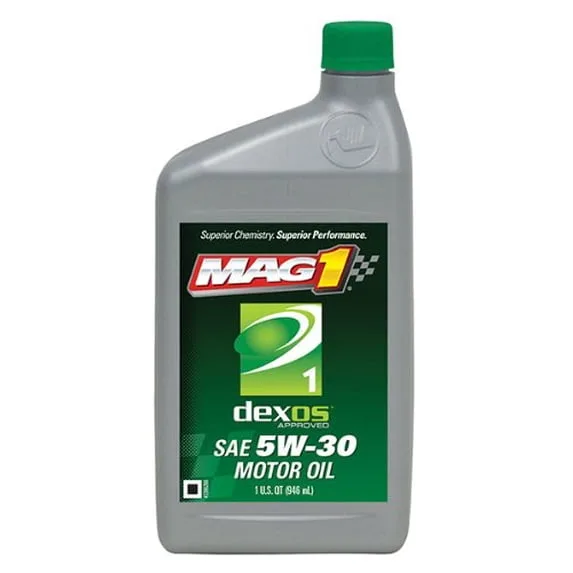
If you've stared at the oil aisle wondering what oil meets GM dexos specification, the short answer is: any oil carrying the licensed dexos logo and a valid license number printed on the bottle. That's the only wording GM officially recognises. As of 2026 the current specs are dexos1 Gen 3 for gas engines, dexos D for light-duty diesels, and dexos R for high-performance LT engines.
The tricky part isn't finding a dexos oil. It's picking the right one for your specific engine. A dexos1 jug that's perfect for a 5.3L V8 Silverado will damage a 3.0L Duramax over time.
Per GM's own service bulletins, using the wrong dexos family voids the powertrain warranty. This guide walks you through the exact spec your engine needs and how to verify it before you pour.
Quick Answer
An oil meets GM dexos specification when it carries the licensed dexos trademark logo and a unique license number on the bottle. The four active specs are dexos1 Gen 3 (gas), dexos D (diesel), dexos R (performance), and the legacy dexos2. You can verify any bottle's license at gmdexos.com.
"Meets or exceeds dexos" without the logo is not approved.
What "Meets GM Dexos Specification" Actually Means
Dexos is General Motors' proprietary engine oil specification. GM licenses oil brands to use the dexos name only after their formulation passes a fixed battery of engine and bench tests. The result is a printed logo and a unique license number on every approved bottle.
That logo is the only thing that legally means "meets GM dexos specification." Anything else, no matter how the marketing copy reads, is not licensed. GM enforces the trademark aggressively and maintains a public database of every approved product.
Dexos sits above the baseline API and ILSAC standards. In our research, dexos1 Gen 3 requires tougher limits on Noack volatility, LSPI resistance, timing chain wear, and turbo deposit control than API SP alone. A dexos oil will always meet API SP, but an API SP oil doesn't automatically meet dexos.
The Four Active Dexos Specs and Which Engines Use Them
GM uses four dexos families as of 2026, and they are not interchangeable. Match the spec to the engine, not the other way around.
Dexos1 Gen 3 (Gasoline Engines)
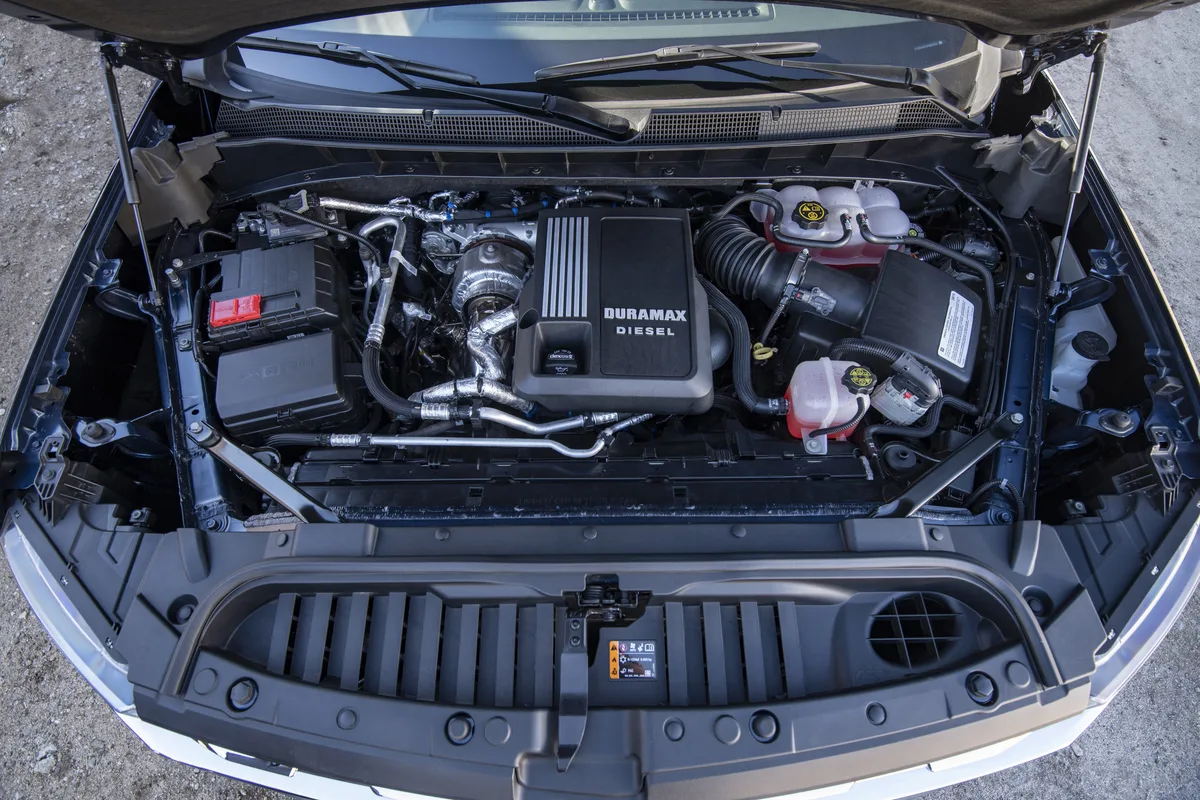
Dexos1 Gen 3 replaced Gen 2 in September 2022. It covers virtually every GM gasoline engine from 2011 onward. That includes the 5.3L and 6.2L small-block V8s, the 2.7L turbo four, the 3.6L V6, and most turbocharged four-cylinder GDI engines across Chevrolet, GMC, Buick, and Cadillac.
If your GM burns gas and isn't a Corvette or Blackwing, this is almost certainly the spec you need.
The Gen 3 upgrade tightened LSPI protection, aeration control, and timing chain wear limits. It's fully backward compatible, so Gen 3 oil is safe to use anywhere Gen 2 was previously specified.
Dexos D (Light-Duty Diesel)
Dexos D covers the 3.0L LM2 and LZ0 Duramax inline-six diesels. You'll find these in the Silverado 1500, Sierra 1500, Tahoe, Yukon, Suburban, and Escalade. It runs a low-SAPS chemistry to protect the diesel particulate filter (DPF).
A gasoline dexos1 oil in one of these engines will clog the DPF and set emissions faults.
Dexos R (High-Performance LT Engines)
Dexos R launched for the 2019 Corvette ZR1. It now covers the Corvette C8, Camaro ZL1, and the CT4-V and CT5-V Blackwing. These engines run hotter, spin harder, and demand higher HTHS viscosity than a standard dexos1 formulation delivers.
Dexos R is typically supplied as a 0W-40 grade.
Dexos2 (Legacy Spec Being Phased Out)
Dexos2 was the European-market spec for Opel and Vauxhall gasoline and diesel engines. GM is retiring it as those brands leave the portfolio. If your vehicle's manual calls for dexos2 and you can't find fresh stock, GM has published bulletins allowing dexos D or an ACEA C3 oil as a substitute in most cases.
Check the specific service bulletin for your VIN before switching.
How to Find the Right Dexos Oil for Your GM Vehicle
Finding the correct oil is a straightforward decision tree. Follow it in order and you can't go wrong.
- Step 1: Open the owner's manual to the "Recommended Fluids and Lubricants" page. It states the exact dexos spec and the exact SAE viscosity grade.
- Step 2: Note the viscosity. Most modern GM gas engines call for SAE 0W-20. Some older ones use 5W-30. Diesels typically call for 0W-20 dexos D. Corvette LT2/LT6 uses 0W-40 dexos R.
- Step 3: At the store, pick up any bottle in that viscosity that shows the licensed dexos logo for your spec.
- Step 4: Cross-check the license number at gmdexos.com if you want to be certain the batch is current.
- Step 5: Buy the correct capacity for your sump (6 quarts for the 5.3L, 8 quarts for the 6.2L, 10 quarts for the 3.0L Duramax).
For anyone doing this at home, our beginner's walkthrough for a first oil change covers the mechanical side once you've picked the right bottle.
Decoding the Dexos Logo and License Number on the Bottle
The dexos logo isn't decorative. It's a licensed trademark that only appears when GM has certified the formulation. Every approved bottle carries three things you can verify by eye.
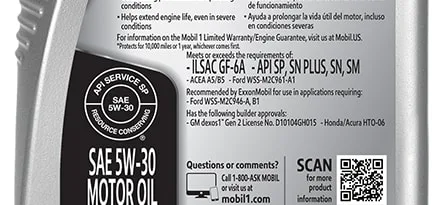
Look for these on any bottle claiming dexos approval:
- The dexos wordmark with a small trademark symbol, printed in the current GM-approved font
- The spec family, printed as "dexos1 Gen 3", "dexos D", or "dexos R"
- A unique license number, usually formatted like "D1G3-XXXXXXX", "DD-XXXXXXX", or "DR-XXXXXXX"
Type that license number into the official GM licensed dexos product database and it returns the exact brand, product name, and viscosity grades covered by that license. If nothing comes back, the bottle isn't legitimately approved, no matter what the front label promises.
Counterfeit and expired licenses do show up on lower-volume shelves. This 30-second check protects your warranty and your engine.
"Meets or Exceeds Dexos" vs. Actually Licensed: Why the Wording Matters
This is where most GM owners get burned. A bottle that reads "meets or exceeds dexos1 specifications" is not the same as a bottle carrying the licensed dexos1 Gen 3 logo. Only the licensed product has been tested and approved by GM.
Some reputable brands do publish self-certified formulations. They may genuinely meet the technical limits. But GM's warranty language is specific: the oil must carry a valid dexos license, not just claim equivalence.
Aggregate reviews of warranty denials show this wording is the single most common reason a claim gets pushed back.
The safe rule is simple:
| Label wording | Warranty-safe? |
|---|---|
| Licensed dexos logo + valid license number | Yes |
| "Meets or exceeds dexos1 specifications" (no logo) | No |
| "For use in vehicles requiring dexos1" (no logo) | No |
| API SP / ILSAC GF-6A only, no dexos mention | No |
If the logo isn't on the bottle, treat the oil as unapproved for warranty purposes, even if the chemistry looks identical on paper.
Matching Viscosity to Your Engine and Climate
Viscosity is the second half of the answer. Getting the dexos spec right and the viscosity wrong still causes problems. Your owner's manual is the authority here, not the counter person at the parts store.
Most 2011+ GM gasoline engines are factory-filled with SAE 0W-20 dexos1 Gen 3. Older 5.3L and 6.2L V8s (roughly 2007 to 2013) called for 5W-30. The 3.0L Duramax uses 0W-20 dexos D.
Corvette LT2, LT4, LT5, and LT6 engines use 0W-40 dexos R.
| Engine family | Viscosity | Dexos spec |
|---|---|---|
| Ecotec 2.7L Turbo, 5.3L L82/L84, 6.2L L86/L87 | 0W-20 | dexos1 Gen 3 |
| Older 5.3L LMG, 6.0L LY6, 6.2L L92/L9H | 5W-30 | dexos1 Gen 3 |
| 3.0L LM2/LZ0 Duramax | 0W-20 | dexos D |
| LT2 (C8 Corvette), LT4, LT5, LT6 | 0W-40 | dexos R |
Climate doesn't change the dexos family, only the viscosity guidance inside it. GM publishes cold-weather charts in the manual. Below -20°F, stick to a 0W grade even if the manual lists 5W as an option.
Dexos-Licensed Oils Worth Knowing
Plenty of major brands hold current dexos licenses. Any of the following can be found on shelves as of 2026 with a valid dexos1 Gen 3, dexos D, or dexos R license printed on the bottle.
- ACDelco dexos1 Gen 3 Full Synthetic: the GM OEM brand, sold at every dealer parts counter
- Mobil 1 Extended Performance: dexos1 Gen 3 licensed in 0W-20 and 5W-30
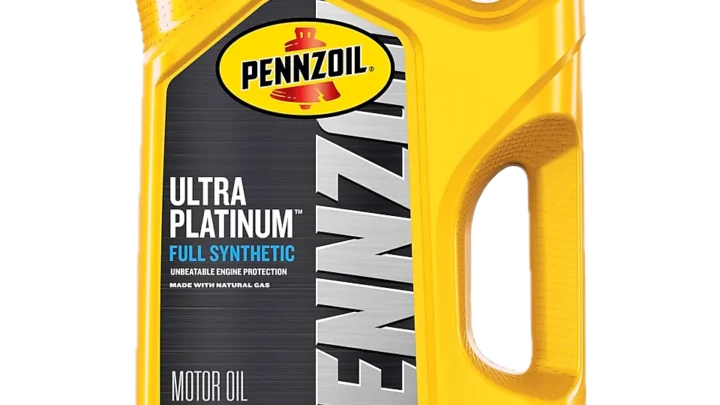
- Pennzoil Platinum Full Synthetic: dexos1 Gen 3 across the common grades
- Valvoline Restore & Protect Full Synthetic: dexos1 Gen 3 licensed
- Castrol Edge Full Synthetic: dexos1 Gen 3 in 0W-20 and 5W-30
- Quaker State Ultimate Durability: dexos1 Gen 3 licensed
- Mobil 1 ESP Formula: commonly carries dexos D for the 3.0L Duramax
- Mobil 1 FS 0W-40: the current dexos R factory fill for LT2/LT6
Verified buyer feedback consistently ranks these as the go-to options because they are widely stocked and priced competitively. Expect $28 to $55 per 5-quart jug depending on brand, spec, and viscosity. Dexos R and dexos D typically sit at the top of that range.
Store-brand full synthetics from major retailers can also carry the dexos1 Gen 3 license. Check the logo, check the number, and treat all licensed oils as equivalent for warranty purposes.
Mistakes That Cost GM Owners Money
Most dexos-related engine problems trace back to a handful of avoidable mistakes. Manufacturer specifications and independent forum data both point to the same short list.
- Pouring dexos1 into a 3.0L Duramax: gasoline-spec oil clogs the DPF and triggers emissions faults within a few thousand miles.
- Using dexos1 in a Corvette or Blackwing: HTHS viscosity is too low for the LT engine's oil pressure targets, causing accelerated bearing wear.
- Buying "meets or exceeds" oil to save $5: no license number means no warranty coverage if a claim comes up.
- Ignoring the Oil Life System: extending intervals past the OLS reading with a lower-tier oil is a documented cause of timing chain stretch on 5.3L V8s.
- Mixing an aftermarket oil additive: any bottle marked "for use with dexos oils" that isn't itself dexos licensed invalidates the oil's certification.
- Trusting a quick-lube upsell: some chains still stock non-licensed bulk oil labelled as dexos-compatible. Ask to see the drum sticker before they pour.
These same warning signs come up when you're evaluating a used GM vehicle. Our pre-purchase inspection walkthrough covers the maintenance-record checks that flag oil-related engine damage before you buy.
Dexos vs. API SP, ILSAC GF-6, and ACEA Ratings
Dexos is stricter than the mainstream American and European baselines, not looser. Understanding how the specs relate helps when you're comparing bottles.
| Spec | Issued by | Focus | Relationship to dexos1 Gen 3 |
|---|---|---|---|
| API SP | American Petroleum Institute | Baseline gasoline engine protection, LSPI | Dexos1 Gen 3 meets API SP and exceeds it |
| ILSAC GF-6A | ILSAC (US/Japan OEMs) | Fuel economy, low-viscosity gas oils | Dexos1 Gen 3 meets GF-6A and exceeds it |
| ACEA C3 / C5 | European automakers | Low-SAPS diesel and emission-system protection | Roughly parallel to dexos D chemistry |
| Porsche A40, Mercedes 229.5 | OEM-specific | High-performance European gas engines | Similar HTHS band to dexos R, not interchangeable |
The takeaway: an API SP oil is not a substitute for dexos1 Gen 3 in a warranty-covered GM engine. An ACEA C3 oil is often accepted as a legacy dexos2 substitute per GM service bulletins, but only when the manual or bulletin says so.
Never assume equivalence across specs without checking the current GM technical service bulletin for your VIN. The American Petroleum Institute's motor oil guide is a good primer if you want to see how the baseline categories are structured.
Warranty, Magnuson-Moss, and What GM Can Actually Require
GM can require you to use an oil that meets the dexos specification. It cannot legally require you to buy an ACDelco-branded product. That's what the Magnuson-Moss Warranty Act protects.
Under Magnuson-Moss, a manufacturer can't void your warranty just because you used an aftermarket product, unless they can prove that product caused the failure. In practice, using any licensed dexos oil keeps you fully compliant. GM has publicly confirmed that any dexos-approved brand is acceptable under warranty.
Where owners run into trouble is documentation. If a warranty claim gets scrutinised, you'll want:
- Dated receipts for every oil change showing the product name
- The dexos license family printed on the receipt or bottle photo
- Service records showing intervals in line with the Oil Life System
Aggregate reviews of denied claims show that most rejections come from missing records or from oil that never carried a valid license, not from choosing a non-ACDelco brand. Keep the receipts and stick to licensed oils and you're covered.
Oil Change Intervals and the GM Oil Life System
GM's Oil Life System (OLS) is an algorithm, not a mileage timer. It tracks engine temperature, RPM, cold starts, and load to calculate remaining oil life as a percentage. When it hits 0%, the dashboard shows "Change Engine Oil Soon."
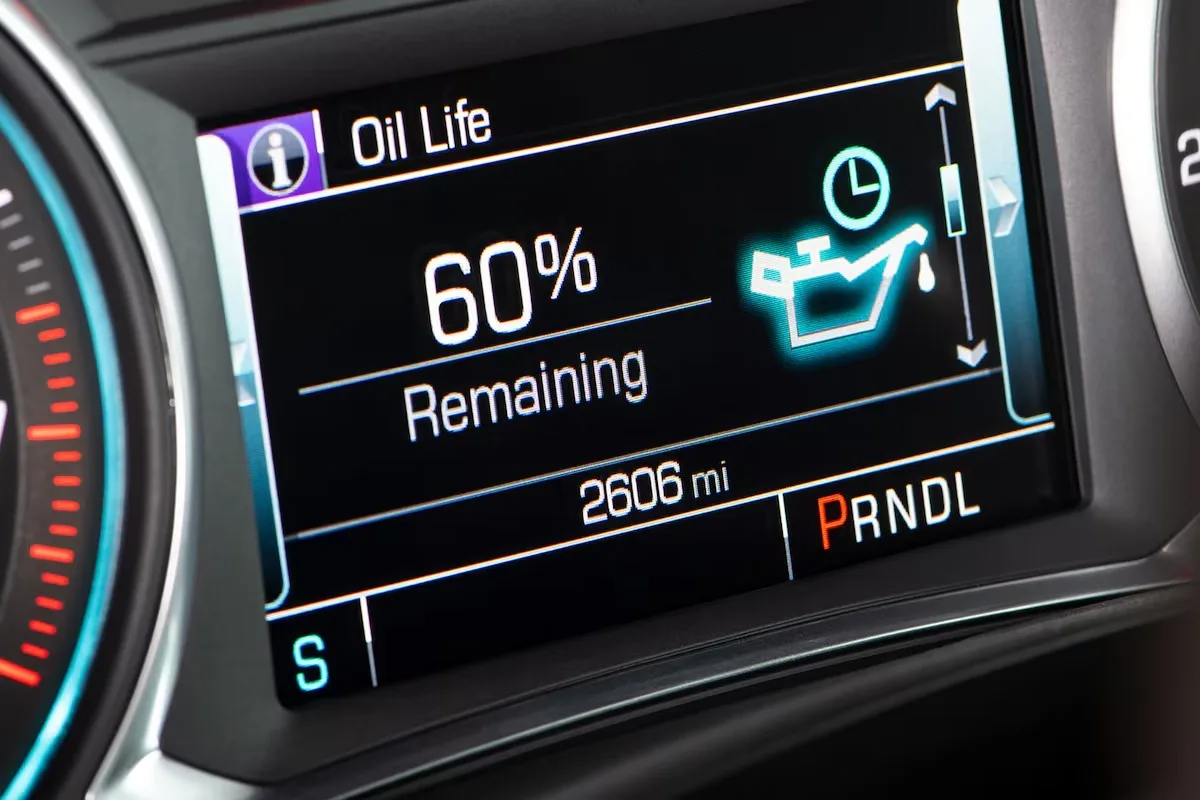
Typical intervals with a licensed dexos oil run 7,500 to 10,000 miles on gas engines and around 7,500 miles on the 3.0L Duramax. Heavy towing, short trips, or extreme cold shorten that number automatically. Never exceed the OLS reading, and never let the oil sit longer than 12 months regardless of miles.
After every change, reset the monitor from the driver information display. On most 2014+ GM vehicles, that's Menu > Vehicle Information > Remaining Oil Life > press and hold Set/Reset.
Frequently Asked Questions
Can I use any full synthetic oil in my GM vehicle?
No. Full synthetic only describes the base oil, not the additive package or GM approval. Your engine needs an oil carrying the licensed dexos logo for the correct family (dexos1 Gen 3, dexos D, or dexos R).
A premium full synthetic without the dexos license doesn't meet GM's warranty requirements.
Is dexos1 Gen 3 backward compatible with older GM engines?
Yes. Dexos1 Gen 3 replaces Gen 2 in every application, and GM confirms it's safe in any engine previously specified for Gen 2 or Gen 1. Aggregate reviews and service bulletins show no reported issues with the transition.
If your manual calls for dexos1, Gen 3 in the correct viscosity is the current answer.
What happens if I put dexos1 in a 3.0L Duramax by mistake?
Dexos1 has a higher sulfated ash content than dexos D. Over time it clogs the diesel particulate filter and can trigger emissions faults or a limp mode. A single accidental fill won't destroy the engine.
Drain and refill with dexos D as soon as you can, ideally within a few hundred miles.
How do I verify a bottle's dexos license is real?
Look up the license number on gmdexos.com, the official GM dexos database. Enter the number from the bottle and the search returns the brand, product name, and viscosity grades covered. If the search returns nothing, the license is expired, fake, or the product was never approved.
Does dexos R replace dexos1 in a Corvette?
Yes, for LT2, LT4, LT5, and LT6 engines. Dexos R has a higher HTHS viscosity and stronger high-temperature protection than dexos1, which the Corvette's dry-sump and high-output engines need. Never substitute a standard dexos1 0W-20 for the specified 0W-40 dexos R.
Your Quick Decision Guide by GM Engine
Use this as your one-stop reference at the parts counter.
| If you drive… | Use this dexos spec | Typical viscosity |
|---|---|---|
| 2011+ Silverado, Sierra, Tahoe, Yukon, Suburban (gas) | dexos1 Gen 3 | 0W-20 or 5W-30 per manual |
| 2011+ Malibu, Equinox, Traverse, Acadia, Encore | dexos1 Gen 3 | 0W-20 |
| 2020+ Silverado 1500 / Sierra 1500 3.0L Duramax | dexos D | 0W-20 |
| C8 Corvette Stingray, Z06, E-Ray | dexos R | 0W-40 |
| Camaro ZL1, CT4-V Blackwing, CT5-V Blackwing | dexos R | 0W-40 |
| Older Opel/Vauxhall vehicles calling for dexos2 | dexos D or ACEA C3 per bulletin | Per manual |
Match the spec, match the viscosity, verify the license number, and keep the receipt. That's the whole checklist for staying warranty-safe and giving your GM engine the protection it was designed around.

Similar Posts