What Does 5W-30 Mean? Motor Oil Grades Explained Simply
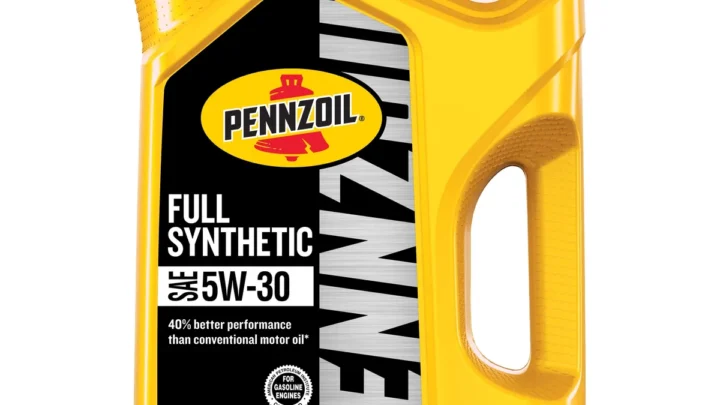
If you've picked up a jug of engine oil and wondered what does 5W-30 mean, the short answer is that it's a viscosity grade. The "5W" describes how the oil flows in cold weather. The "30" describes how it flows once the engine is up to operating temperature.
Both numbers come from a single classification system used across the industry.
That system is SAE J300, maintained by SAE International and still the reference standard as of 2026. It sets the exact viscosity limits every oil labeled 5W-30 has to meet, whether it's conventional, synthetic blend, or full synthetic. Understanding the label helps you match the right oil to your engine and skip the guesswork at the parts counter.
Here's how each part of the code actually works.
Quick Answer
5W-30 is a multi-grade engine oil viscosity rating. The "5W" is its cold-start winter flow grade. The "30" is its flow grade at 100°C.
Both numbers come from the SAE J300 standard set by SAE International. It's one of the most common grades used in modern passenger cars today.
What 5W-30 Actually Means on the Bottle
The 5W-30 marking on a bottle of engine oil is a viscosity code, nothing more. Viscosity is a fluid's resistance to flow. Cold oil flows slowly.
Hot oil flows quickly.
A passenger car engine has to start at freezing temperatures and then run at over 100°C. One grade of oil has to handle both extremes. That's why the label carries two numbers separated by the letter "W".
The first number covers cold conditions. The second covers hot. Together they tell you how the oil behaves across the full operating range your engine will actually see.
You'll find this same format on nearly every bottle you pick up, from 0W-20 to 10W-40 and everything in between. The digits shift, but the meaning stays the same. Once you can read the code, an at-home oil change becomes a lot less intimidating.
The "W" Doesn't Stand for Weight: What It Really Means
Here's a common mix-up. The "W" in 5W-30 does not stand for weight. It stands for Winter.
Old-timers and even some parts counter staff still call it "5-weight oil" out of habit. The letter is a season code, though, not a mass reference. That distinction matters.
Oil isn't measured by weight in this context at all. It's measured by how thick or thin it acts at specific temperatures. Calling it "weight" leads people to think a higher number means a heavier or denser oil, which isn't how the SAE grading system actually works.
So when someone says "10-weight" or "30-weight," they mean the SAE viscosity grade. The vocabulary is just loose. Stick with "viscosity grade" and you won't get tripped up reading a spec sheet.
Breaking Down the "5W": Cold-Start Viscosity Explained
The "5W" is the winter rating. It measures how easily the oil flows in cold weather, specifically at start-up when the engine has been sitting overnight or through a cold snap. The lower this number, the better the oil pumps and circulates before the engine warms up.
Per SAE J300 testing, a 5W oil has to pass two cold-weather benchmarks:
- Cold-Crank Simulator (CCS): maximum 6,600 mPa·s at -30°C
- Mini-Rotary Viscometer (MRV): maximum 60,000 mPa·s at -35°C, with no yield stress
In plain language, a 5W oil will let your starter crank the engine and let the oil pump push oil through the galleries down to roughly -30°C. If you regularly park outside in colder conditions than that, a 0W grade is usually the smarter pick.
Breaking Down the "30": How the Oil Behaves at Engine Temperature
The "30" is the high-temperature grade. It describes how the oil flows once the engine is at normal operating temperature, which sits around 100°C at the sump for most passenger cars. This is the number that decides whether your oil is thick enough to protect bearings and cam surfaces under load.
For any SAE 30 grade oil, the kinematic viscosity at 100°C must land between 9.3 and 12.5 cSt. On top of that, SAE J300 requires a minimum High-Temperature High-Shear (HTHS) viscosity of 2.9 mPa·s at 150°C.
HTHS matters because engine oil sees very high shear conditions between moving parts. You want the oil film to stay intact when it's stressed and hot. If the film breaks down, metal-on-metal contact starts wearing components fast.
Higher second numbers like 40 or 50 give a thicker film at temperature. That can help older or high-performance engines. It also creates more drag and can hurt fuel economy in engines designed for thinner oils.
How SAE J300 Sets These Numbers (The Standard Behind the Label)
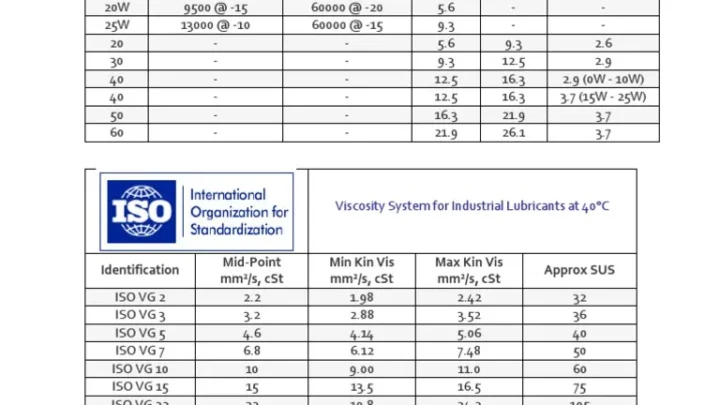
Every viscosity grade you see on a bottle traces back to one document, SAE J300, maintained by SAE International. It's the industry-wide rulebook that defines what "5W" and "30" mean in terms of measurable, lab-verified properties. Any oil sold as 5W-30 has to meet both the 5W cold-flow limits and the SAE 30 hot-flow limits.
Without this standard, "5W-30" would mean whatever a marketing team wanted it to mean. With it, an off-brand jug from a discount store and a premium full synthetic have to hit the same viscosity targets to earn the label.
| SAE Grade | Key Test Limit | Temperature |
|---|---|---|
| 5W | CCS ≤ 6,600 mPa·s | -30°C |
| 5W | MRV ≤ 60,000 mPa·s | -35°C |
| 30 | Kinematic viscosity 9.3 to 12.5 cSt | 100°C |
| 30 | HTHS ≥ 2.9 mPa·s | 150°C |
Cold-Crank Simulator (CCS) and Mini-Rotary Viscometer (MRV)
Two ASTM test methods handle the cold side. The CCS test (ASTM D5293) mimics starter-motor conditions to check crankability at low temperature. The MRV test (ASTM D4684) checks pumpability, which is whether the oil pump can actually move the oil through the engine once it starts.
Kinematic Viscosity and HTHS at 150°C
For the hot side, ASTM D445 measures kinematic viscosity at 100°C. A separate HTHS test (ASTM D4683 or D4741) then simulates the shear stress inside a running engine at 150°C. Together, these results tell you how the oil flows and how well its film holds up under real load.
Is 5W-30 Right for Your Engine? A Quick Decision Workflow
The single best source of truth for what oil belongs in your car is the owner's manual, not the parts counter or a forum thread. Follow this workflow before you buy.
If Your Manual Specifies 5W-30
You're set. Buy a 5W-30 that also meets the API, ILSAC, or OEM specs listed in the manual (more on those in the next section). Stick with that grade year-round unless the manual gives a separate cold-weather recommendation.
If Your Manual Specifies a Different Grade (0W-20, 5W-20, 5W-40)
Do not substitute 5W-30 out of habit or because it's cheaper. Modern engines are engineered for a specific HTHS range, oil pump pressure, and clearances. Using 5W-30 in an engine designed for 0W-20 can lower fuel economy and trigger oil consumption.
Going from 5W-30 to 5W-40 in a small turbo engine can foul variable valve timing and hydraulic lifters.
If You Drive in Extreme Cold or Extreme Heat
If temperatures where you park regularly drop below -25°C, look for a 0W-30 that carries the same OEM approval as your recommended 5W-30. In extreme heat with heavy loads (towing, mountain driving, hot desert climates), your manual may list 5W-40 or 10W-40 as an alternative. Follow that guidance, not general internet advice.
Reading the Full Label: API, ILSAC, ACEA, and OEM Approvals
The viscosity grade only tells you how the oil flows. The approvals printed on the back tell you what standards the additive package meets. Skipping this part is how people accidentally void warranties.
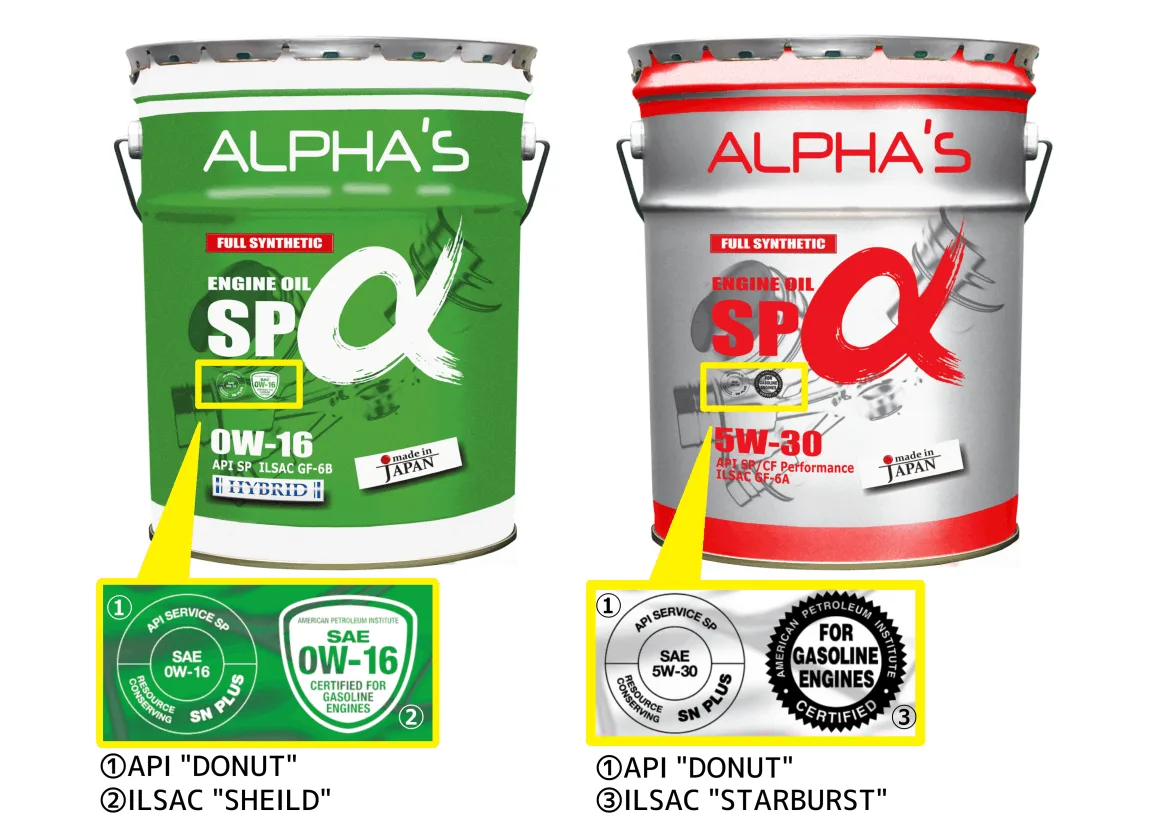
Here's what to look for on a bottle of 5W-30:
- API Service Category: current gasoline spec is API SP (with the API donut symbol). Diesel-capable oils carry CK-4 or FA-4.
- ILSAC Certification: GF-6A is the current mark for xW-30 grades, and the ILSAC starburst confirms the oil is fuel-economy rated and licensed.
- ACEA Sequence: European vehicles typically need an ACEA C-class (C2, C3, C5) or A3/B4 5W-30, depending on the emissions system.
- OEM Approval: look for the manufacturer's own code, such as GM dexos1 Gen 3, Ford WSS-M2C946-B1, MB 229.51, VW 502.00, or BMW LL-04.
If your manual lists a specific OEM code, that code has to appear on the bottle. Two 5W-30 oils can hit the same SAE grade and still be wildly different in additive chemistry.
Conventional vs Synthetic Blend vs Full Synthetic 5W-30
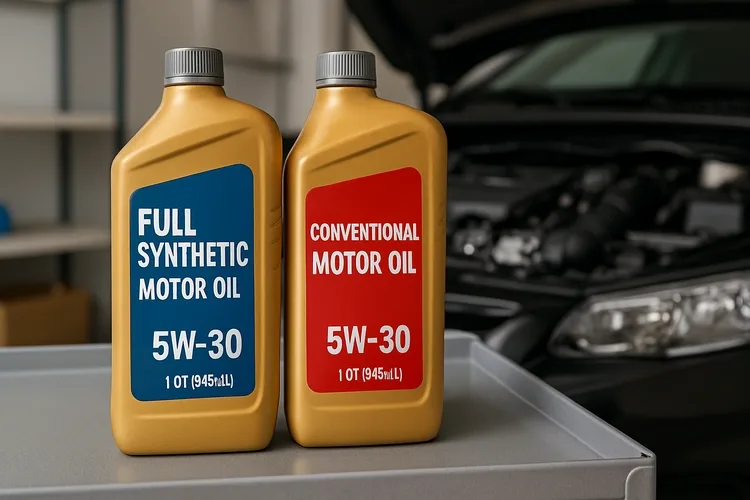
The viscosity grade doesn't change based on formulation. A conventional 5W-30 and a full synthetic 5W-30 both meet the same SAE J300 targets. What changes is the base oil quality, how the additives hold up, and how long the oil stays in grade.
| Formulation | Base Oil | Typical Drain Interval | Best For |
|---|---|---|---|
| Conventional | Group I/II mineral | 3,000 to 5,000 miles | Older engines, mild climates, per-manual use |
| Synthetic Blend | Mineral + Group III/IV mix | 5,000 to 7,500 miles | Mid-mileage vehicles wanting extra margin |
| Full Synthetic | Group III/IV/V | 7,500 to 15,000 miles | Modern turbo GDI, extreme temps, longer intervals |
| High-Mileage | Blend or synthetic + seal conditioners | 5,000 to 10,000 miles | Vehicles over 75,000 miles with mild leaks or burn-off |
Full synthetic 5W-30 handles heat, shear, and oxidation better than conventional. That's why almost every new car with a factory-fill oil ships with full synthetic. If your manual calls for a synthetic 5W-30 (dexos1 Gen 3 is a good example), a conventional oil won't meet the spec even if the grade matches.
5W-30 vs Nearby Grades (5W-20, 0W-30, 10W-30, 5W-40)
Small changes in the numbers create real differences in how the oil behaves. Here's the quick read on each nearby grade.
| Grade | Cold Behavior vs 5W-30 | Hot Behavior vs 5W-30 | Typical Use |
|---|---|---|---|
| 5W-20 | Same cold flow | Thinner at operating temp | Many late-model Ford, Honda, Toyota engines |
| 0W-30 | Better cold-start | Same hot viscosity | Cold climates, modern European diesels |
| 10W-30 | Slower cold flow | Same hot viscosity | Warm climates, older engines, small engines |
| 5W-40 | Same cold flow | Thicker at operating temp | European turbo diesels, high-performance engines |
The most common swap people ask about is 5W-30 to 5W-20 or vice versa. Both start the same cold, but 5W-20 is measurably thinner at 100°C. Manufacturers pick 5W-20 to squeeze out fuel economy in engines with tight bearing clearances and low-tension piston rings.
Going the other way (5W-30 into an engine designed for 5W-20) can raise oil pressure and drop fuel economy by about 1 to 2 percent. It won't destroy the engine, but it isn't free either. Always default to the manual.
Where 5W-30 Fits Best: Vehicles, Climates, and Driving Styles
5W-30 is the most widely specified passenger car grade in North America. It's the factory fill for a huge slice of GM, Ford, Stellantis, and Nissan gasoline engines from roughly 2000 onward, along with many European vehicles running ACEA C3 or A3/B4 formulas.
Climate-wise, 5W-30 covers most of the continental US, Canada down to about -25°C ambient, most of Europe, and the majority of Australia. In genuinely arctic conditions or in vehicles that live outside through Alberta or Minnesota winters, a 0W-30 with matching OEM approval is a smart cold-weather upgrade.
Driving style matters, too. If your mix is stop-and-go city driving, short trips, or towing, 5W-30 handles it well when you stick with a quality synthetic and change on the OEM's severe service interval. Fleet operators lean on 5W-30 for the same reason DIYers do: it's compatible with a wide range of vehicles and easy to source.
A quick oil check is also worth doing during a used-vehicle walkaround, since dark, gritty oil or the wrong viscosity in the sump can hint at deferred maintenance.
Common Mistakes People Make With 5W-30
The wrong-grade swap tops the list. People grab 5W-30 because it's on the shelf, even when their vehicle calls for 0W-20 or 5W-40. The grade on the cap has to match the grade in the manual, full stop.
Ignoring the OEM approval is next. Two 5W-30 oils can share the SAE grade and still fail your vehicle's spec because the additive package doesn't hit dexos1 Gen 3 or MB 229.51.
Other frequent misses:
- Topping up with a different viscosity in a pinch, then leaving it that way until the next change
- Assuming synthetic and conventional 5W-30 are interchangeable when the manual specifies synthetic
- Stretching drain intervals on a conventional oil past 5,000 miles
- Mixing brands mid-interval when there's a leak or burn-off, without checking spec compatibility
- Trusting a jiffy shop sticker instead of confirming which oil actually went in
What Happens If You Use the Wrong Viscosity Grade
Short answer: the engine usually keeps running, but the trade-offs stack up over time. The severity depends on how far off the grade is and how long it stays in.
Running 5W-30 in an engine specced for 5W-20 typically drops fuel economy by 1 to 2 percent. It can also raise cold-start oil pressure enough to trip fault codes on some late-model engines.
Running 5W-20 in an engine specced for 5W-30 or 5W-40 is riskier. Thinner oil under sustained load can drop the HTHS film below the safe zone, which shows up as accelerated cam and bearing wear over tens of thousands of miles.
Going way off, say 10W-40 in a modern turbo GDI engine designed for 0W-20, can foul variable valve timing solenoids, delay oil pressure at start-up, and clog fine oil galleries. It also voids most powertrain warranties.
Pro Tips for Buying and Using 5W-30 the Right Way
Check the manual first, every time. Manuals occasionally update the recommended grade across model years, so don't rely on what you bought three cars ago.
Match the approval code exactly. If the manual says "meets dexos1 Gen 3," the bottle needs that language or the current dexos R replacement, not just a generic API SP.
A few more research-backed habits worth adopting:
- Buy the largest jug that fits your interval. 5-quart jugs of full synthetic 5W-30 typically run $25 to $45 as of 2026 and cost less per quart than singles.
- Verify the API donut and ILSAC starburst on the container. Off-spec oils sometimes skip these marks.
- Keep the receipt and the empty jug label until your next change, in case of a warranty claim.
- Reset the oil life monitor after every change. A missed reset can push you past the OEM interval by thousands of miles.
- Store spare oil upright, out of direct sunlight, and use it within a few years of the manufacture date printed on the bottle.
Frequently Asked Questions About 5W-30 Motor Oil
Is 5W-30 good for high mileage engines?
Yes, and there are 5W-30 formulations designed specifically for higher-mileage vehicles. High-mileage 5W-30 blends add seal conditioners and slightly higher levels of anti-wear additives to help engines with minor leaks or oil burn-off. Verified buyer feedback reports fewer visible leaks and steadier oil consumption once switched over.
Can I use 5W-30 instead of 5W-20?
Only if your owner's manual lists both grades as acceptable. Some manufacturers approve 5W-20 for fuel-economy testing and 5W-30 as an option in hotter climates or under heavy loads. If your manual only calls out 5W-20, stick with it to avoid drops in fuel economy and possible fault codes.
Does 5W-30 work in diesel engines?
Sometimes, but never assume. Many light-duty diesels take a 5W-30 that meets ACEA C3 and a specific OEM code such as MB 229.51 or VW 507.00. A gasoline-only 5W-30 with API SP alone is not the right oil for a modern diesel with a particulate filter.
How often should I change 5W-30 oil?
Follow the interval in your owner's manual, which varies by formulation. Conventional 5W-30 typically runs 3,000 to 5,000 miles. Full synthetic 5W-30 often runs 7,500 to 10,000 miles, and some OEM-approved synthetics stretch to 15,000 miles.
Severe service (short trips, towing, dusty roads) usually cuts those numbers in half.
Is full synthetic 5W-30 worth the extra cost?
For most modern engines, yes. Full synthetic 5W-30 holds its viscosity longer, protects better at high temperatures, and enables longer drain intervals that offset the higher up-front price. Turbocharged and direct-injected engines especially benefit from the improved oxidation and shear stability.
The Bottom Line on Choosing 5W-30
5W-30 is a viscosity grade, not a brand or a quality tier. The "5W" is its cold-start winter rating, the "30" is its hot-operating rating, and both are defined by SAE J300 with lab-verified test limits.
The right 5W-30 for your car is whichever one meets your manual's viscosity call and its API, ILSAC, ACEA, or OEM approvals. Match those two things, pick the formulation your driving conditions justify, and change it on schedule. Do that consistently and the label on the bottle stops being a mystery and starts being a spec sheet you can read at a glance.

Similar Posts