Motor Oil Viscosity Chart: How to Pick the Right Grade
A motor oil viscosity chart tells you exactly how thick or thin your engine oil behaves across the full temperature range your engine sees. It's the single most important thing to get right when you're standing in front of a shelf of 0W-20, 5W-30, and 10W-40 bottles. Pick the wrong grade and you risk cold-start wear, oil starvation, or a voided warranty.
Pick the right one, and your engine gets steady lubrication whether it's -20°F outside or 110°F.
Every chart sold in North America follows SAE J300, the standard that defines every viscosity grade licensed as of 2026. In our research, most drivers glance at the bottle, guess based on habit, and skip the manufacturer spec entirely. That's where the problems start.
Here's how the chart really works.
Quick Answer
A motor oil viscosity chart maps SAE grades against temperature and shear conditions. The first number followed by a W is the cold-weather rating. The second number is the hot-operating viscosity at 100°C.
Lower numbers flow thinner. Higher numbers stay thicker under heat. Always match your grade to the OEM spec in your owner's manual.
What a Motor Oil Viscosity Chart Actually Shows You
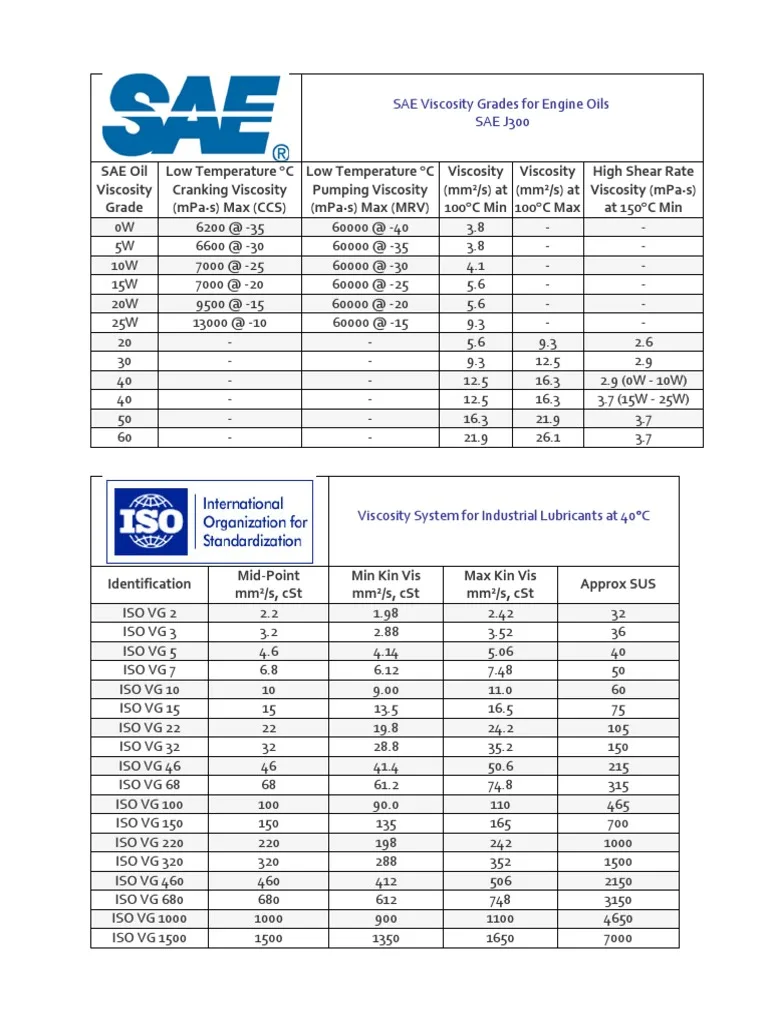
A viscosity chart is a lookup grid. On one axis sit the SAE winter grades from 0W through 25W. On the other sit the operating grades from 16 through 60.
The grid tells you two things. How well the oil pumps in the cold. How thick it stays once the engine is hot.
This isn't a marketing tool. It's a compliance framework. SAE International publishes the J300 standard that every licensed engine oil must meet before carrying an SAE grade on the label.
A bottle marked 5W-30 has to pass the cold-cranking test for 5W and the kinematic viscosity test for 30.
Think of the chart as a translator. On one side is what your engine needs. On the other is what the bottle can actually deliver.
The Two Numbers on Every Oil Bottle, Decoded
Every multi-grade oil has two numbers separated by a W. Together they tell the full behavior story.
What does the W actually stand for?
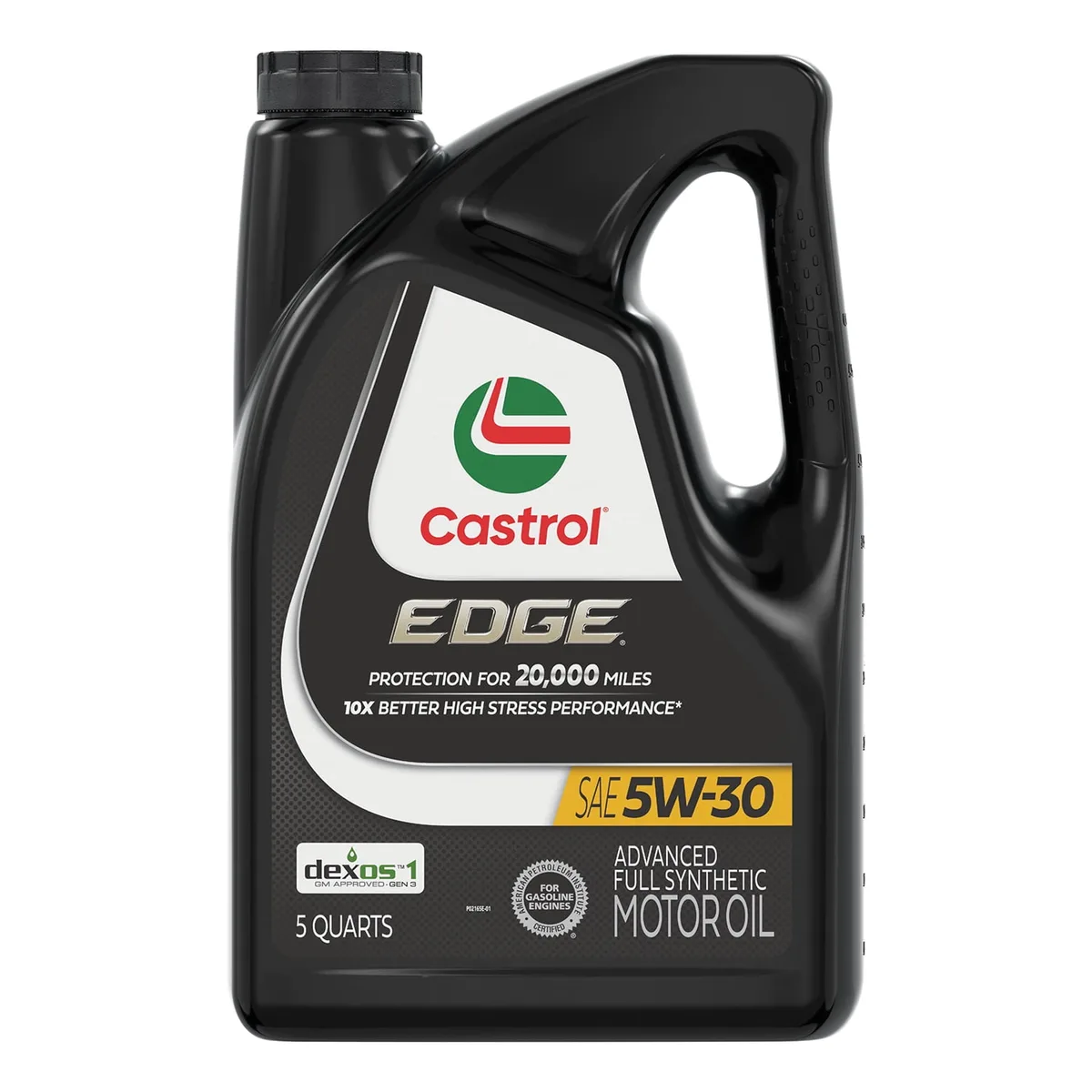
The W stands for Winter, not Weight. Fix that in your head first. The number in front of the W (the 5 in 5W-30) rates how easily the oil pumps at cold-start temperatures.
Lower is better in the cold. A 0W flows better at -35°C than a 5W, and a 5W beats a 10W.
What does the second number mean?
The second number is the oil's kinematic viscosity at 100°C, measured in centistokes (cSt). A 30-grade oil is thinner at operating temperature than a 40. A 20 is thinner still.
Modern engines with tight tolerances usually want thinner grades for efficiency. Older engines with wider clearance often want thicker grades for cushion.
What the numbers don't tell you
The label doesn't spell out High-Temperature High-Shear (HTHS) viscosity, and that spec matters as much as either grade number when you're planning routine engine upkeep on a modern turbo. HTHS predicts how the oil behaves in tight bearings under heat and pressure. We'll get to it in the next section.
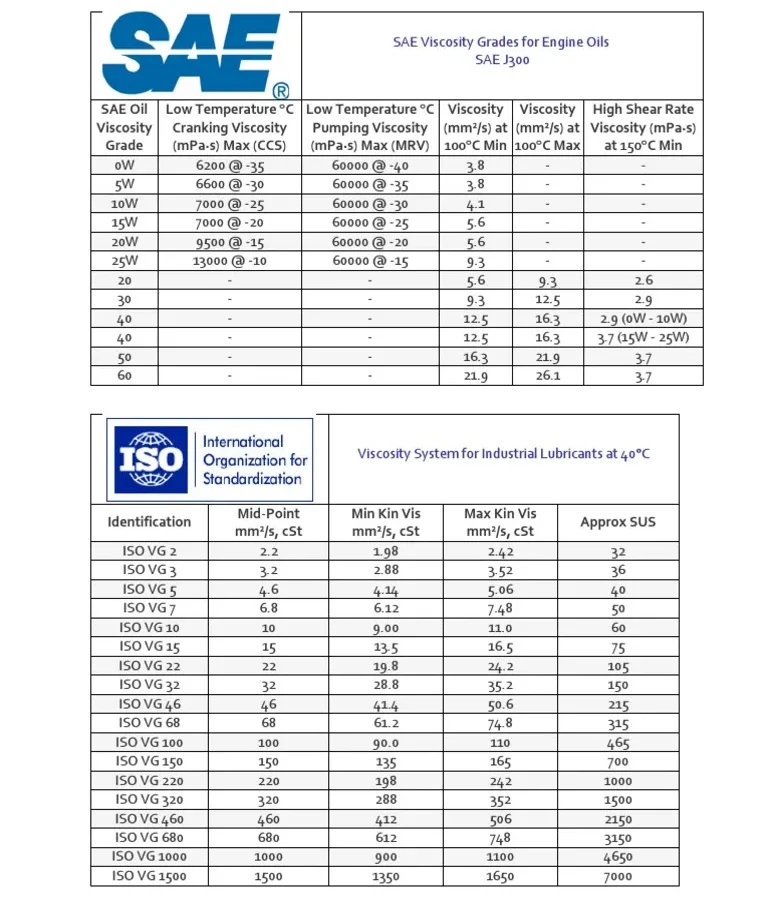
SAE J300 Viscosity Chart (Full Reference Table)
Here's what the current J300 grid looks like in practical numbers. Manufacturer specs indicate these limits are non-negotiable for a licensed grade.
Cold-Crank (CCS) and Pumpability (MRV) Limits by Winter Grade
| Winter Grade | Max CCS (cP) | CCS Test Temp | Max MRV (cP) | MRV Test Temp |
|---|---|---|---|---|
| 0W | 6,200 | -35°C | 60,000 | -40°C |
| 5W | 6,600 | -30°C | 60,000 | -35°C |
| 10W | 7,000 | -25°C | 60,000 | -30°C |
| 15W | 7,000 | -20°C | 60,000 | -25°C |
| 20W | 9,500 | -15°C | 60,000 | -20°C |
CCS predicts how hard your starter has to work in the cold. MRV predicts whether the oil pump can actually move the oil once the engine fires.
Kinematic Viscosity Ranges at 100°C for Operating Grades
| Operating Grade | Min cSt at 100°C | Max cSt at 100°C |
|---|---|---|
| 20 | 6.9 | Under 9.3 |
| 30 | 9.3 | Under 12.5 |
| 40 | 12.5 | Under 16.3 |
| 50 | 16.3 | Under 21.9 |
| 60 | 21.9 | Under 26.1 |
HTHS Minimums Across xW-20, xW-30, xW-40, and xW-50
HTHS is measured in centipoise (cP) at 150°C under high shear. Higher HTHS means better film strength under stress.
- xW-20: 2.6 cP minimum
- xW-30: 2.9 cP minimum (3.5 for heavy-duty diesel)
- 0W/5W/10W-40: 3.5 cP minimum
- 15W/20W-40 and xW-50: 3.7 cP minimum
Matching Viscosity to Outside Temperature
Ambient temperature used to be the main driver behind grade choice. It still matters, but modern engines calibrate around a narrower range than they used to.

Sub-Zero and Arctic Climates
If temperatures regularly drop below -20°F, a 0W-something is the safe pick. 0W-20, 0W-30, and 0W-40 all pump reliably down to roughly -40°F. Skip 10W and 15W grades in these regions. Cold-start oil starvation is real, and it kills engines silently.
Hot Desert and High-Load Conditions
In Arizona summers, Middle East heat, or towing over mountain passes, the second number carries more weight. Look for grades with strong HTHS numbers. A 5W-40 or 10W-40 gives more cushion under sustained heat than a 5W-20.
Don't override your OEM spec just because it's hot outside.
Temperate and Four-Season Regions
Most of the continental U.S. and UK sits in the temperate band. A modern 0W-20 or 5W-30 covers the full year without seasonal switching. If you're on the fence, follow the chart in your owner's manual for your specific climate zone.
How to Read Your Owner's Manual Viscosity Chart
Your owner's manual is the final word, not the SAE chart on the back of the bottle.

Open the lubrication section. You'll usually see a small graphic showing viscosity grades stacked against a temperature scale. Follow these steps to read it right:
- Find your engine variant. Manuals often list multiple engines with different oil recommendations.
- Locate the temperature band that matches your local climate.
- Note every approved grade in that band. Some manuals allow 5W-30 or 0W-20 in the same zone.
- Check for an OEM approval code (dexos1 Gen 3, VW 504.00, BMW LL-01, MB 229.5). This overrides the generic SAE grade.
- Match both the grade and the approval when buying oil.
The same care applies when you're checking a used car before purchase. Whatever oil the previous owner ran is now part of the engine's history, and a mismatched grade is worth investigating.
Common Grade Comparisons Drivers Actually Face
Most viscosity questions come down to two grades sitting side by side on the shelf. Here's how the practical differences shake out.
0W-20 vs 5W-20
Both have the same hot viscosity. The 0W flows better at very cold starts. OEM data indicates 0W-20 drops CCS from around 6,600 cP to 6,200 cP at their respective test temperatures.
If you park outside in a cold climate, 0W-20 gives measurable protection at the start. In garaged or mild conditions, 5W-20 works fine and often costs less.
5W-30 vs 10W-30
Same story, different band. 5W-30 pumps at -30°C. 10W-30 only guarantees pumpability to -25°C. For most passenger cars built after 2010, the manufacturer already spec'd 5W-30 or thinner. 10W-30 mostly lives on in older domestic V8s, small engines, and some diesel applications.
5W-40 vs 15W-40 for Diesel
Heavy-duty diesel is where thicker grades still dominate. 15W-40 has been the fleet workhorse for decades because it's cheap, shear-stable, and holds film strength under load. 5W-40 is the modern synthetic upgrade with better cold-start behavior and often longer drain intervals. If you tow year-round in variable weather, 5W-40 usually wins on total wear.
Viscosity Choices by Engine Type
Not every engine reads the chart the same way. What works for a 2005 pickup can wreck a 2023 turbo four-cylinder.
Turbocharged and Direct-Injection Engines
Modern turbo GDI engines run tight bearing clearances and see extreme heat around the turbo shaft. They demand oils with strong HTHS numbers and Low-Speed Pre-Ignition (LSPI) protection. That's why API SP and ILSAC GF-6A came into force.
Never drop below your OEM viscosity on a turbo. Coked bearings and cracked pistons follow.
High-Mileage Engines Past 75,000 Miles
Older engines with worn seals and wider clearances sometimes benefit from a slightly heavier grade. Bumping a 5W-20 up to 5W-30 can quiet lifter noise and slow oil consumption. Don't jump two grades.
Going from 5W-20 to 10W-40 chokes cold-start flow. A dedicated high-mileage formula with seal conditioners is often smarter than a big viscosity change.
Diesel, Motorcycle, and Small-Engine Applications
Diesel engines need Heavy-Duty Engine Oil (HDEO) rated CK-4 or FA-4, typically in 15W-40 or 5W-40. Motorcycles with wet clutches need JASO MA or MA2 rated oil, since car oils with friction modifiers cause clutch slip. Small engines (mowers, generators) usually spec straight SAE 30 or 10W-30, and swapping to synthetic 5W-30 is fine unless the manual forbids it.
OEM Approvals That Override the Generic Chart
An OEM approval trumps the SAE grade every time. Two 5W-30 oils can behave very differently once shear, deposits, and additive chemistry come into play.
Common approvals to watch for:
| Approval | Applies To | What It Means |
|---|---|---|
| dexos1 Gen 3 | GM gasoline | LSPI protection, aeration control |
| dexos R | GM Corvette/performance | High shear, high heat |
| dexos D | GM light-duty diesel | DPF-compatible ash levels |
| VW 504.00 / 507.00 | VAG gas/diesel | Low SAPS, extended drain |
| MB 229.5 / 229.52 | Mercedes-Benz | Full-SAPS or mid-SAPS long-life |
| BMW LL-01 / LL-04 / LL-14 FE+ | BMW | Longlife with SAPS variants |
| Porsche C20 / C30 / A40 | Porsche | Model-specific film strength |
| Ford WSS-M2C9xx | Ford Ecoboost, Coyote, etc. | Ford-specific chemistry |
If your engine calls for dexos1 Gen 3, a generic 5W-30 without that certification isn't a substitute. Watch for the American Petroleum Institute donut and the OEM approval printed on the back label. Both matter.
Getting this right on service intervals is part of any solid DIY oil change routine.
Mistakes People Make When Picking a Viscosity
Grade confusion is common, and most of it comes from the same handful of misreadings.
- Reading the W as Weight. It's Winter cranking, not oil weight. Thinking 10W is thicker than 5W at all temperatures is wrong.
- Ignoring the OEM approval. A 5W-30 without dexos1 Gen 3 in a modern GM engine can trigger LSPI events.
- Bumping viscosity for "extra protection." Modern engines have oil galleries and VVT solenoids sized for a specific viscosity. Too thick means slow flow to the top end.
- Copying a neighbor's grade. Their engine, climate, and mileage aren't yours.
- Mixing grades during top-off. It's better than running low, but avoid making it a habit.
- Chasing fuel economy grades on old engines. Dropping a 1998 truck from 10W-30 to 0W-20 usually spikes oil consumption.
Buying a used vehicle? Check what oil the seller actually ran during your pre-purchase inspection walkthrough. Habitually wrong viscosity leaves fingerprints inside the engine.
What Happens When You Run the Wrong Grade
Wrong grade doesn't always cause immediate failure. It usually shows up as accelerated wear you won't notice until the damage is done.
Too thin for the spec:
- Low HTHS starves bearings under high load
- Increased oil consumption through ring lands
- Higher wear rates on cam lobes and timing chains
- Potential turbo bearing damage under sustained boost
Too thick for the spec:
- Slow oil pressure buildup on cold starts, meaning dry-start wear
- Poor flow to top-end components, especially VVT actuators
- Reduced fuel economy from higher internal drag
- Timing codes on some engines because VVT can't hit target angles
The nastiest failures are the quiet ones. Sludge builds slowly. Ring wear tracks by the thousand miles.
Manufacturer specs confirm that consistent use of the wrong viscosity can cut engine life by 30 to 50 percent, even without a single dramatic failure. Oil analysis (UOA) from a certified lab catches viscosity mismatches early.
Pro Tips for Getting Viscosity Right Year-Round
A few working habits keep you out of trouble no matter the season or vehicle.
- Keep it simple with one grade. Most modern engines happily run 0W-20 or 5W-30 twelve months a year.
- Buy oil that carries both the SAE grade and the OEM approval printed on the back label. Missing approval, missing protection.
- Track your oil consumption for the first 1,000 miles after any grade change. A jump of more than a quart per 1,000 miles means the new grade doesn't fit your engine.
- Send a used oil sample to a lab once a year on higher-mileage vehicles. Wear metal trends catch viscosity problems long before compression drops.
- Store fresh oil sealed and out of temperature extremes. Base oils can oxidize on the shelf, especially conventional stocks.
- Match your filter to the drain interval you actually plan to run. A cheap filter on a 10,000-mile synthetic run is false economy.
- Don't overfill. Extra volume aerates in the crankshaft, spikes HTHS shear, and can foul the PCV system.
If a shop pushes a heavier grade "for protection," ask which OEM approval they're matching. Handling your own scheduled fluid service removes that guesswork entirely.
Motor Oil Viscosity Chart FAQs
Is 5W-30 or 10W-30 better for high mileage?
For most engines built after 2000, 5W-30 is the better default even at high mileage. It pumps faster on cold starts, which is when most wear happens. Try a dedicated high-mileage 5W-30 with seal conditioners before jumping to 10W-30.
Only move to 10W-30 if your OEM chart specifically allows it in your climate.
Can I switch between 5W-20 and 5W-30 in the same engine?
Only if your owner's manual lists both as approved. Some manufacturers (like Ford on certain Coyote engines) permit either grade depending on climate. Others (like most modern Toyotas) approve only one.
Running an unlisted grade may not destroy the engine, but it can void warranty coverage and shift fuel economy.
What viscosity is best for very cold weather starts?
Anything starting with 0W is your safest cold-start pick. 0W oils meet pumpability limits down to roughly -40°F, while 5W tops out near -35°F. If you're parking outside in Canada, Alaska, or northern Europe, a 0W-20, 0W-30, or 0W-40 matched to your OEM spec is worth the small price bump.
Does thicker oil mean better engine protection?
Not usually. Thicker oil only helps if the engine was designed for it. Modern engines have tight bearing clearances and narrow oil galleries.
Too thick means slow flow, delayed pressure, and starved top-end components on cold starts. Match the OEM spec first. Only bump up one grade if oil consumption or noise justifies it.
How often does the SAE J300 chart get updated?
SAE J300 sees revisions every few years as engines evolve. Recent updates added the 0W-8, 0W-12, and 0W-16 grades to support ultra-low viscosity gasoline engines and hybrids. Current 2026 licensed grades still follow the same core structure.
Winter rating, operating rating, HTHS minimums, and shear-stability limits.
Is synthetic oil always the right choice regardless of viscosity?
For most vehicles built after 2010, yes. Full synthetic base oils hold viscosity better under heat, shear less over time, and flow faster in the cold. Conventional oil still works in low-stress applications like older small engines.
If your OEM calls for a synthetic-only approval like dexos1 Gen 3 or MB 229.5, conventional isn't an option.

Similar Posts