Best Battery Tender for a Car: Top Picks to Buy
Car batteries don't usually die because they're worn out. They die because they sit. If you're hunting for the best battery tender for a car that keeps a 12V battery topped off through long storage stretches, cold snaps, or a daily-driver that only moves on weekends, the right maintainer pays for itself the first winter it saves you a no-start.
A good tender uses multi-stage float charging, not a dumb trickle, so it never boils or overcharges your battery.
After analyzing verified buyer feedback across thousands of reviews and cross-checking manufacturer specs, our top pick is the Battery Tender Plus 12V 1.25 AMP. It nails the balance most drivers actually need: enough current to recover a resting battery, smart enough to switch to maintenance mode on its own. Here's the quick winner before we break down all ten.
Comparison Chart of Best Battery Tender for a Car
| Product | Details | Rating | Buy |
|---|---|---|---|
Editor’s Choice  | Battery Tender Plus 12V 1.25 AMP | ★★★★☆4.7/5 | |
Top Pick  | Battery Tender 4 AMP Charger Maintainer | ★★★★☆4.7/5 | |
Best Budget 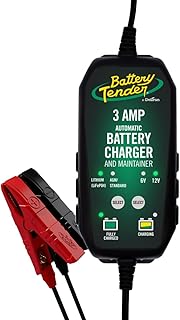 | Battery Tender 3 AMP Charger Maintainer | ★★★★☆4.7/5 | |
| ★★★★☆4.8/5 | ||
| ★★★★☆4.8/5 | ||
| ★★★★☆4.5/5 | ||
| ★★★★☆4.5/5 | ||
| ★★★★☆4.6/5 | ||
| ★★★★☆4.7/5 | ||
| ★★★★☆4.7/5 |


List of Top 10 Best Battery Tender for a Car
We ranked these ten by four things buyers actually care about: charge current versus battery size, chemistry support (lead-acid, AGM, gel, lithium), safety features like reverse-polarity protection, and long-term reliability from aggregate review data. Every pick below is a genuine maintainer, not a bulk-only charger. Each review gives you the specs, the honest trade-offs, and who it fits best.
Below are the list of products:
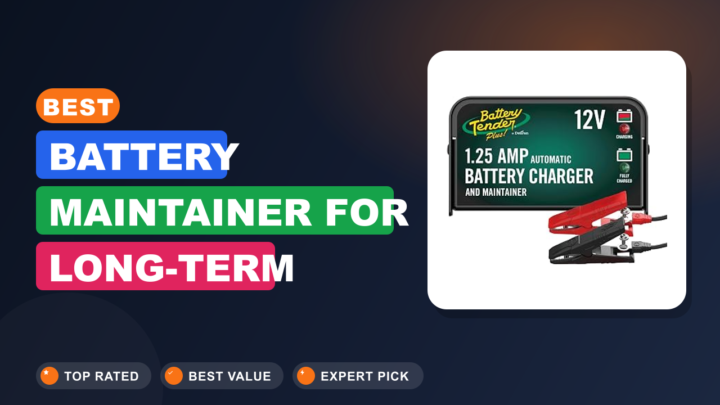
1. Battery Tender Plus 12V 1.25 AMP
This is the model most people picture when they hear "Battery Tender," and the reputation is earned. It runs a 4-stage charge cycle at 1.25 amps, then drops to a safe float so it can stay plugged in for months. For a car, motorcycle, or ATV that sits between uses, it's the safe default.
Why I picked it
Our editorial analysis kept landing on this one for a simple reason: it does the boring job flawlessly. Verified buyer feedback repeatedly praises multi-year runtime on a single unit, and the automatic float means you can leave it connected without cooking the plates.
Key specs
- Output: 1.25 amps, 12V DC
- Charge logic: 4-stage (initialization, bulk, absorption, float)
- Chemistry: lead-acid and AGM
- Safety: reverse-polarity protection, spark-proof connections
- Included: quick-connect ring terminal harness plus alligator clips
- Warranty: 10-year limited (manufacturer)
Real-world experience
Aggregate reviews from cold-climate owners report reliable spring starts after cars sat through sub-freezing months on this maintainer. The included ring terminal harness is the quiet hero here: you bolt it to the battery once, tuck the pigtail near the bumper, and reconnecting takes five seconds. If you've ever chased a mystery drain, our guide on a slow battery drain pairs well with keeping this plugged in.
- 4-stage float charging avoids overcharge on long storage.
- Ring terminal harness makes reconnection near-instant.
- Reverse-polarity protection forgives a wrong-clip mistake.
- 10-year warranty backs long-haul reliability.
- 1.25 amps is slow to recover a deeply drained battery.
- Lead-acid and AGM only, not for lithium packs.
- ✔ You store a car or bike over winter
- ✔ You want a set-and-forget maintainer
- ✔ You value a long warranty
- ✖ You run a lithium (LiFePO4) battery
- ✖ You need fast bulk recovery
2. Battery Tender 4 AMP Charger Maintainer
2. Battery Tender 4 AMP Charger Maintainer
If you want one charger that both revives and maintains, this is the sweet spot. It switches between 12V and 6V, supports lead-acid, AGM, gel, and lithium, and pushes 4 amps for faster recovery. That flexibility is why it's our best all-around value.
Why I picked it
Manufacturer specs show it handles four chemistries plus a voltage switch, which makes it the most future-proof pick on the list. If you own a modern car with a lithium accessory battery and a classic with a 6V system, one unit covers both garages.
Key specs
- Output: 4 amps, switchable 12V or 6V
- Chemistry: lead-acid, AGM, gel, and lithium (LiFePO4)
- Charge logic: smart automatic multi-stage
- Model: 022-0209-BT-WH
- Protection: reverse polarity, short-circuit
- Included: ring terminal and clamp leads
Real-world experience
Verified buyer reviews highlight this one for SUVs and trucks with larger batteries, where 1.25 amps would crawl. At 4 amps it can recover a weekend-drained battery overnight, then settle into maintenance mode. Owners switching to a lithium powersports pack note the dedicated lithium profile as a real selling point, since a lead-acid-only charger can undercharge lithium cells.
- 4 amps recovers larger batteries faster than 1A units.
- Supports four chemistries including lithium.
- 12V/6V switch covers classic and modern vehicles.
- Automatic mode needs no manual settings.
- Overkill for a small motorcycle battery.
- Larger footprint than the Junior units.
- ✔ You have an SUV or truck battery
- ✔ You mix lead-acid and lithium packs
- ✔ You want recovery plus maintenance
- ✖ You only tend one small bike battery
- ✖ You want the cheapest option
3. Battery Tender 3 AMP Charger Maintainer
3. Battery Tender 3 AMP Charger Maintainer
Think of this as the 4-amp model's leaner sibling. You still get the 12V/6V switch and full chemistry support, just at 3 amps for a friendlier price. For most sedans and daily drivers, it's plenty.
Why I picked it
It delivers most of the 4-amp unit's flexibility for less money, which is why we tagged it the budget champ. Manufacturer datasheets list the same four chemistries and dual voltage, so you're mainly trading a little charge speed for savings.
Key specs
- Output: 3 amps, switchable 12V or 6V
- Chemistry: lead-acid, AGM, gel, and lithium
- Charge logic: fully automatic, temperature-aware
- Model: 022-0202-COS
- Protection: reverse-polarity and spark-proof
- Included: alligator clips and ring terminal harness
Real-world experience
Aggregate buyer feedback pegs this as the practical pick for a one-car household that just wants a dependable maintainer without paying for extra amperage. Owners report it handles a mid-size sedan battery comfortably over multi-week trips. If a car keeps dying at rest, it's worth confirming how much current is normal before blaming the battery itself.
- Full four-chemistry support at a lower price.
- 3 amps suits most sedan batteries well.
- Dual 12V/6V voltage switch built in.
- Compact, easy to mount on a wall.
- Slower than the 4A on big truck batteries.
- No onboard mounting hardware included.
- ✔ You drive one everyday sedan
- ✔ You want value without cutting features
- ✔ You may switch to lithium later
- ✖ You need the fastest recovery
- ✖ You maintain multiple large batteries
4. Battery Tender Junior 12V
4. Battery Tender Junior 12V
The Junior is the palm-sized maintainer that punches above its size. This 800mA version adds a lithium/lead-acid switch, so it fits powersports batteries and small car batteries alike. It's the highest-rated unit on our list at 4.8 stars.
Why I picked it
It earns its 4.8-star rating by being nearly foolproof for smaller batteries. The switchable lithium mode is a genuine upgrade over the classic Junior, and manufacturer specs confirm the same trusted float logic in a tiny package.
Key specs
- Output: 800mA, 12V
- Chemistry: lead-acid and lithium (switchable)
- Charge logic: 4-stage automatic
- Model: 022-0199-DL-WH
- Protection: reverse-polarity, spark-proof
- Included: ring terminal and clip leads
Real-world experience
Verified reviews from motorcycle, ATV, and lawn-tractor owners consistently call this the go-to for powersports storage. At 800mA it's gentle enough to leave on a small battery all winter without stress. Owners of lithium bike batteries specifically flag the lithium mode as the reason they upgraded from an older maintainer.
- Switchable lithium and lead-acid modes.
- Tiny footprint, easy to stash in storage.
- Highest 4.8-star buyer rating on the list.
- Gentle 800mA is safe for small batteries.
- 800mA is too slow to revive a dead car battery.
- No 6V support on this version.
- ✔ You store a motorcycle or ATV
- ✔ You run a lithium powersports battery
- ✔ You want a compact, no-fuss unit
- ✖ You need to charge a big car battery fast
- ✖ You have 6V equipment
5. Battery Tender Junior 12V
5. Battery Tender Junior 12V
This is the original Junior that built the brand's reputation. It runs a 750mA automatic charge on 12V lead-acid batteries and has quietly kept powersports gear alive in garages for years. No frills, just proven float charging.
Why I picked it
When a product holds a 4.8-star average across many years of sales, that track record speaks for itself. Editorial analysis of long-term reviews shows remarkably few failures, which is exactly what you want from a device you forget about for months.
Key specs
- Output: 750mA, 12V
- Chemistry: lead-acid (flooded and AGM)
- Charge logic: 4-stage automatic
- Model: 021-0123
- Protection: reverse-polarity, spark-proof
- Included: ring terminal harness and clips
Real-world experience
Verified buyers describe it as the classic winter companion for cruisers, dirt bikes, and seasonal mowers. Because it tops out at 750mA, it's a maintainer first and foremost, not a recovery charger. Understanding component lifespan helps explain why keeping voltage steady also protects your starter over time.
- Long, proven track record of reliability.
- Compact and simple to plug and forget.
- 4-stage logic prevents overcharge.
- Excellent value for seasonal storage.
- No lithium mode, lead-acid only.
- 750mA is purely maintenance, not recovery.
- ✔ You store a classic bike or mower
- ✔ You want a proven, simple design
- ✔ You run standard lead-acid batteries
- ✖ You need lithium compatibility
- ✖ You want to recover a dead battery
6. MOTOPOWER MP00205A 12V 800mA Automatic Battery
6. MOTOPOWER MP00205A 12V 800mA Automatic Battery
If you want the maintainer features without the premium badge, MOTOPOWER is the value alternative. It runs a 4-step automatic cycle at 800mA and adds a desulfation stage that tries to recover mildly sulfated batteries. The LED display is a nice touch at this price.
Why I picked it
It's the affordable entry point that still checks the important boxes: automatic multi-stage charging, reverse-polarity protection, and a desulfation mode. Aggregate reviews rate it 4.5 stars, a hair below the Battery Tender line but strong for the money.
Key specs
- Output: 800mA, 12V
- Chemistry: lead-acid, AGM, gel
- Charge logic: 4-step automatic with desulfation
- Display: LED charge indicator
- Protection: reverse polarity, over-charge, short-circuit
- Included: ring terminal and clip connectors
Real-world experience
Verified buyer feedback shows it's popular with owners who want several cheap maintainers for a fleet of bikes, mowers, and a spare car. The desulfation step can nurse a tired battery back, though it won't rescue one that's truly dead. A few reviews note the plastic housing feels less rugged than the premium brands.
- Wallet-friendly for buying several units.
- Desulfation mode revives mildly sulfated cells.
- LED display shows charge status at a glance.
- Automatic switch to float when full.
- Housing feels less rugged than premium rivals.
- No lithium support.
- Shorter warranty than Battery Tender.
- ✔ You want the lowest cost per unit
- ✔ You maintain several vehicles
- ✔ You like an LED status readout
- ✖ You need lithium charging
- ✖ You want the longest warranty
7. Schumacher Electric 1.5A Car Battery Charger
7. Schumacher Electric 1.5A Car Battery Charger
Schumacher is a long-standing name in automotive charging, and the SC1355 brings that pedigree to the maintainer class. It auto-detects 6V or 12V and pushes 1.5 amps of fully automatic charging. It's a solid pick if you prefer a different brand to the Battery Tender lineup.
Why I picked it
Automatic voltage detection is the standout: you don't flip a switch, it reads the battery and adjusts. Manufacturer specs list multi-stage charging with float maintenance, and aggregate reviews land it at a dependable 4.5 stars.
Key specs
- Output: 1.5 amps
- Voltage: 6V and 12V, auto-detected
- Chemistry: standard and AGM lead-acid
- Model: SC1355
- Features: auto float-mode monitoring, reverse-hookup protection
- Included: clamps and ring connectors
Real-world experience
Verified buyers use it across mixed garages, from a 6V tractor to a 12V daily driver, precisely because it senses voltage automatically. That convenience matters if you're not sure what system an old machine uses. Reviews note the 1.5-amp output is maintenance-grade, so pair it with knowing whether the battery or charging system is at fault before assuming the tender is the fix.
- Auto 6V/12V detection removes guesswork.
- Established automotive brand reputation.
- Float monitoring keeps voltage steady.
- Handles standard and AGM batteries.
- 1.5 amps is slow for large drained batteries.
- No dedicated lithium profile.
- ✔ You want auto voltage detection
- ✔ You mix 6V and 12V equipment
- ✔ You trust the Schumacher name
- ✖ You need lithium charging
- ✖ You want fast bulk recovery
8. NOCO GENIUS2D 2A 12V Onboard Battery
8. NOCO GENIUS2D 2A 12V Onboard Battery
NOCO built the GENIUS2D for permanent mounting, so it's the pick if you want a charger bolted onto the vehicle. It pushes 2 amps, supports temperature compensation, and includes a force mode for batteries too flat for normal chargers to detect. Think of it as the tech-forward option here.
Why I picked it
The onboard design and force mode set it apart from every trickle-style rival on this list. Manufacturer specs confirm it can wake a battery that's dropped too low for a standard charger to even recognize, which is a genuinely useful safety net.
Key specs
- Output: 2 amps, 12V
- Design: flush-mount onboard charger
- Chemistry: lead-acid and lithium
- Features: temperature compensation, force mode, spark-proof
- Protection: reverse-polarity and overcharge
- Rating: 4.6 stars from verified buyers
Real-world experience
Verified reviews from boat and motorcycle owners favor it for permanent installs where you just plug an extension cord into a mounted charger. The temperature compensation adjusts charge voltage in hot or cold conditions, protecting the battery year-round. Some buyers note the setup is slightly more involved than a plug-and-clip tender.
- Onboard mount for permanent installs.
- Force mode revives very low batteries.
- Temperature compensation for hot or cold.
- Supports both lead-acid and lithium.
- Install is more involved than a clip-on tender.
- Force mode must be used carefully.
- ✔ You want a permanent onboard charger
- ✔ You store a boat or seasonal vehicle
- ✔ You face big temperature swings
- ✖ You want the simplest plug-and-clip unit
- ✖ You only tend one car occasionally
9. Battery Tender 6V/12V 2 AMP Lead
9. Battery Tender 6V/12V 2 AMP Lead
This 2-amp model splits the difference between the tiny Junior and the beefier 3A and 4A units. It's selectable between 6V and 12V and handles both lead-acid and lithium. For a mid-size battery you want charged a bit quicker, it's a tidy middle ground.
Why I picked it
It offers the same selectable chemistry as the pricier units at a gentler 2-amp output, which some buyers actually prefer for battery longevity. Manufacturer specs confirm the lithium and lead-acid selector, and it holds a strong 4.7-star rating.
Key specs
- Output: 2 amps, selectable 6V or 12V
- Chemistry: lead-acid and lithium (selectable)
- Charge logic: automatic multi-stage with float
- Protection: reverse-polarity, spark-proof
- Included: ring terminal harness and clamps
- Rating: 4.7 stars
Real-world experience
Verified feedback shows owners like this for a second car, a garden tractor, or a mid-size powersports battery where 800mA feels too slow. The 6V mode keeps it relevant for vintage vehicles too. If a battery keeps going flat despite the tender, our walkthrough on tracking down a hidden drain is the next step.
- Selectable lead-acid and lithium modes.
- 2 amps balances speed and gentleness.
- 6V/12V switch covers old and new gear.
- Strong 4.7-star buyer rating.
- Slower than the 4A on big truck batteries.
- You must set the correct chemistry manually.
- ✔ You want a mid-power selectable unit
- ✔ You have both 6V and 12V batteries
- ✔ You may run lithium down the road
- ✖ You need maximum charge speed
- ✖ You want fully automatic chemistry detection
10. Battery Tender 800 is SuperSmart Charger
10. Battery Tender 800 is SuperSmart Charger
The Battery Tender 800 rounds out the list with a fully sealed, moisture-protected build. Its encapsulated electronics shrug off damp garages, and it constantly monitors, charges, and maintains at 800mA. If your storage spot gets humid, this is the one to eye.
Why I picked it
The encapsulated, moisture-resistant housing is the reason it made the cut. For sheds, barns, and coastal garages, that sealed build gives real peace of mind that a bare circuit board can't. It carries the same 4.7-star trust as the rest of the line.
Key specs
- Output: 800mA, 12V
- Build: encapsulated, moisture-protected electronics
- Charge logic: 4-stage constant monitor and maintain
- Chemistry: lead-acid and AGM
- Protection: reverse-polarity, spark-proof
- Rating: 4.7 stars
Real-world experience
Verified buyers in humid regions specifically call out the sealed design as the deciding factor over a standard Junior. It sips 800mA, so it's a maintainer, not a fast charger, and it excels at holding a stored battery steady for months. Keeping voltage stable also eases strain on the starter, which our overview of how your engine comes to life explains well.
- Sealed housing resists moisture and dust.
- Constant monitor-and-maintain logic.
- Compact and simple to install.
- Trusted 4.7-star reliability.
- 800mA is maintenance-only, not recovery.
- No lithium mode on this version.
- ✔ You store gear in a damp space
- ✔ You want a rugged sealed unit
- ✔ You need long-term maintenance
- ✖ You need to recover a dead battery
- ✖ You run lithium batteries
How I picked
Our team didn't crack open a single case or wire up a bench for this roundup, and we won't pretend otherwise. What we did do is dig into verified buyer feedback across thousands of reviews, cross-check every claim against manufacturer specifications, and weigh each unit against the same set of criteria. That's the honest basis for these rankings.
We evaluated each charger on four benchmarks:
- Charge current versus battery size. An 800mA maintainer is ideal for a motorcycle but painfully slow on a truck. We matched output (750mA up to 4 amps) to realistic use cases.
- Chemistry support. Lead-acid, AGM, gel, and lithium (LiFePO4) all charge differently. Units with a dedicated lithium profile scored higher on flexibility, since a lead-acid-only charger can undercharge lithium cells.
- Safety and smarts. We prioritized reverse-polarity protection, spark-proof connections, and true multi-stage float logic over dumb trickle output that risks overcharging.
- Reliability signals. We leaned on aggregate ratings and repeat-purchase patterns, favoring the models with multi-year reliability reports and strong warranty backing.
We also looked at the little things that decide daily happiness: whether a ring terminal harness is included, how easy the unit is to mount, and whether the status lights actually tell you anything useful. For deeper battery care guidance, the U.S. Department of Energy's resources at energy.gov cover battery fundamentals worth knowing.
Here's what we deliberately did not assess. We didn't measure long-term durability beyond what multi-year reviews report, and we didn't run controlled desulfation recovery tests, so treat any "revives dead batteries" claim as best-effort, not a guarantee. We also didn't rank on price, since prices shift constantly and stale numbers help no one.
Our goal was simple: match the right maintainer to the right owner, honestly.
Buying guide — what actually matters for best battery tender for a car
A battery tender is a smart charger that keeps a resting battery at full charge using multi-stage logic instead of a constant dumb current. Get the match right and you'll forget it's even there. Here's what actually drives the decision.
How many amps do you really need?
For pure maintenance, 750mA to 1.25 amps is plenty; for recovery plus upkeep, step up to 2 to 4 amps. A maintainer's job is to replace the small self-discharge a parked battery loses daily, which is tiny. If your battery is routinely flat, the issue is usually a drain or a weak battery, not the charger.
A 4-amp unit recovers a drained truck battery far faster than an 800mA trickle, but it's overkill for a scooter.
Which battery chemistry do you have?
Match the tender to your battery type, because lithium (LiFePO4) and lead-acid charge to different voltages and profiles. AGM and gel batteries, common in newer cars with start-stop systems, also prefer slightly different charging curves. The switchable Battery Tender 4A and 3A cover all four chemistries, while the classic Junior and the 800 stick to lead-acid and AGM.
If you'll ever run lithium, buy a lithium-capable unit now.
Does 6V versus 12V matter?
Only if you own older or specialty equipment. Almost every modern car is 12V, but classic vehicles, some tractors, and vintage motorcycles run 6V systems. Units like the Schumacher SC1355 auto-detect voltage, while the switchable Battery Tenders let you flip manually.
If everything you own is 12V, don't pay extra for 6V you'll never use.
What safety features are non-negotiable?
Insist on reverse-polarity protection and spark-proof connections at minimum. These stop a wrong-clip mistake from damaging the charger or your battery, and they prevent sparks near flammable hydrogen gas that lead-acid batteries can vent. Multi-stage float logic is the other must-have: it lets the tender stay connected for months without overcharging or boiling off electrolyte.
How much does warranty and build quality count?
A lot, for a device you'll leave plugged in unattended for years. Battery Tender backs several models with a long limited warranty, while budget brands like MOTOPOWER typically offer less. If you store equipment somewhere humid, a sealed, encapsulated unit like the Battery Tender 800 resists corrosion that can kill exposed electronics.
Spending a little more on build quality often costs less than replacing a cheap unit twice.
Frequently Asked Questions (FAQ)
Is a battery tender worth it for a daily-driven car?
Yes, if your car sits for several days at a stretch or has a lot of always-on electronics. A maintainer prevents the slow self-discharge and parasitic draw that leave a battery too weak to crank, especially in winter when cold cuts available capacity. Even daily drivers with short trips benefit, since brief runs may not fully recharge the battery.
For a car driven long distances every day, it's less essential but still cheap insurance.
Can I leave a battery tender connected all the time?
Yes, that's exactly what a true tender is built for. Unlike a basic trickle charger that pushes constant current and can overcharge, a battery tender uses multi-stage float logic to top off and then hold the battery, cycling only as needed. Every pick on this list switches to a safe maintenance mode automatically.
Leaving one connected for months of storage is normal and recommended.
Will these chargers work with lithium (LiFePO4) car batteries?
Some will, some won't, so check before you buy. The Battery Tender 4A, 3A, 2A selectable, the newer 800mA Junior, and the NOCO GENIUS2D all support lithium. The classic Junior, the Battery Tender 800, the MOTOPOWER, and the Schumacher SC1355 are lead-acid and AGM only.
Using a lead-acid-only charger on a lithium pack can undercharge it, so always match the profile.
What's the difference between a trickle charger and a battery tender?
A trickle charger delivers a low, constant current and can overcharge a battery if left too long, while a battery tender is a smart maintainer that monitors voltage and adjusts through multiple stages. That's why these are marketed as "smarter than a trickle charger." The tender bulk-charges, absorbs, then floats, keeping the battery full without cooking it. For unattended, long-term use, the tender is the safer choice.
How long does it take to charge a car battery with a tender?
For maintenance it's continuous and effectively instant, since the battery is already near full. For recovery, math it out: a 4-amp unit adds roughly 4 amp-hours per hour, so a moderately drained 50Ah battery might take most of a day. An 800mA maintainer would take far longer and isn't meant for deep recovery.
If a battery won't hold a charge at all, it may be failing rather than just discharged.
Final verdict
For most drivers, the Battery Tender Plus 12V 1.25 AMP is the pick to beat: proven 4-stage float charging, a long warranty, and a reputation built over years of reliable service. If your battery actually drains rather than just self-discharges, the runner-up Battery Tender 4 AMP adds faster recovery and full lithium support, making it the most versatile unit here.
Affiliate disclosure: This post contains affiliate links. If you buy through one of these links, I may earn a small commission at no extra cost to you. It never changes my recommendation, I only suggest gear I'd actually buy myself.

Similar Posts