What Happens If You Use the Wrong Oil Viscosity in Your Car
Wondering what happens if you use the wrong oil viscosity in your engine? The short answer is that consequences range from harmless to catastrophic. It depends on how far off you went, your engine design, and the weather you drive in.
A one-grade slip in mild weather might just cost a little fuel economy. A serious mismatch in a modern turbo engine can chew through bearings in months.
Manufacturer specifications exist for real engineering reasons, all tied to the SAE J300 viscosity standard. In our research across OEM technical bulletins as of 2026, off-spec oil ranks among the most common triggers for denied powertrain warranty claims. This guide walks you through what actually goes wrong inside the engine, when it matters most, and how to recover if you've already filled with the wrong stuff.
What "Wrong Oil Viscosity" Actually Means
Viscosity is a measure of how thick an oil is at a given temperature. When people say "wrong viscosity," they usually mean the oil grade doesn't match what the vehicle manufacturer specified on the oil-fill cap or in the owner's manual.
That mismatch shows up in three main ways:
- Wrong winter grade (the number before the W), so cold flow is off
- Wrong operating grade (the number after the W), so hot-film thickness is off
- Wrong specification approval entirely, meaning API, ILSAC, or OEM approval doesn't match
A 5W-30 poured into an engine that calls for 0W-20 is a viscosity mismatch. So is 10W-40 in a car that wants 5W-20. Even swapping a Dexos1 Gen 3 for a plain API SP conventional counts, because the additive package may not protect the way your engine expects.
The Short Answer: What Happens When You Use the Wrong Grade
Using wrong oil viscosity pushes the engine outside its designed film thickness. Too thick, and cold-start flow drops. Too thin, and hot-load protection collapses.
Mild mismatches usually cause fuel economy loss, VVT codes, or lifter tick. Severe mismatches cause bearing wear, timing chain stretch, and turbo failure. A correct-grade oil change often prevents lasting damage if caught early.
How Engine Oil Viscosity Works Inside Your Engine
Oil in a running engine has one main job. It keeps metal parts from touching each other by forming a thin hydrodynamic film between them. That film has to be thick enough to hold parts apart under load, but thin enough to flow through tight tolerances at cold start.
Engineers pick a viscosity grade that hits that balance for your specific engine. Bearing clearances, oil pump capacity, VVT solenoid design, and even piston-ring tension all factor into the choice.
The Winter Number vs the Operating Number
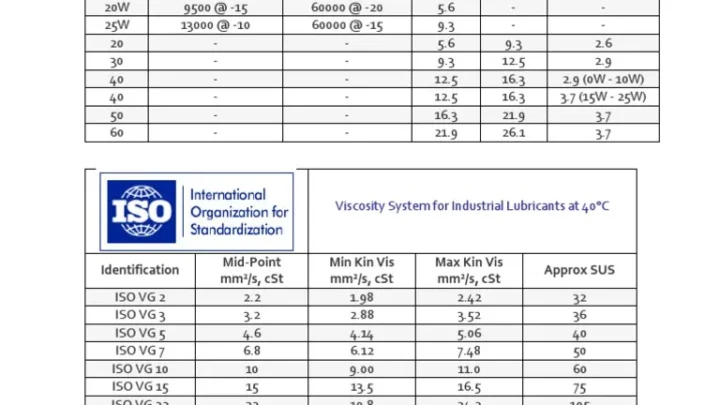
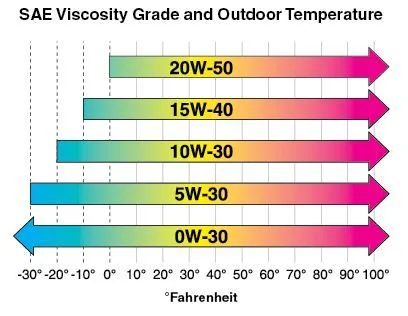
Modern oils are multigrade. A 5W-30, for example, behaves like an SAE 5 at cold-crank temperatures and an SAE 30 at operating temperature.
- The W number governs pumpability and cranking at low temperatures
- The second number governs film thickness once the oil is hot
- The gap between them is bridged by viscosity modifier polymers
Get the W number wrong in a cold climate and the pump struggles to move oil on start-up. Get the operating number wrong and the film either drags on internal parts or gets too thin to protect them. The SAE J300 standard defines the exact viscosity limits for every grade.
Why HTHS and Oil Film Thickness Matter More Than the Label
HTHS stands for High-Temperature High-Shear viscosity. It measures how thick the oil stays under real bearing conditions, not just in a static lab beaker.
Two oils labeled 5W-30 can have very different HTHS values. A European-spec 5W-30 for a BMW or VW typically runs 3.5 cP or higher. A resource-conserving ILSAC 5W-30 might sit closer to 2.9 cP.
Swap one for the other in the wrong engine and you can end up with too little film for the bearings, even though the label looks identical.
What Happens If You Use Oil That's Too Thick
Thicker-than-spec oil sounds safer to a lot of drivers, and that instinct is wrong on modern engines. Thicker oil doesn't flow as fast, especially cold. It also loads the oil pump harder and slows every hydraulic circuit inside the engine.
Cold-Start Damage and Oil Pump Cavitation
At cold start, an engine calling for 0W-20 needs oil at every bearing within a couple of seconds. Pour in 10W-40 during a Michigan January and pump inlet pressure can drop into cavitation territory. Cavitation is basically the pump pulling vapor instead of liquid.
That means starved bearings and dry metal contact right when wear is easiest to cause.
Aggregate teardown reports from independent oil analysts show a clear pattern. Engines fed one grade thicker than spec in cold climates show measurably higher iron and lead wear in their first few thousand miles.
VVT Codes, Chain Rattle, and Lifter Tick
Variable Valve Timing systems use oil pressure to move cam phasers. Too-thick oil delays that pressure. Common symptoms include:
- P0011 or P0014 cam position fault codes on Bank 1
- P0021 or P0024 codes on Bank 2 of V-configuration engines
- Timing chain rattle for the first few seconds after cold start
- Ticking hydraulic lifters that quiet down once oil warms up
These are the engine telling you its oil is too heavy for the system to work as designed. Ignore it long enough and cam phasers or tensioners can fail outright.
Fuel Economy Loss and Higher Oil Temps
Thicker oil creates more internal drag. Every crankshaft rotation costs a little extra energy. In real-world driving, going one grade heavier typically costs 1% to 3% in fuel economy.
Oil temperatures also creep up because the fluid is doing more work internally, which speeds up oxidation and shortens oil life.
What Happens If You Use Oil That's Too Thin
Thinner-than-spec oil creates the opposite problem. Cold-start flow gets better, but hot-load protection drops off a cliff. This is the more expensive mistake in most cases, and it's easy to make if you handle your own oil changes and grab the wrong bottle off the shelf.
Film Collapse Under Load and Bearing Wear
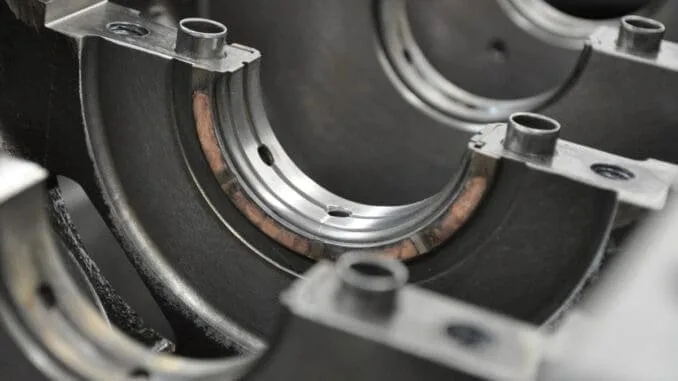
Under sustained load, hot oil in the bearings sees enormous shear forces. If HTHS viscosity is too low, the film gets squeezed thin enough for metal to touch metal. That's how you spin a rod bearing.
Symptoms don't always show up right away. Wear accumulates until oil pressure drops noticeably at hot idle, or until a deep knock announces itself under acceleration. By then, the crankshaft usually needs regrinding at minimum.
LSPI Risk in Turbo GDI Engines
Low-Speed Pre-Ignition is a violent uncontrolled combustion event in turbocharged direct-injection engines. Modern oils built to API SP or Dexos1 Gen 3 include additive chemistry specifically designed to suppress it.
Drop in a random 5W-30 from an older spec because it "looks the same" and you can strip out that protection. The result can be a cracked piston or bent rod, sometimes on a single event.
Oil Burning, Consumption, and Low Oil Pressure
Too-thin oil slips past piston rings more easily. Owners often notice:
- Faint blue smoke at start-up or hard acceleration
- Oil consumption jumping from negligible to a quart every 1,000 to 2,000 miles
- Low oil pressure warnings at hot idle
- A slight burnt-oil smell from the exhaust after long drives
If any of these show up shortly after an oil change, the grade is a prime suspect.
One-Grade Off vs Several Grades Off: How Bad Is It Really
Not every viscosity mistake is a catastrophe. The severity scales with how far you missed the spec and what the engine tolerates. A single grade off in mild conditions is usually recoverable.
Two or three grades off, especially in extreme temperatures, is when real damage starts stacking up.
| Mismatch | Typical Risk Level | What Usually Happens |
|---|---|---|
| One grade off (5W-30 in a 5W-20 engine) | Low to moderate | Slight MPG loss, possible VVT codes, no lasting damage in most cases |
| Two grades off (10W-40 in a 5W-20 engine) | Moderate to high | Cam phaser complaints, cold-start wear, oil pressure irregularities |
| Wrong W number in cold climates (10W-30 at 20°F below zero) | High | Delayed oil pressure, dry-start bearing wear |
| Wrong OEM approval on turbo GDI (non-Dexos in a Dexos engine) | High | LSPI risk, timing chain stretch, warranty denial |
| Straight-weight oil in a multigrade engine | Very high | Cold-start starvation, catalytic converter contamination |
The takeaway is simple. Small misses in warm weather rarely destroy anything. Big misses on modern engines can wreck expensive parts fast.
Symptoms Your Engine Has the Wrong Viscosity
Your engine will usually tell you something's off within a few hundred miles. The trick is knowing which signs point to viscosity rather than to an unrelated fault.
Noises to Listen For
Cold-start noises are the earliest tell. Listen for a valvetrain tick that fades after 10 to 20 seconds, or a soft chain rattle right at start-up. Both usually point to oil that's too thick to reach the top end quickly.
A deeper knock at hot idle or under load points the other way, toward oil that's too thin to hold film in the bearings.
Dashboard Warnings and OBD-II Codes
Modern engines flag viscosity trouble through the powertrain control module. The most common codes tied to oil grade issues include:
- P0011, P0014, P0021, P0024 for cam position and VVT actuation
- P0520, P0521, P0522, P0523 for oil pressure sensor readings
- P06DD or P06DE for oil pump control faults
- Low oil pressure warning lights at hot idle or after long climbs
One code by itself isn't proof. A cluster of these right after a fresh oil change usually is.
What You'll Feel Behind the Wheel
Aggregate owner feedback reports a few consistent patterns. Sluggish throttle response until the engine warms up. A slight drop in fuel economy on the same commute.
Rougher idle when the engine is hot. If those show up together after a service, the oil grade is worth checking before anything else.
Damage Timeline: Minutes, Miles, and Long-Term Effects
Wrong-viscosity damage doesn't hit all at once. It builds in stages, and knowing the timeline helps you judge whether to panic or just book a proper oil change.
| Time Since Fill | What's Happening Inside |
|---|---|
| First few minutes | Oil pump adjusts to new viscosity, possible pressure spike or dip |
| First 50 to 200 miles | VVT codes appear, lifter noise, minor cold-start wear |
| 500 to 2,000 miles | Fuel economy drops, oil temperatures climb, ring sealing begins to suffer |
| 3,000 to 5,000 miles | Measurable bearing wear on used-oil analysis, oil consumption climbs |
| Beyond one oil change interval | Cam phaser complaints, timing chain stretch, potential turbo bearing wear |
Catching the mistake in the first day or two usually costs you nothing more than the price of a proper oil change. Running an entire interval on badly wrong oil, especially in a turbo GDI or hybrid, can shorten engine life by tens of thousands of miles.
When Wrong Viscosity Is Actually Fine (and When It's Not)
Not every off-spec fill is dangerous. Older engines and certain climates handle mismatches better than modern high-output engines do.
Older High-Mileage Engines
Engines with 150,000 miles or more often have wider bearing clearances from normal wear. Bumping from 5W-20 to 5W-30 in a high-mileage motor can actually help hold oil pressure at hot idle. Many high-mileage formulas do exactly this on purpose.
This is the one scenario where a slightly heavier grade is defensible.
Turbocharged, Hybrid, and Modern GDI Engines
These engines are the opposite story. Tight bearing tolerances, aggressive cam phasing, oil-cooled turbos, and LSPI-sensitive combustion mean they need exactly what the manufacturer specified. Going one grade heavier can trip VVT codes almost immediately.
Going one grade lighter can invite LSPI or turbo bearing wear. Hybrids compound the risk because they cold-start the engine dozens of times a day, magnifying any pumpability shortfall.
Extreme Cold vs Extreme Heat
Climate matters as much as the label. A 10W-30 in a Phoenix summer is generally fine. The same oil in an Alberta January can leave the pump straining for pressure.
If you're driving through a season the spec doesn't cover, switch to a grade the OEM actually lists for that temperature range. A quick pre-purchase check like our used-car inspection walkthrough also flags engines that have been fed the wrong oil for years.
Warranty, OEM Specs, and What the Manufacturer Requires
Manufacturers don't put viscosity grades on the oil cap for fun. Every spec is tied to warranty coverage, emissions compliance, and the specific engineering of your engine. Ignoring it can cost you both an engine and a claim.
Reading the API Donut, ILSAC Starburst, and OEM Approvals
Every bottle of motor oil carries three markings worth checking:
- The API service donut lists the current service category (API SP as of 2026)
- The ILSAC starburst confirms resource-conserving performance for gasoline engines
- OEM approvals like Dexos1 Gen 3, MB 229.5, VW 502 00, BMW LL-01, or Porsche C30 appear on the back label
If your owner's manual calls for Dexos1 Gen 3 and the bottle only shows API SP, that's not the same oil. Modern OEM approvals include additional testing for LSPI, timing chain wear, and turbocharger deposit control that basic API licensing doesn't cover.
Magnuson-Moss Warranty Rights vs Off-Spec Oil
The Magnuson-Moss Warranty Act in the United States protects your right to use any brand of oil. It does not protect you if that oil fails to meet the specification the manufacturer requires. Dealers can and do deny powertrain claims when used-oil analysis shows a non-approved grade.
Keeping receipts and matching the OEM approval on the bottle is the cleanest way to preserve coverage.
What to Do If You Already Put the Wrong Oil In
Don't panic and don't keep driving on it for weeks. In most cases, catching the mistake within the first day or two means no lasting damage.
Follow this sequence:
- Stop driving beyond short, low-load trips
- Confirm the correct grade from the oil-fill cap or owner's manual
- Drain the wrong oil and replace the filter
- Refill with the correct viscosity and OEM approval
- Reset any stored oil-life monitor and clear any VVT codes
If the engine ran more than a few hundred miles on badly wrong oil, add a used-oil analysis to the next service. Labs like Blackstone or Polaris can flag early bearing wear before it becomes visible damage.
Mistakes People Make When Choosing Oil Viscosity
The same handful of missteps show up over and over in aggregate service records. Avoiding them costs nothing.
- Grabbing a heavier grade because "thicker protects better" on modern engines
- Trusting a quick-lube tech who defaults to 5W-30 for everything
- Mixing an ILSAC 5W-30 into an engine that needs a European ACEA C3 5W-30
- Ignoring the OEM approval printed on the oil-fill cap
- Using a summer-only heavy grade year-round in a cold climate
- Assuming "synthetic" alone means the oil meets your engine's spec
The bottle needs to match the manual on grade, API service category, and OEM approval. All three matter.
Expert Tips for Picking the Right Grade Every Time
A few habits keep you out of trouble for good.
- Photograph the oil-fill cap once and save it on your phone
- Match both the SAE grade and the OEM approval, not just the number
- In climates that swing hard between seasons, use the widest multigrade the OEM lists
- For turbo GDI engines, always pick an oil carrying the current LSPI-protection spec (API SP or Dexos1 Gen 3 as of 2026)
- Buy from a retailer that turns inventory fast, so the additive package is fresh
- Send a used-oil sample once a year on any high-value engine to catch drift early
Frequently Asked Questions
Will one tank of the wrong viscosity ruin my engine?
Almost never in a single oil-change interval, as long as the mismatch is only one grade off. Modern engines tolerate a short exposure to slightly wrong oil without lasting harm. Drain it, refill with the correct grade, and monitor for VVT codes or lifter tick over the next few hundred miles.
Can I mix two different viscosities in the same engine?
Mixing a small top-off of the wrong grade is generally safe in an emergency. The blended viscosity will sit between the two, which usually keeps the engine within a workable range. Change back to the correct oil at the next service rather than running the mixed fill for a full interval.
Does using thicker oil really help a burning-oil engine?
Sometimes, but only in older high-mileage engines with worn ring lands or valve seals. Bumping from 5W-20 to 5W-30 can slow consumption a little. On modern engines with tight tolerances, the same move often triggers VVT codes and cold-start wear without fixing the real problem.
Will the wrong oil viscosity void my warranty?
It can, if the dealer proves the engine failure was caused by off-spec oil. The Magnuson-Moss Warranty Act protects your right to choose the brand, not to ignore the specification. Keep receipts showing an oil that meets the exact SAE grade and OEM approval listed in your manual.
The Bottom Line on Oil Viscosity Mistakes
Match the grade on the cap. Match the OEM approval on the bottle. Adjust for climate only if the manufacturer lists an alternate grade for that temperature range.
Do that, and the whole question of what goes wrong with the wrong viscosity stays theoretical for the life of your engine.

Similar Posts