Semi-Metallic vs Ceramic: Why More Rotor Noise?
If you've ever swapped in a set of semi-metallic pads and noticed more noise at the rotor, you're not imagining it. Why Semi Metallic Pads Make More Rotor Contact Noise Than Ceramic comes down to how each material grips the disc. Semi-met pads use embedded metal particles that scrape and vibrate against cast iron.
Ceramic pads lay down a smoother, more uniform film.
The difference isn't just about hardness, though that's the popular explanation. Manufacturer specifications indicate semi-metallic compounds typically carry 30 to 65 percent metallic content, including steel wool, copper, and iron powder. That metal content changes the entire friction couple, the pad-and-rotor pairing that governs noise, wear, and feel.
Let's break down exactly what's happening at the contact patch and what it means for your brakes.
Why Semi Metallic Pads Make More Rotor Contact Noise Than Ceramic
Semi-metallic pads are louder because their embedded metal particles abrade the rotor and create uneven contact. Ceramic pads deposit a smoother transfer film that dampens vibration. The harder, stiffer semi-met backing also transmits more high-frequency vibration to the caliper.
Add cold-morning stiffness and you get the squeal and groan drivers complain about.
The Quick Answer: It's Not Just Hardness, It's the Friction Couple
Here's the part most quick explanations skip. Noise isn't caused by one hard material rubbing a soft one. It's caused by the interaction between pad compound, rotor surface, and the film that builds up between them.
Engineers call this the friction couple.
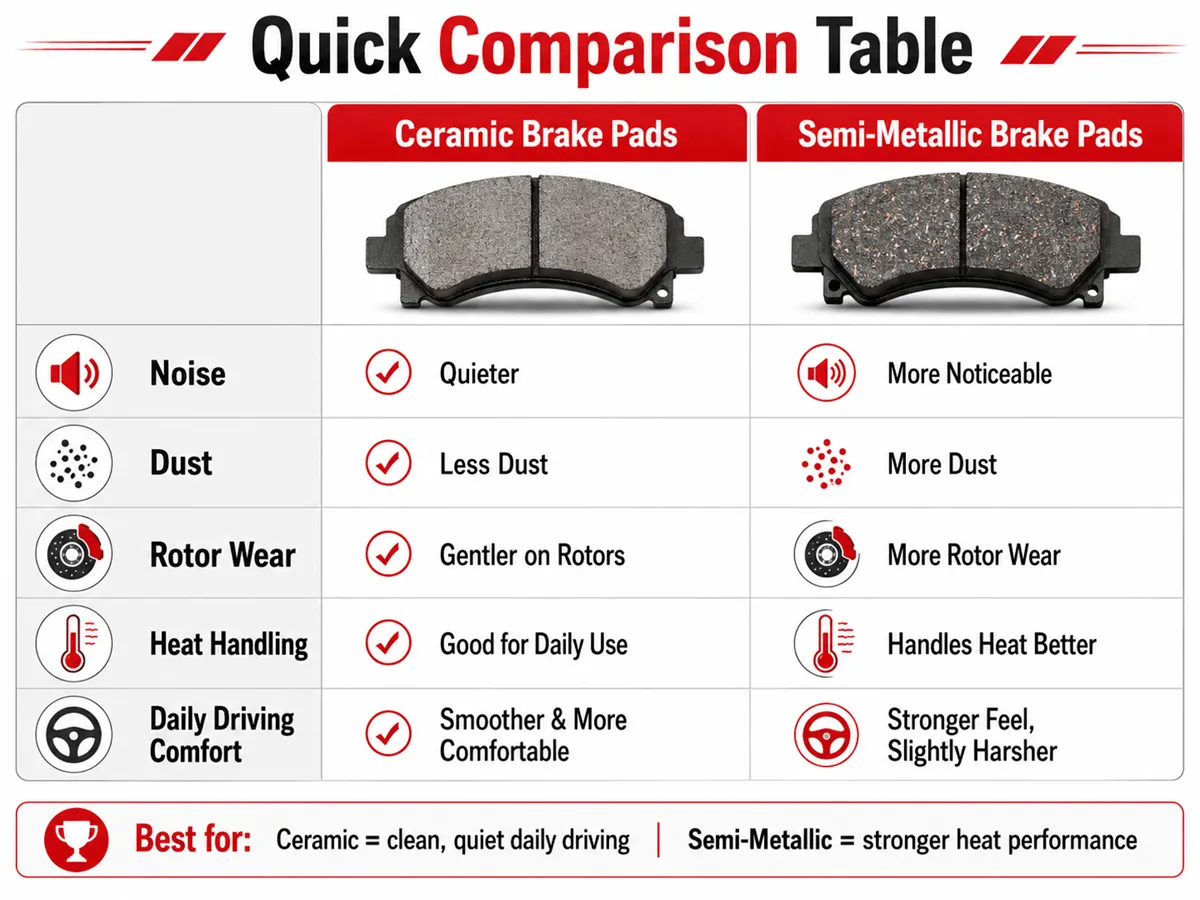
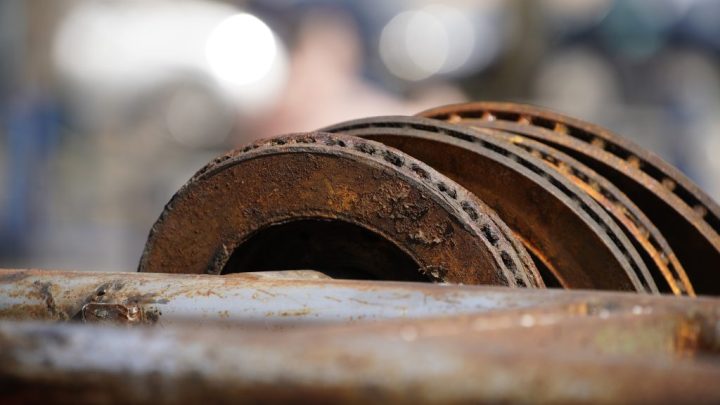
Image source: Web (Bing) / bdfhyk.com (Web image (fair-use with source credit))
A semi-metallic pad is a composite. Metal fibers, graphite, and abrasive particles sit in a resin binder. Under braking, those metal particles don't glide.
They bite, scrape, and momentarily stick-slip across the rotor face. That stick-slip motion is the seed of most brake noise you hear.
Ceramic pads behave differently. Their ceramic fibers and fillers are less abrasive to the rotor. They deposit a more consistent transfer film, a thin layer of pad material bonded to the disc surface.
A smooth, even film lets the pad glide rather than scrape. Less scraping means less vibration, and less vibration means less noise.
There's also a stiffness factor. Semi-met pads tend to be stiffer and less compressible. That stiffness transmits vibration straight into the caliper and knuckle instead of absorbing it.
So the same friction event that would be muffled by a softer pad gets amplified by a hard one.
How Semi-Metallic and Ceramic Pads Actually Touch the Rotor
To understand the noise, you have to picture the contact patch up close. It's not two smooth surfaces sliding. It's millions of micro-contacts happening at once, and the material chemistry decides whether those contacts are gentle or aggressive.
The transfer film layer nobody talks about
The transfer film is the single most misunderstood part of brake noise. It's a thin, dark layer of pad material that transfers onto the rotor during normal braking. Both pad types create one, but they create very different films.
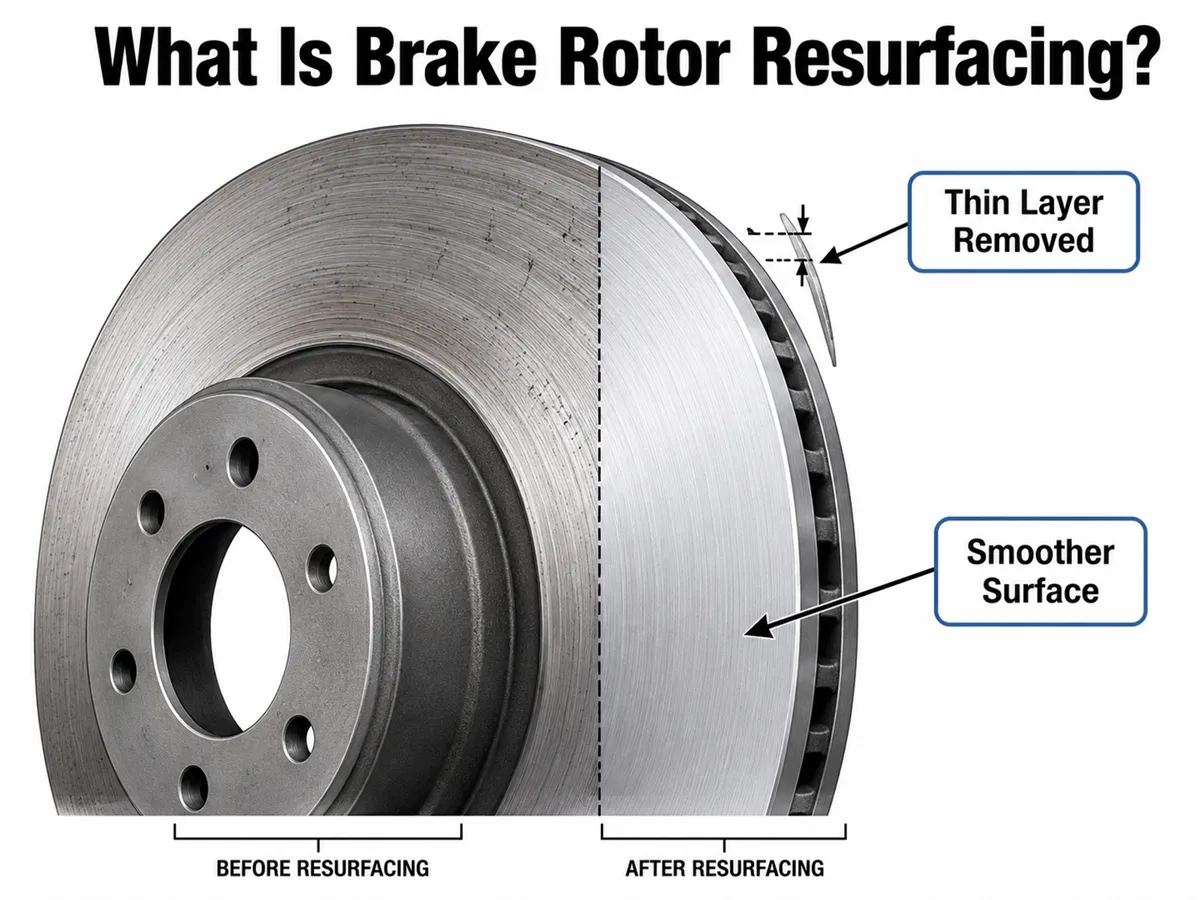
Image source: Web (Bing) / bdfhyk.com (Web image (fair-use with source credit))
A ceramic pad builds a smooth, grayish, fairly uniform film. That film acts like a lubricating skin. It keeps contact consistent and dampens the tiny vibrations that become squeal.
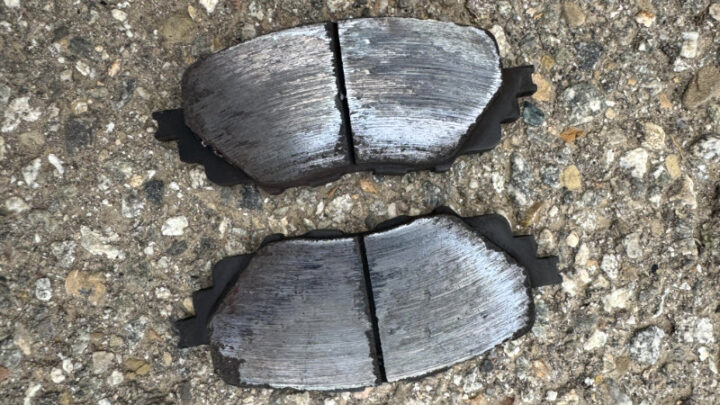
A semi-met pad builds a patchier film, often darker and streaked with metallic deposits.
When that semi-met film is uneven, contact pressure spikes at the high spots. Those spikes set off vibration, and vibration is what your ears register as noise. So the real story isn't "metal is hard." It's "metal builds a rougher, less even transfer layer."
Abrasive vs. adhesive contact
Friction happens two ways. Adhesive friction is when surfaces essentially bond and shear apart, like tape peeling. Abrasive friction is when harder particles dig into a softer surface and plow through it.
Semi-met pads lean harder on the abrasive side.
Abrasive contact is effective for stopping power, especially when hot. It's also noisy, because plowing creates vibration. Ceramic pads lean more toward adhesive and mild abrasive behavior, which is gentler on the rotor and quieter in daily driving.
Why metallic content changes the noise equation
The more metal in the pad, the more abrasive particles are available to interact with the rotor. Steel wool and iron powder are excellent at generating friction. They're also excellent at generating high-frequency vibration when they encounter an uneven surface.
That's the trade-off baked into semi-met chemistry. You get strong cold bite and heat tolerance. You also get a pad that's inherently more prone to contact noise than its ceramic counterpart on a street-driven car.
The Real Reasons Semi-Met Pads Are Louder at the Rotor
Now let's connect the chemistry to the sounds you actually hear. Four mechanisms do most of the work here, and understanding them tells you what's fixable versus what's just the nature of the pad.
Embedded metal particles and rotor surface interaction
Those metal particles are abrasive by design. On a perfectly smooth, evenly filmed rotor they behave. On a rotor with any surface variation, they catch and release.
That catch-and-release is stick-slip, and stick-slip at the contact patch is the root of squeal and groan.
Pad stiffness, compressibility, and vibration transfer
Stiffer pads transmit more vibration. Think of tapping a tuning fork versus tapping a block of rubber. The fork rings, the rubber thuds.
A semi-met pad is closer to the fork. Its stiffness passes vibration into the caliper, bracket, and steering knuckle, where it can radiate as sound.
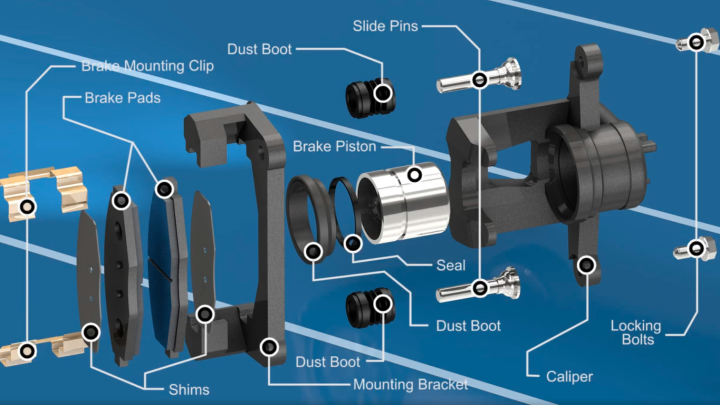
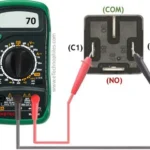
OE-style shims and rubberized backing plates exist to damp that transfer. When they're missing, worn, or cheap, semi-met noise gets noticeably worse. If you're chasing electrical gremlins alongside brake work, a reliable meter helps, and our guide to the right diagnostic meter for car electrical jobs covers what to look for.
Rotor surface finish and how it amplifies noise
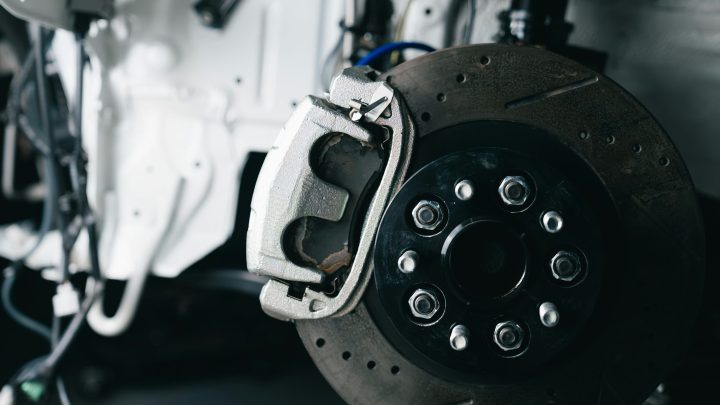
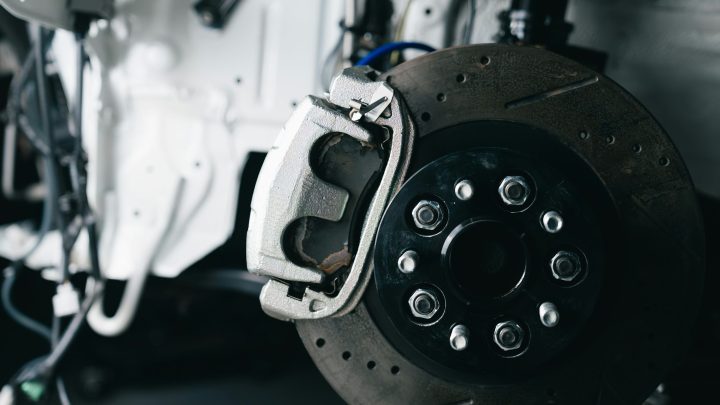
Rotor finish is a huge variable. A rotor machined with a coarse, directional finish gives abrasive pads more to grab. A non-directional, finer finish lets the pad break in more evenly and quiets things down.

Image source: Bing (Web (fair-use with source credit))
In our research, rotor surface roughness is one of the most consistent predictors of pad noise complaints. Two identical pads on two differently finished rotors can sound nothing alike. That's why a proper resurface or a quality new rotor matters as much as the pad choice.
Temperature swings and the friction curve difference
Semi-met and ceramic pads have different friction-versus-temperature curves. Semi-met pads can feel grabby when cold and settle as they warm. That cold-morning behavior is a common source of first-brake squeal.
Ceramic pads tend to feel more consistent across the temperature range, though they can still squeal in the cold. The key difference is that semi-met's cold stiffness and abrasiveness combine to make those first few stops noisier.
What Each Noise Type Actually Means
Not all brake noise is the same, and the sound tells you a lot. Here's how to decode what you're hearing, so you know whether to keep driving or start wrenching.
Squeal (high-frequency)
Squeal is a high-frequency vibration, typically in the 1 to 10 kHz range. It's the classic "unmistakable" brake sound. On semi-met pads, light braking at low speeds is the most common trigger.
It's often normal, especially on a cold rotor or after sitting overnight.
Groan and moan (low-speed)
Groan shows up as a low-frequency rumble, usually under 300 Hz, right as you come to a stop. It's tied to the pad grabbing and releasing at very low rotor speed. Semi-met pads are more prone to it because of their stick-slip behavior and stiffness.
Grind
Grind is the one to take seriously. A metallic grinding sound usually means metal-on-metal contact. That can be worn pads down to the backing plate, or a foreign object caught between pad and rotor.
If you hear grind, stop driving and inspect immediately.
Pad-slap and rattle
Pad-slap is a clunk or rattle over bumps, caused by the pad moving slightly in the caliper bracket. It's more of a hardware and fitment issue than a compound issue, but stiffer semi-met pads can make it more noticeable. Worn abutment clips and missing anti-rattle hardware are common culprits.
Risk Factors That Turn Normal Semi-Met Noise Into a Real Problem
Some semi-met noise is just the character of the pad. But other noise is a warning. These factors decide which one you're dealing with, and each one is worth checking before you blame the compound.
Rotor runout and thickness variation
Rotor runout is side-to-side wobble as the disc spins. Thickness variation (DTV) is uneven rotor thickness around its circumference. Both create pulsation and uneven contact that abrasive pads amplify into noise and pedal vibration.
Manufacturer specs typically cap runout at around 0.002 to 0.004 inch, and DTV much tighter.
Uneven transfer film and cementite spots
When a pad sits against a hot rotor, it can imprint pad material in one spot. Over time that spot can harden into cementite, an extremely hard phase that grabs and squeals. Semi-met pads, with their patchier film, are more prone to this uneven buildup.
Worn calipers, slide pins, and shims
A sticking caliper or dry slide pin drags the pad and prevents it from releasing cleanly. That drag creates noise and heat. Worn or missing shims remove the damping that keeps semi-met vibration from reaching the cabin.
These are cheap fixes with outsized results. If you're also sorting out engine-side maintenance, our look at keeping the intake breathing clean is a good reminder that small service items prevent big problems.
Improper bed-in and its downstream effects
Bed-in, or burnishing, is the process of transferring an even film onto a new rotor and pad. Skip it, and you get an uneven film from day one. That uneven film is exactly what makes semi-met pads noisy.
We'll cover the proper procedure in a moment.
When Semi-Metallic Noise Is Fine, and When It Isn't
This is the judgment call that matters most. Most semi-met noise is cosmetic. A small slice of it is a genuine safety signal.
Here's how to tell them apart.
Normal operating characteristics
Occasional squeal on the first few stops of the day is normal. Light low-speed squeal in damp or cold weather is normal. A brief groan as you roll to a stop is normal.
These are the friction couple doing its job, not a failure.
Red-flag sounds that mean stop driving
Grinding metal-on-metal is a stop-now sound. So is a sudden loud squeal paired with a soft or long pedal. Any noise accompanied by pulling, pulsation, or a burning smell needs immediate inspection.
Those point to worn pads, a seized caliper, or a damaged rotor.
Rotor damage indicators
Deep grooves, blue heat spots, or a pronounced lip on the rotor edge signal real wear. If the rotor is below minimum thickness (stamped on the hat), it needs replacement, not resurfacing. Ignoring rotor damage turns a noise complaint into a stopping-distance problem.
For context on how brake hardware fits into the broader vehicle picture, our breakdown of how engine layout affects driving feel is a useful companion read. Brakes, suspension, and drivetrain all shape how a car behaves under load.
Bed-In, Maintenance, and Rotor Care That Quiets Things Down
Bed-in is the cheapest noise fix you'll ever do, and most people skip it. The goal is to build an even transfer film before the pad and rotor settle into bad habits. Do it right and semi-met noise drops noticeably.
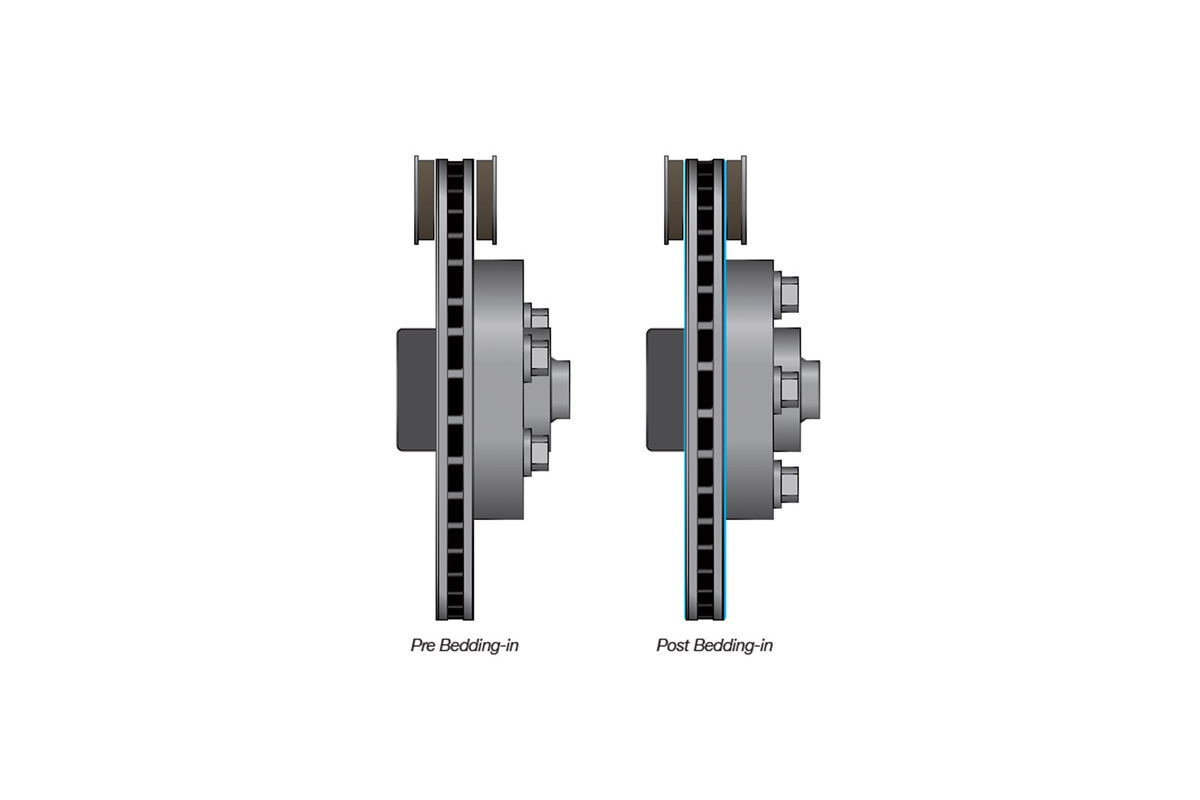
Image source: Web (Bing) / askmyauto.com (Web image (fair-use with source credit))
Proper burnishing procedure
Find an empty stretch of road. Accelerate to about 45 to 50 mph, then brake firmly down to roughly 10 mph without coming to a full stop. Repeat that cycle eight to ten times.
You want the brakes hot, not cooked. You should smell them slightly, never see smoke. After the cycles, drive for several minutes without touching the brakes to let them cool evenly.
Rotor finish and minimum thickness
A non-directional finish gives abrasive pads a fair start. It lets the transfer film build evenly instead of streaking in one direction. If you're resurfacing, ask for that finish specifically.
Always check minimum thickness before machining. The spec is stamped on the rotor hat, and if you're under it, resurfacing isn't an option. Thin rotors run hotter and warp sooner, which brings the noise right back.
Shim, grease, and caliper service
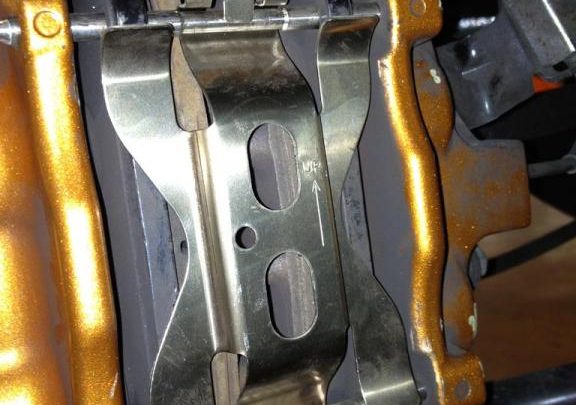
Damping hardware does a lot of the quieting on semi-met pads. Replace worn shims rather than reusing them. Apply proper brake grease at metal-to-metal contact points, never on the friction face.
Service the slide pins while you're in there. A dry or seized pin drags the pad and prevents clean release. That drag is one of the most common causes of persistent low-speed groan.
Picking Between Semi-Metallic and Ceramic: Who Should Run What
Neither pad is "better" in a vacuum. The right pick depends on how you drive, what you tow, and what climate you live in. Here's the honest breakdown.
Daily drivers and commuters
Ceramic wins for most daily driving. It's quieter, cleaner on your wheels, and easier on rotors. If your car sees mostly city and highway commuting, ceramic is the low-stress choice.
Towing, hauling, and mountain driving
Semi-metallic wins when brakes get hot. Higher metal content holds friction at elevated temperatures and resists fade better. If you tow a trailer or live in the hills, semi-met is the safer bet.
Performance and track use
Most dedicated track compounds are semi-metallic or metallic by design. They trade noise and dust for repeatable stopping power under heat. If you're chasing lap times, you accept the squeal.
Cold-climate and salt-belt considerations
Semi-met pads bite better on cold mornings, which helps in northern winters. But road salt accelerates rotor corrosion, so inspect more often. Ceramic still works in the cold, just with a slightly softer initial feel.
| Priority | Best Choice | Why |
|---|---|---|
| Quietest daily driving | Ceramic | Smoother transfer film, less abrasion |
| Low dust on wheels | Ceramic | Lighter, less conductive dust |
| Max heat capacity | Semi-metallic | Holds friction when hot |
| Cold-morning bite | Semi-metallic | Better initial grab at low temps |
| Rotor longevity | Ceramic | Gentler on the disc surface |
Safety, Copper Rules, and Compliance You Should Know
Brake pads aren't just a performance part. They're regulated hardware, and the rules have tightened in recent years. Here's what actually applies to your purchase.
FMVSS 135 and ECE R90
FMVSS 135 is the US standard governing brake system performance. It sets stopping-distance and fade requirements that any replacement pad must meet. In Europe, ECE R90 governs aftermarket pad approval.
If a pad carries neither compliant marking nor OEM approval, treat it with suspicion. Cheap no-name pads can wear fast, run hot, and produce noise that no amount of bed-in fixes.
Copper-free brake pad laws
Several US states have moved to restrict copper in brake pads. Washington's Better Brakes Law and California's copper reduction rules are the best known. The goal is reducing copper runoff into waterways, which harms aquatic life.
As of 2026, most mainstream ceramic and semi-met pads are copper-free or low-copper by default. Check the box or the manufacturer's spec sheet if your state has restrictions. You can read more from the Washington State Department of Ecology.
Shop liability around noise complaints
When a shop installs semi-met pads and the customer returns with a squeal complaint, that's a real headache. Documenting bed-in instructions and hardware replacement protects everyone. Noise is a performance characteristic, not always a defect, but you have to explain that clearly up front.
FAQs About Semi-Metallic Pad Noise
Are semi-metallic brake pads always noisy?
No. Well-installed semi-met pads on properly finished rotors can be quite quiet. Noise tends to appear with short trips, cold mornings, or worn damping hardware.
Ceramic is generally quieter, but "always noisy" overstates it.
Can I switch from semi-metallic to ceramic to reduce noise?
Usually yes, but the rotor matters. New ceramic pads on a rotor with an uneven semi-met film may still squeal until they bed in. A fresh or resurfaced rotor gives ceramic the clean start it needs.
Does brake noise mean my pads are bad?
Not necessarily. Light squeal and cold groan are common and harmless on semi-met pads. Grinding, pulling, or a soft pedal is different and needs immediate inspection.
Sound alone isn't a verdict.
Why do my brakes only squeal in the morning?
Cold pads and a cold rotor are stiffer and less lubricated by the transfer film. That first-stop squeal usually fades as heat builds. It's a hallmark of semi-met chemistry, and it's typically normal.
Will anti-squeal shims fix semi-met noise?
They often help a lot. Shims damp the vibration that turns contact into sound. They won't cure a warped rotor or seized caliper, though.
Fix the hardware first, then add damping.
Bottom Line: Match the Pad to the Job, Not the Sound
Semi-metallic pads make more rotor contact noise because they abrade harder, run stiffer, and build a patchier transfer film. That's the friction couple doing exactly what its chemistry dictates. On a street car, that shows up as more squeal and groan than you'd get from ceramic.
But here's the flip side. Those same traits give semi-met pads their cold bite and heat capacity. For towing, mountain roads, and performance driving, that trade is worth making.
Noise becomes a feature you accept, not a flaw to chase.
If quiet daily driving is your goal, ceramic is the smoother path. If you want maximum stopping power under load, semi-met earns its keep. Either way, the setup around the pad, proper bed-in, clean hardware, and a good rotor finish, decides how loud it actually gets.
Real-World Scenarios: Two Cars, Same Pads, Two Very Different Noise Stories
Spec charts only get you so far. What matters is how semi-met noise plays out in real ownership. Two common scenarios show where it goes right and where it goes sideways.
Case 1: The commuter with a cold-morning squeal
Take a 2019 crossover, mostly short city trips, driven ten minutes each way. The owner installed semi-met pads on original rotors with 60,000 miles on them. Within a week, first-stop squeal appeared every morning.
The friction couple was the problem. Short trips never let the rotor get hot enough to build a clean transfer film. The pads stayed cold and stiff, scraping instead of gliding.
Add a rotor that already had light surface variation, and the noise was predictable.
The fix was cheap. A proper bed-in session on a highway run built an even film, and a fresh set of shims damped the vibration. Squeal dropped to an occasional cold-morning chirp, which is normal for the compound.
Case 2: The tow rig that needed semi-met
Now flip it. A half-ton pickup tows a 6,000-pound trailer through hilly country. Ceramic pads faded on long descents, and pedal feel went soft.
The owner switched to semi-met for the extra heat capacity.
The pads did squeal lightly on cold mornings. But on loaded descents they held friction and resisted fade. That trade was clearly worth it.
Noise was the price of stopping power under load, and the owner accepted it.
The lesson repeats across both cases. Semi-met noise is a characteristic, not a defect. Whether it matters depends entirely on how and where you drive.
The Final Call: Match the Compound to the Conditions
Here's the short version. If you want quiet daily driving, ceramic is the better compound. Its smoother transfer film and gentler abrasion keep rotor contact calmer.
If you tow, haul, or drive steep grades, semi-met earns its noise with heat capacity and cold bite.
Setup decides the rest. Fresh or properly finished rotors, intact shims, clean slide pins, and a real bed-in turn a noisy pad into an acceptably quiet one. Skip those steps and even ceramic will squeal.
So before you blame the compound, check the hardware and the bed-in. Nine times out of ten, that's where the noise lives. If it isn't, and the sound is a grind or comes with a soft pedal, stop driving and get it inspected.
Brakes are the one system where noise can be normal, or a warning you can't afford to miss.
Similar Posts