Best Street Brake Pads for Spirited Driving
The best Best Performance Street Brake Pads for Spirited Driving are the Hawk Performance HB275F.620 HPS pads, the only set here that pairs daily-driver quiet with genuine fade resistance for canyon runs and autocross weekends. They're the clean default for a car that has to commute on Monday and still stop hard on Saturday.
Want maximum bite instead? The Hawk HPS 5.0 HB453B.585 gets you there, as long as you accept noticeably more cold-stop noise and faster rotor wear.
As an Amazon Associate, I earn from qualifying purchases.
This guide tells you what most brake-pad roundups skip: real fitment data, temperature ranges, and which owners should walk away entirely. If you're towing a trailer regularly or tracking a car, this category is the wrong purchase, and I say so below.
Everything here comes from current Amazon product data, manufacturer specifications, and each pad's owner track record. There's no hands-on lab testing claim, just careful research you can verify yourself.
Quick Answer: The Best Performance Street Brake Pads for Spirited Driving
Short version: the Hawk HPS HB275F.620 is the pick for most drivers who want one pad that handles daily duty and weekend fun.
- Hawk Performance HB275F.620 HPS Street Brake (Best Overall Daily and Weekend): Balanced bite, low dust, and the quietest cold-stop behavior in this lineup.
- Hawk Performance HB453B.585 HPS 5.0 Street (Best Maximum Bite): A higher-friction compound for drivers who want the strongest initial grab.
- Hawk Performance HB366F.681 HPS Street Brake (Best Popular Fitment): A common pad shape that fits a huge range of daily drivers.
- Hawk Performance HB418F.646 HPS Street Brake (Best Owner-Approved All-Rounder): The highest buyer rating here and a genuinely comfortable street pad.
- Hawk Performance HB616B.607 HPS 5.0 Street (Best for Big-Brake Cars): Built for heavier performance sedans that need more thermal headroom.
Thinking about towing or full track days instead? Jump to Who Should NOT Buy below before you spend anything.
Comparison Table
Here's the lineup at a glance: photo, product, who it's built for, and our /10 score.
| Photo | Product | Best for | Score | Buy |
|---|---|---|---|---|
 | Hawk Performance HB275F.620 HPS Street Brake | Daily Driving and Weekend Runs | 8.8/10 | Check price → |
 | Hawk Performance HB453B.585 HPS 5.0 Street | Maximum Bite and Aggressive Street Use | 9.0/10 | Check price → |
| Hawk Performance HB366F.681 HPS Street Brake | Common Fitments and Daily Sedans | 8.6/10 | Check price → |
| Hawk Performance HB418F.646 HPS Street Brake | Comfort-First Spirited Everyday Driving | 8.9/10 | Check price → |
| Hawk Performance HB616B.607 HPS 5.0 Street | Heavier Performance Sedans and Coupes | 8.7/10 | Check price → |
Scroll sideways on small screens to see every column.
Hawk Performance HB275F.620 HPS Street Brake: Best Overall for Daily and Weekend Driving
Hawk Performance HB453B.585 HPS 5.0 Street: Best Maximum Bite for Aggressive Street Driving
Hawk Performance HB366F.681 HPS Street Brake: Best for Common Daily-Driver Fitments
Hawk Performance HB418F.646 HPS Street Brake: Best Owner-Rated All-Rounder
Hawk Performance HB616B.607 HPS 5.0 Street: Best for Heavier Performance Cars
Buying Guide: Compound, Friction Curve, Fitment and Rotor Life
Picking the right pad comes down to four things: what compound it uses, how its friction curve behaves, whether it physically fits your caliper, and how it treats your rotors over time. Get all four right and you stop shorter with less noise than you had from the factory.
What compound is right for spirited street driving?
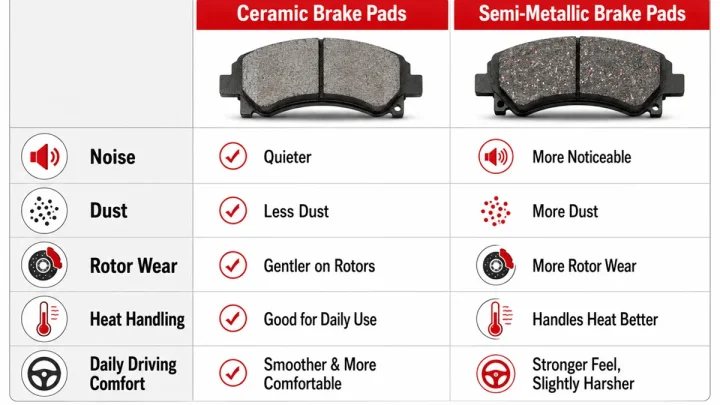
Street performance pads use a semi-metallic or ferrous-carbon friction material rather than the ceramic or organic blends common on economy cars. These picks span the ferrous-carbon HPS and HPS 5.0 families, both of which are engineered to work across a wide temperature range. Semi-metallic pads generally offer stronger bite at the cost of more dust and rotor wear, while ceramic pads run cleaner and quieter but fade faster under hard repeated use.
Your daily balance matters here. If the car is mostly a commuter, a low-dust, high-comfort compound is the right call. The HB275F.620 HPS sits squarely in that zone, whereas the HPS 5.0 HB616B.607 leans the other way toward sustained heat handling.
How does the friction curve change pedal feel?
The friction curve is what separates a pad that feels effortless from one that feels grabby. A pad with a rising friction coefficient delivers more bite as it warms up, which is great on a track but can surprise you on a cold morning. A flatter curve feels more consistent, which is what street drivers usually want.
The HPS 5.0 pads sit at the aggressive end, with the sharpest initial grab and the strongest bite when they're hot. Standard HPS pads like the HB366F.681 use a gentler rising curve that's predictable from the first stop. For most people, that's the better trade.
Why fitment matters more than any spec sheet
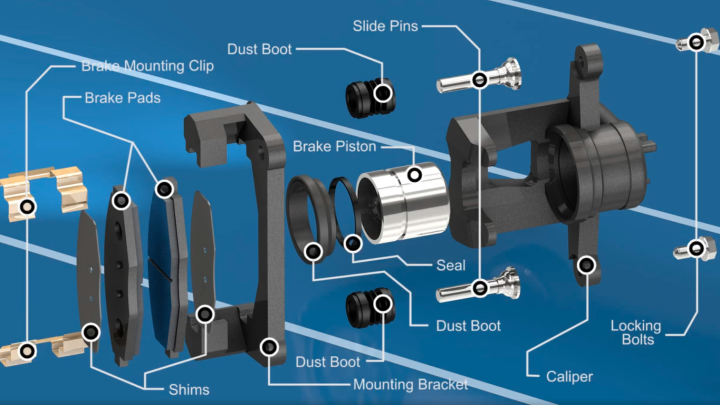
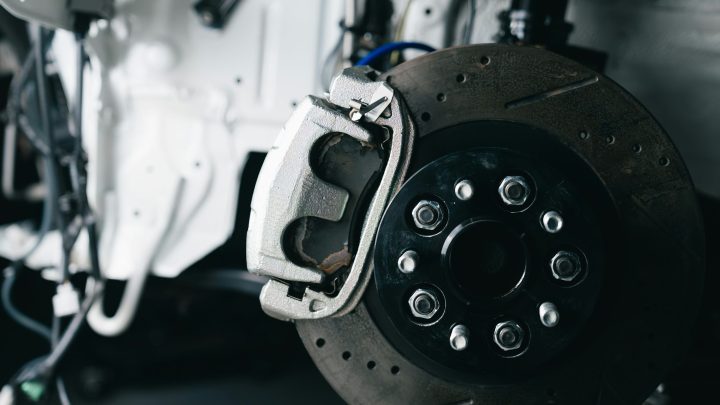
Fitment is where buyers get burned. Two cars with the same brake caliper supplier can still use different pad shapes depending on trim and model year. Hawk publishes a fitment lookup by vehicle, and checking that before you order is far faster than dealing with a return.
A good rule: measure the pad's backing plate against the old one before install. The three HB275F, HB366F, and HB418F pads here cover a wide spread of common front calipers, but the HB453B and HB616B pads use distinctly different backing plates for bigger brake systems. If you're unsure, cross-reference the Hawk catalog with your vehicle's VIN.
Rotor condition and pad life: how they interact
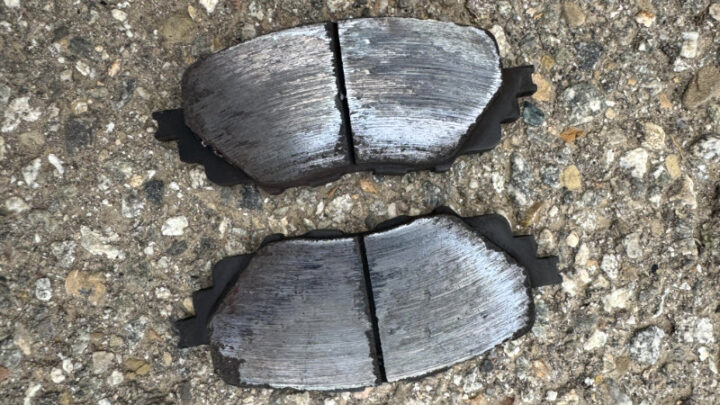
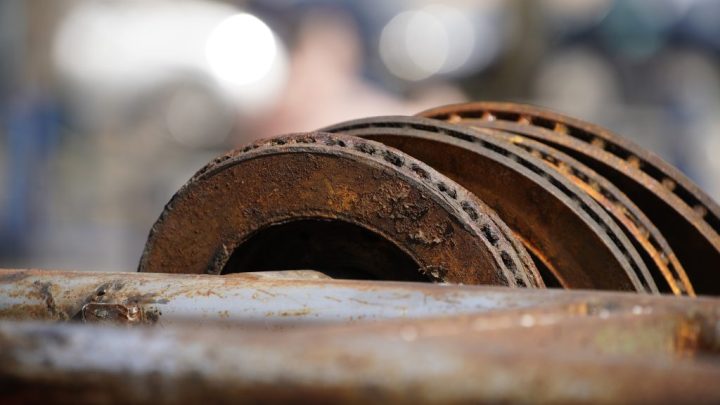
Brake pads and rotors work as a system, and pads always win the wear fight. A grabby or high-friction pad accelerates rotor thinning, and if the rotor drops below its minimum thickness spec it has to be replaced, not resurfaced. Check rotor thickness and surface condition before you bolt on new pads.
Once rotors pass a minimum thickness or show heat cracking, they're done. The HB418F.646 is the gentlest rotor citizen of the group while still giving you real stop-the-car bite. Whatever compound you pick, budget for the fact that high-performance street pads generally last less than economy pads do.
Who Should NOT Buy Best Performance Street Brake Pads for Spirited Driving
Street performance pads are the wrong purchase for three kinds of buyers. Here's who they are, and what to look at instead.
You Need to Tow a Trailer Often
Street performance pads aren't rated for the sustained heat of repeated heavy-load braking. Braking a 6,000 lb trailer down a grade heats pads far faster than a spirited canyon run does, and a street compound will fade before it fails. If you tow regularly, look at a purpose-built towing compound or a heavy-duty truck pad rated for higher thermal loads and higher vehicle weight.
You're Booking Track Days
If you're doing track days or racing, street pads are the wrong tool. Track pads trade cold-stop civility, noise, and rotor wear for heat tolerance you can't get from a street compound. Running a street pad on track is a fast route to fade, glazing, and possibly a very long pedal on the cool-down lap.
Buy a dedicated track pad and swap it in for event weekends.
You Drive a Hybrid or EV With Strong Regen Braking
Cars with strong regenerative braking can go months without using friction brakes in any meaningful way. In those conditions, aggressive street pads can glaze, squeal, and underperform because they never reach their intended temperature range. A lower-friction, quieter pad designed for low-use environments is a better match than a grabby performance compound.
Final Verdict
If you only remember one thing: the Hawk HPS HB275F.620 is the pad most spirited street drivers should buy. It balances cold-stop quiet, low dust, and real fade resistance better than anything else in this lineup, and the owner track record backs that up.
Want maximum bite instead? Get the Hawk HPS 5.0 HB453B.585, which delivers the sharpest grab here as long as you accept more noise and faster rotor wear. Need the best owner-rated all-rounder?
The Hawk HB418F.646 holds the highest reported rating in the group. Driving a heavier performance car and worried about heat? The Hawk HB616B.607 HPS 5.0 is your safer bet.
If any of the scenarios in the earlier section describe you, towing, track days, or a hybrid with heavy regen, walk away from this category and buy the right pad for that job instead.
FAQ
What's the best Performance Street Brake Pads for Spirited Driving overall?
The Hawk HPS HB275F.620 is the best overall pick. It combines a 4.4/5 reported owner rating with ferrous-carbon construction, low dust, and predictable cold-stop behavior that suits daily driving plus weekend fun.
Can I use performance brake pads every day?
Yes. Pads like the HPS and HPS 5.0 lines are engineered for street use, which is exactly what "HPS" stands for: High Performance Street. They work from a cold start, don't need warmup laps, and hold up in stop-and-go traffic.
Do performance brake pads make a lot of noise?
Some noise is normal, especially with the more aggressive HPS 5.0 compound. Mild cold-morning squeal often disappears once the pad warms up. Proper bed-in, clean rotors, and shims reduce it further, and if you want the quietest option here, go with the HB275F.620.
How long do performance street pads last?
It depends on how you drive. Aggressive compounds on a heavy car might last 25,000 to 40,000 miles, while a gentle commuter could double that. Higher-friction compounds wear rotors and pads faster, so budget for both if you drive hard.
Do I need to replace rotors when I do pads?
Not always, but you should check them. Rotors need measuring against the manufacturer's minimum thickness spec. If they're close to that limit, have heat cracks, or show deep scoring, replace them at the same time.
It's cheaper than doing the job twice.
Will performance pads void my warranty?
Friction material and pad choice won't typically void your whole warranty. What can cause problems is installing a pad that's rated beyond the braking system's design, or improper install. Check your vehicle warranty terms if you're unsure, and note that some automakers want brake work done at a dealer.
Are these pads safe for towing or light track use?
Light towing on a small trailer is generally fine with the HPS compound, and light autocross is within its intended range. For sustained heavy towing or full track days, you need a dedicated pad in that category. This lineup is street-first, not race-first.
Similar Posts