How Long Can You Really Go Between Synthetic Oil Changes?
Ask a mechanic "how long can you go between synthetic oil changes" and you'll get five different answers from five different people. The truth is that modern full synthetic oil can safely last far longer than the old 3,000-mile rule most drivers grew up with. But the real interval depends on your engine, how you drive it, and what your manufacturer actually specifies.
As of 2026, most automakers spec between 7,500 and 10,000 miles for full synthetic under normal service. Some European brands stretch that to 15,000 miles or more. Push past those limits without a good reason and you're gambling with fuel dilution, sludge, and additive burnout.
Here's the honest, condition-by-condition answer.

Quick Answer
Most full synthetic oil lasts 7,500 to 10,000 miles between changes. Some extended-performance synthetics go 15,000 to 20,000 miles under ideal use. Manufacturers cap the time interval at 12 months regardless of mileage.
Severe service (short trips, towing, dust) cuts intervals to 5,000 miles. Always follow your owner's manual and oil life monitor first.
The Real Answer: How Long Synthetic Oil Actually Lasts
Modern full synthetic oil is engineered to run far longer than the old rules of thumb suggest. The catch is that "how long" isn't a single number. It's a range that shifts with the oil grade, the engine, and the driving profile.
Here's what current manufacturer specs and API SP oil formulations actually support:
| Oil type | Typical interval | Time cap |
|---|---|---|
| Synthetic blend | 5,000 to 7,500 miles | 12 months |
| Standard full synthetic | 7,500 to 10,000 miles | 12 months |
| Extended-performance synthetic | 15,000 to 20,000 miles | 12 months |
| Euro-spec synthetic (LL-01, 504.00) | 10,000 to 20,000 miles | 24 months on some brands |
The interval assumes you're using the correct viscosity and manufacturer approval for your engine. It also assumes normal service. If your driving fits the severe bucket, cut those numbers in half.
The 12-month calendar rule matters just as much as mileage, because oil oxidizes and picks up moisture whether the car is driven or not.
Why the 3,000-Mile Rule Doesn't Apply to Synthetic
The 3,000-mile change interval was born in the era of conventional mineral oil, carbureted engines, and additive packages that burned off fast under heat. Modern synthetic oil is a completely different animal. It's built from Group III, Group IV (PAO), or Group V (ester) base stocks that resist oxidation, shear, and thermal breakdown for far longer.
Add in modern additive chemistry, tighter engine tolerances, and better filtration, and the math shifts. According to the American Petroleum Institute, current API SP-rated oils are designed to handle low-speed pre-ignition, timing chain wear, and fuel dilution in modern turbocharged engines. That's a workload conventional oil couldn't touch.
The 3,000-mile rule stuck around because it was profitable for quick-lube shops, not because your engine needed it. If you handle your own service, our step-by-step DIY drain and refill walkthrough covers what actually matters at the pan.
What Actually Determines Your Oil Change Interval
Four variables set your real interval. Miss one and the "10,000 miles" figure on the bottle becomes meaningless. Here's how each one shifts the number.
Driving Conditions (Short Trips, Highway, Towing)
Short trips are the silent oil killer. If your commute is under 10 miles and the engine never reaches full operating temperature, fuel and moisture pool in the oil instead of boiling off. That thins the oil and dilutes the additive package.
Highway driving is the opposite. Steady RPM, full temperature, and low load per mile means the oil sees the least stress possible. A car that lives on the interstate can comfortably run to the top of its recommended range.
A tow rig or delivery van pulling weight all day? Cut the interval by 30 to 50 percent.
Engine Type (Turbo, GDI, Diesel, Naturally Aspirated)
Not every engine treats oil the same way. Turbocharged and direct-injection (GDI) engines run hotter, dilute oil with fuel more aggressively, and cook oil around the turbo bearings. Diesels contaminate oil with soot.
Naturally aspirated port-injection engines are the gentlest on oil by a wide margin.
- Naturally aspirated: full recommended interval
- GDI or TGDI: knock 2,000 to 3,000 miles off the top end
- Diesel: follow the diesel-specific schedule, often engine-hour based
- High-performance or track use: change annually or after each event
Climate and Temperature Extremes
Extreme cold means longer warm-up times, more moisture in the oil, and thicker cold-start flow. Extreme heat oxidizes oil faster and thins high-temperature viscosity. Dusty environments load the air filter and pull abrasives into the crankcase.
If you drive year-round in Phoenix summers or Minnesota winters, treat your climate as a severity multiplier. Don't push to the maximum interval just because the odometer says you can.
Oil Grade and Manufacturer Spec
The spec on the bottle isn't optional. If your engine calls for dexos1 Gen 3, ACEA C3, or VW 508.00, a random 5W-30 that meets none of those approvals will shorten the safe interval. It may also void your warranty.
Match the viscosity (0W-20, 5W-30, whatever your manual says) and the manufacturer approval. Only then does the "10,000 miles" number on the label apply to your engine.
Normal Service vs Severe Service: Which One Are You?
Most drivers assume they're "normal service." Most drivers are wrong. Manufacturers define severe service more broadly than the marketing suggests, and slipping into that bucket cuts your safe interval nearly in half.
Here's the honest breakdown:
| Normal service | Severe service |
|---|---|
| Trips over 10 miles, mostly highway | Frequent trips under 10 miles |
| Moderate climate | Extreme heat or cold |
| No towing or heavy loads | Regular towing or hauling |
| Paved roads | Dusty, unpaved, or gravel roads |
| Steady driving | Stop-and-go traffic, idling |
| Personal use, around 12,000 miles a year | Rideshare, delivery, fleet |
If two or more severe conditions apply to your driving, follow the severe schedule. That usually means 5,000 miles or 6 months, whichever comes first. Ignore it and additive depletion, fuel dilution, and TBN drop will chew through the oil long before the mileage number says so.
Decision Guide: Match Your Situation to an Interval
Use these branches as a straightforward if/then. Find the profile that matches your daily driving. Use that interval as your baseline, then adjust up or down for any secondary factors from the sections above.
Highway Commuter with a Modern Engine
If your daily drive is 20 miles or more of steady highway in a naturally aspirated or gently driven engine, run your full synthetic to the manufacturer's upper limit. That's typically 10,000 miles or 12 months for most modern gasoline cars. Extended-performance synthetics can push toward 15,000 miles if the manual allows.
Short-Trip City Driver
If most of your trips are under 10 miles and the engine rarely gets fully warm, change your oil every 5,000 miles or 6 months, whichever comes first. Fuel dilution and moisture build up fast in this pattern. The odometer isn't the metric that matters here.
Time is.
Turbocharged or Direct-Injection Engine
If you own a modern turbo or GDI engine (most new Fords, VWs, Hyundais, and Hondas), stay conservative. Aim for 5,000 to 7,500 miles even with a top-tier full synthetic. These engines are notorious for fuel dilution in the crankcase, and the oil ages faster than the sticker suggests.
Tow Rig, Fleet Vehicle, or Rideshare Car
If your truck tows a trailer regularly, or your car is your income (Uber, Lyft, DoorDash), follow the severe-service schedule strictly. That's 5,000 miles or 3 to 6 months. High engine hours and heavy loads accelerate wear regardless of what the mileage looks like.
Low-Mileage Weekend Driver
If your car sees fewer than 5,000 miles a year, mileage isn't your problem. Time is. Change the oil once every 12 months, minimum.
Oil oxidizes, absorbs moisture, and loses TBN even when the engine sits. A car that sleeps in the garage still needs annual service.
How to Read Your Oil Life Monitor (And When to Trust It)
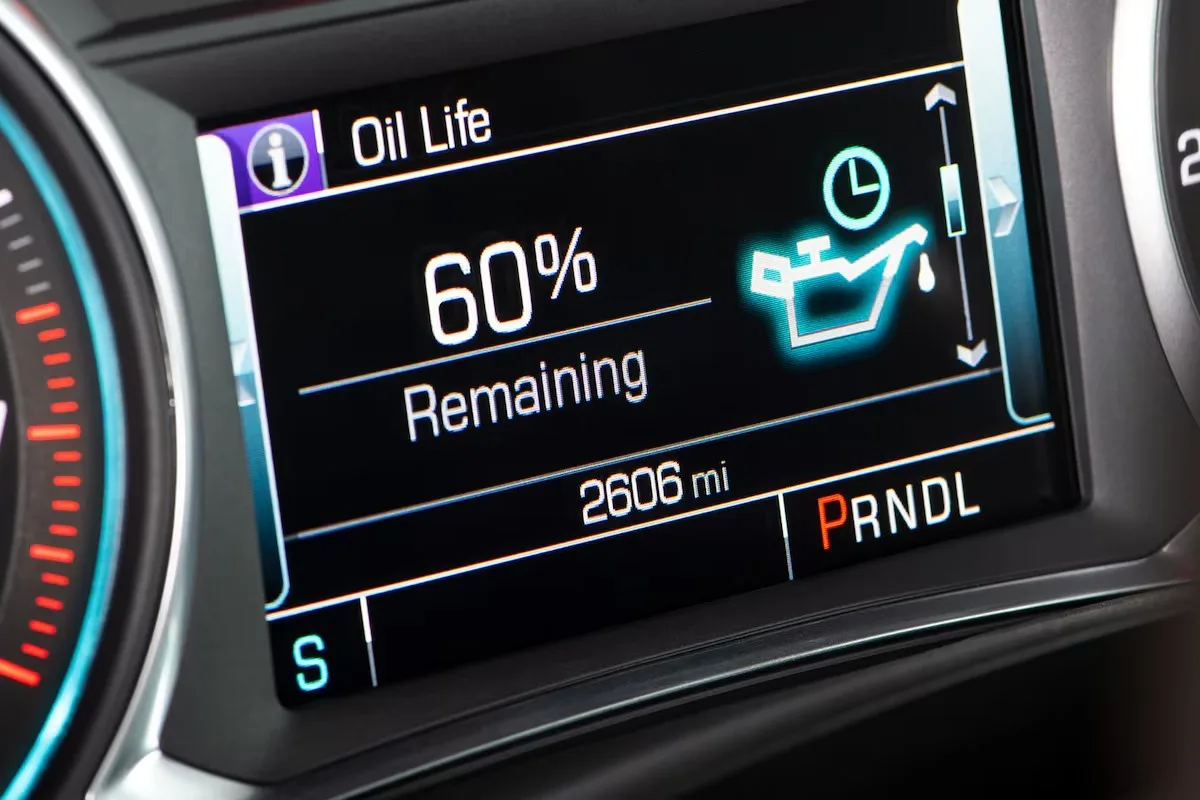
The oil life monitor (OLM) on modern cars isn't a mileage countdown. It's an algorithm. GM, Ford, Honda, and most other automakers estimate remaining oil life from engine RPM, coolant temperature, load, cold starts, and idle time.
That's why a highway commuter and a city driver in the same car can see wildly different countdowns.
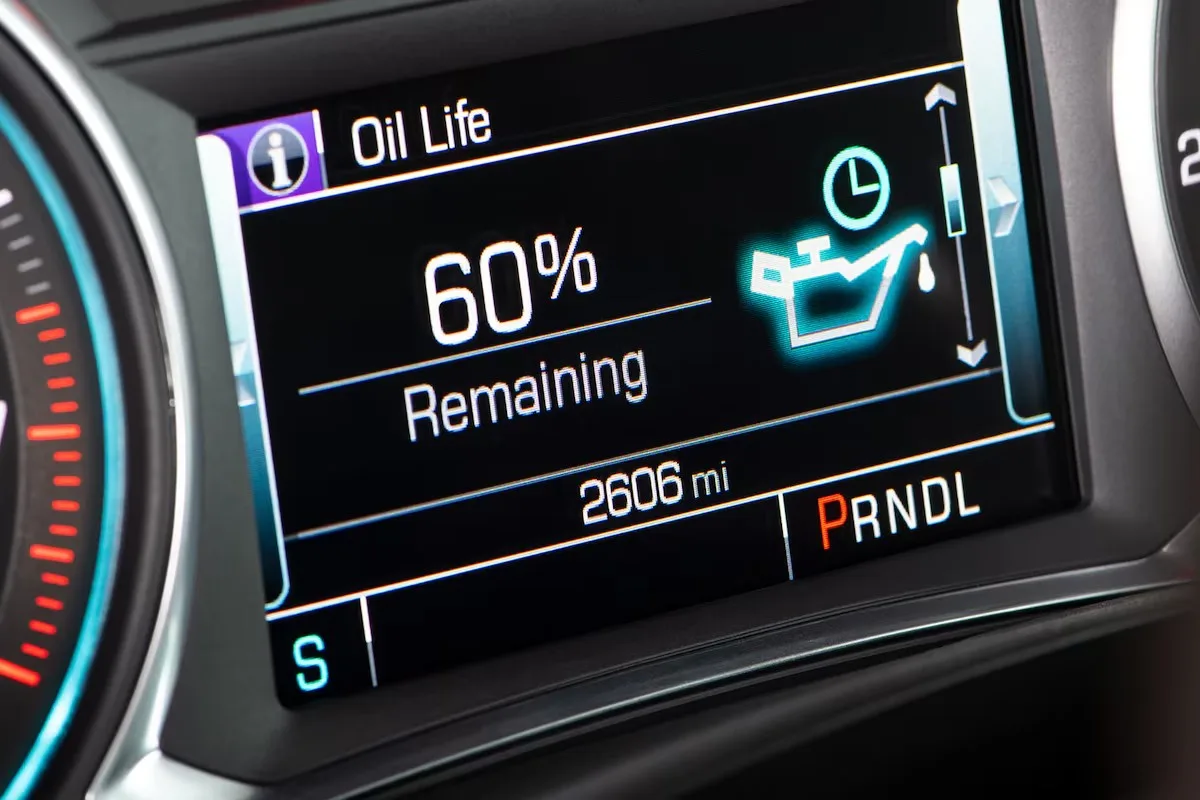
Trust it, but verify with two guardrails. First, change the oil no later than the monitor's warning threshold (usually 15 percent remaining or "Change Oil Soon"). Second, override the monitor and change the oil at 12 months even if it still shows plenty of life.
The algorithm tracks engine stress, not moisture or oxidation from sitting.
Two situations where the OLM under-warns you: heavy fuel dilution in GDI engines, and infrequent long-distance driving. In those cases, use the mileage recommendation as your ceiling and the OLM as a floor. Always reset the monitor after each change or the next countdown will be inaccurate.
Time vs Mileage: Why the Calendar Matters Too
Oil ages whether the engine runs or not. Oxidation, moisture absorption, and additive settling all happen on the shelf. That's why every manufacturer publishes both a mileage limit and a time limit, and the shorter one wins.
For most cars, that time cap is 12 months. Some European brands with condition-based servicing allow up to 24 months, but only with specific approved oils. If your car sat in the garage all pandemic and rolled over 3,000 miles in two years, the mileage says you're fine.
The calendar says change it.
The rule of thumb: 12 months maximum for full synthetic, 6 months for severe service. No exceptions for low mileage.
Full Synthetic vs Extended-Performance Synthetic: What Changes the Interval
Not all "synthetic" oils are built for the same interval. Standard full synthetics (Mobil 1, Castrol Edge, Valvoline Advanced) are rated for the manufacturer's standard interval, usually 7,500 to 10,000 miles. Extended-performance formulas (Mobil 1 Extended Performance, Pennzoil Platinum Euro L, Amsoil Signature Series) use richer additive packages and premium base stocks aimed at 15,000 to 20,000 miles.
Here's the honest side-by-side:
| Feature | Standard full synthetic | Extended-performance synthetic |
|---|---|---|
| Base oil | Group III (mostly) | Group III/IV/V blend |
| Typical drain | 7,500 to 10,000 mi | 15,000 to 20,000 mi |
| Additive reserve (TBN) | Standard | High |
| Price per quart | $6 to $9 | $9 to $14 |
| Best for | Normal service, daily drivers | Long highway miles, low fuel dilution |
Extended-performance oil doesn't overrule severe service. If your driving beats up the oil, the additive reserve still drains faster than the label suggests.
Mistakes That Wreck Your Engine Between Changes
The biggest mistake isn't going a little too long. It's ignoring the signals telling you the oil is done. Here's what actually causes premature engine wear:
- Stretching intervals to hit "20,000 miles" without checking the manual or the oil life monitor
- Using a viscosity or spec that doesn't match the manufacturer approval
- Skipping the oil filter change to save $10 (a clogged filter goes into bypass and sends unfiltered oil to your bearings)
- Ignoring the 12-month calendar rule on low-mileage cars
- Topping off with a different brand or grade repeatedly instead of doing a full change
- Trusting the dealer's "3,000 mile" upsell instead of your owner's manual
- Not resetting the oil life monitor after a change
- Ignoring visible sludge on the oil cap or a rising oil level (a classic sign of fuel dilution)
One more that trips people up: assuming a full synthetic drain interval applies right after a switch from conventional. Give the engine one shorter interval (about 3,000 miles) to flush out the residual old oil and let the new additive package establish itself.
Used Oil Analysis: The Only Way to Know for Sure
If you want to stop guessing, send a sample to a lab. Used oil analysis (UOA) is the closest thing to a blood test for your engine. Labs like Blackstone Laboratories or Polaris Labs charge $30 to $40 per sample and report back on wear metals, contamination, viscosity, TBN, and fuel dilution.

Here's what the report tells you:
- Iron, copper, aluminum, lead: internal wear levels (rising numbers mean parts are wearing)
- Silicon: dirt intrusion (a bad air filter or a leaking intake boot)
- Fuel dilution: how much gasoline is in the oil (over 5 percent means shorten your interval)
- TBN: remaining additive reserve (below 2.0 mg KOH/g means the oil is done)
- Viscosity change: shear or dilution (more than 20 percent off fresh means change it)
Run the same analysis for two or three intervals in a row. You'll see whether you can safely stretch to 10,000 or need to pull back to 6,000. For a car you plan to keep long term, it's the cheapest insurance policy you can buy.
Pair it with the inspection habits from our checklist for evaluating a used vehicle if you're buying a car with unknown service history.
Warranty Rules You Can't Ignore
Follow the schedule in your owner's manual, not the one at the quick-lube counter. Manufacturer warranties require documented service at the intervals printed in the maintenance schedule. Skip them and a denied claim on a $6,000 timing chain job is on you.

The Magnuson-Moss Warranty Act protects your right to use any oil that meets the manufacturer's spec, not just dealer-branded oil. Keep receipts and a mileage log. If you do your own oil changes, save the receipt for each bottle of oil and each filter.
Two rules worth memorizing. Match the exact spec (dexos1 Gen 3, MB 229.5, VW 508.00, whatever your manual lists). Change at or before the manufacturer's stated interval, whichever comes first between miles and months.
Signs Your Oil Is Done Before the Interval Is Up
Sometimes the oil gives up early. Pull the dipstick every few weeks and look for these signs:
- Oil that's gone from amber-brown to black and gritty
- A gasoline smell on the dipstick (fuel dilution)
- Oil level rising instead of dropping (fuel or coolant contamination)
- Milky beige residue under the oil cap (coolant in the oil, a serious issue)
- Ticking from the valvetrain on cold start that fades once warm
- Visible sludge or varnish on the underside of the oil cap
- A dashboard oil pressure warning at idle
Any of these means change the oil now, no matter what the odometer says. If you spot coolant in the oil or oil in the coolant, stop driving and get the engine diagnosed. That's a head-gasket-level problem, not a service interval question.
Frequently Asked Questions
Can I really go 10,000 miles on synthetic oil?
Yes, if your manufacturer specs it, you use the right full synthetic, and your driving isn't classified as severe service. Modern API SP oils and current OEM approvals are engineered for that interval. Confirm it in your owner's manual and trust your oil life monitor as a secondary check.
What happens if I go too long between synthetic oil changes?
Additives deplete, fuel dilution rises, and viscosity drifts out of spec. That leads to accelerated wear on bearings, cams, and timing chains. Sludge forms in the oil galleries and starves the top of the engine.
Serious cases end in timing chain failure or spun bearings.
Does synthetic oil really last a year even if I don't drive much?
No, one year is the outer limit, not a floor. Oil oxidizes and absorbs moisture even when the car sits. If your car sees fewer than 5,000 miles a year, change the oil once every 12 months and use a synthetic rated for extended shelf stability.
How do I know if I'm in severe service?
If two or more apply to your driving, you're in severe service: trips under 10 miles, extreme heat or cold, towing, dusty roads, stop-and-go traffic, or commercial use. Cut your interval in half from the normal recommendation. Follow the severe schedule printed in your manual.
Is Mobil 1 Extended Performance actually good for 20,000 miles?
Per Mobil's own spec, yes, under ideal highway conditions in a modern port-injection engine with no fuel dilution issues. Real-world results vary. A used oil analysis at 10,000 and 15,000 miles is the only way to confirm it's safe in your specific engine.
Your Personal Interval, Decided in 60 Seconds
Open your owner's manual and find the maintenance schedule. Note the mileage and time intervals for both normal and severe service. Match your driving to the severity table earlier in this piece.
If you're normal service with a modern gas engine, run your full synthetic to 7,500 to 10,000 miles or 12 months. If you're severe service, cut it to 5,000 miles or 6 months. Track it, log it, and reset the oil life monitor after every change.
That's the whole system.

Similar Posts