Why Do Car Brakes Squeak When Stopping Slowly?
If your brakes squeak every time you ease to a stop, you're not imagining it, and you're not alone. Why Car Brakes Squeak When Stopping Slowly usually comes down to a handful of causes, some harmless and some that mean a repair is overdue. The tricky part is telling which is which before something gets expensive.
In our research, the loudest low-speed squeaks trace back to brake pad wear indicators, glazing, or rust film on the rotors. Manufacturer specifications for most passenger cars put new pads at 10 to 12 mm thick, with replacement due around 3 mm. That number matters a lot as we sort through what's making your noise.
Why Car Brakes Squeak When Stopping Slowly
Brakes squeak at slow speeds because light pedal pressure lets the pad vibrate against the rotor instead of gripping firmly. Common causes are worn pads touching the wear indicator, glazed friction surfaces, rust film after rain, or dry caliper slides. Real brake squeal typically sits between 1 and 16 kHz.
It's a vibration problem, not just a worn-parts problem.
The Short Answer: Two Kinds of Squeak, Two Very Different Meanings
Not every squeak is a warning. Some are just the physics of a cold brake system doing its job. Others are metal scraping metal, and those don't wait around.
Here's the split you need to know.
- Nuisance squeak. Happens briefly, often in the morning or after rain. Clears within a few stops. Low risk.
- Warning squeak. Repeats every slow stop and gets louder over weeks. Usually the wear indicator, glazing, or a hardware issue. Needs inspection.
The sound itself matters too. A short, high chirp as you roll the last few feet is often a vibration artifact. A long, piercing squeal that follows you down the driveway is a different animal.

Image source: Web (Bing) / sinobrake.com (Web image (fair-use with source credit))
So how do you tell them apart? The next section breaks down what's actually happening under your wheel.
How Disc Brakes Actually Work and Why Slow Stops Are the Noisiest
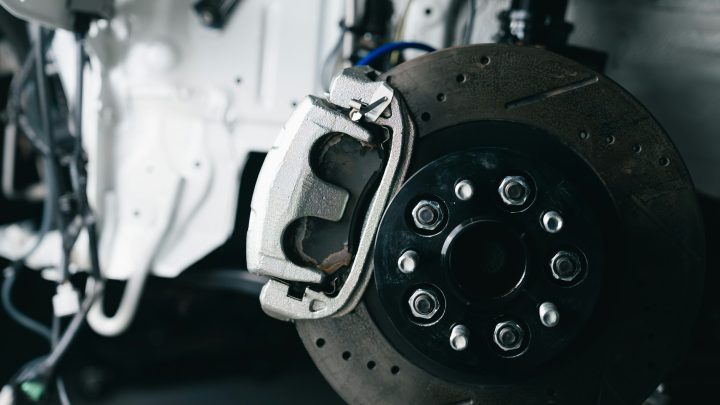
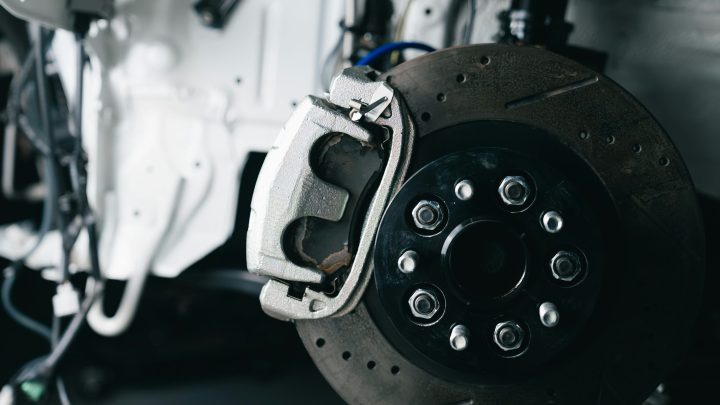
Disc brakes stop your car by squeezing a brake pad against a spinning brake rotor. Both parts are made of friction material on one side and metal on the other. When the pad clamps down, kinetic energy converts to heat, and the car slows.
Under hard braking, the pad presses firmly and stays quiet. Under light braking, the pad barely kisses the rotor. That's when vibration creeps in.
Friction, vibration, and the squeal frequency you hear
Brake squeal is a high-frequency vibration, usually 1 to 16 kHz depending on the pad, rotor, and caliper geometry. Engineers studying brake noise call this a self-excited vibration, meaning the brake generates the noise on its own without an outside trigger.
If you've ever held a wet finger on a wine glass rim, you've heard the same idea. Light contact plus a resonating surface equals a tone.
Why light pedal pressure triggers squeak more than hard braking
Slow stops give the pad a chance to vibrate rather than grip. Hard braking loads the pad firmly enough that vibration can't build. That's why a squeak that vanishes under hard braking is often benign, while one that stays constant is more concerning.
Where the noise really comes from: pad, rotor, shim, or caliper
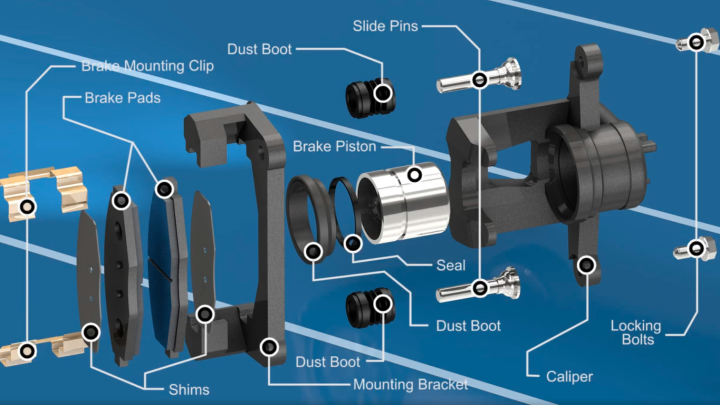
Each part of the assembly plays a role.
- Pad: friction compound, chamfer, and backing plate shape affect noise.
- Rotor: surface finish, thickness variation, and runout matter.
- Shim: bonded to the back of the pad to damp vibration.
- Caliper: slide pins and piston movement control how evenly pressure applies.
If any of those four is off, you'll hear it. Once you understand the mechanics, the causes start to make sense one by one.
The Real Causes of Low-Speed Brake Squeak, Ranked by Urgency
Not all causes are equal. Some you can drive on for weeks. Some you shouldn't drive on at all.
Here's the breakdown in order of how fast you should act.
1. Worn pads hitting the wear indicator (metal tab or sensor)
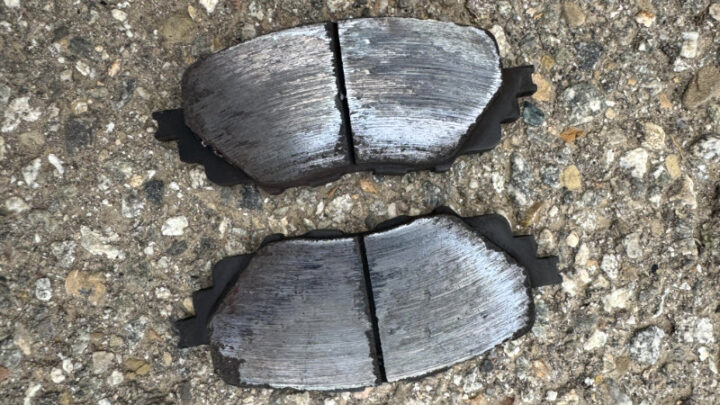
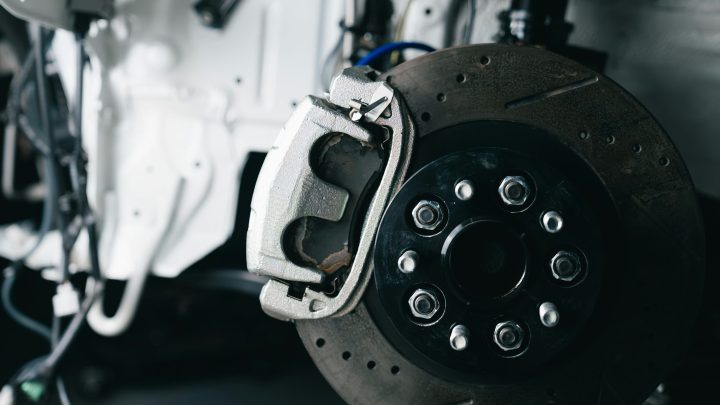
This is the single most common cause of low-speed brake squeak. Brake pad wear indicators are small metal tabs built into the pad backing plate. When the pad wears down to roughly 2 to 3 mm, the tab starts contacting the rotor.
That contact is what you hear.
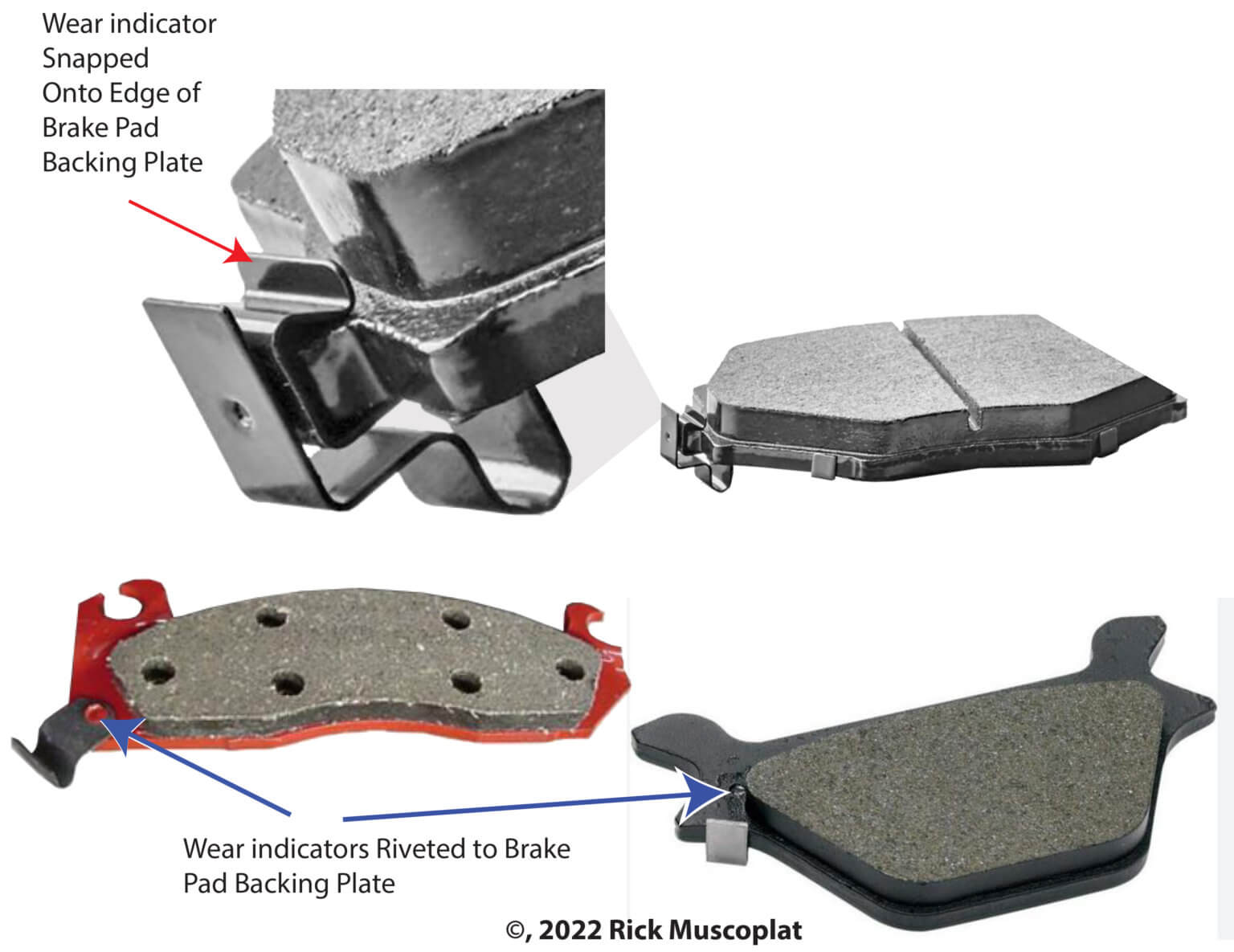
Image source: Web (Bing) / ricksfreeautorepairadvice.com (Web image (fair-use with source credit))
Some newer cars use electronic pad wear sensors instead. If your dashboard shows a brake warning light in addition to the squeak, that's a sensor signal. Either way, this is a replace-soon situation, not a replace-today one, unless the noise has shifted to grinding.
2. Glazed pads or rotors from heat and improper bedding
Glazing happens when friction material overheats and hardens into a glassy surface. The pad loses grip, and vibration builds. Aggressive braking on new pads without proper bedding is a frequent cause.
So is riding the brakes down a long descent.
You'll usually notice this as a squeak that fades when you brake harder.
3. Rust film after rain, a car wash, or a humid night
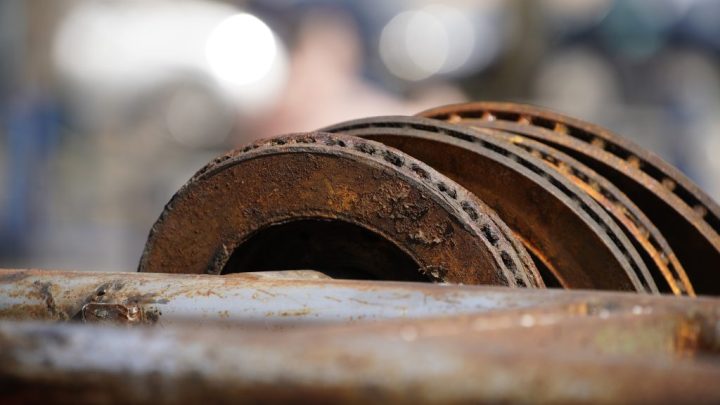
This is the harmless one. A thin rust layer forms on the rotor surface overnight, especially in humid or coastal climates. The first few stops scrape it off, and the squeak disappears.
If it clears within a couple of stops, you can stop worrying. If it doesn't, we're back to the list.
4. Dry or seized caliper slide pins and missing hardware
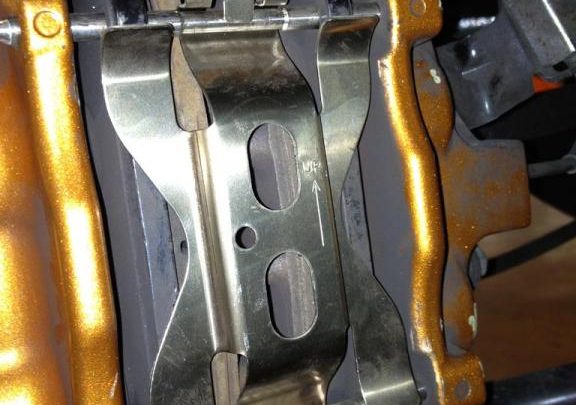
Caliper slide pins need a thin film of high-temperature brake grease to move smoothly. When they dry out or seize, the pad applies unevenly and squeals. Missing abutment clips, anti-rattle springs, or shims cause the same problem.
This is common on cars with 60,000+ miles who've never had a brake service.
5. Cheap or mismatched pads without proper shims
Budget pads sometimes skip the shim that dampens vibration. Mixing a new pad with an old rotor surface can also trigger noise. If your brakes were fine before a cheap pad swap, that's your answer.
6. Rear drum brake shoes and parking brake drag
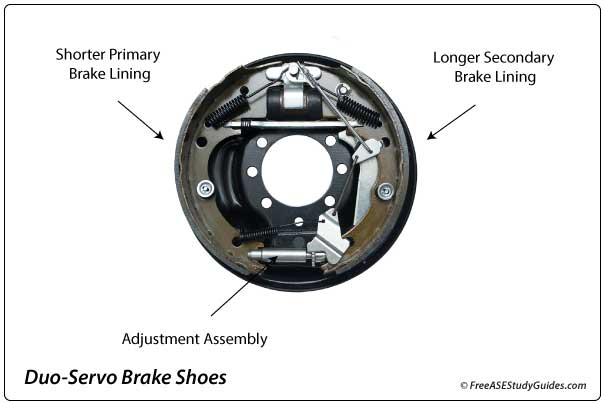
Not every car has rear discs. Drum brake shoes can squeak when the return springs weaken or the parking brake drags slightly. This is often overlooked because drivers assume all brakes are discs.
7. Squeaks that aren't your brakes at all
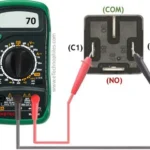
Wheel bearings, suspension bushings, and even a worn serpentine belt can mimic brake squeak. A wheel bearing typically squeaks while turning or at constant speed, not just under braking. If you want a deeper dive into spotting electrical and mechanical faults, our guide on the right meter for the job covers the diagnostic tools worth having.
Now let's match noise patterns to causes so you can narrow it down fast.
Matching the Squeak to the Cause: When It Happens Tells You What It Is
Timing is everything with brake noise. When the squeak shows up gives you more information than the sound itself.
| When You Hear It | Most Likely Cause | Urgency |
|---|---|---|
| Only first few stops in the morning | Rust film on rotors | Low, clears itself |
| After rain or car wash, gone by lunch | Moisture on rotor surface | Low |
| Every slow stop, louder over weeks | Worn pads at the wear indicator | High, replace soon |
| Constant squeal, even coasting | Metal-on-metal contact | Stop driving |
| Squeak only in reverse | Pad chamfer or rear shoe issue | Medium |
| Squeak plus a pulsing pedal | Rotor thickness variation | Medium, inspect |
| Squeak that fades under harder braking | Glazing | Low to medium |
| Squeak turning or over bumps | Wheel bearing or suspension | Not brakes, still check |
That last row is the one people miss most. If the squeak follows you around a corner, it's likely a bearing, not the brake. Brake noise almost always changes with pedal pressure.
Bearing noise changes with steering input and speed.
A pulsing pedal alongside the squeak is the one combination worth taking seriously right away, because it usually points to rotor thickness variation or runout.
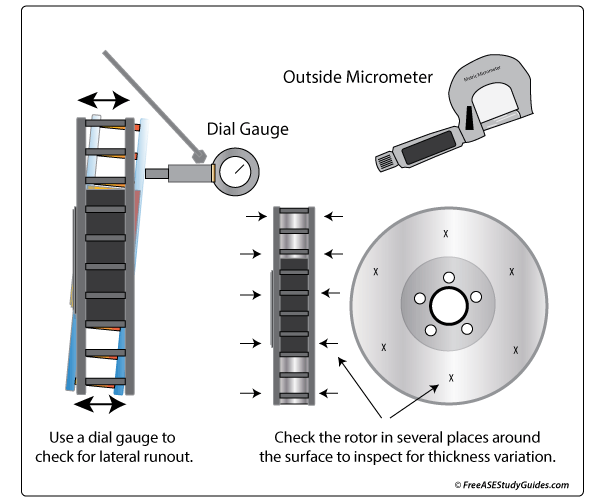
Image source: Web (Bing) / mail.freeasestudyguides.com (Web image (fair-use with source credit))
Once you've narrowed the pattern, you can decide what to check first. That's the next step.
Diagnosing It Yourself: A Safe Step-by-Step Walkthrough
You can usually narrow down a brake squeak in under an hour with basic tools. What you need is a jack, jack stands, a lug wrench, a flashlight, and a ruler or caliper gauge. No special equipment required.
The road test: reproduce the squeak on purpose
Drive somewhere quiet and try to trigger the noise deliberately. Ease to a stop from about 10 mph several times. Then brake harder from 30 mph.
Note exactly when the squeak appears and when it fades.
If it only shows up on light, slow stops, you're likely dealing with vibration or glazing. If it's constant regardless of pressure, suspect the wear indicator or metal contact.
The visual inspection: pad thickness, rotor condition, hardware
Lift the car safely and remove each wheel. Shine a light into the caliper opening and look at the pad material. You're checking thickness, but also the surface.
Look for deep grooves in the rotor, blue heat spots, or heavy rust rings. Check for missing shims or clips between the pad and caliper. A pad sitting crooked in the bracket is a red flag.
The 3 mm rule and what wear indicators look like
Most manufacturers spec replacement around 3 mm of pad material. New pads run 10 to 12 mm. That means you're halfway through the pad's life at roughly 6 mm.
A wear indicator is a small metal tab bent toward the rotor. When the pad gets thin enough, the tab touches the rotor and squeals. If your pad is at 3 mm or less, you've found your answer.
Checking caliper slide pins, shims, and abutment clips
Slide pins should move freely with light hand pressure. If they're stuck or dry, that's a problem. Shims should sit flat against the pad backing plate with no rust bubbling underneath.
Replace any hardware that's cracked, bent, or missing. New pads often come with a hardware kit, and skipping it is a common mistake.
What You Can Fix at Home vs. What Needs a Shop
Some squeaks are a Saturday afternoon fix. Others need a lift, a press, or a diagnostic scanner.
- DIY-friendly: greasing slide pins, replacing shims and clips, bedding new pads, cleaning rust film.
- Shop-only: rotor replacement, caliper rebuild, ABS faults, brake line work.
- Judgment call: pad replacement if you're comfortable with torque specs and jack stands.
Why incorrect DIY brake work is a genuine safety risk
Brakes are the wrong place to learn by trial. A pad installed backward, a caliper bolt left loose, or a rotor installed with contaminated surfaces can fail under hard braking. Per NHTSA guidance, brake system defects remain one of the most common causes of vehicle safety recalls in the US.
If you're not confident, pay for the inspection. The cost of a brake job is far less than the cost of a crash.
How to Stop Brake Squeak for Good (Bedding, Grease, and Hardware)
The fix depends on the cause, but a few habits prevent most low-speed squeaks from returning.
The correct bedding procedure for new pads
Bedding transfers a thin, even layer of friction material from the pad to the rotor. Without it, pads can glaze and squeal within a few hundred miles.
Here's the standard process for most passenger cars:
- Find an empty road and drive to about 50 mph.
- Brake firmly to about 10 mph, without coming to a full stop.
- Repeat 6 to 10 times with a minute of driving between stops to cool.
- Drive normally for 10 minutes to let everything cool evenly.
Avoid hard stops from high speed for the first 200 miles. Aggressive bedding is for track pads, not street pads.
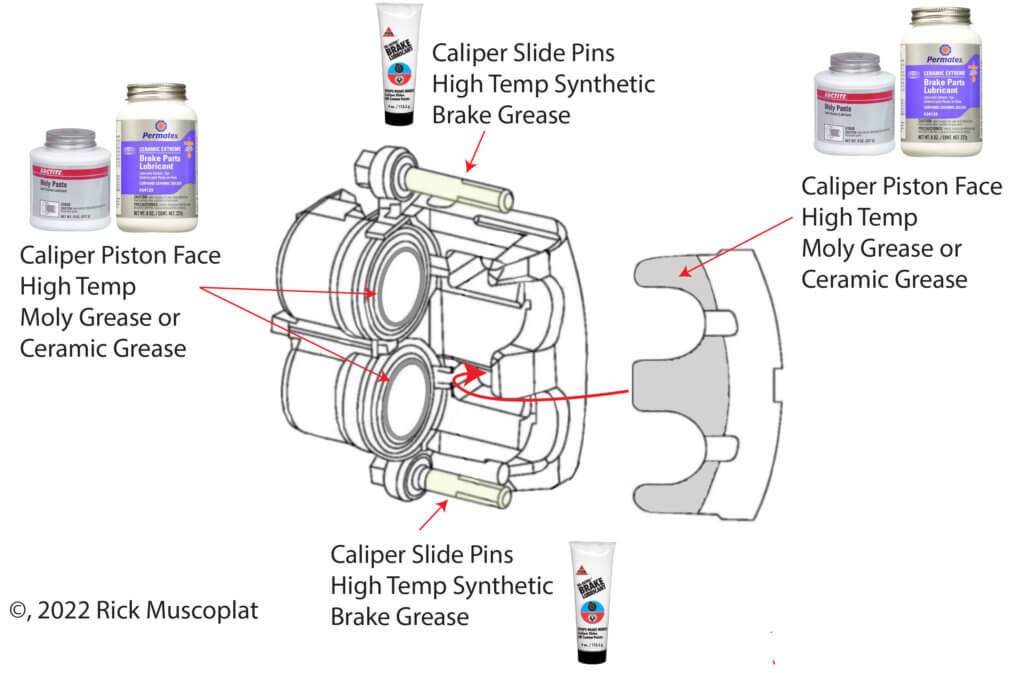
Image source: Web (Bing) / ricksfreeautorepairadvice.com (Web image (fair-use with source credit))
Where to apply brake grease and where never to
Apply a thin film of high-temperature silicone brake grease to the slide pins and the metal-to-metal contact points at the abutment clips. That's it.
Never put grease on the friction surface, the rotor face, or the pad material. Even a fingerprint of grease on a rotor can cause noise and poor braking. Use brake cleaner on the rotor surface before installing.
Why torqueing lug nuts to spec prevents rotor distortion
Uneven lug nut torque warps rotors over time. The warping shows up as thickness variation, which causes both squeak and a pulsing pedal. Always torque to the manufacturer's spec in a star pattern.
Most passenger cars land between 80 and 110 ft-lbs.
Matching pads to rotors and how you actually drive
Use pads and rotors designed to work together. Mixing a high-friction pad with a soft rotor accelerates wear and noise. If you commute in stop-and-go traffic, ceramic pads generally run quieter than semi-metallic.
Brake Pad and Rotor Options That Affect Noise
Pad and rotor choice directly affects how quiet your brakes stay over time. Here's how the main options compare.
| Pad Type | Noise Level | Dust | Best For |
|---|---|---|---|
| Semi-metallic | Moderate | Higher | Towing, performance, heavy loads |
| Ceramic | Lower | Lower | Daily driving, commuting |
| Organic | Lowest cold noise | Moderate | Light-duty, older vehicles |
| Low-metallic | Moderate | Moderate | Budget daily driving |
OE pads vs aftermarket: what you're really paying for
OE pads are engineered to match your car's noise, vibration, and harshness targets. Aftermarket pads vary widely. A good aftermarket set can match OE performance.
A cheap set often can't.
If quiet braking matters most, spec OE-equivalent pads with factory-style shims.
Coated, slotted, and drilled rotors
Coated rotors resist rust between the vanes and the hub, which cuts down on that morning rust squeak. Slotted and drilled rotors look aggressive but can be noisier and wear pads faster. For a street car, plain coated rotors are the quietest choice.
When resurfacing makes sense and when it doesn't
Resurfacing removes a thin layer of rotor to restore a flat surface. It makes sense if the rotor has enough thickness left and the problem is surface glazing or light scoring.
It doesn't make sense if the rotor is near minimum thickness, has cracks, or shows heavy heat spots. Replacing is often cheaper than resurfacing once labor is factored in.
Costs, Specs, and What You Should Expect to Pay
Prices vary by region and vehicle, but these ranges give you a realistic picture as of 2026.
| Service | Typical Parts Cost | Typical Labor | When You Need It |
|---|---|---|---|
| Front pad replacement (DIY) | $40 to $120 | None | Every 30k to 70k miles |
| Front pad replacement (shop) | $40 to $120 | $150 to $300 | Same |
| Pads and rotors per axle | $150 to $400 | $200 to $400 | Pads worn, rotors at limit |
| Caliper replacement (each) | $80 to $250 | $100 to $200 | Seized or leaking caliper |
| Brake fluid flush | $20 to $40 fluid | $80 to $150 | Every 2 to 3 years |
| Diagnostic inspection | None | $50 to $150 | Any unexplained noise |
A quick note on timing. Pads typically last 30,000 to 70,000 miles depending on driving style and pad compound. Rotors often get replaced every second pad change.
If you hear a squeak and you're past 50,000 miles on the current set, budget for inspection now rather than waiting. Catching a wear indicator early saves the cost of a rotor. Ignoring it usually doesn't.
Brake fluid matters too. It absorbs moisture over time and lowers its boiling point, which affects pedal feel and braking consistency. Flush every 2 to 3 years even if the brakes feel fine.
When a Squeak Means Stop Driving Right Now
Most brake squeaks give you time to plan a repair. A few don't. Here's how to tell the dangerous ones apart from the annoying ones.
Metal-on-metal grinding plus squeal
If the squeak has turned into a grinding or scraping sound, stop driving. You've worn through the pad material and the backing plate is cutting into the rotor. Every mile you drive shaves metal off a part that isn't cheap to replace, and stopping power drops fast.
Pulsing pedal, pulling, or soft pedal
A pedal that pulses under braking points to rotor thickness variation or runout. A car that pulls to one side means a caliper is dragging or a brake line is restricted. A spongy or soft pedal usually signals air or moisture in the brake fluid.
Any of these means the brake system isn't working normally, and you should treat it as urgent.
Brake fluid loss or warning light on the dash
A low brake fluid level or a brake warning light is never something to ignore. Low fluid can mean a leak somewhere in the system, and that can fail without warning. Get it inspected the same day.
If the pedal sinks to the floor, do not drive the car at all.
Reduced stopping distance in any form
Any noticeable change in how long it takes to stop deserves immediate attention. Braking performance is not a "wait and see" item. Per NHTSA, brake system issues are among the most common causes of vehicle safety recalls in the US.
The rule is simple. If the squeak is joined by grinding, a pulsing pedal, a pulling car, a warning light, or a soft pedal, park it and get it checked. A lone squeak with none of those is still worth investigating, but it's rarely a same-day emergency.
Brake Noise and the Rules That Matter
Brake noise isn't just about convenience. It sits inside a regulatory framework that exists to keep stopping performance predictable.
Why replacement pads must meet R90 or OE spec
In the EU and UK, replacement brake pads and rotors must meet UN Regulation No. 90 (ECE R90) to be road-legal. That standard tests friction performance against the original part. In the US, FMVSS 135 sets the baseline for brake performance on new vehicles.
Cheap pads that skip these standards can be quieter on day one and dangerous on day thirty. If a pad set doesn't list a compliance standard, that's a warning sign.
Inspection requirements that flag brake noise
Many US states include brake function in their periodic safety inspection. The UK's MOT test checks brake efficiency and balance. A squeak isn't an automatic fail on its own, but an inspector will flag worn pads or a dragging caliper.
If your car is due for an inspection, don't gamble on the noise clearing up. Deal with it first.
Warranty implications of skipping brake service
If your car is still under warranty, neglected brake service can complicate a claim. Manufacturers expect you to follow the maintenance schedule and address warning signs. Ignoring a wear indicator for months and then claiming a rotor failure usually doesn't end well.
Keep receipts for any brake work. They're your proof that you did the right thing when it counted.
FAQs About Brakes Squeaking When Stopping Slowly
Is it normal for new brakes to squeak?
A light squeak in the first few hundred miles of new pads is common. It usually means the pads haven't fully bedded yet. If it persists past 500 miles, suspect a shim issue or missing hardware.
Do the bedding procedure again before assuming the pads are bad.
Why do my brakes only squeak when I stop slowly?
Light pedal pressure lets the pad vibrate rather than grip firmly. Harder braking loads the pad enough to suppress the vibration. This is why low-speed squeak is so common and why it often disappears the moment you brake harder.
Can I drive with squeaking brakes?
It depends on the cause. A brief morning squeak that clears within a few stops is fine to drive on. A constant squeal, a grinding noise, or a squeak alongside a pulsing or soft pedal is not.
When in doubt, get it inspected.
How long can I go before replacing squeaking pads?
If the squeak is from a wear indicator, you have limited runway. Most pads at the indicator have 2 to 3 mm left, which is roughly a few hundred to a thousand miles depending on driving. Waiting risks rotor damage that turns a cheap job into an expensive one.
Does brake grease really fix squeaks?
Sometimes, yes. Brake grease on the slide pins and abutment contact points stops vibration from transferring through the caliper. It won't fix a worn pad, a glazed rotor, or a seized caliper piston.
For those, grease is a bandage, not a cure.
Why do my brakes squeak after a car wash but stop later?
Water leaves a thin rust film on the rotor surface. The first few stops scrape it off, and the squeak disappears. This is normal behavior for most cars, especially in humid climates.
If the squeak lingers past five or six stops, it's not the water.
Similar Posts