ILSAC GF-6 Oil Explained: What It Is and Why It Matters
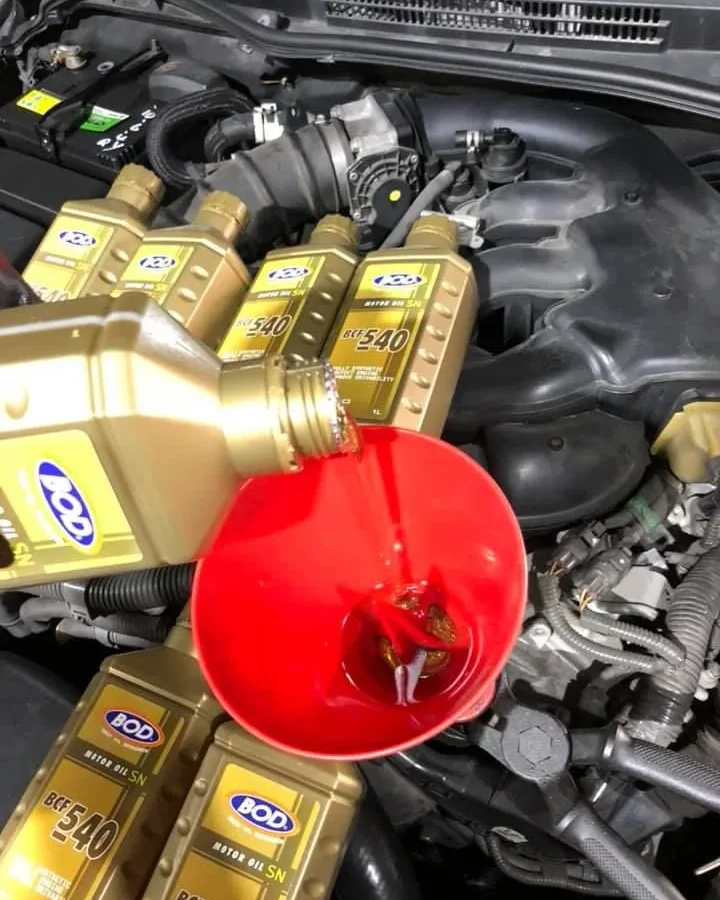
If you've stared at the oil aisle wondering what is ILSAC GF-6 oil and whether it's the right pour for your engine, you're in good company. GF-6 is the current passenger car engine oil standard set by ILSAC, the group that decides what a modern gasoline engine expects from its lubricant. It replaces GF-5 with tougher protection against low-speed pre-ignition, timing chain wear, and lost fuel economy over time.
In short, it's the oil most 2020-and-newer gasoline engines were designed around.
The spec first hit shelves on May 1, 2020, and as of 2026 it remains the ruling ILSAC standard for licensed passenger car motor oils in North America. It also introduced a split personality, GF-6A and GF-6B, that trips up a lot of buyers. Get the wrong one and you can void a warranty or wear an engine out early.
Here's the plain-English breakdown.
Quick Answer
ILSAC GF-6 is the current passenger car motor oil standard for gasoline engines. It comes in two flavors. GF-6A covers common viscosities like 0W-20 and 5W-30 and is backward compatible with older engines.
GF-6B covers only SAE 0W-16 and is not backward compatible. Both add LSPI protection and stronger timing chain wear resistance versus GF-5.
What ILSAC GF-6 Motor Oil Actually Means
ILSAC stands for the International Lubricant Standardization and Approval Committee. It's a joint body created by North American and Japanese automakers to define what a passenger car engine oil should actually do on the road.
GF-6 is the sixth generation of that specification. Think of it as a performance floor. If an oil carries the certification, it has passed a specific battery of engine tests covering wear, deposits, fuel economy, oxidation, and pre-ignition control.
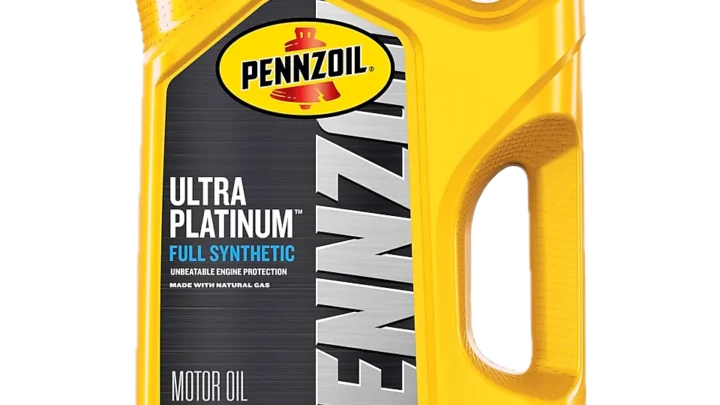
The rules are published under API 1509, and licensed oils earn the right to display the API certification marks on the bottle. No mark, no license, no proof the oil meets GF-6.
Why the Right Oil Spec Matters More Than Ever
Modern engines run hotter, spin faster, and squeeze more power from smaller displacements than the engines of a decade ago. That's great for fuel economy. It's also brutal on the oil.
Turbocharged gasoline direct injection engines can experience low-speed pre-ignition, a violent uncontrolled combustion event that has cracked pistons and snapped connecting rods in real-world engines. Timing chains stretch sooner. Piston deposits build up faster.
GF-6 was written specifically to defend against those failure modes.
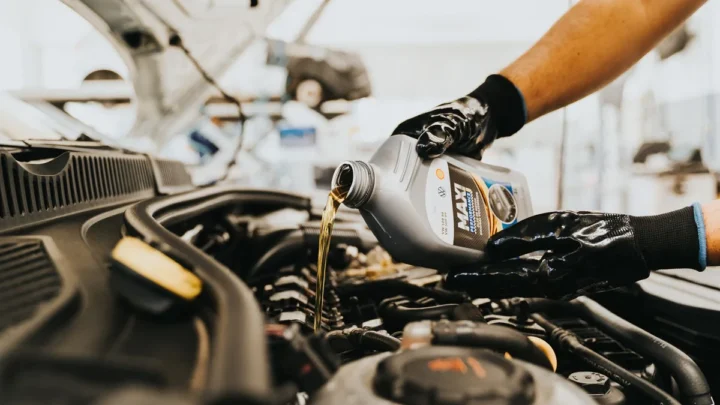
Skipping the correct spec is the kind of mistake that shows up at 60,000 miles as a rattling chain or a check-engine light. If you handle your own maintenance, servicing your own engine oil is where the payoff lands. You control exactly what goes into the sump.
The Difference Between GF-6A and GF-6B
Here's the split that confuses most buyers.
GF-6A is the mainstream version. It covers common viscosity grades and is backward compatible with older ILSAC categories such as GF-5, GF-4, and GF-3. If your owner's manual calls for 5W-30 or 0W-20, you're in GF-6A territory.
GF-6B is a narrower category built for a single low-viscosity grade, SAE 0W-16. It is not backward compatible. Only use GF-6B in an engine the automaker specifically designed for 0W-16.
If the manual doesn't call for it, don't use it.
| Feature | GF-6A | GF-6B |
|---|---|---|
| Viscosity grades | 0W-20, 5W-20, 5W-30, 10W-30, others | 0W-16 only |
| Certification mark | Starburst | Shield |
| Backward compatible | Yes | No |
| Typical use | Most 2020-plus gasoline cars | Select fuel-economy-focused engines |
How GF-6 Compares to Older ILSAC Standards
Every ILSAC generation tightens the screws. GF-5, licensed in 2010, focused on emission system compatibility and fuel economy retention. GF-6 keeps all of that and adds two big things GF-5 never had, LSPI protection and a dedicated timing chain wear test.
Per API testing protocols, GF-6 oils must pass the Sequence IX test for LSPI and the Sequence X test for chain wear. Neither existed in the GF-5 era. GF-6 also demands better fuel economy retention through the drain interval, not just at the fresh-oil point.
If your car was built before roughly 2011, a GF-6A oil still works fine thanks to backward compatibility. It's simply a better oil dropped into an older engine.
The Relationship Between ILSAC GF-6 and API SP
You'll often see ILSAC GF-6 and API SP printed together on the same bottle. That's not a marketing trick. They were developed in parallel and released on the same day, May 1, 2020.
API SP is the American Petroleum Institute's service category covering the same performance improvements: LSPI protection, chain wear resistance, deposit control, and improved oxidation stability. Think of API SP as the underlying performance category and ILSAC GF-6 as the fuel-economy-focused subset with the consumer-facing Starburst and Shield symbols.
An oil carrying the Starburst is always API SP-RC (Resource Conserving). An oil labeled API SP alone may not be ILSAC-licensed. The official specifications and licensed brand lists are published by the American Petroleum Institute.
Key Performance Upgrades in GF-6 Oils
GF-6 didn't add features for the marketing brochure. Each upgrade traces back to a specific engine failure mode automakers were seeing in the field.
LSPI Protection for Turbo GDI Engines
Low-speed pre-ignition is the villain that pushed GF-6 into existence. It happens at low RPM and high load, exactly where a downsized turbo engine spends its most fuel-efficient minutes.
Per the Sequence IX test, a GF-6 oil is required to suppress LSPI events across a defined test cycle. That protection comes from a reworked additive package, typically lower calcium and higher magnesium detergent balance. If you drive a modern turbo four-cylinder, this alone is worth the upgrade.
Timing Chain Wear Protection
Timing chain stretch became a common complaint on several 2010-era engines. GF-6 responded with the Sequence X test, which measures chain elongation after a defined bench cycle.
An oil that passes Sequence X holds chain wear below a fixed threshold. Aggregate technical reviews show this is one of the clearest, most measurable improvements over GF-5.
Fuel Economy Retention Over the Drain Interval
GF-5 oils had to prove fuel economy when fresh. GF-6 oils have to prove it stays. The Sequence VIE (for GF-6A) and Sequence VIF (for GF-6B) tests measure the FEI Sum, a combined fuel economy score at both fresh and aged oil points.
Real-world result: less MPG drop-off in the last third of the drain interval.
Deposit and Aeration Control
Direct injection engines cook piston crowns hard. GF-6 tightens deposit and oxidation limits via Sequence IIIH. It also caps aeration and foaming, which matters for stop-start systems where the oil is repeatedly re-primed.
Cleaner pistons, cleaner turbochargers, quieter valvetrains.
How to Identify a True GF-6 Oil on the Shelf
Two symbols do all the work. The Starburst on the front of the bottle means GF-6A. A newer Shield-shaped logo means GF-6B (0W-16 only).
No symbol, no certification.
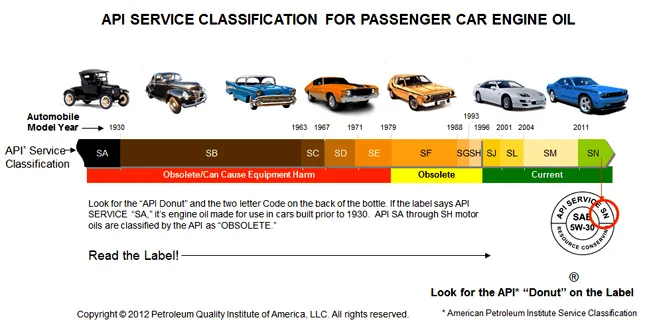
Flip the bottle. The circular API Donut on the back shows the service category (API SP), the viscosity grade, and whether the oil is Resource Conserving. All three markings should line up with what the front of the bottle claims.
A few quick shelf checks:
- Front label shows the Starburst (GF-6A) or Shield (GF-6B).
- API Donut lists API SP and the viscosity grade you need.
- "Resource Conserving" appears in the lower half of the Donut.
- Brand is on the API-licensed list (searchable at api.org).
If the label only says "meets" or "recommended for" GF-6 without a certification mark, the oil is not licensed. Skip it.
Viscosity Grades Covered Under GF-6
GF-6A and GF-6B split the viscosity map. GF-6A covers the workhorses. GF-6B exists for one grade only.
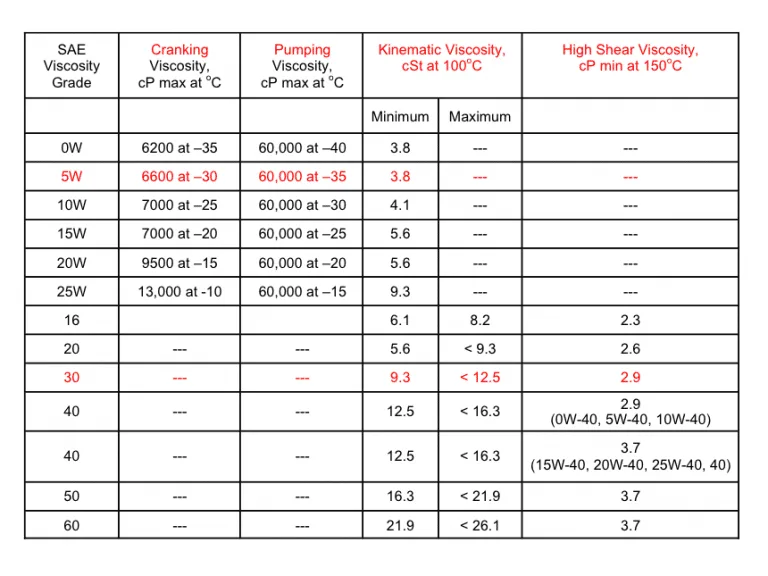
Here's the practical breakdown:
| SAE Grade | Category | Typical Application |
|---|---|---|
| 0W-16 | GF-6B | Toyota, Honda hybrids and select fuel-economy engines |
| 0W-20 | GF-6A | Most 2015-plus passenger cars |
| 5W-20 | GF-6A | Common Ford, Honda, and Chrysler engines |
| 5W-30 | GF-6A | Broad domestic and import coverage |
| 10W-30 | GF-6A | Older gasoline engines, some light trucks |
Viscosity is not interchangeable. A 0W-20 and a 5W-30 protect differently at operating temperature. Match the exact grade in your owner's manual, then let the certification symbol confirm the spec.
One nuance: SAE 0W-16 is only licensed under GF-6B. If a 0W-16 bottle lacks the Shield symbol, it isn't a certified GF-6 product.
Which Vehicles Actually Need GF-6 Oil
Any 2020-or-newer gasoline passenger vehicle sold in North America was almost certainly designed around GF-6. Many 2017-plus turbo GDI vehicles also benefit strongly because LSPI protection wasn't standardized until GF-6.
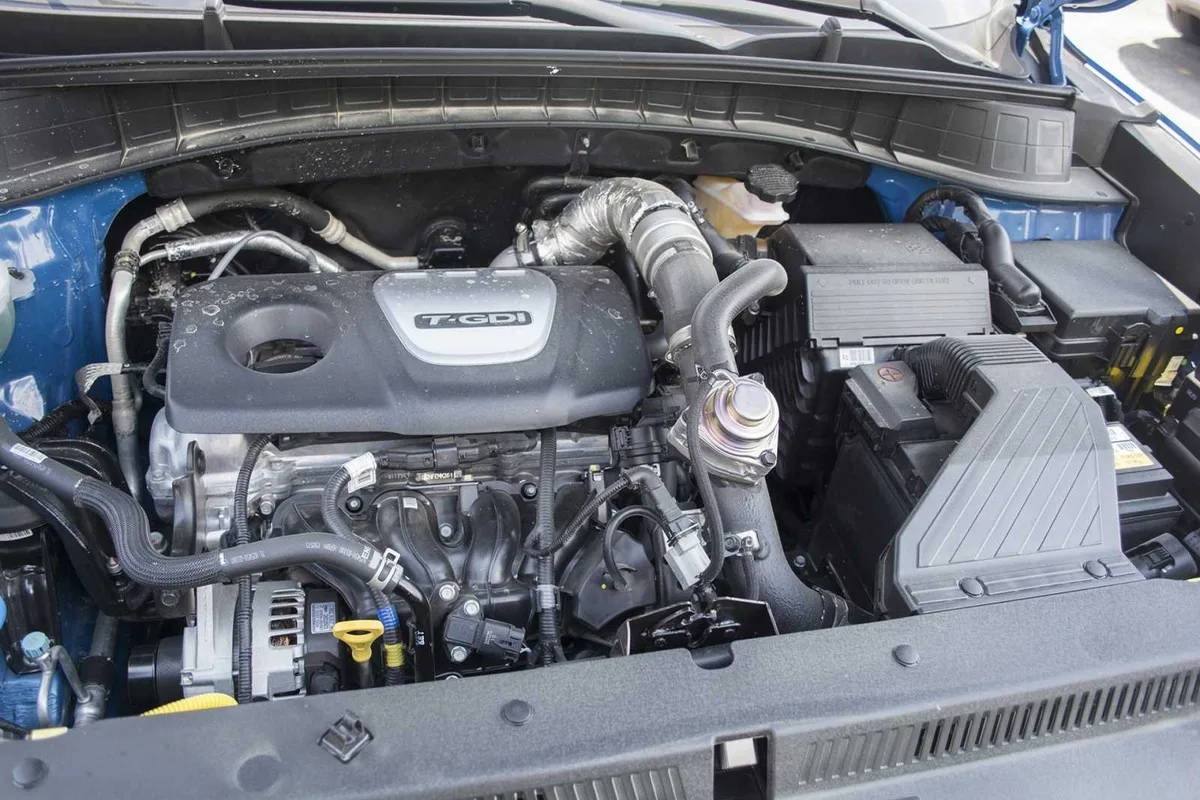
Vehicles that specifically want GF-6:
- Turbocharged gasoline direct injection (TGDI) engines
- Modern hybrids with gasoline engines
- Stop-start equipped cars and SUVs
- Any new car still under factory warranty
- Small-displacement engines making high specific output
Never skip the owner's manual. It's the authoritative source for viscosity and specification. If you're shopping used, cross-check the required oil spec during your pre-purchase walkaround.
Our pre-purchase inspection checklist covers what to verify before you sign.
Diesel engines, heavy-duty pickups running API CK-4 or FA-4, and motorcycle wet-clutch engines are all outside the GF-6 scope. Don't pour a GF-6 oil where the manual calls for a different service category.
Backward Compatibility With Older Engines
GF-6A is fully backward compatible with GF-5, GF-4, GF-3, GF-2, and GF-1. If your 2008 Camry calls for a GF-4 5W-30, a GF-6A 5W-30 is a straight upgrade. Better wear protection, better deposit control, same viscosity behavior.
GF-6B is a different story. It only exists in SAE 0W-16, and it is not backward compatible with earlier ILSAC categories. Never substitute a GF-6B 0W-16 for a GF-6A 5W-30 just because both are "GF-6".
The viscosity mismatch alone can starve bearings at high temperature.
The safest rule: match the viscosity your engine was designed for, then pick the newest ILSAC category available in that grade. That's almost always going to be GF-6A.
Common Mistakes When Choosing GF-6 Oil
Most GF-6 mistakes trace to the same three habits. Buying by price, buying by viscosity alone, or trusting a bottle without checking the certification mark.
Frequent slip-ups our research keeps surfacing:
- Grabbing a 0W-16 bottle for a 5W-30 engine because both say "GF-6"
- Assuming any API SP oil is automatically ILSAC-licensed (it isn't)
- Ignoring the OEM spec (dexos1 Gen 3, Ford WSS-M2C, etc.) and picking only by ILSAC
- Using a "meets specifications of" oil with no Starburst or Shield on the label
- Overextending drain intervals because "GF-6 lasts longer" (it doesn't officially)
- Mixing partial top-ups of different viscosities to save a few dollars
The single worst mistake is the viscosity swap. GF-6B in a GF-6A engine can starve high-load bearings within one drive cycle at highway speed. GF-6 upgrades do not override the physics of viscosity.
If the manual says 5W-30, buy 5W-30. Confirm the Starburst. Confirm the API SP mark.
Then confirm your OEM approval if the automaker lists one.
When GF-6 Is Not the Right Choice
GF-6 is a passenger car gasoline oil spec. It's the wrong pick anytime the engine wasn't designed for a passenger-car service category.
Skip GF-6 in these situations:
- Diesel pickups and light-duty diesels requiring API CK-4, FA-4, or an OEM diesel spec
- Heavy-duty commercial engines under API service categories starting with "C"
- Motorcycles with a wet clutch (friction modifiers can cause clutch slip)
- Powersports 2-stroke engines
- Older engines calling for high-zinc (ZDDP) flat-tappet oils
- Racing engines requiring dedicated non-ILSAC formulations
Classic muscle cars with flat-tappet camshafts are the most common miss. GF-6 caps phosphorus around 0.06 to 0.08 percent to protect catalytic converters. That level is fine for modern roller-cam engines.
It's too low for a stock 1970s flat-tappet cam under high spring pressure.
If your engine falls outside GF-6's scope, the correct oil will be listed by the manufacturer under a different service category. Don't force-fit GF-6 just because it's the newest thing on the shelf.
Warranty, Emissions, and Compliance Considerations
Warranty claims can be denied when an engine fails and the wrong oil is documented at the last service. Automakers reference the required ILSAC or OEM spec directly in the owner's manual, and dealers cross-check receipts when a claim gets contested.
Keep this simple habit at every change:
- Save the receipt with the oil brand and viscosity listed
- Note the spec (ILSAC GF-6A, API SP, plus any OEM approval like dexos1 Gen 3)
- Record the mileage and date
- Photograph the bottle before you pour if you're doing it yourself
GF-6's phosphorus cap exists specifically to protect three-way catalytic converters and oxygen sensors. Running a non-compliant oil (too much ZDDP, too much sulfated ash) can poison the catalyst and trigger emissions faults. EPA warranty rules on catalytic converters typically extend to 8 years or 80,000 miles, so a poisoned cat is not a cheap problem.
For California drivers, CARB compliance follows federal emissions standards for oil specs. Sticking to a licensed GF-6 oil keeps you inside those lines by default. Skipping the certification is the fast route to trouble at the next smog check.
Expert Tips for Buying and Using GF-6 Oil
A few working habits separate the confident oil buyer from the one guessing at the shelf.
- Match the OEM approval first, ILSAC second. If Ford calls for WSS-M2C961-A1, start with an oil that carries that approval, then confirm it's also GF-6A licensed.
- Full synthetic is the default for GF-6A. Modern base oils (Group III and higher) meet the tighter oxidation and volatility limits more easily than conventional stock.
- Buy from a rotating shelf. Motor oil has a long shelf life, but very old inventory sometimes predates the current API SP / GF-6 licensing.
- Don't mix GF-6A and GF-6B. Top up with the same grade you drained, from the same category.
- Change the filter at every service. A tired filter caps the benefit of a fresh oil.
- Follow the OEM oil-change interval. GF-6 improves drain-interval performance, but the automaker sets the number, not the oil brand.
If a shop tries to upsell you a "premium" oil that doesn't carry the Starburst or Shield, that's your cue to ask why.
Frequently Asked Questions
Is ILSAC GF-6 oil fully synthetic?
Not necessarily by definition. GF-6 sets performance requirements, not base-stock requirements. In practice, most GF-6-licensed oils on shelves as of 2026 are full synthetic or synthetic blend because the tighter oxidation, volatility, and fuel economy tests are hard to pass with conventional base stocks alone.
Can I use GF-6A oil in a car that originally called for GF-5?
Yes. GF-6A is fully backward compatible with GF-5, GF-4, GF-3, GF-2, and GF-1. Match the viscosity your owner's manual specifies (like 5W-30 or 0W-20) and use the GF-6A version.
You get better wear protection and cleaner pistons with zero compatibility risk.
Does GF-6 replace API SP?
No. They work together. API SP is the service category set by the American Petroleum Institute.
ILSAC GF-6 is the fuel-economy-focused subset for passenger cars. Most GF-6A oils carry both marks on the bottle, with the API SP Donut on the back and the Starburst on the front.
What happens if I accidentally use 0W-16 GF-6B instead of 5W-30 GF-6A?
Change it out as soon as possible. GF-6B 0W-16 is far thinner than GF-6A 5W-30 at operating temperature and can cause elevated wear in an engine not designed for it. A single short drive is usually not catastrophic, but avoid highway loads or long trips until the correct oil is back in the sump.
How often should I change GF-6 oil?
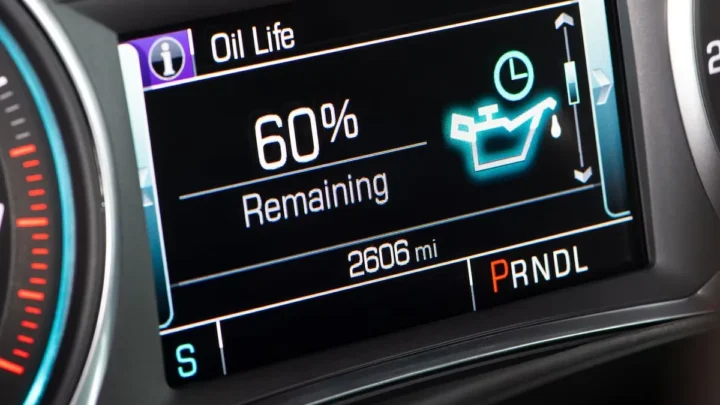
Follow the mileage or oil-life monitor recommendation in your owner's manual. GF-6 improves fuel economy retention and deposit control across the drain interval, but it doesn't extend the automaker's specified change interval. Typical figures run from 5,000 to 10,000 miles depending on engine and driving conditions.
Final Verdict on Choosing GF-6 for Your Engine
For any modern gasoline passenger vehicle, GF-6 is the right answer almost every time. GF-6A covers the vast majority of engines on the road today. It replaces every earlier ILSAC category cleanly and adds real protection where modern engines fail, LSPI, chain wear, deposits.
Reach for GF-6B only when your owner's manual specifically lists SAE 0W-16. Reach for a non-GF-6 oil only when you're outside the passenger-car gasoline world (diesel, heavy-duty, motorcycle, flat-tappet classic).
A quick decision rule that holds up in the shop:
- If the manual calls for a common viscosity (0W-20, 5W-20, 5W-30, 10W-30), buy the GF-6A version with the Starburst.
- If the manual calls for 0W-16, buy the GF-6B version with the Shield.
- If the manual calls for an OEM approval (dexos1 Gen 3, Ford WSS-M2C, Chrysler MS), start with that and confirm it's also GF-6 licensed.
- If the manual predates GF-6 (older than 2020), a GF-6A oil in the correct viscosity still applies.
Match viscosity, confirm the certification mark on the bottle, respect any OEM approval, and keep the receipt for your service records. Do that at every change and your engine stays inside its designed protection envelope for the life of the vehicle.

Similar Posts