How Often to Change Oil If You Barely Drive Your Car
If you barely drive, figuring out how often to change oil if you don't drive much can feel like a guessing game. The sticker on your windshield says 5,000 miles, but you haven't hit that in two years. Meanwhile, your owner's manual mentions "severe service" without spelling out what that means for a car that sits in the garage most weeks.
Low-mileage driving is actually harder on your oil than a steady highway commute.
Most manufacturers cap the interval at 12 months regardless of mileage. API service ratings like SP require oils to protect against short-trip damage for exactly that reason. As of 2026, both Toyota and Ford still list a firm 12-month cap for cars driven under 5,000 miles a year.
Here's why that number matters so much for garage-kept and rarely-driven vehicles.
Why Low-Mileage Driving Is Harder on Engine Oil Than You'd Think
Highway miles are actually easy on oil. The engine reaches full operating temperature, moisture burns off, and unburned fuel evaporates cleanly. Short trips and long sits do the opposite.
When a cold engine only runs for a few miles, water and raw fuel sneak past the piston rings and pool in the crankcase. The engine never gets hot enough to boil them off. Over weeks and months, that mixture eats away at the additive package protecting your engine.
Our research across manufacturer maintenance schedules shows the same pattern. Toyota, Honda, Ford, and GM all classify frequent short trips as "severe service." Sitting for weeks with occasional short drives is arguably rougher on oil than a daily commuter's steady miles.
The Short Answer: How Often to Change Oil When You Barely Drive
Change your oil every 6 to 12 months if you barely drive. Use 6 months for conventional oil. Stretch to 12 months only with full synthetic.
Do this even if you're nowhere near the mileage limit. Time and moisture degrade oil, not just miles.
What Actually Happens to Oil Sitting in an Engine
Oil doesn't just wear out from friction. It gets contaminated from the inside out, especially in cars that don't run long or often.
Moisture and Condensation Buildup
Every engine breathes. When it cools down, humid air enters the crankcase and condenses into water droplets. On long drives, that water evaporates.
On short trips, it stays put and mixes with the oil.
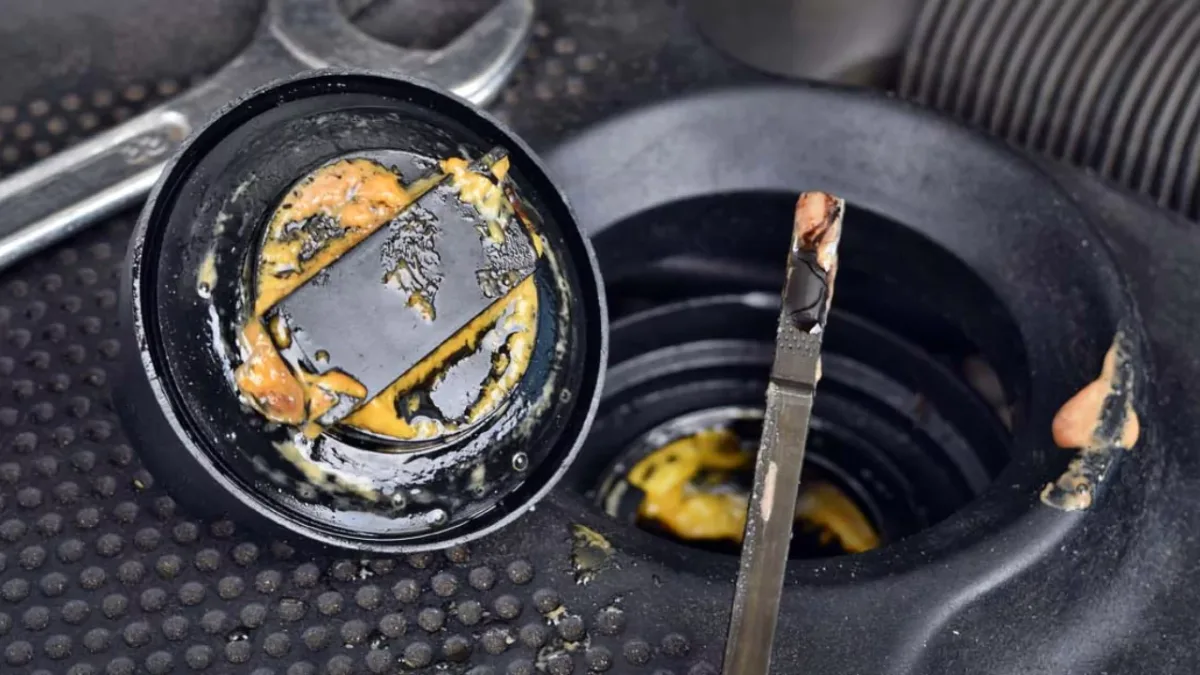
The telltale sign is a milky, mayonnaise-like film under the oil filler cap. That's water and oil emulsifying together, and it's a red flag for short-trip drivers.
Fuel Dilution From Short Trips
Cold engines run rich. Extra fuel gets injected to help combustion, but some of it slips past the rings and dilutes the oil. Aggregate used oil analysis data shows fuel dilution of 2 to 5 percent is common in low-mileage cars.
Diluted oil loses viscosity. Thinner oil means weaker film strength, more metal-on-metal contact, and faster wear.
Additive Depletion Over Time
Modern motor oil is roughly 15 to 25 percent additives, including detergents, anti-wear compounds like ZDDP, and corrosion inhibitors. These additives neutralize acids and hold contaminants in suspension. They deplete whether the car is running or sitting.
The Total Base Number (TBN), which measures acid-neutralizing capacity, drops steadily with time. Once TBN falls below about 2.0 mg KOH/g, the oil can no longer protect against acid attack.
The Condition Variables That Change Your Interval
There's no universal rule here. Your right interval depends on how you drive, where you park, and what's in your sump. Here's what actually moves the needle.
Trip Length and Drive Pattern
If most trips are under 10 miles, your engine rarely reaches full operating temperature (roughly 195 to 220°F). That's the "severe service" threshold nearly every manufacturer uses.
Rule of thumb: if you're not driving at least 20 minutes at highway speed once a week, you're a short-trip driver, regardless of total mileage.
Climate and Storage Environment
Cold and humid climates accelerate condensation and acid buildup. Winter storage in an unheated garage in Michigan is harder on oil than parking in a dry Arizona shed.
Ambient temperatures below 10°F push the interval shorter. Coastal humidity does the same.
Oil Type: Conventional, Synthetic Blend, or Full Synthetic
Full synthetic oils resist oxidation and shear far better than conventional. That matters more than mileage for garage-kept cars.
| Oil Type | Time Limit (Low-Mileage) | Notes |
|---|---|---|
| Conventional | 6 months | Oxidizes faster, weaker cold-weather flow |
| Synthetic blend | 6 to 9 months | Middle-ground protection |
| Full synthetic | 12 months | Best resistance to acid and oxidation |
| High-mileage synthetic | 12 months | Seal conditioners help older engines |
Engine Type: Turbo, Hybrid, or Naturally Aspirated
Turbocharged engines run hotter and are more prone to oil coking. Short trips are especially rough on them, since the turbo cools down through the oil.
Hybrids are the trickiest case. The gasoline engine often sits idle while electric power does the work, so oil ages by calendar even when the odometer barely moves. Naturally aspirated engines are the most forgiving of the three.
The Decision Tree: Finding Your Right Interval
Walk through these scenarios and match yourself to the closest one. If two fit, pick the shorter interval.
If You Drive Under 5,000 Miles a Year
Change the oil every 12 months on full synthetic, or every 6 months on conventional. Do not wait for the odometer to hit 5,000 miles. If you also do frequent short trips, drop the synthetic interval to 9 months.
If Most Trips Are Under 10 Miles
You're firmly in severe service. Change oil every 6 months regardless of oil type. Once a month, take the car on a 30-minute highway drive to burn off moisture and fuel.
If the Car Sits for Weeks at a Time
Six months is your ceiling. Long idle stretches mean acids and moisture sit undisturbed on bearings and cylinder walls. If it's a collector car parked most of the year, follow the pre-storage and post-storage rules covered later in this article.
If You Store the Car Seasonally
Change the oil right before storage, not after. Fresh oil has full additive protection and low contamination. Then change it again in the spring before you drive it hard.
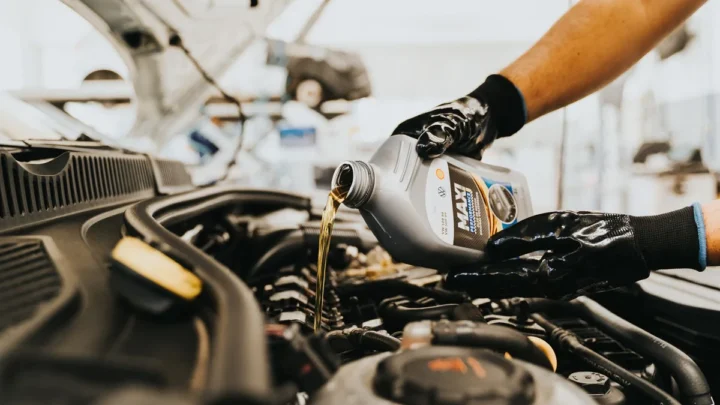
Doing your own step-by-step service at home makes this affordable when you're on a twice-a-year schedule.
Time-Based vs Mileage-Based Intervals
Manufacturers list two numbers for a reason: whichever comes first wins. Miles measure mechanical wear. Time measures chemical breakdown.
For a heavy commuter, mileage hits first. For a low-mileage driver, time always does. That's the whole point of the dual spec.
Some quick benchmarks from current OEM guidance:
| Driver Type | Typical Trigger |
|---|---|
| Daily commuter (15,000+ mi/yr) | Mileage |
| Suburban driver (~7,500 mi/yr) | Whichever fires first |
| Low-mileage (under 5,000 mi/yr) | Time (always) |
| Seasonal or stored car | Time plus storage prep |
Skipping the time interval because the odometer looks low is the single most common mistake we see in low-mileage owners. Oxidation, acids, and moisture don't care how far you've driven.
What the Owner's Manual Actually Says (and What It Leaves Out)
Every modern manual has a maintenance schedule with two columns: normal and severe service. Read the severe service section, then read it again.

Severe service is defined by conditions almost every low-mileage driver hits:
- Trips under 5 to 10 miles in normal temperatures
- Trips under 10 miles in freezing weather
- Extended idling or stop-and-go traffic
- Long periods of storage between drives
- Dusty, sandy, or salted roads
If two or more of these describe you, you're on the severe schedule. That's usually half the normal interval.
What manuals rarely spell out clearly: the 12-month cap applies even if you meet no severe conditions. A garage-kept car driven only 3,000 miles a year on smooth highways still hits the calendar limit.
The other blind spot is oil spec. Manuals list a required grade (say, 0W-20 API SP dexos1 Gen 3). Sticking to that spec matters more than which brand pours it.
Deviating can void engine warranty coverage on newer vehicles.
Oil Life Monitors: Can You Trust Them for Low-Mileage Cars
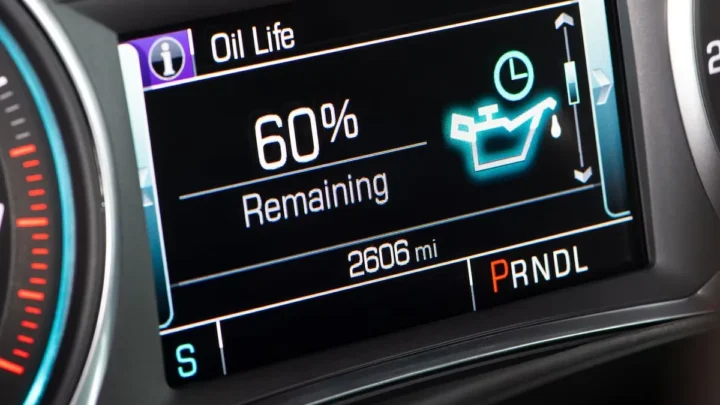
Oil life monitors (OLMs) are useful but incomplete. Most read engine load, rpm, temperature, and start cycles, then calculate remaining life. They don't actually sample the oil.
That means an OLM can badly overestimate remaining life on a rarely-driven car. A monitor showing 60 percent life at the 12-month mark doesn't override the calendar rule. GM and Honda both instruct owners to change the oil at least once a year regardless of what the monitor shows.
Some newer systems (Ford, Toyota, Mercedes) do incorporate elapsed time. Even so, they don't measure fuel dilution, TBN, or water content. They're modeling wear, not confirming condition.
If your OLM never triggers, use the 12-month rule anyway. If it triggers early, take it seriously. Reset it every time you or a shop changes the oil, or the next reading is meaningless.
Signs Your Oil Needs Changing Before the Interval Hits
A quick monthly check catches problems before they cause damage. Pop the hood, pull the dipstick, and look for these warning signs.
- Dark brown to black color with a burnt smell (oxidation, common in stored cars)
- Milky beige film under the oil cap (water contamination)
- Gasoline smell on the dipstick (fuel dilution above roughly 5 percent)
- Gritty texture when rubbed between fingers (soot or particulates)
- Oil level dropping without visible leaks (consumption or dilution boil-off)
Fresh synthetic oil is amber to light brown and pours cleanly. It should not smell like fuel or feel gritty.
The same dipstick check pays off when you're sizing up a used vehicle before buying. Oil condition tells you more about the previous owner's habits than any service receipt.
Warning lights matter too. A yellow oil life or oil level warning means act this week. A red oil pressure light means stop driving immediately and check the level before anything else.
Mistakes Low-Mileage Drivers Make Most Often
Low-mileage owners tend to make the same handful of errors. Any one of them can shorten engine life by tens of thousands of miles.
- Waiting to hit 5,000 miles even after 2 or 3 years of driving
- Trusting the oil life monitor as the only signal
- Idling the car in the driveway "to circulate the oil" (this makes fuel dilution worse, not better)
- Skipping the filter and only draining oil to save $10
- Using conventional oil in a car that spec'd synthetic from the factory
- Never taking the car on a highway run to burn off moisture and fuel
- Using the "normal" service schedule when you clearly qualify for severe
- Storing a car all winter with old, acidic oil sitting in the sump
Fixing any two of these will meaningfully extend engine life. Fixing all of them is what separates a well-kept collector car from a garage queen with sludged bearings.
Used Oil Analysis: The Smartest Way to Know for Sure
For low-mileage cars, a used oil analysis (UOA) removes the guesswork. Labs like Blackstone Laboratories test a small sample and report exactly what's in your oil.
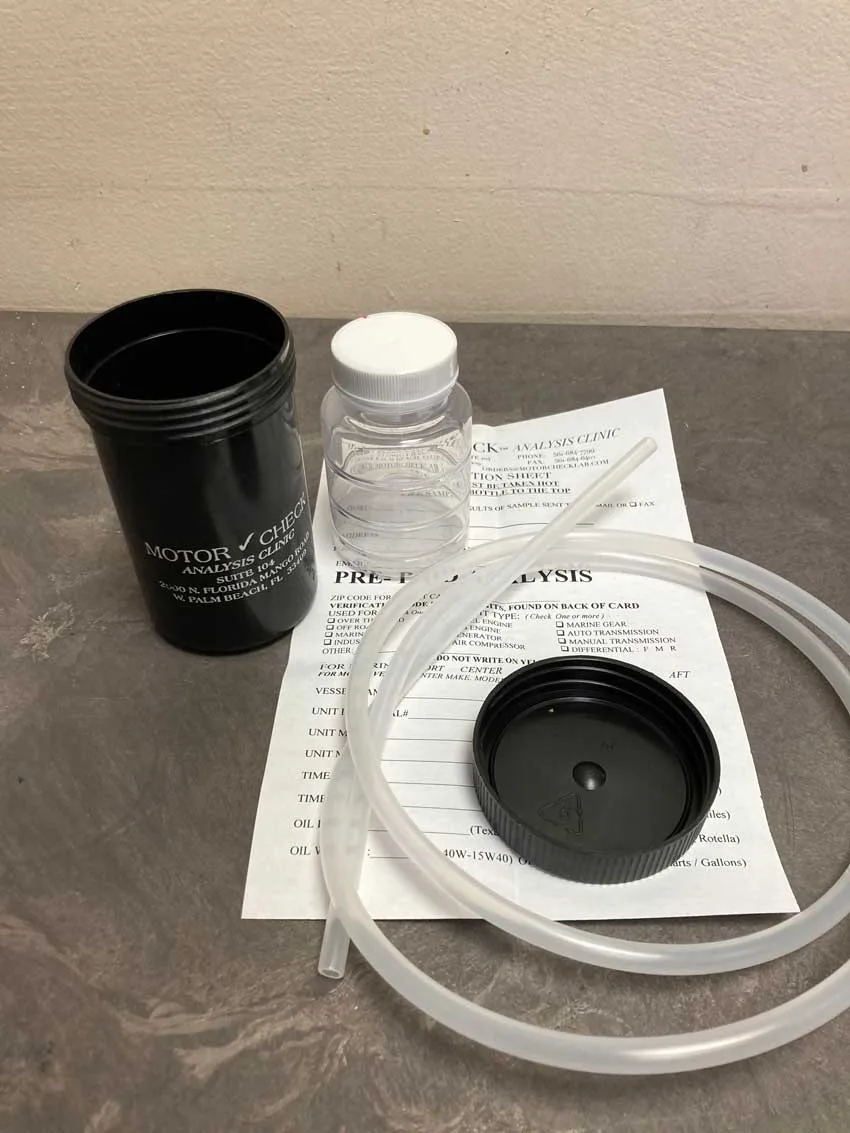
A UOA measures:
- Wear metals (iron, copper, aluminum) in parts per million
- Fuel dilution percentage
- Water content
- Total Base Number (TBN)
- Viscosity at 100°C
- Insolubles and oxidation
Cost runs $30 to $40 per sample. Send one after your first suspected "too soon" change, then again 12 months later to build a baseline.
If TBN is above 4 and fuel dilution is under 2 percent, your interval is safe. If TBN drops below 2 or dilution climbs above 5 percent, shorten the interval.
One sample tells you more than years of guessing. It's especially worth doing for classic cars, hybrids, and any collector vehicle where dealer schedules don't quite fit.
Pre-Storage and Post-Storage Oil Change Rules
Old oil is the wrong thing to leave sitting in an engine for months. Acids etch bearing surfaces, and moisture attacks cylinder walls.
Before storage:
- Take a 30-minute highway drive to warm the oil fully.
- Change oil and filter with fresh full synthetic.
- Add fuel stabilizer and top up the tank.
- Hook up a battery tender.
After storage, before you drive hard:
- Check oil level and condition on the dipstick.
- Start and idle 5 minutes to circulate oil.
- Change oil if the car sat longer than 12 months.
- Take a gentle 15-minute drive before pushing it.
For cars stored 6 months or less on fresh synthetic, a spring change isn't mandatory. For 12 months or longer, always change it.
Costs, Timelines, and What to Expect
A twice-a-year oil change on a low-mileage car is cheap insurance. Expect these ballpark costs as of 2026:
| Service | DIY Cost | Shop Cost |
|---|---|---|
| Conventional oil + filter | $25 to $40 | $50 to $75 |
| Full synthetic oil + filter | $45 to $75 | $85 to $130 |
| Used oil analysis (sample) | $30 to $40 | n/a |
| Storage prep (oil + stabilizer + tender) | $80 to $130 | $150 to $250 |
A DIY oil change takes 30 to 45 minutes once you own ramps, a drain pan, and a filter wrench. A shop appointment is usually 30 minutes with a booking, an hour without.
Used oil disposal is free at most auto parts stores. The EPA and state programs require proper recycling, so never pour it down a drain or onto the ground.
FAQs About Oil Changes for Rarely-Driven Cars
Can I change my oil once a year if I use full synthetic?
Yes, for most cars driven under 5,000 miles a year. Full synthetic holds up chemically for 12 months in typical conditions. If you do mostly short trips or park in humid or freezing climates, drop to 9 months.
Always follow your owner's manual severe-service schedule if it disagrees.
Does oil go bad in an engine that just sits?
Yes. Even without running, oil oxidizes slowly, additives deplete, and moisture from humidity enters the crankcase. After 12 months in a sitting engine, TBN and detergent additives are noticeably reduced.
That's why every major manufacturer caps intervals at 12 months regardless of mileage.
Is it worse to drive short trips or let the car sit?
Both are hard on oil, but for different reasons. Short trips add fuel and water contamination fast. Long sits let acids and moisture attack internal parts without protection.
The worst combo is what most low-mileage drivers actually do: a few short trips a month with the car sitting the rest of the time.
Do I need to change the oil filter every time?
Yes. The filter costs $8 to $20 and holds contaminants that would otherwise recirculate through fresh oil. Skipping it defeats most of the benefit of the change.
Reusing an old filter is false economy and violates most manufacturer service requirements.
What oil is best for a car that barely gets driven?
Full synthetic meeting the OEM spec (API SP, ILSAC GF-6, or dexos1 Gen 3, whichever applies). Synthetic resists oxidation and holds additives longer than conventional. For older engines past 75,000 miles, high-mileage full synthetic adds seal conditioners that help prevent leaks during long sits.
Your Simple Decision Guide
Match yourself to the closest scenario and follow the rule. If two fit, pick the shorter interval.
- Under 5,000 miles a year, mostly highway: full synthetic every 12 months
- Under 5,000 miles a year, mostly short trips: full synthetic every 6 to 9 months
- Car sits 2+ weeks between drives: every 6 months plus a monthly highway run
- Seasonal or winter storage: fresh synthetic before storage, check again in spring
- Collector or classic car under 1,000 miles a year: annually plus a UOA every other year
- Turbocharged low-mileage car: every 6 months minimum, full synthetic only
- Hybrid with mostly EV driving: annually with a highway drive once a month to exercise the gas engine
Change the filter every time. Log the date and mileage. When the calendar hits your limit, change the oil, whatever the odometer says.

Similar Posts