Diesel Oil vs Gasoline Oil: Key Differences Explained
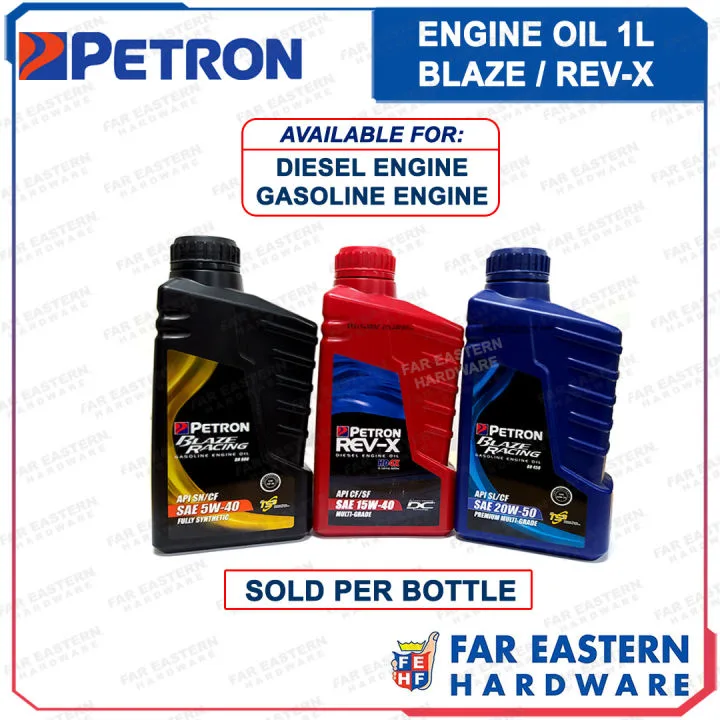
Pouring the wrong bottle into your engine won't blow it up on the first startup, but the difference between diesel oil and gasoline oil is bigger than most drivers realize. Diesel oil carries more anti-wear metal, more acid-neutralizing chemistry, and more soot-fighting dispersants because diesel combustion is dirtier and hotter under pressure. Gasoline oil is tuned around lower phosphorus, lighter viscosity, and catalytic converter safety.
The two oils are governed by different American Petroleum Institute (API) service categories. "C" is for compression-ignition (diesel) and "S" is for spark-ignition (gasoline). As of 2026, the current top marks are API CK-4 and FA-4 for diesel and API SP for gasoline.
Here's what actually separates them and why it matters.
Quick Answer
Diesel oil has higher TBN and more zinc anti-wear metal. Gasoline oil runs lower phosphorus to protect catalytic converters. Diesel oil also carries stronger soot dispersants.
The two follow different API categories: "C" for diesel, "S" for gasoline. Using the wrong oil shortens engine or emissions-system life.
Why Diesel Oil and Gasoline Oil Aren't Interchangeable
Modern engines are engineered around a specific oil chemistry. Swap that chemistry, and something breaks. Not next Tuesday, but eventually.
Diesels burn under 15:1 or higher compression, run hotter, and produce far more soot per gallon of fuel burned. Gasoline engines spark-ignite at leaner air-fuel ratios and rely on catalytic converters that hate phosphorus. Oil companies build separate formulas so each side of the fence gets what it needs.
Here's the rough shape of the mismatch:
- Diesel oil in a gas engine: excess phosphorus can poison the catalytic converter over time.
- Gasoline oil in a diesel engine: too little TBN and soot handling for the workload.
Getting the oil right protects the engine and the emissions system at the same time. It also keeps warranty coverage intact, which matters more than most people think.
The Short Answer: What Actually Separates the Two
Four things separate diesel oil from gasoline oil. Additive chemistry. Viscosity targeting.
Service category. Drain interval design.
Diesel oils carry roughly 1,000 to 1,200+ ppm phosphorus in the ZDDP anti-wear package. Modern gasoline oils sit closer to 600 to 800 ppm to keep catalyst chemistry alive. TBN, which measures how much acid the oil can neutralize before it turns corrosive, runs about 7 to 10 for gas engine oil and 10 to 14 for heavy-duty diesel oil.
Viscosity is the other big split. Passenger gas engines commonly spec 0W-20 or 5W-30 for fuel economy. Diesel pickups and commercial trucks typically call for 5W-40, 10W-30, or 15W-40 to hold film strength under high load.
The rest of this guide unpacks the "why" behind each of those numbers.
How Compression-Ignition and Spark-Ignition Engines Stress Oil Differently
Diesels ignite fuel with heat from compression. No spark plug. Peak cylinder pressures often push 2,000 psi or higher, and the crankshaft, bearings, and rings all see loads a gasoline engine never sees.
That workload creates three problems the oil has to manage:
- Combustion acids from sulfur and NOx byproducts
- Soot particles that clump together and thicken the oil
- Higher heat and pressure at the ring belt and main bearings
Gasoline engines have their own headaches, but they're different ones. Modern GDI and turbo-GDI engines run leaner mixtures, hotter piston crowns, and are prone to Low-Speed Pre-Ignition (LSPI). LSPI is a violent knock event at low rpm and high load that can crack pistons or bend rods.
API SP oils have LSPI-preventing calcium and magnesium chemistry baked in. Diesel oils don't need that, but they need heavy dispersant loads that would foul a gasoline catalytic converter in short order.
Different jobs. Different chemistry. Same "motor oil" label on the shelf.
What's Inside Each Oil: Additives, Base Stocks, and Detergent Load
Every engine oil is a base stock plus an additive package. The base stock is 70 to 90 percent of the bottle. The additive package does most of the heavy lifting.
Base stocks fall into API Groups I through V. Groups I and II are conventional refined mineral oils. Group III is severely hydrocracked and often marketed as "synthetic" in North America.
Group IV is true PAO synthetic. Group V is ester and other specialty chemistries. Premium diesel and gasoline oils lean heavily on Group III and IV blends for oxidation resistance.
ZDDP, Phosphorus, and Anti-Wear Chemistry
Zinc Dialkyldithiophosphate (ZDDP) is the workhorse anti-wear additive in nearly every engine oil. It forms a sacrificial film on cams, lifters, and bearings under boundary lubrication. Diesel oils carry more of it, roughly 1,000 to 1,400 ppm phosphorus.
Gasoline oils are capped lower to protect the catalytic converter downstream.
TBN, Detergents, and Soot Dispersion
TBN comes from calcium and magnesium detergent packages. Diesel oils need more of it because sulfur-derived acids and blowby raise the acid load fast. Dispersants keep soot particles suspended so they drain out with the oil instead of settling as sludge inside the block.
Sulfated Ash and SAPS Levels
SAPS stands for Sulfated Ash, Phosphorus, and Sulfur. European ACEA sequences classify oils as full SAPS, mid SAPS, or low SAPS. Diesels equipped with Diesel Particulate Filters (DPFs) need low or mid SAPS oil to avoid clogging the filter and forcing frequent regens.
API Service Categories: "C" for Diesel, "S" for Gasoline
The API donut on the back of an oil bottle tells you almost everything you need in three seconds.
Two letters. The first letter is the engine type. "C" stands for Compression-ignition, meaning diesel.
"S" stands for Spark-ignition, meaning gasoline. The second letter marks the generation, with later letters denoting newer, more demanding specifications.
As of 2026, the current API categories break down like this:
| Category | Engine Type | Current Spec | Notes |
|---|---|---|---|
| API SP | Gasoline | Current | LSPI protection, timing-chain wear control, backward compatible |
| API CK-4 | Diesel | Current | Backward compatible with older on-highway diesels |
| API FA-4 | Diesel | Current | Fuel-economy focused, lower HTHS, NOT backward compatible |
Backward compatibility matters. API SP works in older gasoline engines that specified SN, SM, or SL. CK-4 works in older diesels that called for CJ-4 or CI-4.
FA-4 is the exception. It's a lower-viscosity diesel oil designed for specific newer heavy-duty engines only, so don't drop it in an older Cummins or Duramax without checking the manual first.
If you're due for a service and want a walkthrough on doing it yourself, this beginner-friendly step-by-step drain and refill guide covers the process cleanly. The American Petroleum Institute maintains and licenses these categories through its Engine Oil Licensing and Certification System (EOLCS), which is what earns a bottle the right to display the donut and starburst.
Viscosity Grades and HTHS: Why 15W-40 and 5W-30 Aren't the Same Job
SAE J300 is the viscosity standard behind every grade printed on a bottle. The number followed by "W" is cold-flow performance. The second number is high-temperature viscosity at 100°C.
A 5W-30 flows better at cold start than a 15W-40. A 15W-40 keeps a thicker protective film at operating temperature under sustained load. That's why diesel pickups and heavy tow rigs still spec 15W-40 in warm climates.
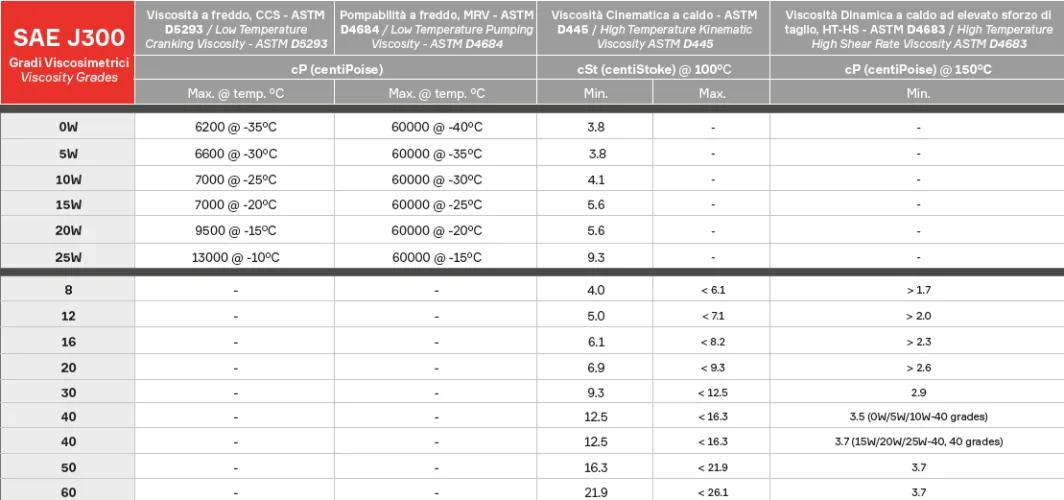
Then there's HTHS, or High-Temperature High-Shear viscosity, measured at 150°C. It's the number that best predicts wear in real driving:
- Fuel-economy PCMOs (0W-20, 5W-20): HTHS around 2.6 cP
- Standard PCMOs (5W-30, 10W-30): HTHS 3.0 to 3.5 cP
- Heavy-duty diesel oils (CK-4 15W-40): HTHS ≥ 3.5 cP
- FA-4 low-viscosity diesel oils: HTHS 2.9 to 3.2 cP
Higher HTHS means a stronger oil film under load, at the cost of a small fuel-economy hit. Your owner's manual has already balanced that trade-off for you.
Diesel Oil vs Gasoline Oil: Side-by-Side Spec Comparison
Here's how the two oils typically stack up on the specs that matter most.
| Specification | Gasoline Oil (API SP) | Heavy-Duty Diesel Oil (API CK-4) |
|---|---|---|
| Typical viscosity | 0W-20, 5W-20, 5W-30 | 5W-40, 10W-30, 15W-40 |
| TBN | ~7 to 10 | ~10 to 14 |
| Phosphorus (ZDDP) | 600 to 800 ppm | 1,000 to 1,400 ppm |
| Sulfated ash | <1.0% typical | ~1.0 to 1.6% |
| HTHS viscosity | 2.6 to 3.5 cP | ≥ 3.5 cP |
| Detergent/dispersant load | Moderate | Heavy |
| LSPI protection | Yes (required in SP) | Not required |
| DPF-friendly | N/A | Requires low or mid SAPS |
| Typical drain interval | 5,000 to 10,000 mi | 10,000 to 25,000+ mi with UOA |
The table tells the whole story at a glance. More acid neutralization and wear metal on the diesel side. Lighter viscosity and catalyst-safe chemistry on the gasoline side.
What Happens If You Put Diesel Oil in a Gasoline Engine
The engine will run fine for a while. The catalytic converter is what suffers first.
Diesel HDEOs like 15W-40 CK-4 carry roughly 1,000 to 1,400 ppm phosphorus. Modern gas engines are designed around 600 to 800 ppm. Excess phosphorus slowly coats the precious-metal washcoat inside the three-way catalytic converter and poisons it.
Short-term risks over a single drain interval:
- Reduced fuel economy from a heavier viscosity
- Higher cold-start wear if the grade is too thick for climate
- No LSPI protection in turbo-GDI engines
Long-term risks over multiple drain intervals:
- Catalytic converter degradation and P0420 codes
- Failed emissions inspections
- Voided powertrain and emissions warranty coverage
A one-time top-off with diesel oil in a roadside pinch won't destroy anything. A whole drain interval on the wrong oil is a bad idea.
What Happens If You Put Gasoline Oil in a Diesel Engine
This one is worse, and it shows up faster. Diesels produce more soot and more combustion acids than gas engines, and gasoline oil isn't built to handle either load.
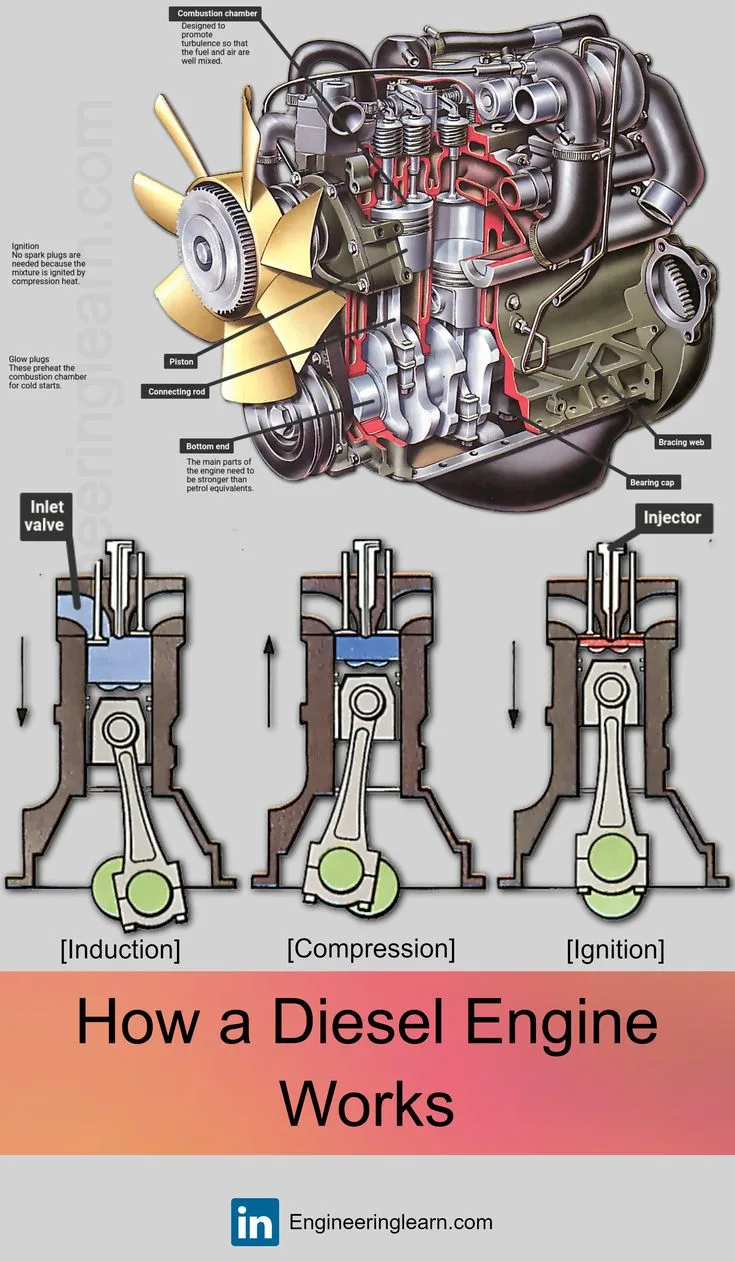
Aggregate technical bulletins from heavy-duty OEMs flag three failure modes:
- TBN depletes fast, and the oil turns acidic well before the drain interval ends
- Dispersants get overwhelmed, and soot clumps into abrasive particles
- Ring pack and bearing wear accelerate under high cylinder pressure
Modern common-rail diesels with DPFs add another problem. Gasoline oils aren't low-SAPS formulations, so ash builds up in the filter and forces premature regens or filter replacement.
The visible signs come quickly. Oil turns pitch black within a few hundred miles. Viscosity climbs from soot loading.
Used oil analysis shows elevated iron and copper.
If a wrong fill happens, drain it and refill with the correct HDEO before the next long run. A clean drain and refill walkthrough makes the fix straightforward at home.
Dual-Rated and Universal Fleet Oils: When They Actually Work
Some oils carry both an "S" and a "C" rating on the API donut, like "API CK-4/SN" or "API CJ-4/SM". These are dual-rated fleet oils, and they exist for one reason: mixed fleets where the shop can't stock five different SKUs.
They're a compromise, not a free lunch. A dual-rated 15W-40 works in older gasoline engines that specified SN or earlier, but it isn't licensed for API SP with LSPI protection. That makes it a no-go for modern turbo-GDI cars.
Where they genuinely shine:
- Farm and construction shops running diesel tractors and gas pickups side by side
- Pre-2011 gasoline engines with flat-tappet cams that benefit from higher ZDDP
- Classic muscle car engines originally designed around higher zinc levels
Where they don't belong:
- Any modern gasoline vehicle with a catalytic converter and OEM SP requirement
- Any DPF-equipped diesel that requires low-SAPS chemistry
If you're eyeing a used vehicle with thin maintenance records, a solid pre-purchase inspection routine will flag sludge, wrong-grade fills, and skipped intervals before you sign.
Matching Oil to Your Engine: Owner's Manual, OEM Approvals, and ACEA Sequences
The owner's manual is the single most reliable source for the right oil. Every engine builder publishes a viscosity grade, an API or ACEA specification, and often a proprietary OEM approval that trumps the API donut.
Common OEM approvals to look for on the back label:
- GM dexos1 Gen 3 (gasoline) and dexos D (diesel)
- Ford WSS-M2C946-B1, WSS-M2C961-A1
- Mercedes-Benz MB 229.51, 229.52, 228.51
- Volkswagen VW 502.00, 504.00, 507.00
- Cummins CES 20086, 20081
- BMW Longlife-04, Longlife-14 FE+
ACEA sequences matter more in Europe and on European engines everywhere. C2, C3, and C5 are low or mid SAPS oils for catalyst-equipped gas and diesel engines. E6, E7, and E9 are heavy-duty diesel oils for on-highway trucks with aftertreatment.
Match the manual first, then approvals, then API and ACEA. If you're due for your next routine oil service, match the spec on the cap and the label together before you buy.
Climate, Drain Intervals, and Real-World Use
Ambient temperature drives the winter grade. Cold-crank viscosity is what protects your bearings in the first three seconds after startup.
Practical rules of thumb:
- Below 0°F: 0W-something, always
- 0°F to 32°F: 5W-something
- Warm year-round: 10W or 15W is usually fine
Drain intervals are a function of oil quality, fuel quality, and duty cycle, not just miles. Gas passenger cars typically run 5,000 to 10,000 miles on modern full synthetic. Diesel pickups often stretch 10,000 to 15,000 miles, and on-highway Class 8 trucks with used oil analysis (UOA) can push 25,000 to 50,000 miles per drain.
Short trips, heavy towing, dusty conditions, and long idling all shorten intervals. Highway miles at steady load stretch them. When in doubt, send a sample to a UOA lab and let the numbers set your interval.
Mistakes People Make When Buying Engine Oil
The single biggest mistake is buying by viscosity alone. A 5W-30 is not a 5W-30 across brands and categories. An API SP 5W-30 and an API CK-4 5W-30 have completely different additive chemistries under the same viscosity label.
Other common misses:
- Ignoring OEM approvals in favor of "meets or exceeds" marketing text
- Using an old CJ-4 or CI-4 drum on a new engine that needs CK-4 or FA-4
- Assuming "synthetic" means it meets your engine's spec (it might not)
- Mixing FA-4 into a CK-4-spec engine to save a dollar per quart
- Trusting a shop that stocks one bulk oil for every vehicle in the bay
- Skipping used oil analysis on high-value diesels
If you're shopping a used diesel pickup, the wrong oil history shows up in the pan and the top end. A thorough used truck pre-buy inspection can save you a five-figure repair bill.
FAQs on Diesel Oil vs Gasoline Oil
Can I use diesel oil in a gasoline engine as a one-time fix?
Yes, a single top-off in a roadside pinch won't cause immediate damage. Running a whole drain interval on diesel oil in a modern gasoline engine risks catalytic converter poisoning from excess phosphorus and can trigger P0420 codes. Drain and refill with the correct API SP oil at your next opportunity.
Is 15W-40 diesel oil OK for an older gasoline engine?
For pre-2011 gasoline engines with flat-tappet camshafts, a dual-rated 15W-40 with both a "C" and "S" API mark can actually help because of higher ZDDP levels. For any modern port-injected or GDI gas engine with a catalytic converter, stick to the API SP grade the manual specifies.
What's the difference between CK-4 and FA-4 diesel oil?
CK-4 is a backward-compatible heavy-duty diesel oil with HTHS viscosity above 3.5 cP. FA-4 is a lower-HTHS oil (2.9 to 3.2 cP) built for fuel economy in specific newer engines only. FA-4 is not a drop-in for older on-highway diesels and can accelerate wear if used against spec.
Do synthetic diesel oils last longer than synthetic gasoline oils?
Yes, in most cases. Diesel oils carry more TBN, more dispersants, and heavier detergent load, so they handle longer drain intervals under UOA monitoring. Gasoline oils are formulated around lighter loads and shorter intervals to match modern service schedules and fuel-economy targets.
What oil is best for a bi-fuel or dual-fuel engine?
Follow the engine builder's spec first, since bi-fuel engines are usually a modified gasoline or diesel base engine. Natural-gas conversions often benefit from low-ash oils to control valve deposits. When the manual gives a range, choose the higher-detergent option within the same viscosity grade.
The Bottom Line: Picking the Right Oil for Your Engine
Start with the owner's manual and match the viscosity, the API or ACEA spec, and any OEM approval printed there. That single step solves 95 percent of the confusion.
For everyday drivers, an API SP 5W-30 or 0W-20 covers most modern gasoline engines. For diesel pickups and heavy trucks, an API CK-4 5W-40 or 15W-40 with the right OEM approval is the safe default. Skip the shortcuts, skip the marketing, and let the engineers who built the engine tell you what it needs.

Similar Posts